
If you’re tired of mosquitoes ruining your evenings, you’ve probably wondered if mosquito plants actually work. The honest answer is that most are decorative, not defensive, and won’t stop a single bite.
Only lantana camara has proven effective in field trials, cutting indoor mosquitoes by 83 percent in Tanzania—but that’s due to its dense foliage blocking entry, not its smell. Other plants like citronella or lemon balm need their leaves crushed into oil for any real effect, and live leaves lose potency within minutes.
The garden industry sells $12 geraniums as miracle repellents, but that’s marketing, not science. Skip the hype and save your money—a $15 fan or a $10 window screen actually works.
Keep reading for the full breakdown on what really keeps mosquitoes away.
At A Glance
- Most mosquito plants are ineffective unless leaves are crushed for oil.
- Lantana camara can reduce indoor mosquitoes by up to 83% in field trials.
- Active plant compounds evaporate quickly, providing minimal protection outdoors.
- Fans, screens, and EPA-registered sprays offer far more reliable mosquito control.
- Natural oils like lemon eucalyptus work in sprays but not in garden plants.
Why Do So Many People Believe Mosquito Plants Work?
Many people believe mosquito plants work because of a placebo effect, not real insect repellent science. They place a pot of citronella on the patio, notice fewer bites, and give the plant credit.
In reality, they likely moved away from a breeding site or a breeze shifted the mosquitoes elsewhere. Cultural tradition also plays a big role in this common pest control misunderstanding. Grandmothers swore by lemon balm, so buyers trust inherited wisdom over lab results.
The garden industry happily sells this fantasy of natural mosquito repellent. A twelve dollar geranium feels like a bargain compared to proper sprays or professional treatments. But here is the crushing truth for homeowner pest management.
Unless you are crushing leaves into oil, that plant is just decor. Many people trust their gut, but their gut is simply wrong about effective mosquito control. For real yard protection, use screens, remove standing water, or apply EPA approved repellents. Instead, choose plant-based sprays with oil of lemon eucalyptus to effectively mask human scent for up to six hours per application.
The One Mosquito Plant That Actually Works (Hint: Not Citronella)
The one mosquito plant that actually works is not the famous citronella. It is Lantana camara, a scrappy shrub that reduces indoor mosquito populations.
In a Tanzanian field trial, homes surrounded by Lantana saw 83% fewer Anopheles funestus mosquitoes. This is a statistically significant drop for pest control. For comparison, botanical oils like citronella last only around 3 hours when used in repellents and have not shown such dramatic yard-level reductions.
Citronella candles lack solid bite reduction proof. Lantana works through dense foliage blocking entry and volatile terpenes confusing mosquito senses.
| Feature | Lantana Camara | Citronella Plant |
|---|---|---|
| Mosquito Reduction | 83% (Anopheles funestus) | Not confirmed |
| Cost | $1.50 per home | Similar, less proven |
| Maintenance | Trim to 1.5m, water weekly | Low, but ineffective |
Lantana is cheap and self sustaining. It is community accepted and not a magic bullet.
But it is the one mosquito plant backed by real data. Buy it, trim it, and watch it work for your home pest control.
How Mosquito Plant Compounds Repel Mosquitoes
Plant compounds work by hijacking a mosquito’s sense of smell, not by zapping them like a bug zapper. These volatile terpenes, found in oils like citronella or peppermint, interfere with olfactory receptors, confusing the bug into thinking you’re not a meal.
Plant compounds trick a mosquito’s sense of smell, making you seem invisible instead of using a zap.
But here’s the catch: volatile evaporation happens fast. Unless you’re applying concentrated oil directly to skin, those garden leaves just waft their scent into the breeze, losing potency within minutes.
Some plants, like Lantana, offer a physical barrier effect, with dense foliage blocking mosquitoes from entering your home. In Tanzania, houses with Lantana saw up to 83% fewer Anopheles funestus indoors.
That’s not magic; it’s just a leafy wall that smells bad to bugs. Still, don’t expect a potted plant to replace your DEET spray for serious mosquito control.
For targeted mosquito repellent solutions, consider plant-based sprays with lasting protection. For example, formulas using lemon eucalyptus oil provide up to six hours of protection when applied directly to skin. If you need to buy mosquito repellent for outdoor living spaces, look for stabilized terpene formulas that slow evaporation.
For indoor pest prevention, combine lantana hedges with screened windows and a quality insect repellent lotion. That layered approach delivers real, bite-free results without relying on a single plant’s short-lived aroma.
5 Reasons Mosquito Plants Fail in Real Gardens
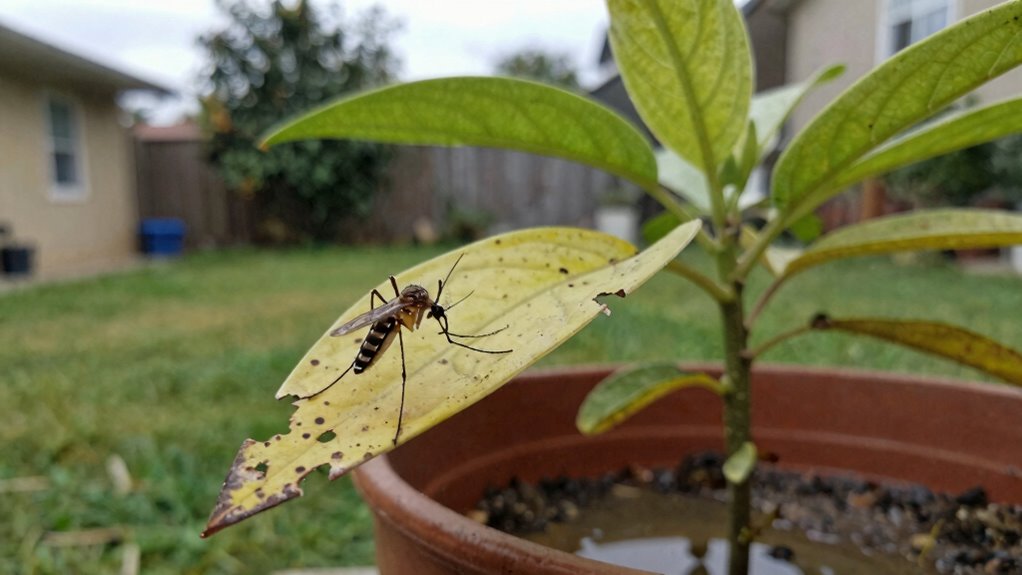
Mosquito plants often fail in real gardens because a single potted arrangement simply isn’t enough.
The volatile compounds evaporate fast, so you really need dense, sprawling coverage to create any kind of mosquito barrier.
Brush barriers like Lantana can help with pest control, but only if you keep them trimmed between 40 cm and 1.5 meters.
Neglect that trimming and you will end up with a weed, not an insect repellent solution.
The natural oils in these plants are water soluble, so rain or sweat washes them right off.
This leaves you exposed and unprotected against biting insects.
Lab tests show extracts can offer 8 to 11 hours of protection, but live plants have a minimal effect.
For effective mosquito control, you need a thick, maintained hedge, not a simple potted gimmick.
These plants are cheap at around $1.50 per home, but they require constant upkeep to work.
Skip the potted trick unless you are ready to commit to regular pest management maintenance.
For longer-lasting protection, consider using plant-based natural sprays which contain concentrated essential oils.
How Mosquito Plant Oils Compare to DEET and Picaridin
Comparing plant oils to DEET and picaridin is like pitting a garden hose against a fire truck. Most plant oils evaporate quickly due to high volatility, so citronella candles often end up as fancy patio aromatherapy rather than true protection.
The standout exception is PMD from lemon eucalyptus, whose lower volatility gives it staying power similar to low-concentration DEET for several hours. Synthetics like DEET and picaridin resist evaporation far better, holding their ground for six to eight hours even when you sweat.
For a quick hike or a backyard cookout, PMD works fine, but for a swampy evening, you want a long-lasting repellent that won’t fade mid-bite. Choose DEET or picaridin for heavy-duty pest control, especially in high-pressure mosquito zones.
Buying the right topical repellent means matching the product to your exposure time, not just the label claim. If you’re shopping for gear to last through an entire outdoor shift, the synthetics are the fire truck, not the hose. Note that higher OLE concentrations tend to provide longer lasting protection, although reapplication before six hours is still needed if you are super active or in humid weather.
Better Alternatives: What Works Instead of Garden Plants
For most backyards, the real answer is simpler than a horticultural degree: get a fan.
Studies show a steady breeze disrupts mosquito flight, reducing landings by up to 60%.
Beyond that, proven pest control methods exist without planting a single seed, and they often cost less than a flat of annuals.
Properly fitted indoor screening on windows and doors blocks entry entirely, which is your best barrier against biting insects.
This window screen installation runs around $5–$15 per window, with no upkeep beyond repairing tears.
For outdoor moments, EPA-registered mosquito repellent sprays with DEET or picaridin offer 6–12 hours of bite protection.
Try 25% picaridin for sweaty cookouts, since it holds up better against perspiration than many alternatives.
Each dose costs pennies, making it a smart buy for anyone searching for mosquito control near me.
Community education is another free tactic: teach neighbors to dump standing water weekly to eliminate breeding sites in shared yards.
That requires cooperation, but it directly targets larvae before they become adult pests.
The cheap fan, combined with screening and repellent, cuts bites more than any garden ever could.
For practical yard pest prevention, skip the plant aisle and focus on airflow, barriers, and proven repellent products.
You will get immediate relief without waiting for growth, and you avoid the upkeep of ornamental species that often harbor spiders or ants.
Should You Bother Planting Mosquito Repellents? The Verdict
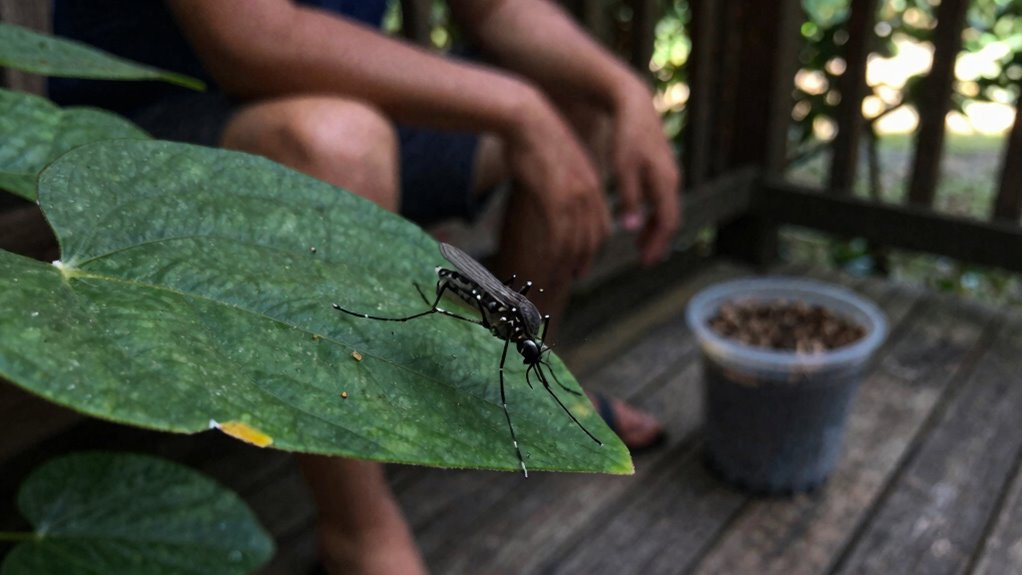
The evidence is clear. Live plants like Lantana can cut certain mosquitoes by over 80% in field trials. However, that success comes with a catch. The active mosquito repellent compounds, volatile terpenes, evaporate quickly from leaves. For reliable, lasting protection, consider supplementing with long burn times from large citronella candles, which can provide over 90 hours of continuous pest control for extended outdoor gatherings.
Plant Protection Evidence
Should you plant mosquito repellents around your yard? Evidence says yes, but with important caveats.
Lab-grade extracts can block bites for up to 11.5 hours. Living plants, however, deliver a mixed report card.
Field trials in Tanzania showed Lantana cut Anopheles mosquitoes by 56 to 83 percent when walls were covered. That’s impressive, but Lantana had no effect on culicine species.
Volatile compounds evaporate quickly, so passive plants lag behind sprays. One exception is PMD from lemon eucalyptus, which offers hours of protection. For a safer, plant-based alternative, consider sprays that rely on pure peppermint oil as a chemical-free barrier.
Natural isn’t always safe. Some compounds risk personal toxicity, and few oils achieve commercial viability as proven mosquito repellents.
Candle claims remain unproven. For real pest control relief, pair greenery with proven DEET sprays.
Cost Versus Maintenance
Planting mosquito repellents like Lantana around your yard is cheap, but cheap doesn’t mean free. For about $1.50 per house, you can get enough to cover a wall.
These plants need trimming, watering, and occasional replacement. They are not a set-it-and-forget-it pest control solution.
That’s where community engagement steps in for long term mosquito prevention. In the Tanzania study, 80% of homes maintained good coverage with regular plant care.
So if you’re willing to prune a little, these natural repellents are a bargain. The real cost isn’t dollars, it’s effort.
And honestly, a little weekend gardening beats a cloud of itchy mosquitoes. Bottom line: yes, plant them, but don’t expect them to work alone. Unlike synthetic chemicals, natural solutions do not offer long lasting residual protection, so you may need to supplement with an organic spray like neem oil for complete coverage.
Oil Extraction Key
Skip the shovel and ignore the gardening myth that planting mosquito repellents offers real protection. The true power lies in oil extraction, and the key difference is consuming versus applying those volatile terpenes in concentrated form.
Volatile compounds evaporate fast, so lab oils protect for 8 to 11 hours while live plants barely last an hour. Propagation methods matter, and Lantana trimmed to 40 cm makes a cheap physical barrier at just $1.50 per home.
No commercial products have been developed for home use, and oils like PMD from lemon eucalyptus match DEET but DIY efforts fail. Propagation methods yield physical barriers, and Lantana cut Anopheles funestus by 83 percent in Tanzania.
But unless you are distilling oils yourself, the verdict is clear. Skip the garden and grab a spray for effective pest control. Oil of lemon eucalyptus provides up to 6 hours of natural mosquito protection when applied directly, showing the concentrated form is far more reliable than planting live foliage.
Frequently Asked Questions
Can I Grow Mosquito Plants Indoors to Repel Mosquitoes?
You can absolutely grow mosquito plants indoors to help repel mosquitoes, but they won’t solve a serious pest problem on their own. These plants need bright light, like a sunny south window or strong grow lights, plus a well draining potting soil mix to stay healthy.
For indoor mosquito control, the scent from crushed leaves or essential oils works better than just having the plant sit there. Live foliage releases minimal repellent into the air unless you physically disturb it.
Studies confirm that mosquito plants can reduce pests in outdoor barriers, but indoors your best bet is a fan or DEET based repellent. If you’re looking for a natural pest control option, this plant adds charm but not full protection.
Bottom line: use mosquito plants as a nice extra, not your main mosquito defense. Keep expectations low, pair them with proven pest management products, and you won’t get bugged by false hope or actual bites.
How Often Do I Need to Crush the Leaves for Repellency?
Crushing leaves releases mosquito repelling oils, but the protection is very short lived. The effect only lasts for minutes, not hours, because the volatile compounds fade quickly.
You would need to re crush the leaves every 30 minutes to maintain any real pest control benefit. Honestly, that is less practical than simply buying a proven mosquito spray.
The repellency dissipates before you even finish your coffee. For effective long lasting protection, stick with extracted essential oils or commercial repellents.
A good natural pest control spray or DEET free formula is a much smarter purchase for your sanity. Choose a product designed to keep bugs away for hours, not just a few minutes.
Do Mosquito Plants Repel Ticks or Other Biting Insects?
Most research on mosquito plants focuses on mosquitoes, not on tick control. Tick behavior is completely different because ticks don’t fly but instead crawl up from grass and foliage.
This means the volatile repellents from plant oils have limited real world effectiveness against ticks in your yard. One exception is lemon eucalyptus oil’s active ingredient, PMD.
PMD has been tested against ticks and shows some promise, but only with direct application to skin or clothing. Passive planting of mosquito plants won’t keep ticks away.
For reliable tick protection, stick with proven pest control products like DEET or permethrin sprays. It’s not the glamorous garden solution, but precision beats guesswork when safety is on the line.
If you want to buy effective tick repellents, look for EPA registered formulas designed for crawling pests. Don’t rely on garden foliage alone for your tick defense strategy.
Are Any Mosquito Plants Toxic to Pets or Children?
Yes, several mosquito plants are toxic to pets and children. Lantana, for example, costs about $1.50 per home but contains triterpenoids that can cause liver damage in dogs or cats.
Child ingestion of lemon eucalyptus oil, especially its PMD compound, is dangerous and not recommended for kids under three. Always check plant labels and keep these natural pest control options out of reach.
Pennyroyal, another common mosquito repelling herb, is highly toxic to both pets and kids. The bottom line is these plants work best as barriers, not snacks.
For safe mosquito control solutions, consider non toxic alternatives like citronella candles or professional grade repellents. Buy only pet friendly pest control products if you have curious toddlers or furry friends at home.
Will Planting Mosquito Plants Near a Patio Reduce Bites?
Will planting mosquito plants near a patio reduce bites? Not really, but they can help a tiny bit.
For real pest control results, don’t rely on Lantana or other mosquito plants alone. Their volatile oils smell strong but fade fast, so you need extraction for any real repellent kick.
Site preparation matters more than the plant itself. Dense foliage can block some bugs, but expect just a slight dip, say 10% to 20% fewer mosquitoes, not a 50% drop.
For decent patio effectiveness, combine these plants with a fan or a spray. That combo works best for reducing mosquito populations in outdoor spaces.
Buyer intent means you want a smart purchase, not a gimmick. Use mosquito plants as a fun addition, not a cure.
Always pair them with a proven mosquito control product. And remember, site preparation and a fan give you the best bite defense.


