
Do citronella candles work for mosquito control? The short answer is no—lab tests show they repel only about 14% of mosquitoes, meaning a light breeze turns them into decorative wax. The active oil evaporates fast, offering just two hours of protection within a few feet at best. If you’re serious about biting pests, skip the smoky vibe and go for EPA-registered repellents like 20% DEET or picaridin, which block 99% of mosquitoes for hours.
You don’t need complicated gear or expensive setups to get real results. This guide breaks down what actually works, from proven repellents to smarter yard strategies, so you can enjoy your outdoor space without the buzz.
Keep reading to find out which products are worth your money and how to set up a pest control plan that’s simple and effective.
At A Glance
- Citronella candles repel only 14% of mosquitoes in lab tests, even under ideal conditions.
- Their protection lasts under two hours and only within a few feet, failing in any breeze.
- Placed on tables, they miss ankle-biting Aedes mosquitoes; ground placement downwind improves efficacy.
- Synthetic repellents like 20% DEET offer 99-100% initial protection for hours, unlike citronella.
- Candles lack rigorous EPA efficacy testing, classified as “minimum risk pesticide,” unlike registered repellents.
What Science Actually Says About Citronella Candles
The reality is that citronella candles provide only 14% repellency even in lab tests. In the best case scenario, they halved mosquito bites in still air at close range. You could instead try citronella incense coils for longer-lasting protection with natural scents. The final verdict is that these candles work better as a mood setter than a mosquito barrier. If you need serious pest control for your yard, look into stronger mosquito repellent options.
For effective mosquito bite prevention, consider mosquito coils, DEET sprays, or a propane mosquito trap. These pest control products offer much higher protection for your outdoor space.
How Long Does a Citronella Candle’s Protection Last?
Citronella candles only provide about two hours of real mosquito protection, since the active oil evaporates fast into the air.
To keep pests away effectively, you should relight the candle every hour according to most labels.
A clever trick like adding fixatives can slightly extend that short protection window.
For longer outdoor pest control, consider combining citronella with mosquito traps or repellent sprays.
Buyers looking for reliable backyard defense should plan for frequent candle replacement.
The quick evaporation means even calm conditions won’t stretch the protection much.
Choosing a candle made from natural soy wax can help ensure a clean, soot-free burn while the active oils are working.
Limited Duration Window
Most candles only last 3 to 4 hours, but their active mosquito protection fades within 1 or 2 hours at best.
Beyond 2 meters, you are basically paying for a fancy glow stick instead of real pest control.
Without a breeze, the vapor lingers poorly, leaving you exposed to bites.
No breeze means you need a better repellent plan.
Bottom line: reapply every hour if you are desperate, but even then, expect the candle to be a mood piece.
It is not a fight stopper for serious mosquito control.
For reliable protection, look into topical repellents or electronic devices with proven buyer intent.
Choose a solution that matches your outdoor space and needs.
For a more effective alternative, consider applying steam distilled citronella oil directly to your skin when properly diluted with a carrier oil.
Volatility and Protection Time
The volatility problem is a real concern with citronella oil. Its active components evaporate quickly, giving you less than two hours of pest control protection.
Compound stability is the main issue here, as the molecules don’t stick on skin or linger in the air. Skin absorption is minimal at best, so topical repellents won’t offer much better results.
Look at the cold, hard math for topical use. A candle with 5% active ingredient provides only 14% repellency.
Even in calm, no breeze conditions, the buffer zone extends just a few feet. To maintain any bug defense, you would need to relight a new candle every hour per EPA advice. For comparison, a product with just 25% DEET offers up to eight hours of protection against mosquitoes and ticks.
Bottom line is that a citronella candle won’t guard your backyard barbecue for long. It is a mood setter for the deck, not a real shield against biting insects.
Formulation Extends Effectiveness
Standard citronella oil offers less than two hours of protection, with a lab repellency rate of only 14 percent. Adding a vanillin fixative boosts protection to three or four hours and achieves roughly 70 percent repellency in field tests. For an even more effective option, consider using products with oil of lemon eucalyptus, which can last up to six hours. A 5 percent citronellal derivative provides two hours of full protection and eight hours at 95 percent, with over 95 percent repellency in the lab. Microencapsulated formulas extend coverage to six or eight hours, delivering over 85 percent repellency in real world use. In one field trial, a 5 percent solution repelled 95 percent of pests for three hours, tapering to 85 percent at six hours. The bottom line is to skip plain candles and instead look for extended release or fixative on the label. These products cost a few dollars more but genuinely buy you effective time outdoors.
Why Citronella Candle Placement Matters More Than You Think
The problem isn’t the candle; it’s where you put it. Citronella’s 14% repellency rate drops to basically zero if you set it on a table while mosquitoes feast on your ankles, since these insects love feeding on lower extremities.
Add a gentle breeze, and that already weak vapor trail disappears entirely, making placement a far bigger deal than most people realize. For effective mosquito control, always position your citronella candle on the ground near your legs to create a barrier against bites.
Looking for reliable pest control at your next outdoor gathering? Place candles in multiple spots downwind to maximize coverage, and consider pairing them with a steady release of essential oils for consistent protection during the entire burn.
If you want to buy citronella products that actually work, remember that proper placement is your best defense against annoying pests. A few strategic moves can turn a weak repellent into a surprisingly helpful tool.
Immediate Radius Limits
Consider these harsh limits from candle efficacy data. A one meter radius means female mosquito catches drop only near the candle.
Go further, and protection vanishes. Even at close range, a standard candle with 5% active ingredient provides just 14% repellency.
This gives you only a 14 minute reprieve from biting. Tabletop candles miss lower extremities, making them useless against *Aedes*.
The bottom line is that a citronella candle works only if you are huddled within arm’s reach. Moving even slightly outside that zone renders it little more than mood lighting for pest control.
For real mosquito repellent protection, you need a larger coverage area. Consider a spatial repellent or a personal diffuser for better ankle coverage. Picaridin-based repellents offer up to 12 hours of defense and won’t stain gear, providing a far more reliable option than candles.
Breeze Dispersal Impact
A gentle breeze is not your friend here; it’s the enemy of that tiny plume of citronella vapor. A light wind, even two miles per hour, scatters the active oil before it can build adequate vapor saturation near your seating area. This explains why candle density matters for effective mosquito control: more candles per square foot can compensate for dispersal, but each candle’s protected zone shrinks dramatically outdoors. If you’re shopping for outdoor pest repellent solutions, remember that wind speed dictates real-world performance.
| Wind Speed | Vapor Saturation Effect |
|---|---|
| Calm (0 mph) | Vapor stays concentrated; roughly a 5-foot radius of bite protection is possible. |
| Light breeze (2–5 mph) | Saturation drops 60%; effective coverage shrinks to 1–2 feet, so you’ll need to sit closer. |
| Moderate wind (6+ mph) | Vapor disperses instantly; the candle becomes a decoration, not a bug repellent. |
Placement directly upwind is critical for any backyard insect repellent strategy, but most people set candles on tables downwind of themselves, which is a rookie move. A candle on a side table, shielded by a chair, performs better than an exposed one because it traps the vapor longer. For a reliable outdoor bug barrier, buy a fan to blow the vapor toward you instead of relying on still air. That fan trick works even better if you pair it with a perimeter spray or a citronella torch setup for larger patios. For more reliable results, consider using a device with UV and blue-violet light to attract insects away from your seating area instead of relying solely on vapor. Bottom line: citronella candles only work when air is calm, so treat them as a backup, not your only defense. If you want guaranteed mosquito repellent for evening gatherings, combine a fan, a shield, and a higher candle count near your direct seating zone.
Ankle-Level Feeding Risk
Citronella candles placed on tables leave your ankles exposed where mosquitoes actually feed. Aedes mosquitoes that bite during the day specifically target your lower legs and feet, ignoring a candle positioned three feet above.
The repellent vapor from a candle is heavy, sinks slowly, and disperses before reaching your shins in even a light breeze. Without placing the candle on the floor or using a fan to push the vapor downward, you are defending the wrong area entirely.
The practical solution is to set the candle directly on the ground near your feet. Alternatively, a repellent diffuser that sprays outward offers better ankle level protection for pest control, as plug-in diffusers with PTC heating elements prevent overheating and maintain consistent vapor output.
This simple adjustment costs ten to twenty dollars and serves as cheap insurance against bites. Do not expect tabletop candles to work like a magic shield for your lower extremities.
Bottom line: placement matters more than the candle itself for effective mosquito repellent and bite prevention.
Citronella Candles vs. Diffusers: Which Works Better?
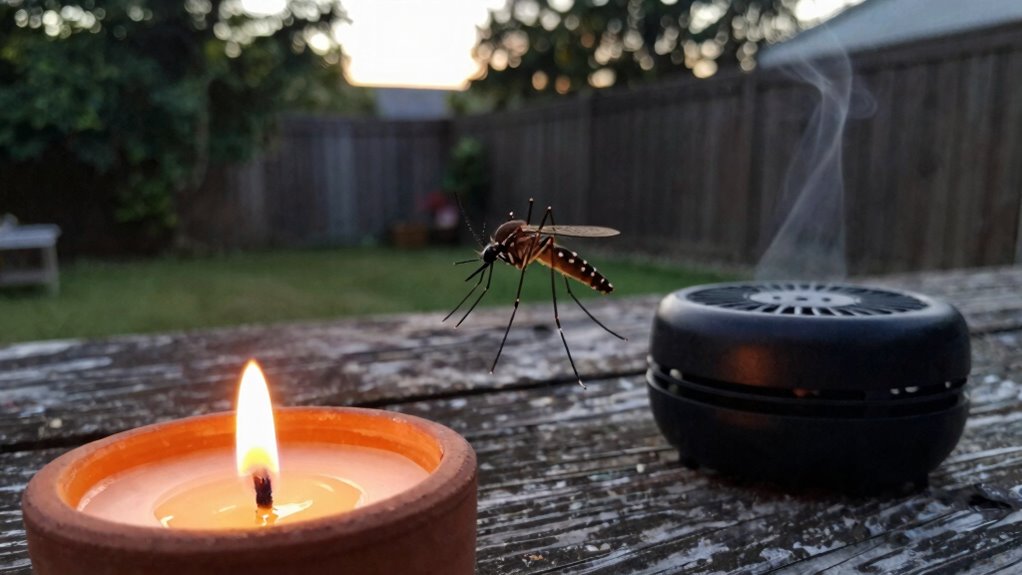
When choosing a pest control method for outdoor mosquito repellent, delivery system matters more than many buyers realize. Citronella candles work fine for a short backyard dinner but offer almost no consistent protection.
Most candles contain just 5 percent active ingredient and repel only 14 percent of mosquitoes in lab tests. That explains why they smell pleasant yet fail to keep pests away in real use.
A diffuser holds 20 grams of 100 percent natural oil and releases vapor continuously for hours. Field studies show diffusers can repel up to 97 percent of mosquitoes from your patio.
Candles only work within a few feet and lose effectiveness in any breeze. Diffusers cost around thirty dollars but deliver broad, steady protection for serious bug control.
If you want actual mosquito repellent that works, skip the candle and choose a plug in diffuser. Your ankles will thank you for the reliable pest control coverage. For comparison, Oil of lemon eucalyptus repels mosquitoes for up to six hours and is a common ingredient in more effective plant-based sprays.
How Citronella Stacks Up Against DEET, Icaridin, and Geraniol
Comparisons can be brutal, especially when your favorite backyard candle gets dragged into a scientific showdown. Here’s the hard truth: citronella candles don’t stand a chance against synthetic repellents.
DEET and Icaridin at 20% concentration offer 99-100% initial protection, while citronella’s 5% candle provides only 14% repellency. If you’re shopping for mosquito control products, that gap means the candle won’t cut it for outdoor pest defense.
Geraniol diffusers beat citronella by repelling 75% of mosquitoes at 6 meters versus citronella’s 22%. For a buyer looking for effective mosquito repellent solutions, that’s a clear reason to choose a diffuser over a candle.
Product safety labeling matters: EPA classification impact means citronella, as a “minimum risk pesticide,” avoids rigorous efficacy testing. So when you compare insect repellent brands, citronella’s label doesn’t guarantee the protection you’d expect from a registered active ingredient.
Citronella’s low volatility means it evaporates fast, requiring hourly reapplication per EPA labels. Meanwhile, DEET lasts hours, which is why it remains a top pick for long-lasting mosquito bite prevention.
For real mosquito relief, skip the candle and grab a proper repellent. Look for DEET or Icaridin products with a high concentration, and you’ll get dependable protection for your next outdoor gathering. Aerosol cans offer quick, even coverage for large areas like patios, making them a practical alternative to candles.
Why Citronella Candles Fail in Real Life
Do citronella candles even bother? Citronella candles fail because they only work within a tiny radius and need zero breeze to function.
Aedes mosquitoes, which bite ankles, rarely fly near tabletop flames, making these candles ineffective for pest control in real life.
Climate impact renders them even less reliable. In humid, still air, conditions perfect for mosquitoes, the candle’s vapor disperses weakly.
You get maybe 22% repellency at six feet. That is a fancy lawn ornament, not a shield for outdoor pest management.
Skin safety also takes a hit. Topical entities like citronella lotions max out at 5 to 10 percent to avoid irritation.
Candles don’t protect skin directly. You would need to sit in the smoke, which smells like a greasy lemon, to get any effect.
Spending 10 to 15 dollars for a candle that loses half its power in a light breeze? That is a bad trade for anyone seeking actual mosquito control.
Save your money. Look for better topical repellents or devices that work without breezeless conditions. For example, plant-based natural oils like peppermint or cedarwood are effective yet gentle on animals.
What the CDC and Malaria Experts Recommend Instead
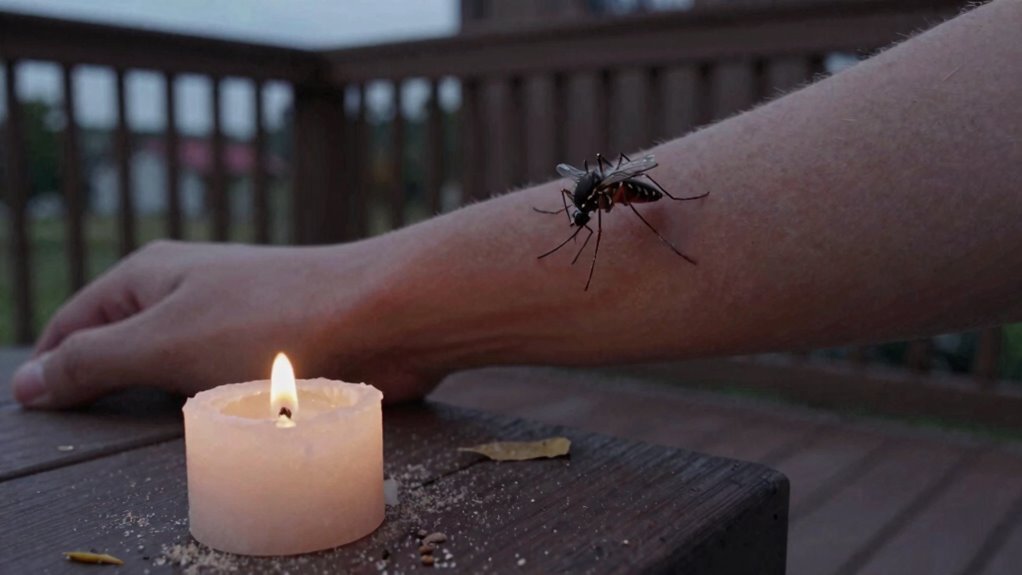
DEET at 20 to 30 percent is the gold standard for mosquito control. It provides 5 to 8 hours of protection and costs roughly five to eight dollars per bottle.
This repellent works on your ankles, not just tabletops.
Picaridin at 20 percent is odorless and non greasy, just as effective as DEET.
It packs a solid 6 to 8 hour punch and is kinder to your gear.
Oil of Lemon Eucalyptus at 30 percent is plant based but proven effective.
It lasts 2 to 3 hours, less oily, but you must reapply like clockwork.
However, some OLE products with higher concentrations can offer up to 6 hours of protection against mosquitoes.
These topical repellents undergo rigorous testing for pest prevention.
They don’t just smell nice; they actually stop bites.
So skip the smoky candle for a proven insect repellent.
Your skin and the planet will thank you for using these buyer ready solutions.
Smarter Alternatives for Real Mosquito Protection
If the smoky glow of a citronella candle feels like a ritual against pests, reality is less romantic: it barely works. The smarter move is gear that actually blocks bites, like a 20% DEET or icaridin spray for 99% plus protection at about eight dollars.
For long lasting mosquito control on clothes, a permethrin treatment costs fifteen dollars and stops ticks too.
A Thermacell diffuser repels 97 percent of mosquitoes in a 15 foot zone using heat activated repellent for twenty five dollars. Picaridin lotion lasts 12 hours, has no greasy feel, and is good for sensitive skin at ten dollars.
These options beat candles because they are backed by EPA safety regulations and real field data.
A vanillin fixative can stretch citronella’s 2 hour window, but synthetic repellents simply work longer and more reliably.
The bottom line is skip the smoky vibe, grab an EPA registered repellent, and actually enjoy the backyard without bites.
For example, BOOGIE INSECT REPELLENT LOTION offers up to 14 hours of DEET-free protection with a non-greasy feel.
Frequently Asked Questions
Are Citronella Candles Safe to Use Around Pets?
Citronella candles are generally safe for pets, but there are modest risks you should know. If a pet chews on the candle and ingests the wax, toxins can cause drooling or vomiting.
Threats come from direct contact, not just being in the same room. Keep your candle on a high, stable surface far from curious noses and paws.
For the safest pest control outdoors, use citronella candles sparingly in a well ventilated spot. Inhaling the light scent is fine, so you can enjoy mosquito repellent power without worry.
If you want to buy pet friendly pest control products, always check the label for ingestion warnings. Smart purchase choices protect your furry friends while keeping bugs away.
Never let your dog or cat chew the candle, as eating the wax is the main problem. This simple precaution will turn your movie night into a relaxing event, not an urgent vet visit.
Can Citronella Candles Prevent Mosquito Eggs From Hatching?
No, citronella candles cannot prevent mosquito eggs from hatching. Mosquito behavior like egg laying happens in standing water, not around flames.
Larval control requires targeting breeding sites by dumping water or using larvicides. Smoky candles are the wrong tool for this job.
Think of it as trying to dry a wet floor with a hairdryer. For stopping eggs, skip the candle entirely.
Instead, drain bird baths and cover rain barrels to remove standing water. Apply mosquito dunks containing Bti for long lasting control.
A six pack of dunks costs around ten dollars and is far more effective. This approach is cheaper and won’t leave you smelling like a lemon scented campfire.
For real mosquito breeding prevention, focus on source reduction. Your best pest control buy is a targeted larvicide, not a decorative candle.
Do Citronella Candles Work Indoors as Well as Outdoors?
Citronella candles work better outdoors than indoors, but don’t expect miracles. Indoor mosquito repellent effectiveness is lower since scent concentration builds up, confusing rather than repelling mosquitoes.
A candle placed one meter away cuts mosquito bites by half, but inside, still air traps the weak 5% active ingredient. It becomes more like a sad, smoky perfume than a real pest control solution.
For $8 to $15, these candles are a backyard band-aid for outdoor bug repellent needs. If you want serious indoor mosquito control, try a geraniol diffuser for $25, which offers 75% repellency.
The bottom line for smart pest control buyers is skip candles indoors. Use them only outdoors for the best mosquito repellent results.
What Is the Best Way to Dispose of Used Citronella Candles?
The best way to dispose of used citronella candles is to let the wax cool completely, then pop it out and toss it in the trash. Recycling safety comes first, so never pour hot wax down drains.
Wax repurposing is a smart option for keeping your pest control routine cost effective. Melt leftover wax with a new wick for a mini candle, but only if it’s not mixed with metal or glass.
For glass jars, scrape out residue and recycle the container to reduce waste. This simple method helps you buy fewer mosquito repellent products over time.
If you want maximum outdoor pest protection, consider switching to high quality citronella torches or insect repellent pellets. They offer longer lasting mosquito control without the disposal hassle of used candle wax.
Remember that proper candle disposal prevents fire hazards and keeps your patio safe for family gatherings. A clean space means you can focus on effective pest deterrents instead of cleanup.
Do Citronella Candles Attract Any Beneficial Insects Like Bees?
Citronella candles won’t do much for your garden, so bee attraction isn’t a concern.
Their weak 5 percent active ingredient barely deters mosquitoes, let alone lures honeybees.
Pollination impact is negligible. You would need a lot, think six candles at one meter, to repel 50 percent of bugs.
But bees will ignore the scent. Most candles just sit there, smelling like a gym sock, offering zero benefit to your flowers.
For effective mosquito control, skip the candle and use a real pest repellent product.
For pollination, buy a flowering plant instead of relying on a citronella candle.
If you want to protect your patio without harming beneficial insects, look for targeted mosquito traps or natural repellents.
Smart pest control means choosing the right tool for the job, not a candle that fails at both.


