
Flying ants aren’t the real problem—they’re just the visible sign of a hidden colony living inside your walls. To get rid of flying ants for good, you have to find and eliminate that nest.
This guide covers simple traps, caulking tricks, and when it’s worth calling a pro to chase the queen out of a wall void.
Read on to compare the best products and tools to knock out the colony fast.
At A Glance
- Vacuum swarmers immediately and discard the bag outdoors to prevent re-infestation.
- Identify the nest by looking for sawdust, ant trails, or swarmers emerging from cracks.
- Target the hidden colony, not just flying ants, as treating the queen stops reproduction.
- Avoid broadcast sprays; hire a pro to pinpoint nests with moisture meters or borescopes.
- Inspect for damp wood or leaky pipes, as moisture attracts carpenter ant colonies.
Why Flying Ants Appear Indoors
Flying ants indoors usually means a mature ant colony has been living in your home for years, often inside a wall void or under a concrete slab. These winged alates are the future queens and kings, not random wanderers looking for food.
Flying ants inside usually mean a hidden colony has thrived in your home for years.
Their sudden appearance signals that the colony is ready to reproduce and expand. Warm, humid weather triggers them to emerge for a mating flight right from inside your house.
If you spot them in your living room, the nest is already within your property, not outside. This means professional pest control is likely needed to treat the hidden colony effectively. A targeted treatment plan from a local exterminator can eliminate the root colony and prevent future swarms.
You cannot ignore this issue, as it can lead to new infestations throughout your home. Baiting the hidden nest with a product containing 0.03 percent imidacloprid can disrupt the colony from within, but for flying ants emerging indoors, professional application is still the most reliable method.
Acting quickly helps you avoid the nuisance of more flying ants and protects your home from structural damage. Contacting a pest management service for an inspection is the smart first step to regain control.
How to Spot Flying Ants vs. Termites
Confusion between flying ants and termites is understandable. Both are winged, dark, and briefly invade your airspace.
For proper termite identification, you must look at three things: the waist, the antennae, and the wings. Ants have a pinched, narrow waist and bent or elbowed antennae.
Termites have a broad waist and straight antennae, like tiny beads on a string. Also, ant wings are two different sizes, with the front pair longer.
Termite wings are equal in length and easily fall off. Their swarm behavior differs, too.
Flying ants emerge in spring or early summer after rain, often near dusk. Termites swarm during the day, especially after warm, humid weather.
If you see winged insects near windows or lights, grab a sample. Check the waist.
A pinched middle means ant. A straight body means termite, and that calls for a pro, not a DIY fix. Pin-type meters are reliable on hardwoods like oak, but for softer woods where termites hide, pinless models work better for non-destructive scanning.
For reliable pest control guidance, act fast if you suspect termites. Contact a local termite treatment expert to prevent costly damage.
Find the Flying Ant Nest Before Treating
Before spraying anything, find the nest first, because that is the only reliable way to stop flying ants for good. Look for a small pile of sawdust, a trail of worker ants, or the swarmers emerging from a crack as clear signs pointing to the colony location.
These clues often lead straight to the hidden nest entrance, saving you time and unnecessary pesticide exposure. If the nest stays hidden, professional detection using dampness meters or borescopes can pinpoint it without tearing open walls.
This targeted approach is far more effective than broadcast spraying, which rarely reaches the core colony. For a lasting flying ant treatment, you need to eliminate the queen and the brood, not just the visible swarmers. Once the nest is located, you can use a delayed-action formula like a gel bait to ensure the poison spreads through the colony, affecting workers and the queen.
Hiring a pest control service for a thorough ant nest inspection is a smart move when DIY methods fail. Using moisture meters helps locate wood-damaging ants like carpenter ants, which often nest in damp or rotting lumber.
Once you know the exact nest site, you can apply a residual insecticide or bait directly, giving you a complete flying ant elimination plan. Always pair your nest discovery with a crack and crevice treatment to block future entry points and prevent re-infestation.
After the nest is treated, monitor the area for a week to confirm no new swarmers appear, and seal any gaps around windows and doors with caulk. This practical, step-by-step method ensures your flying ant removal is done right the first time.
Locate the Nest
Patience and a little detective work are the real tools for locating a flying ant nest. Spraying stragglers without finding the source is like wiping a spill without turning off the faucet.
A flying ant’s body shape, pinched waist and elbowed antennae, helps rule out termites. The nest itself hides in wood, soil, or wall voids, often near dampness.
| Location | Clue to Look For |
|---|---|
| Indoors near baseboards | Small piles of sawdust or wood shavings |
| In damp crawlspaces | Frass, ant droppings mixed with debris |
| Under mulch or rotting stumps | Damp, crumbly soil with small exit holes |
| Inside hollow doors or window frames | Rustling sounds at night |
| Behind kitchen cabinets | Trails of winged ants emerging at dusk |
Check these spots during warm, humid evenings, the prime time swarmers emerge. A flashlight and gentle tap on walls can reveal activity, saving you from guesswork.
For effective pest control, focus on these indoor pest hotspots to stop a flying ant infestation before it spreads. Look for sawdust piles near baseboards or frass in crawlspaces to identify an ant colony location.
Bottom line: find the hideout before you treat, or you’re just chasing ghosts. A targeted pest treatment plan starts with spotting the nest. Use a steel wool roll to seal any discovered gaps around baseboards or vents after locating the nest.
Signs of Infestation
A nest is the real target, not the flying ant you just swatted. Those swarmers are just the PR team, showing off while the real damage happens elsewhere.
Look for telltale piles of sawdust, often mixed with insect parts, near baseboards or window frames. That is carpenter ant frass, a classic sign of structural damage that needs professional pest control.
Outside, check for loose soil near foundations. This signals soil erosion from underground tunneling and may indicate a larger colony.
You might hear a faint, crinkling sound from walls, like a tiny bag of chips being crushed. That noise is the colony chewing wood, and it is your cue to act fast with targeted treatment.
Ignore the strays and focus on the nest. That is where the battle is won for effective pest management.
Using a boric acid powder as a baiting strategy near the nest eliminates the colony once ants transport it back.
Professional Nest Detection
Professional nest detection is more about playing detective than chasing swarmers. The pros know that natural swarm triggers like warm damp air after rain only reveal adults, not the home base.
Instead, they track colony lifecycle timing and wait for the phase when workers are actively foraging. That is when pest control baiting works best.
A technician will probe wall voids, check eaves, and tap baseboards for hollow sounds. They might use moisture meters to find damp wood, a common carpenter ant habitat. Slow-acting baits provide longer-lasting residual effect compared to fast-kill formulations.
Inspection costs run $150 to $400, but that is cheaper than guessing with random treatments. Keep in mind if swarmers appear indoors in winter, the nest is inside your walls.
Do not spray and pray. Let a pro pinpoint the nest first with a professional inspection.
Bottom line is get a professional finding before you treat. Otherwise you are just swatting at shadows and wasting money.
What Triggers a Flying Ant Swarm Near You?

Ever wonder why flying ants seem to appear out of nowhere, especially when you least expect it? The trigger is a perfect storm of warmth, moisture, and timing.
After heavy rain, particularly following a dry spell, the soil softens. This signals mature colonies that are one to six years old to release swarmers. High humidity and temperatures between 70–85°F accelerate this process. Urban heat islands can keep sidewalks warmer and delay swarms into late summer.
Environmental shifts like El Niño effects extend rainy seasons. If you need flying ant pest control, timing is critical to prevent a full infestation. A three-month bug barrier using effective outdoor concentrates can stop new colonies from forming near your home.
| Trigger | Why It Works |
|---|---|
| Rain after drought | Soft ground for new queens |
| Warm, damp air | Signals breeding readiness |
| Evening light | Attracts alates to windows |
| Mature colony age | One to six years needed |
| Barometric drop | Sudden pressure change |
These conditions align briefly, so the swarm is a short, frantic window. Call a professional for ant swarm removal before the colony settles.
Check your home for flying ants at exterior lights and windows. The moment you see wings, act fast with targeted pest elimination. A warm, humid evening with a falling barometer is a major flying ant swarm trigger for most homes.
Seal Entry Points to Block Flying Ants
Flying ants can slip through tiny cracks and gaps around your home. Sealing these entry points is essential for effective pest control around doors and windows.
Use caulk to fill foundation cracks and gaps near utility lines. Weather stripping also helps block swarmers while preventing moisture damage.
Damp wood attracts ants, so sealing entry points stops both water and pests. For complete ant prevention, inspect your home’s exterior regularly. Applying residual insecticidal dusts to cracks and wall voids can provide long-lasting control after sealing.
Common Entry Points
Block every conceivable crack, gap, and crevice that a flying ant could wriggle through. These little aviators are surprisingly adept at finding the tiniest of openings. Focus on common entry points like window frames, door frames, and where utility lines enter your home.
Caulk is your best friend here, but don’t forget to check screens for tears. Signs of termites can be easily confused with flying ants, so look for their distinct, straight antennae and a broad waist. A seasonal ant calendar can help, swarms typically happen in spring after rain.
You will want a quality silicone caulk, priced at about five dollars per tube, for this job. Spraying a soapy water mix at entry points can additionally knock out scouts. The direct verdict is simple, seal every gap you find or they will keep coming. For a stronger, rust-resistant barrier, consider using stainless steel wool in damp or outdoor areas.
Moisture Damage Prevention
Moisture is the hidden enemy inviting a flying ant infestation in your home.
Damp wood, leaky pipes, or clogged gutters create soft, rotting wood perfect for carpenter ant colony reproduction.
New queens burrow into moist timber to lay eggs, while winged swarmers signal an existing nest nearby.
Their nuptial flight is brief, but the real damage comes from worker tunnels hollowing out your structure.
Sealing entry points means tackling the damp problem first.
Fix that dripping outdoor spigot; replacement washers cost under two dollars.
Caulk gaps around windows and utility lines using silicone, a simple $5 tube.
Inspect attic vents and crawlspace vapor barriers, as a wet sill plate invites wood decay.
Block the moisture to block the entire ant colony.
Dry conditions make your home boring for destructive pests like carpenter ants.
Bottom line: treat the leak today, or prepare for a very crowded spring swarm.
Your caulk gun is cheaper than professional termite insurance and won’t judge your plumbing skills.
Applying a bifenthrin spray around your home’s foundation can create a long-lasting barrier that repels flying ants and other pests for weeks.
Remove Moisture and Food That Attract Flying Ants
Ants, like uninvited houseguests, tend to show up when there’s something to eat or drink. Their anatomy comparison to termites is simple: ants have pinched waists and bent antennae, whereas termites are straight-waisted.
A colony growth timeline reveals that flying ants appear only after one to six years, when the nest is mature. So, if they’re indoors, your home is the buffet.
To remove moisture and food, repair leaky pipes under sinks or in basements. Ants love damp wood as much as a toddler loves puddles.
Repair leaky pipes to cut off moisture; ants love damp wood as much as toddlers love puddles.
Wipe counters and floors daily; a single crumb is an open invitation to a colony-wide feast. Store dry goods, like cereal or pasta, in sealed glass or plastic containers, using airtight side-locking lids to keep pests out and lock in freshness.
This turns your pantry into Fort Knox. Dry sinks, clean spills, and seal food for effective pest control.
It’s boring but vital for ant prevention. Without easy meals, those swarmers will move on from your home.
Vacuum Flying Ants and Monitor Activity
Vacuuming gives you instant relief from visible flying ants and feels very satisfying. Using a vacuum hose attachment, you can capture swarmers fast without any chemicals.
After vacuuming, monitor the area to see if more ants appear. This tells you if it is just a stray ant or a sign of a hidden nest.
If new ants keep showing up, you may need professional pest control to treat the colony using bait stations placed along ant trails. Watching this activity helps you decide the best next step for your home.
Immediate Vacuuming
Before you start hexing the neighborhood or donning a full beekeeper suit, try the most obvious, low commitment step. Grab a vacuum for immediate pest control action. The suction technique is key, so use a hose attachment with full power to capture alates mid flight. This prevents escapes and keeps your ant problem contained.
Dump the canister or bag outdoors immediately. Those swarmers might crawl back out if you delay. Vacuum maintenance matters, so clean the brush roll and filters after each use. This avoids clogged parts and lingering ant scent trails that attract more ants.
Target ants near windows or lights first, where they gather. Move slowly to avoid scattering them across the room. Empty outside by sealing the bag or rinsing the canister in a bucket. Then dispose of the contents far from your home’s foundation to prevent re entry.
For under $30, a decent stick vacuum handles this job without fuss. It is a practical, friendly solution for homeowner ant control.
Activity Pattern Monitoring
The vacuum did its job, but now you need to monitor for ant activity to prevent a full infestation. Check windowsills, baseboards, and vents at the same time each evening for several days.
A lone ant or two might be stragglers from an outdoor swarm, but consistent sightings suggest a mature colony indoors. Correct ant identification is vital here; a carpenter ant swarmer means potential wood damage, not just a nuisance.
Remember that a colony lifespan can stretch years, so a few random fliers don’t necessarily mean a nest is inside. Jot down how many you see and where they appear.
If activity spikes, it’s time to move beyond the vacuum and consider professional pest control. This baseline data helps you decide on the next steps for elimination. For targeted indoor treatment, consider using diatomaceous earth as a natural mechanical barrier.
Hidden Nest Indicators
A persistent indoor swarm suggests more than just bad timing. That winged parade likely means a mature colony has set up shop nearby, often in wall voids or underground nests.
Catching these alates with a vacuum is step one, but it is just cleanup and not victory. Monitor activity for a week; if new flyers appear daily, the nest is hidden, not a one-off outdoor nuptial flight.
Check windowsills and light fixtures for dead swarmers. A daily pile means active emergence from a hidden pest infestation.
Listen for faint rustling in walls at dusk. This is a classic sign of carpenter ants excavating and expanding their colony.
Look for tiny piles of sawdust, or frass, near baseboards. That wood debris points to ongoing structural damage that needs professional pest control.
Vacuum, then track the activity. Still seeing action after seven days? Call a pro for a full inspection and targeted treatment.
Applying a residual insect dust to cracks and crevices around suspected entry points can create a long-lasting barrier against re-infestation.
That is the bottom line for protecting your home from hidden nest indicators.
Use Insect Traps Targeting Flying Ant Colonies
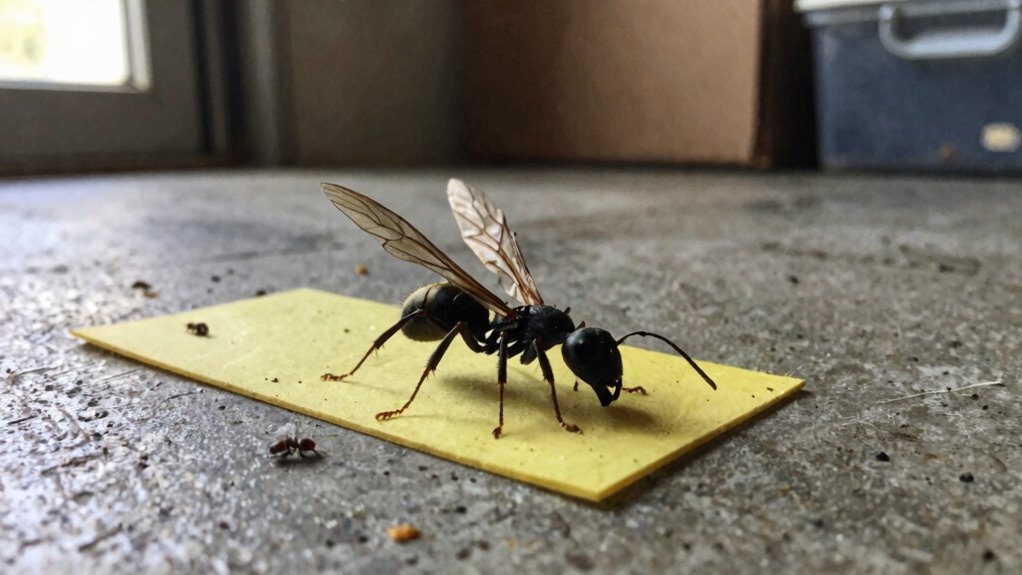
Insect traps provide a clever solution for flying ant control. These stations use a sweet, slow acting poison that worker ants carry back to the colony.
Over a few weeks, the poison eliminates the queen and her brood. For effective flying ant extermination, place traps along ant trails, near windowsills, or where swarmers gather.
A good rule of thumb is one trap per 10 feet of suspected wall void. Bait station safety is simple but vital for home pest control.
Keep traps out of reach of children and pets. Choose child resistant models like Terro’s refillable stations, priced around eight dollars for a six pack.
They are discreet and create no mess. Nature does the rest for hidden colonies, though traps are not for stray swarmers.
When DIY Flying Ant Control Isn’t Enough
Traps work great for slow, stealthy colony elimination, but they have limits. Sometimes they just aren’t enough to stop a serious infestation.
If flying ants keep popping up indoors after weeks of trapping, a hidden nest is likely causing structural damage. You may have spotted them near a damp wall or a leaky pipe.
That dampness source is a carpenter ant’s dream home, slowly hollowing out wood you can’t see. Traps cannot reach nests deep inside walls or crawlspaces, no matter how many you set.
Traps only stop ants that take the bait, but stubborn colonies often ignore it entirely. Indoor swarms hint at a massive nest, not just a few stragglers.
Damp spots like leaky pipes keep attracting new ants, making trap after trap a losing game. When DIY flying ant control isn’t enough, it’s time to stop guessing and call a professional exterminator for targeted treatment.
Why Professional Flying Ant Control Is the Best Option
Why keep wasting money on traps that never reach the root of the problem? Flying ants signal a mature colony nearby, making a swarm a warning you should not ignore.
Professionals identify the ant species, locate the hidden nest, and apply targeted treatments to eliminate the queen. They also use baiting strategies that match the colony’s life stage, destroying the entire structure.
Natural predators rarely handle indoor flying ant infestations, so do not rely on spiders to save you. Professional pest control services cost between $150 and $400 for a thorough job, which beats ongoing DIY failures every time.
Call a pro, sleep soundly, and stop playing ant detective. A certified exterminator gives you the best chance to stop flying ants for good.
Prevent Next Year’s Flying Ant Swarm With Year-Round Maintenance
One flying ant is today’s tomorrow you didn’t ask for.
Year-round pest control maintenance is the boring but brilliant fix.
It stops next year’s swarm before it starts, saving you the panic of vacuuming alates from your ceiling fan.
Seal every crack, gap, and crevice around windows, doors, and utility lines.
Caulk costs five dollars, but a carpenter ant colony costs thousands to remove.
Year-round humidity control means fixing leaky pipes and soggy wood.
Damp walls are basically a five-star ant hotel for future infestations.
Seasonal light management reduces outdoor lighting near doors.
Swap white bulbs for yellow bug lights at eight dollars each to avoid attracting swarmers.
The bottom line is to maintain your home’s defenses every month, not just after a swarm.
A little caulk and a bulb swap beats a pest control bill.
Frequently Asked Questions
Can Flying Ants Bite or Sting Humans?
Yes, flying ants can bite or sting humans, though it is rare. They are reproductive ants, not a separate species, so their bite or sting depends on the colony type.
For example, carpenter ants deliver a painful bite, whereas fire ant swarmers sting. A flying ant allergy is possible, causing swelling or itching.
During swarm seasonality, from spring to early summer, encounters increase. But these ants are focused on mating, not attacking, so they are more annoying than dangerous.
If you notice swarms near your home, professional pest control treatment can eliminate the colony and prevent future invasions. For indoor infestations, consider an indoor ant bait or spray to target reproductive ants before they establish a nest.
For outdoor control, granular insecticides around the foundation create a barrier against flying ants. Always read the label on any pest control product to ensure safe and effective use.
A smart purchase might include a fast acting ant killer for immediate relief and a long term bait station for ongoing protection. This two step approach keeps both flying ants and their parent colony under control.
Do Flying Ants Lose Their Wings After Mating?
Yes, flying ants do lose their wings after mating, and this wing shedding is the main purpose of their swarming behavior. They find a mate, drop their wings, and then start a new colony, which is a critical step in the ant life cycle.
After the nuptial flight, the queen snaps off her wings because they are no longer needed for travel or reproduction. This is a one way ticket to motherhood, not a recurring party trick. If you see wingless ants in your home, they have likely moved on from flying and are now nesting.
For homeowners, spotting these wingless queens or swarming ants often signals a nearby infestation that needs professional pest control treatment. Effective ant control products, like bait stations or liquid sprays, target these new colonies before they grow. If you’re dealing with ants indoors, consider buying a reliable ant killer specifically designed for carpenter ants or nuisance species.
Wingless ants are a clear sign that reproduction has occurred, and a colony is establishing nearby. For the best results, use a granular bait or a non repellent spray to eliminate the entire nest. Don’t wait for the swarm to get worse; act fast with a targeted pest control solution.
Are Flying Ants Harmful to Pets or Plants?
Flying ants are generally not harmful to pets or plants, so you can breathe easy when you spot a swarm. Ant ingestion toxicity is very low, meaning a dog or cat that snacks on a few will likely only get a mild tummy ache at worst.
For your garden, the real concern isn’t the ants themselves but the nest soil disruption they can cause. Carpenter ants tunneling in pots may disturb root systems, though they never actually eat the greenery itself. Still, a single swarmer won’t ruin your landscape, so don’t panic over one stray flyer.
If your pet gobbles down a bunch of ants, watch for vomiting or drooling and call your vet if symptoms persist, but serious reactions are rare. For plant lovers, the key is checking container soil for active nests, especially after a rainstorm when winged reproductives emerge.
When you spot flying ants indoors, that’s a signal to inspect for an established colony, which might warrant a targeted ant bait or insecticide treatment. Buying a quality granular bait or liquid concentrate can stop the nest before it spreads to your potted plants or patio.
You’ll want to pair any treatment with sealing cracks and removing moisture sources around your home, since that’s what attracts these pests in the first place. For outdoor protection, a perimeter spray with residual action is a smart purchase to keep both ants and their winged stages away from your beds.
Remember that flying ants are just reproductive males and queens, so they’re short-lived and rarely cause direct damage themselves. Focus on nest prevention and pet monitoring, and you’ll keep your family and foliage safe without overreacting.
If you’re unsure whether you’re dealing with ants or termites, check for elbowed antennae and pinched waists, which confirm ants, and then choose a pest control product labeled for ant elimination. That way, you make an informed buy and target the problem at its source.
How Long Do Flying Ant Swarms Typically Last?
Flying ant swarms typically last just a few hours to a couple of days. But swarm duration factors like temperature, humidity, and rain can stretch it or cut it short.
Seasonal timing peaks in spring and early summer, often after heavy rain. Think of it as their one wild party before queens burrow down.
If you see them indoors, that’s a different, less funny story. For effective ant control, seal entry points and consider a targeted insecticide spray for immediate relief.
To prevent future swarms, reduce moisture around your foundation and trim vegetation. If the problem persists, a professional pest inspection can identify hidden nests and save you time.
Will Bug Zappers or UV Lights Help Control Flying Ants?
Bug zappers and UV lights are a poor bet for flying ants, and most pest control experts will tell you the same.
They will zap a few stragglers, but they mainly attract moths, beetles, and other nuisance insects you never wanted near your patio or porch.
If you are comparing flying ant control options, think about the swarm timing factor before you buy any electrical trap.
Winged ants only fly for a few days each year during mating season, so that $30 zapper sits idle and useless for the other 360 days.
Indoor infestations are a different story, because the source is usually a nest inside your walls or foundation.
A UV light cannot stop a reproductive colony, and it definitely won’t prevent future swarms from emerging through cracks and gaps.
For real flying ant prevention, focus on exterior crack sealing, window screens, and door sweeps instead of glowing gadgets.
Vacuuming up visible swarmers and fixing moisture issues near the perimeter will deliver far better long-term results than any bug zapper.
When shoppers ask me for the best flying ant treatment, I always recommend targeted baits and residual sprays for the nest perimeter.
If you want a device that earns its place, choose a quality insect light trap only for enclosed garages or sheds, not as your main defense.
Think of a zapper as a nightlight that kills the wrong bugs, while your real money should go toward exclusion and nest elimination.


