
Getting rid of flying termites isn’t about swatting them or spraying the air. Those swarmers are just a warning sign of a hidden colony that’s been eating your wood for years.
Turn off the lights, vacuum them up, and toss the sealed bag outside to stop the swarm fast. But that won’t touch the underground nest—only a professional treatment with liquid barriers or bait stations will.
A real fix from a pro runs between $1,200 and $4,500, but skipping it can cost you far more in structural damage. Keep reading to learn exactly why professional treatment beats DIY, and what steps you need to take next.
At A Glance
- Turn off lights and close curtains immediately to make swarmers settle near windows.
- Vacuum visible flying termites, then seal and dispose of the vacuum bag outdoors.
- Do not spray termites with bug spray; it scatters survivors and doesn’t kill the colony.
- Swarmers mean a hidden colony has been damaging wood for years; call a professional inspector.
- Professional treatment, like liquid barriers or bait systems, is required to eliminate the infestation.
Flying Termites or Ants? How to Tell the Difference
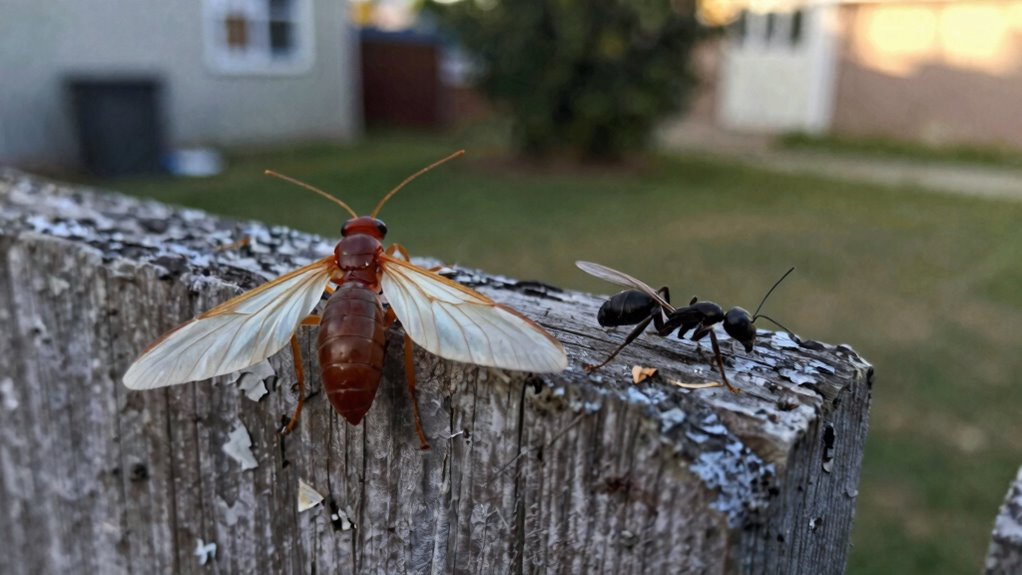
Since flying termites and ants often appear right after a spring rain, it is easy to mistake one for the other.
But the difference matters for your wallet and your walls.
Termite swarmers have four equal sized wings, straight antennae, and a thick waist.
Ants have uneven wings, bent antennae, and a pinched waist.
This is no insect identity crisis, it is a clue for early termite detection.
Termite mating behavior involves swarmers leaving their colony in groups to pair up and start new infestations.
Swarmer attraction to lights is why you find them near windows or porch bulbs after dusk.
They are not breaking in, they are just confused.
Once you spot them, look closely for a termite identification guide.
Bottom line: equal wings and straight antennae equal termite.
Time to call a pro for pest control services before property damage begins.
Using a pinless moisture meter can help reveal hidden dampness that attracts termites after a swarm.
Flying Termites Inside? Turn Off the Lights and Contain the Swarm
Turning off the lights is the quickest way to manage flying termites indoors. Shut off all lights and close the curtains so the swarmers settle down. They are drawn to windows but will cluster near frames in darkness. This makes them easier to vacuum up with a strong pest control tool. Vacuuming disrupts the swarmer lifecycle but does not stop colony foundation. It only buys you time before calling a termite exterminator. Seal the vacuum bag immediately and place it outside. Do not use sprays because that scatters survivors and makes the problem worse. A single queen from the swarmers can start a new colony in your home. Containment is key, but it is only a stopgap measure. These flying insects hint at workers gnawing somewhere dark and hidden. The light trick works well, but it is no cure for an infestation. Contact a professional pest control service soon. They can find the hidden colony and provide a real solution. For perimeter prevention, consider using TERRO Perimeter Outdoor Ant Bait to create a barrier against crawling pests.
Can You Really Get Rid of Flying Termites on Your Own?
DIY termite control often fails because you lack the right tools. Professional liquid treatments need injection rods and hundreds of gallons of chemical, not spray cans.
Killing flying termites does nothing to stop the workers eating your wood. You are just swatting the tip of the iceberg, friend.
Without breaking the breeding cycle, new swarmers return next season like uninvited relatives. DIY approaches only manage symptoms, not root causes of the infestation.
Call a pro for targeted colony elimination and foundation protection. Your house deserves more than wishful thinking from a can of spray.
However, if you insist on a DIY route, in-ground bait stations like the BASF system with Novaluron can target colonies more effectively than contact sprays, though they still require ongoing monitoring and patience.
Why Liquid Barriers Stop Flying Termite Colonies at the Source
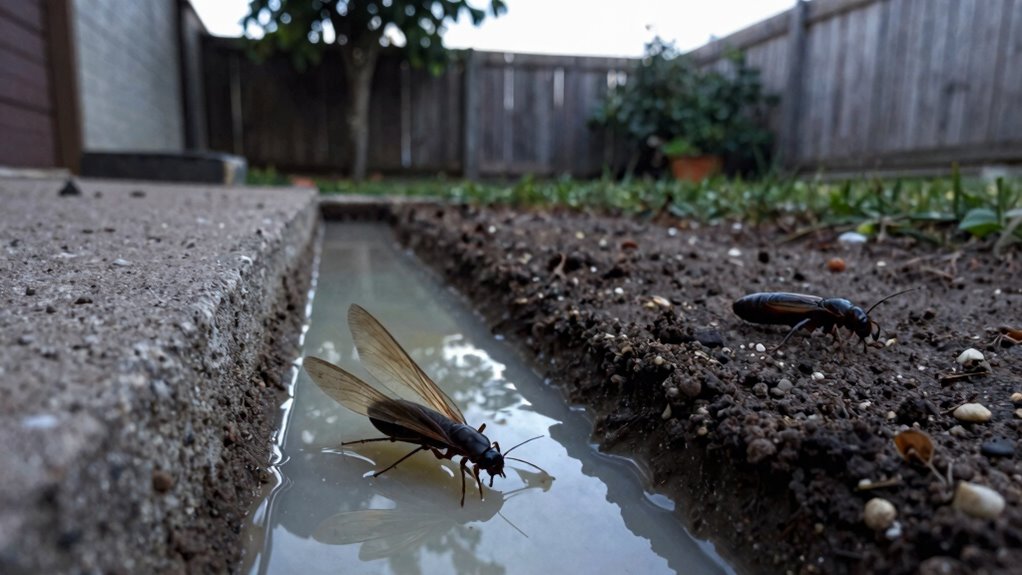
Liquid termiticides create a chemical barrier that acts like a moat around your home. This treatment is injected into the soil near foundation entry points to block flying termites from starting new colonies.
Worker termites, which cause the most damage, cannot cross this barrier. As a result, no new swarmers can emerge from the treated zone.
The barrier works by forming a continuous toxic area. Any termite that tries to cross it dies, stopping colony formation at its source.
A typical liquid termite treatment costs between $1,500 and $3,000. It uses hundreds of gallons of termiticide to ensure full protection.
But one untreated gap, like a pipe penetration, ruins the entire defense. Termites can slip right through, just like leaving a door open.
For long-term results, a trench treatment using concentrated formulas can provide up to five years of protection around the foundation.
How Bait Systems Slowly Wipe Out Flying Termite Nests
If liquid barriers are the scorched-earth approach to termite defense, bait systems are the patient, long-game strategy. Think of it as setting up a slow-poison buffet rather than blowing a moat.
These systems rely on baited cellulose, a tasty wood-based snack laced with a delayed-acting toxin. Workers find it, eat it, then share it back at the nest.
Over months, this forager-to-colony pipeline achieves colony elimination without flooding your yard with chemicals. Stations are shallow, spaced 10 to 20 feet apart, costing about $300 to $400 for an initial setup.
Quarterly monitoring fees run around $75 per visit, which is a reasonable investment for ongoing termite control. Termites must encounter the bait first, so if they ignore it, the system does nothing until they do.
Success is a waiting game, taking three to twelve months for full collapse. However, this approach leaves zero barrier gaps to worry about after, which is a major plus for homeowners seeking a thorough termite treatment.
It is slow, deliberate work, but once the colony starves, flying swarmers stop appearing. For those searching for a long term pest solution, this bait station strategy offers a discreet and effective way to eliminate termites at the source.
You get professional grade termite elimination without the heavy chemical footprint of liquid sprays. Just remember that patience is key, and the payoff is a home that is finally free from hidden nest activity. Regular inspection every 3 to 6 months ensures bait remains fresh and stations remain damage-free for this slow elimination process to succeed.
Post-Treatment Steps to Block Flying Termites From Returning
The post-treatment phase is where good termite control turns into great home protection. After professionals spray that chemical moat, soil barrier upkeep becomes your job.
Do not dig, till, or pile mulch against the foundation. That breaks the shield’s continuity, giving swarmers a ghost door.
Moisture reduction checks are next, since damp earth near your slab is basically a “vacancy” sign. Fix leaky spigots, slope gutters away, and keep sprinklers from soaking the perimeter weekly.
Damp earth near your slab is a vacancy sign for termites—fix leaks, slope gutters, and dry the perimeter.
That’s extra work, certainly, but cheaper than another $1,200 treatment. Also, watch for winged piles near windows post spray.
A few stragglers are normal. Dozens mean your barrier got breached.
Call the company. They’ll patch it free under warranty.
Bottom line: keep that soil dry. Keep that barrier whole.
Swarmers will pass your place like a bad rest stop.
Consider applying a quarterly fogging schedule to suppress other pests like roaches that might exploit the same damp conditions.
Mistakes That Let Flying Termite Swarms Turn Into Infestations
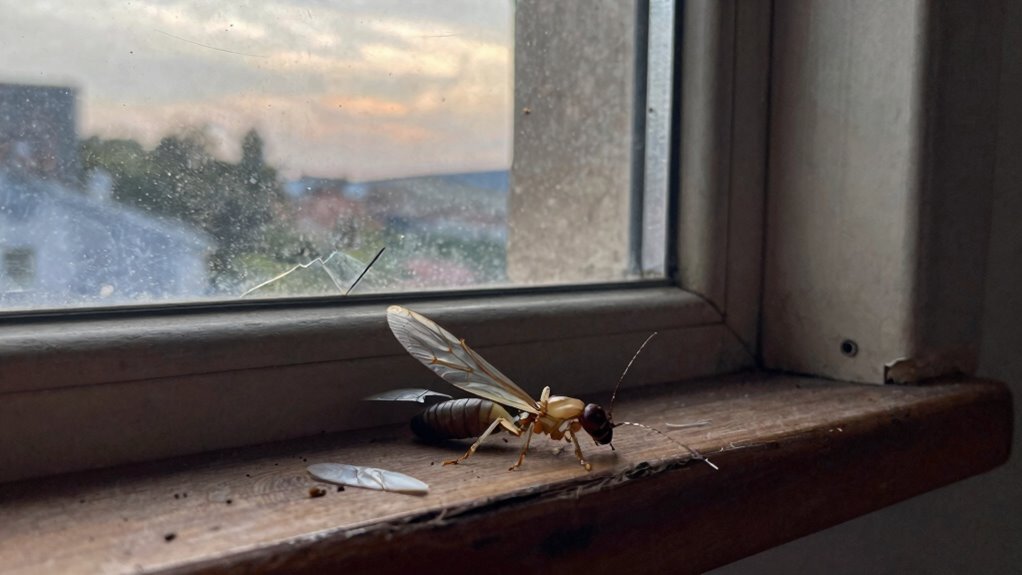
Ignoring swarmers indoors is a classic first mistake, and it practically rolls out the welcome mat for a full termite infestation. Skipping a professional pest inspection after spotting them only compounds the error, since a hidden colony is already busy eating your walls.
DIY treatments, like spraying flying termites with bug spray, are about as effective as trying to fix a leaky roof with a paper towel. They kill the messengers but do nothing to the workers destroying the structure, so you end up with both a false sense of relief and ongoing structural damage.
That’s why homeowners searching for termite control services should act fast after seeing swarmers, not just clean up and hope for the best. A licensed exterminator can locate the colony with moisture meters and bait stations, then recommend a liquid barrier or wood treatment that actually stops the damage. For long-term prevention in garages and sheds, combining natural repellents with ultrasonic devices provides ongoing, chemical-free pest control that keeps pests outdoors.
If you’ve already seen wings near windowsills or heard faint clicking in the walls, don’t wait for the problem to escalate into costly foundation repair. Schedule a termite inspection right away, because the longer you delay, the more likely you’ll need emergency pest control and fumigation instead of a simple preventive plan.
Ignoring Swarmers Indoors
After the swarmers have fluttered their last frantic circles around the living room lamp and finally dropped dead on the windowsill, the temptation to simply sweep them up and forget the whole thing is almost overwhelming. But that is one of the biggest behavioral misconceptions about termites.
Those dead bugs aren’t just a mess. They are a memo from a colony already munching your foundation.
Sweeping is not solving. Every dead swarmer you ignore is proof of a nearby nest.
Worker termites are already eating wood somewhere in your home. Light attraction is a clue.
Finding dead swarmers near windows means they emerged from inside, not outside. That colony is yours.
Actionable prevention starts now. Vacuum them up, yes, but then call a professional for a termite inspection immediately. After the inspection, consider applying borate-based sealants that kill termites on contact and prevent future invasions.
Ignoring it just gives the colony more time to expand. Bottom line: dead swarmers equal a live problem.
Don’t let a clean up replace a real solution. Schedule a pest control inspection today.
Skipping Professional Inspections
Skipping a professional inspection is a rain check for regret. Flying termites indoors are a loud alarm, not a simple nuisance.
Without a pro, you gamble on costly delays that let worker termites chew for months. They silently create hidden damage behind walls.
A proper inspection uses tools like moisture meters and sounding hammers. These reveal a colony’s true size and activity level.
It costs maybe $75 to $150 but saves thousands in repair costs. Trusting guesswork instead risks infestations doubling or tripling treatment costs.
The bottom line is to always hire a licensed inspector after spotting swarmers. It is the only way to catch trouble early.
That is before hidden damage turns a small problem into a full blown nightmare. Protect your home with a pest control expert you can trust.
DIY Treatments Ineffective
The DIY termite aisle at the hardware store is tempting, but those cans and sprays only kill termites you see.
A single spot treatment on visible swarmers misses the hidden colony in your walls, like a bandage on a bullet hole.
Foam and sprays cannot reach the nest, so the colony rebuilds quietly.
No liquid soil barrier or structural fumigation is possible without professional termiticide and gear.
Colonies survive by splitting, so a half-hearted pour under the porch often makes the problem spread.
The cheap stuff feels good for five minutes, then the swarmers laugh.
Skipping proper liquid barriers or full structural fumigation is just funding termite amusement.
Call a professional pest control service to save your foundation and get real termite control.
When to Schedule Your Annual Inspection for Flying Termites
Spring is the season when flying termites or swarmers emerge after rain to mate. This makes it the perfect time to schedule your annual pest control inspection.
Seasonal swarming peaks are your clue to act before new colonies settle. Schedule for late March through May, right after those lovely spring showers.
Pre rain dampness checks are smart since wet wood around foundations attracts termites. Inspections cost around $75 to $150, often free if treatments follow.
Timing is everything. Book two weeks after a heavy rain when swarmers are most visible. Imidacloprid can also be applied as a preventive systemic treatment that kills grubs and underground larvae before they cause lawn damage.
Skip the wait. Annual checks catch colonies early, saving thousands in repair costs.
Bottom line is inspect each spring, pronto. No excuses, just peace of mind.
Why Seeing Flying Termites Means You Need a Professional Now
Seeing flying termites indoors isn’t just a nuisance; it’s the insect equivalent of a smoke alarm that won’t stop screaming. Those swarmers, with their four equal-sized wings, don’t eat your house themselves, but they wouldn’t be there without a hidden colony of wood-destroying workers lurking nearby.
Calling a professional pest control service now, not later, is the only smart move because a quick termite inspection can save thousands in repair costs. A licensed exterminator can pinpoint the exact source of the swarm and assess the extent of any structural damage before it spreads.
Flying termites often appear after rain or warm humidity, which is a prime time for termite swarm season, but their presence inside your walls signals an active infestation that’s already established. Delaying treatment only gives the colony more time to chew through load-bearing beams, floor joists, and wooden framing.
A professional termite treatment plan, whether liquid barriers or bait stations, targets the hidden nest and stops future swarms at the source. For targeted control of active infestations, a foam with non-repellent active ingredients can be applied directly into wall voids and cracks to kill termites on contact. You’ll also get a clear quote for termite removal and prevention, which beats paying for major foundation repairs later.
Don’t wait for discarded wings on your windowsill or hollow-sounding wood to confirm the worst. Contact a local termite control expert today for an immediate inspection and protect your home’s value.
Every day you wait, the colony grows, and so does the cost of extermination services. Act quickly, and you’ll keep your family safe and your largest investment intact.
Swarmers Signal Hidden Colony
Flying termites inside your home are a clear warning that a hidden termite colony is already active nearby. These swarmers emerge only when a mature colony is ready to expand, so their presence indoors means the nest is established in your walls or under your slab.
Swarmers do not cause damage themselves, but worker termites have likely been silently eating your home for years. An indoor swarm often indicates a colony that is at least three to five years old.
Each missed swarmer pair can start a new colony foundation right in your yard. Professionals use this signal to locate the main nest before beginning termite treatment.
A neighbor’s swarm outside is just a nuisance, but yours inside means you need immediate pest control. Don’t just vacuum them up and call it a day, since that colony will not move out on its own.
Call a licensed inspector now to protect your property from further damage. Ignoring the swarmers means you are paying for costly repairs later. Boric acid powder can be used for other pests like ants, but it will not stop a mature termite colony.
Active Infestation Likely Nearby
A swarm of flying termites inside your home is not a mere inconvenience. It is a neon sign pointing to an active colony already eating your structure.
Those swarmers did not teleport in; they emerged from a nearby nest. This often points to moisture control issues like leaky pipes or poor drainage.
Foundation cracks are fundamentally welcome mats for worker termites to travel undetected. Spotting these winged pests means workers have been chewing your wood for months, maybe years.
You cannot solve this with a can of spray. Termite colonies are underground fortresses that require professional termite treatment.
Dampness control helps prevention, but it will not stop a colony mid feast. Foundation crack sealing can come later, but treatment should come first.
Call a pro now for a termite inspection. Your walls are not a buffet, so act quickly to stop further structural damage.
Professional Inspection Essential
Once you see a flying termite inside, the time for guessing is over. Those sightings require a professional inspection, not a spray can or a DIY trap.
The swarmers point to hidden termite damage underground. Worker termites could be chewing your home’s structural wood right now.
Only a licensed pest control expert can confirm the colony size and recommend a cure. Skip the guesswork to protect your home equity.
Inspect every crawlspace and attic carefully. Professionals use moisture meters, borescopes, and thermal cameras to find mud tubes or damp wood you would miss.
Check your home’s termite treatment history too. Past service records are key, without documentation you are flying blind into a costly fix.
Always get a written estimate for the treatment plan. Expect quotes from $1,200 for a liquid barrier to $4,500 for a bait system, depending on foundation footage and infestation severity.
A pro termite inspection costs $100 to $300. That is cheap insurance against thousands in structural repairs.
Do not wing it, book an inspection today.
stainless steel steel wool barriers for nearby attic gaps can also stop rodents, but they are no substitute for professional termite treatment.
Frequently Asked Questions
Do Flying Termites Bite Humans or Pets?
Flying termites do not bite humans or pets, though they can give you a quick scare when they swarm. These winged reproductives lack the chewing mouthparts needed to bite, so their only mission is to mate and start new colonies.
Termite bites are essentially nonexistent, but that doesn’t mean you should ignore these pests. If you see swarmers inside your home, it’s a strong warning that a mature termite colony is already active nearby.
The real damage comes from hidden worker termites that silently chew through wood, which is why professional termite control is essential. A local pest control service can inspect your property, identify the colony, and recommend targeted termite treatment options.
For homeowners, spotting a swarm is your cue to act fast, not to panic. Don’t wait for structural issues, because early intervention saves you money and stress.
Schedule a termite inspection today with a licensed exterminator to stop costly wood damage in its tracks. Look for pest control companies offering bait systems, liquid soil barriers, or wood treatment plans that match your home’s needs.
Your goal is to protect your largest investment, so compare quotes from trusted exterminators and ask about preventive termite protection plans. Swarmers may be harmless, but the colony behind them is not, so book your termite inspection now.
How Long Do Flying Termites Live After Swarming?
Flying termites, also called swarmers, typically live only 24 to 48 hours after swarming. Their short adult lifespan is a key factor they lose wings quickly and die soon, but they cannot eat wood.
Swarm survival rate is low. Most die before finding a mate.
So seeing them indoors should not cause panic. They are not the destroyers of your home.
However their presence signals a colony nearby with long lived workers that damage wood. The real fix is to call a professional pest control service.
A termite inspection can confirm if you have an active infestation. You need a targeted treatment plan to eliminate the hidden colony.
Don’t wait for visible structural damage. Contact a licensed exterminator for a complete pest control solution today.
Can Vacuuming Flying Termites Prevent an Infestation?
Vacuuming flying termites can’t prevent an infestation. Those swarmers you suck up are just the scouts of a much larger colony.
The real damage comes from hidden worker termites already munching your walls and wooden structures. Proper swarm remains disposal is smart, so go ahead and suck them up and toss the bag.
But this is like putting a bandage on a broken pipe. You need a professional termite inspection to find the colony and stop the source.
Otherwise, you’re just cleaning up symptoms, not the problem. For long term termite control, schedule a local pest control expert to apply targeted treatments.
If you’re shopping for termite protection products, look for foam sprays or bait stations that attack the nest directly. A proactive termite treatment plan is your best buy for wood destroying pest prevention.
Do Flying Termites Mean I Have a Leak in My House?
Not necessarily. Flying termites don’t directly prove a leak exists, but they often point to a moisture source nearby.
Leak detection becomes smart after you spot them. Those swarmers love damp wood, like rotting window frames or leaky pipes.
A single indoor swarm gives about a 70% chance of an active colony, but the leak itself isn’t guaranteed. Think of it as their way of saying, “Hey, check your plumbing.”
Call a pro for both leak detection and termite inspection. This is the best way to prevent costly termite damage and find the right pest control treatment for your home.
When Is the Typical Swarming Season for Flying Termites?
The typical swarming season for flying termites hits in spring, especially after a warm rain. These termite swarms follow predictable seasonal patterns, usually from March to May in most regions.
But don’t worry. Swarmers themselves don’t eat wood, they’re just the colony’s matchmakers.
If you see them inside, it’s a sign of an established nest nearby. That means it’s time to call a professional pest control company for a thorough termite inspection.
A pro can identify the colony and recommend the right termite treatment, which is smarter than any DIY fix. Spotting winged termites indoors is a clear buyer intent signal that you need expert termite control products and services.
For fast relief, look for local pest management solutions or termite bait stations to protect your home. Remember, early detection with a licensed exterminator saves you money on costly structural repairs.


