
Getting rid of wasps in wall voids isn’t a job for a can of spray from the hardware store. Those consumer products can’t reach deep enough, leaving the queen alive and a colony of angry workers behind.
A professional uses insecticidal dust, often applied with heat mapping to find the nest before dawn. The dust kills the entire colony within 72 hours, and the cost runs $150–$300—far less than repairing drywall later.
Sealing gaps with caulk and mesh in winter is the cheap, smart move to avoid panic when summer hits.
This article breaks down the full seasonal plan, from detection to prevention, so you can handle the problem without tearing open your walls.
At A Glance
- Detect nests by listening for faint scratching at dusk or scanning walls with thermal imaging.
- Treat in early spring when colonies are small and nests are shallow for easy removal.
- Use professional insecticidal dust injected into voids, not surface sprays that miss the queen.
- Apply dust pre-dawn (4-6 AM) through entry holes to ensure complete colony kill in 72 hours.
- Seal gaps after confirming death via silence check, then repair drywall to prevent re-entry.
Why Wasps Are Suddenly Everywhere in Your Walls

Wasps don’t just appear in your walls overnight. They’ve been there for weeks, quietly building a colony as you blissfully ignored the signs.
Climate change is lengthening their active season. This pushes the normal nesting cycle earlier in spring and later into fall.
Queens scout homes sooner, and colonies grow bigger by late summer. A mild winter lets more queens survive, making your wall void prime real estate for a new nest.
They chew through siding gaps no bigger than a pencil eraser. They set up shop where you can’t see them until the buzzing starts.
By then you’ve got hundreds of workers. Each one is more annoyed than the last, and that’s when you realize ignoring that tiny hole was a rookie mistake.
You’ll regret paying for professional wasp removal or pest control treatment later if you wait. Schedule a home inspection now to catch hidden entry points before the swarm gets worse. A solar-powered UV light trap is a chemical-free way to disrupt their activity near the wall void without needing to spray.
5 Warning Signs of a Wall Void Nest
Though you might not see a single wasp, your walls can broadcast a pretty clear signal that something’s buzzing behind them.
First, you hear faint scratching or crackling sounds, like tiny construction workers building a papery mansion.
Second, you spot wasps marching in and out of a dime-sized hole, like they own the place.
Third, odd dark stains appear on your drywall. That is wasp droppings or leaked nest material.
Fourth, your walls feel oddly warm in one spot. Wasp colonies generate noticeable heat signatures from all those bodies and larvae.
Fifth, you see the wasps become active at dusk.
That is when you schedule a night treatment application, as the pros do, since the colony is home and defensive.
Call a local pest control expert for a free inspection to prevent structural damage. For a DIY approach, consider a foam spray that expands to penetrate deep into the wall cavity and eliminate the hidden colony on contact. Buzz off.
Why DIY Removal Fails (And Costs You More)
Wasps hiding in your walls don’t get calmer, they get more aggressive once disturbed.
Consumer spray cans lack the pressure to reach deep into wall voids, leaving the queen unharmed and the colony fully active.
This forces stinging pests deeper into your home, which often leads to costly structural damage.
Professional pest control removal targets the entire nest, eliminating the root cause.
DIY wasp nest removal typically fails because it treats only surface activity.
For safe wasp extermination, trust a licensed exterminator to inspect and treat the void.
Skipping professional help often results in higher repair bills and repeated infestations.
A thorough inspection ensures no hidden colony remains to cause future problems.
Even high-reaching sprays that shoot up to 30 feet cannot penetrate the insulation and framing that shield a wall void colony.
Hidden Hive Aggression
If you’re thinking about grabbing a can of spray foam and a ladder to handle those wasps yourself, pause and consider this: that plan often backfires, turning a minor nuisance into a costly, dangerous mess.
Hidden Hive Aggression
The real problem isn’t just the nest, it’s the colony’s communication network. Wasps leave colony scent trails that guide reinforcements to any threat. Disturbing the wall void triggers a defensive perimeter zone around the entire entry point, meaning every wasp within twenty feet becomes a flying landmine. You’re not just fighting a few guards, you’re facing an organized, chemically alerted army.
“One angry wasp calls a thousand friends.” That’s why late season colonies, packed with 1,000+ workers, respond to DIY poking with swarm level fury. You can’t see the alarm signals, but you’ll feel them. For safe wasp nest removal and professional pest control near you, skip the spray foam and call a pro. Our expert wasp exterminator services find and remove every hidden hive, so you stay safe. Get a free nest inspection today.
Many natural oil-based repellents claim a duration of 60 to 90 days but are ineffective against wasps already sealed inside a wall void, requiring professional removal instead.
Ineffective Spray Penetration
You are not solving the problem. You are just making them angry.
Angry wasps chew new exits through drywall inside your home. You waste twelve to twenty dollars per can, buying three or four tries.
The nest grows, and by August it holds over one thousand workers. The bottom line is that aerosol sprays cannot reach deep nests.
Call a pro who uses dust treatments that coat the entire void. You pay one hundred fifty to three hundred dollars once, not sixty in failed cans plus drywall repair. Most repellents do not guard against all pest types, and aerosol sprays provide only short-term surface-level protection rather than penetrating the void.
How Professionals Locate the Exact Nest Inside Your Wall
Professionals use acoustic listening tools and infrared detection to locate the exact nest without cutting holes in your wall. A stethoscope like device amplifies faint buzzing or scratching sounds from the colony.
A thermal camera then spots warm patches where heat from the nest seeps through drywall. This one two punch turns guesswork into a certain bet for pest control. It saves your wall from unnecessary damage and speeds up pest removal services.
For reliable bee or wasp nest removal, this method is both efficient and safe for your home.
Acoustic Listening Tools
The acoustic listening tool is the exterminator’s stethoscope. It is a sensitive electronic device that amplifies the faint scratching and buzzing of a hidden wasp colony.
This acoustic detection method lets pros pinpoint the nest’s exact location without drilling guesswork. Think of it as eaves dropping on a very angry, paper chewing tenant.
A good unit runs $200 to $600. It comes with amplified headphones and a contact microphone that filters out background noise.
Exterminators press the probe against the wall and move slowly until the wasp activity peaks. The crackling sound, which is wasps chewing drywall, resembles crinkling cellophane.
Tap the wall near the nest and the buzzing spikes. It is not flashy but it is precise.
Bottom line: if you hear buzzing, this tool finds the source. This precise method works similarly to how 365nm wavelength UV flashlights pick up faint scorpion glows with better accuracy and less background noise. It saves you from patching a dozen useless holes and is worth every penny.
Infrared Detection Methods
Acoustic listening can help you find a nest by sound, but infrared detection provides a full visual of the problem.
Professionals use thermal imaging cameras, which cost between 0 and ,000, to scan walls for heat and moisture issues.
A wasp colony gives off significant warmth, so the nest appears as a glowing hot spot even through drywall or siding.
This method shows the exact size, shape, and depth of the wasp nest removal job.
It means they only drill one or two small access holes instead of relying on guesswork.
Heat mapping beats blind drilling every time because it gives you a clear target.
You get a precise treatment, fewer holes in your wall, and one less reason to regret a DIY project.
Using a thermal pest control inspection also helps identify hidden structural issues, such as moisture issues that attract pests.
Homeowners searching for effective wasp control near me will benefit from this non-invasive approach.
Early vs. Late Season: Wasp Treatment Timing
Every season brings its own flavor of trouble for wasp removal, and the difference between early summer and late summer is like comparing a parking ticket to a major fender bender.
Early season, tied to weather patterns and queen emergence, means small, manageable colonies you can often knock out with a single treatment.
Late season brings peak aggression and thousands of workers, so timing truly matters more than method.
In early season, from May to June, queens just start colonies with under 100 workers, making treatment quick and often a one visit job.
By late season, August through September, colonies exceed 1,000 workers and become more aggressive, requiring multiple treatments to fully resolve.
Weather also impacts success: rain clumps dust treatments and heat above 90°F agitates wasps, reducing control effectiveness.
Accessibility changes too, early nests are shallow and easy to reach, while late nests expand deep into voids and become harder to target.
The bottom line is catch them early for an easier, cheaper fix and avoid the need for expensive repeat visits.
The Dust Treatment That Kills a Wall Nest in 72 Hours
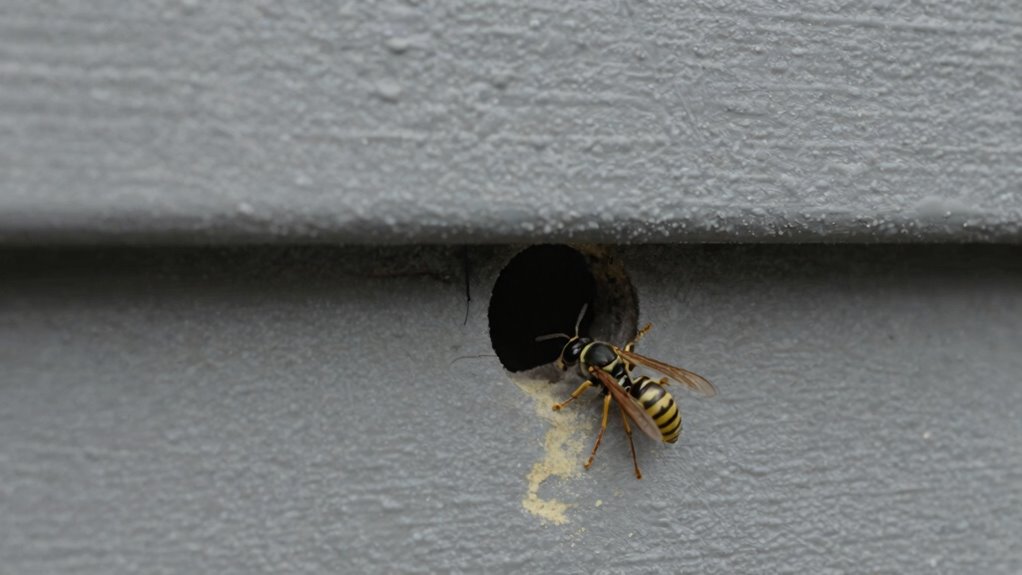
Professional dust application is the key to success here. It is not aerosol spray, but a lightweight powder like Drione that sticks to every wasp it touches. Timing your treatment correctly, ideally just before dawn when the colony is quiet and all workers are inside, guarantees the dust spreads through the nest in one clean hit. Applied through the main entry point and a few small drilled holes, it kills the entire colony within 72 hours, no ladder required. This method is perfect for use with waterproof dust formulations that remain effective in damp wall voids and crawl spaces. This method works best for effective wasp control and long term nest elimination. You get a complete colony kill without the risk of missing any hidden wasps.
Professional Dust Application
While a consumer aerosol can works for an exposed nest, a wall void colony needs a different approach. Think less “spray and pray” and more precision dusting. Professional pest control technicians rely on insecticidal dusts. These fine formulations drift deep into the cavity to coat every wasp and comb surface.
Dust persistence means the active ingredient stays lethal for weeks. Unlike sprays that evaporate quickly, this method ensures long term control. Applicator precision is achieved with specialized bellows. They inject dust exactly where needed, removing any guesswork from the job.
Professional formulations cost roughly $20 to $40 per treatment. This covers a three foot drop from the injection point. Fine particles cling to wasp bodies and spread the poison colony wide within 72 hours. The technique requires patience because dust works silently inside the wall.
A tech might drill a pencil sized hole above the nest. They then squirt a measured puff and tape it shut. No drama occurs, just dead wasps after a few days. The bottom line is to hire someone with the right gear. Your vacuum cleaner will not cut it for this precision pest control task. As with boric acid powders, this insecticidal dust lasts for weeks if kept dry.
Timing Your Treatment
Picking up a bellows filled with dust is one thing, but knowing when to use it is another.
Wasp psychology tells us these insects are most docile during pre-dawn hours, when colony temperatures drop and workers cluster inside the nest.
Experience timing your treatment to these cooler, low-light windows raises success rates dramatically.
Spraying between 4:00 AM and 6:00 AM gives you the best chance for a complete wasp nest kill.
Late-season colonies, packed with over a thousand aggressive workers, require extra patience.
Treating them midday guarantees agitated wasps and wasted insecticide dust.
A single evening application of professional-grade dust usually kills the nest within 72 hours.
To avoid sealing wasps inside, never plug entry holes until three days post-treatment.
Because pyrethrin-based aerosols break down quickly in sunlight, pre-dawn applications ensure the active ingredients remain potent long enough to reach the deepest nest chambers.
Bottom line: treat before sunrise, not during lunch.
This timing makes your pest control efforts safer and more effective.
How to Confirm the Colony Is Dead Before Sealing

A good rule of thumb: if you can still hear buzzing, the colony is very much alive and angry. Before sealing, confirm death to avoid wasp disposal chaos and potential stings.
A colony autopsy is simple and effective. Wait three days after your pest control treatment, then perform these checks.
First, do a silence check by pressing a glass to the wall. Listen for one minute with zero buzzing or scratching meaning success.
Next, use an infrared thermometer for a heat scan. A dead nest matches wall temperature, while a warm spot suggests live wasps.
For the entry hole test, gently insert a thin wire or straw. If it comes out clean, no live wasps remain; sticky goo means death.
Count dead workers below the entry point. A pile of dry, crisp bodies confirms the colony is gone for good.
Only proceed to sealing once all four checks pass. Patience prevents a nasty, sting filled surprise during your wasp removal process. A good way to keep the area safe afterward is to use brightly colored traps with effective bait like honey or vinegar to prevent future infestations.
Sealing Siding, Vents, and Cables Against Future Nests
Since wasps are relentless in their hunt for a cozy cavity, sealing common entry points is your best long term pest control defense. Grab exterior caulk and fine mesh, both under $15, to fill siding butt joints, J channels, and cable holes.
Unscreened soffit vents need 16 gauge screen to block queen size gaps around your roofline. Backdraft dampers on vent terminations stop crawlers with no extra effort for reliable wasp prevention.
Work in late fall or winter when nests are dormant for safe wasp nest prevention. Spring sealing risks trapping queens inside, which is bad for your drywall and your nerves.
On ladders, prioritize fall prevention with a harness up. A slip beats a sting every time for safe DIY pest control.
For ethical removal of stuck foragers, run exhaust fans full blast or spray spearmint water. It repels without killing, a humane pest control solution for stuck insects.
Bottom line: seal it tight, seal it smart for effective wasp exclusion services. They will find another house to haunt when your home is properly sealed.
For sealing irregular gaps around pipes and vents, flexible, shapeable steel wool provides a strong barrier that rodents cannot chew through.
Emergency Protocol: Wasps Breaking Through Drywall
Evacuate the room immediately. Close the door and seal under it with a towel to warn others away.
Stings inside a home are dangerous, especially for allergic individuals. Call a professional exterminator for safe wasp control.
Do not attempt to spray or block the hole. Trapped wasps will chew through more drywall and make repair far costlier.
Do not seal the hole with tape or any material. Wasps will find another exit into living spaces.
Wait for pro treatment to kill the colony first. After the colony dies, a patch and paint job will be needed.
Budget for drywall repair costs between $150 and $400. Remember your wall is temporary, but your skin is not. A professional exterminator may use a residual effect spray to prevent re-infestation after the colony is treated.
A Seasonal Checklist to Block Wasps for Good
Prevention beats panic, every time. The key is simple: winter exclusion and spring inspection.
Prevention beats panic, every time. The key is simple: winter exclusion and spring inspection.
In late fall, after confirming the colony is dead, seal every gap with exterior caulk and fine mesh. Focus on siding joints, cable holes, and soffit vents. A tube of caulk costs about five dollars, and screening is a few bucks more.
Skip sealing in spring because you might trap an overwintering queen.
Instead, conduct a spring inspection around March or April. Look for cracks, loose siding, or unscreened vents before queens start scouting. A flashlight and a careful eye are all you need.
Fix any issues to avoid a wall void nest entirely. This cheap, simple method saves you from a noisy, buzzing surprise later.
Schedule your pest control maintenance now for long term wasp prevention. For similar durability against pests, consider brush seals with high-density nylon bristles that fill uneven gaps around doors.
Frequently Asked Questions
Can Wasps Damage the Structural Wood Inside My Walls?
Wasp nests themselves don’t munch on wood, but they can cause indirect damage that’s worth taking seriously. A colony chewing through drywall to expand might find a stud, and while they don’t eat it, their tunneling weakens structures over time.
That’s especially true if water seeps in through those chewed holes, which creates the real threat: pathways for dampness and rotting wood. The best way to protect your home is to seal every entry point around eaves, vents, and cracks before wasps settle in.
If you’re dealing with an active infestation, don’t wait for the damage to spread. Use a targeted wasp killer spray or a residual dust treatment in wall voids, and always apply it in the evening when wasps are less active.
For long term control, install fine mesh screens over vents and repair any loose siding or roofline gaps. Regular pest inspections can catch early nesting signs, especially in attic spaces or behind exterior trim.
Ignoring the problem can turn a minor nuisance into costly structural repair, so act quickly if you hear buzzing inside walls. Concrete foundations rarely face danger from wasps, but wooden framing in older homes is far more vulnerable.
If you’re unsure about the extent of the damage, contact a licensed pest control professional to assess and treat the area. Their expertise, combined with quality products, gives you the safest and most effective solution for protecting your home’s integrity.
Will Wasps Return to the Same Wall Void Next Year?
Yes, wasps often return to the same wall void next year because they leave a nest scent behind. That chemical trail acts like a prime real estate sign for new queens scouting for spring nesting spots.
Coupled with reliable bee behavior patterns, that entry hole stays an open invitation for pest re infestation. But it is not a guaranteed outcome if you take the right pest control action.
If the colony died off in fall and you seal cracks before spring, you can dodge the reunion entirely. For wasp control that sticks, you need to clean the void thoroughly to remove all residual pheromones.
Then seal it tight with quality caulk or expanding foam to eliminate access points. When you combine void cleaning with exclusion sealing, next year’s problem becomes a non event.
This pest prevention approach saves you from repeat exterminator calls and nest removal costs. For a smart purchase, look for professional grade wasp dust and long lasting exterior sealants to finish the job right.
Is It Safe to Stay in My Home During Professional Treatment?
Yes, it is safe to stay in your home during professional pest control treatment. The pros use targeted dust and gels, not clouds of poison, so you won’t need to evacuate.
Just stay out of the treated room for a couple hours while the dust settles. Treatment safety is high because they avoid interior living spaces and focus on cracks and voids.
Your home occupation is fine once the treatment dust dries, usually within a few hours. The bottom line is you can stay, just avoid being the curious guy sniffing the baseboards.
For the best pest control results, choose a professional who applies slow acting dusts that are safe for pets and kids. If you want peace of mind, ask about green pest control options that are low odor and pet friendly.
This approach keeps your family safe while eliminating cockroaches, ants, or bed bugs effectively. You can book a no hassle treatment today and stay in your home the whole time.
How Can I Tell if Wasps Are Entering Through My Roof?
You can tell wasps are entering through your roof by spotting them at specific access points. A thorough roof inspection usually finds them at siding butt joints, unscreened soffit vents, or gaps around J-channels.
A simple test is to watch for wasps crawling along a roofline’s edge, then vanishing. If you see that, they are coming in from the top down and you probably need professional help to remove them.
For effective wasp control, check for entry points around your roof flashing and eaves. Identifying these nest access routes early can prevent a full infestation.
If you need to get rid of wasps in your attic, look for signs of nesting near roofline gaps. Sealing these cracks with caulk or foam is a smart purchase for long term pest prevention.
Consider using a residual insecticide spray around soffit vents and J channels. This targeted treatment helps stop wasps from re entering your roof structure.
Do Wasps Die off Naturally in Winter Without Treatment?
Yes, wasps in wall voids die off naturally in winter if freezing temperatures hit the queen and workers. But that does not mean your pest control problem is solved, and leaving a nest untreated can cost you more in the long run.
A dead colony still rots inside the wall, attracting secondary pests like carpet beetles and rodents. That rotten nest also stains your walls and creates a lingering odor that no DIY spray can fix.
The real buyer intent here is knowing that treating an active nest with professional-grade wasp killer or dust is cheaper than dealing with cleanup later. Even if the original colony dies, new queens may reinfest the same void come spring.
For smart pest control homeowners, the takeaway is simple: don’t wait for winter die off. Apply an insecticidal dust during active season to eliminate the colony and prevent future wasp infestations.


