
Getting rid of bats in your attic isn’t a simple DIY job—it’s a careful process with legal rules to follow.
If you spot greasy smudge marks or dime-sized holes near your roofline, that’s usually where they’re sneaking in.
The key is installing a one-way door over their main entrance, then sealing every other gap with caulk or copper mesh.
You’ll need to wait at least three warm nights above 50°F, then watch the exit at dusk for five nights straight.
Once you see no bats for two consecutive nights, you can seal the door for good—but miss one hole, and the whole colony returns.
This guide covers exactly how to find those hidden entry points, time your exclusion correctly, and even where to place a bat house so they relocate instead of re-infesting.
At A Glance
- Install a one-way door over the primary entrance while sealing all other gaps.
- Check local laws, as exclusion is banned during maternity season from June to July.
- Seal all dime-sized gaps with caulk, steel wool, or copper mesh to prevent reentry.
- Wait for three consecutive nights above 50°F with calm winds before installing doors.
- Watch the exit at dusk; remove door only after two nights with no bats seen.
Health and Damage Risks of Bats in Your Attic

There are two main reasons to evict bats from your attic, and neither is particularly fun.
First, guano accumulation poses a serious structural hazard.
A single bat can produce droppings daily, and over months, that piles up fast. That guano is acidic, so it eats through wood and drywall, leading to costly repairs.
More troubling, that same pile can fuel Histoplasmosis transmission. That’s a lung infection from breathing in fungal spores that thrive in bat waste.
You don’t want that. The health risk spikes when disturbed, like during a cleanup.
So you’re not just dealing with a mess; you’re dealing with a biohazard.
Bottom line: bats in the attic mean property damage and a potential respiratory threat.
No one wants that combo, which is why professional bat removal and attic restoration services are your best first call.
If you’re searching for bat exclusion near me, know that early intervention saves you from structural rot and medical bills.
Schedule an inspection before droppings soak into your insulation, and you’ll protect your family’s air quality.
That’s the practical path to a safe, bat-free home.
No one wants that combo. Humane one-way exclusion devices allow bats to exit safely without reentry while you plan a permanent seal.
Best Time for Safe Bat Removal in Massachusetts and New Jersey
| State | Safe Exclusion Dates |
|---|---|
| Massachusetts | May 1 to May 31, August 1 to October 15 |
| New Jersey | April 1 to May 14, August 1 to October 15 |
One way doors must stay for five nights with outdoor temperatures above 50 degrees Fahrenheit.
Seal all other holes first before installing the door. That is it. Pick your safe window and call a professional bat removal service.
This will help you avoid a stinky, sad mess and protect your home from re entry. For effective bat control, always use expert exclusion methods during these approved periods. For sealing entry points, consider using flexible wire mesh that allows airflow while blocking pests.
Installing a One-Way Door: The Only Legal Way to Get Bats Out
Legal exclusion timing is a legal requirement, not just a suggestion, in states like Massachusetts, New Jersey, and Florida where bats are protected. A one-way door must be installed over the primary entrance while all other gaps are sealed, since bats can slip through openings as small as half an inch. For safe removal, wait for three consecutive nights above 50°F with winds under 10 mph and no heavy rain. If conditions are not met, the door may need to stay on longer than five nights to ensure full bat exclusion. Using a professional pest control service helps avoid fines and ensures compliance with local wildlife laws. Proper bat removal timing is key to solving your infestation without harming protected colonies, and installing a three-chamber bat house at 15–20 feet high can provide a safe relocation target for excluded bats.
Legal Exclusion Timing
The one-way door is the only legal way to evict bats from an attic. It works like a revolving door at a fancy hotel, but only in one direction.
Timing is everything, and the legal nuances here are stricter than your HOA’s lawn rules. Regional laws dictate seasonal deadlines, so check your state’s bat calendar for exclusion windows.
Massachusetts allows exclusion from August 1 to mid-October. But you cannot perform bat removal during June or July, which is maternity season.
New Jersey’s safe dates run April 1 to May 14 and August 1 to October 15. Florida waits until maternity season ends on April 15, with exclusion allowed through August 15.
State exemptions exist for emergencies, like a single bat indoors, but don’t push it. Ignoring these windows risks harming flightless pups or hibernating adults, which is both cruel and illegal.
The bottom line is to time your door installation right. Otherwise you are breaking the law and annoying the bats, and neither ends well.
Proper Door Placement
Find the main entrance first, then install the one-way door there. This one way installation is the only legal, humane method for bat removal.
Bats squeeze through half inch gaps, so seal every other opening except this main exit. That door lets them leave at dusk but stops them from coming back.
Weather compliance matters here. Doors must stay up at least five nights, including three with good weather.
It is like a velvet rope for bats. They can go out to the club but cannot get back in.
Leave it longer if cold or windy hits. Once no bats appear for a few nights, remove the door and permanently seal that hole.
A solid plan, and no bats trapped inside.
For similar exclusion principles on solar panels, physical mesh barriers with 1/2-inch openings effectively block pests from accessing sheltered areas.
Weather Conditions for Removal
Since bats are cold-blooded and struggle to fly in chilly rain, one-way door removal depends on the weather. The door must stay in place for at least five nights, with three of those being good-weather nights.
That means temperatures above 50°F and winds below 10 mph. Anything stronger risks wind damage to the door, tearing it loose before the bats are out.
Check local temperature minimums for your area, since bats won’t leave if it’s too cold. A calm, mild evening is your best bet for effective bat exclusion.
If a cold snap hits, wait it out. Rushing this just leaves bats trapped, which is illegal and messy.
Bottom line: pick a warm, calm week, and let the door do its job. Patience pays for safe bat removal and humane pest control.
Weather and Night Count for One-Way Door Removal
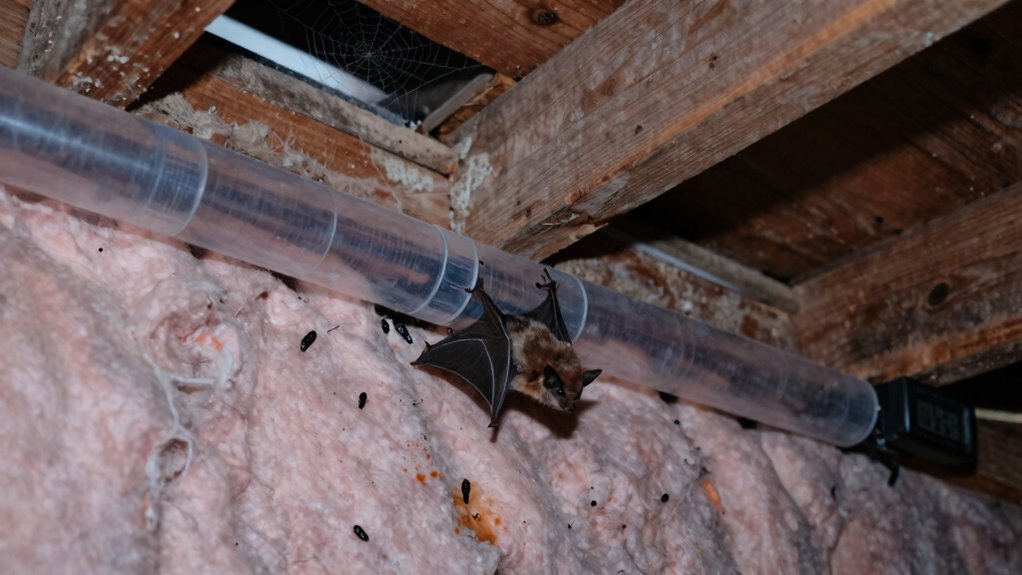
Timing one-way door removal hinges on the weather and the night count. A poorly placed bat exclusion door can cause bats to circle back into wiring gaps or other attic hazards.
Check the forecast for three consecutive nights above 50°F, with winds under 10 mph and no heavy rain. Cold snaps trap bats inside, and wet nights leave them sluggish and vulnerable.
Wait for three consecutive nights above 50°F with light winds and no heavy rain before sealing.
Count at least five nights before sealing. That is the sweet spot between “they’re gone” and “you’re sealing too soon.”
Watch the exit at dusk. If you see no bats for two nights straight, you are golden.
Bottom line. Patience beats panic.
Wait for good weather, count carefully, then seal. Done right, you are bat free and not bat terrified.
Since enclosed spaces like attics hold scents longer than open areas, a peppermint oil spray can extend your repellent’s effectiveness after the door is removed.
How to Spot Every Bat Entry Point (Even the Tiny Ones)?
Once the one-way door has done its job and the weather cooperates, the real detective work begins. You need to find every single gap a bat could use.
Bats squeeze through holes the size of a dime, just half an inch. Check unscreened vents, rotted eaves, and chimney gaps.
Look for greasy smudge marks, that is their oil from squeezing in. Bat feces nearby is a dead giveaway and guano removal signals an entry point.
Probe loose siding, pipe gaps, and window sills. A flashlight at dusk shows them in action during an inspection.
Seal every void you spot with caulk, steel wool, or wire mesh. For long-term outdoor protection, consider using a rustproof copper mesh instead of standard steel wool to prevent corrosion in damp conditions. Do not miss tiny cracks because bats will not.
If you see droppings or dark stains, patch it fast. Miss one hole and the entire colony returns for reentry.
Permanent Sealing After All Bats Have Exited
Thoroughness at this stage is not optional. It is the difference between a solved problem and an invitation to repeat the whole ordeal.
Permanent sealing means patching every gap a bat could squeeze through. Half an inch is plenty big for a bat to enter.
Use galvanized steel mesh or caulk for cracks. Seal gaps around vents, chimneys, and eaves.
The cost runs $200 to $600 for materials. Hiring a professional pest control service costs $1,000 to $3,000.
A final inspection is key to permanent bat exclusion. Wait a week after bats exit, then check all sealed spots at dusk.
If no bats reappear, the job is done. Miss one hole and the colony returns, because bats are persistent like that.
Avoid sealing during maternity season from June to July. This prevents trapping flightless pups inside.
The bottom line is to seal every crack and do a final inspection. You can then enjoy a bat free attic.
It is not glamorous, but it works better than hoping they relocate to a fancy bat house.
For sealing smaller entry points around wiring or ducts, copper foil tape offers a flexible, non-toxic alternative that blocks gaps and provides a durable barrier.
What to Do If You Find a Single Bat in Your Living Space?
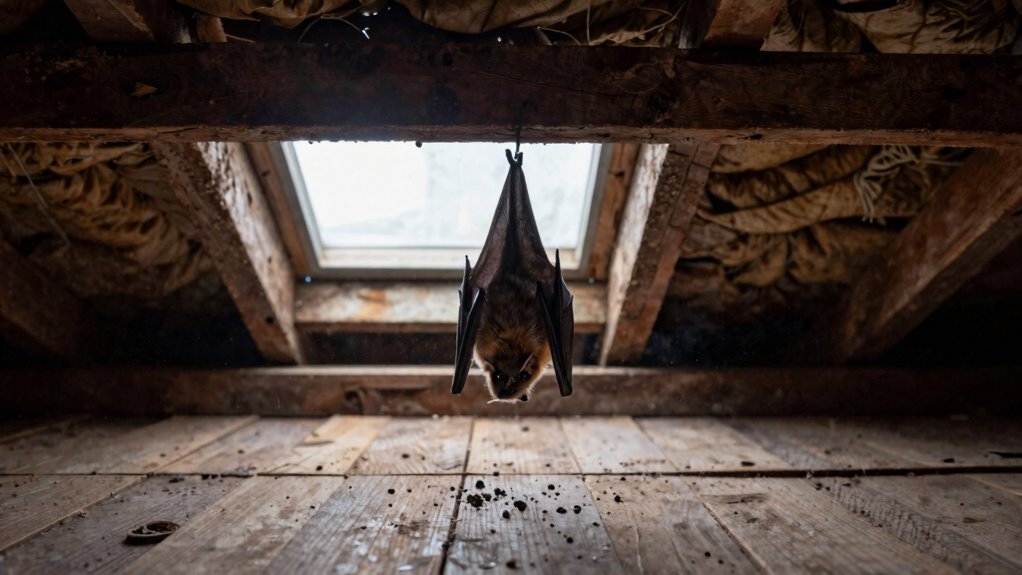
First, stay calm. That single bat is far more scared than you are.
Open a window, dim the lights, and contain the room to let it find its own way out by dusk. This simple approach works best for a lone bat, but for larger infestations you may need professional pest control for bats.
Check that no other bats are hiding in corners or behind drapes. If you suspect attic bats or roosting bats, call a licensed bat removal service for safe exclusion.
Do not touch the bat directly. If you have any concerns about bites or rabies exposure, contact a local wildlife control expert right away.
After the bat leaves, seal any gaps in eaves or vents to prevent future bat problems, including adding brush seal strips to block entry points around doors and windows that pests might exploit. For persistent issues, a complete bat control plan can protect your home long term.
Stay Calm, Contain It
Since you have found a single bat in your living room, the worst thing you can do is panic. Bats are more scared of you than you are of them and they are terrible at steering through human spaces.
Stay calm and begin a quick threat assessment to decide if the bat is injured or just lost. If it is flying erratically, it is probably confused rather than rabid.
Close the doors to the room and remove any pets or children. That bat will not attack you but it may leave droppings that require odor removal later.
Use enzyme drain cleaners once the bat is gone to handle that small mess. Do not try to grab the bat and instead let it tire out on its own.
Your pest control effort here is simply containment for now. This keeps the situation safe until you can contact a bat removal professional for exclusion services.
Open Window, Dim Lights
Once you have the bat contained in a single room, open a window and dim the lights for a simple pest control solution. Bats navigate by sound, not sight, so they will fly toward the brighter exit you provide.
Close off the rest of the house and turn off all indoor lights. Let the room go dark except for that one open window.
The bat will likely fly out at dusk within 30 minutes. If not, wait longer, it is not in a rush.
A dad-style quip: “Bats are stubborn, but they likewise hate bright rooms.” This method works for one bat with no special tools needed.
Just an open window and patience will do the job. If it lingers past midnight, call a professional pest control service.
Bottom line: this is a simple, free, and effective bat removal method for solo bats. For persistent bat issues, ultrasonic bat repellents safely deter them without harming pets or humans.
Installing a Bat House: Giving the Colony a Better Alternative
Since bat exclusion without a backup plan is like evicting a family without telling them about the vacant house down the street. A bat house gives the colony a proper new home for effective pest control.
Bat exclusion without a backup plan is like evicting a family with nowhere to go.
For bat house location, mount it 12 to 15 feet high on a sunny south or southeast wall. Avoid spots over doorways or patios because droppings management means you don’t want that mess where you walk.
One bat house holds about 80 bats and costs around $30 to $60. Mount it on a building, not a pole, as bats prefer a solid structure.
Paint it dark in black or brown for heat absorption. Install the bat house before exclusion begins so the colony has a place to go.
It’s not glamorous, but it works for humane bat removal. The colony relocates, your attic clears, and everyone wins except the mosquitoes. For ongoing pest control indoors, a residual spray can target insects like silverfish in dark, damp areas.
Frequently Asked Questions
What Should I Do if Bats Return After Sealing?
If bats return after sealing, a professional exclusion inspection is necessary. They likely found a missed crack, since bats squeeze through 1/2 inch gaps easily.
Technicians will install one way doors on the new exit. These doors let bats out but block re entry, and they stay in place for five nights when temperatures are above 50°F.
A small oversight is more than embarrassing. It can invite a whole bat colony back into your attic or walls.
Seal everything tighter than a jar lid to prevent future problems. The bottom line is hire a pro, not a guess, for lasting bat control solutions.
Can I Use Bat Repellents or Ultrasonic Devices?
Bat repellents and ultrasonic devices simply don’t work for bat removal in your home. Bats quickly adapt to or ignore those sounds, so you are wasting your money on gimmicks.
Ultrasonic sounds cannot penetrate roosts, and chemical repellents fail to deter entire colonies. The only proven bat control method is exclusion with one-way doors.
You should expect to pay between $300 and $600 for professional bat exclusion services. This investment saves you time and frustration compared to store bought gadgets.
Forget the gadgets and focus on sealing entry points after bats leave. Install a one way door for at least five nights when temperatures stay above 50°F.
Your bottom line for effective bat pest control is simple. Skip the repellents and invest in proper exclusion to protect your home long term.
How Do I Clean up Bat Droppings Safely?
Cleanup of bat droppings requires droplet precautions, like a damp mop, to avoid stirring up dust.
Always use respiratory protection, such as an N95 mask, since the droppings can carry histoplasmosis spores.
Wet the area with a spray bottle first, then carefully bag the waste.
Avoid dry sweeping or vacuuming without a HEPA filter, it just makes things airborne.
For large infestations, call a pro.
They have the gear and know how to handle the job safely.
Will Homeowners Insurance Cover Bat Damage?
Will homeowners insurance cover bat damage? In most cases, the answer is no because standard policies treat bats as pests or vermin.
That means bat removal costs and attic cleanup are typically denied as a maintenance issue. However, the type of damage matters a lot when filing a claim.
If a bat chews through a wall to enter your home, that might qualify as a “sudden” event and could be covered. Chewed wires or torn insulation from an established colony is almost always excluded.
Start the claims process by documenting everything with clear photos and scheduling a professional bat inspection. Then call your agent to confirm your specific policy language and exclusions.
Most insurers view bat infestations as a home upkeep problem, not an unexpected surprise. So if you suspect bats, act fast to prevent costly repairs and avoid paying out of pocket for bat removal services or attic restoration.
How Can I Tell if Bats Are Still Inside After Sealing?
After sealing, an attic inspection is the only reliable way to confirm bats are gone. Listen at dusk for scratching or squeaking near entry points.
Do a guano analysis to check for fresh droppings that mean bats are still inside. Dry, crumbly guano is old. Damp, shiny piles are new and a clear sign of active bat activity.
Check for urine stains or strong odors around the attic space. If you hear noise or find fresh guano, the one way door likely failed or maternity season blocked removal.
Call a pest control professional for a safe bat exclusion if you suspect a problem. Choosing the right bat removal method now can save you costly repairs later.


