
Does apple cider vinegar really repel mosquitoes? The short answer is yes, but only at a 15% concentration or higher—anything weaker can actually attract them. If you’re looking for a cheap, natural option for your backyard or patio, it’s worth knowing how to use it right.
At lower strengths, like the 5% you’d find in most grocery store bottles, it mimics fermenting fruit, which draws mosquitoes instead of driving them away. A proper 15% mix can kill larvae in standing water within 18 hours, making it useful for basic dengue prevention around your home.
The catch is that vinegar fades fast—you’ll need to reapply every 40 minutes, while DEET offers six hours of protection at similar strength. Still, at roughly $3 a bottle, it’s budget-friendly for short-term use. Keep reading for exactly how to mix and apply it for the best results.
At A Glance
- Vinegar repels mosquitoes only at concentrations of 15% or higher.
- At 5% concentration, vinegar actually attracts mosquitoes rather than repels them.
- Vinegar provides short protection (about 40 minutes) and requires frequent reapplication.
- A 15% vinegar solution kills mosquito larvae in standing water within 18 hours.
- Vinegar is less effective than DEET, which offers over 90% repellency for hours.
Does Apple Cider Vinegar Actually Work as a Mosquito Repellent?
The short but honest answer is yes, but only if you get the mix right. A cost benefit analysis reveals apple cider vinegar is cheap, roughly $3 per bottle, yet requires precision for effective pest control.
At a 15% concentration, it kills larvae in 18 hours, but at 5%, it actually attracts mosquitoes like a sad little bug lamp. Seasonal usage patterns matter: it is great for spring standing water, but less reliable for peak summer evenings when skeeters are hungrier.
Studies show 5% vinegar only repels 39.6% of biters, meaning you will still be a buffet. For outdoor use, stick to 25% mixes or higher for mosquito repellent that works, but do not expect DEET level wizardry. Unlike 20% Picaridin which offers up to 12 hours of mosquito defense, apple cider vinegar requires much higher concentrations and frequent reapplication to achieve limited results.
The bottom line is that apple cider vinegar is good for targeted larval control, not your main defense. If you want a reliable mosquito killer for your yard, pair it with other proven repellents.
How to Make a DIY Apple Cider Vinegar Mosquito Spray
For a general spray, mix one part vinegar with three parts water. That is about 1 cup vinegar to 3 cups water.
Another simple way to apply it is to dab a cotton ball with undiluted vinegar and rub it on exposed skin. Wear it near doorways or spray on outdoor cushions.
The smell fades fast, but mosquitoes get the message quickly. Just remember that high enough vinegar means real repellent, low means a dinner invitation.
Test a small patch first, since vinegar can sting sensitive skin. This homemade pest control solution works well for backyard bug protection. Compared to plant-based repellents, apple cider vinegar lacks the extended six hours of protection provided by oil of lemon eucalyptus.
What Concentration of Apple Cider Vinegar Repels Mosquitoes?
The concentration of apple cider vinegar you use determines how well it repels mosquitoes. A 5% solution, which is five parts vinegar to 95 parts water, provides only 39.6% repellency, meaning more than six out of ten mosquitoes still bite.
For serious bite prevention, a 15% concentration works much better. This strength kills mosquito larvae in 18 hours and strongly deters adult mosquitoes, making it effective against dengue transmission.
For serious bite prevention, a 15% concentration kills larvae in 18 hours and deters dengue mosquitoes.
A 25% solution, made from three parts water to one part vinegar, offers stronger pest control but can irritate your skin. Weak solutions may actually attract mosquitoes at low doses, so avoid underdosing.
For practical use, target a 15% or higher concentration for outdoor protection. Just remember it will smell like vinegar, not perfume, but it helps keep bugs away. BTI-based larvicides are a safer alternative that target only mosquito larvae without harming beneficial insects.
Apple Cider Vinegar vs. DEET: Which Mosquito Repellent Protects Better?
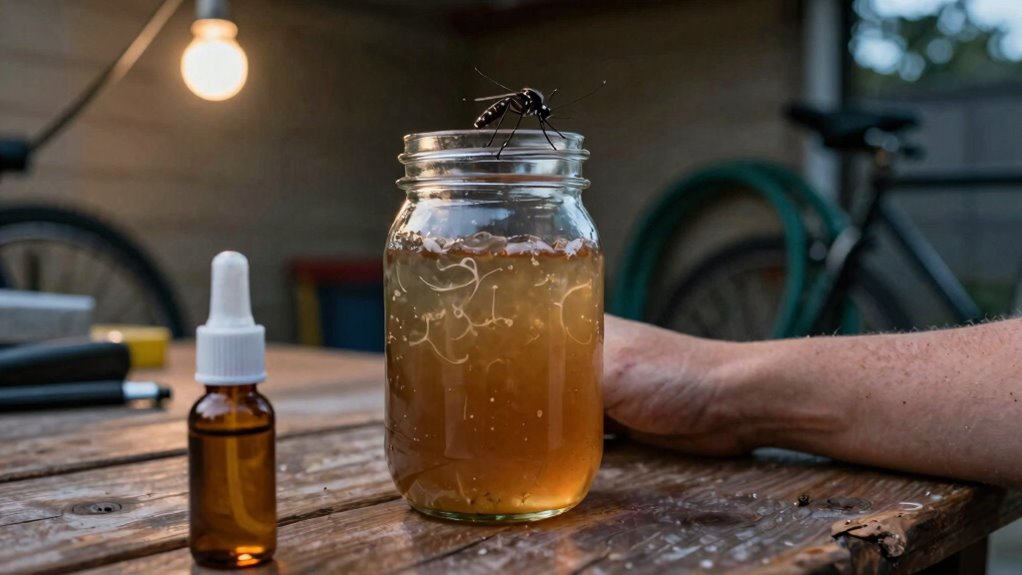
Regarding outright protection, DEET handily beats apple cider vinegar. A 5% vinegar mix repelled only about 40% of mosquitoes, while DEET often hits over 90% at similar strengths for effective pest control. For heavily infested areas, products with at least 30% DEET provide reliable defense when applied evenly to exposed skin and clothing.
That said, vinegar wins on side effects. It is just sour-smelling water, not a chemical that might irritate skin or melt your watchband.
For cost, a $4 bottle of apple cider vinegar makes gallons of spray. This makes it a cheap, if weaker, alternative for light mosquito pressure when you need topical bug repellent for your yard.
Repellency Percentage Comparison
Comparing apple cider vinegar to DEET is like pitting a stubborn mule against a thoroughbred racehorse. One works hard, but the other is built for speed.
In head to head trials, DEET’s efficacy hovers around 95% repellency for several hours. A 5% vinegar solution manages only 39.6%, meaning most mosquitoes still bite.
The difference comes down to a concentration gradient. Vinegar needs high doses to matter, whereas DEET works at mere 10 to 30 percent formulas.
DEET gives 5 to 6 hours of protection at 20% concentration. Vinegar offers roughly 40 minutes to 1 hour, if lucky, at similar strengths.
A sensory masking test shows vinegar overwhelms mosquito antennae. DEET actually blocks their CO₂ receptors outright.
For serious pest control, choose a topical repellent designed for long lasting coverage. DEET concentrations over 50% raise risk of skin irritation and toxicity, so stick to lower formulas for safe, proven protection.
Pick a proven product for outdoor protection and bite free comfort.
Side Effects Profile
Choosing between apple cider vinegar and DEET for pest control often involves more than just bite prevention.
Their side effects profile splits them apart like a bad breakup.
DEET, the synthetic heavyweight, can trigger long term skin sensitivity, especially with repeated heavy use.
Apple cider vinegar is gentler on skin but brings its own baggage.
DEET downsides include irritating eyes, melting certain plastics, and feeling greasy.
Prolonged exposure might cause rashes in sensitive individuals when you apply this topical repellent.
ACV upsides are typically mild, though undiluted it stings open cuts.
For environmental odor impact, vinegar smells like a salad dressing bomb went off, lingering on clothes and skin.
DEET’s chemical scent fades faster but isn’t exactly perfume either.
For short tasks, vinegar’s smell is tolerable for your quick pest control needs.
For all day hikes, DEET’s longevity wins for serious protection, except when skin protests.
Bottom line: pick vinegar for sensitive skin and quick trips.
Choose DEET for serious protection, accepting the trade offs if you are buying topical repellents. Professional-grade liquid barriers provide protection for up to 90 days, offering a longer duration than either vinegar or DEET for structural pest issues.
Cost and Availability
Cost and availability tip the scales hard in apple cider vinegar’s favor. It stands as the budget friendly underdog against DEET’s premium price tag.
A 16 ounce bottle of apple cider vinegar costs roughly $2 to $4. A similar sized DEET repellent runs $8 to $12, which is a 300% price difference when you compare cost per ounce.
Yet availability issues haunt vinegar as a pest repellent. You can buy it anywhere, but it demands constant reapplication every 20 minutes or so.
This is unlike DEET, which offers all day protection. Here is how the two stack up for practical use.
Price shock: DEET costs three times more per ounce than vinegar.
Shelf life: Vinegar lasts years, while DEET expires faster once opened.
Mixing mess: Vinegar needs DIY prep, but DEET is ready out of the bottle.
For severe insect conditions, 98.11% DEET products provide a long-lasting barrier that vinegar cannot match.
The verdict is that vinegar wins on wallet but fails on convenience. Sometimes you get what you pay for when choosing an insect repellent.
Can Drinking Apple Cider Vinegar Keep Mosquitoes Away?
Drinking apple cider vinegar to repel mosquitoes sounds like the kind of folk remedy your grandmother swears by, and there might be a sliver of truth behind it. The idea hinges on two key mechanisms: taste receptor activation and body scent alteration.
When ingested, the vinegar’s acetic acid may alter a person’s natural scent, making them less detectable to mosquitoes. Furthermore, the vinegar’s compounds can activate mosquitoes’ taste receptors, potentially discouraging them from biting.
Nevertheless, evidence is thin, with no rigorous human studies confirming real-world effectiveness. For pest control, consider proven topical repellents like DEET or picaridin instead.
| Ingestion Method | Proposed Effect | Real-World Reliability |
|---|---|---|
| 1-2 tbsp daily | Alters body scent | Unproven, anecdotal |
| Diluted in water | Activates taste receptors | Minimal scientific backing |
| Topical vinegar spray | Direct repellent action | Weak, short-lived |
The bottom line is that it is a low-risk, low-cost gamble, but don’t ditch your DEET just yet. For effective mosquito protection, rely on topical repellents or screen barriers.
Will Apple Cider Vinegar Kill Mosquito Larvae in Standing Water?
Yes, apple cider vinegar can kill mosquito larvae in standing water, but it requires a careful game of proportions. A 2023 study found that a 15% concentration (15% vinegar, 85% water) wipes them out within 18 hours.
This is a handy trick for pest control in small pools, but get the mix wrong and it flops. The magic number is 15% vinegar, any lower and the larvae just swim on.
It targets the wrigglers before they become annoying, flying adults. This method works best in stagnant pools like birdbaths or plant saucers where mosquito breeding often happens.
For effective mosquito larvae control, measure your vinegar precisely to avoid a failed treatment. Always apply this vinegar solution to standing water you can see, not hidden damp areas.
This natural repellent alternative can save you from buying harsh chemicals. Just remember that a 15% ratio is your key to killing mosquito larvae on the spot.
EPA-registered products containing Bti offer a similarly safe and targeted option for controlling larvae in standing water.
Why Low Concentrations of Apple Cider Vinegar Attract Mosquitoes
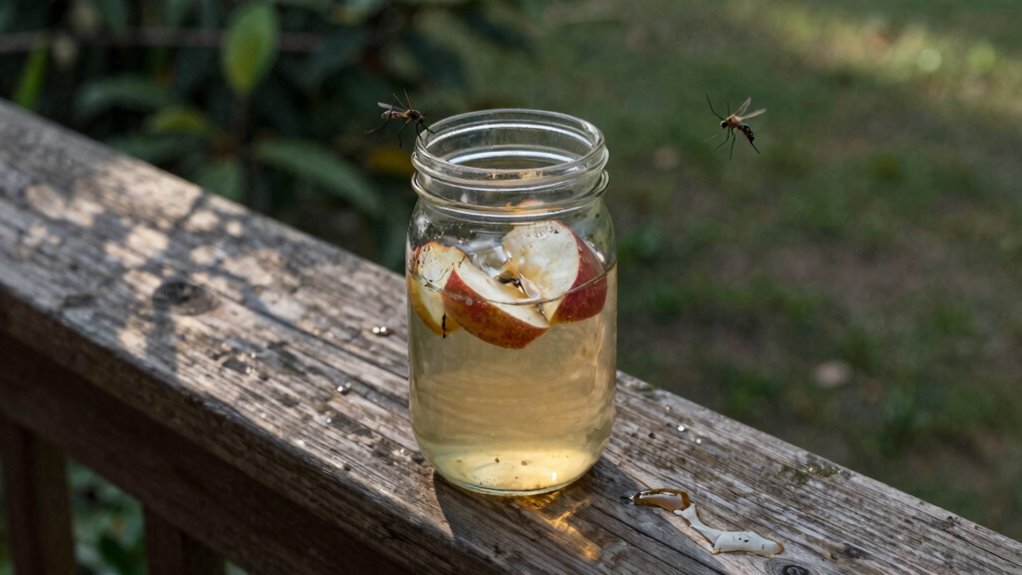
At low concentrations, apple cider vinegar actually acts as a mosquito attractant rather than a repellent. This makes it a clever bait for traps, much like an insect lamp luring pests away from people. For instance, traps that use UV light with sticky adhesive can capture many flying pests without relying on sprays or electricity.
The risk is that using it near skin can draw mosquitoes closer instead of protecting you. A 5% solution may help with pest control in a trap, but it can backfire as a biting bait near exposed skin.
For safe mosquito repellent use, always place the trap away from seating areas.
Attractant Versus Larvicide
The concentration of apple cider vinegar dictates whether it repels or attracts mosquitoes, creating a tricky balancing act for DIY users. At low levels under 10%, the scent mimics fermented fruit to a mosquito’s sensitive antennae, not a threat. The vinegar pH around 2 to 3 gets neutralized by water, so the smell becomes intriguing instead of toxic for pest control. This is similar to how in low concentrations, standing water can become a nursery that draws larvae in.
Here is why low concentrations fail as a larvicide for mosquito traps. The sweet spot is missed, as larval toxicity only kicks in at 15% or higher according to a 2023 study in Malaria Journal. Mosquitoes swim toward death, because low concentrations turn standing water into a nursery that draws larvae in.
Repellency collapse occurs at 5% concentration, where protection drops to 39.6% meaning most mosquitoes still bite. For effective mosquito repellent and larvicide results, stick with 15% or higher vinegar solutions in your DIY pest management plan.
Mimicking Mosquito Traps
Why would anyone intentionally attract mosquitoes? A properly designed trap lures them away from people.
At low concentrations, apple cider vinegar mimics the scent of fermenting fruit, a natural mosquito breeding ground. This attractant property changes trap design entirely, making it a smart pest control solution.
Clever bait optimization uses a 5% or weaker vinegar solution. The mosquitoes fly in, drawn by the promise of a meal, but find a sticky surface or drowning chamber instead.
It’s a bait and switch, literally. For example, a DIY trap using a plastic bottle, a 5% ACV solution, and a yeast-activated sugar bait costs about $2.
This effective mosquito repellent approach works as a decoy, not a shield. The setup is simple: cut the bottle, invert the top into the base, and fill with the attractant mix.
Just remember that the same low concentration which lures them into a trap won’t repel them from your skin. For best results against backyard pests, place the trap away from outdoor seating areas.
Use it as a decoy to reduce mosquito populations without harsh chemicals. Many homeowners buy insect trap supplies like these for seasonal pest management. Mosquito traps require attraction systems mimicking body heat, CO2, and UVA light to compete with natural breeding grounds.
Risk of Biting Bait
You might think you are being clever with a low-concentration apple cider vinegar trap for mosquitoes. Unfortunately, any diluted mix under 15% turns you into the bait.
The faint acetic scent mimics natural human skin cues, luring them closer instead of repelling them. Mosquitoes detect the weak vinegar as a food source, not a threat.
Their biting preferences trigger when they mistake it for a host’s natural smell. The trap becomes a feeding station, increasing skin sensitivity to their bites nearby.
A 5% solution saw 60% of mosquitoes still biting in pest control studies. So while a trap sounds clever, you are fundamentally serving appetizers before the main course, yourself.
Use full-strength vinegar at 15% or higher for effective repellency, not traps. For a completely different approach, consider using plug-in indoor diffusers that create a 20-foot protection zone without attracting bugs. For DIY mosquito control, choose stronger solutions to avoid attracting more pests to your yard.
Is Apple Cider Vinegar an Effective Mosquito Trap?
Does Apple Cider Vinegar Repel Mosquitoes?
Is Apple Cider Vinegar an Effective Mosquito Trap?
How well does apple cider vinegar actually work as a mosquito trap? Not very, honestly. At low, attractant concentrations, it might lure a few adults, but it is unreliable.
However, for larval control in standing water, it earns its keep. Pouring a 15% concentration of apple cider vinegar into birdbaths or plant saucers kills larvae within 18 hours, per a 2023 Malaria Journal study. It is cheap, around a dollar per bottle, making it a budget-friendly pest control solution. Just do not water down your plants with it; that is a different, sadder kind of science experiment.
As a trap for biting adults, you are better off with a fan or DEET repellent. Vinegar is better at killing babies than catching grownups, so use it for the kids in the kiddie pool, not for the ones at your ankles. The bottom line is that it is great for larvae, lousy for adults. For a more reliable outdoor solution, natural, pet-safe options like essential oil-based repellents can kill adult mosquitoes and repel them for up to two weeks.
How Apple Cider Vinegar Helps Prevent Dengue as a Natural Repellent
Dengue prevention requires a two front strategy, and apple cider vinegar works as both a repellent and a larvicide. It won’t knock out adult mosquitoes on its own, but it kills larvae in standing water with a simple 15% vinegar solution you can mix at home. For people with allergies, children should not blindly use stickers, so it is important to check ingredients and consult a pediatrician before using any natural repellent products. This cheap and easy pest control method directly stops the next generation of biting Aedes aegypti. That makes it a practical tool for areas like the Philippines, where dengue cases surged by 245% in early 2019. For best results, use apple cider vinegar alongside other mosquito control products rather than as a lone solution. It’s a friendly and helpful addition to your dengue prevention routine.
Dengue Prevention Strategy
Apple cider vinegar isn’t a magic shield against dengue, but it’s a handy tool in the fight against mosquitoes.
When used smartly, it aids vector control by targeting breeding sites and reducing mosquito populations.
Drinking vinegar daily, around one to two tablespoons, may alter your body’s scent and make you less appealing to Aedes mosquitoes.
These are the primary dengue carriers, so this natural repellent tactic can help you avoid bites.
Spraying a 15% vinegar solution (one part vinegar to five parts water) into standing water kills larvae within 18 hours.
This stops them before they develop into biting adults, making it a simple pest control step for your property.
Applying a spray of equal parts vinegar and water on skin or clothes creates a sour barrier mosquitoes avoid.
However, you will need to reapply every few hours for continued protection.
It is no replacement for screens or EPA-approved repellents, but it is a cheap, easy add-on for your dengue defense kit.
For a comprehensive mosquito management plan, combine it with other proven prevention methods.
Repellent vs. Larvicide Role
Apple cider vinegar won’t replace DEET, but it serves a specific role in mosquito control. It works as a repellent for adult mosquitoes and a larvicide for their young.
The key is dose response. At 15% concentration, it kills larvae within 18 hours, making it a useful dengue prevention tool for standing water.
At 5%, it actually attracts mosquitoes. So do not skimp if you want it to work as a larvicide.
For skin application, results are weak. Direct use offers only 39.6% repellency at 5% concentration.
Undiluted ACV can sting your skin. That is why skin safety matters when trying this method.
Better uses include spraying on indoor plants. You can also pour it into flowerpot saucers.
It is not a substitute for DEET repellents. But for budget friendly larval control, it earns its keep.
Try it as a trap. Set a dish with vinegar and soap for the most effective results.
For outdoor areas where standing water is a concern, chemical-free operation from a solar bug zapper can complement your larvicide efforts without adding toxins to the environment.
How to Use Apple Cider Vinegar Indoors and Outdoors
Spray a 1:1 vinegar‑water mix on plants or entry points to keep mosquitoes away without harming most houseplants. This simple pest control solution works for indoor and outdoor use.
Soak a cotton ball in undiluted vinegar and place it near windows or doors. It acts as a subtle boundary marker that bugs avoid.
Pour full-strength vinegar onto patios or deck edges for an outdoor soak. Reapply after rain, as the smell fades but still discourages landing.
For larger yards, use a 15% vinegar solution in standing water to kill larvae quickly. Just remember that your picnic guests might mistake the scent for salad dressing.
The Science Behind Apple Cider Vinegar’s Repellent Effect
The homemade sprays and vinegar-soaked cotton balls work because of surprisingly clever biology. Mosquitoes rely on taste receptors on their tongues and olfactory sensors on their antennae to find their next meal.
The strong, sour smell of apple cider vinegar comes from its acetic acid. This acid does two things to stop mosquitoes.
First, it causes sensory masking, overwhelming the mosquito’s ability to detect human scent. Second, when a mosquito lands on treated skin, the vinegar activates its taste receptors and delivers an unpleasant sensation that deters biting.
This repellent effect heavily depends on vinegar concentration. Higher levels like 25% in a DIY spray provide stronger deterrence, while low levels at 5% can actually attract mosquitoes. Citronella oil similarly disrupts mosquito olfactory receptors to confuse their ability to locate a host.
Simple Precautions for Using Apple Cider Vinegar as a Repellent
Vinegar might make your kitchen smell like a salad dressing, but putting it on your skin requires caution. Users should watch for skin sensitivity, especially on broken or delicate skin, as undiluted vinegar can sting or cause redness.
A simple patch test behind the ear helps you avoid looking like a blotchy tomato. Always dilute one part apple cider vinegar with at least three parts water to prevent chemical burns.
Drinking 1–2 tablespoons daily may tweak your scent over time, but effects take days, not minutes. Do not rely on it for a sudden mosquito siege.
Reapply every hour for outdoor use, since vinegar washes off with sweat or water. This repellent option is cheap and quirky, but not a miracle worker. For a milder alternative, DEET-free formulations using plant-based oils are often recommended for safer protection around babies.
Use caution and never skip the patch test unless you enjoy witness protection for your elbows. For best pest control results, pair it with other topical repellents for complete coverage.
Frequently Asked Questions
Can Apple Cider Vinegar Expire and Lose Its Repellent Effect?
Yes, apple cider vinegar does expire and can lose its repellent effect over time. Its shelf life is typically two to three years, but potency starts declining once you open the bottle.
The acetic acid that mosquitoes hate slowly breaks down, making an old bottle less effective as a natural pest control solution. If the vinegar smells weaker than when you bought it, that’s your first clue it’s past its prime.
Look for cloudiness or sediment, which are clear signs the product is no longer optimal for DIY mosquito repellent. For best results in your home pest control routine, replace your bottle every year.
A fresh bottle costs around three to five dollars, which is far cheaper than a hospital visit for a mosquito-borne illness. Upgrading to a new bottle ensures you get the strongest deterrent power for your yard or patio.
Does Apple Cider Vinegar Repel All Mosquito Species Equally?
Apple cider vinegar does NOT repel all mosquito species in the same way. In studies, a 5% concentration achieved only 39.6% repellency, meaning over 60% of mosquitoes still bit.
Species variation matters a lot, especially for tough pests like Aedes aegypti. These aggressive mosquitoes may resist weaker sprays, so your best pest control strategy should target their biology.
Repellent duration is short with vinegar, so you must reapply every few hours. For DIY mosquito traps, lower concentrations actually attract bugs, not deter them.
Bottom line: apple cider vinegar is unreliable across species for effective mosquito protection. If you want consistent results, try a DEET based repellent from a trusted mosquito repellent brand.
Vinegar won’t save you from a determined mosquito, especially during peak biting hours. For yard treatments, pair it with a professional grade insecticide spray to get full coverage.
Smart buyers looking for long lasting mosquito control should choose EPA approved repellents with proven efficacy. Don’t gamble on homemade solutions when you need guaranteed protection for your family.
Is Apple Cider Vinegar Safe for Pets if Used as a Repellent?
Apple cider vinegar has pet safety concerns, as topical irritation can occur on sensitive skin, especially for dogs and cats prone to licking.
Ingesting it may cause stomach upset, so it’s not a reliable pest control solution for your furry friend.
A safer bet is a diluted spray, like one part vinegar to three parts water, applied only to areas pets can’t reach.
But skip it entirely near open wounds to avoid stinging and infection.
For best pet friendly mosquito control, try citronella collars or vet recommended sprays.
These options are less tangy and more reliable for keeping bugs away.
Bottom line: avoid the vinegar bath for your canine companion.
Your local pest control expert would recommend a store bought repellent designed for pets instead.
Does Apple Cider Vinegar Stain Clothing or Furniture?
Apple cider vinegar can cause fabric discoloration, but it’s not a guaranteed stain. The acid might lighten dark clothes or leave a faint mark on delicate fabrics like silk.
For stain removal, wash the area immediately with soap and water, and most marks fade easily. On furniture, always test a small hidden spot first, because wood finishes are usually fine but upholstery can absorb the smell.
If you’re dealing with a stubborn vinegar stain on a couch, think about using a fabric-safe enzymatic cleaner, much like you would for pet messes. A quick dab with a clean cloth and rinsing with cool water minimizes any lasting damage.
That said, pest control professionals often use vinegar as a natural deterrent for ants and fruit flies, so spill risks are common around baseboards and window sills. For those spills, blot dry and ventilate the room to prevent lingering odors that attract other pests.
When you’re shopping for stain removers, look for pH-neutral options that won’t react with acidic residues. You’ll also want to pair that with routine pest prevention, like sealing cracks and using targeted traps, to keep your home safe and clean.
Ultimately, apple cider vinegar is more a temporary nuisance than a permanent problem, so don’t let a splash ruin your day. Just act fast, use the right cleaner, and you’ll protect both your fabrics and your pest control setup.
Can Apple Cider Vinegar Be Mixed With Other Natural Repellents?
Yes, apple cider vinegar can be mixed with other natural repellents to create stronger pest control blends.
However, effectiveness data is limited, so it helps to keep your expectations realistic.
For example, combine one part vinegar with one part witch hazel, then add a few drops of eucalyptus or citronella oil.
This mix boosts repelling power against mosquitoes, but don’t expect miracle results from any DIY solution.
Studies show that over 60% of mosquitoes still bit with a 5% vinegar solution alone.
To get the best natural repellent for your yard, pair these blends with proven pest control products.
If you want a smart purchase, look for citronella candles or DEET-free sprays to complement your vinegar mix.
Try it during outdoor gatherings, but always test a small area first to avoid skin irritation.


