
Getting rid of mosquitoes in the yard doesn’t require harsh chemicals—just a smarter approach to their breeding cycle. The real trick is targeting the water where they lay eggs before they ever take flight.
Start by dumping standing water from tires, saucers, and tarps every week to stop larvae from hatching. Scrub containers with bleach water to remove eggs, and remember: dry equals dead.
For water you can’t drain, drop Bti mosquito dunks into rain barrels or ponds—they kill larvae for 30 days without harming pets or plants. Trim overgrown bushes and keep grass short to deny adults shady resting spots, and seal gutters with fine mesh to block hidden nurseries.
This breakdown covers the exact steps, from simple checks to long-term fixes, so you can enjoy your yard without the buzz.
At A Glance
- Eliminate all standing water weekly to stop mosquito breeding.
- Scrub containers and use Bti dunks for long-term larvae control.
- Clean gutters and downspouts to prevent hidden water pools.
- Trim overgrown vegetation and keep grass short to reduce resting spots.
- Seal rain barrels and treat ponds with mosquito fish or larvicide.
Eliminate Standing Water in 5 Simple Steps
Let’s get one thing straight: standing water is a mosquito motel, and you’re the unwitting landlord. The real trick to eradicating larvae is denying them a check-in desk.
Search for larval habitats at least twice weekly, especially after rain. Flip bird baths, dump pet bowls, and scrub plant saucers weekly. That disrupts eggs before they hatch.
Use Bti dunks for rain barrels or ponds. They kill larvae for 30 days without harming pets. These dunks contain Bti bacteria that target only mosquito and fungus gnat larvae.
Aeration with a solar fountain keeps water moving. Mosquitoes hate moving water.
Empty or treat every stagnant pool. Do this, and your yard goes from motel to no-tell.
Find and Empty Hidden Breeding Sites (Tires, Saucers, Tarps)
Weekly yard inspections are non-negotiable, since mosquitoes breed in any water that sits for a week. Drain or remove culprits like old tires, plant saucers, and folded tarps, which often hold hidden puddles.
Scrub these items thoroughly afterward to destroy any stubborn mosquito eggs that survive drying out. This targeted mosquito control step is essential for effective vector-borne prevention around your home.
For a complete pest management plan, pair these drainage checks with larvicide treatments in low-lying areas. You can also upgrade to mosquito-repellent landscaping by leveling soil and adding gravel to prevent pooling.
When you find a hidden breeding site, treat it with a residual insecticide spray after cleaning to disrupt the full life cycle. Regular property maintenance like this reduces adult mosquito populations without requiring professional fumigation.
Combine these actions with trimming tall grass and clearing gutters to eliminate adult resting spots. Then, book a seasonal mosquito barrier treatment from a licensed exterminator for long-term control.
Remember that plastic covers and pet bowls need after every rainfall, not just during weekly sweeps. Inspecting beneath decks and around downspouts catches the sneaky containers that attract breeding females.
If you notice standing water in abandoned buckets, drill drainage holes or store them upside down after use. These simple source reduction tactics are the cornerstone of integrated pest management.
Finally, mark your calendar for a monthly deep-dive audit, focusing on shaded corners where evaporation is slow. For these hard-to-drain spots, toss in a mosquito dunk with methoprene to stop larvae from maturing into biting adults. Consistent effort here saves you from costly mosquito fogging services later in the season.
Weekly Yard Inspections
The discipline of a weekly yard inspection is the unsung hero of mosquito control. This tedious chore pays hidden dividends by stopping infestations before they start.
Grab an inspection checklist that targets trouble spots like tires, saucers, and tarps. Walk the yard every seven days to maintain an effective mosquito treatment routine.
Seasonal timing checks are vital, especially after rain. Water lurks in forgotten buckets or folded tarps for a full week.
Those weekly yard inspections catch larvae before they become biting adults. A neighbor notification protocol helps, too.
A quick text about a shared ditch or fence line tire can prevent a block wide problem. Without these checks, you’re just guessing on pest control needs.
It’s dull, yes, but cheaper than itching all summer. Bottom line: make the list, walk the yard, text the neighbor.
If standing water cannot be emptied, treat it with BTI-based dunks that kill mosquito larvae safely for over 30 days.
Drain or Remove Items
Inside a forgotten tire, under a folded tarp, or at the bottom of a plant saucer, that’s where mosquitoes throw their pool parties. For effective vector control, you need to target each larval source with relentless precision.
A single bottle cap of water can birth hundreds of biting adults in a week, so every hidden pocket matters. Check old tires because they hold heat and dark water, making them prime breeding grounds.
Recycle those tires or drill drainage holes to stop them cold. Plant saucers collect rain and irrigation, so dump them weekly to disrupt the mosquito life cycle.
Folded tarps create pools in their creases, so pull them taut or drain the corners after every storm. Bucket and trash can lids trap water for days, so store them upside down to keep them dry.
Even a kayak or canoe can hold water inside, so prop it on its side to let it drain completely. Forget deep cleaning and fancy larvicides; just tip, drain, or remove any standing water you find.
A yard free of standing water deprives mosquitoes of their nursery, killing them before they ever bite. This simple yard maintenance routine is cheap, easy, and works every time, so start your pest control checklist today.
Buying a mosquito repellent or insecticide won’t help if you skip the source, so tackle these hidden spots first. For ongoing mosquito prevention, pair this drainage habit with a regular weekly inspection of your entire property. Electric foggers cover up to 5,000 square feet for mosquitoes and flying pests and require no licensing, making them a convenient option for treating larger areas after you’ve eliminated breeding sites.
Scrub for Hidden Eggs
Persistence alone won’t win the war. Scrubbing hidden eggs, larval husks, and dried biofilm from your containers is the real enemy.
Even after draining, egg rafts can cling to rough surfaces and survive for weeks. Here’s how to get ruthless with your pest control routine.
Scrub saucers and tires with a stiff brush and soapy water. Target sunken spots where eggs hide, then rinse thoroughly to wash away debris.
Flip tarps and shake out any standing water. Use a hose to blast off dried gunk from folds and corners before storing them dry.
Inspect bottle caps and other small debris that collect water. These tiny sites can host hundreds of eggs, so remove them for good.
Remove saucers from pots and scrub their inner rims with diluted bleach. Use one part bleach to nine parts water, then rinse and dry upside down.
Check every container weekly for mosquito breeding hotspots. Don’t forget those forgotten junk piles around your yard.
Dry equals dead for mosquito larvae. Stop them before they hatch by buying drain covers or larvicide tablets for tough spots.
Seal Rain Barrels and Treat Cesspools to Block Larvae
Rain barrels and cesspools are basically all-you-can-eat buffets for breeding mosquitoes, so sealing them is non-negotiable for effective mosquito control.
Fit fine mesh screen over every barrel opening and snug the lids tight, because even a fingernail gap invites egg-laying and attracts pest activity.
For cesspools, use a tight-fitting lid or solid cover to block access entirely; no screen is needed here, just a complete seal.
To treat cesspools, drop monthly Bti dunks down the vent pipe, and these bacteria-based discs kill larvae for weeks while staying safe for septic systems.
A pack of Bti dunks costs about $10 and covers three months of larval prevention, which is a smart investment for seasonal pest management.
Cover barrels fully, not just the top, and check overflow spouts and cracks weekly to stop hidden entry points.
For larvae that escape into nearby standing water, solar-powered zappers with 4200V grids and IPX5 waterproofing provide a chemical-free backup to kill adult mosquitoes naturally.
Bottom line: seal and treat aggressively, or your yard becomes a mosquito nursery that invites backyard pest control headaches.
For long-term mosquito prevention, combine these sealing steps with regular inspections and targeted larvicide treatments.
Mosquito-Proof Gutters, Drains, and Downspouts
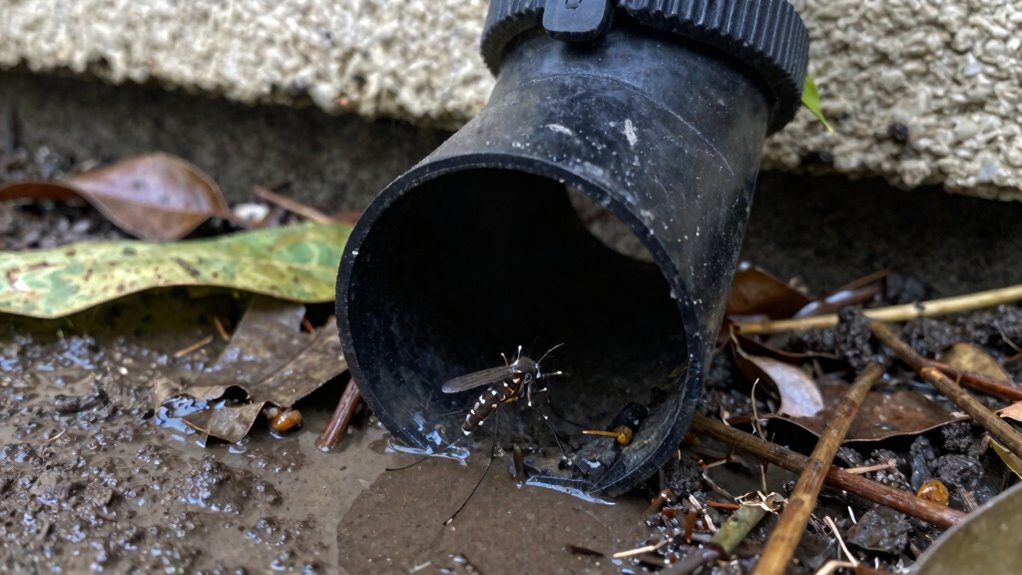
Clean your gutters at least once a year to stop leaves from turning them into mosquito nurseries. Blocked drains and overwatered lawns also create perfect puddles for larvae. A little weekly effort with pest control prevents mosquitoes before they ever take wing. Use larvicide bits in downspouts to target breeding sites directly. Inspect drainage ditches for standing water after heavy rain. Consider installing mosquito-proof screens on gutter outlets for long term protection. To further reduce adult mosquitoes indoors, consider using plug-in diffusers that create a protective zone without sprays or smoke.
Clean Gutters and Downspouts
Clean gutters and downspouts are an unglamorous but essential line of defense against backyard mosquitoes. Debris blocks water flow, creating shallow pools where larvae thrive.
Without this maintenance, even diligent use of mosquito traps and yard foggers becomes futile. Inspect gutters twice yearly, especially after autumn leaf fall, clearing all sludge by hand or with a trowel.
Guarantee downspouts drain fully, as a single clogged elbow can hold enough water for hundreds of eggs. Install gutter guards like LeafFilter ($200–$600 per section) to prevent debris accumulation long-term.
Check for sagging sections that trap water and re-secure them to maintain a consistent downward slope. This low-chore breaks the mosquito breeding cycle before it starts. If you notice foul odors or organic buildup in drains connected to downspouts, using enzyme-based cleaners can break down the sludge that attracts pests and prevents larvae from finding a food source.
Skip it, and you’re just fogging a nursery instead of stopping the pest problem.
Clear Drainage Obstructions
Check drainage ditches and low spots for leaves, mud, or yard debris that turn a dry path into a mosquito breeding ground after a rain. A clogged drain is basically a stagnant pond with better curb appeal, and it invites mosquito control problems right at your foundation.
Clear out the gunk with a shovel or a garden trowel; it’s cheap, takes ten minutes, and beats hiring a pest control service for a larvae infestation later. Snag a downspout extension, about $10 at any hardware store, to push water six feet away from foundations, which is a smart home pest prevention tip.
That simple fix keeps runoff flowing and prevents hundreds of mosquito eggs from hatching near your exterior walls. For extra flair, plant mosquito repellent plants, like citronella or marigolds, near damp runs; they won’t fix a blockage, but they’ll make you feel productive while you wait for dry weather.
Bottom line: keep water moving, and those biting insects lose their nursery, so you can skip expensive yard treatments and just enjoy your patio. Focus on standing water removal, inspect gutter outlets monthly, and consider a garlic spray for high traffic zones if you want added protection.
Prevent Landscape Overwatering
Preventing landscape overwatering is a smart way to stop mosquito infestations before they start. Too much water turns your yard into a breeding ground where pests can multiply.
Choosing drought-tolerant plants reduces soggy soil and cuts down on watering needs. Improving soil drainage with sand or compost stops puddles from forming.
Check your irrigation timer and set it for a five-minute soak instead of a thirty-minute flood. Install a rain sensor on your sprinkler system for around $30 to skip watering after storms.
Direct downspout runoff away from flower beds using extendable splash blocks. Grade your lawn with a gentle 2% slope so water does not pool near the foundation.
Routine use of a pool skimmer net with fine nylon mesh can also remove mosquito larvae from standing water in birdbaths or ponds.
These simple fixes cost under $50 and stop mosquito nurseries cold. They keep your landscape healthy and pest free without expensive treatments.
Use Mosquito Dunks (Bti) for Water You Can’t Drain
You inevitably find yourself staring at that low-lying swampy corner of the yard after a heavy rain, the one that won’t drain for weeks and has become a mosquito nursery. Improving yard drainage is ideal, but sometimes it’s a pipe dream.
Fogging techniques only kill adults, missing the real problem: larvae. Enter mosquito dunks, doughnut-shaped tablets containing Bacillus thuringiensis israelensis (Bti). This bacteria targets only mosquito larvae, leaving pets, plants, and people alone.
Drop one dunk into that boggy area, and it releases Bti for up to 30 days, killing larvae before they hatch into biters. A six-pack costs about $10 at hardware stores.
No mixing, no spraying, just toss and forget. For stubborn water you can’t drain, these are the simplest, most effective fix for mosquito control. For lighter protection near treated areas, natural ingredient patches offer a degree of defense without harsh chemicals.
Treat Pools, Ponds, and Birdbaths to Stop Breeding
Mosquito dunks work great for neglected areas, but the water features you actually enjoy need their own approach.
The good news is that pools, ponds, and birdbaths are all manageable with the right pest control routine.
Start with pools: keep the water chemically balanced and the pump running daily.
A stagnant pool is a mosquito resort, so chlorine or regular filtration makes it a no-fly zone, even during winter months.
For ponds, stock them with mosquito fish, which are natural larvae predators that treat your pond like a buffet.
These fish are a top buyer’s choice for biological mosquito control, but never release them into natural waterways.
Birdbaths are simpler: change the water every three days without exception, and scrub the bowl weekly to remove eggs.
Birdbaths are simpler: change the water every three days without exception, and scrub the bowl weekly to remove eggs.
This quick DIY mosquito prevention keeps birds healthy and stops larvae from maturing in standing water.
If fish aren’t an option for your pond, use Bti dunks as a safe larvicide alternative.
They’re harmless to pets and plants, yet they target only mosquito larvae, giving you targeted yard protection.
So treat each feature like a job: pools need pumps, ponds need fish, and birdbaths need scrubbing.
It’s not glamorous, but this practical approach ensures long-term mosquito suppression around your home.
For additional protection around the yard, UV light traps can silently catch adult mosquitoes without zapping.
Adjust Landscaping to Prevent Standing Water and Resting Spots
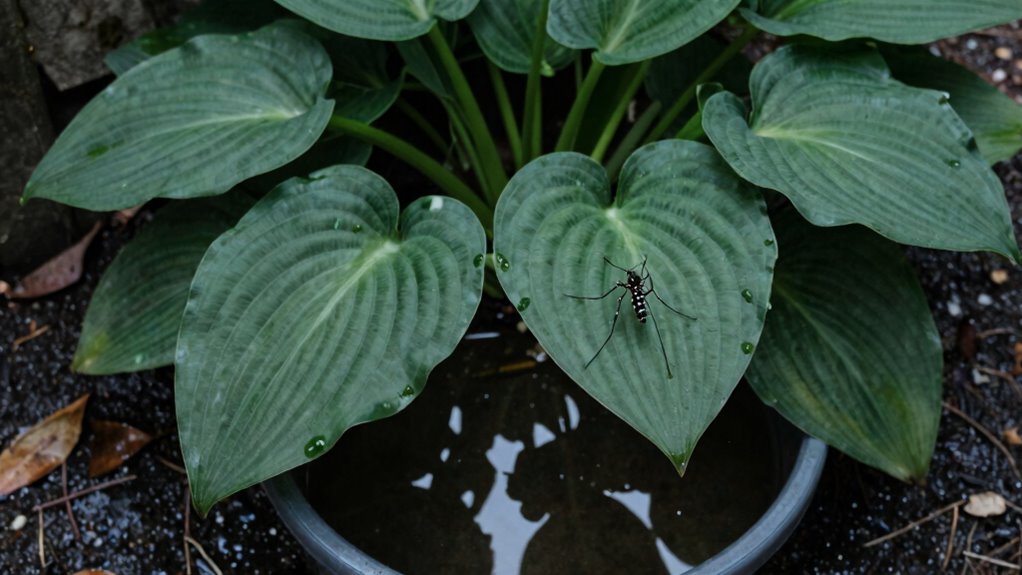
Landscaping can be your best mosquito control tool or your worst enemy. Proper landscape grading slopes soil away from your home to stop rainwater from collecting into breeding puddles.
That low spot near the shed needs grading down or drainage ditches to move water to a dry well. Keep those ditches free of leaves and debris so they don’t become new mosquito habitats.
Trim back overgrown shrubs and keep grass short to eliminate resting spots for adult mosquitoes. A well-maintained yard denies pests both standing water and shady hiding places.
This simple yard care routine makes your property resistant to mosquito infestations. You’ll enjoy a safer, more comfortable outdoor space with professional pest prevention methods.
For times when you need extra protection beyond yard maintenance, consider using DEET-based repellents for maximum long-lasting defense against mosquitoes and ticks.
Install Screens and Clear Clutter to Keep Mosquitoes Out
Installing screens on all entry points, including vents, costs under $50 and pays for itself in bites avoided.
Installing screens on all entry points pays for itself in bites avoided.
Draining any container that holds water for longer than a week, from plant saucers to dog bowls, stops mosquito breeding.
Trimming overgrown bushes and grass lowers humidity and gives mosquitoes fewer places to nap.
Puncturing unused tires or storing them indoors prevents thousands of larvae from hatching in a single tire.
This combination keeps your yard comfortable, not just mosquito-free.
For reliable pest control, always eliminate standing water and reduce clutter.
If mosquitoes persist, apply a permethrin yard spray to create a long-lasting residual barrier against these pests.
Frequently Asked Questions
What Is the Most Effective Mosquito Repellent for My Yard?
The most effective yard repellent is source control, not a spray. Remove standing water and trim overgrown vegetation to stop mosquitoes from breeding.
For active outdoor protection, a mosquito misting system is the top performer. It delivers automated, quick bursts of insecticide across your entire yard.
Installation costs around $2,000, but it works like a permanent bug barrier. It covers the whole property, unlike spot treatments that only protect a small area.
Citronella candles are okay for ambiance, but they only cover about 10 feet. They are not a serious defense for real mosquito control.
A misting system acts like a moat for bugs, keeping pests away continuously. If you want reliable yard protection, invest in a misting system.
Otherwise, you can light a candle and pretend it works. For buyers seeking effective pest control solutions, the misting system is the smart purchase.
Do Mosquito Traps or Foggers Work Better for Large Areas?
For large areas, mosquito traps outperform foggers for long term control. Foggers offer quick knockdown but the chemical fog fades fast and requires keeping people and pets away during treatment.
Traps provide sustained, targeted mosquito control that works around the clock. Effective trap placement matters: position them away from seating areas and near shaded breeding spots.
One high quality unit typically covers about one acre of yard. Think of foggers as a band aid solution while traps are the surgical fix.
It is less dramatic but far more lasting for serious yard defense. For the best pest control results, invest in a reliable mosquito trap and your barbecues will thank you.
How Can I Prevent Mosquitoes From Breeding in My Rain Garden?
Rain garden design is your first line of defense against mosquito breeding. Use sand or gravel instead of soil in the lowest area to create fast draining conditions that dry out within 24 hours.
Avoid vulnerable plant types like cattails that hold standing water. Instead, select native sedges and fibrous rooted plants that dry out between rains and resist pest infestations.
Add a French drain or dry well below the garden bed to whisk water away quickly. This targeted pest control measure eliminates the stagnant water that mosquitoes need to lay eggs.
For long term mosquito prevention, install a submersible pump if drainage is slow. A quick draining rain garden reduces the need for chemical larvicides or mosquito repellent sprays.
You can also apply a mosquito dunk or larvicide tablet to any unavoidable standing water. These biological pest control products target mosquito larvae without harming your garden plants or pollinators.
It sounds like extra work upfront, but it costs far less than a lifetime of itchy ankles and mosquito borne illness protection. Trust the process and your garden will stay functional and pest free.
Will Planting Certain Flowers or Herbs Naturally Repel Mosquitoes?
Planting certain flowers or herbs like citronella, lavender, or marigolds can help, but they are more of a mild deterrent than a magic bullet. They don’t break the mosquito lifecycle, which requires standing water for breeding.
These plants release oils you can use in DIY repellent recipes, like rubbing crushed leaves on skin. For a real yard defense, focus on removing breeding spots and using professional pest control products.
Think of herbs as a backup, not a frontline solution. To effectively reduce mosquito populations, combine them with larvicides or barrier sprays that target breeding sites.
Searching for the best mosquito repellent for your yard? Look for products containing DEET, picaridin, or oil of lemon eucalyptus for personal protection.
For outdoor spaces, consider permethrin-treated gear or a misting system for long lasting control. Your goal should be to eliminate standing water in gutters, planters, and bird baths firsthand.
Then, use plants as a natural accent to support your main pest management strategy. That way, you get both pleasant scents and real mosquito relief.
What Should I Do if My Neighbor Has Standing Water I Cannot Access?
Neighbor’s standing water is a mosquito breeding ground you cannot ignore. It can quickly lead to a full blown pest problem on your property.
Start by having a calm, friendly conversation about the health risks. Mosquitoes carry West Nile and other diseases you don’t want near your home.
Explain that a simple larvicide dunk or draining the water can prevent an infestation. Many homeowners don’t realize how fast mosquito eggs hatch in stagnant water.
If they refuse, check your local property maintenance codes. Most cities require neighbors to remove standing water that attracts pests.
You can also call code enforcement or your county vector control office. They will inspect and issue a notice to drain the area.
For immediate protection, use a mosquito barrier spray around your own yard. A good repellent for outdoor use gives you peace of mind while you wait.
Legal action is a last resort, but it is an option if the issue persists. Start with kindness, then get official if needed.
It is an awkward situation, but taking smart pest control steps keeps your family safe. Your sanity and health are worth the effort.


