
Getting rid of mosquitoes naturally starts with one hard truth: most store-bought sprays only treat the symptom, not the source. The real culprit is stagnant water, where a single forgotten bucket can hatch thousands of mosquitoes in under a week. This guide breaks down exactly how to get rid of mosquitoes naturally, focusing on simple, permanent fixes you can do this weekend. You’ll learn which breeding spots to target, how to treat water you can’t drain, and the cheapest tools that actually work—no hype, no toxic foggers.
We’ll walk you through a practical checklist, from scrubbing bird baths to choosing the right larvicide for ponds. By the end, you’ll have a clear, repeatable routine that cuts mosquito populations fast.
Let’s start with the first and most critical step: identifying every hidden water source on your property.
At A Glance
- Eliminate standing water every three days to break the mosquito breeding cycle.
- Clean clogged gutters and fill tree holes to remove hidden stagnant pools.
- Use Bti dunks in standing water to kill larvae without harming pets or plants.
- Introduce Gambusia fish or copepods to ponds and barrels for natural larval control.
- Cover rain barrels and containers with fine mesh screens to block egg-laying mosquitoes.
Why Is Standing Water the First Thing You Must Eliminate?
Why should anyone focus on standing water first? A single forgotten bucket can breed thousands of mosquitoes in a week.
No spray, trap, or zapper solves that problem. The real fix is boring, simple work.
Check your bird baths and change that water weekly. Or toss a slow-dissolving dunk in for $10 for long term mosquito control.
Clogged roof gutters are a hidden lake holding gallons of stagnant muck. Clean them twice a year so water doesn’t collect and mosquitoes don’t party.
Flip any container holding rain: plant saucers, toys, tarps. Ponds need a pump or fish like Gambusia to eat larvae.
Standing water is their nursery. Remove it and you break the mosquito life cycle.
Standing water is their nursery. Remove it, and you break the mosquito life cycle for good.
Bottom line: skip the gimmicks. Patrol your yard often and dump everything that holds water.
Drain Every Source of Standing Water in Your Yard Every 3 Days
The verdict is simple. Empty anything that holds water every three days to avoid a mosquito infestation.
Unused garden pots, buckets, and even bottle caps can become breeding grounds. Tip them out after a rain to stop larvae from developing.
Rain barrels are great for water conservation. They need tight screens or lids to block egg laying mosquitoes.
Check your gutters and kiddie pools too. Standing water is the top pest control target in any yard. For water you cannot drain, use Mosquito Dunks with Methoprene to kill larvae before they mature.
Drain Unused Containers
Mosquitoes only need a bottle cap’s worth of water to lay eggs, so a forgotten saucer under a potted plant is basically a five-star nursery. Draining unused containers every three days breaks the mosquito life cycle before they become biting adults.
Check these spots weekly to target mosquito breeding sites and reduce pest pressure around your home. Flip over buckets, kiddie pools, and old tires that collect rainwater.
Dump plant saucers and pet water dishes after every rainfall or watering session. For permanent ponds, proper pond maintenance and water feature aeration keep mosquitoes away naturally.
A simple fountain pump, priced around $20 to $40, prevents stagnant water and adds a low-maintenance mosquito control solution. The bottom line is to grab a flashlight, walk your yard, and dump anything holding water.
If you cannot drain a container, use a Bti product like Mosquito Dunks, which costs about $12 for six, specifically for ornamental ponds. Such BTI-based larvicides remain effective for at least 30 days and target only mosquito larvae, not beneficial insects.
This simple habit cuts your mosquito population dramatically without harsh chemicals or citronella torches that barely work.
You will notice fewer bites and less buzzing within a week of consistent draining. For best results, pair this with routine yard inspections and pest control services if you have a large property.
Seal Rain Barrels Tightly
Why bother with cheap covers under $15 from hardware stores.
They block debris and keep your water clean for plants.
Check the seal monthly to prevent mosquito breeding.
Even a dime sized gap can invite pest control issues.
For gutters, add a fine mesh screen over the downspout entry point.
This catches leaves and stops mosquito access completely.
Spend a few bucks on a solid lid now for effective mosquito prevention.
Or battle bites all summer long.
That is a trade worth making for a pest free yard.
No one needs a mosquito nursery in their outdoor space.
Pair this with a botanical yard spray like Wondercide to target mosquitoes in surrounding vegetation.
When You Can’t Drain It, Use Bti Larvicides on Standing Water
Not all standing water can be drained, like a permanent pond or a rain barrel you rely on. That is where Bti products such as Mosquito Dunks provide an effective mosquito control solution.
These donut shaped rings release a natural bacteria targeting only mosquito larvae, killing them before they become adults. The best part for the gardener is that Bti is harmless to people, pets, and plants.
You can treat that stubborn bird bath or ditch without worrying about collateral damage. For long term pest prevention, simply drop a dunk into standing water and let it work.
Buy Mosquito Dunks today for safe, targeted larvicide treatment. They stop mosquitoes at the source, keeping your yard comfortable and protected.
Applying Bti Products
When you cannot drain a water source like a rain barrel or decorative pond, you can still stop mosquitoes dead in their larval tracks with *Bacillus thuringiensis israelensis*, or Bti for short.
For effective mosquito larvicide application, simply drop a Bti dunk into the water.
Each dunk treats up to 100 square feet for 30 days with no measuring or mess.
Place the dunk near the water’s edge, where larvae hide and feed.
These dunks target only mosquito larvae, not fish, pets, or plants.
A six-pack of Bti dunks costs around $12 online for a reliable mosquito control solution.
If you need to buy mosquito killer for standing water, this is a safe and easy option.
Bottom line: if you cannot drain it, use a Bti dunk instead.
Targeting Mosquito Larvae
Some water sources simply cannot be drained, like rain barrels, decorative ponds, and ditches. That is where Bti larvicides step in to target the mosquito life cycle right at its most vulnerable point, the larval stage. These larvicides are safe for kids and pets after drying, mimicking the approach used in natural repellents.
Larval stage identification is simple. Look for tiny, wriggling “wrigglers” near the water’s surface, breathing through a snorkel-like tube.
Drop a Bacillus thuringiensis israelensis dunk into a rain barrel for about twelve dollars for a six pack, treating one hundred square feet each. It releases bacteria over thirty days for effective mosquito control.
The larvae eat it and stop feeding within hours. They die before becoming biting adults, so no draining and no fuss is needed.
Just float a puck in that pond or ditch for hands off pest management. Let nature handle the rest with this simple larvicide application.
Bottom line, Bti is your lazy, effective weapon against standing water mosquitoes. It offers easy pest prevention without draining any water sources.
Safe for Non-Targets
You toss a Mosquito Dunk into a rain barrel or birdbath, and the job is done. No mixing, measuring, or worry about your koi fish is needed.
Bti degrades quickly in direct sunlight, so you should reapply every 30 days. It delivers effective mosquito control without harming pets or wildlife.
For stagnant water you cannot drain, this is your cleanest larvicide choice. A tiny toxin that works precisely where it is needed.
What Are Mosquito Dunks and How Do They Work in Rain Barrels?
Most people eventually find out the hard way that a rain barrel is basically a five-star mosquito resort. Enter the Mosquito Dunk: a donut shaped ring of compressed corncob bits soaked in a biological larvicide called Bti.
Drop one in your barrel, and it slowly releases a bacterium that targets only mosquito larvae, killing them before they can become biting adults. These dunks are harmless to pets, plants, and people, so you can still water your garden without worry.
Drop one in your barrel, and it slowly kills mosquito larvae while staying harmless to pets, plants, and people.
They are additionally safe for natural predators like dragonflies and frogs that might visit the barrel. One dunk treats up to 100 square feet for thirty days, costing around twelve bucks for a six pack.
Just float one in your rain barrel, replace monthly, and watch your resort go from five star to zero star for mosquitoes. For effective mosquito control in standing water, this is a top rated larvicide you can buy. For those seeking alternative DEET-free insect repellent options, natural patches and stickers offer a portable, plant-based solution for personal protection during outdoor activities.
Natural Predators That Eat Mosquito Larvae in Standing Water
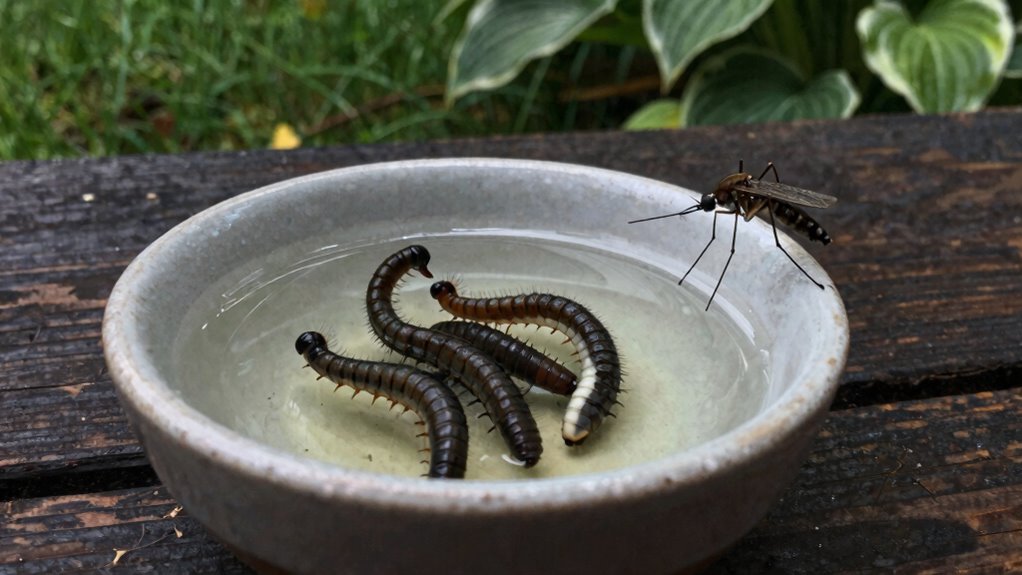
Gambusia fish, often called “mosquitofish,” are relentless larvae eaters and cost around $5 to $10 for a small group. They thrive in ponds and rain barrels, making them a budget-friendly solution for natural mosquito control.
Dragonfly nymphs and copepods also target mosquito larvae in standing water, giving you free biological pest control. Adding these predators to your water features can sharply reduce mosquito breeding without chemical treatments.
For homeowners seeking organic mosquito control, these options work well for rain barrel maintenance and backyard pond care. You can easily buy mosquito-eating fish online or at local garden centers, and they quickly pay for themselves.
This approach supports long-term mosquito prevention tips, since the predators keep reproducing and hunting on their own. Pair them with water circulation or aeration for even better results, and you will see fewer adult mosquitoes in weeks.
Whether you need DIY mosquito management or eco-friendly yard care, these natural predators offer a safe, low-maintenance answer. Just introduce them once, and they will continue to handle the larvae season after season. For additional protection, you can also use catnip oil as a natural repellent to deter adult mosquitoes from the area.
Introducing Gambusia Fish
Why the red tape? Gambusia can outcompete native wildlife, so check with your local fish and game department first. Ask about approved sources or restrictions for mosquito control solutions.
If permitted, a single female can produce dozens of fry monthly, keeping larvae in check for years. No pumps, no chemicals are needed for this natural pest management approach.
Just hungry fish patrolling stagnant water for effective mosquito larvae control. It’s the laziest form of pest control, and that’s exactly the point.
Just confirm you’ve got the paperwork before buying mosquito fish. Nobody wants a mosquito problem and a fine.
Copepods as Larvivores
If Gambusia fish feel like a paperwork headache, copepods offer a far less bureaucratic path to mosquito control.
These tiny crustaceans are barely visible to the eye but are voracious predators of first instar larvae.
They require no permits or pond stocking restrictions.
They work silently in aquatic habitats where standing water cannot be drained.
No permits needed.
Unlike fish, copepods are broadly legal everywhere and simply need to be added to bird baths or rain barrels once a year.
They target a specific stage.
Copepods only eat the youngest larvae, making them a precise tool for early intervention before mosquitoes become flying annoyances.
Low maintenance is a key benefit.
A single application in spring often lasts the season, reducing the need for constant monitoring or refilling.
For small, contained water sources, copepods are a hilariously easy, fish free fix.
They are a practical pest control solution for mosquito prevention and larvae elimination.
Some solar bug zappers offer chemical-free operation to target adult mosquitoes without introducing toxins to the environment.
Dragonfly Nymph Benefits
Let dragonfly nymphs do the dirty work. These voracious predators, living underwater for up to two years, devour dozens of mosquito larvae daily each.
Pond stocking ideally includes these nymphs for long-term mosquito control. They need calm, vegetated water, not fountains.
Water movement deters them, so pair nymphs with still sections of a pond. They are free if native, or you can buy mosquito control nymphs online for about $15 per dozen.
A slight downside is they also eat small fish and tadpoles. For a self-sustaining biological pest control solution, add them once and let nature handle the rest.
The bottom line is that dragonfly nymphs are the lazy homeowner’s best pest management weapon. Just don’t expect them to do dishes. While dragonfly nymphs handle the larvae, UV light traps can help control adult mosquitoes in outdoor areas up to 4,000 square feet without chemicals.
How to Stock a Pond With Mosquito-Eating Fish (Legally)
After you eliminate standing water and treat what remains with Bti, the next step is adding natural predators like Gambusia affinis. These mosquito fish are a top choice for pest control in ponds and water gardens.
Legality matters first, so many states require stocking permits to protect fish health and prevent ecosystem damage. Check with your local fish and wildlife agency before buying mosquito fish.
Violating permit rules can bring fines, which is no fun at all. Here is how to stock your pond legally for effective mosquito management.
Obtain stocking permits from the state agency. They are often free or very low cost, usually between zero and ten dollars.
Failure to do so risks jail time, so seriously do not skip this step. Always source from approved suppliers like a licensed fish farm or extension service.
Avoid wild caught fish because they may carry diseases or pests. To buy mosquito fish that are healthy and legal, use only approved vendors.
Acclimate the fish slowly to your pond water temperature by floating their bag for about 15 minutes. Release roughly 10 to 20 fish per 100 square feet of water surface.
Gambusia breed fast and overstocking harms fish health, so follow that guide. These tiny gluttons eat hundreds of mosquito larvae daily for natural pond pest control.
Stock once and they will self sustain without extra effort from you. Just confirm you are legal first to enjoy a buzzing free yard.
For additional yard pest protection, Amdro granules provide effective perimeter control against many ant species.
Why Does Moving Water With Fountains or Pumps Stop Breeding?
Mosquitoes despise moving water because their biology demands stillness. Female mosquitoes need stagnant water to lay eggs and for larvae to survive.
Mosquitoes despise moving water because their biology demands stillness.
Ripples or currents from fountains or pumps will drown larvae or wash them away. Water movement disrupts the surface tension, making it impossible for adults to land and deposit eggs.
A simple submersible pump, costing around 30 dollars, creates enough circulation in a 50-gallon pond to stop breeding entirely. The larvae, which breathe through a tube at the surface, cannot handle even gentle turbulence.
Mosquitoes are like lazy houseguests. They prefer a calm, undisturbed pool to a lively, splashing one.
For any water feature, adding a fountain or pump is a reliable, chemical-free pest control solution. This method breaks the breeding cycle and keeps your pond mosquito-free without harmful sprays. For indoor spaces, a plug-in diffuser can create a similar chemical-free protection zone by keeping adult mosquitoes away.
Clean Gutters and Fill Tree Holes to Stop Standing Water
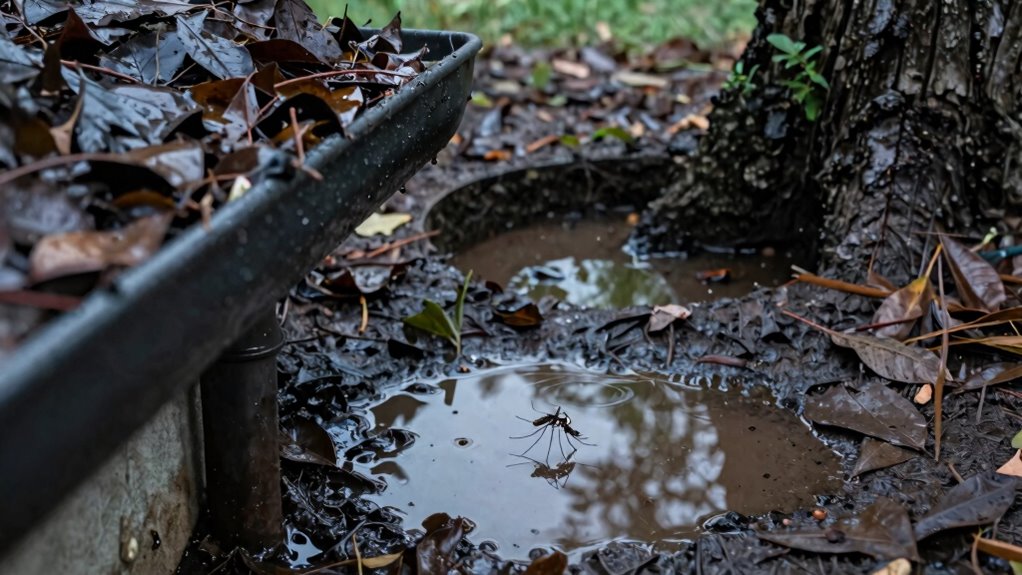
Moving water naturally deters mosquitoes, but not every breeding site has a fountain. Stagnant water hides in overlooked spots and turns them into nurseries for pests.
Fortunately, two simple pest control fixes can eliminate these hidden hazards. Perform annual gutter cleaning to remove leaves, twigs, and debris that block flow.
Clogged gutters create shallow puddles perfect for mosquito eggs. A standard cleaning costs nothing but elbow grease and prevents infestations.
Fill tree holes with sand or mortar to stop water from pooling in natural cavities. A bag of play sand, available for five dollars at hardware stores, handles the job.
A small mortar mix also works for under ten bucks. Inspect gutters after heavy rain to check for standing water and signs of larvae.
Touch up tree holes each spring, as weather can erode fill material. Bottom line: a half‑hour gutter cleaning plus a quick tree hole patch removes breeding grounds.
This approach stops mosquitoes without chemicals or fuss. For lasting mosquito control, these low‑cost steps are a smart buy. Apply food-grade diatomaceous earth in thin, dry layers along ant trails and entry points to complement these efforts by targeting crawling insects that may also be present.
Remove Old Tires and Containers That Create Standing Water
Old tires and neglected containers breed mosquitoes as reliably as a forgotten coffee cup grows mold. A single discarded tire can hatch thousands of mosquitoes in a season, turning your property into a mosquito control nightmare. A garlic spray repellent can be applied around problem areas to further discourage adult mosquitoes by creating an invisible sulfur-based barrier. The solution is simple: tire recycling. Many local waste facilities accept old tires for free or a small fee, so check yours before they become a larval nursery. Container disposal is similarly straightforward. Empty buckets, plant pots, and kiddie pools should be dumped, scrubbed, and either stored upside down or tossed. That old birdbath? Flip it weekly to break the mosquito breeding cycle. Even a soda can cap holds enough water for eggs, so don’t overlook tiny culprits during a yard inspection. Don’t overthink it: walk your yard, identify every water-holding item, and eliminate it. No standing water, no mosquitoes, and fewer biting pests around your family. For long-term pest prevention, schedule a seasonal yard check and use larvicide in drains or low spots that can’t be emptied. Professional mosquito extermination services can also treat problem areas if you notice persistent swarms. Stay proactive with these home pest control tips, and you’ll cut down on itchy bites and potential disease risks without harsh chemicals.
Block Mosquitoes From Getting Into Standing Water Sources
The easiest way to stop mosquitoes from turning your rain barrel into a nursery is to put a simple screen over it. Screening methods work wonders. A fine 16 mesh hardware cloth costs about five dollars per roll.
Physical covers keep adult mosquitoes out. This breaks their life cycle before it starts. Fit a tight lid on rain barrels.
Ensure no gaps exist around the spigot or overflow pipe for complete mosquito control. Install window screen mesh over any open containers. Secure it with bungee cords or zip ties for a durable barrier. For similar protection, use UV-resistant HDPE mesh to block pests while withstanding weather damage.
Cover pet water bowls with small, weighted screens. This keeps water accessible but prevents mosquito eggs from hatching. Check these covers weekly after storms.
Even a tiny tear can invite an infestation of biting pests. A few bucks spent on screening now beats a summer of scratching later. Use these low cost pest prevention tips for lasting relief.
Flush Bird Baths and Bromeliads Every 3 Days in Summer
A bird bath without a flush schedule is basically a mosquito bed and breakfast with free real estate. In summer, those pests need only a week to go from egg to biter, so a three day flush breaks the cycle completely. This method is more effective than relying on essential oil repellents, which only provide up to six hours of protection and require frequent reapplication.
For bird bath cleaning, dump the water, scrub the sides with a stiff brush, and refill fresh. No soap needed, just friction.
Bromeliad maintenance is trickier since their leaves cup water naturally. Flush each rosette with a hose or pour water through, every three days, to wash away larvae before they mature.
It takes two minutes, costs zero dollars, and spares you the chemical route. Bottom line: set a phone reminder, pick a routine, and make flushing a habit.
Your yard stays peaceful, your birds stay hydrated, and mosquitoes get evicted. This simple pest control routine keeps your bird bath and bromeliads safe for wildlife without harsh sprays.
Frequently Asked Questions
Can Mosquitoes Breed in Muddy Puddles or Damp Soil?
Yes, mud puddles and damp soil can breed mosquitoes if water stands for more than a few days. Even a shallow tire track holding water for a week becomes a perfect nursery for larvae.
Damp soil alone won’t support mosquito breeding, so that myth is busted right here. They need liquid water to complete their life cycle, which is why persistent puddles are your real enemy.
To stop mosquitoes in your yard, check for standing water after every rainstorm. If a puddle lasts four days or longer, treat it with Bti dunks or mosquito bits for fast, targeted control.
For a permanent solution, consider larvicide products that kill larvae before they become biting adults. Dumping out small puddles is free and effective, but for larger areas, a granule or liquid Bti treatment works best.
Smart homeowners know that mosquito prevention starts with eliminating breeding sites. Search for “best larvicide for standing water” or “long lasting mosquito killer for yards” to find top rated solutions.
How Do I Check for Hidden Standing Water in My Yard?
Checking for hidden standing water means playing detective in your own yard. Mosquito behavior is predictable: they need still water to breed.
Look for overturned leaves, clogged gutters, or low spots that hold puddles for days. A simple DIY trap is a tin can or plant saucer placed in a shady corner. If it collects water within 48 hours, you’ve found a problem spot.
Check under tarps, inside old tires, and behind downspouts. A five minute sweep after each rain, using a flashlight to spot shimmers, beats spraying later.
That’s the whole trick for effective mosquito control. Find the water and remove it before pests take over your yard.
Will Bti Harm Bees if They Drink Treated Water?
No. Bti toxicity is extremely specific to mosquito larvae, so it won’t harm bees even if they drink treated water.
Bee foraging behavior does not target stagnant water sources where Bti is applied, as they prefer flower nectar.
The bacterial toxin in Bti only activates in the alkaline gut of certain insect larvae, not adult bees.
This means you can safely treat rain barrels or bird baths without worrying about your buzzing buddies.
For effective pest control, Bti is the perfect mosquito killer that keeps your yard safe for pollinators.
Looking to buy a proven larvicide? Choose Bti granules for standing water treatment.
It is a smart purchase for homeowners who want rapid mosquito reduction without harming beneficial insects.
You can confidently apply Bti around ponds, buckets, and even clogged gutters to stop mosquitoes before they bite.
How Quickly Do Mosquito Larvae Turn Into Adult Mosquitoes?
Larval development from egg hatch to adult emergence typically takes 7 to 14 days. Temperature and food supply speed up or slow down this process significantly.
Warmer water accelerates growth like a fast food service, while cooler conditions act like a slow cooker. The mosquito pupa stage is a brief non feeding phase before the adult emerges.
So in a week or two a standing water puddle can become a buzzing nightmare. That’s why professional mosquito control treatments target breeding sites to break the life cycle quickly.
For effective yard protection, look for larvicides and adulticides with residual action. Buying a quality mosquito control product now can stop infestations before they start.
Are There Plants That Repel Mosquitoes From Water Features?
Mosquito repellent plants near water features are mostly a myth, honestly. They won’t stop breeding in standing water or pond edges.
True pest control hinges on water feature maintenance, like moving water or adding larvicide. Mint or citronella grass might smell nice, but mosquito larvae don’t care.
A fountain or pump is a better bet, costing between $50 and $200. It beats buying dead end plants that don’t kill larvae.
Dragonflies are the real predators here, not herbs or scented foliage. So skip the botanical hype for mosquito prevention.
Check for standing edges weekly and let a pump do the dirty work. For the best pest control results, combine aeration with a targeted larvicide product.
Smart buyers focus on water circulation and larval treatment, not planting tricks. That is the practical way to keep your yard safe from mosquito populations.


