
Getting rid of mice in an apartment starts with sealing gaps, not just setting traps. Mice can squeeze through a hole the size of a dime, especially around pipes and baseboards.
That’s why stuffing steel wool into every crack and covering it with caulk creates a barrier they can’t chew through. Without this step, you’ll keep catching the same revolving door of rodents.
Your landlord is actually required by law to fix structural gaps, so that part isn’t on you. In this guide, you’ll learn exactly where to seal, which traps actually work, and how to handle landlord-proofing.
Stick around for the simple tricks that stop mice for good without wasting your time or money.
At A Glance
- Seal gaps larger than a pencil with steel wool and waterproof caulk.
- Place snap traps perpendicular to walls with peanut butter as bait.
- Store dry goods in glass or metal containers and clean daily.
- Check and seal pipe chases, baseboards, and dryer vents regularly.
- Request landlord seal structural gaps as a legal pest-proofing duty.
Stop Asking Why Mice Return: Seal Their Entry Points First
Stop wondering why mice keep coming back. It is not a mystery; it is a building-wide plumbing issue.
Mice enter through gaps around pipes in your kitchen or utility closets. Any gap bigger than a quarter-inch is a mouse highway.
Your tenant rights include a pest-free home, but sealing those gaps is your first move. Use steel wool mixed with caulk for a smooth patch, not just duct tape, which mice chew through.
Steel wool and caulk seal gaps better than duct tape, which mice chew through.
Odor management matters because dead mice in walls stink. Seal now to avoid that smell.
Focus on pipe chases under sinks and behind appliances. Door sweeps on all interior doors likewise help block mice.
Quick fix: buy a tube of caulk for about five dollars and a pad of steel wool for three dollars. Bottom line: seal first, trap later. No sealing, no solution. For long-term protection in damp areas, choose rustproof copper mesh to resist corrosion and gnawing.
Find and Seal Every Entry Point in Your Apartment
Mice squeeze through gaps as small as a pencil, so sealing every crack is the real battle when using effective rodent proofing. Start with steel wool packed into holes, then cover it with caulk because they can chew through foam but not metal.
Focus on pipe chases under sinks, behind appliances, and where utility lines enter walls, since those are the mouse highways in any pest control for apartments plan. Inspect baseboards and window frames for new gaps, as mice will find even tiny pest entry points over time.
Apply a silicone based caulk over the steel wool to create a permanent rodent exclusion barrier around your home. Check your door sweeps and dryer vents too, as these are common spots where rodent control services often find breaches.
Using cavity wall insulation or cement patch on larger openings adds an extra layer of defense against mice in the house. Stick with this approach and you will keep your apartment mouse free without harsh chemicals. For additional defense, consider ultrasonic pest repellers that emit high-frequency sounds to irritate rodents without bothering humans or pets, though they work best in open rooms since sound cannot penetrate walls or furniture.
Steel Wool and Caulk
The classic duo of steel wool and waterproof caulk might not sound glamorous, but it is your apartment’s best defense against tiny, furry invaders.
Steel wool acts like a scratchy, unchewable barrier. Mice hate its texture.
Waterproof caulk seals it in place, creating a smooth, permanent plug they cannot pull out or gnaw through.
Together, they form a simple, cheap fortress for any gap you find. This rodent proofing solution costs less than $10 total.
Crumple steel wool tightly into openings larger than a pencil eraser. Mice squeeze through ¼ inch gaps, so block them for effective pest control.
Apply waterproof caulk over the steel wool to prevent rust and keep it anchored. Smooth it flush with the wall for a professional finish.
Wear gloves. Steel wool splinters easily, and caulk is sticky enough to ruin a good pair of jeans.
Check each seal after it dries. A proper bond means zero wiggle room for curious noses.
Replace any loose steel wool before reapplying caulk. Half hearted patching invites repeat visitors, so use this home maintenance tip for lasting exclusion.
This method relies on thick, fluffy fiber texture that makes gnawing impossible for rodents.
Common Entry Point Locations
Since mice rarely declare their entry points, the detective work falls to the tenant. Rodent behavior reveals their routes as they hug walls and squeeze through any gap over a quarter inch.
They follow pipes like highways. Check behind the stove, under the sink, and along baseboards where flooring meets walls.
Look inside cabinets, near the refrigerator’s kickplate, and around dryer vents. Nest locations hide behind appliances or in cluttered closets, often near a food source.
Gaps around electrical wiring, gas lines, and window frames are prime real estate for invaders. Seal each opening with steel wool, which mice hate to chew, mixed with caulk for a permanent pest control fix. Consider using a brush seal strip on sliding doors and windows to block pests without needing tools.
If you can slide a pencil through, a mouse can too. That is not a riddle but a rule for effective rodent exclusion.
Get crawling to find those holes and plug them before dinner guests arrive. The four legged kind showing up uninvited means you need immediate home sealing solutions.
Sealing Pipe Chases and Gaps
Good news: you already know where the holes are from your crawlspace inspection of entry point locations. Now seal those pipe chases and gaps with proper exclusion materials. A 1/4 inch gap is all a mouse needs, so patch every crack for effective rodent proofing. Effective rodent exclusion requires the right pest control seal kit for doors and windows in addition to pipe chases.
Use copper mesh instead of steel wool. It won’t rust and mice cannot chew through it, plus a $10 roll goes a long way for pest prevention. Apply a high quality silicone caulk or expanding foam over the mesh to create a smooth, gnaw proof seal.
Check behind appliances, under sinks, and around utility lines where pipes enter walls. These are prime pest entry point locations for home exclusion work. Seal gaps around dryer vents and HVAC lines with a metal flashing and foam combination, costing about $15.
Recheck monthly because mice can exploit new gaps from settling or renovations. Bottom line: patch every hole with durable exclusion materials and you will stop the invasion before it starts.
Best Materials for Plugging Mouse Holes in Apartments
Steel wool and copper mesh are the best materials for sealing mouse holes in apartments.
For a permanent rodent exclusion solution, mix steel wool with caulking compound to create a tough patch.
Mice can pull out loose steel wool like a kid grabbing a loose tooth, so don’t just jam it in there.
Copper mesh won’t rust and is easier to work with for pest control entry points.
Make certain the final seal is smooth and flush to the wall to block mice effectively.
This DIY rodent proofing technique ensures no gaps remain for pests to gnaw through.
For added protection, high-purity copper foil tape creates a conductive barrier that discourages mice from chewing through sealed gaps.
Sealing With Steel Wool
When tackling mouse holes in an apartment, the right barrier matters more than most people expect. Steel wool is a top choice for pest control because its wiry, metallic strands are impossible for rodents to chew through.
This simple material blocks mouse entry points and forces them to look elsewhere for food and shelter. For a lasting rodent proofing job, don’t just stuff the gap loosely; pack the steel wool firmly and push it deep into the hole.
A standard roll costs only $4 to $8 at any hardware store, making it a pocket-change investment for home maintenance. Because steel wool rusts over time, pair it with a sealant like caulk for outdoor or damp areas to keep the barrier intact.
Choose medium-grade steel wool, such as Grade 1 or 2, for the best mix of easy handling and tough defense. Always wear gloves during installation, since the fibers can be sharp and irritate your skin.
Avoid using steel wool near electrical outlets unless the gap is fully sealed with a non-conductive material to prevent fire hazards. In short, this is a cheap, durable fix for stopping mouse travel routes and keeping your living space rodent-free.
For a complete exclusion strategy, combine it with caulking and regular inspections around baseboards and pipes. That way, you get both immediate blockage and long-term protection without frequent rework. For those who prefer a non-toxic approach to handling any mice that do get inside, reusable snap traps offer a chemical-free and cost-effective solution for ongoing control.
Copper Mesh and Caulking
Copper mesh and caulking make the gold standard pair for sealing mouse holes in apartments. The mesh costs about $10 per roll and is rustproof and chew proof. Mice cannot gnaw through it like they can with steel wool. Pair it with a quality caulk for around $5 per tube to create a smooth, permanent patch.
This combo works best after trap spacing and prebaiting success have reduced active mice. Sealing holes first can trap rodents inside, so timing matters. Apply copper mesh tightly into gaps, then seal the edges with caulk. It is ideal for pipe chases and utility closets.
One quip: mice hate this more than a landlord hates a complaint call. The bottom line is that this duo blocks entry for good. You avoid constant re-applications and achieve long term rodent exclusion. For effective pest control, invest in these durable entry point seals. For apartments with lingering infestations, tamper-resistant bait stations provide secure containment of poisons near sealed entry points.
How to Set Snap Traps So Mice Can’t Escape
For the best shot at snapping mice fast, place snap traps perpendicular to walls. Think right angles like a T shape.
For the best shot at snapping mice fast, place snap traps perpendicular to walls.
This forces mice to pass directly over the trigger plate as they scurry along baseboards, maximizing capture success. Trap placement matters more than bait selection, though peanut butter or chocolate tied securely to the trigger works well.
Loose bait invites theft, so tie it on with thread for reliability. Position traps with the trigger side facing the wall, not away from it.
Use two traps side by side, as mice often leap over a single one. Set the trigger sensitivity so a light touch snaps it, but not so light it fires at air currents.
Place traps inside cardboard boxes with entry holes cut out, because mice investigate enclosed spaces. Check traps every 24 hours, as stale bait or a dead mouse scares off others. The Victor Wide Pedal Snap Rat Traps offer eco-friendly construction with an expanded trigger to increase capture likelihood.
Where to Place Traps in Any Apartment (Small or Large)
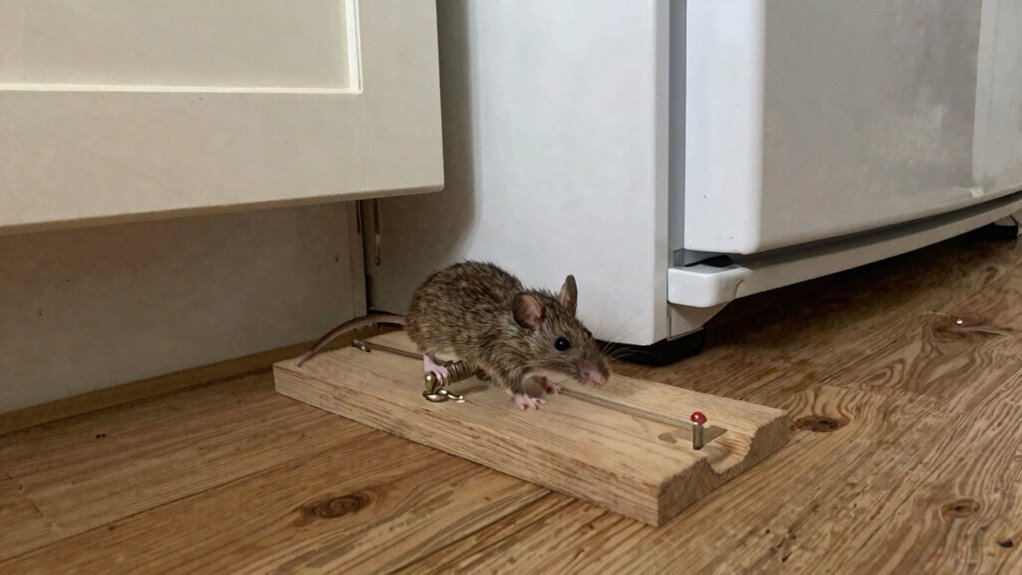
The best trap in the world is useless if it’s sitting in the wrong spot. Mice stick to baseboards, under appliances, and in dark corners.
Place traps within 10 feet of suspected activity, key walls, or droppings. Sticky traps and glue boards work well along these travel paths, but confirm they’re snug against the wall, not out in the open.
For a small studio apartment, focus on high traffic zones under the sink and behind the fridge. Use two traps per zone and set them perpendicular to the wall for maximum coverage.
In a medium one to two bedroom apartment, cover the kitchen, utility closet, and pantry. Place traps every 10 feet along walls in every room to block pest travel routes.
If you have a large three bedroom or more apartment, check basements, laundry rooms, and hallways. Pay special attention to perimeters and dark storage areas where mice hide.
No matter the apartment size, always inspect pipe chases and door gaps. Seal these entry points first, then set traps directly inside them to catch mice on arrival.
Double check each trap is snug against the wall, not floating in open space. This simple step turns a good pest control plan into a proven rodent solution that works. Using non-toxic, pesticide-free adhesives ensures safety for kids and pets even if placed in sensitive areas.
Peanut Butter, Chocolate, or Bacon: The Bait Mice Cannot Resist
Reaching into your bait stash of peanut butter, chocolate, or bacon feels like choosing a favorite child. All three work, but each has quirks that matter for effective rodent control.
Peanut butter is the gold standard for bait longevity because it stays sticky for days. However, warm apartments can turn it into a messy puddle that mice avoid.
Chocolate, especially dark or milk candy, offers high sugar appeal for pest attraction. But it melts or dries out fast, reducing its effectiveness over time.
Bacon provides a strong protein scent and stays intact longer than soft baits. Yet it can rot, creating bait longevity issues if left out too long.
Rotating baits weekly prevents rodent bait aversion and keeps pests curious. Mice can learn to ignore one scent, so switching baits maintains their hunger.
Tie or glue bait securely to the trap trigger for best results. Loose bait lets mice steal the treat without springing the trap, which is embarrassing and unhelpful for pest control.
For consistent results, peanut butter wins for staying power in your pest control routine. Never rely on a single option, rotate and secure baits for maximum effectiveness.
Using baitless traps placed directly in active runways can also eliminate the need for any bait at all.
Sanitation Changes That Starve Mice Out of Your Apartment
Since mice can survive on crumbs and drips alone, starving them out demands a level of sanitation that borders on obsessive. Every cracker fragment under the fridge and grease splatter behind the stove becomes a five-star meal for a rodent.
Wipe counters nightly, sweep floors daily, and store all dry goods in thick glass jars or metal canisters with tight lids. Leave nothing out, because even a single dropped oat is an invitation for an infestation.
Pair this clean sweep with effective rodent proofing by sealing gaps after cleaning. If you skip this step, mice will simply dine from the neighbor’s unit.
Odor removal is equally critical, so use an enzyme cleaner to erase scent trails left by droppings or urine. If mice smell food, they will find it, no matter how clean your counters are.
Without crumbs and without smells, your apartment becomes a ghost town for mice. This pest control strategy is your best bet for a permanent mouse removal solution. For an additional layer of defense, place peppermint oil pouches along walls and in corners to naturally repel rodents without chemicals.
Skip the Poison: How to Use Bait Stations Safely in Apartments

Skip the poison. Your neighbors, pets, and future self will thank you.
Skip the poison. Your neighbors, pets, and future self will thank you.
Rodenticide in apartment walls creates dead-mouse odor, an unforgettable fragrance.
Safer bait stations work, but only with stubborn precision. Seal gaps with weather stripping first, or you are feeding a revolving door.
Use tamper-resistant stations bolted or locked in shadowy corners. Check stations weekly with gloves and a flashlight.
Choose block baits over pellets for less mess and fewer crumbs. Pair baiting with live trapping near suspected entry points for quick wins.
Dispose of uneaten bait per local rules. Do not toss it in communal trash.
If stations keep emptying without dead mice, stop baiting and start sealing. The bottom line: bait is a stopgap, not a fix.
Proper exclusion is the real hero for long term rodent control and pest prevention.
Look for stations with clear lids or see-through windows to check bait levels quickly without spooking rodents.
Your Landlord Is Likely the Problem: How to Force a Building-Wide Fix
Two responsibilities sit on your landlord’s shoulders, and they are not optional. Structural pest proofing and sanitation in common areas are the law.
If mice come from utility closets or pipe chases, that is a building-wide problem. Your tenant rights include demanding building wide inspections of basements, laundry rooms, and ceiling spaces.
Many landlords ignore these until you cite your renters’ legal options. Send a written request, document every hole you find, and reference your local health code.
If they stall, you can withhold rent or break a lease in some states. Check your local laws first before taking that step.
Escalating to code enforcement or a housing inspector often gets fast results. Landlord responsibilities aren’t suggestions, they are the law.
Push for a coordinated fix, not just spot treatments. You pay for a livable space, so insist on a complete rodent control strategy, including ultrasonic devices with adjustable frequency to supplement structural repairs.
Frequently Asked Questions
Can Mice Climb Walls to Reach Upper-Floor Apartments?
Yes, mice can climb walls to reach upper floor apartments. These tiny rodents use their claws to scale exterior surfaces like brick, stucco, and siding with ease.
Interior pipe access inside walls acts like an express elevator for mice. Once they find a gap near plumbing, they ascend effortlessly to any level.
Think of them as furry mountaineers that need zero gear to travel upward. For long term control, start by sealing all utility line openings with copper mesh or steel wool.
Place snap traps along baseboards at intervals no wider than 10 feet. This targeted rodent control strategy stops the climb and stops the problem before it spreads.
How Do I Know if Mice Are Nesting Inside My Walls?
Gnawing sounds from inside your walls, especially at night, are a strong sign of mice nesting. You might also notice a sharp ammonia smell from their urine, which confirms an active infestation.
Listen near pipes and utility lines, because mice travel along those gaps. Hearing scratching or squeaking behind kitchen cabinets or baseboards means they have likely settled in.
Check for droppings near small openings and along baseboards to spot their routes. The most effective rodent control starts with exclusion sealing every gap you find.
Setting traps along walls will help verify activity and reduce the population fast. For long term pest prevention, concrete action beats guesswork every time.
Are Ultrasonic Repellents Effective for Keeping Mice Away?
Ultrasonic repellents are not effective for keeping mice away. The sound frequency from these devices does not penetrate walls or furniture, so mice quickly habituate to the noise.
The real work is sealing holes, setting snap traps, and removing food sources. Save your money for weatherstripping and steel wool instead of plugging in a device.
Device placement alone won’t fix a building level problem. Rodent control requires exclusion, sanitation, and mechanical traps for best results.
Those little rodents could care less about your high pitched playlist. If you want to buy a pest control product that actually works, invest in professional grade snap traps or bait stations.
For long term prevention, focus on rodent proofing cracks and gaps with copper mesh. Sealing entry points is the only proven way to stop infestations before they start.
How Long Does It Take to Fully Eliminate a Mouse Infestation?
A full elimination timeline depends on the method you choose. A professional pest control service typically clears an infestation in two to four weeks.
Technicians seal every entry hole, set rodent traps, and monitor progress closely. A DIY mouse removal timeline is longer, often stretching to six or eight weeks.
You will learn as you go, and you might make a few mistakes along the way. For a quick and effective fix, never skip the steel wool.
It is cheap, easy to install, and stops rodents from chewing through gaps. Use it with caulk to block entry points and speed up your mouse control results.
Will a Cat or Dog Alone Solve My Mouse Problem?
Simply put, no, a cat or dog alone won’t solve your mouse problem. Many cats have zero prey drive and much prefer a nap over chasing rodents.
A dog might bark at a mouse but rarely catches one effectively. Think of them as a furry deterrent, not a reliable pest control solution.
Relying on a pet is like using a mousetrap with cheese but forgetting the trigger. It’s hope, not a real plan for rodent removal.
For real results, start with exclusion: seal all holes with steel wool and caulk for under $10. Then set quality snap traps at about $2 each for targeted mouse control.
Accept the truth: pets are companions, not extermination tools. The smart purchase here is professional grade exclusion supplies, not a new pet.
For effective pest control, focus on sealing entry points and using proven trapping methods. That’s how you solve a mouse problem for good.


