
Finding and destroying cockroach egg cases is one of the most effective ways to stop an infestation for good, since each case can hatch into up to 40 new roaches. These hard, dark brown oothecae hide behind refrigerators, under sinks, and along baseboard gaps—so grabbing a bright flashlight is your first move.
Crushing them instantly on a hard surface works, but to truly win, you need a plan that covers hidden nooks with boric acid or IGR sprays every 7–10 days for 8–12 weeks. This article walks you through exactly where to look, how to treat each spot, and what products get the job done fast.
At A Glance
- Cockroach egg cases are dark, purse-shaped oothecae, 6–8 mm long, hidden in warm cracks.
- Inspect behind refrigerators, under sinks, inside cabinet hinges, and near pipe drafts.
- Destroy oothecae by stomping firmly on a hard surface or scraping and then crushing.
- Vacuum fragments with a HEPA-filtered shop vac, then seal the bag outdoors.
- Treat every 7–10 days for 8–12 weeks to kill newly hatched nymphs.
What Does a Cockroach Egg Case Look Like?
Effective roach gels like those containing Fipronil provide long-lasting control by placing small baits in cracks and crevices.
The Best Way to Destroy Cockroach Egg Cases Immediately
The fastest way to destroy a cockroach egg case is to crush it. Squishing the ootheca, a hard purse shaped pod holding up to 40 eggs, is immediate case crushing.
Stomp firmly on a hard surface. Vacuum disposal of the fragments with a HEPA filtered shop vac then prevents any survivors.
For glued on cases like on cabinets, scrape them off with a stiff brush first then crush. A budget tip is that a 25 dollar handheld vacuum works fine for small jobs.
But a 100 dollar Shop Vac with HEPA for allergy prone individuals is better for multiple finds. Crushing is free, instant, and requires no chemicals.
Missed fragments mean survivors. Vacuuming guarantees total removal.
The bottom line is crush first, vacuum immediately, and seal the bag in outdoor trash within five minutes. It is oddly satisfying though the cleanup is less so. For additional protection, boric acid powder applied to cracks and crevices can kill any hatched nymphs.
Where to Find Cockroach Egg Cases in Kitchens and Bathrooms
Finding a cockroach egg case feels like a small, grim treasure hunt, but the stakes are high. Each ootheca, that hard purse-shaped pod, holds up to 40 future pests.
Finding a cockroach egg case feels like a grim treasure hunt—each pod holds up to 40 future pests.
In kitchens, sneak behind the fridge’s warm motor area and under the sink near pipe drafts. Also check inside cabinet hinges for these glued-on pods.
Appliances like stoves and dishwashers are prime real estate for cockroach egg cases. Bathrooms offer similar hiding spots, with bathroom dampness drawing them in.
Look under sinks, behind toilets near the floor, and around pipe drafts where pipes punch through walls. Check medicine cabinet hinges and any dark, tight crack near a water source.
Each ootheca you find and crush spares you a swarm. Treat those spots with a flashlight and a squish, parent-style.
To ensure you catch every hidden pod, pair that search with a broad-spectrum kit that covers all lifecycle stages, including eggs, larvae, and adults.
Inspect Like a Pro: Where to Shine Your Flashlight
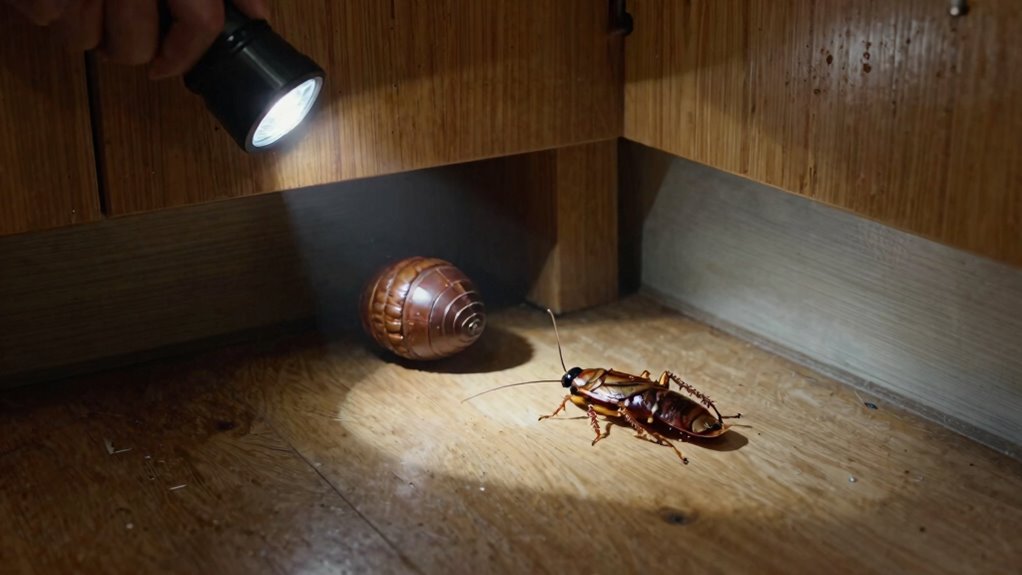
A simple flashlight becomes a cockroach egg case detector when you aim it into dark cracks and crevices. Those oothecae, the scientific name for egg cases, are masters of disguise. They look like tiny brown purses or rice grains that often blend with wood tones. Focus your inspection on these spots for effective egg identification and nymph tracking.
| Where to Shine | What to Spot | Why It Matters |
|---|---|---|
| Behind refrigerators | Oothecae 6-8 mm long | Common nest site, near heat |
| Under kitchen sinks | Dark, shiny capsules | Dampness attracts roaches |
| Inside cabinet hinges | Small, purse-like cases | Easy to miss, perfect for hiding |
| Along baseboard gaps | Empty split cases | Sign of recent hatching |
Start with the fridge coils because roaches love the warmth. Then check under the sink where pipes meet walls. A bright light reveals even tiny dark capsules for thorough pest control. For best results, use a UV flashlight with a 395nm wavelength for broad coverage that makes oothecae glow slightly, making them pop out from wood and paint. This method saves you time and money with no expensive gadgets needed. Buy a UV flashlight now to spot roach egg cases fast.
Why Cockroach Egg Cases Mean You Must Treat Every 7–10 Days
Persistence is the real enemy here, not just the roaches themselves. Egg cases hold the entire future breeding cycle hostage, which is why your treatment timing must sync to their hatching schedule.
A typical hatch window lasts under two days, but egg viability stretches across weeks. So newly laid cases keep popping off, and missed timing leads to nymph emergence that floods your kitchen with 30 to 40 fresh mouths per case.
A typical hatch window lasts under two days, but egg viability stretches across weeks, so newly laid cases keep popping off.
The trick is to treat every 7 to 10 days, like clockwork. That strips away any new hatchlings before they mature into egg laying adults, which takes about six weeks. Applying a gel bait with colony elimination properties ensures any roaches that do hatch carry poison back to disrupt the breeding cycle.
Every week plus retreat smashes the chain at a different link. It is relentless, but cheaper than one massive infestation later.
Bottom line: mark the calendar, babysit those gaps, and treat on repeat. No skipping: your future self will thank you.
Use Baits and Growth Regulators to Stop the Life Cycle
Apply bait in dime sized spots every 8 to 12 inches.
This spacing ensures ants or roaches pick up the poison and carry it back to the nest.
Insect growth regulators or IGRs stop nymphs from becoming reproducing adults.
Use them to break the life cycle before new infestations begin.
Time your treatments for hatching, roughly every 7 to 10 days.
Consistent reapplication targets young pests before they mature.
These products remain effective for up to six months against cockroaches after a single application.
Apply Baits Strategically
Timing is everything, as female German roaches carry their egg cases until just 24 to 48 hours before hatching.
Strategic bait placement is key, so put gel baits in pea sized dots every 8 to 12 inches in their hideouts like behind fridges or under sinks.
This targeted bait application forces nymphs to eat the poison before they can reproduce.
For best results, reapply baits weekly for 8 to 12 weeks.
That’s about $12 to $20 per tube, covering 30 to 40 spots.
The goal is to kill nymphs before they lay new egg cases.
Bait where they stash egg cases, swap bait types every few weeks to avoid resistance, and stick with it.
Miss a week and you’re back to square one.
Use non-repellent formulas to ensure roaches do not avoid the bait, as imidacloprid baits spread through colonies via droppings for a secondary kill effect.
Use Insect Growth Regulators
Use insect growth regulators to target roach reproduction. Baits alone won’t stop the next generation from growing up.
Insect growth regulators (IGRs) mimic hormones to block nymph development. This stops young roaches from molting into breeding adults.
IGRs also target adult sterilization timing. They prevent females from producing viable eggs.
These products come as sprays or bait additives. They cost about fifteen to twenty-five dollars per container.
Apply IGRs every two weeks for best results. They are slow acting so don’t expect instant dead roaches.
The treatment permanently breaks the roach life cycle. For tough infestations, pair IGRs with gel baits.
The bottom line is simple. If you want to stop roach babies, IGRs are the unsung hero quietly disrupting their growth.
Like hydroprene foggers for fleas, IGRs disrupt insect growth to prevent maturation and reinfestation for up to seven months.
Time Treatment for Hatching
Effective cockroach control hinges on attacking the breeding cycle, and the timing of your treatments is absolutely critical. Since the hatching schedule is unpredictable, you must treat every 7 to 10 days for 8 to 12 weeks.
This catches newly hatched nymphs before they ruin your egg viability efforts. Apply gel baits in pea-sized dots every 8 to 12 inches in hiding spots.
They poison roaches and spread through the colony like a bad rumor. Meanwhile, insect growth regulators are the secret weapon.
They stop nymphs from ever becoming breeding adults, breaking the cycle for good. Think of it as a pest birth control, no new roaches, no new problems.
Sprinkle light dustings of boric acid in wall gaps, too. It damages cockroach shells, adding a third layer of defense.
For additional protection, use sprays that offer up to 18 months of outdoor residual protection to prevent reinfestation around entry points.
The bottom line is to combine baits, IGRs, and dust. Stick to the schedule and you will starve the next generation.
How to Ensure No Egg Case Survives Your Treatment
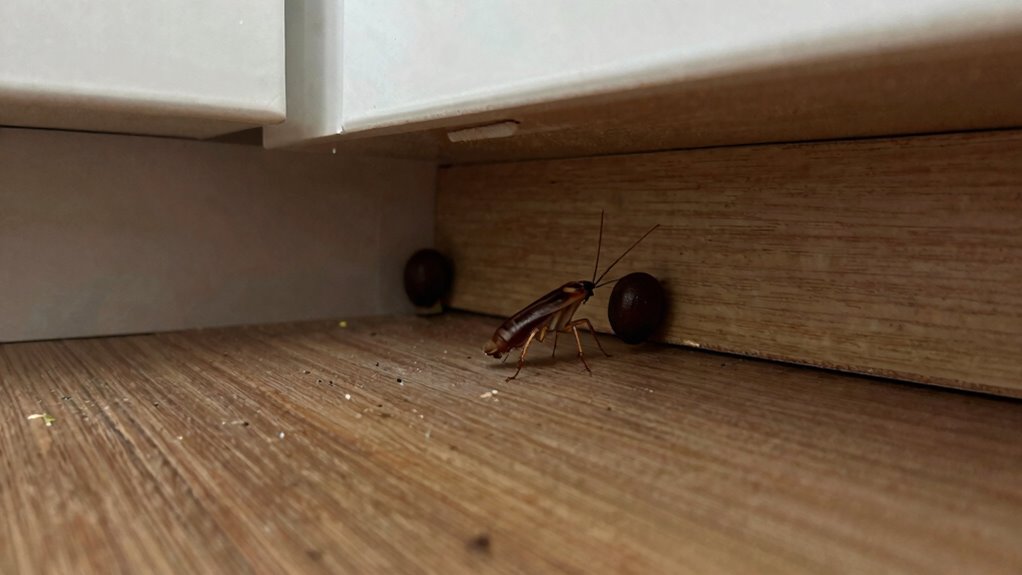
Thoroughness is the difference between a one-and-done treatment and a six-month saga. Let’s make sure no egg case slips through by targeting every ootheca.
Each egg case is a ticking time bomb. Its incubation period ends in nymph emergence just days after you spray.
If you miss one, you’re restarting the clock. Here’s what to lock down for effective pest control.
Inspect every possible hiding spot behind fridge motors, inside cabinet hinges, and under sink pipes. Use a bright flashlight because egg cases blend with wood, so slow down.
Treat every 7 to 10 days for at least 8 weeks. That’s not a suggestion; it’s the math for nymphs that hatch in staggered waves.
A single missed cycle lets them reach breeding age. Scrape off glued cases with a stiff brush, then crush them.
Stomping works, but vacuuming with a HEPA filter seals the deal. Just toss the bag outdoors.
Bottom line: skip a step, and you’ll be repeating this routine. Don’t.
To complement your efforts, place discreet bait stations behind appliances to eliminate any roaches that emerge from missed cases.
Apply Dusts and Sprays to Kill Embryos in Hidden Nooks
Boric acid dust is a cheap, effective weapon for pest control; puff it into every crack and crevice behind appliances and baseboards. 99% or higher purity ensures maximum effectiveness and longer-lasting pest control. Residual pesticide sprays work too, coating surfaces where embryos lie hidden and killing them on contact.
For best results, use both methods together, targeting those tight, dark nooks where egg cases love to lurk.
This dual approach ensures you kill roach embryos before they hatch.
Boric Acid Dusting
A light dusting of boric acid is like leaving broken glass in a dark alley for roach egg cases. It works, but you have to know exactly where to apply the powder.
This fine white powder acts as a slow poison for embryos, drying them out and cutting their shells when they groom. For effective egg case destruction, use a bellows duster for about eight dollars into hidden nooks.
Target warm spots like behind the fridge motor, under the stove, and inside cabinet hinges. Females frequently drop oothecae in these areas.
Use a puff duster for hard to reach gaps, and a one millimeter layer is enough. Avoid piling it up, because roaches will avoid clumps.
Leave the dust undisturbed for two weeks to kill embryos and nymphs that crawl through it. Boric acid dusting is a cheap, safe, and effective roach control method, though natural plant-based sprays offer a no-dust alternative that kills on contact. Just don’t inhale the stuff, or you will be the one coughing.
Residual Pesticide Sprays
Boric acid dusting works like a slow-motion demolition derby for roach embryos, while a residual pesticide spray offers a more direct approach. It kills them on contact, and the key is matching spray duration to the surface type. For long-term control, borax bait can also be effective by targeting the colony through worker ants returning poison to the nest.
On non-porous surfaces like tile or glass, a spray may last weeks. On porous wood or drywall, it soaks in fast, reducing effectiveness for cockroach control.
Choose a product with a six-month residual claim for hard surfaces. For kitchen cabinets, spray into cracks and hinges, not open areas.
Aerosol sprays with a crack-and-crevice nozzle work best for targeted roach treatment. One can, like Hot Shot at $6, covers dozens of spots.
The verdict is that spray beats dust on smooth, hidden surfaces for immediate embryo death. For porous nooks, combine with dust for a complete pest management strategy.
Bottom line: read the label on spray duration and apply to the right surface type. Watch hatch rates drop with this simple, direct approach.
Frequently Asked Questions
Can I Reuse a Vacuum After Picking up Egg Cases?
Yes, you can reuse a vacuum after picking up egg cases, but you must follow a strict cleanup protocol.
Immediately seal the vacuum bag or empty the canister into a plastic bag, tie it tightly, and toss it outside to prevent live hatch containment.
Next, clean or replace the vacuum filter, since some filters are washable and others cost only $5 to $15.
Skipping this step risks spreading eggs throughout your home, so prioritize filter disposal to avoid a surprise cockroach reunion later.
A HEPA filter is ideal for trapping tiny particles and is a smart purchase for any pest control routine.
Honestly, it is easier to crush egg cases by hand first, then vacuum for thorough pest removal.
But if you must vacuum whole cases, always prioritize vacuum filter disposal and use a sealed bag for safe pest containment.
This approach keeps your home free from roach infestations and supports effective pest management strategies.
What Should I Do if I Find a Broken Egg Case?
If you find a broken egg case, treat it as a live egg risk. Those embryos could still hatch within days.
Immediate broken case disposal is critical for effective cockroach control. Vacuum the pieces with a HEPA filter, seal the bag in plastic, and toss it outdoors.
Then, treat the area with boric acid or a residual spray for complete elimination. Don’t assume it’s empty, nymphs may emerge soon.
A split case means action, not relief. For the best pest control results, act fast with proven products to stop an infestation before it starts.
Do Cockroach Egg Cases Smell Like Anything?
Cockroach egg cases don’t have a strong, obvious smell on their own. They are mostly inert, hard shells, so sniffing them out is not a reliable pest control method.
If they are sitting in a damp, hidden spot like behind a fridge, you might catch a faint, greasy scent. That odor mixes with the general musty smell from roach activity.
The smell is less about the egg case itself and more about the mess around it. So don’t rely on your nose for roach egg detection.
Use a flashlight instead to find these oothecae in dark corners and crevices. For effective cockroach treatment, focus on deep cleaning and applying a quality insect growth regulator.
Buying a targeted spray or bait station can help you break the roach life cycle. That is the smart purchase for long term pest control.
Can I Flush Cockroach Egg Cases Down the Toilet?
Flushing cockroach egg cases is a gamble, not a real pest control solution. Those oothecae are tough and the water pressure often won’t crush them, so the eggs can stay viable through the journey.
That means you risk a sewer safety issue, since they could hatch downstream and crawl right back into your home. You are far better off crushing them directly or using a HEPA vacuum for complete disposal.
Honestly, mailing eggs to your plumber just creates a new infestation point. For effective cockroach treatment, stomp don’t flush and always pair removal with bait stations or insect growth regulators.
If you want a long term fix, shop for professional grade roach sprays or gel baits that stop egg development. Bottom line: focus on indoor pest management that kills the whole life cycle, not a flush of the problem.
How Long Can a Cockroach Egg Case Survive Without Hatching?
A cockroach egg case can survive a few weeks to a few months, depending on conditions. Dormancy triggers like cold or dryness can slow development but not always kill the eggs.
Temperature effects are key: below 45°F, they’ll die; above 70°F, they’ll hatch in 1 to 2 months. So if you find one, don’t wait. Crush it or toss it to stop an infestation before it starts.
For effective home pest control, use a vacuum for egg cases and seal gaps where roaches hide. Choosing the right roach bait or spray can kill both adults and unhatched eggs.


