
What Do Cockroach Eggs Look Like? If you’ve spotted a tiny, dark brown purse-shaped case in your kitchen, that’s an ootheca—a cockroach egg capsule that’s smooth, glossy, and tough as leather. A live one feels plump with a sealed seam, while an empty one looks flattened, cracked, and brittle.
Knowing which type you’re dealing with matters—German roach cases are small and light brown, while American ones are bigger and darker—and finding one means a family is already nearby. This guide covers where these eggs hide, how to spot them early, and the exact steps to break the cycle before it spreads.
Below, we’ve rounded up the most effective treatments and traps to help you act fast and keep your home roach-free.
At A Glance
- Cockroach eggs are encased in a dark brown, purse-shaped ootheca about a quarter inch long.
- Live oothecae are plump, firm, glossy, and have a smooth, closed seam.
- Empty oothecae are flattened, shriveled, brittle, and split open lengthwise.
- German cockroach oothecae are small, light-brown capsules, roughly 8 millimeters long.
- American cockroach oothecae are larger, darker, and measure 8 to 10 millimeters.
What Do Cockroach Eggs Look Like? Dark Brown, Light Brown, and Shaped Like Purses
Cockroach eggs come in a neat little package called the ootheca that looks like a tiny, dark purse. The egg shape is consistently oblong, resembling a capsule or a small bean.
Texture comparison reveals a smooth, hard, and somewhat glossy surface, almost like a miniature leather wallet. Depending on the species, the ootheca is dark brown or light brown.
A German cockroach’s egg case is about 8 millimeters long and can hold up to 50 eggs. An American cockroach’s ootheca is similar in length but darker in color.
This tough, protective shell defends the embryos inside until they hatch. If you spot a purse-like object that is brown and rigid, you have likely found cockroach eggs.
For effective pest control, identifying these egg cases early is key to stopping an infestation. Professional extermination services can help you remove them before they hatch, and bait stations with fipronil can trigger nest-wide elimination.
Where You’re Most Likely to Find Cockroach Egg Cases
Where you might find cockroach egg cases depends on the species. German cockroaches glue their egg cases in warm, humid spots like kitchen cabinets or near appliance motors.
American cockroaches deposit eggs in cracks, basements, or sewer drains. Brown-banded cockroaches attach their egg cases to furniture, ceilings, or picture frames.
Check kitchen cabinets and pantries near food sources and warmth. Look for refrigerators and stoves where appliances provide steady heat.
Inspect bathroom vanities and plumbing pipes where humidity attracts egg cases. Search closets and high shelves because brown-banded species prefer raised, dry areas.
These egg cases hold dozens of future pests, so check tight spaces regularly. Finding one means you are likely hosting a family, so act fast by vacuuming or scraping them out. For long-term control, consider using anticoagulant baits that kill rodents and pests within days of ingestion.
How Big Are Cockroach Egg Cases? Size Differences by Species
An ootheca is the scientific name for a cockroach egg case, and it looks like a tiny, ridged purse. Its size varies noticeably by species. German cockroach oothecae average just 8 by 3 millimeters and can contain up to 50 eggs.
American cockroach cases run 8 to 10 millimeters long and hold only 15 to 16 embryos. Brown-banded oothecae are smaller at about 5 millimeters, carrying 10 to 18 eggs. These size differences relate directly to adult lifespan and mating frequency.
German cockroaches have shorter lives and mate often, packing many eggs into each small case to maximize reproduction. American cockroaches live longer and produce fewer, larger eggs per case. For quick pest identification, hold a suspected ootheca next to a ruler.
A brown-banded case looks half the size of a German cockroach egg case. American cases are slightly longer but less bulky. Size alone won’t confirm the species, but it helps narrow your list for effective pest control action. For persistent infestations, fipronil-based gels provide fast knockdown and residual protection against multiple species.
Why Cockroach Eggs Have That Hard, Capsule-Like Shell
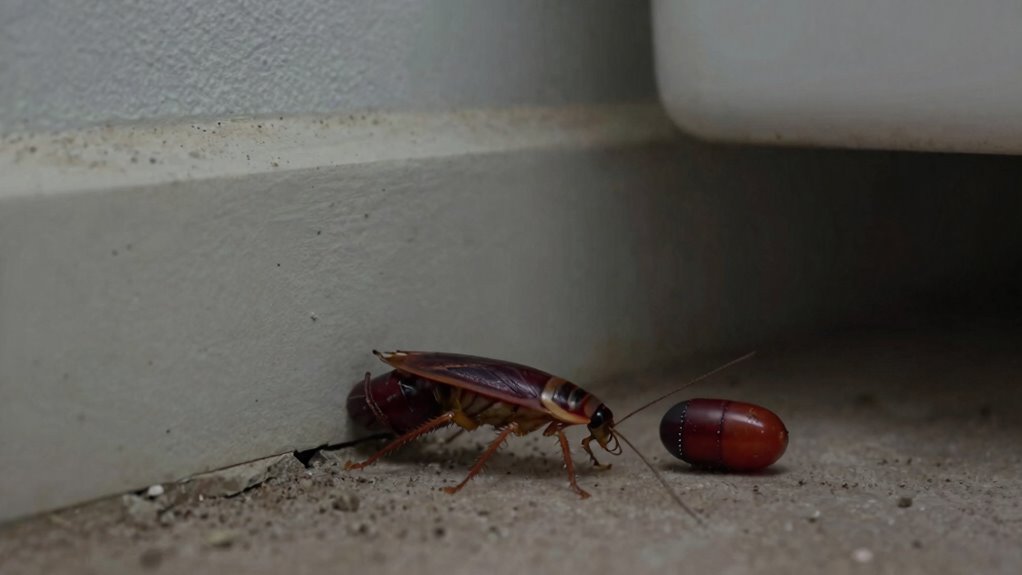
Since a cockroach egg case called an ootheca needs to survive everything from a stomp to a pesticide spray, its shell is a tiny biological tank.
This hard capsule results from a unique cockroach egg composition that blends protein and a tough, waterproof substance called sclerotin.
The ootheca structural purpose is clear: shield the embryos from physical crushing, chemical attacks, and drying out until they hatch.
Its rigid shell can withstand moderate blunt force, like a dropped shoe, without cracking.
The outer layer repels many liquid insecticides, buying the eggs time to develop during a professional pest control treatment.
The capsule seals in humidity, which is critical since eggs dry out outside the female.
Microbes and predatory bugs cannot easily breach the shell, keeping the brood safe from common household pests.
For effective roach elimination, targeting the ootheca directly with an approved spray significantly reduces future infestations.
Bottom line: that hard shell is not for decoration.
It is a survival bunker that every homeowner needs to consider during cockroach extermination.
Imidacloprid-based baits can also target the newly hatched nymphs after they emerge from this resilient capsule.
How to Identify Cockroach Eggs by Species: German, American, Brown-Banded, and Oriental
Identifying cockroach eggs by species is simple when you focus on appearance, size, and where they hatch.
German cockroach oothecae are small light-brown capsules about a quarter-inch long. You will often find them tucked near warm kitchen appliances. They hatch in around one month.
American cockroach oothecae are larger and darker. They hold fewer eggs and are usually dropped in hidden crevices.
For brown-banded cockroaches, look for tiny reddish-brown cases. These prefer raised areas like cabinets or furniture. Their incubation time varies by species.
For effective pest control, knowing these clues helps you target infestations early. If you need fast removal services, professional exterminators can identify and treat these eggs before they hatch. Gel bait formulas with growth regulators also prevent hatched nymphs from reproducing.
Appearance & Size
Within the realm of cockroach eggs, the ootheca acts like a tiny, species-specific ID card. Its casing texture and composition vary, making identification possible without a microscope. German cockroach oothecae are light brown, about 8 mm long, with a ridged, purse-like shape. American counterparts are darker, bulkier, and average 8 to 10 mm. Brown-banded capsules are smaller, roughly 5 mm, with a reddish tint. Oriental varieties are nearly black and similarly long.
German: 8 mm, pale, smooth but ribbed. American: 8 to 10 mm, dark, leathery casing texture. Brown-banded: 5 mm, light red, glossy finish. Oriental: 8 to 10 mm, deep brown, thick ootheca composition. Spot these and you have nailed the species, no guesswork needed. Size and hue are your first clues for effective pest control identification.
If you find these capsules, you can target the right treatment. Knowing the species helps you choose the best roach killer for your home. Once identified, boric acid powder offers a fast-acting, kill-on-contact solution that eliminates roaches within 72 hours.
Incubation & Location
Where do cockroach eggs actually hide, and how long before they become a problem? German cockroaches glue their oothecae in warm, humid spots like inside kitchen drawers, behind fridges, or under sinks. American cockroaches prefer darker, damp areas such as basements or sewer pipes. Brown-banded roaches are more rebellious and often stash eggs in furniture or upper cabinets. Oriental cockroaches seek cool, humid places like crawl spaces. Incubation varies by species. German eggs hatch in 24 to 38 days, American in 40 to 60 days, and brown-banded in 50 to 90 days.
That speed is fast enough for a small problem to become a full infestation. Sadly, this rapid reproduction also feeds genetic resistance. It is a nasty evolutionary adaptation where roaches quickly develop immunity to common baits. This makes professional pest control treatments more essential over time. Check any dark, humid crevice regularly for egg cases. A single ootheca left unnoticed can turn into hundreds of roommates, fast.
For effective roach elimination, focus on crack and crevice treatments. Targeting these hiding spots stops eggs from hatching and spreading. If you need a long term solution, consider a baiting strategy that rotates active ingredients. Rotating active ingredients can help delay the onset of resistance in cockroach populations. This approach helps beat resistance and keeps your home protected.
How Long Until Cockroach Eggs Hatch? Incubation Timelines
Cockroach egg hatching times vary by species, so identifying your pest is the first step to effective control. German cockroach eggs hatch in 24 to 38 days, while American cockroach eggs take about 6 to 8 weeks. Understanding these incubation timelines helps you plan your pest control strategy to disrupt their life cycle. For faster results, use targeted treatments like gel baits or insect growth regulators on the egg cases. Knowing when eggs will hatch lets you apply treatments before nymphs emerge. This approach reduces the chance of a full blown infestation taking hold in your home. For surface outbreaks, foggers can provide quick knockdown but cannot reach hidden roach nests effectively.
German Cockroach Timeline
An egg case, called an ootheca, is a small brown purse that holds a cockroach’s future offspring. For German cockroaches, this purse is light brown, about 8 mm long, and contains up to 50 eggs.
The female carries it until just before hatching. Eggs hatch within 24 to 38 days, depending on humidity and temperature conditions.
Nymphs then molt through 5 or 6 instars, reaching adulthood in about 103 days. An interactive lifecycle chart helps visualize this rapid cycle for effective pest control. Boric acid acts as a stomach poison ingested during grooming or feeding, disrupting their digestive and nervous systems.
Here’s the timeline:
- Egg stage: 24–38 days in the ootheca.
- First instar: Tiny nymphs emerge, 3 mm long.
- Nymph stages: 5–6 molts over 70–100 days.
- Adult: Lives 90–140 days, producing 5–8 oothecae.
A single female and offspring can yield 30,000 cockroaches yearly. So check those warm, damp spots fast to prevent an infestation.
If you see signs of activity, act quickly with targeted pest control treatments. Buying a quality insect growth regulator can break this cycle effectively.
Professional extermination services can also help stop German cockroach reproduction. Remember to seal cracks and reduce moisture for long term prevention.
American Species Duration
American cockroach eggs develop more slowly than their German counterparts. You will recognize them by their dark brown, purse-like ootheca measuring 8 to 10 millimeters long.
Each case typically holds around 15 to 16 embryos. The female carries the ootheca for just a few hours to days before depositing it in a warm, hidden spot.
The incubation period then stretches from 24 to 38 days. Temperature and humidity can extend this timeframe even further.
This slow development means there is no rushing an infestation. For effective pest control, patience is key when targeting egg cases.
Treating hidden spots with a residual insecticide can prevent nymph emergence. First instars appear as tiny nymphs about 3 millimeters long.
If you spot these cases early, immediate removal helps stop a larger problem. Professional pest control services often recommend monitoring these zones for signs of activity. Slow-acting poison ensures worker ants carry bait back to the nest, similar to how roach baits must be left in place for colony elimination.
Brown-Banded Hatching Period
Brown-banded cockroach eggs hatch on a noticeably quicker schedule than their American relatives. The ootheca releases its nymphs in roughly 36 to 75 days, depending on the warmth and humidity of the hideout.
This timeline sits snugly in the brown banded lifecycle, a process that is faster than most but still demands patience. Think of it as a slow-cooked pest problem that requires careful monitoring for effective pest control.
Warmer spots around 80°F slash incubation to 36 days. Cooler corners stretch that period to 75 days, so temperature is a key factor in your extermination strategy.
Each ootheca holds 10 to 18 nymphs, not a swarm but a modest start. This egg count per case means early detection is critical to prevent a full infestation.
Brown banded egg location matters because they glue eggs to furniture, walls, or ceilings. Unlike German roaches, they are not hidden in dark crevices, making inspection easier for homeowners.
After hatching, it takes 6 to 8 months to reach adulthood, a slow burn in the brown banded lifecycle. This maturation window gives you time to apply roach control treatments before they reproduce.
Bottom line: check those high-up spots for cockroach egg cases. These eggs are not playing hide and seek, so a thorough inspection is your best defense against an invasion. Natural roach killers like diatomaceous earth can be used to target nymphs upon emergence for quick results.
How to Tell a Live Egg Case From an Empty One
So you have found a cockroach egg case, which is called an ootheca. The big question is whether it is still active or already hatched.
To check egg integrity, look for a firm, plump and rounded shape. A live ootheca feels slightly flexible and not brittle.
Viability signs include a smooth, glossy surface without cracks or dents. An empty one is often shriveled, flattened or split open along its seam like a dried up purse.
An intact, glossy case is likely still cooking up trouble. A dry, split one is just a souvenir.
| Feature | Live Ootheca | Empty Ootheca |
|---|---|---|
| Shape | Plump, rounded | Flattened, shriveled |
| Feel | Firm, slightly flexible | Brittle, papery |
| Surface | Glossy, smooth | Dull, cracked |
| Seam | Closed tight | Split open lengthwise |
| Color | Dark brown, uniform | Pale, patchy |
If you find an intact case, professional pest control can stop a new infestation before it starts, but applying a long-lasting residual spray in hidden spots can also prevent hatching nymphs from establishing. Knowing how to spot a live egg case helps you decide whether treatment is needed.
What Happens Right After Cockroach Eggs Hatch
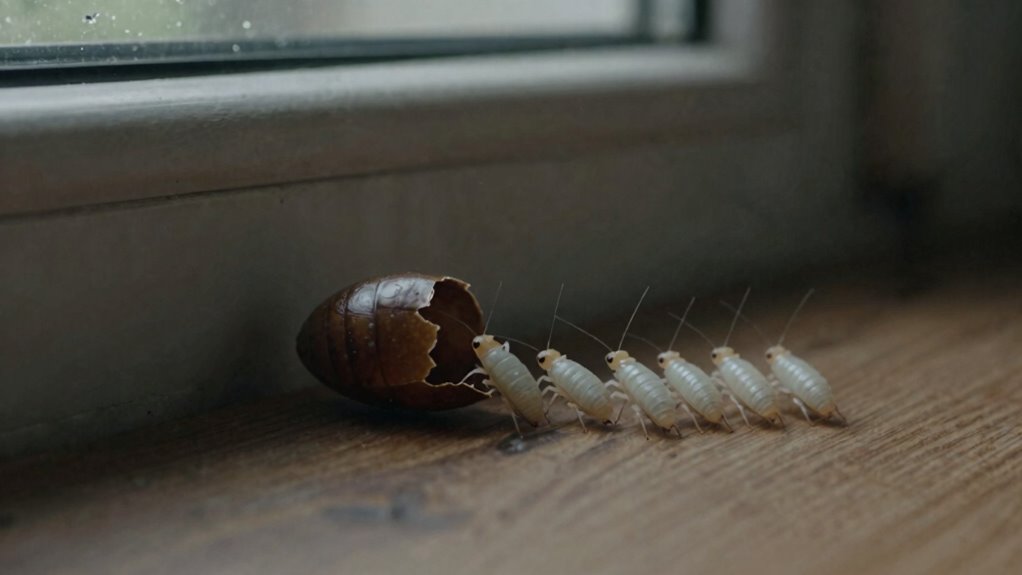
When a cockroach egg case, or ootheca, finally hatches, the tiny nymphs that emerge are about the size of a speck of dust. These first instars are pale, soft, and immediately scurry into dark cracks, driven by instinctive nymph behavior to avoid light and predators.
They won’t eat for a day or two, surviving on leftover yolk. What happens next is a programmed growth spurt.
Instar development begins with each nymph molting five to six times. This shedding of the exoskeleton, called ecdysis, lets them grow larger at each stage.
A feeding frenzy starts around day three. Nymphs then consume starchy foods, glue, or even book bindings, so early pest control treatment is vital.
Group behavior emerges as nymphs aggregate in warm, humid harborage. They do this to retain dampness and share chemical cues, making infestations harder to spot.
The first molt occurs within three to four days. That turns them from dust mites into visible, dark brown miniatures of adults.
Don’t expect them to look like much. They are just hungry, tiny hitchhikers waiting to grow up and trigger a full infestation.
If you see these nymphs, call a pest control professional immediately. Early action stops a hidden colony from taking over your home.
How Many Eggs Does One Female Cockroach Produce in a Lifetime?
A single female German cockroach can produce five to eight egg cases in her lifetime, with each case containing roughly 40 eggs. This means one female can generate between 200 and 320 direct offspring, making professional pest control a wise investment.
Temperature and food availability directly affect egg count variables, so a warm, cluttered home speeds up reproduction. A single female can birth up to 30,000 descendants in one year when you factor in her offspring’s reproduction.
Temperature and food availability directly affect egg count variables, so a warm, cluttered home speeds up reproduction.
American cockroach females produce fewer eggs per case, only 15 to 16, but they live longer and extend their breeding window. The bottom line is that one female cockroach can infest a home within months if left unchecked.
If you spot an ootheca, act fast with removal and sanitation as your best defense. Otherwise that one pest becomes many, and your kitchen becomes their nursery.
Don’t wait to schedule a pest inspection. Deny them the warmth and humidity they crave to break the life cycle.
Indoxacarb baits eliminate entire colonies through secondary transfer and feeding, targeting even hard-to-reach roaches.
How to Spot Cockroach Egg Cases in Common Household Hiding Spots
A flashlight is your best tool for finding cockroach egg cases, known as oothecae, because they are masters of disguise. During a home inspection, these small brown capsules blend into dark, greasy crevices with unsettling ease.
Focus your search on warm, humid zones like kitchen cabinets, behind the fridge, and under sinks. Spotting these purse shaped cases is the first step to removing an infestation, as they are often glued to surfaces or dropped near food debris.
Check drawer corners and hinge gaps where light rarely reaches. Inspect the undersides of shelves and baseboards for tiny, ridged pouches.
Scan appliance motor compartments, like the back of microwaves or toasters. Look inside cardboard boxes or paper bags stored in pantries because roaches love the glue.
These cases are about a quarter inch long and dark brown. Catching them early beats a bigger surprise later, so trust me on this pest control tip for keeping your home protected. Using a model with a 365nm wavelength provides sharper contrast for spotting these hidden egg cases against dark surfaces.
What to Do When You Find a Cockroach Egg Case
Finding a cockroach egg case almost always means one thing: there is an active infestation nearby. That smooth, dark purse shaped capsule, the ootheca, is a ticking bomb of nymphs.
First, identify the egg appearance. If it is ribbed and about 8 mm, that is a German roach.
Then, note the egg location. Look in warm, damp cracks near food sources or moisture problems.
Do not squash it. That can scatter eggs and worsen the problem.
Instead, vacuum it up, seal the bag, and toss it outside immediately. Then treat the area with a residual spray or gel bait to kill the source.
Check every drawer, hinge, and appliance seam within three feet. One case left alone hatches dozens within weeks.
Act fast and stay calm. Repeat the sweep tomorrow to catch any missed nymphs.
That is the blunt truth. No glamour, just effective pest control.
Bottom line: remove it, kill the source with bait or spray, and stay vigilant.
How to Prevent Future Cockroach Egg Cases in Your Home
Preventing future cockroach egg cases starts by cutting off their basic needs for survival. Focus on moisture sources like leaky pipes or damp basements, since roaches need water to breed and thrive.
Eliminate clutter habitats such as piled cardboard or stacked newspapers, which make perfect hiding spots for egg capsules. Sealing cracks and crevices with caulk also stops pregnant roaches from depositing oothecae in wall voids.
Using gel baits and insect growth regulators can disrupt the reproductive cycle before new nymphs hatch. For long-term control, schedule a professional pest inspection to target hidden egg case reservoirs.
Target Moisture Sources
Target moisture sources first. Cockroach egg cases need humidity to survive, so drying out their environment is key.
Leaky pipes under sinks create perfect nursery conditions. Fixing them immediately reduces the chance of oothecae hatching.
Humidity vents in bathrooms and laundry rooms should be checked. Clogged ones trap moisture and invite cockroach breeding.
A dehumidifier, around $150, can keep relative humidity below 50 percent. This dries out potential egg-laying spots fast.
Here’s where to target:
Inspect under appliances for standing water from dishwashers or fridges. Even a puddle invites oothecae and attracts pests.
Seal gaps around pipes with caulk. This prevents cockroach access to leaky plumbing and hidden moisture.
Clean condensation on windows and walls weekly. Use a squeegee to deny egg-laying humidity in your home.
Check drip pans under the fridge and AC units. Empty them every few days to remove egg-friendly dampness.
Bottom line: dry areas mean fewer oothecae. A quick pipe fix today saves a crack-team exterminator tomorrow.
Eliminate Clutter Habitats
The ootheca thrives where clutter meets darkness. Stacks of newspapers, forgotten cardboard boxes, and crammed pantry shelves create perfect harborages for egg-laying females.
Clutter reduction isn’t just tidiness; it’s strategic defense. Removing these hiding spots forces cockroaches into open areas where treatments work better and oothecae become visible and destroyable.
| High-Risk Clutter | Low-Risk Alternative |
|---|---|
| Cardboard boxes | Clear plastic bins |
| Piled paper bags | Recycled immediately |
| Crammed drawers | Slim, sealed organizers |
Harborages removal means emptying cabinets weekly and sealing cracks behind appliances. Check under sinks, inside closets, and behind picture frames.
Vacuum crevices to collect dropped capsules. A tidy home, honestly, still requires vigilance but it cuts egg-laying options dramatically.
Bottom line: fewer hiding spots, fewer oothecae, lower infestation odds. Prioritize kitchens and bathrooms first; they’re the roach’s favorite real estate.
Frequently Asked Questions
Can Cockroach Eggs Hatch if the Ootheca Is Crushed?
Crushing an ootheca often kills the eggs, but it’s not a guaranteed solution. Cockroach egg viability depends on the stage of development, so if the eggs are close to hatching, some might survive.
A crushed ootheca survival rate is low, but it is not zero. The ootheca’s tough, purse-like shell normally protects the eggs inside, acting like a tiny, armored suitcase for the developing pests.
For effective pest control, don’t just crush it and walk away. Homeowners looking for reliable roach control should dispose of the whole ootheca in a sealed bag to prevent any stragglers.
If you want a pest-free home, buy a quality spray or bait that targets egg cases directly. Using a professional grade insecticide is your best bet for eliminating cockroach infestations at every stage.
Do Cockroach Eggs Need Warmth to Develop Properly?
Yes, cockroach eggs need warmth to develop properly. Egg temperature is critical, with ideal hatching humidity around 90%.
German cockroach oothecae require 70-80°F for successful embryo development; too cold, and they die. Below 50°F, growth halts completely.
Dry air shrinks eggs, preventing hatch entirely. That’s why keeping infested areas warm and moist can accidentally create a perfect nursery.
For effective pest control, target temperature and humidity extremes. Use bait traps or insecticides in warm spots where egg cases hide.
Freezing or heating treatments can break the egg cycle. Monitor your home’s microclimates to disrupt their development.
When buying pest control products, look for those that work on both adults and egg cases. Consistent application stops re-infestation before it starts.
Can You See Cockroach Nymphs Inside a Fresh Egg Case?
No, nymphs are not visible inside a fresh egg case. The ootheca’s tough, dark brown shell blocks that view entirely.
Proper inspection timing matters. Nymphs only become faintly visible later, just before hatching, when the case lightens and thins.
Ootheca visibility reveals nothing until that final stage. So don’t bother peering at fresh ones.
It is like trying to see a surprise through a wrapped gift. You just have to wait.
For spotting nymphs, check the case near the 20 day mark. Otherwise, you are wasting effort on a solid little purse.
How Long Can a Female Carry an Ootheca Before Dropping It?
It varies by species, but the female typically carries the ootheca, or egg case, for a few hours to several days before dropping it.
German cockroaches hold it until nearly hatching, almost the full incubation length, which boosts egg viability and gives you a smaller window to treat them effectively.
Other species, like the American cockroach, deposit the ootheca sooner in a warm, damp spot, often hidden in cracks or under appliances.
That means you might find the casing before nymphs emerge, which is your best chance for targeted pest control treatments.
She is not exactly a helicopter parent, since survival mostly depends on the case’s tough shell.
But knowing the carry time helps you time your roach killer sprays or gel baits for maximum impact.
If you are dealing with an infestation, check common harborage areas like kitchen cabinets, baseboards, and behind the fridge for these small brown capsules.
Removing them manually, then applying a residual insecticide, stops the next generation before it hatches.
For fast-acting results, choose a professional-grade roach bait with an attractant that reaches hidden females.
And if you want the easiest route, a complete roach control kit with sprays and traps handles both adults and these egg cases efficiently.
Timing is everything: when the ootheca is still carried, the female is more mobile, so a broad perimeter spray works better than spot treatments.
Once you find dropped cases, vacuum them up and seal them in a bag to prevent any late hatch.
So, the brief answer is a few hours to several days, depending on the species, and your smart purchase is an integrated pest management plan that targets both stages.
Buy a product that lists ootheca or egg case activity on the label, and you will cut the reproduction cycle faster.
Do All Cockroach Species Glue Their Egg Cases to Surfaces?
Not all cockroach species glue their egg cases to surfaces, so pest control strategies must account for this variation.
The German cockroach, for instance, carries its ootheca until hatching, never using glue secretion for surface adhesion.
Others, like the American cockroach, might deposit theirs after a few hours or days, but they don’t always rely on adhesive.
It’s a mixed bag: some species prefer a sticky approach, while others just drop and go.
For effective roach treatment, knowing where egg cases hide matters more than assuming glue is universal.
If you’re dealing with German cockroaches indoors, focus on cracks and warm harborages, not sticky surfaces.
American cockroach control often requires checking dark, damp zones like drains and baseboards, since their egg cases can be loosely placed or glued.
When buying pest control products, look for IGRs (insect growth regulators) to stop hatching nymphs from maturing.
You’ll also want residual sprays or baits that reach hidden oothecae, since manual removal is rarely thorough.
For professional-grade results, pair a gel bait with a dust formulation in voids where females drop cases.
This mix targets both adhesive-laying and free-dropping species, saving you from repeat infestations.


