
Finding a wasp nest doesn’t require a detective badge, just a little patience and a sharp eye. If you’ve noticed a few too many wasps buzzing around your yard, chances are their nest is closer than you think.
Watch a worker’s straight-line return flight from a flower—it flies with purpose, dragging its hind legs if it’s a paper wasp. Follow until it vanishes into a hole or crevice, whether under an eave, in a shed, or a dime-sized ground hole.
Paper nests hang in plain sight, while mud nests stick to walls like stubborn guests. For a safer hunt, wait until dusk when wasps are sluggish, then mark the spot and spray from a distance.
After 24 hours, you’ll know if you nailed it. Stick around—we’ll also cover their zigzag wood-scraping clues to catch nests before they grow.
At A Glance
- Follow a wasp’s straight-line return flight from a flower to its nest entrance.
- Check eaves, sheds, and bird boxes for papery or mud nest structures.
- Look for a small, clean dirt hole with steady daytime wasp traffic.
- Identify paper wasps by their dangling hind legs during flight.
- Search for zigzag gnaw marks on weathered wood near the nest.
Find the Nest by Watching the Wasp’s Return Flight
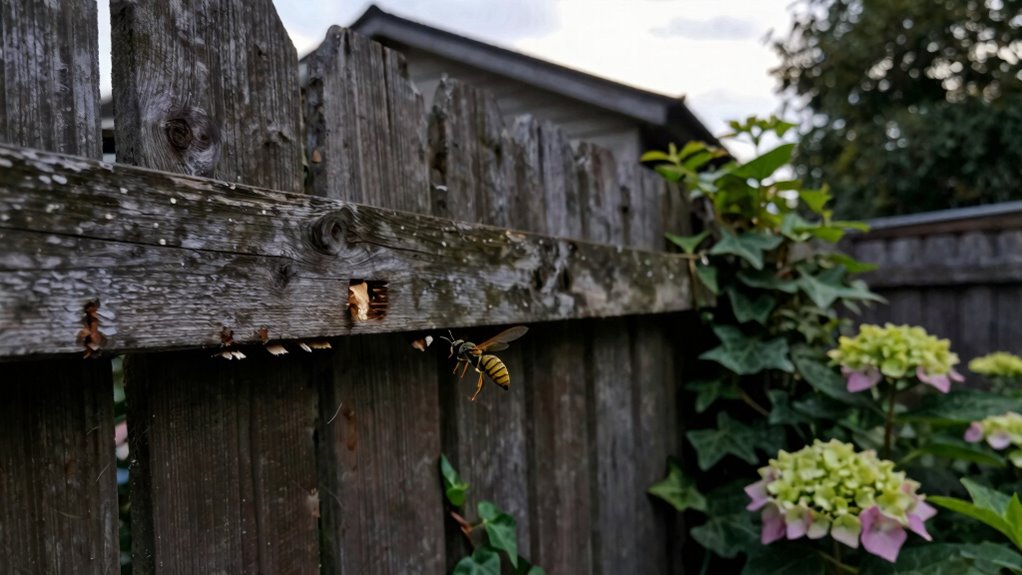
You can find a wasp nest by following the insect’s return flight, even if you have never tracked a wild animal before. Watch a wasp sip from a flower, then track its takeoff; it flies a straight line back to the nest.
Follow that path, noting landmarks along the way. Do not get distracted by nectar feeding, as that is just a pit stop.
You are after the direct flight home, and later in summer when colony numbers swell this becomes easier. Ignore mating swarms, since that is a different, post nuptial behavior.
A worker wasp returning with a full load moves with a businesslike hustle, and its trajectory is a beeline. Look for it to disappear into a small hole or crevice, which is the entry point for pest control.
If you lose sight, wait patiently because another wasp will be along shortly. This method works on any structure, from a porch to a backyard shed. Bright yellow traps placed near the nest entry can then help keep your space wasp-free.
Check Obvious Wasp Nest Locations: Eaves, Sheds, and Bird Boxes
Check obvious wasp nest locations first, since wasps are not creative architects. Eaves, sheds, and bird boxes are prime real estate for nesting pests.
A nest size can range from a ping-pong ball in early spring to a basketball by late summer. This reflects colony dynamics that explode from a single queen to thousands of workers.
Look under roof overhangs, inside tool sheds, or in abandoned bird boxes. These dry, dark spots offer shelter for a growing colony.
A small, papery ball is a young nest. A large, enclosed shell signals a mature colony ready for professional pest control.
If you see steady wasp traffic entering a gap under an eave or through a shed vent, that is your target. Check these first and you will save yourself a lot of wandering during your home inspection.
If you find a nest, early spring is the best time to deploy decoys that mimic enemy hives.
Spot Yellowjacket Ground Nests by Dirt Openings
Spotting a yellowjacket ground nest means looking for a small, neat dirt hole, not a big paper ball. This opening, often no bigger than a dime, is the entry to a hidden colony.
Watch for daytime activity around it to confirm the nest location. If you see a steady stream of wasps flying in and out, you have found the nest.
This simple observation can help you target pest control efforts without any fancy equipment. You can use a foam delivery system to target ground-nesting yellowjackets by spraying directly into the hole. For effective wasp removal, rely on this clear sign of an active nest.
Locate Small Dirt Holes
Look for small dirt holes that might be yellowjacket ground nests. These holes are often no wider than a thumb and have a clean, single opening.
Unlike ant mounds with sprawling dirt trails, yellowjacket entrances show faint yellowing or sawdust around the rim. Mole cricket damage leaves raised tunnels, while wasp holes stay tidy.
Use a coin to check the size. If the hole fits a quarter or less, it is likely a nest entrance, not a random crack.
Examine the rim for polished or worn dirt. Frequent wasp traffic smooths the soil over time, a clear sign of active pest control issues.
Check in the morning when dew reveals fresh dirt kicked out overnight. This is a dead giveaway of active digging that requires professional treatment.
Listen for faint buzzing from below the ground. Ignore flying insects for now, as they are a later concern for full nest removal.
Place a disposable trap using natural baits near the hole to confirm yellowjacket activity before treatment.
Watch Daytime Ground Activity
A sunny afternoon is the perfect time to become a detective of dirt. Watch for a steady stream of yellowjackets dropping into the same spot; that’s your clue.
Ground holes, often no wider than a pencil, get busy traffic when workers forage for wood harvesting nearby, leaving tiny sawdust trails. These nests stay hidden; only the entrance shows, so you need to confirm active wasp nest removal before acting.
Look for constant comings and goings, not just one lost flyer. Check around tree roots or old rodent burrows, prime real estate for yellowjacket ground nesting.
If you see more than ten wasps entering a single hole in ten minutes, you’ve found it. Mark the spot with a stick, then plan professional pest control services at dusk.
Since you’ll be observing from a distance, consider using a 20% Picaridin lotion to guard against biting flies and ticks during your watch.
Bottom line: daylight ground activity is the easiest, cheapest tip-off, free and accurate. Grab some coffee and watch; you’ll know exactly where to target your wasp extermination treatment.
Hunt at Night to Track Hornet Nests
Why would you hunt for a hornet nest in the dark? Hornets are diurnal, so they sleep at night, making nocturnal hunting the safest method for pest control.
A single worker can sting repeatedly, but after sunset the entire colony is sluggish and defenseless. You simply walk the property with a red-filtered flashlight, because red light provides nest illumination without alarming them.
Dress in thick, light-colored clothing. Dark fabrics attract insects, and you don’t want to look like a bear while scouting for hornet nest removal.
Move slowly, pausing every few steps to listen. Hornet nests hum faintly, even when occupants are dormant.
Shine your red beam at eaves, attic vents, and tree forks. Look for any dry, sheltered spot above ground level where a nest might be hidden.
Mark the nest location with a GPS pin or chalk. You won’t see it again until dawn, so precise marking is essential for later treatment.
Bottom line: night hunts are the only way to find hornet nests without getting stung. Grab a red light and wait for dusk to begin your professional pest inspection. Spraying at sunrise or sunset reduces accidental stings and wildlife contamination.
Identify the Wasp by Its Body Shape and Flight Style
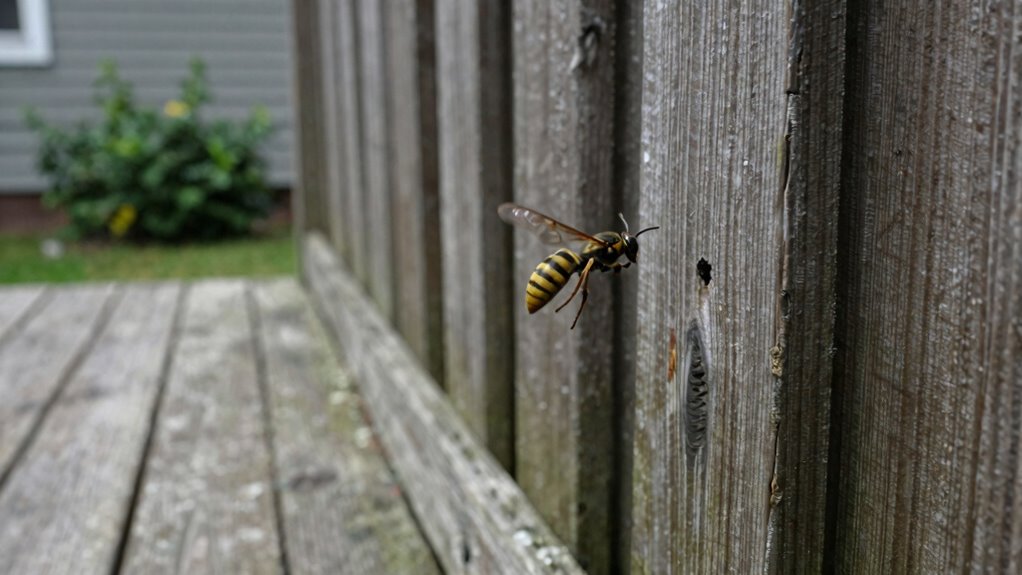
Identifying a wasp by its body shape and flight style is the first step toward effective pest control. Wasps have smooth, longer black-and-yellow bodies with a very thin waist, unlike fuzzy honey bees.
Paper wasps fly with their back legs hanging down, which is a dead giveaway for homeowners. Their flight is direct and purposeful, following defined paths between food and nest.
Watching these patterns, especially later in summer, leads straight to the hidden entrance. This knowledge helps you locate the nest for professional removal or targeted treatment.
If you see wasps following a steady route near your eaves or garden, you have found a key sign of infestation. Contact a local exterminator to safely eliminate the threat and protect your property.
Using non-toxic, food-based baits in traps can safely reduce wasp populations without harming kids or pets.
Body Shape and Markings
To spot a wasp without getting too close or too stung, start by looking at its body shape and flight style. A wasp’s slender, pinched waist and smooth, hairless exoskeleton set it apart from fuzzy bees.
Its nest architecture and seasonal behavior dictate its appearance throughout the year. A distinct, narrow petiole called the “wasp waist” is a dead giveaway, and bees lack this extreme taper.
Bold yellow and black bands, often with white or orange, signal a social wasp. Solitary species are typically duller in color.
Many wasps, especially paper wasps, fly with their hind legs dangling down like tiny skiers. This unique trait helps you identify them from a safe distance.
Worker wasps are 10 to 15 mm long, while queens can reach 20 to 25 mm in early spring. Hornets top out at 35 mm, so knowing size can help you decide if pest control is needed.
If you see these signs near your home, consider contacting a professional for wasp removal. Plant-based repellent sprays last less than balms; sweat, rain, or high heat reduce protection duration. Acting early can prevent stings and protect your property.
Flight Style and Patterns
Wasps’ flight behavior is surprisingly predictable once you know what to look for. They travel direct, straight lines between nest and food, like tiny commuters.
Key differences emerge: paper wasps drag their back legs. Hornets fly with a buzzing heft, and yellowjackets dart erratically low.
Observation difficulty spikes in spring, when few wasps fly. It eases by late summer as colonies swell.
A wasp zips in, lands, and leaves instantly with eerie efficiency. Legs dangling and a zigzag path make some seem almost comical and easy to track.
Fast, low fliers skimming grass with sudden turns feel sneaky and make you clumsy. A hornet’s deep drone and lumbering flight inspire awe mixed with mild panic.
Follow a wasp’s return path from a food source. It leads straight to the nest, giving you a direct line to the problem for pest control removal. Place bait stations 4 to 5 feet high to intercept yellow jackets along their direct flight path.
Paper or Mud? Identify the Nest by Its Material
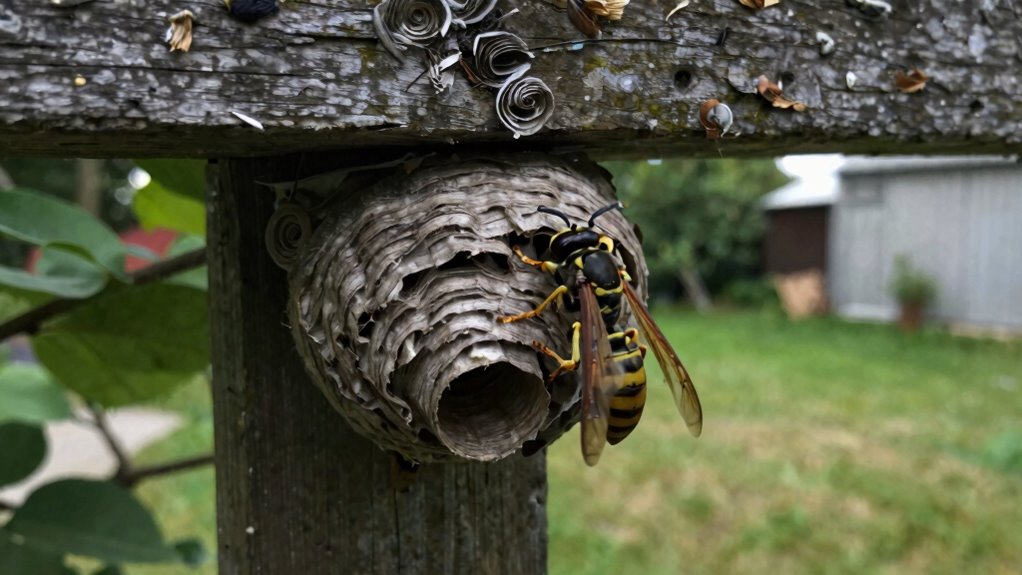
The nest material is the first big clue when identifying a pest problem. A paper shell texture, dry and crinkly like pressed cardboard, points to yellowjackets or hornets who chew wood into pulp.
Mud nests, smooth and hard like dried clay, belong to solitary mud daubers who are far less aggressive. This nest material comparison saves you from a very bad afternoon and a potential sting.
Paper nests feel light and brittle, while mud nests feel heavy and solid. Paper shells are layered with a swirled pattern, but mud tubes are segmented and stacked.
Paper nests hang from eaves or branches, whereas mud nests stick to flat walls or corners. Paper nests house hundreds of wasps, while mud nests hold a single wasp’s larvae.
Check the texture before you poke it for safe pest control. That’s the polite and practical approach to avoid a nest removal emergency. Natural oil-based repellents can be hung nearby to deter wasps from rebuilding in the same spot.
Trace the Zigzag: How Wood Harvesting Gives Them Away
Wood harvesting gives wasps away with telltale graffiti. On weathered fence boards or wooden sheds, clean zigzag lines appear where they’ve gnawed faded outer wood for pulp.
Wood harvesting gives wasps away with telltale graffiti: clean zigzag lines on weathered wood.
Seasonal timing matters. These marks show up in mid-spring when a founding queen starts building, then intensify through summer as colony dynamics shift and hundreds of workers chew strips for nest expansion.
The lines are narrow, about 1/8-inch wide, often multiple parallel scratches. Think of a tiny lumberjack leaving a cartoonish trail. It is absurd but useful for pest control inspection.
Spotting this pattern on a dry, sunny afternoon, especially near roof eaves or wall cavities, means a nest is likely within 50 feet. Check along the wood’s top edge. Worn patches confirm recent activity.
Don’t ignore this clue. It is a dead giveaway for locating and removing a wasp nest before it grows larger. For treating the nest, use a product that works like an organic garden insecticide for effective control.
Remove the Nest Safely Without Getting Stung
Removing a nest safely is about timing and planning, not luck. The best window is dusk or dawn when wasps are slow and gathered inside.
First, map out the nest entrance and an escape route before you start. Suit up in thick, layered clothing, and tuck your pants into your socks.
Wear a hat with a veil or netting to shield your face and neck. Use a commercial aerosol wasp spray and hit the entrance from a safe distance.
For large or high nests, hire a professional pest control service for $100 to $400. That cost is far cheaper than a trip to the emergency room.
Never block the entrance before treating, because that traps angry wasps inside and guarantees stings. After spraying, wait a full 24 hours to confirm all activity stops.
Then you can remove the nest, but first check for any lingering wasps with a flashlight. For buyer intent, ask your local exterminator for a free inspection if you suspect multiple nests.
Professional wasp nest removal is the safest option for attics or eaves. If you want to avoid wasp stings altogether, schedule the work for early morning.
A pest control company can also treat ground nests with specialized dust. Always read the insecticide label and follow the reentry instructions carefully. Keep a safe distance of 15 to 27 feet to prevent stings when using a commercial spray.
Prevent Future Nests With Simple Maintenance Tips
Prevention is the most effective weapon in the war against wasps. It is cheaper than removal, safer than spray, and far less embarrassing than running from a single angry yellowjacket.
Understanding seasonal timing is key for pest control. Seal cracks and holes in early spring, before a queen chooses your attic as her nursery.
Colony dynamics mean one nest can explode into thousands by August. Block entry points to eaves, vents, and wall gaps with caulk or fine mesh, or use fine mesh wire to seal gaps without blocking airflow.
Trim back tree branches touching your house. Wasps use them as highways to access your home.
Remove old nests in winter, as they are empty. Just knock them down without spraying.
Keep trash cans sealed and compost covered. A little work in March saves you from a swarm in July.
Frequently Asked Questions
What Do I Do if I Can’T See Where the Wasp Goes?
If the wasp disappears, tracking powder offers a low-tech solution. Dust some near a bait station, then follow the chalky footprints back to the nest.
Lure traps, like the RESCUE! brand at $12, work differently, catching scouts before they return. They’re a good backup, honestly.
One or the other usually saves you from playing hide and seek with a grumpy insect. For reliable wasp control, tracking powder helps you locate the hidden nest for targeted treatment.
If you prefer a hands off approach, a quality wasp lure trap can intercept scouts and reduce the population. Both options are smart pest control products to buy when you need to eliminate a nest safely.
How Can I Tell if Wasps Are Nesting in My Wall Cavity?
Structural buzzing is often the clearest sign of a wall cavity nest. If you notice a wasp disappearing near your siding or brickwork, stop and listen for a faint, steady hum.
Look for a small crack or hole where wasps enter and exit the structure. Unlike flying insects that hover, wasps fly straight in with no loitering.
Tap the wall gently with a tool or your knuckles. A hollow thud combined with buzzing means a nest is likely inside your wall void.
A stethoscope can help you pinpoint the sound, but a drinking glass pressed against the wall works just as well. This DIY wasp inspection technique can save you time and money.
Bottom line, if you hear buzzing and spot a hole, you likely have a wasp nest in your wall cavity. For safe wasp nest removal, consider calling a pest control professional or using a targeted wasp spray designed for wall voids.
Are Yellowjacket Ground Nests Dangerous to Mow Over?
Yellowjacket ground nests are absolutely dangerous to mow over, and lawn care safety starts with spotting them first.
Their nesting habits involve a tiny dirt hole that hides an angry underground colony, making professional pest control the smart move.
A single mower pass can disturb thousands, triggering a stinging attack you do not want.
One unlucky homeowner got chased into his house after hitting a nest, swearing he would never skip yard inspection again.
Watch for wasps diving into the soil, then avoid that patch until dusk when they are calm.
If you need a ground wasp killer, look for fast acting foam sprays or dust formulations for the best results.
For long term wasp nest removal, consider buying a reusable trap or hiring a exterminator near you.
Bottom line: spot the hole, skip the mow, and save yourself the pain of an emergency room bill.
Do Wasps Come Back to the Same Nest Location Each Year?
Wasps do not return to the same nest location each year. Nest persistence is seasonal, so queens emerge in spring to build new nests elsewhere and never reuse old structures.
Seasonal reoccupation is a myth. Wasps vacate by autumn, and the papery shell crumbles on its own.
That old, empty nest is just a ghost of past activity. It is like a vacation home they never revisit, so always find the fresh activity instead.
If you spot a new nest, professional pest control removal is your safest bet. Use targeted wasp sprays or dust treatments to eliminate the colony before it grows.
Bottom line: no repeat tenants, but proactive wasp nest eradication keeps your property safe. For lasting protection, invest in perimeter barrier sprays and quarterly inspections.
How Quickly Can a Wasp Nest Grow in One Season?
A wasp nest can explode from the size of a ping-pong ball to a basketball in just one season, depending on the wasp season timeline and key nest size factors like food supply and local weather. Colony growth typically peaks by late summer, with a single nest housing anywhere from 3,000 to 6,000 workers, which is a lot of angry roommates to deal with.
Early spring nests are still small and easy to bag up yourself, but by fall you are facing a full-blown apartment complex that requires professional wasp control. If you spot a nest in May, act fast with a reliable wasp killer spray or trap before it becomes a towering problem in your yard.
To stop nest expansion before it gets out of hand, consider an immediate nest removal service or a residual insecticide dust designed for eaves and attics. Quick action in the spring can save you from expensive wasp extermination costs later, and it also protects your family from painful stings.
For the smartest purchase, look for quick-kill aerosol foams that reach deep into cavities, or hang preventive traps around patios and trash areas. A small investment now beats a late-summer emergency where the colony has already multiplied beyond DIY control.


