
How to Keep Spiders Out of Outdoor Furniture doesn’t have to mean wrestling with webs every morning. If you’re tired of clearing egg sacs from cushions and dodging daddy longlegs at dawn, the fix is simpler than you’d think.
This guide walks you through the exact steps to break the spider cycle—from deep cleaning and sealing cracks to the cheap lighting swap that cuts their food supply.
You’ll learn why raising legs and trimming back plants disrupts their travel routes, plus how a five-minute weekly sweep keeps them from settling back in.
There’s also a natural peppermint spray trick for extra insurance, with no harsh chemicals needed.
Ready to reclaim your patio without a major hassle? Keep reading for the full breakdown.
At A Glance
- Seal cracks with caulk to eliminate spider hideouts.
- Elevate furniture to improve airflow and reduce moisture.
- Remove webs and egg sacs weekly with soapy water.
- Apply peppermint oil spray to undersides and crevices.
- Trim plants and use yellow bulbs to reduce insect prey.
Why Spiders Target Your Outdoor Furniture (and How to Stop Them)
Spiders treat your outdoor furniture like a nonstop buffet with free penthouse suites. This isn’t a compliment, but spider biology explains it.
They are drawn to dark, dry crevices packed with insect prey. Your cushions, table undersides, and leg joints offer cozy, moisture controlled lodgings.
Moisture control is key, since damp wood attracts gnats and flies that become spider snacks. To repel spiders, keep surfaces dry and use quick drain materials.
Fix cracks in wood with caulk for under ten dollars to stop hideouts. Elevate furniture slightly to boost airflow and reduce dampness.
Deny spiders the dark, damp nests they crave, and they will move elsewhere. This simple pest prevention strategy keeps your patio free of webs. Using a natural deterrent spray around furniture joints can also help repel spiders without harsh chemicals.
Start With a Deep Clean to Remove Webs, Eggs, and Insects
Start with a deep clean before you caulk, spray, or rearrange anything. Deep cleaning means using soapy water and a scrub brush in every gap, joint, and under the cushions.
Egg removal is critical because spider egg sacs are tiny, white, and clingy. If you miss them, dozens of tiny freeloaders will move in next week.
Sweep away webs from legs and corners, then vacuum crevices where dust and insect bits collect. This cuts off the spider buffet right at the source.
Think of it as eviction by scrub brush. Remove the old sticky mess, and spiders find your furniture far less appealing.
It is cheap and effective, and you can do it with stuff you already own. Skip this step, and everything else is just a temporary fix.
Using non-toxic glue traps near cleaned furniture can catch any lingering spiders without chemical sprays.
Seal Cracks in Outdoor Furniture to Block Spider Hiding Spots
Cracks in furniture act like VIP passes for spiders, offering warm and dark hiding spots. Fill them with outdoor caulking or wood glue before pests move in for shelter.
Durable sealant costs about five to ten dollars at hardware stores and prevents dampness damage that attracts bugs. Don’t forget cushion replacement, as old torn cushions create gaps spiders love.
If painting, use weather resistant furniture paint to seal raw wood and hide tiny crevices. For example, a fifteen dollar can of Rust Oleum covers cracks while adding color.
Check joints and legs monthly, then caulk immediately to block entry points. A dry sealed surface leaves spiders no place to nest, so they will move on instead of moving in. For sealing larger gaps around pipes or vents, flexible steel wool provides a durable barrier that resists gnawing and fits irregular shapes.
Rearrange and Elevate Furniture to Disrupt Spider Territory
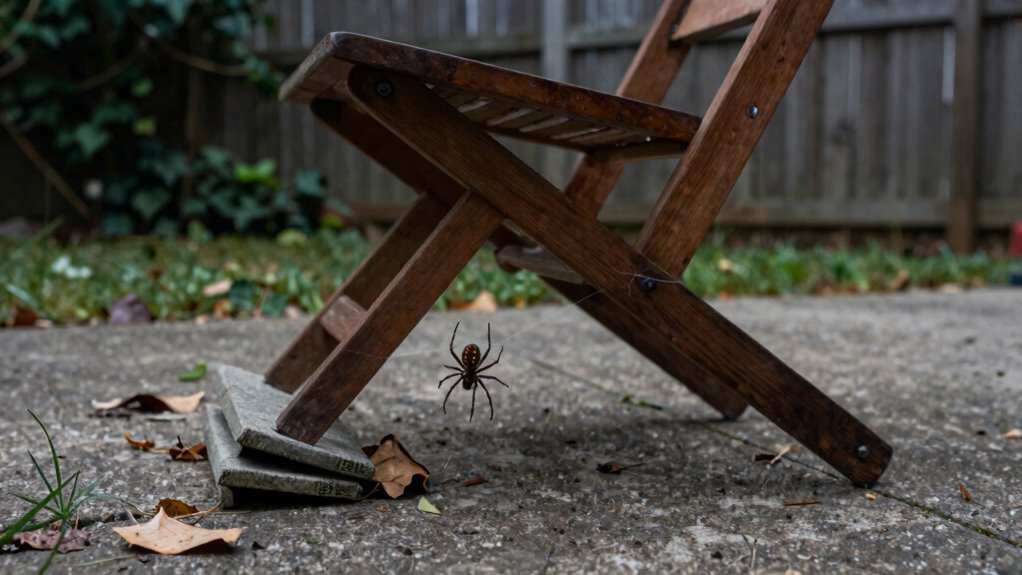
A well sealed couch is a good start, but a static arrangement invites spiders to settle in. Shifting furniture every two weeks breaks their familiar pathways and sends them packing.
Elevating pieces off the ground cuts off access to prime real estate. Rotate chairs and tables every few weeks to disrupt web building patterns and make spiders feel unsettled.
Lift furniture legs using risers or concrete pavers to allow water drainage and a clear view underneath. This pest control tactic ensures nothing scurries unseen in your home.
Lifting furniture on risers or pavers creates a clear view underneath and prevents unseen pests.
Place a low voltage solar lamp near the moved furniture as a light trap to draw insects away and starve the spiders. Pair each change with a quick sweep of debris, especially where cushions meet frames, to cut off nesting spots.
Avoid placing anything flush against walls, giving spiders no cozy corner to call home. For effective spider removal, these simple steps create a hostile environment that drives them out. Applying diatomaceous earth in cracks and crevices underneath furniture adds an extra layer of protection.
Trim Grass, Shrubs, and Climbing Plants Around Your Patio
An overgrown patio invites spiders to an all-you-can-eat buffet. Landscape upkeep and climbing plant control are your best pest control solutions.
Trim grass to under three inches and cut shrubs back at least two feet from furniture. Prune climbing plants like ivy so they never touch walls or chair legs.
Grass should stay six inches away from furniture to reduce insect hiding spots. Shrubs need a two foot gap to break spider bridge paths.
Climbing vines must have no direct contact with structures to prevent nest access. Low branches require three feet of clearance to eliminate canopy highways.
Ground cover should be kept one foot away to limit dampness zones. A fifteen dollar pair of pruning shears is all you need for effective spider prevention.
Just don’t hack things back like you’re auditioning for a landscaping reality show. Trim with purpose and keep your patio pest free.
For additional protection inside low-airflow areas, consider placing long-term pouches near furniture storage.
Swap Outdoor Lighting to Cut Off the Spider Food Supply
Why do spiders seem to treat your favorite patio chair like a personal dining room? Your lights run an all‑night, free buffet for bugs.
Swap standard white bulbs for yellow bulbs. They attract far fewer flying insects, cutting the spider’s menu fast. A six‑pack runs about $8.
Install motion‑activated sensor lights so the patio stays dark until you step outside. Models start at $15 and save electricity too.
Turn off decorative string lights after dusk. One hour of glow can draw hundreds of moths.
Aim floodlights away from furniture, toward paths or eaves. This keeps the food supply away from seating.
Replace bright porch lights with dim, warm‑toned LEDs at 2700K or lower. Both bugs and spiders find them unappealing.
Keeping the area dark reduces spider food, so they move elsewhere. Yellow bulbs and UV and blue-violet light can attract over 3,600 insect species, making them far more effective for luring bugs away from seating areas but also drawing them toward strategically placed traps.
Use Natural Repellents to Keep Spiders Away

A simple spray of essential oils, like peppermint or citrus, can send spiders packing without harsh chemicals.
For a stronger mix, combine white vinegar and water in a spray bottle, then apply it around furniture legs and joints.
This natural pest control method targets spider hiding spots without toxic sprays.
A dusting of diatomaceous earth, a fine powder that dehydrates pests, creates a barrier spiders will avoid crossing.
You can find these home spider repellent solutions at most hardware stores.
They offer a safe way to keep your living space pest free.
Products like Mighty Mint Peppermint spray provide a ready-to-use, pet-safe option for outdoor furniture areas.
Essential Oils Spray
Peppermint oil’s sharp scent works as a natural spider repellent. Think of it as a forcefield that smells like a candy cane factory.
For outdoor furniture, mixing 15 drops with water and a splash of dish soap creates a spray. This pest control solution costs about $8 per bottle.
Spider monitoring gets easier since webs stop appearing around legs and seams. Spray weekly or after rain for consistent coverage.
Focus on undersides, joints, and cushion crevices. These are spider highways that need regular attention.
Reapply every 3 days during peak spider season. Use glass spray bottles because plastic can degrade from oil.
Store indoors to keep potency high. Spray frequency is the real trick for effective home pest control.
Lazy people end up with eight-legged tenants. For a longer-lasting option, consider a plant-based peppermint oil spray that provides residual protection up to 90 days. The bottom line is this works but only with regular upkeep.
Vinegar and Citrus Mix
If you have already tried oil sprays, a simpler budget option is a vinegar and citrus mix. The acetic acid in white vinegar creates an acidic environment that spiders detest. Citrus limonene from lemon peels adds a second layer of offensive scent to repel pests naturally.
Combine equal parts vinegar and water, then add a teaspoon of citrus zest or juice per cup for an effective homemade deterrent. This mix costs roughly fifty cents per batch, making it a cheap, non-toxic spider control solution for your home. Its strong smell fades quickly outdoors, so reapply every few days, especially after rain for best results. For a ready-made commercial alternative, you could choose plant-based oil repellents that offer convenient, family-safe protection.
Avoid spraying directly on painted surfaces, as the acid can cause fading over time. The bottom line is this mix works as a gentle, low-stakes repellent, not a spider-killing weapon.
Diatomaceous Earth Application
Diatomaceous earth works like a bouncer who never blinks, cutting into spiders and dehydrating them. For home pest control safety, use food grade diatomaceous earth and wear a dust mask during application.
Keep pets away until the powder settles after dusting. Apply a thin barely visible layer around chair bases, under cushions, and along leg joints.
Focus on dry covered spots since dampness renders it completely useless. Check after rain or humidity to ensure the barrier remains effective.
For spider reapplication guide, refresh every two weeks or immediately after heavy weather. Avoid piling it thick because spiders simply walk around the mound.
Less is genuinely more for diatomaceous earth spider control. Combine with peppermint oil for a double whammy deterrent that smells like a spa but works like a fortress. OMRI-listed products provide verified organic certification for safe outdoor use.
It is cheap at about ten dollars for a giant bag. It is harmless to most things but deadly serious about spider removal.
Plant Spider-Deterring Herbs and Add Citronella Torches
A simple, strategic planting scheme can do more for spider control than any chemical spray. Smart plant selection is key: basil, mint, lavender, and rosemary release scents spiders hate. They cost around $5 per pot.
A simple, strategic planting scheme repels spiders more effectively than chemical sprays.
Tuck them around furniture bases, or place pots on tables, keeping leaves six inches away from seating. Then, add citronella torches. Their smoke masks spider pheromones and repels flying insects, cutting the food supply. For even better results, choose candles made from natural soy wax and essential oils for clean, smoke-free burning.
Torch placement matters, so set them every eight feet along the perimeter. Keep them away from seating to avoid an oily shirt. A six-pack of torches runs about $25 for effective pest prevention.
It is low effort and smells better than pesticide, making you look like a garden pro. This outdoor spider deterrent combo works, it is cheap, and it is almost fun.
Schedule a 15-Minute Weekly Routine to Keep Spiders Away for Good
The quick daily sweep is a five‑minute habit that knocks down fresh webs before spiders settle in.
The consistent deep clean takes the remaining ten minutes, focusing on crevices, under cushions, and behind legs where egg sacs hide.
This simple weekly rhythm turns pest removal into a dull chore, not a battle. It honestly is the best outcome for effective spider control you can hope for. For an extra layer of protection, consider placing natural plant-based repellent pouches in nearby storage areas to deter spiders without harsh chemicals.
Quick Daily Sweep
Committing to a quick weekly sweep, just fifteen minutes total, turns spider prevention from a chore into a habit that pays off fast. This quick sweep as a daily routine means fewer webs, less creepy-crawly surprises, and more time relaxing.
Sweep under cushions, where spiders love to lurk and build nests. Brush around furniture legs and joints, especially any cracks or gaps.
Use a stiff broom on upholstery seams, dislodging egg sacs before they hatch. Wipe down tabletops with soapy water, removing insect attractants.
Shake out seat cushions outdoors to eliminate hidden webbing. A fifteen-minute sweep each week, consistently done, breaks the spider lifecycle.
It’s cheaper than sprays and faster than panic. Just do it.
Using non-toxic adhesives ensures accidental contact with skin or fur is safe and easily remedied with vegetable oil.
Consistent Deep Clean
Why make a deep clean harder than it needs to be? A consistent 15 minute weekly routine prevents spiders from settling.
Focus on deep cleaning to wipe down every surface, including cushion undersides and leg joints, with soapy water. This removes debris and spider eggs.
For effective insect removal, vacuum crevices and corners with a crevice tool. Pay special attention to shaded gaps because spiders love damp, dark spots.
Tighten loose screws and fill cracks with caulk weekly. Wood furniture drinks moisture, so dry it thoroughly after cleaning.
That routine doesn’t just delay problems. It stops them cold.
Think of it as a weekly spider meeting you host, and you’re chairing the agenda. Keep it short, keep it consistent, and they’ll RSVP never.
Here’s your bottom line: 15 minutes now saves hours of later web removal. For a passive barrier against other pests, place repellent balls in nearby storage areas.
Frequently Asked Questions
Do Ultrasonic Spider Repellents Actually Work Outdoors?
Ultrasonic spider repellents largely fail outdoors because their sound waves get scattered by wind, open air, and foliage. What you end up with is a pricey, silent noisemaker that does little to keep spiders away from your patio or garden.
Weather interference like rain, humidity, and temperature swings also wrecks those tiny speakers, making them unreliable. In a sealed garage, maybe you get some value, but on a deck or porch, forget it.
You are better off with a natural spider repellent like peppermint spray or diatomaceous earth. These pest control products cost less, actually stick around in outdoor conditions, and are proven to deter spiders effectively.
If you want the best spider control for your yard, skip the gadgets and buy a decent broom instead. Sweep away webs and egg sacs as part of your regular pest management routine for long term results.
How Do I Keep Spiders From Nesting Inside Folded Patio Umbrellas?
To stop spiders nesting in folded patio umbrellas, start by collapsing and storing them in a dry, sealed spot like a shed or garage.
Spiders are drawn to dark fabric folds, so before folding, shake out the canopy aggressively and spray a natural peppermint or citrus repellent.
A $9 repellent spray can easily last an entire season, making it a smart, low-cost pest control investment.
Store the umbrella upright instead of horizontally to reduce hidden nesting spots and improve airflow.
If you can’t bring it indoors, grab a breathable umbrella cover from Amazon for around $15 and slip a dryer sheet inside before sealing.
Spiders hate the scent of dryer sheets, which acts as a simple, effective spider deterrent.
For long-term prevention, combine a silicone-based fabric protector with weekly spot checks on the ribs and hinges.
This proactive approach targets common spider hiding places and prevents web buildup before it starts.
Consider rotating your umbrella’s position every few weeks so no single side becomes a permanent shelter.
Pair that with a light dusting of diatomaceous earth around the base and pole to create a barrier that repels spiders naturally.
The bottom line is simple: deny them shelter and moisture, and they’ll move to a more inviting spot.
For the best results, pair this routine with a quality spider repellent spray and a weatherproof storage bag.
These pest control steps are perfect for homeowners seeking long-term spider prevention without harsh chemicals.
If you buy a cover, look for one with reinforced seams and a drawstring closure to keep out bugs and debris.
Remember, consistent maintenance beats any single spray or gadget, so make this a five minute seasonal habit.
That way, your patio umbrella stays spider free, mold resistant, and ready for use all summer long.
Can Spiders Cause Damage to Outdoor Furniture Materials?
Spiders rarely cause outright structural failure, but they do leave a mess that accelerates wear on your patio pieces. Their constant web-building traps dust and humidity, leading to wood staining over time, that gray, blotchy look no one loves.
Worse, egg sacs and debris grind into cushions, causing fabric tearing at the seams, especially on high-traffic seating. Honestly, they are less a wrecking crew and more a slow, sticky nuisance, but the right spider control treatment can stop the buildup before it starts.
Routine cleaning solves 90% of it, yet for stubborn infestations, a quality insecticide spray or perimeter repellent keeps webs off your outdoor furniture longer. If you are shopping for pest control products, look for residual sprays labeled for spiders and use them around frames, under skirts, and near joints where they hide.
Bottom line: they won’t break your chair, but they will definitely make it ugly faster, which means you will replace cushions or refinish wood sooner than planned. For smart buyers, pairing a monthly protective wipe-down with targeted spider granules creates a barrier that preserves both material integrity and your wallet.
What Should I Do if I Find a Spider Egg Sac on My Furniture?
Egg sac removal is the immediate fix for spider infestations on your furniture. Use a paper towel or gloved hand to carefully scrape the sac into a sealed bag and toss it.
Preventing hatchings requires regular vigilance around your home. Check gaps, joints, and cushion undersides weekly, since spiders love those spots.
A quick vacuum or soapy scrub eliminates eggs before they explode into tiny invaders. For best pest control results, pair this with a targeted spray treatment.
Bottom line is fast removal plus regular cleaning stops the next generation cold. If you want professional grade spider killer, look for products labeled for egg sacs and crawl spaces.
Is It Safe to Use Diatomaceous Earth Around Pets and Children?
No, it’s not perfectly safe. Diatomaceous earth inhalation is the main worry for households with pets and children.
When applied, it kicks up fine dust that can irritate lungs. This is especially risky for kids or pets with asthma or other breathing issues.
Food grade diatomaceous earth is safer but not risk free. Always keep pets and kids out of the room during application.
For best pest control results, use it in hidden cracks and crevices only. Do not sprinkle it on cushions, bedding, or high traffic areas.
A dust mask is a smart purchase for anyone applying this powder. Protecting your lungs is a simple step that prevents regret later.
Bottom line: diatomaceous earth works well for natural pest control. But gentle caution beats regret every time.


