
Wondering how long cockroaches can stick around in your home? The answer depends on the species, but understanding their lifespan is key to getting rid of them for good.
Cockroach lifespans range from under four months to over two years, with the average adult living about eight months. German cockroach males last 100–150 days, while females can live up to 200 days, and smokybrown cockroaches may survive over two years in ideal conditions.
Factors like genetic makeup, temperature, and humidity all play a role—slow metabolism stretches life, while warm, fast environments shorten it. Timing your pest control treatments to match this lifecycle can make all the difference.
Keep reading to see exactly how that works and which products will help you win the battle.
At A Glance
- Lifespan averages 8 months, varying from under 4 months to over 2 years by species.
- German cockroach males live 100–150 days; females live 190–200 days.
- Smokybrown cockroaches average 218 days but can exceed 2 years in ideal conditions.
- Cooler temperatures and high humidity slow metabolism, extending cockroach lifespan.
- Giant burrowing cockroach is longest-lived, surviving several years.
Cockroach Lifespan: From 4 Months to 2+ Years
Cockroach lifespan isn’t one-size-fits-all. It ranges from under 4 months to over 2 years, depending on the species.
The longest-lived giants, like the *Macropanesthia rhinoceros*, can survive several years, while common pest species such as the smokybrown cockroach often live over a year, sometimes exceeding 2 years in ideal conditions.
German cockroach males live 100 to 150 days, while females reach 190 to 200 days. Smokybrown adults average around 215 to 218 days, which is a solid run for any bug.
General adult cockroach lifespan averages about 8 months, which is notably long for an insect, since most bugs tap out at 3 months. If you’re dealing with an infestation, you’re hosting tenants that might outlast your lease, so you need a thorough pest control plan.
For targeted cockroach treatment, knowing your species matters for effective extermination services. Bottom line: lifespan varies wildly, but expect 4 months to over 2 years, so check your species and act fast with professional removal options.
Whether you’re seeking residential pest control or commercial extermination, early intervention prevents long-term guests. A single female can produce hundreds of offspring in that time, so don’t wait for a full-blown problem.
If you want to buy cockroach bait or schedule an inspection, timing is everything. Start with identification, then pick the right insecticide or call a licensed pest management company.
Using indoxacarb baits like Advion can help eliminate entire colonies through secondary transfer, even targeting hard-to-reach roaches.
Why Cockroach Lifespan Varies So Much Between Species
Cockroach lifespan can range from under four months to over two years, depending on the species. The difference comes down to genetics and environmental factors that influence survival.
Species longevity is not random but shaped by habitat pressures and biology. Some species have a slower metabolism, while others burn through life quickly.
Species longevity is not random but shaped by habitat pressures and biology.
Nymph development takes between 6 to 31 weeks, and a slower growth rate usually stretches adult lifespan. Females that lay many egg cases often die sooner due to the reproductive cost.
Warm, humid environments speed up molting, which can shorten each stage, while cooler climates extend it. Larger species like the rhinoceros cockroach can live for years, whereas small pest roaches fade in months if you need professional removal.
These lifespan mechanisms are not one size fits all. It is a biological dice roll, but your home environment always tips the scales if you spot an infestation.
Expect no uniform answer for how long a roach will live. For effective pest control, focus on moisture reduction and sealing entry points to disrupt their life cycle, along with using bait stations for colony elimination that target nests to break the reproduction cycle.
German Cockroach Lifespan: How Long Do They Live and Breed?
The German cockroach lives fast and dies young, with a female typically surviving 100 to 200 days. That short window is packed with action, as she produces up to eight egg capsules, each holding 30 to 48 eggs.
A single female can spawn over 10,000 descendants, which is why professional pest control is often needed before an infestation spirals out of hand. This rapid breeding is a testament to cockroach evolution, which favored quantity over lifespan.
Oddly, these pests can survive headless for weeks, since their brain isn’t entirely necessary for basic movement. They mature within three months, so an infestation can explode before you notice, making early extermination services a smart investment.
They thrive in warm, moist kitchens and rarely fly despite having wings, so you’ll often spot them near sinks or appliances. Their development from egg to adult spans six to 31 weeks, depending on temperature and food availability. Fast-acting gel baits with colony elimination properties can help break this cycle before it worsens.
The bottom line is that German cockroaches live briefly but breed relentlessly, so act fast or they’ll outrun your cleanup. For effective cockroach control, schedule an inspection and use targeted gel baits or insect growth regulators to break their breeding cycle.
If you’re dealing with a persistent problem, contact a local exterminator for a tailored treatment plan, because DIY sprays often miss hidden nymphs. Remember, a single missed egg capsule can restart the entire infestation, so thorough follow-up is key to long-term relief.
Smokybrown Cockroach Lifespan: A Lifespan That Can Stretch for Years
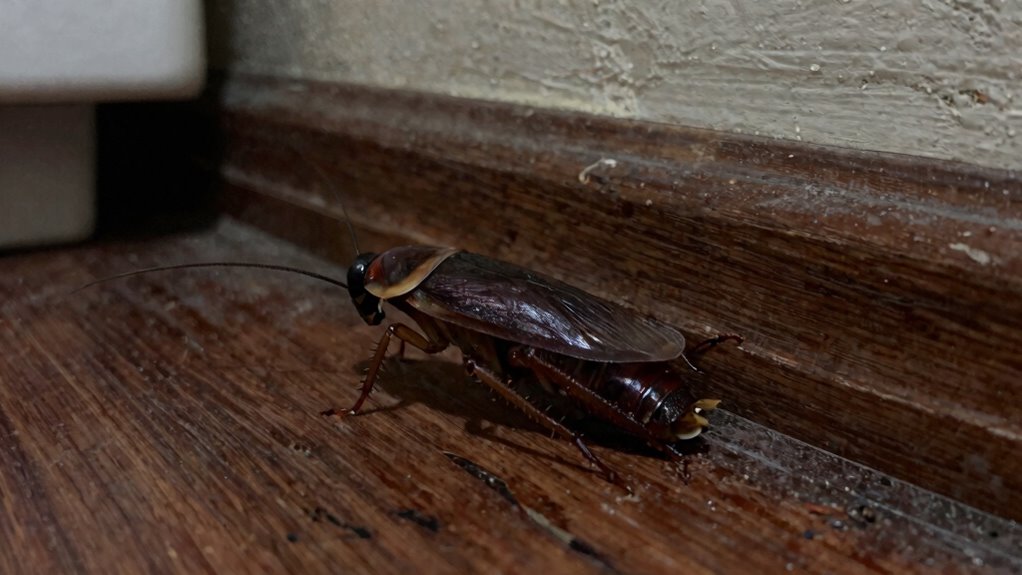
The smokybrown cockroach can live much longer than many people expect. Adult females typically survive around 218 days, while males average about 215 days.
The real concern is the egg-to-adult development, which can take anywhere from 160 days to a stunning 716 days. With warm temperatures and plenty of food, one cockroach can remain active for over two years. Fipronil-based gels can help eliminate these long-lived pests by providing residual protection for up to three months.
This long lifespan means professional pest control is often needed to fully eliminate an infestation. If you spot these dark brown roaches indoors, immediate treatment can prevent them from settling in for years.
For lasting results, consider sealing entry points and reducing moisture around your home. A targeted pest control plan will help you avoid these persistent houseguests becoming a long-term problem.
Average Adult Life
Smokybrown cockroaches take the concept of “living long” quite seriously. Their average adult longevity ranges from about 215 to 218 days, but with ideal conditions like warm, damp spots near food they can stretch adult survival well past two years.
That is basically a retirement plan for a bug. Here is the breakdown for pest control planning.
Average adult lifespan is 215 days for males and 218 for females, roughly eight months. Top end potential can reach two years or more if environmental factors cooperate.
This survival advantage means they outlast many insects, since typical adult bug life is just three months. The practical impact of this long lifespan is significant for infestation management.
A single adult female can produce hundreds of offspring in that time. For effective elimination, focus on sealing cracks and reducing moisture to disrupt their ideal habitat, and apply boric acid as a stomach poison that disrupts their digestive and nervous systems, leading to dehydration and death.
Egg-to-Adult Timeline
The smokybrown cockroach begins its life inside an egg capsule, taking 14 to 59 days to hatch depending on temperature. This is followed by six to seven nymphal stages, each requiring a molt to shed its old exoskeleton.
The entire nymph phase can last from 160 to 716 days, which is nearly two years of growth. During this time, the nymph is vulnerable but can survive briefly without its head.
If you are dealing with a pest control issue, professional treatments can target nymphs before they mature. Adults then live for another year or more, so early intervention is key.
The full egg-to-adult timeline is a marathon, not a sprint. Scheduling regular inspections with a licensed exterminator helps break the long development cycle. To prevent re-infestation during this long development cycle, applying long-lasting residual sprays in hidden spots and entry points can kill nymphs on contact and provide months of protection.
Factors Extending Age
Environmental factors can dramatically extend a cockroach’s lifespan, sometimes doubling it. For the smokybrown cockroach, ideal conditions push its average of 218 days into years.
If you’re dealing with an infestation, understanding these longevity boosters matters for effective pest control. Here’s what helps them defy the reaper.
Temperature control is a big one: constant warmth speeds development, but cooler environments slow metabolism, stretching life. This means a heated home can actually let roaches live longer, so routine cockroach treatment should include checking warm hiding spots.
Water access also plays a key role; high humidity prevents dehydration, a critical need for these damp-loving bugs. Fixing leaks and reducing moisture is a smart home pest prevention step that can cut their survival odds.
Cryogenic survival is fascinating: near-freezing temperatures don’t kill them, they simply pause development and resume when it warms up. This resilience means professional extermination services often need targeted, repeated applications to break that cycle.
Genetic resilience adds another layer, their DNA packs repair enzymes that fix cellular damage, functionally hitting a biological snooze button on aging. That’s why over-the-counter sprays alone rarely solve it, so consider a long-term pest management plan. Additionally, using non-repellent bait formulas ensures roaches ingest the poison without detecting it, maximizing colony elimination.
For anyone seeking a permanent solution, combine habitat changes with scheduled inspections to shorten their lifespan for good. Contact a local pest control expert if you want a tailored strategy against these tough survivors.
The Egg, Nymph, and Adult Stages: What Happens at Each Step
Cockroaches go through three life stages: egg, nymph, and adult. The egg stage lasts 14 to 35 days. A female deposits an ootheca containing up to 48 eggs. Warmth and dampness act as hatching triggers for these egg cases.
Once hatched, nymphs look like tiny wingless adults. They molt six to seven times over six to 31 weeks. Each instar brings them closer to maturity. These nymphs feed constantly to fuel growth.
When the final molt happens, adulthood begins. Adults have wings, though German cockroaches cannot fly. Mating rituals involve males courting females. A single female can produce multiple oothecae.
One German cockroach can spawn 10,000 descendants over its life. The adult stage lasts months to years, depending on the species. For effective pest control, focus on breaking the egg stage. Targeting oothecae with sprays that kill on contact prevents new nymphs.
Regular inspections catch nymphs before they molt into breeding adults. This practical approach stops infestations from growing. If you need help, call a professional for cockroach removal.
How Temperature and Humidity Affect Cockroach Lifespan
Though it’s easy to think of cockroaches as indestructible, their lifespan is surprisingly sensitive to temperature and humidity.
Cockroaches crave warmth and dampness, so controlling these factors can shorten their days effectively.
Optimal humidity levels around 50-70% keep cockroaches from drying out.
Low humidity can kill nymphs within hours, making it a powerful pest control tool for your home.
Temperature also affects development significantly.
At 30°C, eggs hatch in about 35 days, but at 20°C, it takes nearly 59 days.
That means three extra weeks of waiting for a new infestation to emerge, so you have time to act.
Smokybrown cockroach development can range from 160 to 716 days depending on conditions.
German cockroaches thrive in warm, damp kitchens and bathrooms, but dry, cool spaces force them to seek shelter or die faster.
To manage these pests naturally, keep your home dry and cool.
This approach reduces the need for chemical treatments while disrupting their life cycle and growth.
Using a dehumidifier set to maintain humidity levels between 50-60% creates an environment unsuitable for silverfish and similarly reduces cockroach survival.
How Many Babies Can One Cockroach Produce in a Lifetime?
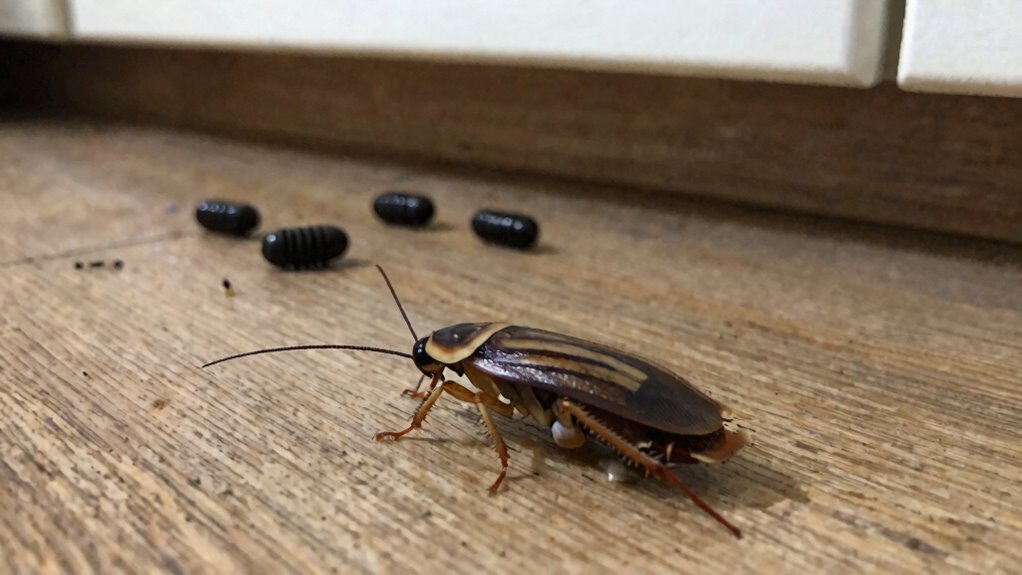
Ignore one, and you are cooking for a crowd. That is why fast cockroach extermination is critical for effective roach prevention. For severe infestations, consider using gel baits which are effective against resistant species.
What Happens During Nymph Molts and Wing Development?
Cockroaches shed their outer shell in a process called molting, passing through several nymph stages before reaching adulthood. During each molt, wing development can vary significantly between species.
Some cockroaches grow fully functional wings, while others remain completely wingless. A few species develop only small wing stubs that are useless for flight.
This natural quirk means an adult cockroach may not always be ready to take off. In fact, a grounded pest might simply be a species where wings serve only as decorative nubs.
For effective pest control, identifying the cockroach species is key to predicting behavior. Matching the trap to the specific roach species is equally critical, as some baits rely on poisoned roaches carrying the toxin back to the nest. Understanding their development stages helps target infestations at the right time.
Molting Process Overview
After hatching, a cockroach spends its nymph stage shedding its exoskeleton repeatedly, a process that sounds like a dedicated gym routine.
This molting is controlled by hormones, with ecdysone triggering the old shell to split along its back.
The insect then wriggles free, leaving a perfect replica of its former self behind.
For effective pest control, understanding this cycle helps you time treatments when nymphs are most vulnerable.
First, a hormonal signal arrives as ecdysone triggers the split of the old exoskeleton.
Second, the nymph inflates its body with air or water to grow larger before the new shell sets.
Third, the new, soft cuticle hardens over several hours, locking in the increased size.
This hardening phase is a prime window for targeted insecticide applications, as the nymph is less mobile.
Fourth, this cycle repeats 6 to 13 times, depending on species and environmental conditions.
Each molt leaves the cockroach slightly bigger, but still wingless until the final transformation.
If you are dealing with an infestation, knowing that nymphs stay near food and moisture helps you place baits and traps effectively.
For long term pest management, disrupting the molting process with growth regulators can stop nymphs from reaching adulthood.
Contact a local exterminator for a professional inspection if you notice frequent shed skins in your kitchen or bathroom.
Those perfect replicas are a clear buyer intent signal that your roach problem is active and needs a fast solution.
Wing Development Variations
During the nymph stage, wing development can be confusing because not all cockroach species follow the same plan. Some end up fully winged, while others stay wingless or partially winged, a condition known as brachypterous.
The wing blade ratio, which describes the length difference between forewings and hindwings, varies widely. This affects how cockroaches balance after their final molt into adults.
Flight muscle dimorphism adds another layer of variation. Some individuals develop strong flight muscles, while others have weak ones, even within the same species.
This uneven development often makes you wonder if nature forgot the memo. For example, German cockroaches have wings but cannot fly, a classic evolutionary tease.
In short, wing development is not one size fits all. It is a messy, species-specific gamble that often leaves cockroaches grounded, which is why professional pest control is key for managing infestations effectively.
Which Cockroaches Live Longer Than a Year: and Which Don’t?
The average cockroach lifespan clocks in at around eight months, which is a respectable run for an insect. Some species stretch that timeline well past a year, while others barely make it past spring cleaning.
Migration patterns and species distribution largely determine which roaches live longer, since climate and habitat play major roles in their survival. For pest control purposes, knowing these lifespans helps you target infestations more effectively.
German cockroach females live 190 to 200 days, and males live 100 to 150 days. That means both sexes fall well under a year, so a fast-acting extermination plan is key for home invaders.
The smokybrown cockroach averages 218 days as an adult. Under ideal conditions, however, it can exceed two years, which makes professional pest treatment essential to prevent long-term colonies.
The giant burrowing cockroach, Macropanesthia rhinoceros, lives several years. It is the Methuselah of the roach world and rarely invades homes.
Most common pest species, like the American cockroach, hover around the eight month mark. To keep your property roach free, schedule regular inspections and use effective baits or sprays.
Using a quarterly fogging schedule provides the best defense for long-term pest control.
How Long Can a Headless Cockroach Survive?
A cockroach can survive without its head for about a week, sometimes up to ten days. This macabre party trick is more like a biology experiment gone wrong.
The insect’s nerve clusters in each body segment handle basic functions like breathing and moving. Without a mouth, it can’t eat or drink, so it eventually dies from dehydration, not decapitation.
Cockroach circulation is open and wounds clot quickly, so blood doesn’t gush out. A headless roach wanders aimlessly for days, running on biological autopilot.
If you spot cockroaches in your home, proper pest control is your best defense. Seal cracks, reduce moisture, and use plant-based sprays to provide up to four weeks of deterrence without harming pets.
Seal cracks, reduce moisture, and use targeted treatments to prevent infestations.
Why Cockroach Lifespan Exceeds Other Insects
Most insects live fast and die young, with the average adult lifespan hovering around three months. Cockroaches, by contrast, average about eight months, which makes them true outliers in the insect world.
This longevity is no accident, and it all starts with evolutionary adaptation. Cockroaches evolved in stable, damp spots like rotting logs, where slow growth and a longer life actually boost survival odds.
Many insects rush through life in temporary habitats, but cockroaches take their time. Their reproductive strategy spreads risk instead of betting on one massive egg batch.
Females produce multiple egg cases, called oothecae, over several months. This stretches their fertile years and keeps the population steady even when conditions turn rough.
Their low metabolic rate also plays a huge role in slowing the aging clock. Think of a fuel-efficient sedan versus a dragster that burns out fast; cockroaches are the sedan of the bug world.
This energy efficiency means they can go weeks without food, which is a major advantage when you’re dealing with a home infestation.
Hardy physiology seals the deal, as they can shrug off radiation, starvation, and even survive headless for days. These traits let them dodge the fatal surprises that kill off less resilient pests.
If you’re looking for pest control solutions, understanding this toughness is key, because it means elimination requires targeted treatments, not just passive traps. For example, sticky glue traps can catch adults but won’t disrupt their long reproductive cycle.
Their ability to bounce back after extreme stress makes them a top candidate for professional roach control services. Whether you’re battling them in a kitchen or basement, their long lifespan demands repeat inspections and baiting strategies.
Buying effective cockroach killers means choosing products that disrupt their reproduction, not just knock down adults on contact.
So when you compare cockroach lifespan to other insects, you see a survival master at work. For homeowners, this translates into a clear buyer’s need: invest in thorough prevention and ongoing monitoring.
Store-bought sprays often fail because they ignore the slow-burn biology that keeps these pests active for months.
To truly outlast them, you’ll want integrated pest management, which targets their hiding spots and egg cases directly. That’s the practical, friendly advice that saves you time and money in the long run.
How Lifespan Data Helps You Choose the Right Cockroach Control Method
Knowing a cockroach’s lifespan isn’t just trivia; it’s a critical piece of data for choosing your pest control weapon.
For example, a German cockroach’s 200-day life cycle means that a single missed treatment can allow nymphs to mature and breed again.
That’s why professional exterminators time their bait applications to hit these peak reproduction windows.
This approach ensures the infestation is truly wiped out before the next generation starts.
By aligning your roach treatment schedule with these growth phases, you avoid the costly cycle of repeated fumigation.
Tracking this data also helps you decide between gel baits, insect growth regulators, or residual sprays for long-term cockroach prevention.
When you know exactly when eggs hatch and nymphs molt, you can target your insecticide applications where they matter most.
This makes your DIY cockroach control far more effective and reduces the chance of a rebound infestation.
Pest management pros rely on this lifecycle info to map out follow-up visits and eliminate hiding spots.
So, before you buy any roach killer, ask about the species’ lifespan to match your strategy to its biology.
A thorough approach that covers both adult roaches and their next wave is the only way to achieve lasting roach extermination in your home.
Lifespan Dictates Treatment
Understanding cockroach lifespans is key to effective pest control. Their life cycles tell you exactly how long treatment must last to break the infestation.
German cockroaches live 100 to 200 days, so you need residual baits that outlast their egg-to-adult cycle. Smokybrown cockroaches survive over a year, requiring slow-acting gels that kill them before they molt into reproductive adults.
The general 8-month lifespan means a single spray rarely works. Plan follow-up treatments every 3 to 4 weeks to catch new hatchlings.
Long-lived species like the 2-year rhinoceros cockroach demand premise modification instead of chemical sprays. Starving them out through sanitation and exclusion is the only reliable method.
Plan Around Peak Breeding
Since lifespan data reveals exactly when cockroaches are most vulnerable, you can time your attack to hit them at peak breeding. This is about matching method to their mating cycles, not just killing adults.
A German cockroach female lays eggs weekly, so a slow bait misses her next batch. Here is how lifespan data guides your choice for pest control products.
Early nymphs mature quickly in three months, so use IGRs and growth regulators. Peak egg laying females live six to seven months, so sticky traps and gel baits work best.
Warmer months speed up seasonal breeding cycles, making barrier sprays and dusts effective. Late adult females still produce, so vacuuming and caulking gaps are key.
The trick is to attack during egg laying peaks, not when roaches are dormant. Target females before they drop 10,000 descendants with the right roach killer.
Bottom line is to time your treatment to their clock, not yours. Choose bait stations or insect growth regulators for the best infestation control.
Frequently Asked Questions
Do Cockroaches Die in Winter if They’re Outside?
Outdoor cockroaches do not universally die in winter, and survival depends entirely on species and shelter.
For example, the German cockroach thrives indoors year round, making winter a prime time for outdoor infestation to move inside your home.
Other species like the smokybrown cockroach may perish if exposed to prolonged cold, but they find warmth in leaf litter or under debris.
So winter is not a guaranteed executioner for roaches, it is more like a relocation notice.
If you see one inside during winter, it likely came from outside, not a deep freeze.
To prevent a full infestation, focus on sealing entry points and using targeted pest control products like gel baits or insect growth regulators.
For smart buyers, look for professional grade cockroach bait stations or residual sprays labeled for outdoor perimeter treatment.
These solutions help stop the shift from outside to inside before it becomes a recurring problem.
How Long Can a Cockroach Live Without Food or Water?
Cockroaches are surprisingly resilient. Without food, they can last about a month, but water scarcity kills them in under two weeks.
That’s because dehydration hits harder than hunger. A German cockroach, for instance, might survive food deprivation for 30 days, but without water, it’s toast in a week or so.
So, while they can tough it out without snacks, they’re no match for a dry spell. The bottom line: cut the water, and you cut their time.
For effective pest control, focus on eliminating moisture sources like leaky pipes and standing water. Pair this with reliable roach baits or sprays to target their hiding spots.
If you want a lasting solution, consider professional-grade gel baits or insect growth regulators. These products break the breeding cycle, ensuring your home stays roach-free longer.
Can Cockroaches Live in a Refrigerator or Freezer?
Yes, cockroaches can survive in a refrigerator or freezer, but they don’t live there long-term. Most species die below 15°F after a few hours of exposure.
These pests enter appliances through tiny gaps around door seals or ventilation vents. Persistent cockroaches may also hitch a ride inside on food containers or grocery bags.
Steady sub-freezing temperatures are an effective natural roach killer. Never view your fridge or freezer as a nesting site; think of it as a slow and chilly death trap.
For best cockroach control, seal all entry points around your appliance with caulk or weather stripping. Combine this with regular cleaning and professional-grade baits for long-term prevention.
Do Male or Female Cockroaches Generally Live Longer?
Female cockroaches typically outlive males, with German cockroach females living up to 200 days versus 110 days for males. This difference comes down to mating habits, as females produce multiple egg capsules over months, which extends their lifespan.
Cooler temperatures also play a role in cockroach longevity, slowing development and letting some females exceed two years. Males, with less reproductive demand, tend to die sooner.
If you are dealing with a persistent infestation, understanding these life cycles helps you choose the right pest control treatment. Targeting egg capsules and using bait stations can break the reproductive cycle effectively.
For long term cockroach elimination, opt for gel baits or insect growth regulators (IGRs) that disrupt female egg production. These products work best in cooler, damp areas where females hide and thrive.
How Long Can a Cockroach Survive After Being Sprayed?
Survival after spraying varies wildly. Some cockroaches die within minutes.
Others, owing to spray resistance, may stagger around for hours or even a day. A key trick is the egg case survival.
The ootheca, a protective capsule, often withstands sprays. So even if the adult perishes quickly, those sealed eggs can hatch weeks later.
This leads to another round of surprise visitors. For lasting control, you need a targeted strategy that includes an insect growth regulator.
Targeting both adults and their hidden egg cases is essential for full extermination. Choose a product that explicitly lists ootheca suppression on the label for effective long-term results.


