
Getting rid of termites in trees isn’t just about saving the wood—it’s about stopping an underground highway to your home’s foundation. If you’ve noticed mud tubes or hollow-sounding bark, you’re already past the point for cheap DIY sprays.
Professional trunk injections with non-repellent foam typically run $300 to $600, while bait stations work slower but hit the whole colony. Fixing damp soil and trimming branches cuts off their easy routes.
This guide breaks down each option by cost, timing, and effectiveness so you can pick the right fix fast. Keep reading for the full breakdown on long-term prevention and when to call a pro.
At A Glance
- Professional treatment drills into the trunk to inject non-repellent foam or termiticides.
- Foam insecticides target active infestations but require repeat applications every few months.
- Bait stations slowly poison the colony; they are the patient, money-saving winner for full infestations.
- Chemical soil drenches like Termidor protect trees for years but avoid on edible crops.
- Manage soil dampness and fix drainage to prevent termite activity around tree bases.
How to Spot Termite Damage in Trees Early
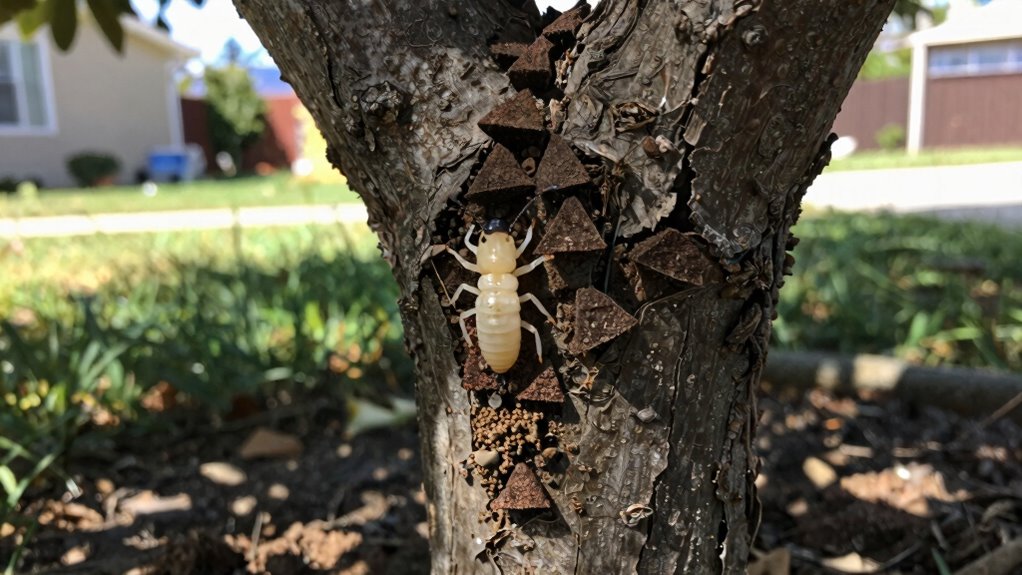
Vigilance is your first line of defense against a six-legged enemy you rarely see. Early signs in trees are subtle, but they are there.
Look for mud tubes snaking up the trunk, or soft, papery bark that crumbles at a touch. Termites follow seasonal movement, shifting their feeding zones as temperatures change.
Look for mud tubes snaking up the trunk, or soft, papery bark that crumbles at a touch.
So check the base and crown regularly for these clues. Also, pay attention to dampness sources like a leaking irrigation line or poor drainage near the roots.
That is an open invitation for a termite inspection to become urgent. Using a pinless moisture meter can help detect hidden dampness without damaging the tree’s bark or finished surfaces. Hear a hollow thunk when you tap the trunk.
That is a bad sign you should not ignore. Spotting these clues early means you can call a professional before the tree becomes a full on termite buffet.
Ignoring them makes the job costlier, trust me on that one.
Why Tree Termites Spread to Your Home
Tree termites don’t just stay in that dead oak in the backyard. They treat it like a hidden vacation home, quietly building up numbers before expanding.
That infested tree acts as a reservoir for termite activity. Termites can travel along its roots straight to your foundation, giving them a free underground highway.
Combine that with damp wood or cracks in your home’s structure. You’ve got an invitation they’ll happily accept during a pest inspection.
For effective termite control, identify termite damage early. Professional treatment spots the root cause before an infestation spreads.
Moisture management and sealing entry points are key prevention steps. A termite baiting system can stop them before they reach your walls, with stations like the Spectracide stakes using a pop-up activity indicator for quick detection.
Hidden Infestation Reservoirs
Infested trees left untreated become hidden reservoirs that act like termite apartment complexes with a direct highway to your home.
Inside, these pests feast on decaying damp wood and build massive colonies far from their natural predators like ants or birds.
This makes the tree a fortress that is safe and stocked with food.
These reservoirs do not just stay put as termites from the tree constantly forage outward.
They tunnel underground to find new sources of cellulose in wood.
Your home’s foundation, siding, or any wooden structure touching soil becomes a tempting target for termite control.
The bottom line is that a single infested tree can seed multiple colonies on your property.
Don’t let a tree become a termite nursery by spotting the signs early.
Call a professional pest exterminator before the apartment complex expands into your living room.
Homeowners can use baits with Novaluron to target these hidden colonies after professional identification.
Traveling Through Tree Roots
Subterranean termites are practically farmers of the underground, so they will happily use a tree’s root system as their own private highway. Those root pathways are perfect for belowground spread, acting like termite turnpikes straight from the tree to your home’s foundation.
Termites don’t need to build new mud tubes because they just follow existing roots that can stretch dozens of feet. That means a tree fifty feet away could hide a colony already tunneling toward your wooden trim.
No trenching is required for termite control, since the roots do the digging for them. A single infested tree becomes a staging area for invasion, making professional pest inspection critical.
If you spot mud tubes or soft wood on a tree, assume termites are already scouting your house using those natural root routes. With products offering residual protection up to nine months, prompt foam application can maintain long-term pest prevention. Scheduling a termite treatment plan now can prevent costly structural damage later.
Structural Attraction Risks
| Home Vulnerability Factor | Why It Attracts Termites |
|---|---|
| Wood-to-ground contact | Direct highway from soil to home |
| Cracks in foundation | Tiny doors for tiny, hungry crawlers |
| Moisture near base (leaky pipes) | Five-star spa and dining combo |
Termites don’t care about your foundation’s feelings. They just follow damp, tasty wood.
A single rotten sill plate is like leaving the backdoor open. You don’t need a hazmat suit, you need to close those gaps.
Check your home’s base like it’s a teenager’s messy room. Annoying, but essential for termite prevention.
That is the bottom line. Schedule a pest control inspection to find hidden entry points.
Call a local exterminator for a wood damage assessment today. Stop structural attraction risks before they cost you thousands.
Target moisture near your base and seal foundation cracks. Protect your home from wood destroying insects with routine maintenance.
For established colonies already pushing through those entry points, a foam spray treatment expands into cracks and voids to eliminate hidden termites on contact while offering up to one month of residual control.
Professional Steps to Treat Termites in Trees
Professional termite treatment in trees requires drilling into the trunk and injecting non repellent foam or termiticides to hit the colony’s carton nest directly. Studies show up to 70% of treated trees are pest free after one year, making this a proven method for tree pest control.
However, chemical treatments on fruit trees can contaminate harvests, so pros often switch to bait stations placed nearby. Before starting, they run a cost benefit analysis to weigh the tree value against treatment price, typically $300 to $600 per tree.
This investment beats replacing a mature shade tree, and regular follow up inspections are mandatory since roots can hide re infestation. For food bearing trees, keep them on a bait only protocol to avoid contamination from termiticide residues.
Hire a licensed exterminator for best results and skip any DIY sprays. It is cheaper than buying a new tree, and expert tree care ensures long term protection. Boric acid powder applied around the tree’s base can help eliminate foraging ants that may disturb bait stations.
What Kills Tree Termites Best? Foams, Baits, or Chemicals
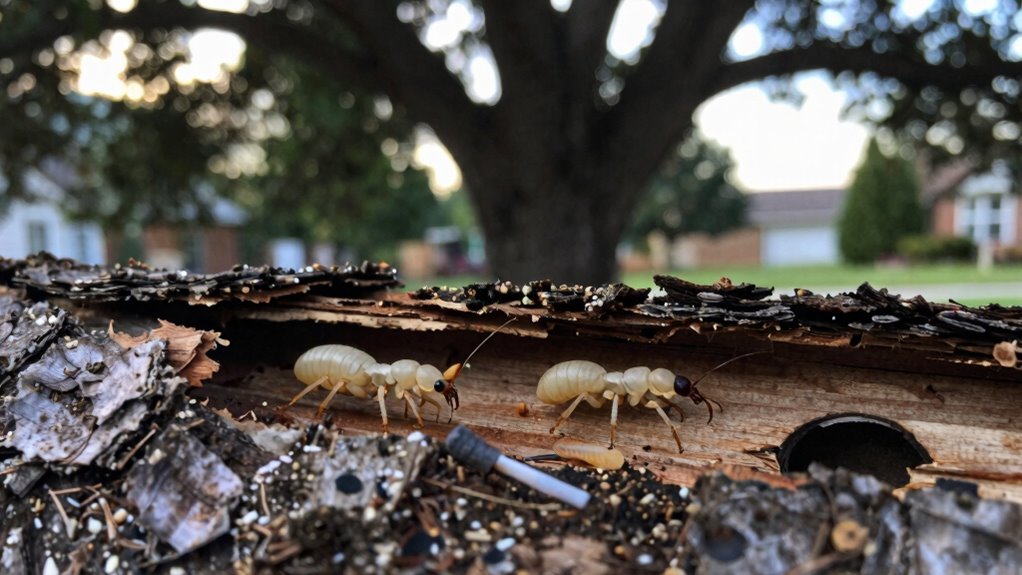
Foams hit active infestations hard and fast, drilling into wood to smother termites on contact.
Baits work slower but target the whole colony, wiping out the source over months.
Chemical drenches offer a solid middle ground for tree treatment.
Tests show systems like Termidor clearing 70% of treated trees within a year.
Each option has trade-offs, so consider your termite control needs carefully.
For fast results, foam treatments are your best bet for targeted elimination.
Applying fipronil-based baits around trees provides a non-repellent alternative that targets the colony over time, similar to how roach gels work.
Foams For Active Infestations
Foam insecticides deliver a targeted punch for active termite infestations in trees. The formula’s cellulose attraction lures termites deeper into treated gaps as the foam expands to coat tunnels.
However, it won’t wipe out the entire colony underground. Pros drill small holes, inject the foam, then plug them for best results.
Foam is fast but not a magic bullet. You’re buying time, not total victory, with this treatment.
A single can costs roughly $40 to $80, enough for a few trees. Repeat applications every few months are necessary to keep pressure on the colony.
For a swift knock-down on visible tree activity, foam is your guy. Just know that roots may still harbor stragglers after treatment.
Bottom line: call a licensed pro for the messy part. Your uncle with a sprayer isn’t the right choice for termite control.
These products work well as a targeted treatment, but for longer-term prevention consider pairing them with borate-based sealants that kill termites on contact and prevent future invasions.
Baits For Colony Elimination
If foam is a quick punch, bait stations are a slow, deliberate siege. They do not kill on contact. Worker termites carry the poison back to the colony, which takes weeks to wipe out the millions hiding inside. Bait placement is key, so stations go at the tree base or secured aboveground where termites travel. The pros then practice colony monitoring, checking stations monthly to see if the poison is being eaten. A single station costs around $10 to $15, but you need several plus professional labor. It is like a free sample they cannot refuse, just a little less tasty. The payoff is lasting colony elimination. For a full tree infestation, baits are the patient and money saving winner. Always choose pest control products designed for termite baiting to ensure colony elimination. Some roach gel baits provide up to one year of effectiveness after drying out, demonstrating that certain bait formulations offer long-lasting residual control.
Chemical Drench Effectiveness
Foam works fast and baits work slow, while chemical drenches land right in the middle for long term termite control. If applied correctly, a single soil drench can protect a tree for years thanks to chemical persistence.
The key is how long the poison stays active in the ground. Non repellent termiticides like Termidor allow termites to crawl through treated soil and die later.
Studies show Termidor kept 70 percent of trees infestation free after 12 months. That number held at 58 percent after six years, making it a durable option for pest control.
Application timing matters a lot for best results. Drench during dry weather so the liquid soaks deep into the root zone instead of running off.
Premise is another termiticide that hit 65 percent after one year. But its protection dropped below 50 percent by year three, so it may not suit long term prevention.
For nut or fruit trees, skip chemical drenches entirely. The label clearly warns against using these products on edible crops.
If you want durable control and can wait a few weeks for results, chemical drenches are a smart buy. Always let a professional handle the pour to ensure safety and effectiveness.
Some outdoor pest control concentrates use synthetic pyrethroids that last up to three months on sealed surfaces.
Safe DIY Tree Termite Treatments (When to Call a Pro)
Patience is a virtue, especially when you’re staring at a tree that might be hosting a termite condo. For safe DIY tree termite treatments, start by managing soil dampness around the base, as termites love wet ground.
Patience is a virtue, especially when you’re staring at a tree that might be hosting a termite condo.
Choose less desirable tree species, like pines over pecans, since some trees attract termite infestations more. A simple DIY pest control step is to trim branches away from your house to block termite highways.
Use a garden hose to check for saturated soil, then fix drainage to prevent future termite activity. But here is a practical tip: if your tree looks like Swiss cheese inside, call a professional termite inspector.
Professional foam treatments cost $200 to $500 per tree and beat guessing with a spray can for active nests. The bottom line is that DIY works for dampness control, not for eliminating an established colony.
When you see mud tubes or hear hollow sounds, do not play hero. Hire a licensed pro for safe termite removal and to protect your property investment. For a long-lasting solution, consider a TERRO Home Pest Defense Kit that provides up to four weeks of residual control for carpenter ants and termites.
Prevent Termites in Trees for Good
Since termite prevention is a lot less expensive than termite excavation, the smartest move you can make is to stop them before they settle in. For lasting protection, focus on these four non‑negotiable actions.
First, apply borate‑based wood treatments to stumps and fence posts near trees. Avoid live plants because borate toxicity can kill roots, and a $30 gallon lasts years.
Second, fix every leaky faucet and gutter. Wood dampness control turns your yard from a termite spa into a desert, because dry wood is uninviting wood.
Third, trim all branches away from your house by at least three feet. This denies termites those handy aerial highways into your attic.
Fourth, install a gravel barrier six inches wide around tree bases. This breaks their underground travel routes without chemicals.
Combine dry wood, physical barriers, and spot‑borate treatments. You will never need to dig up a tree for termite removal. For additional perimeter defense, consider applying bifenthrin granules around the foundation to block crawling insects from entering.
Choose Trees That Deter Termites
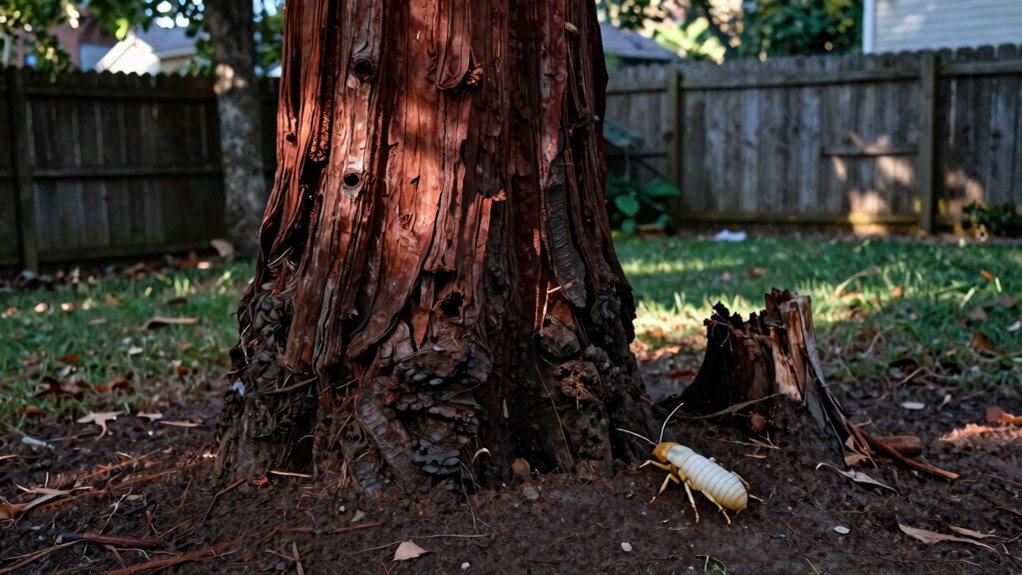
Choosing the right tree species is your smartest, lowest effort move against termites. Not all trees are uniformly tasty to them, so smart selection capitalizes on termite species preference.
Formosan subterranean termites adore pecan trees but typically avoid cedar, redwood, and cypress. If you’re planting near a home, skip the snack trees and go for species that resist infestation naturally.
Termites are picky eaters, just like your kid with broccoli. Cedar contains natural oils termites hate, costing $30 to $60 for a sapling. Cedar wood naturally releases aromatic oils to repel pests without chemicals.
Redwood is dense and resistant, ideal for structural proximity at $40 to $80. Cypress features durable heartwood, and termites rarely bother it for $25 to $50.
Choose less preferred species from the start for long term pest control. This one time decision saves you foam treatments, bait stations, and regret.
Frequently Asked Questions
Can Termites Kill a Healthy, Living Tree?
Yes, termites can absolutely kill a healthy, living tree by hollowing out its core and cutting off water and nutrients.
This causes severe root damage and starves the tree fast once a colony moves in, so early termite control is critical.
If you spot thinning leaves, dieback, or brittle branches, that is a clear sign of an active infestation underground.
Since termites travel through root damage to attack again, professional pest inspection should be your next move for protecting your landscape.
Your tree’s health declines quickly when termites destroy the inner wood, leaving it unstable and dangerous.
A dead tree poses serious safety risks, so you need targeted pest management solutions to stop the colony before it spreads to your home.
For long term protection, consider baiting systems or wood treatment products designed for termite extermination.
Contact a licensed exterminator if you suspect an infestation, because a proactive pest control plan saves you costly removal later.
How Deep Inside a Tree Do Termites Typically Go?
Termites can tunnel surprisingly deep into a tree, sometimes reaching the core. Colony depth varies by species, but a Formosan colony might chew through the entire trunk’s center.
Wood species influence this, as softer, damper wood is easier to invade. They aren’t picky about depth. They follow moisture and food.
So a tree can look fine outside whilst being hollowed out inside. It’s like a bad chocolate Easter bunny, all shell and no substance.
That’s why professional termite inspection and targeted pest control treatment are critical for protecting your property. If you suspect an infestation, you need fast action to avoid costly structural damage.
Look for mud tubes, soft wood, or discarded wings as early warning signs. Buyers often ask about soil treatments or baiting systems to stop colonies before they reach your home’s foundation.
The best defense is proactive prevention combined with regular pest control service. Contact a local exterminator to evaluate your risk and recommend the right termite control products for your situation.
Do Termite Colonies in Trees Have Multiple Queens?
Yes, they can have multiple queens, though it is rare. Most termite colonies start with one queen.
In large, established systems, especially with Formosan subterranean termites, queen replacement can occur. This allows satellite colonies to form and spread from the original nest.
Think of it as a bug based royal drama with backup monarchs ready to take over. These satellite colonies complicate treatment, as multiple queens mean multiple infestation points to manage.
If you are dealing with a persistent termite problem, look for professional termite control products that target both primary and secondary queens. Buying a comprehensive baiting system or a liquid termiticide with slow acting effects can help eliminate these hidden royalty.
Always inspect for mud tubes and damaged wood around your property, as these are red flags for an established colony. For the best results, pair your treatment with a professional inspection service to confirm the queen count.
Bottom line: one queen is typical, but don’t bet on it. A smart purchase today can save you from a costly infestation tomorrow.
Can Treated Trees Still Be Used for Firewood Later?
Yes, treated trees can still be used for firewood, but you need to consider two big caveats: termite survival and wood quality. If the tree was treated with a non-repellent termiticide like Termidor, which kills on contact, the wood is safe to burn after a few months.
Just split the wood and let it dry completely before using it. However, if baits or systemic insecticides were used, toxins may linger in the sap and make indoor burning unsafe.
For pest control safety, always check the chemical labels on the product you used. Exposed wood also loses structural integrity, so it is best reserved for outdoor fires only.
To make a smart purchase and avoid risks, wait at least six months before burning treated wood. This ensures any residual chemicals break down and your firewood is safe to handle.
Bottom line: confirm the product type, wait six months, and burn outdoors for maximum safety. This approach keeps your pest control efforts effective while protecting your family and your home.
What Happens to the Termite Colony After the Tree Is Removed?
Removing the tree does not remove the colony; it just forces them to move. The colony will likely relocate underground, seeking new food sources like your house.
Queen survival is high, so she will lead the move to a new nest nearby. Think of it as uninvited tenants switching apartments; you have cut off their tree buffet, but they will find another.
Bottom line: tree removal alone is not a complete termite control solution. You must follow up with professional soil treatment or termite baits to stop them.
Otherwise, you are just shuffling termites to a different address near your home. For effective pest control, combine tree removal with a targeted liquid barrier or baiting system.


