
Fruit flies seem to appear from nowhere, but they actually come from Africa, where they first co-evolved with humans thousands of years ago over fermented fruit.
That ancient partnership explains why they’re so drawn to your kitchen today—they’re hardwired to hunt ripening produce. These tiny pests hitched rides on global trade routes, and now they’re in nearly every home, spreading fast with a ten-day life cycle.
If you’re seeing them buzz around your trash can or fruit bowl, you’re dealing with a rapid breeding cycle, not a one-off visitor. This guide covers exactly where they enter, how to find their hidden breeding sites, and the quickest ways to break the cycle for good.
Stick with this—you’ll get a clear, step-by-step plan to clear them out.
At A Glance
- Fruit flies likely originated in southern African caves with the San people and marula fruit.
- They spread globally by stowing away in human produce, trash, and travel containers.
- Fruit flies colonized Europe and Asia via ancient trade routes 10,000 to 15,000 years ago.
- Colonial ships carried them to the Americas and Australia from the 1500s to 1800s.
- Modern commerce and jet travel helped them invade every continent except Antarctica.
Where Did *Drosophila Melanogaster* Originate in Africa?
The real plot twist came from an unlikely partnership. The indigenous San people of southern Africa harvested marula fruit and stored it in caves.
The real plot twist came from an unlikely partnership: the San people and marula fruit in caves.
Fermentation created a perfect breeding ground for Drosophila melanogaster. This wasn’t just coincidence, it was symbiotic evolution where flies got food and humans got fermented fruit.
Over generations, the flies developed cave adaptation. They thrived in dark, cool, fruit-rich spaces.
Marula fruit has a pH similar to an orange with a strong fermentable pulp. It became their ancestral host.
Even lab strains like Canton-S, collected from Ohio in 1916, still prefer marula. This cave-based relationship likely sparked the whole human-fly partnership before they ever left Africa.
The origin story isn’t about climate or geography. It is about a fruit, a cave, and a very old collaboration.
If you notice these flies in your home, simple pest control steps like removing overripe fruit can help. For persistent infestations, professional pest control services can target their breeding spots effectively, and modern fruit fly proof containers with airtight lids and fine mesh can prevent them from detecting and accessing your produce.
How Did *D. Melanogaster* Spread From Africa to the World?
The first big push into Europe and Asia happened roughly 10,000 to 15,000 years ago, likely alongside early human trade routes. The Americas and Australia were colonized much later, thanks to ships and planes.
That human-commensal lifestyle, living off fermented marula fruit in caves, then moving with us to every continent, turns out to be the real engine of its global takeover. This is not about super-fly wings, but about stowing away in produce, trash, and travel containers.
For effective pest control, understanding this hitchhiking behavior is key to stopping fruit fly infestations before they spread. If you’re dealing with a fruit fly problem at home, targeted fly traps and proper sanitation of ripe or rotting produce are your best first steps.
Professional pest management services often use monitoring lures and exclusion techniques to break their travel cycle. Identifying entry points around loading docks, kitchens, and recycling bins is a practical buyer-intent strategy for long-term prevention.
Global Dispersal Routes
1. Ancient trade routes allowed these pests to leave Africa 10,000 to 15,000 years ago.
They hitched rides on marula fruit stored in caves by the San people and entered Europe and Asia.
2. Colonial ship routes from the 1500s to the 1800s gave them new opportunities.
They stowed aboard ships carrying fruit cargo and reached the Americas and Australia.
3. Modern commerce from the 1900s to today accelerated their spread.
Jet travel enabled them to invade every continent except Antarctica.
4. These paths show fruit flies are not just passengers.
They are opportunists that adapt to each region’s rotting fruit ecology.
To protect your stored flour and dry goods, choose containers with airtight seals and locking hinges to prevent these pests from accessing breeding sites.
5. To protect your home, focus on sanitation and eliminating breeding sites.
Use targeted pest control sprays and traps near fruit bowls and trash bins.
6. If you notice an infestation, act quickly with professional pest management.
This will stop them from invading your kitchen and pantry.
Human Commensal Expansion
| Human Activity | Fly Outcome |
|---|---|
| Marula storage in caves | First domestication event |
| Overland migrations into Europe | Population expansion 15,000 years ago |
| Oceanic shipping to Americas | Colonization in recent centuries |
Each transport event reshaped the fly’s genome. A 2018 study found a Zimbabwe population still living wild, proving the species can thrive without us. But it chose not to. That decision made *D. melanogaster* the world’s most successful pest. It perpetually hitches rides on rotting fruit, making pest control treatments essential for infested shipments. For fruit farmers, using BTI-based larvicides can safely target mosquito and fly larvae without harming beneficial insects in nearby water sources.
For fruit farmers, professional pest management strategies target this species during storage and transport. If you need to buy effective fly bait or a certified fumigation service, check local supplier reviews. These flies outcompete native insects when humans move produce. A single infested crate can ruin an entire warehouse if left untreated.
Understanding the fly’s genome helps pest control experts predict resistance. Our team recommends inspecting imported fruit within 24 hours of arrival. Contact a licensed exterminator today for a free inspection quote. Early intervention saves both product and profit margins.
Why Are *Drosophila Melanogaster* so Good at Living With Humans?
2. Their biological flexibility lets them exploit rotting fruit worldwide, from African groves to supermarket dumpsters. They do this without evolving new preferences, making pest control strategies tricky.
3. Their tiny size and fast life cycles allow egg to adult development in just ten days. This speed lets them colonize new habitats before competitors notice, which is why effective pest control requires rapid action to target all insect stages, including eggs, to prevent repeated spraying.
4. They don’t merely tolerate our mess. They have been practicing for millennia, so integrated pest management must account for their ancient adaptability.
5. We didn’t domesticate them; they domesticated us. For long-term pest control solutions, understanding this partnership is key to staying one step ahead.
From Rotting Fruit to Lab Bench: the Life Cycle of *D. Melanogaster
Wild flies rely on overwintering strategies, often waiting out cold months as prepupae or pupae on the ground. They emerge when spring warms the fruit, a natural pause button for survival.
These life cycle stages make fruit fly control and lab study incredibly straightforward. Eggs develop into adults in about ten days, making them ideal for genetics research.
Even lab populations have wild roots, so pest prevention starts by understanding their outdoor habitat. Fast reproduction means you need an integrated pest management plan if they invade your space. For standing water issues, Bti-based biological larvicides offer a safe, EPA-registered method to target mosquito larvae without harming other organisms.
How Fruit Flies Became the Most Studied Insect in Science
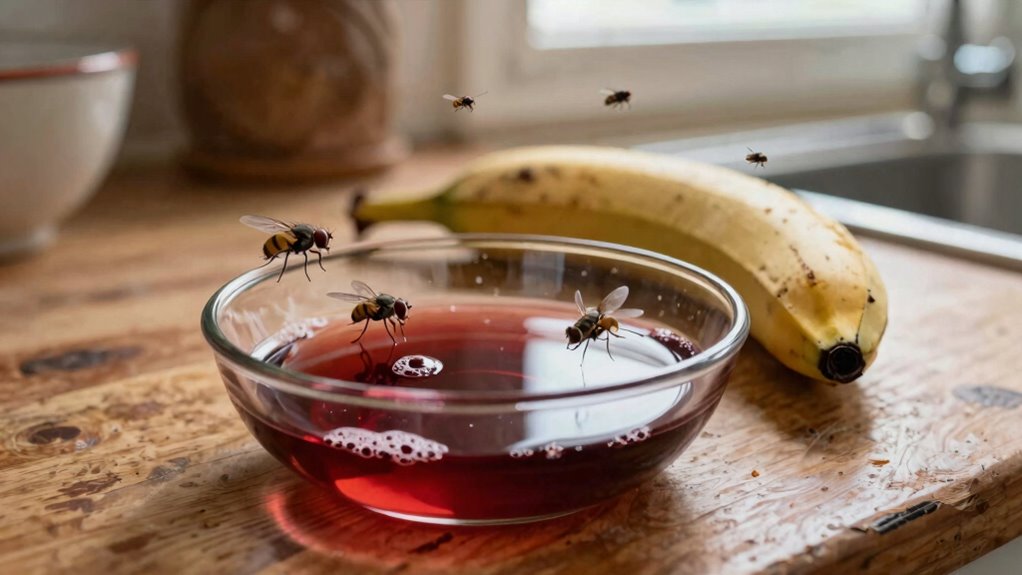
Cleverness, not luck, turned the fruit fly into science’s most loyal lab assistant. This tiny human commensal thrives on our leftovers, offering researchers a perfect trio of traits.
Cleverness, not luck, turned the fruit fly into science’s most loyal lab assistant.
Fast breeding means a new generation in ten days. Scientists can watch laboratory evolution happen in real time, not over centuries.
Cheap housing lets thousands live in milk bottles on mashed bananas. Costing pennies a day, this setup makes large scale pest control studies affordable. For years, scientists have relied on cold-pressed neem oil as a safe, natural method to manage these populations.
Shared DNA is key: 60% of human disease genes match the fruit fly. It becomes a cheap stand in for us during insect control drug tests.
The fly’s short life let Thomas Hunt Morgan spot white eyed mutants in 1910. That moment launched modern genetics and pest management breakthroughs.
Decades later, its genetic divergence from wild cousins taught us about adaptation. A humble pest became a science superstar, thanks to cheap food and fast generations.
Why Wild *D. Melanogaster* Differ From Lab-Reared Flies
Wild flies are bigger than lab flies, which seems odd given the comfortable lab conditions.
That diverse microbiome in wild flies might reveal natural survival tricks we never see in sterile dishes.
A healthier microbiome could teach us how to handle pest infestations in your home.
Lab flies are a convenient stand in, but they do not tell the full story about control methods.
If you want to eliminate fruit flies naturally, focus on their wild behavior and breeding sites.
Buy fly traps and sanitation products that target the real threats, not just lab tested strains.
For persistent wild infestations, focus trapping near breeding sites using bright yellow sticky traps that visually attract fruit flies and gnats without bait.
How Ancient Human Use of Marula Fruit Shaped *D. Melanogaster* Evolution
The San people of southern Africa began harvesting and storing marula fruit in caves thousands of years ago. They unwittingly set the stage for a lasting partnership with fruit flies.
The San people’s ancient cave pantries unwittingly lured fruit flies into a lasting partnership.
This created an evolutionary legacy for *Drosophila melanogaster*, shaping its foraging behavior around a single reliable fruit source. For pest control, understanding this ancient bond helps explain why flies target marula-scented items today.
Marula’s rich scent is packed with terpenes and esters. This acts like a dinner bell, making flies prefer it over other fruits even after centuries apart.
Fermentation-friendly caves offered constant warm breeding grounds. These conditions selected for flies that could thrive on rotting pulp, a key consideration for any home fruit fly trap.
This shared resource locked *D. melanogaster* into a human-linked lifestyle. They became the pest, pet, and lab rat we know today, always drawn to fermented produce.
The bottom line is that your fruit bowl’s uninvited guests trace their picky appetites back to ancient cave kitchens. If you want effective pest management, target the marula-like scents or fermentation cues that trigger their attraction. Modern sprays containing natural botanical oils like peppermint or lemongrass can repel these flies without harsh chemicals.
What the Marula Fruit Experiment Reveals About Fruit Fly Evolution
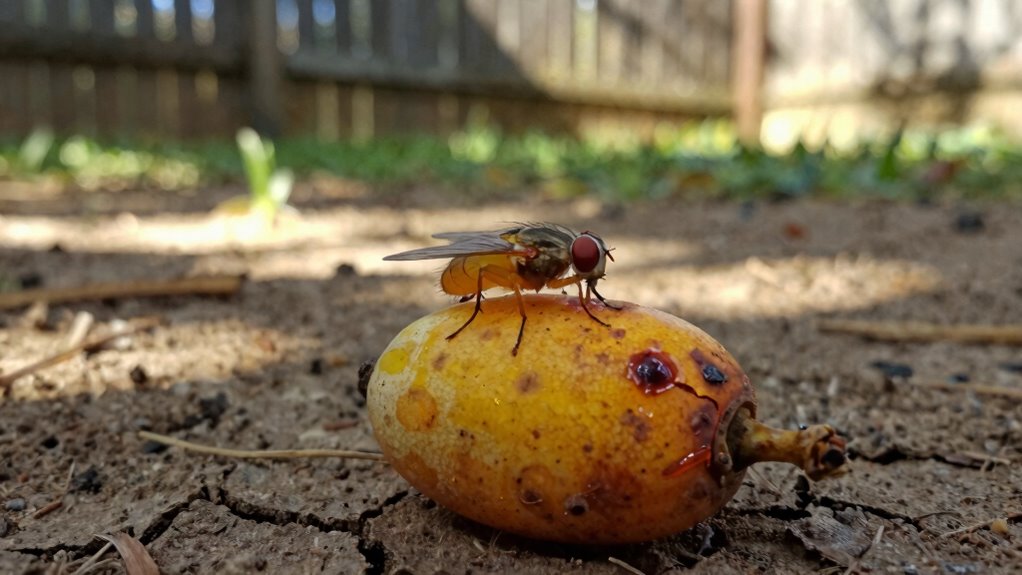
The experiment does not just explain where they came from, it shows why they stuck around. Evolution often starts with a good meal, and here the marula sealed the deal. For pest control experts, this study highlights how targeting a species’ preferred breeding site can improve fruit fly elimination strategies. By understanding their host loyalty, you can set traps more effectively around fermenting fruits to reduce infestations. UV light traps paired with adhesive offer a chemical-free option for fast, effective captures near such breeding hotspots.
This insight helps with integrated pest management plans, especially for commercial orchards and home gardens. If you need to manage fruit fly populations, start by identifying their ancestral attractants like marula or other overripe fruit. You can then deploy baited traps or safe sprays directly on these hotspots. That focused approach often delivers faster, longer-lasting results for your pest control efforts.
What Genetic and Behavioral Traits Set *D. Melanogaster* Apart From Other Flies?
- Its genome holds over 13,000 genes, and 75 percent are linked to human diseases. This makes it a tiny lab partner that helps us understand pest control targets.
- Even lab strains isolated for a century still prefer marula over orange. That stubborn instinct can help you predict breeding sites for better control.
- Wild flies are not fruit hogs. They colonize specific fruits at exact decay stages, acting like picky connoisseurs.
- In short, *D. melanogaster* is a genetically flexible specialist with impeccable taste. Knowing its habits can guide removal and prevention strategies. Effective treatments often use plant-based, non-toxic formulas that kill mites and flies on contact without harming pets or humans.
Frequently Asked Questions
How Long Do Fruit Flies Live?
Adult fruit flies typically live for 40 to 50 days, though this depends heavily on conditions. The full life cycle, from egg to adult, takes about a week in warm weather.
For winter survival, they slow down as prepupae or pupae on the ground, emerging in spring like tiny, six-legged snowbirds. Lab flies get cozy and live shorter lives.
So enjoy their brief, buzzing tenure. But if you want to stop them fast, targeted pest control sprays and sticky traps are your best DIY weapons.
Look for products labeled for fruit fly elimination, especially those that target breeding sites like drains and garbage disposals. For persistent infestations, invest in a quality insect growth regulator to break the cycle for good.
Once you remove the rotting fruit and clean the kitchen regularly, you can cut their lifespan to zero. That means you get rid of the problem, not just the adults.
Can Fruit Flies Bite Humans?
Can fruit flies bite humans? No, they cannot, and here is why. Their mouthparts are a soft, spongy labellum that simply cannot pierce human skin.
They lack the blade-like stylets that mosquitoes or biting midges use to draw blood. In fruit fly habitats like compost bins and overripe produce, they are only after fermenting sugars, not a blood meal.
Anatomy dictates behavior, so that tickle you feel on your arm is landing gear, not a bite attempt. This means you can relax, since these pests are more of a nuisance than a health threat.
If you are dealing with an infestation, your best pest control solution starts with removing their breeding sources. Toss out overripe fruit, clean drains, and use a fruit fly trap with a proven attractant for fast results.
For a smart purchase, look for indoor-safe insecticides or sticky traps that target adult flies without harsh chemicals. These topical products work best when paired with strict sanitation, which is the core of effective residential pest management.
So, no need for bite prevention sprays or repellents here. Just wash your fruit, secure your trash, and consider a targeted fruit fly killer if they persist.
Bottom line: they are annoying, not dangerous, and a little proactive pest control goes a long way. You can solve this quickly with the right trap and a clean kitchen routine.
Do Fruit Flies Only Eat Fruit?
No, fruit flies do not only eat fruit. Their diet is surprisingly broader, centering on fermented food sources like rotting fruit, plus fungi, plant sap, and even spilled soda.
The common fruit fly, Drosophila melanogaster, has a taste for yeast-based decay, not just fruit flesh. Their diet is really about fermentation, not freshness, which is why they breed so fast in kitchen drains or trash cans.
So although they love a bruised banana, they are just as happy with a forgotten beer can or a damp mop head. It is all about the smell of rot, which means effective fruit fly control starts with removing that decaying organic matter.
If you want to get rid of fruit flies for good, you need to target their breeding sites with a proven fruit fly trap and a good drain gel. For long term pest control, pair sanitation with an insecticide spray designed for flying insects around your fruit bowls and compost bins.
What Attracts Fruit Flies Into Homes?
Fruit flies are drawn into homes by fermented residues and garbage odors. They detect rotting fruit, spills, or damp trash from far away.
Even a forgotten banana peel or an open wine bottle will attract them fast. These tiny pests prefer overripe produce, sticky countertops, and sink drains with organic buildup.
Check your compost bin or recycling cans, as these are common breeding sites. The fix is simple: clean spills immediately, seal trash in bins, and store fruit in the fridge.
For persistent infestations, try a fruit fly trap or an enzyme drain cleaner to eliminate breeding grounds. You need a targeted pest control solution to stop them from coming back.
They come for the stink, not the welcome, so routine kitchen hygiene is your best defense. If you want professional grade products, shop for a fruit fly spray or sticky trap today.
How Do Fruit Flies Reproduce so Quickly?
Fruit flies reproduce quickly since their life cycle is built for speed. Egg development takes just 24 hours, and after hatching, larval feeding happens constantly for about four days until they pupate.
A single female can lay hundreds of eggs, meaning a new generation emerges in under two weeks. That’s how a few flies become an infestation before anyone notices, which is efficient if a little unsettling.
If you spot even one fruit fly, act fast with a targeted fruit fly trap or an organic spray to break the cycle. For ongoing kitchen protection, consider a drain treatment to eliminate breeding sites where larvae hide.
For serious outbreaks, a professional grade insecticide or a baiting system can stop them at the source. Picking the right pest control product now saves you from repeating the battle next week.


