
Where Do Fruit Flies Lay Eggs? If you’ve ever spotted tiny flies swarming your bananas or trash can, you already know the problem starts before they buzz around. Fruit flies lay eggs just under the skin of overripe produce, often hiding in soft spots or near stems you might overlook.
A single female can deposit up to 500 tiny, rice-shaped eggs in a damp, fermenting surface, from mushy tomatoes to wet mop residue. Those eggs hatch in as little as 30 hours in warm conditions, which means an infestation can explode almost overnight.
The key to stopping them is catching those hidden clusters early, and we’ll show you exactly where and how to check. Stick around for the practical steps that keep your kitchen fly-free for good.
At A Glance
- Fruit flies lay eggs on fermenting, damp surfaces like rotting produce or wet mops.
- Female flies insert eggs just under the skin of overripe or damaged fruit.
- Common indoor sites include compost bins, trash piles, and dirty drains.
- Eggs are tiny, white, rice-shaped clusters near soft patches or stems.
- Remove damp organic matter and fermenting food to eliminate breeding sites.
What Makes a Spot Ideal for Fruit Fly Eggs?
So, what makes a spot ideal for fruit fly eggs? It is all about speed and survival for effective pest control.
A prime location boosts egg development, so eggs hatch fast within 30 hours to 3 days. That is vital because a female can lay 500 eggs total, and she needs them to become adults in about a week.
A prime egg spot speeds hatching, crucial since a female can lay 500 eggs needing to become adults in about a week.
The spot must support efficient larval dispersal patterns. Once hatched, legless larvae need to spread out to feed on yeast and fungi without competing too much.
A damp, fermenting film on surfaces like rotting produce or a wet mop provides that perfect nursery for fruit fly infestations. It is damp enough to keep eggs from drying out, but not so wet that the larvae drown. Using a food-based liquid bait trap nearby can intercept adults before they lay eggs.
Think of it as a starter home small, wet, and full of food for fruit fly prevention. The larvae will move to drier spots to pupate later, but for egg laying, moisture is non negotiable.
Why Fruit Flies Choose Rotting Produce for Eggs
Fruit flies are naturally drawn to rotting fruit because the soft, mushy flesh makes egg laying almost effortless.
A female can insert her eggs with minimal effort, and they hatch directly into a yeast rich food source.
This instant food supply is a perfect nursery for hungry larvae.
A thin moisture film protects the eggs from drying out before they hatch.
For effective pest control, eliminating these breeding sites is key to stopping an infestation.
Home remedies for fruit flies often target these same moist, fermenting spots.
A single female can deposit up to 500 eggs in one prime location.
That means her offspring wake up to a buffet, which is why a small problem can quickly become a large one.
Buying fruit fly traps and organic repellents can help, but removing rotten produce is the best long term solution.
Preventing access to rotting matter is a critical step in natural pest management.
This isn’t a choice for the fly; it is pure biology at work.
Rotting produce delivers the perfect moisture rich starter kit they need to multiply.
Products with non-toxic and food-safe ingredients are preferred for use in food areas to avoid accidental exposure of family and pets.
How Fruit Flies Deposit Eggs on Fresh Produce
She lands on the produce and taps it repeatedly with her feet to test its ripeness. Using her ovipositor, she inserts eggs just under the skin like a tiny syringe.
Eggs are laid in small clusters, often near stems or soft patches. She chooses produce with visible decay, as it is easier for larvae to feed.
A single female can deposit dozens of eggs per session, a real party trick for a pest. Bottom line: check produce for soft spots before bringing it inside to prevent fruit fly infestations. Using airtight lids with locking buckles can block fruit flies from detecting odors and entering containers.
Where Do Fruit Flies Lay Eggs Indoors?

Common indoor sites for fruit fly eggs include the overripe fruit bowl, where soft, fermenting flesh on bananas or tomatoes attracts them.
The kitchen compost bin is another hotspot, drawing them in with rotting scraps and high humidity levels.
Wet cleaning rags also provide a perfect nursery, as damp fabric holds organic residue.
Female fruit flies ignore spotless areas and seek a slimy, stinky food source for egg laying.
So if a drain smells funky or trash piles up, expect a fruit fly infestation.
Check these spots first for effective pest control before fruit makes its grand appearance.
A similar approach to ant baiting uses slow-acting poison to ensure foragers return to the colony before dying.
How Many Eggs Can One Fruit Fly Produce?
One female fruit fly can lay up to 500 eggs in her short lifetime, starting just one day after emerging. She may deposit over 130 eggs daily into rotting fruit, fueling rapid colony growth.
A single fruit fly can lay up to 500 eggs, starting just one day after emerging.
That means a single fly can turn into a major pest infestation indoors almost overnight. Under ideal conditions, total egg count reaches near 500 in just two weeks.
This fast breeding cycle is why fruit fly control is so important in homes and kitchens. Researchers also use this speed in genetic engineering to test traits quickly.
Different species show slightly varied rates, but all are alarmingly productive. If you spot a few flies, act fast to stop a full blown problem from taking hold. Using traps with UV light and sticky adhesive can quickly eliminate these prolific breeders.
What Do Fruit Fly Eggs Look Like?
Fruit fly eggs are tiny, white, and shaped like miniature rice grains, measuring up to 1/16 inch long. Their smooth, shiny surface makes them easy to overlook, but they are often deposited in clusters near the surface of rotting fruit.
Under warm conditions, these small specks hatch into larvae within just 30 hours. Spotting them early is essential to breaking the infestation cycle and preventing a full-blown pest problem.
For effective pest control, inspect fruit and produce containers regularly. Use targeted fruit fly traps and sprays to eliminate eggs before they develop into adults.
Size and Shape
As small as a grain of salt, fruit fly eggs are genuinely easy to overlook. Their compressed shape means they lie nearly flat, letting them slip into tiny crevices on rotting fruit.
The eggs have an elongated casing, like a tiny pale cylinder, which sets them apart from rounder insect eggs. At about 0.5 mm long, they are roughly the size of a poppy seed.
This cylindrical form comes with a slightly tapered end, and the firm, waxy outer layer resists crushing. That same compressed morphology lets them hide under fruit skins or inside folds, which is why standard cleaning often misses them.
For effective pest control, you need to target these hidden spots with thorough fruit inspection and disposal. Up to 100 eggs can fit in a single cluster, all within a space smaller than a dime.
To prevent a fruit fly infestation, remove overripe produce immediately and wipe down counter crevices. If you are dealing with an active problem, use a trap or spray designed for larval stages, not just adults.
These tiny eggs are tough, but a consistent sanitation routine breaks their cycle. Check under fruit bowl liners and in sink drains, where moisture lets them survive.
Pair that with a targeted fruit fly killer for best results. In short, knowing their size and shape helps you find them, and finding them is your first step to getting rid of them.
Combining traps with proper sanitation and storage helps prevent re-infestation during an active pest problem.
Color and Texture
You have found the eggs, tiny pale cylinders no bigger than a poppy seed. Their egg color is a clean, almost translucent white like a speck of rice but smaller.
This color helps them blend into the fermenting mush they call home. The egg texture is smooth and slightly glossy, not sticky, more like a tiny pearl than a grain of sand.
These eggs are often laid in clusters near the surface of overripe fruit. They are prime evidence of a fruit fly infestation you need to treat.
Easy to spot if you look closely, hard to miss once you know what you are seeing. That is the real trick for effective pest control: knowing your enemy’s nursery.
Spotting these eggs early is key to preventing a full blown fruit fly problem. Use targeted fruit fly traps and lures to break the breeding cycle. Unlike pantry moth traps that rely on non-toxic pheromone attractants to lure males, fruit fly control depends on identifying and removing these egg-laying sites first.
Hatching Timeline
The wait is short, and that is the problem. Once those tiny, white eggs settle in a bruised banana or damp mop head, the clock is ticking.
Within 24 to 30 hours, under ideal hatching conditions, those specks become hungry larvae. The whole point is speed; fruit flies skip the slow lane.
Eggs resemble tiny, elongated rice grains, barely a sixteenth of an inch long. They favor damp, fermenting surfaces, like tomato gunk in a drain.
Hatching conditions include warm temperatures around 75°F and high humidity. Larval emergence happens fast, often before you notice the fruit is past its prime.
Within a week, that single egg can mean dozens of adult flies, all from one overlooked spot. Effective pest control starts with checking produce the day you bring it home.
For fruit fly elimination, inspect every banana, tomato, and onion for damage. A simple fruit fly trap can catch adults, but removing eggs stops the cycle.
You have almost no grace period, so act quickly. Start your pest control routine before the infestation takes hold. Using equipment with a 20-foot protection zone or similar barriers can help prevent adult flies from reaching new breeding sites.
How Do Hidden Eggs Enter Your Home?
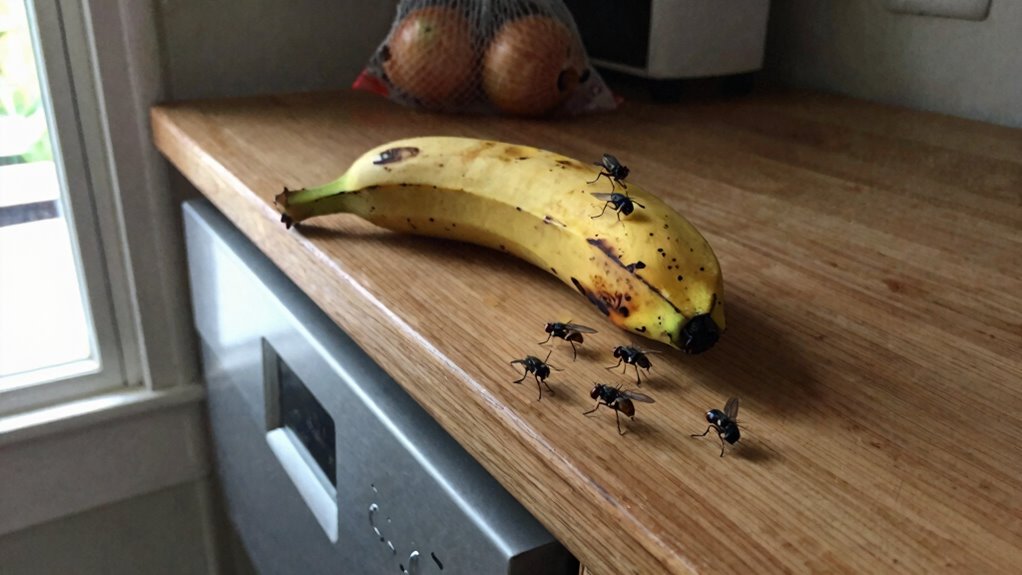
Infestation often starts with one small mistake. Bringing home infested produce is the most common way fruit flies enter your home.
Packaging can hide eggs under fruit skins, inside cartons, or on sticky bottle rims.
A single overripe banana from the store might already hold dozens of tiny white eggs, invisible to the naked eye.
These eggs are laid directly on fermenting surfaces, so any damaged or mushy fruit becomes a Trojan horse.
These eggs are laid directly on fermenting surfaces, so any damaged or mushy fruit becomes a Trojan horse.
Once inside, eggs hatch within days, turning forgotten produce into a maggot nursery.
The flies don’t need much, just a damp film of rotting material.
So check your tomatoes, inspect bagged onions, and toss leftovers immediately.
For effective pest control, focus on eliminating these egg sources before they hatch.
Stop the eggs before they start, and you’ll save yourself from a week of tiny, buzzing houseguests.
Pheromone traps also help by using non-toxic lures to monitor and prevent infestations in your kitchen.
Frequently Asked Questions
Can Fruit Flies Lay Eggs in Clean Fruit?
Clean fruit is not a prime target for fruit flies since they crave fermenting odors and dampness.
Female fruit flies prefer damaged or overripened produce for egg laying, so a shiny apple seems safe.
A single bruise or stem end crack changes everything, offering the soft, mushy flesh they need.
For effective pest control, remember that fruit flies seek rotting surfaces, not pristine ones.
Even “clean” fruit can host hidden eggs if it sat near infested produce in your kitchen.
To prevent an infestation, keep fruit intact, refrigerated, or inspect for tiny blemishes.
Those small flaws are the real invite, so a smart purchase of fruit fly traps or sprays can stop them fast.
How Long Do Fruit Fly Eggs Survive Without Food?
Fruit fly eggs can survive a few days without food, but their survival depends on specific conditions. The eggs need a moist, fermenting surface to stay viable, which is why you often find them in damp drains or rotting fruit.
Without that humid film, the eggs dry out in 24 to 48 hours. So if you cut off their food source and moisture, they typically last a maximum of three days.
This is why a targeted fruit fly treatment should focus on eliminating breeding sites.
Use a drain gel or a fruit fly trap to kill eggs and adults before they multiply. Keeping your kitchen surfaces, sponges, and trash cans dry is your cheapest fruit fly control method.
For heavy infestations, an insecticide spray labeled for fruit flies provides fast, professional grade results.
Do Fruit Flies Lay Eggs in Animal Waste?
Yes, fruit flies do lay eggs in animal waste. Rotten fruit is their top choice, but fresh manure still works for breeding.
The key requirement is dampness and fermenting organic matter, which animal waste provides. Chicken coops or dog runs near compost piles quickly become breeding hotspots.
To stop fruit flies, you need to eliminate those damp, decaying sites. A targeted pest control spray with an attractant can kill adults before they lay more eggs.
If you’re dealing with a persistent infestation, look for a fruit fly trap or insecticide labeled for manure areas. Keeping pet areas clean and dry is your best preventive measure for long term control.
House flies or drain flies might also move in, so monitor any moist waste closely. For a smart purchase, choose a product that covers multiple fly species in one application.
Can Larvae Survive if Eggs Are Refrigerated?
Can larvae survive if eggs are refrigerated? No, not really. Cold tolerance in fruit fly eggs is low, so chilling causes a development halt.
If eggs are kept below 40°F, hatching stops cold. You need warmth to grow these tiny pests. Refrigeration just pauses the whole cycle, and it often kills the eggs outright after a few days.
That is a solid trick for stopping fruit fly infestations. Don’t count on any survivors, cold is their kryptonite. For effective pest control in your kitchen, keep all produce chilled to avoid larvae.
If you are dealing with an active outbreak, pair refrigeration with a targeted fruit fly trap or spray. This buyer intent strategy ensures you stop eggs from hatching and eliminate adult flies.
Do Fruit Flies Lay Eggs on Living Plants Outdoors?
Yes, fruit flies do lay eggs on living plants outdoors, but they target fruits and vegetables that are rotting, damaged, or over ripened on the vine.
These outdoor breeding sites are a major reason why effective pest control in your garden is so important.
The maggots that hatch can ruin crops like tomatoes, which is why you need a reliable fruit fly trap to protect your harvest.
You might imagine flies miffed at choosing “the good fruit they couldn’t reach,” but the real lesson is to harvest immediately.
Don’t leave bruised produce hanging around, as it’s an open invitation to freeloaders.
For best results, combine regular picking with a fruit fly bait station to stop infestations before they start.


