
What smell do mosquitoes hate? It’s not citronella or lavender—it’s a specific blend of skin aldehydes that some people naturally produce, triggering avoidance in *Aedes aegypti*. That built-in repellent sounds great, but it’s unreliable for daily defense, so you need a practical backup plan.
DEET remains the gold standard: 30% concentration gives six to eight hours of protection for about six dollars. For lighter duty, 20% Picaridin offers twelve hours without greasiness, making it a solid alternative. The trick is matching the repellent to your situation, not just guessing.
This article breaks down why certain smells work best and how to pick the right one for your home or yard. You’ll get clear, actionable advice without the fluff. Keep reading to find the exact repellent strategy that fits your routine.
At A Glance
- DEET creates a scent mosquitoes avoid by triggering a warning signal in their antennae.
- Picaridin and IR3535 block mosquitoes’ ability to detect skin odors like lactic acid.
- Natural blends of octanal, nonanal, and decanal can trigger mosquito avoidance.
- Coconut and citrus-based soaps offer brief protection, but fruity floral scents attract mosquitoes.
- Oil of Lemon Eucalyptus provides up to six hours of natural repellent effect.
Human Aldehydes: Why Mosquitoes Love Your Scent
Human aldehyde sounds like something from a chemistry lab, but it actually explains why mosquitoes treat you like an all-you-can-eat buffet.
Decanal and undecanal are long-chain aldehydes from your skin lipids that activate a dedicated glomerulus in *Aedes aegypti* antennae.
This aversion mechanism does not involve DEET, it is pure olfactory tuning to human odour.
In vapor phase testing, these compounds consistently trigger strong attraction rather than avoidance.
The mosquito’s brain contains a specific human detector that makes your scent irresistible.
The mosquito’s brain contains a specific human detector that makes your scent irresistible.
Your natural aldehyde profile is essentially a dinner bell for these pests.
Removing or masking these compounds is a key part of any pest control strategy for effective mosquito repellent.
For local pest control services, understanding this chemical signature can help you choose targeted repellents that block these attractants.
The bottom line is that your unique chemical signature is why you are the main course for mosquitoes.
Using sprays or barriers that disrupt these aldehydes is a smart move for buyer intent mosquito management.
One effective option is using oil of lemon eucalyptus to naturally mask these attractants and provide up to six hours of protection.
Why Some People’s Natural Blend Repels Mosquitoes
Not everyone is a mosquito magnet. Some people naturally produce a repellent scent using compounds like octanal, nonanal, and decanal.
These skin aldehydes are part of the body’s hundreds of natural odors. For hungry *Aedes aegypti* mosquitoes, the precise ratio of these lipid aldehydes can turn a welcoming scent into a natural pest control signal.
Too much of these repellent compounds, and your personal perfume becomes a “keep out” sign. Understanding this balance can help you choose effective mosquito repellent products that mimic these natural aldehydes.
People looking for long lasting mosquito control may find these compounds in certain sprays or lotions. Applying the right repellent formula can create a chemical barrier that mosquitoes actively avoid.
If you want to stop mosquitoes from biting, focus on products with aldehyde based active ingredients. This organic pest defense approach is both practical and scientifically backed for everyday use.
For example, parents should be aware that children under three should skip Oil of Lemon Eucalyptus entirely due to more prone reactions.
Natural Repellent Volatiles
Some people are naturally mosquito resistant without using any repellent spray. Their skin chemistry creates a natural pest control force field using specific volatile compounds.
A blend of octanal, nonanal, and decanal selectively tunes mosquito antennae to trigger avoidance. These natural repellent volatiles come from the body’s 350 plus VOCs.
The table below shows how these compounds work against *Aedes aegypti* mosquitoes. Octanal comes from skin oils and acts as a strong repellent.
Nonanal is produced by skin lipid breakdown and causes avoidance behavior. Decanal is a unique human aldehyde that becomes aversive in blends.
Geranylacetone is a metabolic byproduct that works as a synergistic repellent. It is not magic, just smart chemistry working against your tiny tormentors.
Those lucky few produce a bouquet mosquitoes hate. This proves nature’s repellent can be better than any spray for effective mosquito control.
For those who aren’t naturally resistant, plant-based, DEET-free spray repellents—like those using oil of lemon eucalyptus or lemongrass—can mimic this effect by masking human scent for up to six hours.
Attractive Versus Repellent Blends
People less attractive to mosquitoes produce a natural chemical shield. Some VOCs, like octanal or decanal, don’t repel; they form part of a repellent blend that can be enhanced with commercial pest control sprays. Products like OFF! Picaridin Insect Repellent use picaridin for long-lasting protection.
Oddly, decanal can both attract and repel; it is all about concentration and company. Acetophenone, a compound of bacterial origin, triggers an aversive larval response, warning mosquitoes away from dirty puddles.
So your personal scent cocktail either says “dinner” or “danger.” Your skin’s microbiome plays chef, serving up a mix that is either inviting or off-putting.
Removing one stinky ingredient can flip the whole recipe. This is why targeted insect repellent formulas often aim to mask or eliminate specific skin odors.
Bottom line: you are not crazy; some people genuinely smell like a No-Trespassing sign. That is just biology, buddy, and applying a quality bug repellent can help tip the scales in your favor.
Skin Lipid Aldehyde Balance
That’s discussion idea one: certain aldehydes, such as octanal and nonanal, act as built-in repellents for pest control. Decanal can lure or deter depending on concentration, so topical products must balance it.
Discussion idea two: it’s the balance, not the presence, that matters. Too much greasy aldehyde skews your VOCs into mosquito-repelling territory, a key consideration for mosquito repellent buyers.
In trials, low-attraction individuals pumped out more of these volatiles. But here’s the kicker: it’s a tightrope, and soaps and sweat can tip the scale.
Bottom line: your lipid mix is a personal, sweaty defense system. Don’t scrub it off; work with it to maintain effective pest control naturally. A 5% concentration of catnip oil can rival DEET for effective mosquito repellent, offering a natural alternative to balance your skin’s aldehydes.
Does Soap or Perfume Actually Repel Mosquitoes?
A bar of soap or a spritz of perfume can temporarily confuse a mosquito, but it won’t reliably repel them. Your soap selection matters far more than the brand for pest control success.
Strong fruity or floral scents may actually attract these pests, whereas coconut or citrus-based soaps offer brief protection. The key issue is perfume persistence which fades quickly, so after an hour outside you are practically odorless to a mosquito’s sensitive antennae.
Synthetic repellents like Picaridin or IR3535 work differently by blocking the insect’s ability to detect your skin’s natural lactic acid and carbon dioxide. DEET remains the gold standard for long-lasting reliable repellency when you need effective insect protection. Among odorless options, 20% picaridin provides up to 12 hours of protection and is safe for sensitive skin.
The bottom line is skip relying on your morning routine for defense. For proper mosquito control, choose a proven topical repellent over any scented product you use.
The Natural Repellents Your Body Already Makes
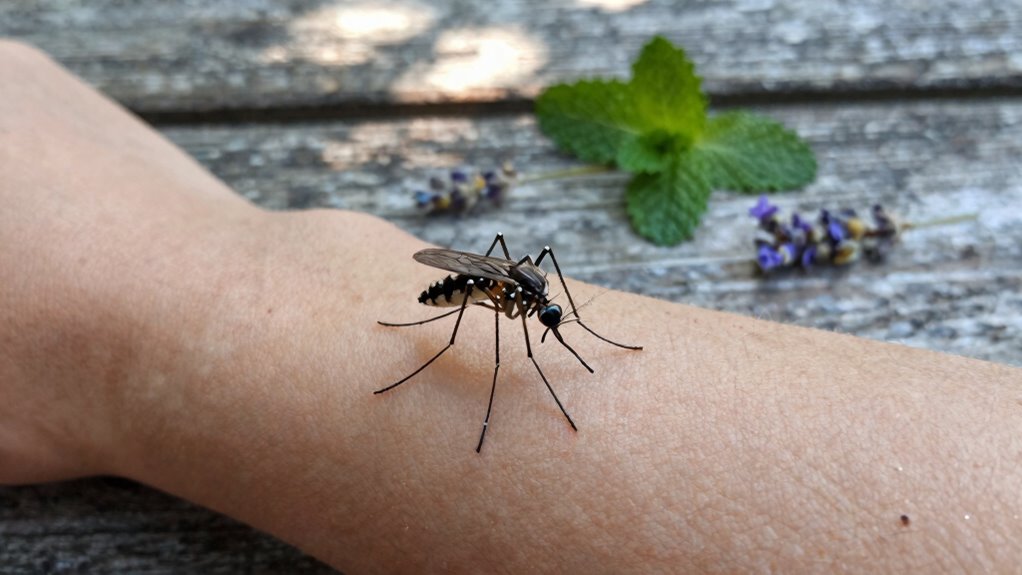
Your body naturally produces a mosquito repellent, though it won’t help much at a backyard barbecue. Some people generate high levels of octanal, nonanal, and decanal, volatile organic compounds that deter biting insects.
These natural repellents come from skin lipids rather than sweat. They work by activating the same olfactory neurons that detect bacterial odors.
Mosquito larvae strongly avoid certain compounds, though adult mosquitoes behave differently. If you have elevated levels of these aldehydes, you are essentially wearing nature’s own pest control cologne.
For effective mosquito control, most people still need DEET or picaridin. The built-in repellent is real but unreliable for everyday protection.
Acetophenone: A Bacterial Smell Mosquitoes Avoid
This bacterial stink acts as a natural alarm, telling young mosquitoes to avoid potentially harmful environments. For effective mosquito control, targeting breeding sites where these bacteria thrive can reduce larvae survival.
Professionals and homeowners seeking pest management solutions can use this knowledge to identify stagnant water sources. Bti-based biological larvicides also target mosquito larvae safely, providing an eco-friendly option for treating standing water. Pairing this insight with larvicide treatments helps you tackle infestations before they reach the biting adult stage.
If you are shopping for mosquito control products, look for options that disrupt larval habitats or introduce repellent cues. This natural avoidance response offers a promising angle for eco-friendly prevention strategies.
Knowing that acetophenone signals danger lets you plan a more targeted pest control approach. By monitoring water features and applying suitable treatments, you can keep your property safer from mosquito-borne irritation.
Bacterial Origin
Homeowners can use this bacterial cue to target mosquito larvae before they mature into flying adults. The bacteria produce a chemical warning that screams “unsafe habitat” to young mosquitoes, not just a random stink.
Professionals in vector control recognize acetophenone as a key olfactory trigger for mosquito larvae. It is a specific bacterial stink, not a general odor, that drives this avoidance behavior. This natural signal functions similarly to botanical oils like citronella that last around three hours against adult mosquitoes.
Using this insight, pest management products can simulate these bacterial signals to disrupt larval development. Think of it as nature’s own repellent, adapted for modern mosquito control strategies.
Aversive Larval Response
Larval chemosensation is the key. Their antennae detect acetophenone in parts per billion, like a tiny smoke alarm.
Bacterial odor detection evolved as a survival instinct. It tells larvae to flee water tainted with disease linked microbes.
For practical control, douse breeding sites with acetophenone or its bacterial source. This drives larvae away with no toxic chemicals needed.
This is a cheap, targeted trick for pest control. Spray a solution costing around $10 per gallon in stagnant water, and watch young mosquitoes evacuate.
The bottom line is to trust the bacteria and save the spray. It is a helpful, natural way to keep your yard bite free. Unlike some larvicides, this method avoids the risk of resistant mosquito populations forming from overuse.
Why DEET Remains the Gold Standard in Mosquito Repellents
No chemical has matched DEET for sheer durability in the field. Its low volatility keeps it working for hours, while natural repellents evaporate in minutes.
For a repellent volatility comparison, DEET wins hands down. Mosquito mating disruption programs don’t use it, but for personal protection, nothing sticks around longer.
DEET at 30% provides 6 to 8 hours of protection. Picaridin at 20% only lasts 3 to 5 hours, and IR3535 gives 2 to 4 hours.
Citronella oil often fails within one hour. That staying power explains why DEET remains the gold standard for pest control.
The stuff is cheap too, a 4 ounce bottle costs about $6. For campers or hikers in mosquito heavy zones, DEET is the practical choice.
Your skin won’t love the smell, but you’ll be itch free. Bottom line is this: if you need reliable, long lasting protection for your outdoor pest control needs, DEET is still the champ.
Higher concentrations of DEET last up to 10 hours of defense against disease-carrying insects.
How DEET Tricks Mosquitoes’ Noses (Not by Masking Odor)
DEET does not mask body odor to confuse mosquitoes. Instead, it directly triggers their sense of smell as a warning signal.
This chemical activates specific nerve cells that tell the mosquito to avoid you. At high doses, DEET also acts as a neurotoxin that poisons the insect on contact.
In controlled tests, only 3.6 mosquitoes landed on DEET-treated skin compared to 29.4 on plain skin. That shows how effective DEET is for lasting pest control and bite prevention.
If you want reliable mosquito repellent for outdoor use, choose a formula with DEET for proven protection. It works by telling mosquitoes to flee before they ever land on you. For heavily infested areas, select a product with at least 30% DEET and reapply as needed.
Synthetic Repellents: When DEET Isn’t Enough

Synthetic repellents like Picaridin and IR3535 step in when DEET’s drawbacks make you want a gentler option. These alternatives avoid overpowering your senses, reducing sensory adaptation so mosquitoes don’t get used to them quickly.
Cultural acceptance varies, with Picaridin popular in Europe for its lighter texture. IR3535 sees wider use in Asia and is often chosen for sensitive skin or children.
For daily wear, Picaridin beats DEET’s gooey mess. Your nose, and mosquitoes, will thank you. Picaridin is safe for kids and will not damage gear or stain clothing.
| Repellent | Key Feature | Best Use Case |
|---|---|---|
| Picaridin 20% | Odorless, non-greasy | Active outdoors, hot climates |
| IR3535 20% | Mild scent, skin-friendly | Sensitive skin, children |
| DEET 25% | Strongest longevity | Heavy mosquito zones |
| Oil of Lemon Eucalyptus | Natural short-term | Brief backyard hangs |
| Permethrin (clothing) | Wash-resistant, 6 weeks | Hiking, camping gear |
You can buy Picaridin sprays for long treks or IR3535 lotions for family camping trips. For heavy mosquito zones, DEET still offers the strongest longevity.
Clothing treated with Permethrin adds wash-resistant protection for up to six weeks. Choose Oil of Lemon Eucalyptus for brief backyard hangs if you prefer a natural option.
The Top Mosquito-Repellent Smells, Ranked by Science
Science confirms that DEET is the top mosquito repellent because it does not mask human scent. Instead, DEET directly triggers a mosquito’s antennae, making them avoid the area entirely.
The chemical works as a direct repellent, not a cover up. The real trick for effective pest control, however, comes from using blends.
Mosquitoes detect complex volatile profiles, so a single smell is less reliable than a carefully mixed combination. For the best mosquito defense, always look for products that combine multiple repellent compounds. This includes unscented formulations like 20% Picaridin or DEET-based repellents that offer reliable, long-lasting protection without strong fragrances.
DEET’s Direct Repellency
How can one scent actually keep mosquitoes away? DEET works through direct smell, meaning mosquitoes detect it and choose to leave.
This is not about masking your scent or overwhelming their senses. DEET triggers specific olfactory receptor neurons on their antennae, creating a clear avoidance reaction.
In landing tests, only 3.6 mosquitoes landed on DEET-treated skin. That is compared to 29.4 on untreated skin, a huge difference for pest control.
DEET is sensed by dedicated receptor neurons, not by hiding your natural smell. Its neural code is processed through glomerular mapping, producing an immediate aversive response.
Repellency works without lactic acid or carbon dioxide. DEET alone does the job, making it a straightforward solution for mosquito control.
If you want reliable protection from biting pests, DEET remains the gold standard. Choose it for proven repellency that keeps mosquitoes away fast.
Blend-Driven Mosquito Avoidance
Attractiveness, it turns out, is a matter of chemistry. For mosquitoes, a single stinky molecule isn’t the whole story, the blend matters most.
Lab assays show that some people naturally repel *Aedes aegypti* simply as their body odor contains more of certain volatiles like octanal, nonanal, and decanal. These compounds, part of a complex human scent profile, actually discourage sugar feeding, even in otherwise hungry females.
Think of it as a perfume that says “stay away.” It’s not one magic ingredient, but the ratio of these natural repellents that flips the switch from attraction to avoidance.
The key takeaway is that your personal chemistry might already be doing the job. So don’t douse yourself in DEET if you’re naturally stinky in the right way. For those needing external help, Picaridin-based repellents offer up to 12 hours of scent-free defense on skin and gear.
For effective pest control, consider using a mosquito repellent spray that enhances your natural defenses. Many homeowners seek out topical solutions that work with their body chemistry.
You can also try a mosquito trap in your yard to reduce breeding populations. This buyer intent for outdoor pest management often pairs well with a personal repellent lotion.
How Mosquitoes Smell Human vs. Animal Odor Differently
Mosquitoes aren’t as random as they seem, and their blood-seeking behavior is actually highly targeted.
They use separate neural pathways to distinguish human scent from animal scent, which explains why some people get bitten more.
This difference comes down to how their antennae process odor blends, not just one single chemical.
A specific cluster of brain cells in *Aedes aegypti* reacts strongly to decanal and undecanal, which are aldehydes found in human skin lipids.
Animal odors barely activate that same cluster, so the mosquito’s brain quickly files them as less appealing.
Human odor is richer in these long-chain aldehydes, making it a stronger attractant for mosquitoes that spread disease.
For pest control professionals, this means targeting the right attractants can improve trap effectiveness around homes.
If you’re looking for mosquito control near you, understanding these scent signals helps you choose better repellents and yard treatments.
Interestingly, some people naturally emit higher levels of octanal, nonanal, and decanal, which actually repel mosquitoes.
That means your own body chemistry can act as a built-in deterrent, even if it feels ironic that the same chemicals attract others.
For practical home defense, using EPA-approved repellents with DEET or picaridin blocks these odor receptors effectively.
You can also reduce mosquito pressure by eliminating standing water and using outdoor foggers that mask human-specific aldehydes.
So whether you need residential mosquito services or just a personal repellent, knowing these neural coding differences gives you an edge.
Buying a quality trap that mimics human odor blends can pull mosquitoes away from your patio without inviting them indoors.
Choosing the Right Mosquito Repellent for Your Situation
Choosing the right mosquito repellent is like navigating a perfume aisle designed by a sadist, but the science gives you a shortcut. DEET remains the gold standard for pest control, costing about $8 for a 100ml bottle with eight hours of protection.
It works through direct olfaction rather than just masking your scent. For those worried about skin sensitivity, Picaridin at 20% concentration costs $10 and offers similar duration without the oily feel.
The volatile synergy between human odour and repellent matters greatly for effective mosquito control. Your unique skin microbiome produces specific aldehydes like decanal, which some repellents exploit instead of blocking.
For heavy mosquito areas, DEET offers proven repellency you can trust. Picaridin has a better feel but is less potent on Aedes species, so choose based on your environment. For even longer-lasting protection, 20% Picaridin provides up to 12 hours against mosquitoes and ticks.
Natural blends work for daily wear, but reapply every two hours for reliable protection. Bottom line, for camping trips buy DEET, and for everyday use Picaridin is fine.
The mosquitoes aren’t paying your dermatology bills, so pick the right topical solution for your needs.
Frequently Asked Questions
Can Mosquitoes Smell Fear?
No, mosquitoes cannot smell fear the way humans experience it. They detect carbon dioxide and skin chemicals like lactic acid, but not emotional states.
Fear does not release a distinct cue mosquitoes have evolved to recognize. Instead, they are drawn to your scent profile or high CO2 output.
If you are panicking and breathing heavily, your exhaled CO2 plume might attract them more. That is not really smelling fear, just responding to a stronger signal.
For effective mosquito control, focus on reducing attractants around your home. Use proven pest control products like DEET based repellents or permethrin treated clothing.
CO2 based traps can also help by luring and capturing mosquitoes away from you. For yard protection, consider professional mosquito control services or barrier sprays.
Stop worrying about your emotions and start protecting your skin. Smart pest control starts with understanding what really draws mosquitoes.
Do Citronella Candles Actually Work?
Citronella candles can help repel mosquitoes, but they are not a magical bug barrier.
The scent works by masking human odors, so mosquitoes struggle to find you at close range.
A single candle barely protects a small patio, so you need multiple units for real mosquito control.
Place them strategically around your seating area and keep them sheltered from wind for better results.
The EPA confirms citronella candles are safe to use outdoors, which makes them a solid low tech mosquito repellent option.
Never burn them indoors due to fire risk and smoke inhalation hazards.
For serious backyard pest control, a DEET based repellent is far more effective than any candle.
Use the candle mainly for ambiance and consider it a mild buffer against biting insects.
Why Do Mosquitoes Bite Some People More?
Mosquitoes bite some people more because of blood type preference and genetic factors. Type O blood is a favorite for these pests, drawing nearly twice as many bites as Type A.
Your skin chemistry and metabolic rate pump out carbon dioxide and lactic acid. This makes you a walking magnet for biting insects in your backyard.
It’s not about personality, but biology and evolution. If you’re a prime target, professional pest control services can help reduce the risk.
Look for mosquito repellents with proven ingredients like DEET or picaridin for personal protection. For long term relief, consider yard treatments and mosquito traps from top pest control brands.
A smart purchase includes both repellents and area control methods. These products target the insects that are naturally drawn to your unique biology.
Does Eating Garlic Repel Mosquitoes?
The verdict is clear. No, eating garlic will not keep mosquitoes away.
Sure, it changes your blood concentration of sulfur compounds. But that does not bother the bugs at all.
The real issue is skin odor masking. Mosquitoes hunt by scent, and garlic’s aroma is too weak on human skin to override their attraction signals.
You will repel your friends at dinner. Yet a mosquito will still land for dessert.
Do not rely on garlic for mosquito control. For real results, use an EPA registered repellent or a proven pest control product.
A citronella candle or a DEET based spray offers far better outdoor protection. These solutions directly block the carbon dioxide and body heat that draw pests in.
If you need long term yard defense, consider a professional mosquito misting system. That is the smart purchase for homeowners seeking relief.
Skip the kitchen remedies. Invest in treatments that actually break the mosquito bite cycle.
Are Mosquito Traps Effective at Repelling Them?
Mosquito traps do not repel mosquitoes. They actually lure them in using attractants like carbon dioxide and octenol to mimic a warm blooded host.
A single trap will catch many mosquitoes in its zone. However, an untreated backyard still leaves you vulnerable to bites.
Think of it as a bouncer for your patio. It works great at the door but can’t control the whole club.
For real mosquito control, pair your trap with a residual insecticide spray. This creates a one two punch that knocks down both flying and resting pests.
Looking for the best mosquito trap for your yard? Combine it with a DEET based repellent to stop bites while the trap works overnight.


