
What attracts mosquitoes isn’t a mystery—it’s a three‑cue combo of your breath, skin odor, and body heat. Without carbon dioxide, they ignore heat and human scent completely, so CO₂ acts as the master switch.
Lactic acid from sweat only matters once CO₂ activates their brain, and heat guides them at mid‑range but fails alone. Your odor barely registers on its own, so the real trick is synergy: skip one cue, and they lose interest fast. Understanding this makes targeted pest control much simpler.
In this article, you’ll learn exactly how distance changes the game and which cues you can disrupt to break the cycle. Stick around to turn that knowledge into practical mosquito prevention.
At A Glance
- Carbon dioxide from exhaled breath is the primary long-range attractant for mosquitoes.
- Lactic acid in human sweat only attracts mosquitoes when combined with carbon dioxide.
- Body heat and infrared radiation attract mosquitoes from up to 70 centimeters away.
- Human-specific skin aldehydes act as a strong, personalized attractant for mosquitoes.
- Visual cues like dark silhouettes help mosquitoes locate hosts at close range.
Why CO2 In Your Breath Is a Mosquito’s First Clue
Mosquitoes don’t just stumble upon you by accident; your breath gives you away. That exhaled carbon dioxide, or CO2, is a powerful trigger in mosquito biology, flipping a switch for host seeking behavior.
Mosquitoes don’t stumble upon you by accident; your breath gives you away.
Aedes aegypti, for instance, lock onto CO2 plumes, which amps up their flight speed and accuracy. Without CO2, their reactions to heat and skin odors go flat, like a joke without a punchline.
Gr3 mutants, who lack CO2 detectors, show no response to breath at all. So, CO2 is their first clue, a long-range marker that says, “Warm blooded meal ahead.”
The takeaway is that if you want to dodge bites, consider masking your breath with a fan or using a mosquito trap that targets CO2. But don’t expect a complete escape just yet, as professional pest control can help eliminate breeding sites.
For effective mosquito prevention, combine repellents with yard treatments to reduce the insect population. Buy a CO2 mimic based trap to lure and capture these pests before they find you.
Why Human Odor Alone Won’t Lure Mosquitoes In
Human odor alone barely attracts mosquitoes, practically invisible to them in the air. The real trigger is carbon dioxide, which unlocks their full response to skin chemicals like lactic acid.
Without CO₂, lactic acid remains useless on its own, a silent signal that never activates their biting instinct. Combining pest control strategies means pairing CO₂ traps with repellents for effective mosquito control.
For best results in your yard, use carbon dioxide lures alongside a quality insecticide spray. This buyer’s guide tip ensures you target mosquitoes at both the detection and feeding stages. For lasting outdoor defense, choose a spray with a 40-day residual barrier to keep killing pests on contact.
CO₂ Synergy Required
The everyday experience of not getting bitten during a jog but being swarmed while sitting still holds a key clue. That CO₂ plume from your breath is the ignition switch.
Without it, human odor alone barely registers, like a movie trailer with no movie. This is why pest control professionals stress the need for targeted mosquito protection.
The table shows that human odor alone offers only a 2% host-seeking index, which is almost zero lure. CO₂ only gives a weak 3% with no directional pull.
Odor plus CO₂ jumps to a strong 25%, showing a clear synergistic effect. Adding heat and infrared boosts it to 40%, which is full feeding mode for mosquitoes.
CO₂ gates the entire mosquito response, so without it even the best scent blend fails. This synergy explains why a resting person with steady breath gets swarmed, while a jogger exhaling bursts only attracts briefly.
For anyone buying mosquito traps or repellents, understanding this CO₂ trigger is essential for effective yard treatment. It is an incubation period for vector-borne disease risk, as mosquitoes need CO₂ to wake up.
That wake-up call determines vector competence for pathogens like dengue. Simple as that: no CO₂, no dinner, which is why outdoor fogging services often target breath zones first. To control larvae before they wake up, you can use Bti-based biological larvicides in standing water to safely kill them without harming other organisms.
Lactic Acid’s Silent Role
Now the CO₂ obsession makes more sense, but lactic acid works like a stagehand rather than the star. Human odor alone, even with lactic acid, fails to lure mosquitoes in.
That is because mosquitoes require a specific lactic acid threshold, a minimum concentration, to even notice it. Below that threshold there is no reaction.
Above it there is still no reaction unless CO₂ is present. Lactic acid does not work solo and is a synergy player.
This is where pest control knowledge becomes important for homeowners. *Aedes aegypti* responds to lactic acid only when CO₂ is additionally detected.
Other mosquito species may ignore lactic acid entirely. So while your skin sweats lactic acid, it will not summon mosquitoes without that CO₂ breath cue.
Think of lactic acid as the backup singer who cannot start the show. The bottom line is do not blame your sweat alone for attracting pests.
Blame your exhaled CO₂ for opening the mosquito door. For effective pest management, focus on reducing CO₂ cues around your outdoor living spaces.
To maintain control, consider applying an IR3535 repellent for up to 8 hours of protection against bites.
How Lactic Acid Boosts Mosquito Attraction
Lactic acid is a mosquito’s wingman, useless alone but devastatingly effective when paired with CO₂. This lactic acid synergy is a textbook example of CO₂ dependence, something every pest control professional should note.
In the lab, pure lactic acid on its own barely registers with mosquitoes. But when CO₂ shows up, the mosquito becomes hyper-focused and zeroes in with alarming speed.
The CO₂ gates the mosquito’s response, effectively releasing its ability to track the lactic acid. Without that initial CO₂ puff, the mosquito ignores the lactic acid entirely for mosquito control purposes.
It’s not the lactic acid that draws them in; it’s the CO₂ that makes the lactic acid matter. So remember, your sweat isn’t the bait, your breath is the key that releases it.
Understanding this CO₂ dependence helps you choose the right mosquito traps and repellents. For effective pest control, focus on masking your breath or using CO₂-based attractants. Using a DEET repellent with at least 25% concentration can reliably mask your breath and skin cues for up to 8 hours.
How Heat and Infrared Help Mosquitoes Target You
Heat is the mosquito’s homing signal, but it needs support to work. Mosquitoes detect thermal radiation from warm skin up to 70 centimeters away, though only when human odor and CO₂ are present.
Without those cues, heat alone barely registers. This spatial scale matters because convection, the hot air rising off your body, fades within 10 centimeters.
Infrared bridges that gap for effective pest control targeting. The table shows that infrared from a 34°C source is detected up to 70 cm.
Convection heat is limited to less than 10 cm. When CO₂ and odor are present, the mosquito’s response increases twofold.
Alone, host seeking is weak or none. The key distance for biting action is mid range, between 10 and 70 cm.
For pest control buyers, this means odor and CO₂ are your best defenses. Block those signals to interrupt the mosquito’s targeting system. Using oil of lemon eucalyptus can mask human scent and provide up to six hours of protection.
Why CO2 and Odor Synergize to Trigger Blood-Feeding

CO2 acts like a master switch in a mosquito’s brain, turning up their response to heat and human odors like lactic acid. A single puff of breath is not very attractive, but when combined with skin chemicals the lure becomes much stronger for blood feeding.
This synergy shows how important CO2 detection is for effective mosquito control around your home. Understanding this connection helps you choose better outdoor pest management strategies.
For example, a CO2 based trap paired with a lactic acid lure can dramatically reduce mosquito populations in your yard. Homeowners seeking reliable mosquito elimination should look for products that mimic these natural triggers.
That way you can disrupt the blood feeding cycle and keep your family safe from biting insects. Remember, the key to pest control is using the right combination of attractants to break their behavior patterns. Additionally, using products like mosquito dunks with methoprene can stop larvae in standing water before they mature into biting adults.
CO2 Gating Heat Perception
Mosquitoes have a dirty little secret: they won’t fully commit to biting you without a proper introduction from CO2. This gas, exhaled in breath, acts as a gate for heat perception.
Without CO2 detection, mosquitoes simply ignore body heat, even from a 34°C source. The synergistic integration of CO2 and thermal cues is critical, as CO2 primes the mosquito’s brain to register warmth as a target.
This gating works best at a medium spatial scale. In small cages, mutants lacking CO2 detection still bite, but in larger spaces, their success drops by 70%.
CO2 acts like a password for the mosquito’s heat sensors, without it, warmth is just background noise. Heat detection alone fails to trigger host seeking, but CO2 plus heat boosts response rates significantly.
This gating explains why standing near someone breathing heavily increases your mosquito appeal. The effect fades at close range, under 10 cm, where convection heat overrides the need for CO2.
For effective pest control, targeting CO2 emissions in outdoor areas can reduce biting pressure. Using traps that mimic breath can lure and capture mosquitoes before they reach you.
To protect your backyard, consider CO2 based repellent devices or fans that disperse the gas. These solutions disrupt the heat gating process, making you less visible to hungry mosquitoes.
For maximum buyer intent, choose products that block both CO2 and thermal cues. Many of these devices also incorporate dual-wavelength UV light to attract and eliminate pests naturally.
Odor Synergy With Lactic Acid
Mosquitoes need more than your breath alone to find you. Lactic acid from your skin is nearly invisible to them by itself.
But pair it with exhaled CO₂ and the duo triggers an urgent blood feeding response. That CO₂ flips a switch, gating the mosquito’s sensitivity to the odor.
The synergy also leans on other cues like an infrared thermal signal from your warm body. Convection heat detection helps them lock on from a few feet away.
Yet neither cue works solo. The real magic is layering CO₂, lactic acid, and heat into an irresistible package.
So don’t blame one scent for the bite. Blame the combo and skip lactic acid heavy workouts before dusk.
Bring 20% Picaridin repellent instead to control pests in your yard. A professional pest control service can also help protect your outdoor space.
Why Mosquitoes Prefer Human Smell Over Animal Smell
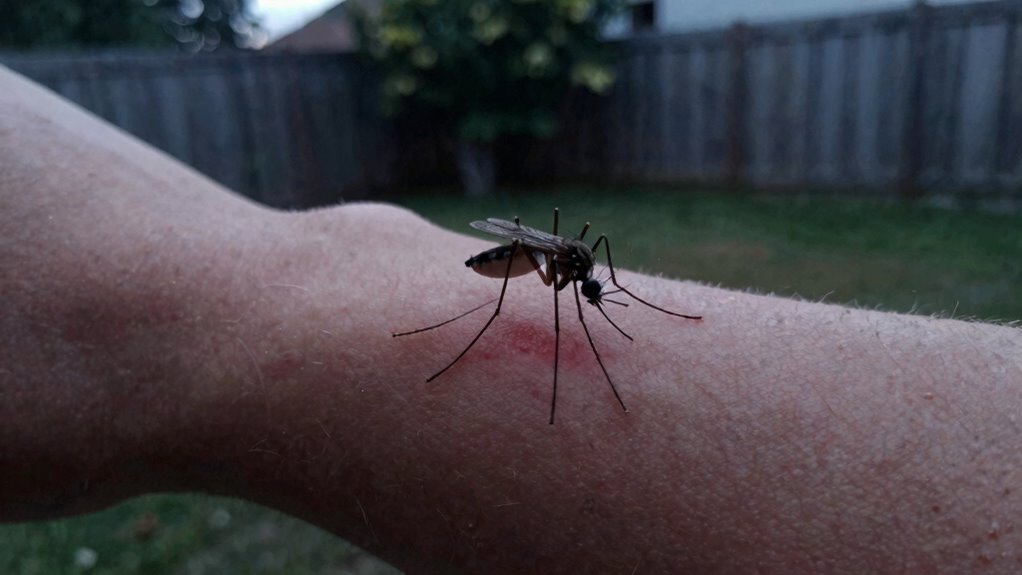
Your skin’s aldehydes act like a personalized dinner bell, a signal no other animal broadcasts. Mosquito brains have dedicated “human detectors,” making our smell especially irresistible.
Lab blends that copy human odor fool mosquitoes, confirming our scent is the real magnet. For effective pest control, targeting these specific olfactory triggers can reduce bites.
Animal smells lack this specific glomerular trigger, so you are the clear target. Using quality repellent helps block this human scent from attracting mosquitoes, and products with picaridin provide a scent-free option that won’t alert game.
How Long-Chain Aldehydes Make You a Mosquito Magnet
Your skin chemistry is like a personal signal that draws mosquitoes in. Long chain aldehydes activate a specific pathway that these pests find irresistible.
This is how a mosquito repellent works by blocking those same signals. Without these compounds, human odor is just moderate to them.
Add them and you trigger the host seeking mode that makes you a target. Your unique aldehyde profile is a major reason you need effective pest control products.
Understanding this science helps you choose the right mosquito trap or spray. The bottom line is that your skin chemistry can determine your risk. Catnip oil’s nepetalactone compound tricks mosquito smell receptors into avoiding the area.
How Butan-1-Amine and CO2 Create a Unique Attraction Signal
CO₂ acts as a key, opening the mosquito’s brain to respond to butan-1-amine. Without CO₂, butan-1-amine fails to register as a meaningful cue.
This gating mechanism prevents mosquitoes from wasting energy on false alarms. The effect is so specific it’s considered unique in the insect world.
For effective pest control solutions, understanding this signal helps disrupt mosquito attraction. Targeting CO₂ detection can reduce false triggers in traps.
If you need reliable mosquito management, this biological quirk offers a clear advantage. It keeps pests from homing in on unwanted areas.
Many natural repellents, such as Mosquito Magician, leverage botanical oils to safely mask these attractants and keep yards protected for up to two weeks.
Why Distance Changes How Mosquitoes Hunt for You
At distances over 10 meters, mosquitoes rely almost entirely on the carbon dioxide plume from your breath. This primary cue acts like a long range dinner bell for pest control in your yard.
As they close to 1–10 meters, they combine CO₂ with human odor and begin using visual silhouettes. For mosquito control near your home, these cues guide them to a resting host.
Under 1 meter, human odor and heat become the primary cues, with skin volatiles fine tuning the final approach. If you want mosquito protection that works, targeting these short range signals is key.
Remove the CO₂ source, and mosquitoes struggle to find you beyond a few feet. This is why professional pest control services focus on reducing breath related attractants.
Your exhaled breath sets the long distance trap, but your skin seals the deal. For effective mosquito repellent, both the CO₂ plume and your body chemistry must be managed. To handle these short-range signals, a repellent containing 20% Picaridin provides up to 14 hours of protection against mosquitoes and ticks without a greasy feel.
The Three-Cue Combo That Drives Mosquito Blood-Feeding
Mosquitoes zero in on a three cue combo that is nearly impossible for them to resist: carbon dioxide, human odor, and heat.
This synergistic trifecta drives their entire host seeking cascade, yet each cue alone only triggers a weak response.
Together, however, they become irresistible, turning a passive wanderer into a determined blood feeder.
The mosquito’s brain integrates these multimodal cues, and that integration is what unlocks its aggressive feeding behavior.
CO₂ from your breath activates the mosquito, gating its response to both heat and skin odor.
Without that CO₂ signal, human scent alone barely attracts them, but CO₂ amplifies the draw dramatically.
Heat, especially infrared radiation, guides their final approach, but only when CO₂ and odor are already present.
Lactic acid, a common skin chemical, becomes a powerhouse attractant solely after the mosquito detects CO₂.
Bottom line: skip one cue, and the mosquito loses interest fast.
That is why using a fan to disperse CO₂, wearing an effective insect repellent to mask odor, and covering skin to block heat gives you a practical three cue defense.
For pest control around your home, reduce standing water and trim vegetation to lower mosquito breeding sites.
If you want to buy mosquito repellent sprays or portable fans, look for products that specifically target carbon dioxide plumes and skin scent masking.
Remember, the best mosquito control strategy is layered, not single action.
Combine physical barriers like long sleeves with chemical repellents and airflow management to break that three cue cycle.
A mosquito trap that emits CO₂ and heat can also lure them away from you, acting as a solid purchase for outdoor patios.
Always read labels on repellents to confirm they block lactic acid detection, which is key to disrupting that final approach.
Picaridin-based repellents are a trusted option to mask skin odor effectively during pregnancy.
What Happens When Mosquitoes Lose Their CO2 Detectors
Without their CO2 detectors, mosquitoes become blind to the effect of heat and human odor. The CO2 sensor acts like an on-switch, gating their responses to these other essential cues.
This loss hits hardest at longer distances, where CO2 detection is critical for finding a host. For effective pest control, targeting this sensor could help you break the mosquito’s host-finding chain.
If you want to reduce bites around your yard, focus on products that mask or disrupt CO2 signals. Look for mosquito traps or repellents that block these olfactory receptors for better protection. Regular garlic spray application every 7 to 14 days can help mask human scent to complement these strategies.
Gating of Heat and Odor
Imagine a mosquito trying to find dinner, but its CO2 detector is busted, like a smoke alarm with dead batteries. In lab experiments, these impaired mosquitoes ignore heat and human odor except when visual cues are present.
Without CO2, they treat your warmth the same as a toaster and your smell like a garden hose. Lab experiments show that CO2 gates the mosquito’s perception of heat, meaning no CO2 means no heat attraction.
Visual cues become critical for CO2-impaired mosquitoes, but alone they’re not enough to find you. Human odor without CO2 triggers only weak attraction, proving CO2 is the key that opens the smell.
Heat synergy fails without CO2; your body warmth is ignored except when the CO2 detector is working. For effective pest control, targeting CO2 receptors is a smart strategy for mosquito traps and repellents. For instance, Thermacell units create a scent-free zone that repels mosquitoes without relying on sprays or lotions.
If you’re shopping for mosquito control products, prioritize those that mimic CO2 plumes to trick these pests. Bottom line: if a mosquito can’t smell CO2, it’s like a lost tourist with no map, it’ll wander but never find the buffet.
Use this knowledge to choose better mosquito protection, since CO2-blocking tech can cut your risk of bites. A practical tip for homeowners: combine visual lures with CO2-based attractants for best results.
Critical Distance Detection Role
The distance a mosquito can detect you matters more than you might think. CO2 is the primary long-range cue for effective pest control, with detection critical beyond about a foot.
Without it, mosquitoes lose their odor range completely. They can’t gate heat or human smell in your yard.
In small cages, CO2 blind mutants fed fine. But in larger spaces of 0.339 cubic meters, they failed 70% of the time.
Think of CO2 as the mosquito’s GPS signal for hunting. Lose it and they buzz aimlessly without a target.
Human odor alone offers only moderate attraction. Heat alone is useless past 10 centimeters for these pests.
CO2 is the key that releases everything: synergy, flight response, and blood feeding. This is why professional CO2 traps work so well for homeowners.
Mosquitoes need CO2 for long range hunting. Remove it and they become confused wanderers, not deadly hunters.
That is why CO2 traps are a top choice for buyer intent when shopping for outdoor protection, though UV and blue-violet light can also attract over 3,600 insect species to increase catch efficiency.
How Real-World Tests Reveal the Limits of CO2 Attraction
Scientists have long known that carbon dioxide (CO2) is a mosquito’s dinner bell. But real-world tests show this attractant has sharp limits.
Scientists have long known that carbon dioxide is a mosquito’s dinner bell, but real-world tests show this attractant has sharp limits.
In small cages, mosquitoes lacking CO2 detection fed normally. In larger spaces, they missed 70% of hosts.
CO2 alone isn’t enough. It needs help from heat and human odor to work at range for effective pest control.
In open fields, a CO2 plume from a single host warns mosquitoes of danger. They approach cautiously, blending CO2 with other cues to avoid becoming a snack themselves.
Cool air below 20°C dampens CO2’s pull. Mosquitoes ignore CO2-rich breath if surrounding temps feel too cold for blood-feeding success.
CO2 dissipates fast beyond a few meters. Without odor or heat, it is just empty gas, useless for finding dinner.
CO2 synergizes with lactic acid and heat. Remove any one, and attraction plummets like a bad joke that bombs.
The bottom line is that CO2 is a starter pistol, not the finish line. For real-world mosquito traps, you need multimodal lures that combine heat, human scent, and CO2 to boost buyer confidence in your pest control solution.
Effective repellents like 20% Picaridin provide up to 12 hours of protection without damaging gear or irritating skin.
Frequently Asked Questions
Can Mosquitoes Smell Me From Across a Room?
Yes, they can. A mosquito’s impressive ability to track human odor plumes and carbon dioxide trails means it can detect a person from across a typical room.
These cues work together, with CO2 acting as a key trigger that makes the insect more responsive to body odors and heat.
Although a single, still person might not be as noticeable, combining breath with skin scent creates a strong, detectable signal.
If you want to stop mosquitoes from homing in on you, your best pest control strategy is to break up those scent trails.
Use a quality mosquito repellent or a portable mosquito trap to disrupt their tracking and reduce biting risks indoors.
For long term protection, consider installing fine mesh screens on windows or using an indoor insect fogger before gatherings.
Smart buyers often look for products with DEET or picaridin, as these proven ingredients block the mosquito’s ability to smell you.
Even a simple fan placed across the room can scatter your scent plume, making it harder for mosquitoes to find you.
Do Some People Get Bitten More Than Others?
Yes, some people get bitten more than others due to genetic factors. Your body’s natural scent, a mix of carbon dioxide and skin chemicals, varies by DNA.
Blood type influence is real; type O attracts more mosquitoes than type A. They can smell these differences from across a room.
If you’re constantly swatting, blame your genes, not your soap. Tests show these factors matter more than most people think.
To reduce bites, invest in proven pest control solutions like DEET based repellents or mosquito traps. For persistent problems, consider professional pest control services to target breeding sites near your home.
Choosing the right mosquito repellent spray or outdoor fogger can make a big difference. Many buyers look for long lasting protection and natural options, so compare products carefully before making a smart purchase.
Does Eating Certain Foods Make You Less Attractive?
The verdict is not really, despite the myths you may have heard. Garlic supplements or spicy meals will not make you a mosquito repellent, so sorry.
Carbon dioxide and your natural human odor are what really drive attraction for biting pests. Research shows these foods might slightly alter skin volatiles, but the effect is tiny compared to your breath’s CO2.
So go ahead and enjoy that curry without false hope about pest control benefits. The bottom line is simple: skip the garlic pill and choose a proven repellent like DEET instead.
DEET is cheaper and scientifically confirmed to work for mosquito control. Mosquitoes are stubborn insects that ignore your dinner choices entirely.
For reliable pest management, stick with professional grade repellents rather than dietary tricks. You need a smart purchase that actually prevents bites and keeps you protected outdoors.
Why Do Mosquitoes Bite Through My Clothes?
Mosquitoes bite through clothes when fabric thickness and weave density are low. Thin, loose weave materials like cotton tees let their needle like mouthparts pierce right through.
A cheap 100% polyester shirt under $10 won’t stop them. A tightly woven denim jacket, around $40, does.
Are Mosquitoes Attracted to Dark or Light Colors?
Yes, dark clothing attracts more mosquitoes than bright fabrics. Dark colors like black or navy trap heat and stand out against the sky, making you an easier target.
Bright fabrics reflect light and stay cooler, reducing appeal. For example, wearing a white shirt instead of a dark one at dusk can cut bites noticeably.
So, if you hate swatting, choose light, loose clothes. It’s a simple swap that works for outdoor pest control.
No bug spray is always needed, just better fashion choices. Picking the right shirt is a natural mosquito repellent strategy many experts recommend.
In fact, pairing light clothing with a reliable mosquito repellent spray offers complete protection. Customers looking to buy pest control products often start here: layer a bright outfit with an effective repellent.
For best results, shop for mosquito traps and barrier sprays too. These tools, combined with light colors, cut down bites during peak biting hours.


