
How to prevent fungus gnats in potting soil starts with understanding what they actually need to survive—constant moisture. These tiny flying pests thrive when you keep your soil damp, so the simplest fix is letting the top two inches dry out between waterings.
A sterilized, high-drainage mix with about 30% perlite cuts their breeding grounds drastically, and a cheap $4 bag works fine. You can also spread diatomaceous earth on dry soil to shred adult gnats, or use Bti drenches and nematodes for active infestations.
This article covers all the practical steps—from yellow sticky traps to potato chunk checks—so you can stop guessing and get quick results. Stick around for the timing and application details that make these methods really work.
At A Glance
- Use sterile, high-drainage potting mix to prevent eggs from hatching initially.
- Allow top two inches of soil to dry completely before watering each time.
- Remove fallen leaves and standing water to eliminate breeding sites.
- Spread a thin, dry layer of diatomaceous earth on the soil surface.
- Apply Bti drench to kill larvae without harming plants or people.
Stop Overwatering to Starve Fungus Gnat Larvae
Stop overwatering, and you’ll starve the larvae before they become a problem.
Fungus gnat larvae need constantly wet soil to survive. Dry conditions kill them, so set a rigid watering schedule. Check the top two inches of soil first before you water.
Fungus gnat larvae need constantly wet soil to survive. Dry conditions kill them.
A moisture meter, about $10 to $15 from any garden center, takes the guesswork out of your hands. Push its probe deep into the pot. If it reads “wet,” wait two days.
No meter on hand? Stick a finger in.
If it feels damp, skip the watering can entirely. Reduce watering frequency in winter when plants need less moisture. Avoid letting water pool in saucers. That standing water is a breeding buffet for gnats.
Your goal is to create dry soil layers that starve larvae into oblivion. For pest control results, dry dirt equals dead gnats.
For persistent infestations, bright yellow sticky traps placed at soil level can capture adult gnats before they lay more eggs.
Use a Sterilized, High-Drainage Potting Mix
The right mix is a fungus gnat’s worst nightmare. Sterilized soil prevents eggs from hatching initially.
Adding sharp sand or perlite creates air pockets. This drains water much faster than regular dirt.
This one-two punch makes the environment far less inviting. It effectively controls those little buzzing jerks.
This approach works best when combined with proper watering practices to avoid excess moisture that attracts and sustains fungus gnats.
Sterilized Mix Benefits
A bag of clean, sterile potting mix is your first and cheapest defense against fungus gnats. Skipping it is like inviting the neighborhood’s worst party guests over for a potluck.
The sterilized mix benefits are simple: no eggs, no larvae, no surprise infestations. Pasteurized soil advantages include killing off pathogens and weed seeds too, which means fewer headaches later.
A typical four‑dollar bag of high‑quality, sterile mix from a garden center saves you from buying pricey sprays or nematodes down the line. It’s a cheap insurance policy for effective fungus gnat prevention, though similarly, storing dry goods in airtight side-locking lids with silicone gaskets provides a pest-proof seal against pantry invaders.
One caveat: check the label for “pasteurized” or “sterilized”, or you’re just buying uninvited guests in a bag. Spend the few extra bucks, read the fine print, and stop future gnats before they start.
This is the easiest win for indoor plant pest control you’ll get.
Drainage Enhancers Added
Even with a sterilized mix in hand, drainage boosters turn a decent bag of dirt into a fortress against fungus gnats. They are cheap insurance for anyone prone to over-loving their plants.
A proper perlite ratio, aim for about 30% perlite to 70% soil, creates air pockets that dry out fast, starving larvae. A coarse sand mix works analogously, adding weight and grit, though it is heavier to carry home.
For a five-dollar bag of perlite, you get months of drier soil. Mix it in thoroughly, not just on top.
The result is water drains in seconds, not hours. Gnats cannot breed in a dry medium, so this simple pest control step stops infestations.
Bottom line: spend a few bucks on perlite or sand for effective insect prevention. Stop overwatering before it starts by adding these lightweight drainage enhancers. For added pest defense, food grade DE can also be dusted onto the dry soil surface to physically dehydrate crawling insects.
Create a Fungus Gnat Barrier With Diatomaceous Earth
Creating a barrier with diatomaceous earth is one of those rare plant care wins that feels almost too easy.
This fine fossilized powder works like microscopic glass shards, shredding adult gnats on contact.
Its drying effectiveness is key. Dust stays lethal only when bone dry, so avoid watering from above.
Barrier maintenance means reapplying after any dampness touches it. This includes after a thorough bottom watering or a humidity spike.
Spread a quarter inch layer across the soil surface to stop adult fungus gnats. A four dollar bag treats dozens of pots, making this a budget friendly gnat repellent.
Just wear a dust mask during application. Breathing this stuff in feels like inhaling a desert.
Kids and pets can safely walk past dry DE. This powder remains a safe gnat control option around your home.
Bottom line: DE won’t kill larvae in soil, but it stops adults from laying new eggs. Pair DE with sticky traps or soil soaks for full infestation treatment. OMRI-listed products provide verified organic certification for safe garden use.
Drench Your Soil With Bti to Kill Larvae on Contact
Drench your soil with Bti to kill larvae on contact. This treatment works within 48 hours on active larvae. You must keep the soil damp for the bacteria to stay alive, as water with organic material can reduce performance. It is safe for plants, pets, and people. Bottom line: Drenching with Bti gives you surgical strike power against hidden larvae. You get effective pest control without the nematode upkeep.
Release Beneficial Nematodes for Season-Long Protection

Beneficial nematodes, specifically *Steinernema feltiae*, are microscopic hunters that seek out and destroy fungus gnat larvae in consistently moist soil.
Because they reproduce on their own, one application can give you season-long pest control without repeated treatments.
Keep the soil damp but not waterlogged, since these nematodes need a thin water film to move and find their prey.
Mix the nematode powder or concentrate with water following the package directions, and expect to spend $15 to $25 for enough to cover a dozen medium pots.
Apply the mix as a soil drench when temperatures stay between 60°F and 90°F, which is the sweet spot for their activity.
For best results, water your plants lightly before application so the soil is already moist and welcoming.
This natural solution targets fungus gnat infestations at the larval stage, preventing adult pests from emerging and spreading.
It’s an eco-friendly approach that fits perfectly into an integrated pest management plan for indoor or greenhouse growers.
Buyer-intent shoppers looking for organic insect control will appreciate that this method avoids harsh chemicals and works quietly in the root zone.
Just reapply if you see a heavy resurgence, though most gardeners find a single dose handles the season.
Check your soil moisture weekly, and avoid letting the top layer dry out completely during the first two weeks after application.
With steady dampness, these microscopic allies will keep tunneling and multiplying, giving you lasting protection against soil-borne pests.
Chemical-free spring traps avoid dangerous poisons, similar to how nematodes offer a safe, natural pest control method without toxic chemicals.
Nematodes Targeting Larvae
Patience has a surprising ally in the fight against fungus gnats: a microscopic worm called *Steinernema feltiae*. These beneficial nematodes precisely target larvae in humid soil, crawling inside and releasing bacteria that kills the host within days.
Unlike chemical sprays, they don’t stop after one generation. Successful nematode reproduction means a single application can provide season-long pest control, as long as soil temperature stays between 60–90°F.
Too hot or cold, and they go dormant. They are not picky about conditions, just keep the soil consistently damp after release for them to move and hunt.
The result? Fewer gnats, less effort, no chemicals. A good starter pack costs roughly $15–$20 and covers up to 300 square feet.
For persistent infestations, this is the smarter, longer-lasting fix for your indoor plants or greenhouse. These nematodes offer an eco-friendly alternative to chemical controls that can harm beneficial insects and disrupt aquatic life.
Moist Soil Application Needed
To deploy beneficial nematodes successfully, the soil must stay damp but not waterlogged for at least a week after release. These microscopic pest control warriors need dampness to swim through soil and attack larvae, but drowning them defeats the purpose.
Pair this with routine inspections using yellow sticky traps to catch adult fungus gnats and potato chunks to monitor larvae. The nematodes then work the underground front for season long control.
Pre water thoroughly by drenching the soil before applying nematodes so they can move freely. Aim for a consistency like a wrung out sponge, not a mud puddle.
Go easy on watering after release by misting lightly daily if needed. Avoid flooding and let topsoil dry slightly between sessions.
Inspect with traps to track adult counts. Fewer flies mean nematodes are working, so remove old potato chunks weekly.
Moist, steady conditions enable season long control. Do not slack off on dampness for effective pest management.
Clear Decaying Leaves and Standing Water to Eliminate Breeding Sites
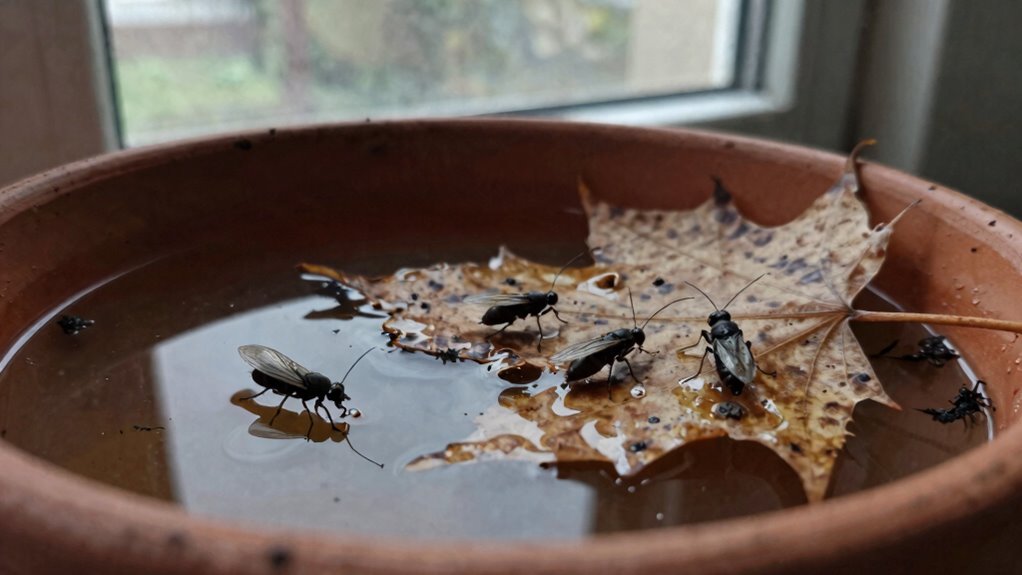
Why do fungus gnats throw a house party in every pot? The answer is leftover organic matter and moisture.
These pests breed in decaying leaves and standing water, so clearing leaves from the soil surface is your first move. Dump any standing water from saucers to remove their breeding sites.
A damp, debris-filled pot is a five-star resort for gnat larvae. Remove fallen leaves weekly and check pots after watering.
A damp, debris-filled pot is a five-star resort for gnat larvae. Remove fallen leaves weekly.
Empty trays immediately and don’t let water sit. Gnats lay eggs in that slimy layer, so dry soil is your best pest control tool.
Clean up any rotting plant matter near pots. It’s free real estate for them, and removing it stops the cycle.
The verdict is simple: dry soil and clean pots break the breeding cycle. No food, no water, no gnats.
Start with this and you’ll cut their population by half without spending a dime. For serious gnat control, this is your first step.
Enzyme-based products like Enzyme Drain Cleaners can also be used to break down organic residues in nearby drains that attract gnats.
Set Up Yellow Sticky Traps to Catch Adults Early
Dry soil stops larvae, but adults still fly in from windows, plants, or that bag of compost you forgot to close. Yellow sticky traps catch them early, preventing a full-blown invasion.
Position traps right above soil in each pot. Adults fly low, so place them near pot rims regardless of pot sizes. Stick a wooden skewer through the trap’s top and push it into the soil.
Cluster traps near light sources like windows or grow lamps. Gnats follow brightness, so a trap within six inches of the bulb catches ten times more adults than one placed in shade.
Swap traps every two weeks or when they’re visibly covered in gnats. Waterproof and UV-resistant traps maintain their stickiness even near bright lights or damp soil. A pack of fifty 3×5-inch sticky sheets costs about $8, and cutting them into quarters stretches the supply.
Catch the fliers early, and you stop the next generation before it starts. This pest control method is simple, cheap, and oddly satisfying to see those yellow sheets speckled with tiny black dots.
Use Potato Chunks to Find and Remove Hidden Larvae
Larvae hiding in soil can be tough to see, but a simple potato chunk makes them come to you.
This potato trap acts like a free buffet sign for fungus gnat larvae and other soil pests.
Cut a raw potato into two-inch chunks, then place them cut side down on damp potting soil.
Cut a raw potato into two-inch chunks and place them cut side down on damp potting soil.
Wait two to three days, then lift the chunks to check for thin, white, worm like creatures with black heads.
That confirms your larval detection and shows exactly where to target pest control.
Destroy the infested chunks by sealing them in a bag and tossing it in the trash.
Replace with fresh potato pieces until you find no more larvae.
This method costs pennies and works best in consistently moist soil, making it ideal for removing hidden infestations without harsh chemicals.
Once the larvae are exposed, you can apply a thin, dry layer of food-grade diatomaceous earth around the soil surface to dehydrate and kill any remaining pests.
It reveals the problem so you can safely remove it, keeping your plants healthy and free of bugs.
Frequently Asked Questions
Can I Reuse Soil After Treating It for Fungus Gnats?
Yes, you can reuse soil after treating it for fungus gnats, but only if you fully sterilize it first. This means baking the soil at 180°F for 30 minutes to kill any hidden eggs and larvae.
Keep in mind that treatment duration matters a lot when controlling these pests. Letting soil sit for a week after a drench won’t work if you skip the heat sterilization step.
Reuse your old potting mix sparingly, and always test it with a potato chunk first. If you want the best fungus gnat control without guesswork, buy a fresh bag of sterile potting soil.
For reliable pest prevention, focus on heat treatment or replace the soil entirely. Your indoor plants will thank you, and you’ll stop adult gnats from emerging weeks later.
How Do Fungus Gnats Get Into My House in the First Place?
Fungus gnats usually sneak into your home as stowaways in infested plants from a nursery or big box store. They can also fly in through open windows or doors, though these tiny, weak fliers rarely travel far on their own.
Their larvae thrive in damp, organic rich soil, so a new bag of cheap potting mix is a common culprit. This means you often bring the problem home yourself, like adopting a plant with free, unwanted pests.
To stop a gnat infestation before it starts, always inspect new plants and soil before bringing them indoors. A proactive pest control routine can save you from buying sticky traps or insecticidal sprays later.
If you spot adult fungus gnats, use yellow sticky traps to monitor the population and target the adults. For long term indoor pest management, let the top two inches of soil dry out between waterings to kill larvae.
Applying a biological insecticide containing Bacillus thuringiensis israelensis directly into the soil is a buyer proven solution. This natural pest control product targets the larvae without harming your plants or family.
Choosing sterile, high quality potting mix and quarantining new plants for a week can prevent reinfestation entirely. A smart purchase of professional grade pest control supplies will protect your indoor garden and peace of mind.
Are Fungus Gnats Harmful to Humans or Pets?
No, fungus gnats are not harmful to humans or pets. They don’t bite, sting, or spread disease.
The biggest risk is mild airborne allergens from their shed skins, which might irritate sensitive noses. Their gnat life cycle thrives in damp soil, not on blood.
They’re more of a nuisance, like tiny, clumsy pilots crashing into lamps. Bottom line: they’re gross, not dangerous.
To eliminate them, focus on a reliable pest control product that targets larvae in soil. Using sticky traps and a soil drench will break the gnat life cycle fast.
If you want a smart purchase for home pest management, look for organic insecticides labeled for fungus gnats. Controlling moisture is your best defense, and it will make them vanish for good.
What Is the Fastest Way to Get Rid of a Severe Infestation?
The fastest way to eliminate a severe infestation is a two pronged attack. Microwave your soil for just two minutes per cup to kill larvae and eggs.
Then use insecticide foggers to target flying adult pests. A $15 fogger blasts the air while microwaving is free.
Combine these methods for a knockdown punch against your bug problem. It is not subtle, but it is effective when you are desperate.
Start with this pest control strategy to stop the outbreak fast. Then fix your watering habits to prevent a second round of infestation.
Can I Use Hydrogen Peroxide as a Soil Drench Instead of Bti?
Yes, you can use hydrogen peroxide as a soil drench, but it is a short term fix, not a substitute for Bti.
The ratio matters: mix one part 3% hydrogen peroxide with four parts water, then drench the soil.
This kills fungus gnat larvae on contact, but it also harms beneficial soil microbes and disrupts the soil microbiome over time.
Bti products like Gnatrol ($15 for 8 oz) target only gnats, leaving your plant roots and good bugs alone.
Hydrogen peroxide is a quick zap for an active infestation.
Bti is a smart, lasting solution for recurring pest control problems.
If you want a safe, targeted approach to stop gnats at the larval stage, choose a Bti based drench for long term plant health.
For a one time emergency, hydrogen peroxide can work, but it will not protect your soil ecosystem.


