
Getting raccoons out of an attic isn’t a brawl, it’s a strategy game you can win with the right timing and tools. If you’ve heard thumping, scratching, or chittering above your ceiling, you’re likely dealing with a raccoon, not a ghost or a rat.
This guide covers exactly how to evict them humanely, from spotting the entry hole to sealing it for good. You’ll learn why bright lights and loud radios actually work, and what to do if you discover babies up there.
The key is using a one-way door system, which costs about $20 and lets mom leave but never come back. We’ll walk through every step so you avoid common mistakes like trapping a mother inside.
By the end, you’ll have a clear, low-stress plan to reclaim your attic without calling in expensive pros. Let’s get those raccoons out for good.
At A Glance
- Use bright lights and loud radios at night to make the attic uncomfortable.
- Apply ammonia-soaked rags near entry points as a natural raccoon deterrent.
- Wait 48 hours after eviction before sealing to ensure no babies are trapped.
- Let the mother raccoon retrieve her babies over one to two days.
- Inspect and seal all gaps with hardware cloth and galvanized steel mesh permanently.
How to Spot Signs of Raccoons in the Attic

Since raccoons are nocturnal and most active after dark, the first clue you have unwanted tenants is often a racket overhead. You might hear thumping, scratching, or destructive sounds coming from the attic shortly after sunset.
After the noise dies down, check the floor or insulation for clues. Raccoon prints look like tiny human hands with five long toes and no claw marks showing.
After the noise dies down, check for raccoon prints: tiny human-like hands with five toes and no claws.
You will also find droppings that pose serious health risks. Their scat is roughly the size of a cat’s and carries roundworm eggs that can linger for years, so never vacuum it up.
Look for torn ductwork or a hole about four inches wide. Spot these signs early, and you will know you are dealing with a masked bandit, not a ghost.
Why Spring Is Prime Time for Attic Invasions
Spring is prime time for raccoon invasions, as mother raccoons search for safe attics to give birth. These seasonal pest control issues peak when females seek shelter between March and May.
An attic offers warmth for newborn kits, which is why wildlife removal experts see a spring spike. Ignoring attic preparation practically invites these nuisance animals inside. Homeowners should focus on raccoon prevention by patching loose vents and sealing soffit gaps.
Late winter is the best time for a roof inspection and pest proofing. Fix damaged shingles, torn screens, or any other entry points. This simple home maintenance costs about fifty dollars in materials. Compare that to hundreds for professional animal removal after an infestation begins.
Raccoons are terrible tenants, so save yourself the hassle. Taking action now keeps your home critter free all season. For a permanent solution, consider installing one-way exclusion doors over the entry points after the raccoons have left.
What Raccoons Can Destroy: Insulation, Ductwork, and Health Risks
A single raccoon family can turn your attic into a disaster zone in just one season. They shred fiberglass insulation for nesting material, which leaves bare patches that can hike your energy bills by up to 30 percent.
Their claws and weight also crush or tear ductwork, leading to expensive HVAC repairs and poor air flow. Beyond the physical damage, raccoon urine and droppings soak into wood and ceiling tiles, creating a permanent, foul odor that’s almost impossible to mask.
The health risks are the real deal breaker: raccoon roundworm eggs can become airborne and cause liver or eye damage if inhaled. Rabies is another serious concern, since raccoons are a primary carrier of the virus.
That’s why contaminated insulation and ductwork often need complete removal and replacement, not just a spot fix. Professional wildlife cleanup typically costs between $1,000 and $3,000, depending on the extent of the damage.
If you’re noticing scratching sounds, stains on your ceiling, or a musty smell, it’s time to call a licensed wildlife control service right away. Prompt raccoon removal and attic restoration can save you thousands and protect your family’s health.
Don’t wait for the problem to worsen; schedule an inspection and get a free quote from a local pest control expert today. Acting fast is the best way to avoid a full-blown biohazard and keep your home safe and livable. For homeowners seeking a do-it-yourself approach, one-way exclusion devices can allow animals to exit safely without reentry, though professional help is often recommended for thorough sealing.
Step 1: Watch the Entry Hole at Dusk to Confirm the Species
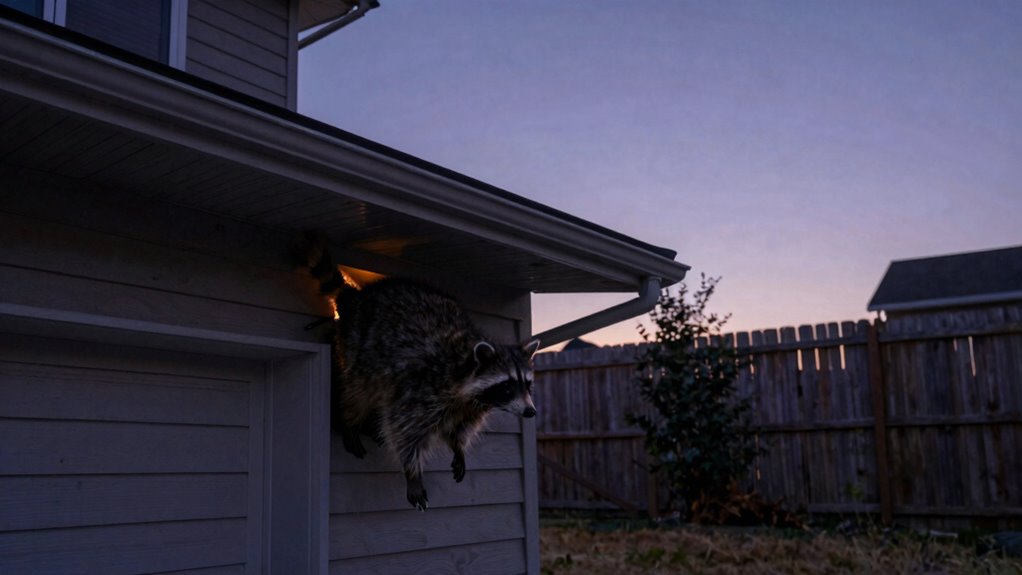
Head up to the attic just before dusk and locate the main entry hole, the one with greasy, dark smudges around its edges. Raccoon behavior is nocturnal, so they exit shortly after sunset, and you can catch them in action.
Position yourself quietly with a snack and watch for a bulky, striped-tailed creature emerging. That sight confirms a raccoon, not a squirrel or bat, which is vital before you start any wildlife removal service.
This attic inspection step is essential because you can’t evict what you don’t identify, and misidentification leads to wasted effort. Watch for multiple heads peeking out, which signals a litter and means you’ll need a full raccoon removal plan.
That hole, often around 4 inches wide, also helps confirm the species and tells you where to focus your exclusion work. Using noise for squirrels that sleep at night is a common mistake, so grab a chair and stay patient.
Confirming the raccoon before acting saves you time and money, and it sets you up for a successful pest control strategy. Once you’re sure, you can book a professional inspection or buy repellents with confidence.
Every dusk view sharpens your pest identification skills, and that clarity makes the next steps far easier. So settle in, stay quiet, and let the animal’s own schedule reveal the truth before you take action.
Step 2: Make the Attic Uncomfortable With Lights, Noise, and Fans
Nightfall is when the real work begins for raccoon removal. Raccoons follow strict nocturnal patterns and leave the attic shortly after dusk.
Nightfall is when the real work begins for raccoon removal.
That is your window to act before they return. Make the space unbearable with bright lights on timers set to 200 watt equivalents. Aim them directly at their nesting spots for maximum impact.
Add a loud radio playing talk or classic rock with the volume cranked all night. Place a high velocity fan on a low setting blowing directly into the attic. The cold draft and constant noise disrupt their comfort and drive them out.
Avoid ammonia based repellents here as strong fumes can harm you or your attic structure. No need for harsh chemicals at this stage of pest control. The goal is simple: turn their cozy den into a noisy, bright, drafty nightmare. For an even stronger deterrent, add a motion-activated device that uses flashing LED strobe lights combined with ultrasonic waves to further unsettle the animals.
They will panic and leave quickly. Give it 48 hours for effective wildlife exclusion.
Step 3: Use Natural Deterrents Like Ammonia and Cayenne Pepper
For the ammonia soaked rag setup, place perforated Ziploc bags filled with ammonia rags around the attic. This helps mimic predator urine to encourage raccoons to leave.
Cayenne pepper works as a spicy irritant sprinkled in problem areas. Avoid direct contact with any young raccoons during this process.
These natural deterrents motivate the mother to move her family out. You can solve your pest problem without harsh chemicals or traps. Plant-based formulas with peppermint oil offer a non-toxic, pet-safe alternative that creates an unpleasant sensory barricade in the attic.
Ammonia-Soaked Rag Setup
Soak clean rags in undiluted ammonia and wring them out slightly. Place each rag inside a sealed, perforated Ziploc bag to control odor release.
Position bags near entry points and soiled insulation, replacing them every two days. This method, costing about $5 for a gallon of ammonia, mimics predator urine without the mess. 100% pure predator urine is a more authentic alternative that triggers natural fear responses in raccoons. It is a cheap raccoon repellent that works reliably. Your attic will smell like a janitor’s closet, but raccoons will flee.
Cayenne Pepper Application Strategy
Use half a cup per 100 square feet for effective pest control in yards and gardens. Reapply after 48 hours if you still see activity.
A cheap shaker bottle, around five dollars, makes clean application simple and odorless. This low cost step reduces risk of critters like squirrels or raccoons.
It is messier than ammonia but still very easy to use. Apply the cayenne pepper, then wait to see results before repeating. This method works best when used with weather-resistant capsaicin sprays for longer-lasting protection after rain.
How the Mother Retrieves Her Babies: and Why You Should Let Her
There are two big reasons to let a mother raccoon retrieve her own babies after eviction. She knows the exact baby relocation steps, carrying one kit at a time in her mouth to a new den.
If you block her, she will tear through your roof like a demolition crew. Nobody wants that expensive repair bill for raccoon damage.
Mother raccoon behavior is predictable but firm. She returns at dusk, checks the attic, grabs a baby, and leaves.
She repeats this over one or two days. She always starts with the most vulnerable kit first.
She uses scent trails to find each hidden baby. She will not abandon any kit until all are moved.
Let her finish her work. It is the fastest and least destructive path to a raccoon free attic.
Why You Must Wait 48 Hours Before Sealing Anything
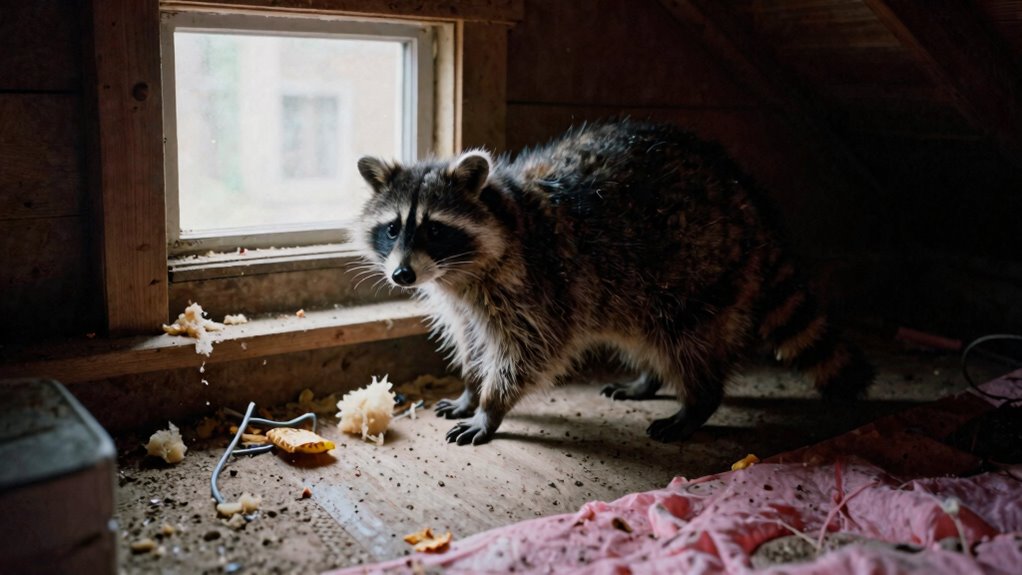
Waiting 48 hours before sealing anything is the raccoon eviction equivalent of checking that everyone made it onto the lifeboat. The mother needs time to move her babies, one by one, to a backup den.
Waiting 48 hours before sealing is the raccoon eviction equivalent of checking everyone made it onto the lifeboat.
Rushing to seal the hole traps her young inside, where they’ll die and cause a stink you’ll never forget. During those two days, she may claw at attic ventilation or structural repairs, trying to break back in.
That’s not her being mean. That’s her being a mom. Let her finish her work.
After the 48 hours, listen for crying sounds. If you hear none, it’s safe to seal.
If you seal too soon, you’re not solving a raccoon problem. You’re creating a corpse.
Patience pays. For professional wildlife removal, waiting is the best pest control strategy.
What to Do If You Find Baby Raccoons in the Attic
First, verify the animals you are dealing with are actually raccoons, as a baby squirrel looks very different and requires a different wildlife removal plan.
The mother raccoon will retrieve her young over one or two days, carrying each baby out one at a time, so allow her access without interference.
To confirm all young are gone, wait 24 to 48 hours after the retrieval begins.
Then, inspect the attic for crying sounds before scheduling any professional raccoon proofing.
If you hear no noise, you can safely seal entry points to prevent future infestations.
Contact a local pest control service for an attic inspection and humane removal if needed.
Identify the Species
If you find baby raccoons in the attic, the most important step is to positively identify the species and resist the urge to panic. Species identification starts with nocturnal verification: wait until dusk to see if an adult raccoon exits to forage.
Baby raccoons have distinct grayish fur, black mask markings, and ringed tails, which make them easy to distinguish from squirrels or opossums. You can confirm the species by listening for chattering or crying sounds after sunset, since raccoons are vocal and active at night.
Check for five-toed tracks near the entry hole, about two to three inches wide, as a clear sign of raccoon activity. Also note the droppings: dark, tubular, and often containing undigested seeds, about the size of a small dog’s.
Correct species identification avoids costly wildlife removal mistakes, because squirrels and opossums need different trapping and exclusion tactics. If you need professional raccoon removal services, this dusk check helps you give accurate information to an exterminator.
Don’t assume it’s a raccoon until you’ve done a quick dusk check, since your attic’s future depends on it. For homeowner pest solutions, acting fast after positive ID prevents structural damage and odor issues.
Once you confirm raccoons, you can plan for attic restoration and sealing entry points, which are key to preventing re-infestation. Call a licensed wildlife control expert if you prefer safe, humane removal over DIY attempts.
Allow Mother’s Retrieval
A mother raccoon, panicked but determined, will do just about anything to get back to her babies. That includes tearing through your roof to reach them.
You will know she is coming back by observing behavior cues. She returns nightly, often after dark, sometimes pacing or scratching near the entry point.
Her timing patterns are predictable. She will make short trips, carrying one baby at a time over a day or two.
Do not block her access yet. Blocking the entry triggers furious digging and can worsen the damage.
If you have already moved the babies, place a box with them outside wrapped in old towels. Let her retrieve each one until she stops returning.
Confirm all young have been moved later to ensure no orphans remain. It is nerve wracking watching a raccoon tear up siding, but allowing retrieval prevents orphaned wildlife and a costlier roof repair.
Safe wildlife removal requires patience, and this method reduces the chance of needing professional pest control for structural damage.
For homeowners facing roof entry issues, this approach keeps the mother and babies together while protecting your attic space.
Confirm All Young Gone
Confirm all young are gone before sealing the attic. This is a critical step in your pest control plan.
Once the mother has stopped returning, wait a full 48 hours after her last sighting. Listen carefully for cries and check every corner with a light. Baby raccoons will squeak when disturbed. Missing one means a dead raccoon stinking up your attic and ruining your weekend.
During daytime checks, noise may mean the mother is still retrieving her litter. She will move her young over several trips, not all at once.
Use the towel test to confirm complete removal. Place a box of damp towels near the entry point. If the towels are untouched after 12 hours, mother retrieval is done.
For final inspection, use a flashlight at dusk. Raccoon babies’ eyes glow greenish yellow. Keep looking until you are absolutely certain.
Lazy checking makes for stinky attics, so do not rush this process. Thorough removal ensures no lingering pests or odor problems.
Use a One-Way Door to Let a Raccoon Out Without Trapping It
One-way doors are a cleaner, humane way to evict a raccoon compared to traps or poison. These devices mount over the entry hole, letting the animal exit while blocking its return.
The biggest advantage is no trapping, so a mother raccoon stays with her young. You also save money with a basic door costing just $20 to $40, plus installation takes only 15 minutes with a ladder.
For this to work, you must first do structural exclusion by sealing every other gap around your attic. Cultural perspectives vary, with some homeowners seeing one-way doors as passive and others as a prudent, preventive measure.
Either way, you avoid the disgusting mess of a dead raccoon in your insulation and the odor that follows. Set the door up after dusk, exactly when Mama leaves to hunt for food.
She will scoot out, try to come back, and eventually give up after a few attempts. Wait 48 hours, then permanently seal the hole with metal flashing or heavy gauge wire mesh.
This approach is simple, low cost, and it solves your wildlife removal problem without cruelty. The raccoon lives to find a new den, and your attic stays clean and protected.
How to Seal Entry Points Without Trapping a Raccoon Inside
Sealing entry points without trapping a raccoon inside requires patience, timing, and a little sneakiness. After the mother has retrieved her young, perform thorough sealing checks at dusk to confirm silence.
Use this three step approach. Leave one primary entry hole open, stuffing it loosely with crumpled newspaper.
If untouched after 48 hours, all raccoons are gone. Install sturdy hardware cloth over all other gaps, securing it with screws every few inches to prevent re entry.
Seal the final hole permanently with galvanized steel mesh and spray foam for bats, which costs about $15 per can. Re entry prevention means blocking even tiny gaps, as raccoons squeeze through four inch holes.
Check eaves, vents, and rooflines twice. Use a weather-resistant rubber seal to block any small gaps around doors and windows. Missing one spot invites a return visit you definitely want to avoid.
How to Choose a Humane Wildlife Removal Professional
Choosing a professional for raccoon removal means confirming they follow truly humane wildlife control policies, not just claiming them.
Verify their licensing and insurance, and ask in detail about baby season protocols during spring.
A company that traps and relocates mothers without checking for young is creating a bigger infestation, not solving one.
Look for pest removal experts who use integrated pest management and always inspect attics before sealing entry points.
This approach protects both wildlife and your home, ensuring long term exclusion over quick fixes.
Ask for a written guarantee on their humane trapping methods and reunification procedures for orphaned kits.
Confirm Humane-Only Policies
Homeowners usually call a wildlife pro expecting a simple raccoon removal service, but many end up with a dirty deal instead.
Always confirm humane only policies upfront because some firms still kill or relocate raccoons illegally, leaving mothers orphaned and babies dead in walls.
Demand written proof of humane only methods, not just verbal assurances. Cheap traps and kill traps are not the same as legal trapping protocols.
Ask if they use exclusion devices, not just trapping. Licensed professionals can install one way doors that let mothers retrieve young safely.
Reject any plan that suggests timing removal without confirming no babies are present. A mother separated from her young will shred your roof.
Bottom line is if they cannot explain their eviction process clearly, they are likely cutting corners. Find a pro who treats raccoons like tenants, not targets.
Verify Licensing and Insurance
Before a single ladder touches your roof, your wallet needs a guarantee that the person holding it is both qualified and accountable. Licensing verification confirms the company follows state wildlife laws, so no fly‑by‑night operations with a pickup truck and a dream.
Insurance coverage protects you if they fall through your ceiling or damage your wiring. Always ask for proof of liability insurance, typically $1 million minimum, covering property damage and accidents.
For raccoon removal, unlicensed pros often skip humane protocols, risking orphaned babies in your attic. A legit pest control operator will provide their license number without hesitation.
Bottom line: if they can’t show both, show them the door. It’s cheaper than fixing a lawsuit.
Ask About Baby Season Protocols
They should inspect the area first before setting any traps. If young are present, they wait for the mother to retrieve them naturally.
Professionals must use one way doors or live traps that allow family reunification. This avoids kill first approaches that harm baby animals.
A reliable pest control company guarantees a follow up check after 48 hours. This confirms all babies are out before sealing the entry points.
The verdict is simple. If they cannot walk you through that process, hire a company that prioritizes protocol over profit.
For humane exclusion, professionals may also use one-way bat doors to let animals exit safely while preventing re-entry.
Frequently Asked Questions
Can I Get in Trouble for Evicting Raccoons?
Yes, you can absolutely get in trouble for evicting raccoons, especially if you separate a mother from her babies. Improperly blocking her out might be considered animal cruelty in many areas, which can lead to fines or legal action.
Neighbor disputes are another common headache when evicted raccoons simply move into a nearby attic. This can cause expensive damage to their property, and you could be held responsible for the new pest issue.
To avoid these risks, always use humane wildlife removal methods that let the mother retrieve her young first. After that, seal all entry points with heavy gauge hardware cloth to prevent future raccoon infestations.
Checking your local wildlife laws before any DIY pest control is a smart move. It helps you stay legal and ensures you choose the right live trap or exclusion strategy for a permanent solution.
For safe raccoon control, consider professional grade products like one way doors or ultrasonic repellents. These tools help you handle the job ethically while protecting your home and avoiding legal trouble.
What Should I Do With Dead Raccoon Smell in Attic?
The dead raccoon smell in an attic usually peaks within a week during the decomposition timeline. Odor neutralization starts with physically removing the carcass, so wear gloves and a mask.
Douse the area with an enzyme based cleaner like Nature’s Miracle, which costs about $15. Baking soda helps, but it’s no match for deep set stink from a dead animal in the attic.
For stubborn cases, an ozone generator rental around $60 per day works wonders. To get rid of raccoon odor for good, remove the source first then neutralize the smell.
Do not try to mask the stench with air fresheners. A professional pest control service can safely remove the carcass and recommend the best products for wildlife odor removal.
Will Insurance Cover Damage From Raccoons in Attic?
Standard homeowners insurance usually says no to raccoon damage in your attic. Most policies include wildlife exclusions, so claims for chewed wires or torn insulation often get denied.
Check your policy’s fine print because some cover “sudden” events like a raccoon breaking through a roof. But gradual destruction from persistent nesting or daily scratching is almost never included.
A typical attic repair costs between $1,000 and $4,000, and you will likely pay out of pocket. That is why focusing on raccoon exclusion techniques is your smartest move.
Install heavy duty vent covers and seal all roof gaps to keep these pests out for good. For active infestations, a professional wildlife removal service can safely evict raccoons and clean up contaminated insulation.
Bottom line: do not count on insurance for raccoon damage. Invest in durable pest control barriers and schedule regular attic inspections to catch problems early.
How Do I Keep Raccoons From Returning to Sealed Attic?
To keep raccoons from returning to a sealed attic, use exclusion techniques like sealing all gaps larger than a quarter with heavy duty mesh or steel wool. Scent deterrents, such as ammonia soaked rags in perforated bags or cayenne pepper sprinkled monthly, can additionally help.
But here is the trick: wait 48 hours after sealing to confirm no babies are trapped. Otherwise, a desperate mother will chew through your new patch, costing you more than a coffee run.
Bottom line: seal smart, deter hard, then sleep easy. For lasting raccoon control, pair professional grade exclusion materials with deterrents that target their sensitive noses.
This approach stops re entry without harming animals and saves you from repeat repair costs. When you choose the right pest proofing products, you protect your home and your investment.
Are There Laws Protecting Raccoons From Certain Removal Methods?
Yes, most states have laws protecting raccoons, especially during their nesting season. Those rules often ban illegal traps like body gripping traps or poison devices which can orphan babies or cause slow suffering.
Authorities increasingly require humane methods for raccoon removal, such as bright lights, loud music, or ammonia rags. These techniques encourage relocation without harming the animal or your property.
Ignoring these laws risks fines or worse, like dead animals rotting in your attic. That is why smart pest control buyers always check local regulations before acting.
For safe and legal solutions, look for professional wildlife control services that offer live traps and one way exclusion doors. Using deterrents like ultrasonic repellents or motion activated sprinklers is also a buyer friendly and effective strategy.
The bottom line is to verify your state guidelines on raccoon trapping and removal. Your local raccoon might have better legal representation than you, and definitely more fur.


