
Wondering how to get rid of gnats without killing your plants? The answer is simpler than you think—dry topsoil stops the problem before it starts. Fungus gnat larvae need moisture to survive, and letting the top two inches of soil dry out between waterings cuts off their life cycle.
Overwatering turns pots into breeding grounds where nearly all eggs survive, so switching to bottom watering keeps the surface dry and larvae-free. Yellow sticky traps will catch the adults flying around, while BTI treatments like Mosquito Bits target the eggs for about $10.
These methods are safe, effective, and require no harsh chemicals. Keep reading for the full breakdown on sand barriers and nematodes to make your gnats vanish for good.
At A Glance
- Let top two inches of soil dry completely between waterings to suffocate larvae.
- Use bottom watering to keep soil surface dry and break the gnat life cycle.
- Apply yellow sticky traps near pots to capture adult gnats without chemicals.
- Introduce beneficial nematodes to hunt and eliminate larvae in the soil.
- Quarantine new plants and remove dead leaves to prevent reinfestation.
How to Identify Fungus Gnats vs. Fruit Flies
First, fungus gnats are not fruit flies, and confusing them leads to wasted effort and a lot of staring at an empty fruit bowl with suspicion.
Fungus gnats are delicate, weak fliers, about 1/8 inch long, with long legs and antennae, hovering near potted plant soil, not your banana bunch. Their larvae, tiny whitish worms with black heads, live in damp dirt, munching organic matter.
To confirm, press a raw potato chunk onto the soil surface. If larvae swarm it in a day, that’s your culprit. Another trick is to spread a 1-inch sand layer on top of the potting mix.
Sand dries fast, blocking adults from laying eggs, and it’s a cheap pest control fix, about $5 for a bag. Fruit flies, meanwhile, target overripe fruit and breed in drains.
So save the fruit bowl inspection for another pest. Bottom line: check the soil, not the kitchen counter.
For effective gnat control, focus on the damp potting mix, not your produce. Soil treatments with beneficial nematodes or Bacillus thuringiensis israelensis can target larvae underground to break the life cycle.
Why Overwatering Creates Perfect Fungus Gnat Conditions
Overwatering is basically sending a party invitation to fungus gnats, and they never bring good guests. Soggy soil creates ideal breeding grounds for these pests right in the top two inches.
Beneficial soil microbes drown in waterlogged conditions, and without them organic matter decays badly. This decay releases smells that attract more adult gnats looking to lay eggs.
Meanwhile, your plant suffers from drought stress because roots can’t breathe. It is ironic that too much water causes the same damage as not enough.
| Factor | Overwatered Soil | Healthy Soil |
|---|---|---|
| Oxygen level | Low, roots suffocate | High, roots thrive |
| Soil microbes | Anaerobic, decomposing poorly | Aerobic, balanced |
| Gnat eggs | 90%+ survival rate | less than 10% survival rate |
| Organic matter | Breeds fungus | Recycled normally |
| Root health | Brown, rotting | White, firm |
This cycle means gnats lay eggs in the one place they know will stay damp. Using a natural, plant-based spray on the topsoil can kill eggs and larvae on contact without harming your plant. A simple pest control fix is to check moisture before you pour.
Use your finger or a moisture meter to test the top two inches. Your plant will thank you, and the gnats can find another hotel.
Let the Top 2 Inches of Soil Dry Out Between Waterings
The simplest moisture check is sticking a finger an inch or two into the potting mix. If it feels damp, skip watering entirely.
Allowing the top layer to completely dry out suffocates gnat larvae and prevents eggs from hatching in the surface soil. For targeted pest control, this method disrupts the gnat breeding cycle effectively.
A more strategic approach is bottom watering, where the plant soaks up water from a tray below. This keeps the soil surface bone-dry and breaks the gnat breeding cycle completely.
Using bottom watering is a practical solution for eliminating gnats. It keeps the top layer dry, which is essential for preventing infestations. Using yellow sticky traps placed near the soil can also capture adult gnats without harming your plants.
Moisture Check Method
Drying out the top two inches of soil is the single most effective way to break the fungus gnat life cycle. This moisture check method relies on a simple rule and costs absolutely nothing.
Stick a finger into the soil up to the second knuckle, which is about two inches deep. If it feels damp, wait. The key is controlling soil dampness at the correct watering depth.
Gnat larvae live only in the top inch of wet soil. Dry that zone, and they starve during your pest control routine.
Check every two to three days, not on a strict schedule. Use a wooden chopstick as a cheap alternative.
Dry means go for watering. Wet means no. Water only when the top two inches feel dry, then water deeply but less often.
This method helps prevent gnats without any chemical pest control products. Ignore the calendar and check the soil.
Your plants will thank you. The gnats won’t.
For added protection, placing sticky traps at soil level near drainage holes targets where adult gnats emerge and gather.
Surface Drying Importance
Letting the top two inches of soil dry out between waterings isn’t just a gentle suggestion. It is the most reliable way to starve out fungus gnat larvae without reaching for chemicals.
This creates a moisture gradient where the deeper soil stays damp while the top dries. Larvae need high topsoil humidity and perish in that dry layer. It is a simple, brutal trick.
| Your Plant’s Mood | What’s Happening Below |
|---|---|
| Thriving, no gnats | Dry topsoil, happy roots |
| Wilted, sad leaves | Possibly too dry, adjust |
| Gnats everywhere | Damp topsoil, larvae feast |
| Perfectly balanced | Dry surface, moist deep zone |
The top layer acts as a barrier for pest control. Let it dry, wait a day, then water.
Your plants will adapt and the gnats won’t. Use this simple moisture management method to protect your indoor garden.
Buying a moisture meter can help you target that dry surface zone precisely. No chemicals needed for effective gnat elimination.
Bottom Watering Strategy
When you water from the top, you invite fungus gnats straight to the soil surface. Bottom watering flips that strategy completely and keeps pests away naturally.
Let the top two inches of soil dry out fully between waterings to starve gnat larvae. Set the pot in a tray of water for about 30 minutes instead of pouring onto the top.
Capillary action pulls moisture upward through the drainage holes, keeping the topsoil bone dry. Use a simple $15 moisture probe to check lower soil dampness before each soak.
Avoid overwatering and aim to quench the plant, not create puddles. It is like giving your plant a controlled drink through a straw, with no soggy topsoil party for gnats.
For a broader approach, boric acid powder can be applied to cracks and crevices as a natural pest killer.
Use Bottom Watering to Keep the Surface Gnat-Free
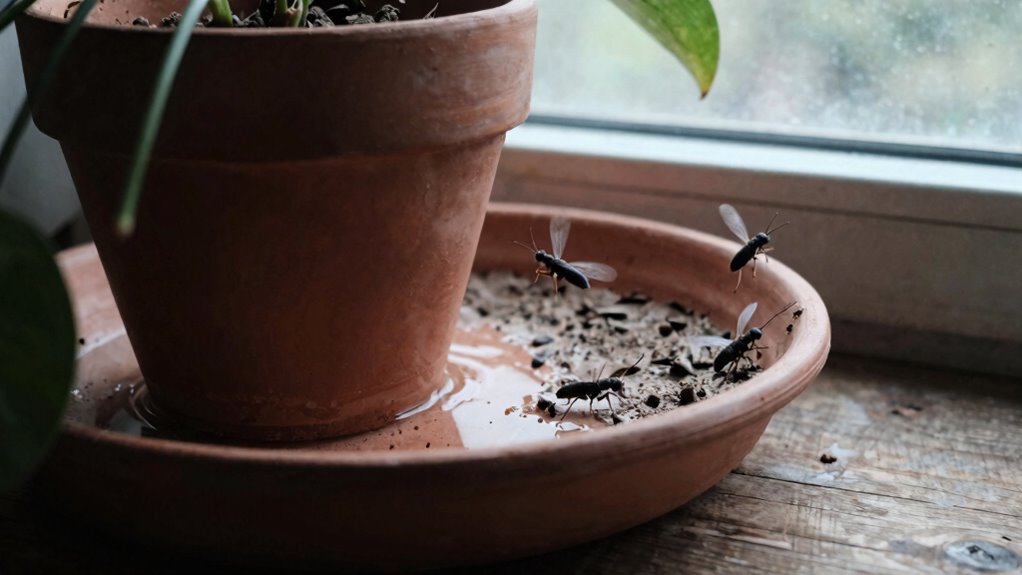
Bottom watering keeps the soil surface dry, which is exactly what fungus gnat larvae and eggs can’t tolerate, so it’s a natural pest control win for your indoor plants.
You simply set the pot in a tray of water for 15 to 30 minutes, letting moisture wick up through the drainage holes, then pour off any leftovers.
This practical method breaks the gnats’ breeding cycle without changing your usual watering rhythm, making it a solid long term prevention strategy for targeted gnat elimination.
If you’re looking for a low effort way to stop gnat infestations at the source, this keeps the top layer bone dry while roots stay hydrated.
Best of all, you don’t need extra sprays or sticky traps for routine gnat control, just a tray and a bit of timing.
For a friendly tip: check the saucer after each soak, because standing water outside the pot can invite other pests, so always dump it to stay on top of pest management.
Switch to this watering technique and you’ll reduce gnat-friendly moisture where it matters, all while keeping your plant care simple and effective.
It’s a buyer friendly habit that costs nothing extra and gives you lasting relief from those tiny flying annoyances.
For additional outdoor protection, consider using candles infused with natural plant-based oils to repel gnats effectively while you tend to your garden.
Why Bottom Watering Works
Switching to bottom watering flips the script on fungus gnats by changing how you hydrate your plants. This pest control method keeps the soil surface bone dry, which breaks the gnat life cycle completely.
Adults need clammy topsoil to lay eggs, but bottom watering denies them that. Roots are forced to reach downward for moisture, improving container drainage and overall plant hygiene.
A dry surface means no fungal growth or decaying organic matter for larvae to eat. Overhead watering just splashes spores around, but this technique locks the kitchen for gnats.
Less surface moisture means fewer flyers hovering near your pots. To get started, stick a saucer under each container and pour in water.
Let the soil soak up what it needs for about 30 minutes. No guesswork, no soggy top layer, just healthier plants and fewer gnats camping out.
Setup and Technique
The bottom-watering method works wonders, but only if you set it up correctly. Place pots in a shallow tray, fill with water, and let thirsty roots drink up. Then dump the excess after 30 minutes. Never leave standing water, or you will defeat the purpose.
For a layered defense, combine this with nematode application. Tiny beneficial roundworms hunt down soil larvae for effective pest control. They are cheap, around $15 for a pack, and self-reproduce for long term protection.
Additionally, install sticky trap placement near the pot’s rim. Those yellow cards capture flying adults before they lay more eggs.
The verdict. Bottom watering dries the surface, nematodes attack below, traps catch the rest. It is a simple, effective trio for buying pest control products that work. These mechanical traps are chemical-free and eco-friendly, safeguarding pets and local wildlife while maintaining lawn health.
Long-Term Gnat Prevention
Long-term gnat prevention starts with a surface so dry that even the most desperate gnat would need a canteen. Keep the topsoil bone-dry by using bottom watering with a tray or self-watering pot, which starves gnat larvae before they hatch.
Pair this method with two key habits for pest control success. Quarantine any new greenery for three weeks and sterilize suspect soil by baking or using a commercial treatment.
This soil sterilization strategy stops reinfestation from taking hold. For maintenance, stick to watering from below only and check the top inch daily.
If the topsoil feels damp, skip the watering session entirely. Remove dead leaves promptly and replace old compost each year to disrupt the gnat lifecycle.
Bottom watering is not flashy, but it is a gnat’s worst nightmare. Your plants will thank you for the dry feet, and the verdict is clear: dry topsoil equals zero gnat breeding ground.
This simple, cheap, and effective approach is your best gnat killer for long-term prevention. Hydramethylnon-based baits are not for gnats, but they provide steady, long-term colony control for cockroach infestations.
Place Yellow Sticky Traps Near Your Most-Infested Plants
Adult fungus gnats are drawn to the color yellow like they owe it money. The humble sticky trap doubles as both a surveillance camera and an execution chamber.
> Adult fungus gnats are drawn to the color yellow like they owe it money. The humble sticky trap doubles as both a surveillance camera and an execution chamber.
Place these traps near the most infested pots to catch adult gnats immediately. Check them daily because a sudden spike in catch indicates your watering schedule, fertilizer regimen, or light intensity needs adjusting.
Buy pre-cut yellow sticky traps online for around $8 per pack of 20. You can also cut larger sheets into small squares to save money. For longer-lasting outdoor or greenhouse protection, choose traps with UV-resistant and waterproof adhesives that hold up in rain or direct sun.
Insert the trap into the soil using a wooden skewer, positioning it just above the plant canopy. Replace traps every two weeks, or sooner if they are covered in gnats.
Bottom line: traps slay fliers fast and tell you exactly where the problem lives. Pair them with dried out soil for real results and effective pest control.
Find and Remove Larvae With Raw Potato Chunks
A raw potato chunk is a low-tech, surprisingly effective tool for finding and removing fungus gnat larvae. It is a cheap, weird little trick that actually works for pest control.
Cut a raw potato into 1-inch cubes, then push each cube slightly into the damp soil surface near the stem of an infested plant. Larvae are drawn to the dampness and starch, crawling into the potato within 24 to 48 hours.
Check the potato chunks daily. Lift them gently and you will spot tiny, whitish worms with black heads, which are the larvae.
It is like a tiny, gross treasure hunt for home pest removal. Discard infested chunks in a sealed bag or trash, then place fresh ones. For a fast-acting, chemical-free option, consider using a food-grade diatomaceous earth dusted on dry soil to directly dehydrate larvae.
Repeat every two to three days until no larvae appear. This simple, soil-safe method costs pennies and requires no chemicals.
Block Egg-Laying Adults With a Sand or Gravel Top Layer

Covering the soil surface with a sand or gravel top layer is one of the simplest ways to block fungus gnat adults from laying eggs. The key is getting the details right for effective pest control.
A sand layer thickness of at least half an inch, about 1.5 centimeters, works best. Too thin, and gnats will still find a way through for egg laying.
For gravel, choose particles between 1/8 and 1/4 inch, or 3 to 6 millimeters. Anything smaller creates a breeding ground, and larger particles leave gaps.
Use coarse, washed builder’s sand for around $5 per 50-pound bag. Small pebbles or aquarium gravel cost about $3 per pound and work well.
Apply the barrier evenly, covering the entire pot surface. This method is cheap, looks tidy, and stops adult gnats cold.
Water carefully by pouring slowly to avoid disturbing the layer. A solid barrier buys you peace of mind with no chemicals needed. For an additional chemical-free option, EPA-registered plant-based sprays with essential oils like peppermint or cedarwood provide effective pet-safe pest repellent action around indoor plants.
Add BTI to Your Watering Routine to Kill Larvae Safely
Add BTI to your watering routine to kill larvae safely. Drop a dose of Bacillus thuringiensis israelensis into your watering can, and you’ll target fungus gnat larvae where they live right in the soil.
Bti is a natural bacteria that’s harmless to plants, pets, and people, but deadly to baby gnats. You simply mix it with water, pour it on the soil every five to seven days, and let it do the dirty work.
For safe Bti dosage, use about one teaspoon of Mosquito Bits per gallon of water for most pots. Too little and it won’t work; too much and you’re just wasting money because larvae die at a shockingly low rate.
For a Bti product comparison, Mosquito Bits cost roughly $10 for a 30-ounce container. Gnatrol WDG runs about $20 for a 2-pound bag, dissolving faster for soil drenches. BTI toxic only to mosquito larvae also makes it safe for beneficial insects when applied only to breeding sites.
Here is a helpful application tip: scatter bits on soil, then water in. Repeat weekly for three weeks until no adult gnats appear on sticky traps.
The bottom line is that Bti is cheap, safe, and effective for pest control. Just don’t forget to reapply for long-term fungus gnat elimination.
When to Use Nematodes or Predatory Mites for Stubborn Infestations
If BTI isn’t working and adult gnats are still flying around weeks later, bring in heavy artillery like nematodes or predatory mites. These beneficial organisms target the fungus gnat lifecycle directly.
*Steinernema feltiae* nematodes, about $15 to $20 for a batch, swim through damp soil to find and infect larvae. Apply them when the soil is warm and moist, so water your plants first.
Predatory mites, *Hypoaspis miles*, roughly $12 for 5,000, eat eggs and young larvae from the surface. They act slower than nematodes but don’t need reapplication.
Both are pricey yet effective for stubborn infestations. Use them after drying out the soil fails, but know they won’t save plants that are already toast. For a safer alternative around plants, consider botanical extract sprays that are eco-friendly and gentle near people and pets.
The bottom line is nematodes for a faster wipeout and mites for ongoing prevention. Buy the right pest control option for your specific fungus gnat problem today.
Repot With Sterile Soil and Discard Old Compost to Break the Cycle
When beneficial nematodes and predatory mites finish their work, the old soil still hides pests.
Repotting timing is critical, so do it when the plant is dormant or just entering active growth, ideally during spring.
Pull the plant gently and shake off every speck of old compost.
Discard that used material far away, and do not compost it indoors.
Follow these steps for a clean break.
First, choose a sterile potting mix made for indoor plants, avoiding garden soil or homemade blends that harbor eggs.
Guarantee container drainage is excellent by adding perlite or sand to your mix.
Waterlogged soil invites larvae, so let the surface dry out completely after repotting before you water again.
Fresh soil is your reset button, and storing it in airtight containers stops re-infestation from damp pantry pests.
It ends the pest cycle dead, with no drama.
Frequently Asked Questions
Can I Reuse Sticky Traps After Washing Them?
Can you wash sticky traps and reuse them? The short answer is no, because washing destroys their stickiness. Soapy water leaves behind a residue that prevents the adhesive from gripping insects effectively.
A fresh pack of 20 sticky traps costs around $5. Trying to reuse them is a false economy since you’ll get zero pest control results. Residue from oils, dust, and dead bugs clogs the adhesive surface, making the trap useless for catching gnats or fungus gnats.
For best results, replace your sticky traps weekly, especially during an active infestation. This ensures consistent monitoring and control of flying pests like whiteflies and aphids. Think of it like reusing a used bandage: technically possible, but not smart for health or pest management.
Bottom line: toss old traps, buy new ones, and save yourself the hassle. Investing in fresh sticky traps is the cheapest way to buy effective pest control. For heavy infestations, pair new traps with yellow sticky cards for targeted gnat elimination.
How Long Does It Take for BTI to Kill Fungus Gnat Larvae?
BTI kills fungus gnat larvae in roughly 4 to 7 days after a soil drench, and the bacteria must be eaten by the larvae to work. Once ingested, the BTI toxins destroy the larvae’s gut lining, stopping feeding within hours and causing death a few days later.
BTI persistence in potting soil lasts about a week, so repeat applications every 5 days are essential for full control. Since fungus gnat larvae live for 12 to 14 days, missing one batch means a new generation will emerge and restart the infestation.
For best results, time your soil drench with the larvae hatching window, then reapply consistently for three weeks. This breaks the life cycle and protects your houseplants without harming beneficial soil organisms or pets.
If you’re shopping for a targeted pest control solution, look for BTI-based granules or liquid concentrates labeled for fungus gnats. These products are safe, biological, and ideal for organic indoor gardening or greenhouse use.
Remember that BTI works only on larvae, not adult gnats, so pair your drench with sticky traps to catch flying adults and reduce egg laying. That dual approach gives you faster knockdown and prevents future breeding, saving you from repeat infestations.
Will Bottom Watering Alone Eliminate a Full Infestation?
Bottom watering alone will not eliminate a full infestation. It dries the soil surface, yes, but adult fungus gnats still fly and lay eggs in other damp spots like saucers or nearby plants.
Larvae survive deeper in those moist soil layers, which means your pest control routine stays incomplete. Think of it as removing the welcome mat while leaving the back door open for gnats.
For total control and a real infestation solution, combine bottom watering with yellow sticky traps to catch adult flies. Then use a Bti drench to kill larvae at the root zone.
This integrated pest management approach targets both flying adults and soil dwelling larvae. It gives you the best fungus gnat elimination without relying on one method alone.
If you want to buy effective pest control products, look for a quality Bti concentrate and high stickiness adhesive traps. These tools work together to stop the full life cycle of gnats.
Do Predatory Mites Harm My Houseplants in Any Way?
Predatory mites are completely safe for your houseplants and pose zero risk to your greenery. Their entire lifecycle is short and focused on one thing: eating pest larvae like fungus gnats or thrips.
Once the food supply runs out, they simply die off naturally. They won’t chew your leaves, munch on roots, or damage any plant tissue.
Think of these mites as temporary biological hitmen, not plant-eating gardeners. A single bottle of Hypoaspis miles mites costs around $20 for 1,000 count and will not harm your fern.
*Mite safety* is incredibly high, making them a targeted pest control tool for any indoor garden. They are guests in your soil, not pests.
Bottom line: these beneficial mites offer a zero risk, highly effective solution for common houseplant infestations. For anyone looking to buy pest control products that are safe and natural, this is your best bet.
Can I Mix Sand With Gravel for the Top Layer?
Yes, mixing sand with gravel works fine for a top layer. Sand fills gaps between gravel, improving soil aeration so air moves better through the surface.
Gravel still allows root drainage, so water doesn’t pool and cause trouble. Keep the layer thin, about half an inch, to avoid trapping moisture.
Too thick of a layer traps dampness underneath, which attracts


