
Getting rid of flies outside isn’t complicated once you understand what they actually want. Flies are drawn to wet, rotting organic matter, and just one pound of manure can host over 1,500 maggots.
That’s why the real solution starts with cleaning—scrubbing stalls, scraping damp corners, and fixing leaky spigots. Trim overgrown weeds too, since they act like fly lounges.
A simple soda bottle trap (funnel top, sugar water, vinegar, and dish soap) catches houseflies without harming bees. For bigger outbreaks, hang commercial traps around your barn for $10 to $20.
This article walks you through the full four-step plan to beat flies without harsh chemicals. Keep reading to get your backyard back.
At A Glance
- Eliminate breeding sites by removing manure and damp organic matter daily.
- Control moisture by fixing leaks and draining standing water immediately.
- Trim vegetation and spread gravel to remove shady fly resting spots.
- Set traps near breeding areas, using commercial or DIY bottle traps.
- Introduce parasitic wasps or dung beetles to target fly pupae naturally.
Clean Up Manure and Trash to Stop Fly Breeding
Clean up manure and trash daily to stop fly breeding. One pound of manure can produce over 1,500 maggots under ideal conditions.
Clean up manure and trash daily to stop fly breeding; a single pound can produce over 1,500 maggots.
Remove garbage bins, compost piles, and any damp, rotting organic matter. This denies flies the habitat they need to multiply.
For active infestations, use granular fly baits like those with spinosad. Scatter these baits near manure piles or trash areas, not around livestock. These baits work as spot treatments for targeted fly control rather than mass eradication.
These baits lure adult flies with a sweet attractant and kill them fast. But remember, they are a bandage, not a cure for the breeding problem.
The key is to clean up first, then bait second. Tackle that wet manure and trash pile to kill the nursery, not just the noisy tenants.
Control Moisture to Kill Fly Eggs Before They Hatch
Flies need moisture to breed, so eliminating standing water is your best first step. Dry out wet areas like leaky faucets, clogged gutters, or damp compost piles to prevent eggs from hatching.
Without that wetness, the fly life cycle stops cold. This simple pest control method targets eggs before they become a bigger problem.
Focus on drying out problem spots, which is key for effective fly prevention. A dry home helps stop future infestations and keeps your space clean. For standing water in ponds or water features, you can use BTI-based larvicides to kill fly larvae without harming fish or plants.
Eliminate Standing Water
Standing water is a fly‑breeding superhighway, and interrupting it is one of the simplest pest control steps you can take.
Any stagnant ponds, clogged gutters, or a kiddie pool left undrained for three days is basically a fly nursery.
One bucket of standing water can hatch hundreds of eggs before you notice.
Walk your property after a rain to target potential breeding grounds.
Tip over any containers, fill low spots with dirt, or drill drainage holes in old tires.
For that birdbath, change the water weekly to avoid a maggot surprise.
A simple trick: add a few drops of dish soap to standing water. The soap breaks surface tension and drowns larvae before they breathe.
For larger water features like birdbaths or ponds that cannot be emptied, you can use Bti-based biological larvicides to safely target and kill any mosquito or fly larvae without harming fish or plants.
You are not drying the whole yard, just denying flies their puddle‑perfect birthplace.
The bottom line is no standing water means no baby flies.
Dry Out Wet Areas
Drying out wet areas stops fly problems before they start, so pair this step with overturning that old bucket. Female flies need damp manure, soggy hay, or wet compost to lay eggs, which hatch into maggots within hours.
Scrape away slimy puddles and fix leaky spigots, drying those spots completely. This moisture control starves new flies before they ever buzz around your yard.
Some people skip this, then wonder why fly traps fill up fast. Dry areas also help beneficial insects like dung beetles and predatory mites thrive instead of drowning in muck.
These helpers eat fly eggs for you, free of charge. Keep rain barrels sealed and spread gravel over muddy paths.
Bottom line: dry first, trap later for effective pest control. Saves money, reduces smells, and breaks the fly life cycle cleanly.
Using natural fly repellents can also be paired with this moisture control for safe, continuous outdoor protection.
Scrub Stalls and Confinement Areas Regularly
Scrub stalls and confinement areas regularly is the dirty secret to breaking fly breeding cycles. Removing wet manure and dampness sources cuts off their larvae before they hatch. A stiff brush and hose every few days is cheaper than any trap. This simple pest control step keeps the fly family tree from growing branches. Regular use of a natural enzyme cleaner also helps break down organic waste that attracts pests.
Break Breeding Cycles
Consistency is your secret weapon for breaking breeding cycles. To truly stop flies, you must understand their life cycle: eggs, larvae, pupae, and adults.
This pest behavior knowledge means targeting the vulnerable larval stage. Larvae need wet manure to survive, so scrubbing stalls daily removes that food source.
This prevents the next generation entirely. It is not glamorous, but it works better than any spray.
Remove all soiled bedding every day. A single manure pile can host thousands of maggots and ruin your pest control efforts.
Use a stiff brush or scraper on corners and under feeders. These are common hiding spots for larvae that need to be eliminated.
Dispose of waste far from barns. Use a concrete pad or a sealed container to stop reinfestation.
The bottom line is simple: break the cycle or let the flies win. Stick to this fly control routine and you will see real results.
For additional protection around the barn, hang baited traps 20-30 feet from the building to capture adults before they can breed.
Remove Moisture Sources
Removing moisture sources is the next critical step in your fly control strategy. While daily manure removal breaks the breeding cycle, damp bedding gives larvae the perfect hiding spot.
Scrub stalls and confinement areas weekly, not just to freshen the air but to wipe out wet patches. Check your drainage slopes so rainwater runs away from foundations instead of pooling into soggy corners.
That stale, urine-soaked straw is basically a fly nursery, so fix it early. Keep compost piles turned and aerated, because a dense, wet heap becomes a breeding hotspot.
Use a stiff broom, some agricultural lime, or fresh shavings to soak up problem areas. This is cheap, honest pest prevention work that pays off fast. Maintaining humidity levels between 50 and 60 percent also makes the area less inviting to moisture-loving pests.
The payoff is fewer flies, less ammonia smell, and neighbors who finally wave from the gate instead of giving you a wide berth. Bottom line: dry floors beat any fly spray on the market, and you’ll cut down on recurring fly infestations naturally.
Stick with this routine and you’ll see a real reduction in fly populations without relying on chemical treatments. It’s the kind of low cost fly control that works every time, so grab the broom and get to it.
Trim Weeds and Grass to Remove Adult Fly Resting Spots
A trimmed perimeter is a quiet act of warfare against the fly population. By cutting back weeds and trimming grass, you remove the shady, damp spots adults use to loaf between meals.
A trimmed perimeter is quiet warfare against flies, removing their shady loafing spots.
Flies prefer these cool zones near food sources, so eliminating them forces pests into open areas where they are easier to target with traps. Consistent mowing every week or two keeps edges short and uninviting.
Weeds as habitat: dense patches near fences or foundations trap moisture, creating ideal daytime resting spots for flies. Grass as shelter: tall blades shield flies from wind and sun, letting them conserve energy for breeding.
Bare gravel strip: spread a three foot gravel border along building walls. It dries quickly and offers zero cover for pest control. For targeted removal, position traps 10 to 15 feet apart near entry points like doors or windows.
Build a Simple Bottle Trap That Catches House Flies
Before you run out and buy another plastic contraption, consider building a fly trap from an empty soda bottle that works just as effectively as most store bought models.
For your home defense, cut the top off, invert it into the base like a funnel, and tape the seam.
Pour in a bait of sugar water with a splash of vinegar and dish soap. The flies enter but cannot escape, making this a great fly control solution.
This method costs pennies and catches dozens daily. For best pest management results, set these traps out in early spring before the population explodes.
Place them near compost or trash bins but away from sitting areas.
Empty and rebait every week to maintain effectiveness as a house fly barrier.
It is not fancy, but it works for basic fly control. Ensure proper placement at least 20 feet from living spaces to avoid the strong, pungent scent of the bait attracting flies indoors. This bottle trap is a reliable, low cost first line of defense against common pests.
Choose Store-Bought Traps for Stable Flies and Filth Flies
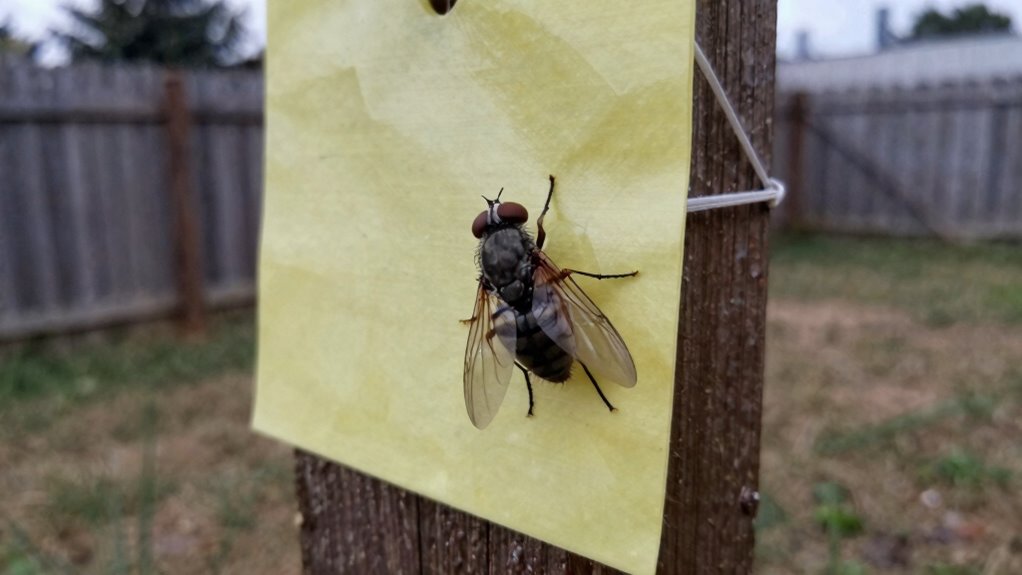
Store-bought traps are a better choice for controlling stable flies and filth flies than DIY soda bottles. These tough biting pests breed in manure and need stronger solutions to stop them.
Commercial traps use specific attractants that mimic rotting manure or animal breath. They lure flies into containers they cannot escape with simple, effective designs.
> Commercial traps use precise attractants that mimic manure and breath, trapping flies for good with simple, effective designs.
These traps are pre baited and ready to hang without any mixing or guessing. They withstand rain and wind much better than a flimsy plastic bottle.
They also target only stable flies and filth flies, sparing beneficial pollinators like bees. That makes them a smart and guilt free kill for your livestock area.
Each trap costs between ten and twenty dollars and lasts a full season. They save you from playing chemist or dealing with frustration.
For those who prefer a chemical-free pest control option, manual swatters made from durable materials offer an effective alternative without leaving toxic residues.
Hang Traps on Barn Perimeters, Fence Posts, and Entryways
Hang traps on barn perimeters using all-in-one bag traps to intercept flies before they enter. Place pheromone traps on fence posts to attract stable flies away from pastures.
Disposable sticky traps work best at entryways, catching flies at the door threshold. Near manure piles, funnel traps with bait target breeding site escapees.
For feed storage areas, bottle traps with sugar syrup lure houseflies without attracting bees. Avoid placing traps near dung beetles or predatory insects.
These helpful insects deserve a break and will handle the dirty work later. Purchasing the right fly control traps for each location makes pest management easier.
Sticky traps and bag traps are perfect for entry and perimeter fly control. Pheromone and bottle traps offer targeted solutions for specific pest problems around the farm.
Waterproof adhesive lasts up to three months outdoors in rain or sun, making these traps reliable in various weather conditions.
Let Dung Beetles and Predatory Insects Do the Dirty Work
For flies that escape sticky traps or sugar syrup, it is time to call in six legged allies that ask only for manure. Dung beetles bury manure piles, cutting off fly breeding grounds entirely.
Predatory insects like parasitic wasps then target fly pupae, consuming them from the inside out. These beneficial partnerships maintain ecosystem balance without any chemical spillage.
Dung beetles: one beetle can bury 200 times its own weight in manure daily, starving fly larvae. Parasitic wasps: tiny, non-stinging insects that kill up to 90% of fly pupae in a barnyard.
Staphylinid beetles: these ground beetles devour fly eggs and maggots, working 24/7 for free. The bottom line is to let nature’s janitors handle the mess. They don’t complain about overtime. For additional control, plant-based sprays using clove oil can paralyze and suffocate flies on contact without harming pets.
Use the 4-Step IPM System to Outsmart Flies Without Chemicals

The 4‑Step IPM system works because it focuses on sanitation, biological control, and prevention. This triple threat is something flies simply cannot beat.
Start by removing breeding sites like manure and wet organic matter. Then let dung beetles and predatory insects handle the cleanup work for you.
Keep an eye on traps to catch fly problems early before they grow. Skip the chemicals, and this method outsmarts flies with calm, low‑effort know‑how.
Pairing a fan with screens creates a bug-free zone by using physical airflow and barriers to keep flies off patios and tables.
Sanitation First Approach
Sanitation comes first because flies are basically just messy roommates who never pay rent. They multiply like it is their full-time job.
Remove their breeding grounds and you starve the problem before it starts. This means tackling wet manure, rotting garbage, and soggy hay piles where maggots thrive.
Manage manure daily by piling fresh droppings away from barns for composting. The heat kills larvae and reduces fly populations naturally.
Fix drainage to eliminate standing water and leaky faucets. Flies need humidity for eggs, so drying out their environment is key.
Time a fly predator release for best pest control results. These tiny non-stinging wasps eat fly pupae, but only after you clear breeding sites.
Start two months before fly season for effective fly management. A $40 compost thermometer and $30 predator pack beats spraying later.
Clean first and let nature finish the job. Residual protection from sprays reduces the need for frequent reapplication when used as a backup. This integrated approach saves money and keeps your barn pest free.
Biological Control Methods
Biological control is like hiring tiny assassins to do your dirty work without the paperwork. Parasitic wasps are minute insects that lay eggs inside fly pupae, killing them before they become adults.
They are harmless to people and pets. Synthetic pheromones can likewise be deployed as chemical lures that attract male flies into traps, reducing breeding.
Beneficial nematodes, microscopic worms, target fly larvae in soil. Dung beetles further help by burying manure, robbing flies of breeding sites.
These methods work best combined with sanitation for lasting pest control. Pesticides often kill these helpful bugs, so using them sparingly keeps the ecosystem intact.
It is a smarter, long-term approach to integrated pest management. For those facing a different soil-dwelling pest, a targeted bacterial option like milky spore offers decades-long control of Japanese beetle grubs while remaining safe for pets and beneficial insects.
Prevention and Monitoring
Picking tiny assassins like parasitic wasps feels almost too fun, but even they can’t do the heavy lifting alone. Prevention and monitoring are the unsung heroes of IPM, where understanding fly life cycles is everything.
Track fly emergence with sticky traps placed near breeding zones. These reveal population spikes and guide your intervention timing before infestations explode.
Remove breeding materials weekly. One pound of wet manure can produce over 1,500 maggots, so denying them damp organic matter breaks the cycle.
Set monitoring cycles into a routine. Check traps and stalls every few days to catch problems early, when a simple cleanup beats chemical sprays.
Execution matters more than gadgets. Clean stalls, note trap counts, and act fast. That is how you win without poison.
For persistent outbreaks, applying a water-based, non-toxic spray like Farnam Bronco E around barns and stables can suppress adult populations while you maintain your sanitation schedule.
Reserve Chemical Sprays for Severe Outbreaks Only
Reserve chemical sprays for severe outbreaks only to protect your farm’s ecosystem. Selective spraying means hitting only problem spots, like a surgical strike for pests.
Target specificity is key when choosing pest control products. Use GF-120 Naturalyte Fruit Fly Bait, which combines attractants with spinosad, a low toxicity compound.
This approach spares beneficial insects like dung beetles that bury manure and reduce breeding habitat. Blasting every corner with pesticide kills those helpful bugs and flies develop resistance fast.
When an outbreak hits, with more than 1,500 maggots per pound of wet manure, break out the spray. Otherwise, stick with sanitation and traps for effective fly management. You can achieve season-long effectiveness by using reusable traps with refillable bait that are odorless and safe around livestock.
It is cheaper, safer, and your ecosystem will thank you with fewer flies.
Track Fly Counts So You Know Exactly When to Act
The fly trap is your farm’s early warning system for pest control. When counts creep upward, you act before flies explode and infestations spread.
Consistent monitoring beats guessing every time for effective fly management. Fly traps with pheromone lures attract specific species, giving targeted data for your action plan.
Check traps weekly and when numbers double, it is go-time. Know your thresholds: for houseflies, 100 per trap per week means trouble and demands immediate response.
Stable flies require action at 50, and ignoring numbers invites chaos on your farm. Choose smart traps like disposable bag traps at $5 each for houseflies with pheromone lures.
Sticky traps at $3 work for smaller areas and both monitor cheaply. Log your counts daily in a notebook to track pest trends.
Spikes reveal breeding hot spots, letting you clean before infestations start. Act on data, not panic, and one trap tells you what to do.
This saves cash and sanity while keeping your livestock healthy. For outdoor areas, waterproof and UV-resistant adhesives ensure these traps remain effective in rain or direct sunlight, lasting up to three months without degrading. Buy your fly traps now to get ahead of the problem.
Frequently Asked Questions
Can I Use Citronella Candles to Repel Flies Outdoors?
Citronella candles are weak against flies outdoors. Their citronella effectiveness is low and flies ignore the scent.
Candle placement matters, but clustering multiple candles near seating creates only a smoky perimeter. This is a minor deterrent, not a real fly control solution.
Expect to spend $10 to $20 for a pack that barely works. This is like using a squirt gun on a bonfire.
For real results, combine fly traps, proper sanitation, and integrated pest management methods. The bottom line is skip candles and focus on removing breeding sites.
How Do I Stop Flies From Gathering Around My Porch Light?
Flies gather around porch lights because they see more than you think.
Switching to a lower light wattage, like 40 watts or less, makes your porch less appealing.
Traps work better than swatting, which only makes you look silly.
Place them away from the door, say ten feet out, to lure flies elsewhere.
Fewer watts plus smart trap placement equals fewer porch pests.
For the best pest control results, choose a reliable fly trap with a strong attractant.
Buying a targeted outdoor insect control product can stop flies before they enter your home.
Keep your porch light dim and your trap set for lasting relief.
Do Ultrasonic Pest Repellers Work Against Flies?
Do ultrasonic pest repellers work against flies? Short answer: not really. They blast an ultrasonic frequency range that flies mostly ignore, since these pests have simple hearing.
Add electromagnetic interference from other devices, and you get spotty coverage in your home. The big trap is pest resistance myths, but flies don’t develop habits. They just don’t care about the noise.
Additionally, device placement limits you because walls and furniture block the signal. Save your $30 for better options like a fan on the porch or a sticky trap.
For effective fly control, trust proven pest control products over gimmicks. Buy a high quality insect killer or a simple fly trap instead.
No buzz, no fuss, and you get real results for your money.
Will Planting Certain Herbs or Flowers Naturally Deter Flies?
Planting certain herbs and flowers can naturally deter flies, but don’t expect an invisible shield around your home.
Mint barriers in pots work well near patios to confuse flies, but always keep mint contained to prevent garden invasion.
Basil borders placed near doors offer mild repellent effects for insect control, though flies won’t flee immediately from your backyard.
These natural fly repellents work best as part of a broader pest management plan, not as a standalone solution.
For serious fly problems, combine herb plantings with sanitation, traps, and professional fly control products.
Consider this a helpful tactic rather than a magic cure, much like a dad joke at Thanksgiving.
How Do I Keep Flies Away From My Outdoor Dining Table?
Keep flies off your outdoor dining table by using food covers, simple mesh domes that block access while letting air flow.
Table placement matters too: set it away from garbage, compost, or animal pens, ideally in a breezy spot.
Flies hate wind, so a fan creates a natural pest control barrier that disrupts their flight patterns.
A $10 food cover can save your sanity during summer cookouts.
One friend swore by a fan to protect her patio dining; another used sticky traps nearby for extra fly protection.
Pair these tactics to find the best fly repellent for your setup.
You will eat in peace, not swatting, and enjoy effective pest management that works.
To buy smart, look for durable mesh covers and portable fans labeled for outdoor insect control.


