
How to keep flies away from an outdoor trash can starts with breaking their breeding cycle, not just swatting adults. Flies are drawn to rotting food, warmth, and moisture, so cutting off those attractants is your first real step.
A bleach scrub kills eggs and larvae hiding in the bin, but drying it in full sunlight is just as critical. Humidity alone will bring them back, so six hours of direct sun makes a lasting difference. Locking lids and heavy-duty bags seal out the scent trails that guide flies in.
Shade and distance—at least twenty feet from your house—reduce the chances of them wandering indoors. Traps can help in a pinch, but they’re backup, not a cure. Stick with these core strategies, and you’ll see the swarm go find another party.
In the full guide, you’ll get the exact bleach ratio, timing tips, and placement tricks that turn a fly magnet into a no-fly zone.
At A Glance
- Clean and bleach-scrub the bin monthly to kill eggs and eliminate odors.
- Keep trash can lid tightly sealed to block fly entry and contain smells.
- Double-bag food scraps in dark, heavy-duty bags to mask rotting odors.
- Place the bin in shade, away from house, to reduce heat and smell spread.
- Dry the bin completely after cleaning to remove damp breeding conditions.
Why Flies Invade Your Trash Can – and Never Leave
Open a trash can lid on a warm afternoon, and you’ll often find a small cloud of flies already inside. Those flies aren’t just visiting; they’re setting up a nursery for pest control problems.
A single female can lay hundreds of eggs in decaying matter, and within a day, maggots are squirming through the mess. The real driver here is fly breeding, which thrives on the damp, warm buffet of rotting food.
That’s why odor control is your silent partner in effective pest management. Smells are the signal that calls them in from blocks away.
Without managing that scent, you’re fundamentally sending out an open invitation for an infestation. So, the verdict is straightforward: stop the smell, and you stop the fly life cycle.
Tackle the source first, or every other fix is just a band-aid for your pest control needs. For a permanent solution, focus on eliminating the breeding grounds and sealing entry points. To draw pests away from the area, you can hang traps at least 20 feet from living spaces for discreet outdoor placement.
The Right Lid: Your First Defense Against Flies
Consistency matters more than cleverness when you’re fighting flies. A trash can’t lid is your first line of defense, and a tight seal is non-negotiable.
Any lid gap is an open invitation for pest entry. Check for cracks or warping and replace the lid if it doesn’t snap shut.
A model like the Rubbermaid Brute costs around $30 to $40 and uses a locking lid that seals completely. Avoid bin overflow because it forces the lid to sit crooked and creates a gap.
That invites flies just like leaving the front door open. No fancy trick beats a lid that fits for effective pest control.
For best results, pick a can with a latch or clamp. A simple secure lid is cheaper than a fly problem and quieter than a swarm.
Bottom line: spend the extra $10 for a lid that clicks. Airtight side-locking lids with silicone gaskets provide a similar pest-proof seal for pantry storage, keeping pests like weevils and moths out of your food. It is your best buy for home pest prevention.
How to Bag Waste So Flies Can’t Smell It
Even the tightest lid won’t help if flies can sniff their way to a free meal. The secret is bagging waste so smells never escape.
Start with heavy duty trash bags tied tightly. Double bag meat scraps or anything damp, since flies love wet rotting odors.
Poor trash can design like bins with hidden gaps near hinges lets those smells leak out anyway. Check seals monthly for a cheap fix.
Poor trash can design leaks odors through hidden gaps—check seals monthly for a cheap fix.
A DIY fly net draped over the can adds an extra barrier. Mesh fabric catches odors and flies alike for effective pest control. Fine mesh lids with openings smaller than 1.5 mm block pests while allowing airflow, proving that similar barrier principles apply to waste management.
Keep bags changed every few days, especially in summer heat when eggs hatch fast. Foul smelling trash signals a buffet, so seal it tight.
Flies won’t bother knocking if you use proper waste sealing techniques. This simple fly prevention method keeps your home pest free.
Bleach Scrubbing Kills Fly Eggs and Larvae Fast
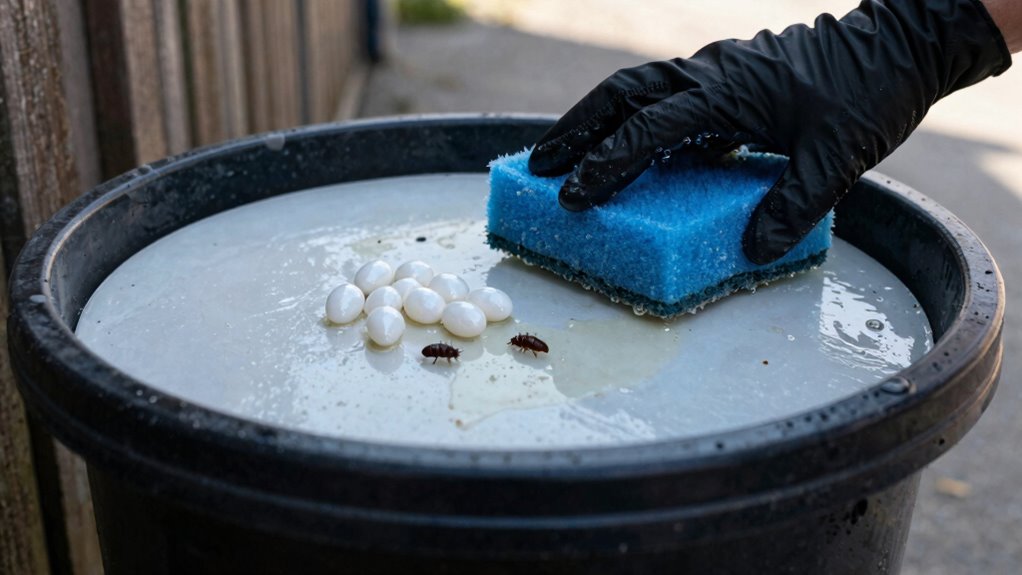
A bleach solution of about one cup of bleach per gallon of water is the fast and effective answer to a maggot infestation. The chlorine breaks down the protective outer layer of fly eggs and larvae, killing them on contact in under a minute.
For pest control, scrubbing with that mixture and letting it sit for ten minutes is the key step. This method works like a chemical eviction notice for a particularly nasty bin.
Use a half-cup of bleach per gallon with a stiff brush and a timer. You get instant fly control without any negotiation from the larvae.
Always wear gloves and ventilate the area when using bleach for sanitation. This kitchen pest solution ensures your garbage bin stays fly and egg free. Pairing this with an odor-neutralizing deodorizer can further reduce pest attraction by eliminating smells at the source.
Bleach Solution Strength
Scrubbing a trash bin with bleach works like a chemical eviction notice for fly eggs and larvae.
Getting the bleach strength right matters so you don’t waste money or irritate your lungs.
A 1:9 ratio, one part bleach to nine parts water, kills most organic residue without harsh fumes.
For routine weekly cleaning of plastic bins, this mild mix is your best bet.
When you face heavy buildup or sticky residue in summer heat, step up to a 1:5 medium strength solution.
For deep disinfecting after a fly outbreak, use a strong 1:3 ratio on metal bins.
Always start with the 1:9 mix because it is effective, cheap, and safer for casual scrubs.
Match the strength to the mess, not the fear.
For a more targeted approach, consider using enzyme-based gels that digest organic buildup and eliminate fly breeding sites deep inside pipes.
Scrubbing and Timing
The bleach scrub itself matters just as much as the ratio. A stiff-bristled brush, used with a 1:10 bleach solution, physically dislodges fly eggs and larvae from crevices where they hide.
Timing is everything: scrub bins immediately after emptying while waste residue is still moist. This routine prevents composting pitfalls like maggots colonizing organic matter and supports moisture control by eliminating the wet film that attracts flies.
Let the solution sit for five minutes before rinsing. Then dry the bin upside down in sunlight to speed drying and kill lingering bacteria.
A quick weekly scrub costs under a dollar for bleach. It disrupts the fly lifecycle entirely for effective pest control.
Mix precisely, scrub vigorously, and time it right. That combination keeps your bin fly free and your compost healthy. For ongoing drain maintenance, using natural enzyme cleaners breaks down organic waste that attracts pests like flies and maggots.
Dry Your Bin Completely to Stop Fly Attraction
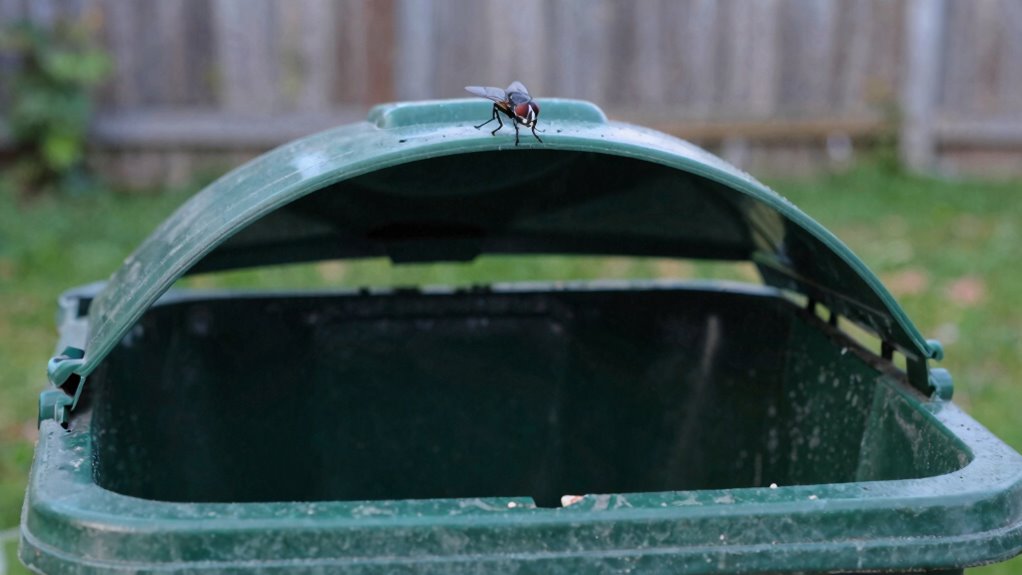
Dry bins stop flies cold because those pests breed in anything damp, not just leftover scraps.
After a bleach scrub, flip the can upside down in direct sunlight for a few hours.
Letting every crack bake dry slashes re-infestation odds dramatically.
This simple habit costs nothing and takes maybe five minutes of effort.
It beats chasing maggots later, so skip the wetness and the flies will shop elsewhere.
For effective pest control, focus on eliminating moisture to prevent fly infestations.
A dry bin is a key part of any fly prevention strategy, addressing the same principle found in plant-based repellents that avoid chemical reliance.
Keep your outdoor trash can dry to avoid attracting flies and other pests.
Scrub With Bleach Solution
One critical step, often overlooked, is the bleach solution scrub. Bleach safety demands gloves and eye protection because this solution kills fly eggs, larvae, and lingering odors.
Scrubbing frequency should be monthly, or weekly if summer heat spikes. Mix one cup of bleach per gallon of water, then scrub the bin’s interior and lid.
Rinse everything thoroughly afterward. Flies despise that sterile chlorine smell, which disrupts their breeding cycle and acts as a strong pest control measure.
A total dry-out before reuse kills any remaining dampness that flies love. Skip this step, and you are just giving maggots a clean house.
For under $3 per gallon of bleach, this cheap routine stops infestations cold. Your trash can smells less like a biology experiment, which is a win.
For added surface protection, a spray like BASF Alpine Fly Bait Spray remains effective for up to 30 days on trash can lids and nearby surfaces.
Sun-Dry Between Uses
After a bleach scrub, every bit of moisture left inside becomes a fly magnet. Dampness alone can reignite the problem within hours, so skip the rinse-and-run routine.
Flip that lid off and tip the bin on its side. Let the sun do the heavy lifting for pure moisture control.
Direct sunlight dries cracks and crevices where eggs hide. It also heats the plastic enough to discourage new visitors and support effective pest control, as steady airflow naturally deters mosquitoes and flies from landing.
A few hours of baking works wonders, especially after a deep scrub. Aim for a sunny spot, and try for six hours total for best results.
If you are in a rush, a quick towel-dry beats nothing. But sun-drying is the real winner for long-term pest prevention.
The bottom line is dry it fully. Otherwise, you will be inviting flies back for round two.
Why a Clean Trash Can Matters More Than You Think
Most homeowners never think about what’s lurking at the bottom of their trash can until the smell hits.
Cleanliness directly disrupts fly breeding cycles, and it’s more critical than bin material or feeder placement.
A single missed spot can host hundreds of eggs, which hatch within 24 hours in warm, damp bins.
This removes invisible egg deposits before they become a full pest infestation.
Flies use scent to locate food, but a clean can with dried surfaces breaks that odor trail.
Eliminating those trails reduces their drive to investigate your outdoor pest control setup.
Organic residue warps lid seals over time, but a scrubbed bin lets the lid fit snugly and bar entry.
Improving lid seal performance is a key step in effective fly prevention.
Clean bins mean fewer flies to kill, saving money on traps and sprays.
Reducing the need for baits is a smart, cost effective approach to fly control for homeowners.
Scrub with soap and bleach monthly, dry thoroughly, and watch visits drop.
A half hour cleanup beats a summer of swatting and keeps your trash can maintenance on track.
For additional odor control, a SealRay Carbon Trash Can Odor Neutralizer seals gaps around the lid to block flies and prevent maggots.
Put Your Trash Can in the Worst Spot for Flies
Direct sunlight makes your trash can a breeding ground for flies by heating the interior and speeding up egg development in just hours. To stop flies in their tracks, place your bin in a shaded spot. But avoid damp corners, as moisture attracts pests and helps them thrive.
A dry, shaded location is the worst spot for flies to call home. Keep the can away from walls and at least 20 feet from your house for effective pest control.
This simple fly prevention tip also reduces odors and keeps your garbage area cleaner. For the best garbage can pest control, choose a spot that stays cool and dry. Your trash removal routine will be more pleasant with fewer flies buzzing around.
Placing natural oil repellent pouches nearby creates an invisible scent barrier that deters flies without chemicals.
Direct Sunlight
Direct sunlight raises the internal bin temperature, speeding up waste decomposition and making it smellier. Warmer bins dry out food scraps faster, releasing more airborne particles that flies detect from blocks away. Heat from the sun reduces the effectiveness of repellents, which break down quicker in UV rays. Maggots, needing warmth to hatch, can mature in under 24 hours in a sun-baked can. Natural repellents need frequent reapplication to maintain effectiveness against stubborn pests. Stick to a shaded corner for effective fly prevention. It keeps things cooler and your trash less inviting to pests.
Shaded, Damp Corners
A shaded corner might seem like the safe play, but a damp one turns your trash can into a fly nightclub.
Shaded corners by themselves just reduce heat, while damp corners are the main event for pest control problems.
Dampness from sprinklers, rain, or leaky gutters creates a breeding paradise for flies.
A single female fly lays up to 500 eggs, and they hatch in 24 hours.
That is a lot of grandkids buzzing around your property.
Avoid damp corners at all costs and move the bin to a dry, sunny spot.
Inspect the area after rain, as puddles or muddy ground are red flags for infestations.
Use a can with a sealed lid like the $35 Rubbermaid Brute to block access and prevent fly entry.
To further eliminate any standing water that might attract flies, consider adding Bti-based biological larvicides to small puddles or damp ground near the bin.
The verdict is never let your trash can chill in a damp corner.
Dry, sunny, and sealed is the only way to keep flies away and maintain effective pest management.
Shade and Distance: 20 Feet Keeps Flies Away
Shade keeps your garbage can cool and less attractive to flies. Constant shade under a tree or awning reduces the heat that draws pests in.
Place your bin at least 20 feet from doors or windows. Flies naturally travel short distances from breeding sites, so this gap works as a simple pest control barrier.
Direct sun makes odors escape faster from any can. Even sealed cans become fly magnets when hot, so avoid those heat traps.
A breezy, shaded corner helps disperse smells better. Still, sunny spots hold odors close and invite more fly traffic.
The bottom line is simple. Cool shade plus distance dramatically cuts fly activity around your home. Since lingering odors attract pests, using mosquito repellent coils can help repel flies in the immediate area around the bin.
Traps and Baits That Work for Outdoor Trash Cans
Even the best distance and shade routine can still let a few determined flies slip through. That is where traps and baits become the backup plan, often the deciding factor in winning the war.
Light traps, like the Victor M380, use ultraviolet bulbs to lure flies onto a sticky glue board. There is no zapping and no mess, just silent, reliable capture near the bin’s entry point. For effective outdoor use, some high-voltage models feature a 4200V grid that zaps mosquitoes, flies, moths, and wasps on contact with a safety outer housing and no chemicals.
For long‑term fly suppression, bait stations are the heavy hitters. Place granular bait, often imidacloprid‑based, in stations the kids and pets cannot access.
The flies feed and then die elsewhere. Light traps cost $40 to $70 and are indoor/outdoor rated; change glue boards monthly.
Bait stations run $15 to $25, with refill pouches costing $10 and lasting two weeks per pouch. Bottom line: use light traps for instant kills and bait stations for sustained control.
Neither replaces bin hygiene, but together they seal the cracks and provide the best outdoor pest control solution.
When to Call a Pro for Stubborn Fly Infestations?
With traps baited and lids sealed, the occasional fly is a nuisance but a persistent swarm is a message. When hundreds keep returning in spite of clean bins, it is time for professional extermination from a pest control service.
They bring heavy duty chemicals and breeding site detection that DIY methods miss. Hidden sources like dead rodents in walls or compromised compost piles are identified.
They apply restricted use larvicides to kill maggots before they hatch, breaking the cycle fast. They seal entry points with commercial grade caulk to prevent future invasions.
Follow up visits ensure the swarm does not return next week, saving your sanity. If you have scrubbed, baited, and sealed yet still see a cloud, call a pro for stubborn fly infestations. Reusable outdoor traps capture up to 20,000 flies using non-toxic baits, but a persistent swarm indicates a deeper problem.
An infestation costing 150 to 300 dollars for initial treatment is cheaper than sleepless nights. Professional extermination eliminates the source and restores your peace of mind.
What Not to Do: Common Mistakes That Attract Flies
Before calling in the pros, let’s admit some things we all do that basically roll out the welcome mat for flies. Leaving the bin lid cracked is like sending a handwritten invitation for a pest problem.
Using a light colored trash bag is a bad move. It lets sunlight and odors leak through, signaling dinner is ready from across the yard.
Another mistake is tossing fly repellent plants near the can, thinking they work magically. They don’t, those basil or lavender sprigs just rot and become fly food.
The real fix for effective fly control is simple. Seal everything in dark, heavy duty bags to prevent pest attraction.
Keep your bin shaded and scrub it dry weekly to stop fly infestation. Otherwise you are just breeding a maggot motel, not solving the fly problem.
Frequently Asked Questions
Can I Use Vinegar as a Natural Fly Repellent?
Vinegar can serve as a temporary fly repellent, but you need a concentration of at least 5% acetic acid for it to work. Spray it directly onto your trash can’s surface, and the strong odor will disrupt flies’ attraction to waste and keep them away for a short time.
Unfortunately, this is not a permanent fix for your pest control needs. The scent fades quickly, especially in heat, so you must reapply the spray daily to maintain any barrier.
For the best results in fly prevention, combine this step with sealing your trash can lids and performing regular cleaning. It is a simple, low cost addition to your home pest control routine, but it is not a standalone solution.
If you want a more reliable fly control method, look into professional grade fly traps or insecticidal sprays designed for long lasting outdoor use. These products offer the durable protection that vinegar simply cannot provide.
Are There Specific Plants That Repel Flies From Trash Cans?
Yes, certain plants can help repel flies from your trash cans. Mint plants and lavender bushes release strong essential oils that flies naturally dislike.
Plant them near your bin for a mild pest control effect, but remember they aren’t a miracle cure. Mint spreads like crazy, so keep it in a pot to avoid a garden takeover.
Lavender needs full sun and well drained soil to thrive. Both plants look nice, smell pleasant, and offer a gentle fly deterrent for outdoor trash storage.
For the best results in fly prevention, combine these plants with a sealed lid and regular bin cleaning. Think of them as a friendly sidekick, not the hero of your fly control plan.
If you want a stronger fly repellent solution, pair these plants with a quality trash can deodorizer or insecticidal spray. Buy a durable bin with a tight sealing lid to maximize your outdoor fly management efforts.
How Often Should I Replace My Trash Can Itself?
Replace the trash can itself every 3 to 5 years, or sooner if the lid doesn’t seal tight.
A warped rim or rusted spot is a fly’s open invitation to breed and invade your home.
Trash bin material matters a lot for pest control.
Thick plastic lasts about 3 years, while galvanized steel lasts closer to 5 years if kept dry.
Check lid replacement frequency seasonally, but a good seal is non negotiable.
When the lid fails, replace the bin to avoid a costly maggot infestation.
This simple swap is cheaper than hiring an exterminator for a full blown rodent or fly problem.
For the best pest prevention, look for a durable trash can with a tight locking lid.
Will Citronella Candles or Torches Help Keep Flies Away?
No, citronella candles or torches will not reliably keep flies away. Their primary target is mosquitoes, not common fly species.
Citronella effectiveness against flies is minimal, because flies are drawn to organic waste, not deterred by scent. Flies prioritize food sources over mild repellent smells, so the candle’s aroma won’t stop them from landing on your trash or compost.
Torches only work in a small radius with wind limitations, making them impractical for most outdoor fly control. A tight lid and regular bin cleaning, costing under $20, offer far better results for fly prevention.
For effective pest control around your home, focus on fly bait stations, sticky traps, and proper sanitation instead of citronella candles. If you want a smart purchase for mosquito repellent, citronella can work, but for flies you need a different strategy.
Bottom line: skip the citronella dad quip, your trash can isn’t a backyard BBQ. Invest in trash can hygiene and targeted fly traps to solve the problem for good.
Do Ultrasonic Pest Repellers Work for Outdoor Trash Flies?
Ultrasonic pest repellers won’t stop outdoor trash flies because their high frequency sound ignores fly biology. These devices send out signals above 20 kHz, which simply doesn’t bother flies at all.
Research shows ultrasonic effectiveness for flies is nearly zero, making these gadgets more marketing hype than a real pest control solution. If you are searching for outdoor fly deterrents, a tight lid on your trash bin is your best weapon.
Regular cleaning of your garbage area is another essential step in effective trash fly control. For a cheap and proven fix, try a sticky trap near the bin opening.
A well sealed outdoor trash can outperforms any plug in gadget by a long shot. Save your money for practical fly removal strategies that actually work.


