
To find a drain fly breeding site, you don’t need a magnifying glass or a PhD—just a stiff brush and a little guts. Scraping the slime from inside your drain pipe is the fastest way to spot the pale, quarter‑inch larvae with dark heads that are the real culprits.
If you don’t find any wrigglers in the gunk, the source is hiding somewhere else. A simple clear tape trap over the drain overnight will confirm if adults are emerging while you sleep.
Kill the biofilm, and you kill the cycle—but only if you hit the right spot. In the next section, we’ll walk through where else those tiny pests might be breeding.
At A Glance
- Place clear packing tape sticky side down over suspected drains for 24 hours to trap emerging adults.
- Inspect sink overflow holes and toilet rims with a flashlight for biofilm and larvae.
- Remove drain covers and scrape pipe walls with a stiff brush to expose hidden larvae.
- Check slow-draining pipes and foul odors signaling sludge and active breeding sites.
- Monitor nightly for three or more flies near drains to confirm a high-output infestation.
Why Biofilm in Drains Causes Repeat Infestations
Biofilm in drains is a slimy mix of bacteria, soap scum, and organic gunk that sticks to pipe walls like a stubborn houseguest. That layer is a buffet and nursery for drain flies, so you will keep seeing them no matter how many you swat.
Biofilm in drains feeds drain flies, so you’ll keep seeing them no matter how many you swat.
Poor pipe hygiene lets that film thicken, protecting eggs and larvae from surface treatments like bleach. Scrubbing removes it, but missing even a small spot lets the problem rebound instantly.
The gooey texture traps dampness and food scraps, creating a perfect breeding ground for more pests. Without breaking up that biofilm, you are just swatting adults while new babies hatch below.
Invest in a stiff drain brush for about eight dollars and start weekly scrubbing. That is your best pest control move to stop the cycle and truly fix pipe hygiene for good. Thick, enzyme-based gels can also be poured into drains overnight to digest organic buildup and disrupt breeding sites deep inside pipes.
Where Drain Flies Are Most Active in Your Home
Drain flies love the damp, dark areas you rarely clean, like bathroom drains and sink pipes.
Their nightly activity peaks after dark, making them easy to spot near lights.
You can identify them by their slow, drunken zigzag flight pattern that is nothing like a mosquito.
Flip on a bathroom lamp at night and watch for tiny fuzzy insects orbiting the bulb.
They are weak fliers, so they stay close to their breeding grounds in wet drains or clogged pipes.
If you see them clustering by a window or sink at night, that drain fly infestation is likely nearby.
Use targeted drain fly treatments to break their life cycle in those damp zones.
Watch for their nightly light show to pinpoint where professional pest control may be needed.
Gel or foam formulas dissolve organic sludge within hours to target breeding sites quickly.
The Top Indoor Breeding Sites to Check First
Start inspecting the most obvious places first. Sink drains and their traps are where biofilm and sludge create a perfect nursery for flies.
Check underneath leaky faucets next. The constant drip keeps surfaces damp, making them a prime alternative breeding site.
Pet water bowls are another sneaky source of pest problems. Stale water and organic matter from drool or food bits easily breed flies if left unchanged for days.
Don’t forget shower drains, especially in rarely used bathrooms. They are like a swamp in miniature and a key spot for fly control.
Inspect toilet bowl rims and the base of the tank. Dampness and debris often gather there, inviting unwanted pests.
For a quick test, place clear tape over a suspect drain overnight. If adults appear, you have found your culprit and can target your treatment.
Check these spots first and you will save hours of pointless hunting elsewhere. Focus on these high-risk areas for effective pest elimination.
How to Inspect Drain Fly Larvae and Slime in Sink Drains
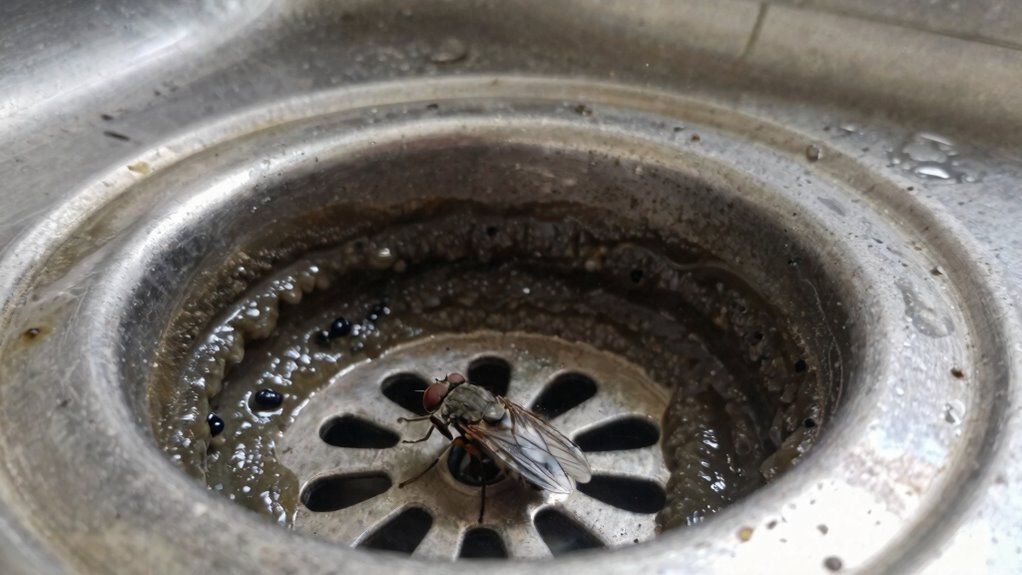
The first step in inspecting sink drains for drain fly larvae and slime is removing the drain plate. A flashlight reveals the gunk inside.
Scrape this organic matter thoroughly for biofilm removal using a stiff brush. It is gross but necessary for effective pest control. The slime itself smells like a forgotten science experiment.
Larvae hide in that sludge. Larval identification requires a magnifying glass to spot tiny worm like creatures wriggling in the muck.
They are pale and about a quarter inch long with a dark head. If you see them you have found the breeding site.
Check for slow drainage as it means a deep blockage. A foul odor signals biofilm decay and active pest activity.
Scrape all visible buildup then rinse. No larvae means no active breeding site so do not panic.
Simple biology not sabotage is the key to drain fly elimination. Professional drain treatment may be needed for stubborn infestations, and Green Gobbler enzyme sticks offer a monthly maintenance option that gradually destroys odors and keeps drain flies away.
How to Spot Drain Flies in Overflow Holes and Pipes
Overflow holes are like hidden apartments for drain flies. They stay dark, damp, and easy to miss. These small openings in sinks and tubs often harbor biofilm and slime. That makes them prime breeding spots for these pests.
Identifying the fly species is key. Drain flies are fuzzy, moth like, and flutter slowly near drains at night. When inspecting overflow holes, use a flashlight to peer inside. Look for wriggling larvae or adult flies resting on the inner edges.
Identifying the fly species is key. Drain flies are fuzzy, moth-like, and flutter slowly near drains at night.
Check for a slimy, dark buildup inside the overflow hole. Scrape it with a pipe cleaner to sample the material. Place clear tape sticky side down over the hole at night. You will capture emerging adults by morning for a positive identification.
Look for slow drainage or gurgling sounds. These are signs of blockages that harbor breeding material. Repeat inspection weekly to confirm the source. Flies can reappear if slime remains in the pipes.
The verdict is that overflow holes are sneaky breeding sites. A flashlight and tape will catch them quickly. Using non-toxic, environmentally friendly adhesives can help manage adults that emerge from these hidden spots.
Why Toilet Rims and Tank Bases Are Prime Breeding Spots
Toilet rims and tank bases attract drain flies because they stay warm and damp. Trapped organic debris under the rim provides a perfect food source for developing larvae.
Condensation from the tank base creates constant humidity. This moisture, combined with residue, turns the area into a hidden breeding ground.
Gaps in the wax seal allow leaks that rot organic matter. Floor puddling from tank or seal leaks extends the problem area.
Sludge buildup at pipe joints from slow leaks adds even more fly habitat. These spots are often missed during routine cleaning.
To inspect, use a flashlight to check under the rim. Gently peel back the wax seal to look for gaps.
A cheap wax ring, costing about $5, fixes seal gaps quickly. Stop your toilet from becoming a drain fly motel with this simple pest control fix. Maintaining humidity below 50 percent with a dehumidifier prevents these pests from reproducing.
How to Check Bathtub and Shower Drains for Drain Flies
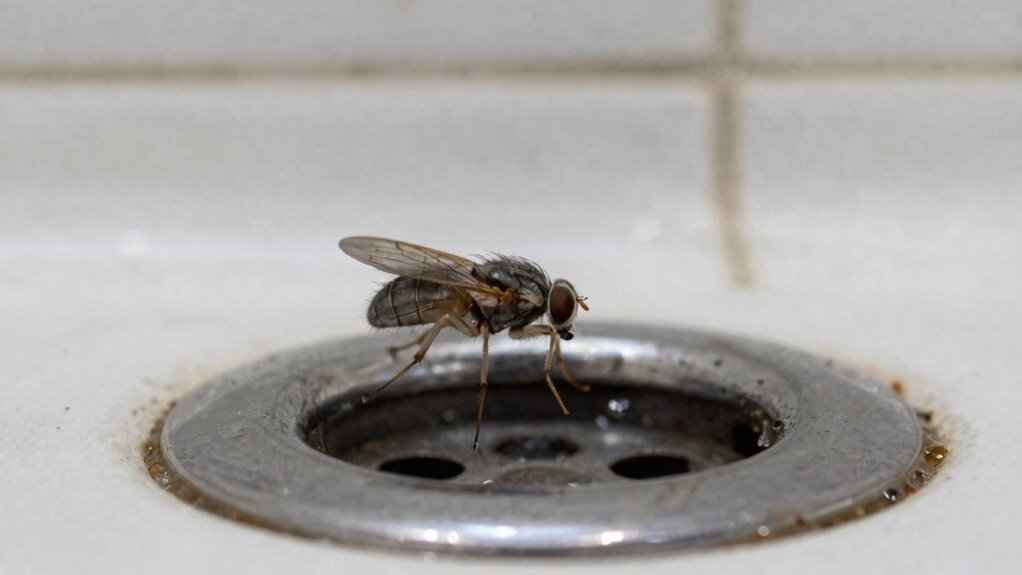
To check bathtub and shower drains for drain flies, start by removing the drain cover. Use a stiff brush to scrape biofilm from inside the pipes, then inspect the collected slime for larvae.
That buildup is a prime breeding site for drain fly infestations.
Finally, place clear tape sticky side down over the opening to trap emerging adults. This simple pest control method confirms an active infestation and guides your drain maintenance plan.
If you spot larvae or flies, a professional drain cleaning service can help. Regular weekly use with enzyme-based cleaners prevents organic gunk from hardening into serious blockages that attract pests.
Remove Drain Cover
First, remove the drain cover. It is often held by just a single screw, but sometimes a stubborn twist-lock ring. A flathead screwdriver usually does the trick, no swearing required. Once it is off, the real work begins.
Scrape visible gunk from the underside of the cover and the drain opening using an old toothbrush or small wire brush. This job is slimy but satisfying. Focus on biofilm removal around the drain rim and inner pipe walls. This is where drain flies lay eggs and where the goo feeds their larvae. Employ pipe scraping techniques with a flexible drain brush to dislodge hidden sludge deeper in the pipe. This saves you from calling a plumber.
Inspect the cover holes for stuck debris or tiny worm-like larvae. A good flashlight reveals everything you need to see. Consider an indoor bug zapper for any flying adults that escape during cleaning.
This step is gross but essential for pest control. If you skip it, the flies win.
Bottom line: remove, scrape, inspect, and repeat until clean.
Inspect Pipes for Slime
The hardest part is usually over. With the drain cover removed, it’s time to inspect pipes for slime.
Grab a flashlight and peer deep into the pipes, especially around pipe joints. These connections, where two sections meet, are prime spots for biofilm that slimy, gunk-filled layer drain flies love.
Hidden leaks in pipe joints create a perfect, damp nursery for pest infestations. Look for slow drainage or foul odors, as these signal buildup needing immediate treatment.
Scrape any slime from inside the pipe with a stiff brush. Check it under a magnifying glass for tiny, wriggling larvae.
If you find them, you’ve nailed the breeding site and can apply targeted pest control. A friend once joked, “I found more slime in my pipes than on my teenager’s phone.”
Just don’t assume one clean drain solves all problems. Check all bathtub and shower drains thoroughly, as hidden leaks can feed multiple colonies and require professional pipe maintenance. For outdoor breeding sites, granular tick treatments can help disrupt the pest lifecycle in damp shaded areas near the home.
Tape Trap Over Opening
A tape trap over the drain opening is one of the simplest ways to confirm whether those fuzzy little flies are actually coming from your bathtub or shower. You just need clear tape, sticky side down, pressed firmly over the drain overnight.
It works like a charm, and it costs nearly nothing. If flies emerge, they will get stuck.
Use clear packing tape, not the cheap stuff, so you can see captured flies without lifting the trap. Apply a thin smear of petroleum jelly around the tape edges to seal gaps. Those tiny flies are crafty escape artists.
Compare results from multiple drains to pinpoint the breeding site. These flies often spread across several pipes.
Commercial sticky traps work too, but tape is quicker and cheaper for a simple pest control test, and many models are UV-resistant and waterproof for use in other damp areas. Check the tape each morning.
If you see flies, you have found the source. No doubt about it.
Use a Simple Tape Trap to Confirm an Active Breeding Site
To confirm an active drain fly breeding site, a simple tape trap is your cheapest detective tool. Stretch clear packing tape sticky side down over the suspected drain opening. Secure the edges lightly so it does not seal completely. Place the trap on drains where you inspected for biofilm, not just any sink. Leave it for 24 hours, then check for stuck adult flies.
Their presence proves emergence, not just lurking. Look for adult flies measuring 2 to 3 mm with fuzzy wings. That means active emergence is nearby. Check the tape after 12 to 24 hours for recent breeding activity. A count of three or more flies per night indicates a high output site.
Check for live versus dead flies to judge freshness of the site. Monitor weekly over five days to catch intermittent hatches and confirm stubborn sites. If no flies appear, clean the drain and retest. Sometimes you are just early. This cheap trick beats guessing and saves you from pouring chemicals into innocent drains. Use this pest control method to pinpoint breeding grounds without wasting money on ineffective treatments. Placement along walls, corners, and known pest pathways ensures maximum effectiveness for other pests as well, though for drain flies the focus remains on the drain opening itself.
How to Kill Drain Fly Larvae in Drains and Pipes
Once you have a tape trap confirming an active breeding site, the real work begins. You need to kill the larvae living in the slime inside your pipes.
Mechanical scrubbing with a stiff brush removes the biofilm they feed on. Chemical or heat methods finish the job for good.
Pour boiling water weekly down drains. It instantly kills larvae without harsh chemicals, but repeated doses are needed to reach deep colonies.
Use a thick enzymatic cleaner like Bio-Clean. This pest control product digests organic slime over several days, starving the larvae naturally.
Try natural repellents such as a baking soda and vinegar fizz. Use half a cup of each followed by hot water to disrupt breeding spots with less toxicity.
Apply steam treatment with a handheld steam cleaner inside overflow holes and pipes. This reaches hidden corners and cooks larvae on contact.
Pick one method and repeat for a week. Consistency beats aggression here because slime regrows fast. Using biological controls can break down organic waste without harming pipes or the environment.
Where Outdoor Sites Like Septic Tanks and Gutters Hide Infestations
Septic tanks serve as ideal breeding grounds for drain flies, with their warm filter beds and sludge offering endless space for infestations. Gutters clogged with leaves and standing water create another inviting hotspot for pest activity. For outdoor control, homeowners can deploy non-toxic attractant cartridges that use natural dehydration instead of poisons. These flies can easily travel from outdoor sites straight into your kitchen sink. Inspecting these areas first prevents homeowners from mistakenly thinking the problem is only indoors. A thorough outdoor pest inspection should target both septic systems and gutters. Professional pest control can identify hidden breeding sources before they worsen.
Septic Tank Sources
Even the most thorough indoor drain cleaning won’t reach a hidden breeding site. Outdoor sources like septic tanks and gutters often become the stubborn enemy you cannot see.
Septic tanks are a prime suspect, especially if you have noticed flies near bathroom or laundry drains. The key is checking your septic tank location for any cracks or loose lids.
A tank too close to the house lets flies sneak inside through foundation gaps or pipe entries. Sewage pipe leaks create sludge pools that feed thousands of larvae underground.
Inspect the tank’s vent pipe for fly activity. Flies often cluster around it, especially at dusk.
Open the tank’s access lid cautiously and look for wriggling larvae on the surface scum. A failing baffle or cracked tank can breed flies for months.
Fix the tank, and you fix the flies for good. Professional pest control for septic systems stops the infestation at its source. For ongoing outdoor protection, a vapor-based treatment can last up to four months inside the bin.
Gutter Breeding Hotspots
Gutters may seem harmless, but they rival septic tanks as a hidden breeding site for drain flies. Leaves, dirt, and standing water create a perfect biofilm buffet, the slimy layer flies love.
Inspect gutters, especially where downspouts curve or connect. Look for slow drainage, dark sludge, or adult flies resting nearby.
Cleaning gutters is step one, but stubborn infestations need more. Enzymatic applications, those bacteria-based cleaners that eat organic gunk, work well if you can safely pour them into downspouts.
For broken or sagging sections holding water, pipe replacement options like seamless aluminum gutters stop pooling permanently. You can expect to pay $5 to $10 per foot installed, which beats repeat fly control service calls.
The verdict is simple: check gutters before calling a pro. If cleaning fails, use enzymes for targeted drain fly elimination.
If that fails, replace the pipe to eliminate the moisture source. Don’t let a gutter turn into a fly motel, and remember that regular gutter maintenance is your first line of defense against pest infestations.
Professional pest inspection often starts with these overlooked spots, so ask your exterminator to flush downspouts during a routine visit. For DIY homeowners, a simple gutter scoop and hose flush can reveal problem areas before larvae hatch. Applying food-grade diatomaceous earth around dry gutter areas can also help create a pest barrier against any crawling insects.
When to Call a Pro for Inaccessible or Recurring Drain Flies
Three situations call for a professional: inaccessible breeding sites, recurring infestations after DIY attempts, and hidden plumbing issues.
Professional services are your best bet when hidden sources lurk behind walls or under slabs.
Professional services are your best bet when hidden sources lurk behind walls or under slabs.
These are areas no scrub brush can reach.
Check wall voids or crawlspaces where leaky pipes create unseen, damp breeding grounds for drain flies.
Look for recurring swarms after your own drain cleaning efforts.
This signals a deeper, hidden source that needs expert pest control.
Sewage backups or septic tank issues require heavy equipment and expertise.
Suspected broken pipes under concrete also mean the cost of DIY repair is higher than calling a pro.
When your fly traps stay full or you smell something funky near the foundation, don’t gamble.
A pro’s inspection, costing $150 to $300, beats buying endless sprays.
Professionals may also use tamper-resistant bait stations to address secondary pest issues near these inaccessible sites.
Frequently Asked Questions
Can Drain Flies Come Through Gaps Around Pipes?
Yes, drain flies can get through gaps around pipes. That gap is an open invitation for adult drain flies to wander into your bathroom or kitchen.
Plugging that opening with caulk or expanding foam is an easy first step. It stops them from entering your living space, but it won’t eliminate the infestation.
The real breeding site is the slimy biofilm inside your drain lines. That’s where the larvae feed and mature, so cleaning the drain is your best pest control solution.
For a permanent fix, use a drain gel or a biological cleaner to break down that organic gunk. Professional grade drain treatments are a smart purchase for anyone dealing with recurring drain flies.
Think of the gap as a door, not a nursery. Focus your pest management on the drain itself to stop the life cycle for good.
Do Drain Flies Bite or Spread Disease?
Drain flies do not bite humans. Their primary concern is disease transmission and allergen potential.
These flies breed in slimy, bacteria filled drains. They pick up pathogens on their hairy bodies and fuzzy wings.
When they land on food or surfaces, they can spread those germs. Plus, their decomposing body parts can trigger allergies or asthma symptoms.
It is less a Holy Grail and more a gross, avoidable mess. Still, professional drain cleaning, costing $150 to 300, is the fix.
The bottom line is they are filthy, not fanged. For reliable pest control, consider a targeted drain fly treatment to stop the infestation.
How Long Do Drain Flies Live Indoors?
Adult drain flies indoors typically live one to two weeks. Their life cycle, however, is longer: eggs hatch into larvae that feed on slime in drains for up to 24 days, then pupate for a couple of days.
That stuck fly on your mirror is on its final, short vacation. Adults are weak fliers, and their indoor nesting site is that same gunk-filled drain.
Cleaning the pipe is your best pest control tactic. You kill the next generation before they even get wings.
For long term drain fly removal, use a enzyme based cleaner or a specialized bio foam. If you need fast results, a commercial drain fly spray targets adults on contact.
Buying a drain brush and a bacterial drain cleaner is a smart purchase for homeowners. This combo stops infestations at the source and keeps your pipes fresh.
Can Drain Flies Breed in Garbage Disposals?
Yes, absolutely. Garbage disposals create a perfect nursery for drain flies. Food scraps and dampness form a slimy biofilm packed with bacteria. This is a drain fly buffet that attracts infestation.
The unit’s dark, damp interior gives adult flies plenty of gaps to hide and lay eggs. They don’t care if you run it. They love the leftover gunk that builds up over time.
To break their cycle, clean the splash guard and grinding chamber with a stiff brush and enzyme cleaner. Check under the rubber baffle. That spot is their favorite condo and a prime target for pest control treatment.
If you want a lasting solution, look for a professional grade drain fly treatment. Buy an enzyme based cleaner specifically designed for garbage disposals. Pair it with a good brush to remove the slimy biofilm.
Regular maintenance stops drain flies from breeding in your kitchen. It also prevents clogged drains and odors. Smart pest control buyers know that prevention beats spraying every time.
Will Bleach Alone Kill Drain Fly Larvae?
Bleach alone will not reliably kill drain fly larvae. It may kill some on contact, but it fails at biofilm removal, leaving the slimy organic layer intact where larvae live.
The larvae lifespan is about two weeks, so they’ll return from surviving eggs. Bleach‘s short-lived fizz, though satisfying, misses the deeper sludge you can’t see.
For a real fix, use an enzyme cleaner or a stiff brush. Think less fireworks and more scrubbing for a lasting drain fly treatment.
That is the bottom line if you want a permanent pest control solution. For best results, pair a professional grade enzyme drain cleaner with mechanical cleaning to target the breeding grounds.


