
House fly, blow fly, and flesh fly infestations each signal a different sanitation failure, so identifying them quickly saves you from guessing wrong. House flies are gray with four stripes and breed in wet trash, while blow flies show a metallic blue or green sheen and target fresh carrion.
Flesh flies are bigger, have three stripes and a checkered red-tipped abdomen, and they drop live larvae on old meat or pet waste. Knowing which fly you’re dealing with matters because the fix changes completely—garbage removal, dead animal search, or yard cleanup.
All three carry over a hundred pathogens like Salmonella and E. coli, so the stakes go beyond annoyance. This guide covers how to tell them apart, what draws each one in, and the exact trap or spray that works for each type.
If you’re seeing dozens inside, you’ll also learn how to trace the buzzing to the source fast. Stick with this breakdown to pick the right control step without wasting time on products that won’t work.
At A Glance
- House fly: gray, quarter-inch, four thoracic stripes; blow fly: metallic blue, green, or bronze.
- Flesh fly: larger, up to half-inch, three stripes, checkered abdomen with red tip.
- House flies breed in wet garbage; blow flies in fresh carrion; flesh flies in old meat.
- All three transmit pathogens: house flies cause food poisoning; blow flies spread E. coli.
- Moisture control (50-60% dampness) prevents larvae development for all three species.
How to Tell House Flies, Blow Flies, and Flesh Flies Apart by Appearance
Fortunately, telling these flies apart only requires a close look at their color and stripes. The house fly has a gray body about a quarter inch long with four dark stripes on its thorax and a sharply curved wing vein. It is the most common pest you will encounter in homes. Blow flies have a metallic blue, green, or bronze sheen that makes them look like tiny jeweled cars. Flesh flies are larger, up to half an inch, and show three stripes on the thorax plus a checkered abdomen often with a red tip. Their larvae are useful in forensic entomology for estimating time of death. For pest control, identifying the species helps you choose the right treatment. Blow flies and flesh flies thrive on carrion, but many are beneficial decomposers breaking down carcasses and returning nutrients to the soil. A fogger that kills roaches, ants, fleas, and spiders also targets these flying pests on contact.
Why Correctly Identifying the Fly Species Matters for Your Home and Health
Identifying the fly species in your home actually matters because the health risks and infestation source clues differ sharply between them. A house fly is usually just a nuisance from garbage nearby, but a blow fly or flesh fly indoors often means a dead animal is rotting in a wall or attic.
Getting the identification right tells you whether to clean the trash bin or start searching for a rodent corpse. For effective pest control, look for topical clues like buzzing near windows or maggots in hidden spots.
Correctly identifying flies helps you target the source of the infestation and reduce health hazards. If you spot a blow fly, call a pest control service to locate and remove the decaying animal.
A flesh fly inside your home can signal a dead rodent in the attic or crawlspace, so prompt inspection is essential. Using fly traps or baits near garbage can prevent house fly problems, but blow flies need professional removal.
For ongoing indoor control, UV light traps with sticky cards are ideal for catching assorted flying pests quietly and without toxins.
Understanding fly species supports buyer-intent decisions like scheduling a home inspection or buying exclusion products. Always match your response to the fly type to protect your family and property.
Health Risks Explained
The scariest thing about flies isn’t their buzzing or their habit of landing on your sandwich; it’s what they leave behind. Each species carries a unique disease menu, and house flies alone harbor over 100 pathogens, causing everything from food poisoning to bovine pink eye.
Blow flies transmit Helicobacter pylori and E. coli, while flesh flies spread dysentery and cholera. These filth flies also trigger fly allergies, which can worsen asthma in sensitive households.
Population forecasting, knowing when warm weather will spike their numbers, helps you time prevention and pest control treatments. But identification is the real game changer for effective fly removal.
A flesh fly infestation signals a dead animal nearby, often in a wall void or attic. An indoor blow fly suggests a rodent carcass, so you’ll need to locate and remove that source fast.
Pinpoint the species, target the source, and cut the health risk quickly with targeted fly control products. For ongoing protection, schedule professional pest inspections before peak season hits. Using non-toxic, food-based baits keeps children and pets safe while attracting flies away from trash.
That way, you stop the disease cycle before it reaches your kitchen, pet food, or family.
Infestation Source Clues
Since house flies, blow flies, and flesh flies look similar to the untrained eye, you might just swat them all and move on. But that is a mistake, because each species points to a different infestation source and saves you from a wild goose chase.
A house fly boom means rotting garbage or manure is nearby. Check your dumpster placement, because if it is too close to your door you are inviting a population explosion.
Flesh flies often signal a dead animal in a wall or attic. Blow flies are drawn to carrion like a forgotten rodent.
The clue is simple: house flies swarm trash, flesh flies prefer corpses, and blow flies love open wounds on dead things. Correct ID tells you whether to clean the dumpster or tear into a wall for professional pest control removal.
Bottom line: do not guess, identify. Save your sanity and your nose with targeted pest management. For persistent infestations, products like BASF Alpine Fly Bait Spray offer residual power lasting up to 30 days for targeted control.
Where Each Filth Fly Breeds: Hidden Problem Spots to Inspect
Why do dumpsters, compost bins, and the occasional forgotten bag of potatoes keep fueling these fly invasions? In urban entomology, these three pests target distinct breeding zones.
House flies prefer wet, decaying matter, like leaky garbage bags or spilled compost. Check under dumpster lids for that telltale damp residue.
House flies thrive in wet, decaying matter like leaky garbage bags or spilled compost.
Blow flies are drawn to fresh carrion, so inspect dead rodents in walls or pet waste bags left too long in the sun. Flesh flies, those with the checkered abdomens, breed in old meat and animal droppings, common in dog parks or outdoor trash piles.
Integrated pest management demands a sweep of these hidden spots, and a professional fly control service can help you map out high-risk zones. Remove the breeding source, and the flies vanish.
That forgotten potato bag? Toss it. Your problem likely starts there, so a routine waste audit and sanitation service visit can stop infestations before they spread. For outdoor areas, non-toxic bait traps can safely drown flies without using harsh chemicals.
How House, Blow, and Flesh Fly Life Cycles Differ and Why That Matters
House fly eggs can become adults in as little as six days, while blow flies take around fifteen. Flesh flies, on the other hand, develop through four distinct stages before reaching maturity.
All three larvae need 50 to 60 percent dampness to thrive, so damp garbage or manure becomes a breeding paradise. Dry conditions stop them cold, which is why moisture control is a key pest control tactic for fly prevention.
Indoor blow fly or flesh fly activity often signals a hidden animal carcass, like a rodent that died inside a wall. This is a strong indicator that your sanitation routine won’t solve the issue, so professional fly extermination may be necessary.
If you spot adult flies near vents or baseboards, inspect for dead pests and remove them promptly. For persistent infestations, targeted insecticide treatments or a pest management professional can break the lifecycle fast.
Egg To Adult Timelines
The three flies have life cycles that are similar in concept but wildly different in timing. This timing matters more than you might think for effective pest control. For fast outbreaks, you can rely on weatherproof formulas like Absorbine UltraShield EX, which provides up to 17 days of protection. A house fly can go from egg to adult in as few as six days under ideal conditions. This allows two to three generations per warm Texas month. Blow flies take roughly two weeks to develop. Flesh flies are actually larviparous, meaning females deposit live larvae instead of eggs.
| Stage | House Fly | Blow Fly | Flesh Fly |
|---|---|---|---|
| Eggs/Larvae | Eggs hatch in 8–12 hours | Eggs hatch in 24 hours | Live larvae deposited |
| Larval period | 4–5 days | 7 days | Varies |
| Pupal period | 3–4 days | 8 days | ~10 days |
| Total timeline | 6–10 days | 15 days | 15–20 days |
This compressed life history shifts seasonal patterns in your facility. House fly outbreaks hit fast and hard, while blow and flesh flies lag behind. Understanding these timelines helps focus your fly control efforts on the worst offenders first. The speedy house fly usually demands immediate action and targeted treatment. For home or business, timing your insecticide application around the pupal stage stops the next generation. Monitoring these rapid cycles is key to preventing a full infestation.
Moisture Needs For Larvae
Moisture isn’t just a preference for these fly larvae; it’s a hard survival requirement that drives everything.
All three species need substrate dampness between 50% and 60%, or their maggots will dry out and die quickly.
A house fly egg cluster on dry manure is a complete waste, and blow fly larvae on a dry carcass will struggle to survive.
Flesh fly larvae, dropped straight onto damp decaying matter, face the same deadly fate without enough liquid to keep them hydrated.
Think of the substrate like a sponge: too dry means no growth, and too wet means drowning.
That’s why dumpsters with soggy trash layers become perfect breeding nurseries, while dry areas like a clean kitchen floor stop them cold.
To win this pest control fight, you need to target moisture sources first, like fixing leaks and turning compost piles regularly.
Controlling humidity and reducing damp harborage points is your first punch in preventing fly infestations before they start.
If you want effective fly control services, start by auditing your property for standing water and wet organic waste.
Call a professional exterminator to handle larvae hotspots, but your daily moisture management is what truly shuts down their life cycle.
Deploying a reliable dehumidifier maintains indoor humidity below 50 percent, the same threshold that prevents these fly larvae from surviving.
Indoor Infestation Clues
Noticing a sudden swarm of flies indoors often feels personal, like they’ve planned a surprise party you never asked for.
The guilty species leaves clues rooted in its life cycle and preferred food.
House flies breed in wet garbage, so seeing them near trash suggests an unsealed bin or compost.
Check your fly entry points near windows and doors, and consider upgrading to a sealed trash can with a tight lid.
Blow flies target dead animals, and their sudden appearance in a wall cavity hints at a rodent carcass.
These seasonal patterns peak in warmer months, so schedule a professional pest inspection if you notice a metallic green or blue sheen.
Flesh flies, with their checkered abdomen, often signal pet waste or dog parks dragged inside.
They linger near open vents, so vacuum vents and use enzyme cleaners to remove organic residues that attract them.
Enzyme-based cleaners break down organic waste that attracts maggots and flies naturally.
If you spot metallic sheens, look for dead rodents and book a rodent removal service immediately.
For gray bodies near trash, tighten lids and apply a residual insecticide around the bin base.
That tells you who to evict first, saving you time on targeted pest control products.
For persistent infestations, call a local exterminator for a full home treatment plan.
Diseases House, Blow, and Flesh Flies Carry Into Your Kitchen
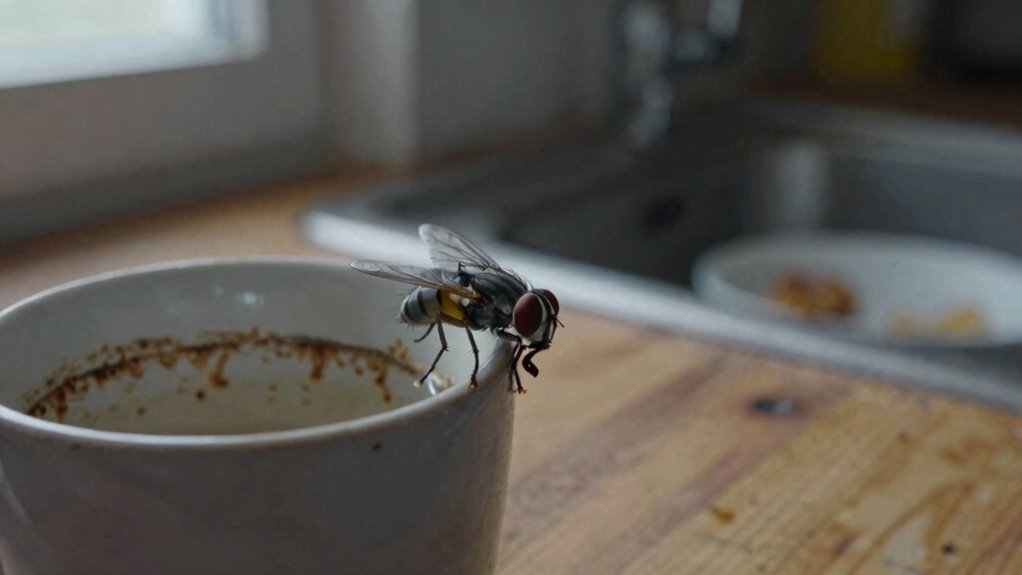
House flies, blow flies, and flesh flies feed on garbage, manure, and dead animals. They do not wipe their feet before landing on your countertop.
Each species mechanically transfers pathogens straight to food by hitching germs on legs or mouthparts. House flies carry over 100 disease-causing organisms, including those behind food poisoning and dysentery.
Blow flies spread E. coli and Salmonella. Flesh flies can transmit typhoid and cholera.
To cut their access, keep compost covered tightly. Use UV fly traps near entry points for effective pest control.
These traps cost around $30 and attract flies with ultraviolet light. They zap flies before they reach the kitchen.
A single fly landing on a sandwich can ruin more than just the meal. Taking action with proper sanitation and fly traps protects your kitchen. Using a fan with soft-stop blades can also provide a physical deterrent without chemicals near tables.
Sanitation: The Primary Step to Eliminate All Three Fly Breeding Sites
Sanitation is the non-negotiable first step for getting rid of house flies, blow flies, and flesh flies. No shortcuts or magic sprays will work if breeding sites remain. Every maggot needs a damp, messy home to thrive. Denying them that is the real secret to professional fly control.
Think of it as evicting the entire fly family before they even unpack their larvae. Scrape dumpster pads weekly with a shovel to wash away spilled gunk. That gunk breeds 1,500 maggots per pound of wet manure. Follow sanitary landfill management rules by burying waste under daily soil layers.
This seals off egg-laying zones completely. Stick to composting site regulation guidelines by turning piles often. Keep piles hot above 130°F so larvae cook before hatching. Keep trash bags tightly tied and bins closed at all times. For aquatic breeding spots, BTI-based larvicides offer a safe, targeted control that kills larvae without harming beneficial insects.
Wall out dead rodents to remove key food sources. Do that and the flies will look elsewhere for their next nursery.
Choose the Right Trap or Treatment Based on the Fly Species Present
Once you have cleaned breeding sites, the next step is choosing the right tool for the specific fly species causing trouble. For house flies, UV light traps with glue boards work best and should be placed near windows and doors.
For blow flies, an indoor outbreak usually requires removing a dead rodent first. After that, chemical control methods like pyrethrin spray can quickly eliminate the remaining adults.
For flesh flies, sticky traps placed near dog runs or garbage cans are highly effective. Remember that fly trap placement is critical for success.
Place UV traps 5 to 6 feet high and avoid positioning them near competing lights. Use bait stations outdoors for house flies only, not indoors.
For general use, non-toxic and odorless glue-based traps provide safe, chemical-free control around children and pets.
| Fly Species | Best Trap/Treatment | Key Consideration |
|---|---|---|
| House Fly | UV light plus glue board, bait stations | Place near entry points, avoid competing light |
| Blow Fly | Pyrethrin spray, dead animal removal | Chemical control is temporary without source removal |
| Flesh Fly | Sticky traps, non-toxic bait | Fly trap placement near breeding sites is critical |
| General | Sanitation first | No trap works if food is still around |
| Outdoor | Fly jugs, bait granules | Keep traps downwind and away from people |
Indoor Fly Swarms? How to Locate the Dead Animal Causing the Infestation
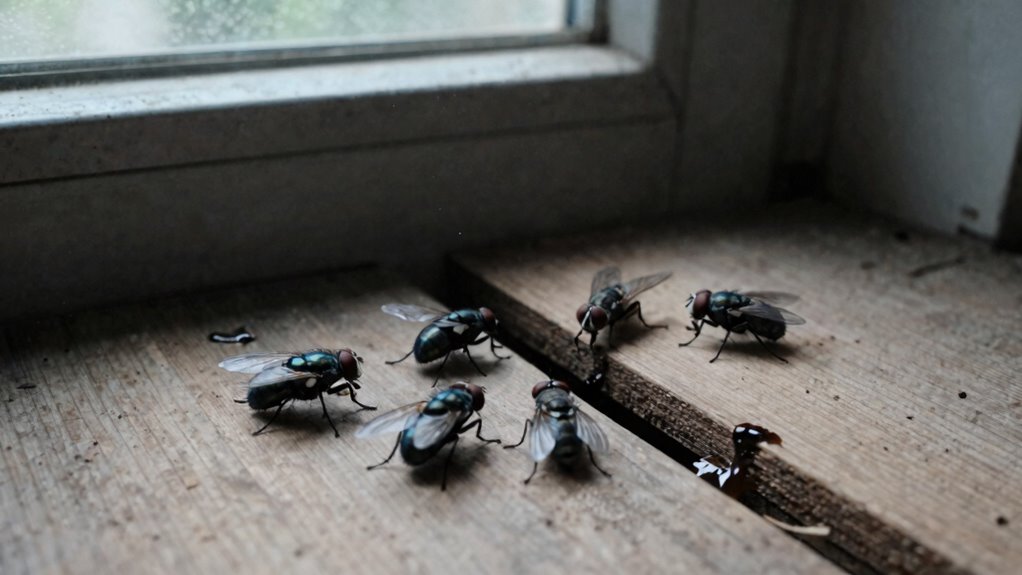
A swarm of flies inside your home often means one thing: something died somewhere it shouldn’t have. A dead rodent in a wall, attic, or crawlspace is the most likely culprit, and blow flies or flesh flies will find it first.
To locate the source, follow the buzzing. Flies circle near the highest concentration of the carcass, often around vents or baseboards.
Sniff for a sweet, rotting odor that intensifies near the dead rodent. This smell sometimes seeps through drywall, guiding your find.
Place an indoor fly trap near the suspected area. If it catches dozens in hours, the carcass is likely close.
Check behind appliances, in attics, or under floors. The smell fades after a few weeks, but the flies keep coming until the body is removed.
Consider hiring a professional pest control service for removal. Patience and a good nose often win, but dead animal removal specialists can finish the job fast. A high-voltage electric swatter can kill lingering flies around vents or baseboards while you locate the source.
Frequently Asked Questions
Can Flies Lay Eggs in My Hair?
No, flies ordinarily cannot lay eggs in living human hair. Fly biology dictates that most species, like house and flesh flies, require damp, decaying organic matter for egg laying.
They look for manure, carrion, or garbage, not clean hair. Hair hygiene discourages this because dry, well kept strands lack the necessary conditions.
For reliable pest prevention and keeping flies off your scalp, maintain good hygiene and avoid rancid odors. If you ever find eggs, egg removal is simple.
Wash thoroughly with shampoo and warm water, as any laid eggs would be rare and superficial. For professional grade fly control products, consider a quality fly repellent spray or insecticide to protect your home and yard.
These treatments target common breeding sites and help you maintain a fly free environment. Smart purchases include larvicides for drains and fly traps for outdoor areas.
Why Are There More Flies After It Rains?
After rain, more flies appear because rainfall triggers a breeding explosion. Standing water creates perfect, damp nurseries for eggs and larvae, so pest control professionals see a spike in fly activity after storms.
Moisture seeking behavior drives them indoors, and they follow the scent of humidity and warmth. A single puddle can birth hundreds of flies within days, making rapid fly treatment essential for homeowners.
They aren’t invading for fun; they are chasing water and heat, which is why you’ll find them near sinks, drains, and pet bowls. Your wet trash becomes a five star buffet, so securing garbage lids and clearing clogged gutters are smart first steps.
To break the cycle, eliminate standing water and use targeted fly control products like baits, traps, or residual sprays. For lasting results, inspect door seals and window screens, then apply a safe indoor insecticide labeled for flies.
Buying a rechargeable electric fly zapper or sticky traps near entry points works well for immediate relief. If the infestation persists, professional pest control services offer larvicide treatments for breeding sites you can’t reach.
Keep your home dry, aerate compost, and dry out mop buckets after use to reduce fly populations fast. Smart shoppers choose products with residual action, since they kill adult flies and prevent larvae from maturing.
Do Fly Traps Attract More Flies to My Yard?
Fly traps can attract more flies to your yard, but only in the short term. They lure flies from nearby areas, so trap placement is key for effective pest control.
Put traps at the property’s edge, not near patios or outdoor seating. DIY bait effectiveness varies, but a sugar, water, and vinegar mix works for house flies.
It fails completely for blow flies if you don’t target the source. Without addressing breeding sites like dumpsters or manure piles, traps just double the problem.
The bottom line is that fly traps help temporarily, but sanitation is the real fix. For a smart purchase, combine traps with a comprehensive fly management plan.
Can House Flies Bite Humans?
House flies cannot bite humans. Their mouthparts, called sponging mouthparts, are designed only for lapping up liquids.
Unlike biting flies, the house fly anatomy lacks the sharp, piercing parts needed for biting. They spread diseases by vomiting and excreting on food, but they do not bite.
It is a common misconception, likely from confusion with stable flies or mosquitoes. So relief is warranted, but sanitation vigilance is not.
What Smell Do Flies Hate the Most?
Flies most hate the smell of citronella candles and lavender oil. These scents overwhelm their sensitive antennae, acting as natural repellents.
A few drops of lavender oil on cotton balls near doors causes them to buzz off elsewhere. Citronella candles, although pleasant to people, confuse the fly’s ability to track food sources.
The strong, herbal aromas disrupt their navigation, making areas unappealing. Simply put, flies avoid what smells too sharp or floral for their tiny brains.


