
Getting rid of fly larvae means killing the source, not just the maggots you see. Boiling water poured on them works instantly, but a rotting mouse in the attic or drain biofilm will just hatch more.
You need to find the dead animal, scrub drains with a stiff brush, and disinfect bins with bleach. Traps stop adults from laying new eggs, but the real fix is removing the stinky buffet they feed on.
This guide walks you through how to locate that hidden carcass and break the cycle for good. Keep reading to learn the exact steps to stop the infestation and keep it gone.
At A Glance
- Remove the breeding source immediately; killing larvae alone prevents nothing.
- Pour boiling water directly on larvae for instant, chemical-free elimination.
- Clean drain biofilm with a stiff brush and enzyme cleaner to stop eggs.
- Disinfect bins with a bleach solution; dry thoroughly to deter regrowth.
- Seal entry points and check attics/crawlspaces for dead animals to prevent reinfestation.
What Exactly Are Fly Larvae and Where Do They Come From?
So where do these unwelcome visitors actually come from? They start as eggs laid in masses on organic material like rotting food or manure.
Fly development happens fast, with eggs hatching into cream colored legless larvae within a day in warm weather. Larval habitats are the real giveaway, think damp decaying spots like garbage bins or drains.
Fly eggs hatch into legless larvae within a day, thriving in damp, decaying spots.
Those little wrigglers use mouth hooks and digestive enzymes to break down tissue, feeding for four to six days. Inside a drain, larvae have a dark strip and a breathing tube, thriving in the film.
Dead animals in attics or crawlspaces additionally serve as prime real estate. So if you spot them, know they came from somewhere humid and messy, a breeding site that needs fast pest control attention. Pest control sprays that target these breeding sites often contain fast-acting ingredients like permethrin for immediate knockdown.
Once you find the source, professional fly elimination can stop the infestation quickly. Calling an exterminator for larvae removal is the best way to prevent recurrence.
3 Signs of a Fly Larvae Infestation You Shouldn’t Ignore
The most obvious warning is visual: clusters of cream-colored, legless maggots, usually 4 to 10 millimeters long, wriggling in trash, pet food, or near drains. This is a clear sign you need immediate pest control assistance to stop the breeding cycle before it spreads.
A second urgent clue is a foul, rotting odor that grows stronger as larvae break down organic material with their mouth hooks and digestive enzymes. If you notice this smell near your kitchen or garbage bins, schedule a professional inspection right away to find the hidden source.
Ignoring both the visual clues and the stench means allowing one female housefly’s 150 to 200 eggs to hatch into a full-blown infestation within a week. At that point, you’ll likely need a targeted fly larvae treatment plan, including sanitation and larvicide application, to regain control.
Catching these signs early can save you from costly cleanup and health risks, so act fast if you spot wriggling pests or that distinctive decay smell. For effective fly larvae removal, contact a licensed exterminator who can identify breeding sites and apply safe residual sprays. Vapor-based treatments can provide long-lasting protection for up to four months by killing flies and maggots inside bins.
Visual Clues
Spotting these visual clues means eggs hatched nearby, and adults will emerge within days. Check under trash bags, inside drains, or around pet waste for fly larvae.
A single cluster signals a breeding site needing immediate cleanup to break the cycle. This pest control action prevents flies from taking over your home.
Regular sanitation and removal of organic matter stops new hatches. For effective fly prevention, inspect hidden moist areas weekly.
After cleanup, deploying non-toxic baits near trash cans can safely attract and eliminate adult flies before they lay more eggs.
Foul Odors
A dead mouse in the wall doesn’t just smell bad. It smells like a four‑star restaurant to a blow fly, and that stench is your first clue that larvae are already snacking.
The foul odors source is often rotting meat, hidden trash, or a pet’s accident under the porch.
Maggots themselves emit a sweet, sickly scent as they digest tissue.
Locating the foul odors source means following your nose to basements, crawlspaces, or behind appliances.
Once found, start foul odors removal by sealing dead animals in double bags.
Scrub the area with a bleach solution to sanitize the surface.
For persistent stink, sprinkle diatomaceous earth around the spot to kill larvae as it deodorizes. Be sure to use food-grade diatomaceous earth for safety around kids and pets if applied in accessible areas.
The lesson is clear: if your home smells like a crime scene, act fast. A five‑minute sniff test now saves a week of maggot wrangling.
You are basically a detective with a trash bag, and proper pest control starts with quick identification.
Call a professional if the source is hard to reach or the odor remains.
Step 1: Find and Remove the Breeding Source Immediately
The first and only real solution is to find and remove the breeding source immediately. Killing the maggots themselves is just a temporary fix for a pest infestation.
Common breeding sites include garbage bins, compost piles, and pet food bowls left out too long. A frequently overlooked source is a dead animal in a crawl space, attic, or wall void.
Once the source is eliminated, clean drains with a stiff brush to remove any remaining eggs. Disinfecting bins with bleach will prevent fly populations from returning and keep your home pest-free. Enzyme-based cleaners break down the organic waste that attracts maggots, helping to prevent future infestations naturally.
Common Breeding Sites
Finding the breeding source is 90% of the battle, and the other 10% is just not panicking when you realize you have been sharing your home with a fly nursery.
Common breeding sites are frankly everywhere you let organic mess pile up.
Pet waste left too long in the yard especially in warm weather becomes a prime nursery. Those egg clusters look like tiny rice grains in the mess.
Compost piles if not turned regularly offer a warm damp buffet for larvae. The larvae chew through scraps with their mouth hooks and thrive in neglected piles.
Overripe fruit garbage can residue and even damp mops feed them.
Bottom line locate these spots then clean or seal them.
No bleach needed yet just swift removal breaks the cycle.
Professional pest control services can help if the infestation is too large for DIY cleanup.
Similarly, traps using a pheromone attractant radius can lure pests from 12 to 25 feet away to break their breeding cycle.
Inspect For Dead Animals
Even though dead animals are not exactly dinner party conversation, they are a top-tier breeding source for flies. A single mouse in a wall or attic can fuel hundreds of maggots within days.
During pest control inspections, homeowners should check all crawlspaces, attics, and under porches for odors or visible carcasses. Dead animal removal is no fun but necessary. Gloves and a mask protect against bacteria. For entry points, you can use steel wool rolls to block gaps and prevent future rodent access.
For larger animals like raccoons, professional animal removal costs $200 to $500, depending on access. Crawlspace hygiene means sealing entry points and clearing debris, preventing future tragedies.
“Nothing smells quite like a neglected crawlspace,” one pest pro jokes. After removal, disinfect the area and set a trap to prevent fly infestations.
The goal is to eliminate the buffet before larvae mature into flies. Inspect first, remove fast, and keep the space dry to stop fly breeding cycles.
Clean Drains And Bins
Before you break out the heavy artillery, step one is always the least glamorous but most critical. Physically find and remove the breeding source. Drains and bins are prime real estate for fly larvae, tucked away in slimy gunk or rotting scraps.
Drain cleaning tackles the organic film where drain flies lay eggs. Use a stiff brush and enzyme cleaner, not just bleach. Bin maintenance means scrubbing out leftover goo after emptying, then drying it completely.
Pour boiling water down drains weekly to kill hidden eggs, avoiding harsh chemicals. Scrub bin lids and bottoms with a bleach solution (1 cup per gallon) to neutralize larvae. Line bins with heavy-duty bags, tying them tight to trap smells before pickup.
Remove food waste daily in summer, when a single egg mass can produce 200 maggots in 24 hours. Bottom line is clean drains and maintain bins before flies win the race. For professional pest control results, focus on these drain and bin maintenance steps. Using sustained-release enzyme treatments monthly or biweekly can gradually digest all organic matter in pipes, preventing the buildup that attracts flies.
Why You Should Check for Dead Animals in Crawl Spaces and Attics
A certain stillness in a crawl space can be more suspicious than any noise. Dead animals are a primary fly breeding source, drawing blow flies within hours.
Prompt carcass removal eliminates the maggot buffet and the odor that attracts more flies. Reinfestation prevention depends on sealing entry points after disposal, ideally using dual-layer barriers like steel wool combined with metal mesh.
| Clue | Likely Pest | Action Needed |
|---|---|---|
| Musty odor | Blow fly larvae | Locate and remove carcass |
| Buzzing sounds, no visible source | Adult flies | Inspect attic vents and ducts |
| Dried urine stains near pipes | Phorid fly larvae | Check for trapped rodent remains |
| Swollen insulation patches | Decomposing animal | Cut and dispose of affected material |
| Maggot trails on walls | Active infestation | Professional carcass removal recommended |
Neglecting this invites persistent swarms. One rotting mouse can spawn 900 larvae.
Check attics quarterly and crawl spaces semi annually. Your nose knows first, so trust it.
If you notice a musty odor or buzzing sounds in your walls, schedule a pest inspection today. Sealing entry points after removal is key to stopping future infestations.
The Right Way to Clean a Trash Bin to Kill Fly Eggs and Larvae
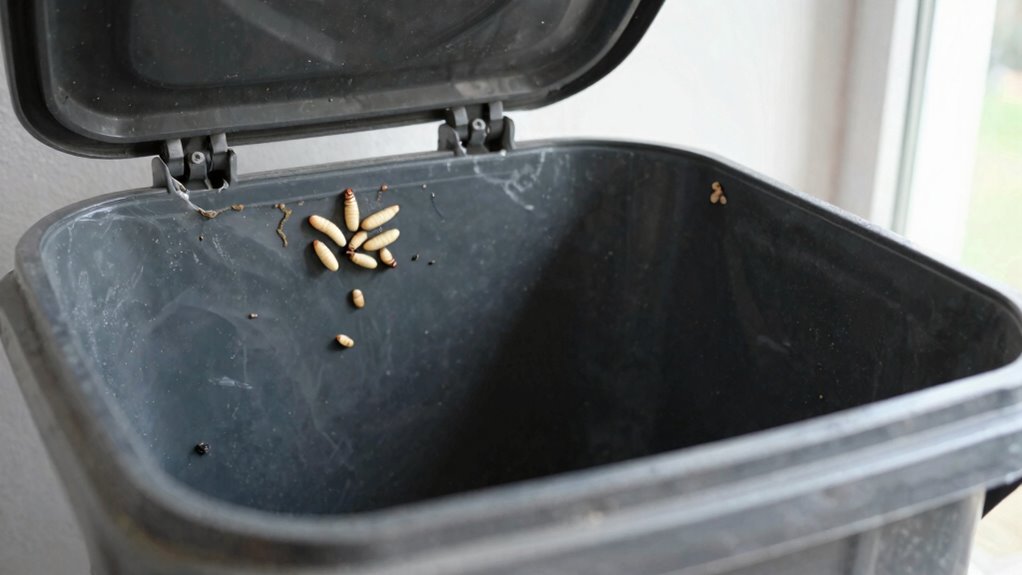
After you scrub and air out the bin, fly eggs and larvae still hide in hidden crevices. They are small and patient, hatching into adult flies faster than you can react.
Use a stiff bristled brush with hot, soapy water to scrape every groove. Focus especially on the area under the rim and the lid hinge.
Rinse with a bleach solution using one cup per gallon of water. Let it soak for five minutes to dissolve egg casings completely.
Dry the bin thoroughly because dampness helps larvae survive. Tip it upside down in direct sunlight if possible for best results.
Spray a commercial disinfectant with pyrethrin into all crevices for residual protection. Products like Raid Fly and Mosquito spray work well to kill hidden eggs and stop reinfestation. Pyrethrin sprays typically kill targeted pests within 15 to 30 minutes for rapid knockdown.
Adult flies return within hours to a damp, uncleaned bin. Scrub smart, kill the eggs, and break the cycle for a pest free home.
How to Kill Fly Larvae With Boiling Water, Vinegar, or Salt
Boiling water poured directly onto fly larvae kills them instantly by scalding. This is a simple and effective pest control method for your home.
A vinegar and salt solution dehydrates and destroys the larvae. Mix one cup of malt vinegar with half a cup of salt for a harsh treatment.
For infested bins, pour the boiling water first to kill visible larvae. Then follow with the vinegar-salt solution to target hidden eggs.
This two-step approach ensures you eliminate the entire infestation cycle. You can buy these ingredients for a quick, chemical-free extermination. For a natural alternative, consider Zevo Insect Killer Spray which uses natural oils like rosemary and cornmint.
Boiling Water Application
Pour boiling water directly from the kettle onto fly larvae for instant chemical free pest control. This scalding method kills maggots on contact in trash bins or drains without harsh sprays.
Always protect your hands and face from splashes because steam burns happen quickly. This approach also removes the organic film where drain fly adults breed, effectively breaking their life cycle.
Pour slowly over clusters of larvae to avoid splashing and focus on drain openings for best results. The heat will kill hidden eggs and larvae that pest control sprays often miss.
Repeat this treatment weekly to disrupt new hatches from drain fly adults. Let surfaces cool completely before rinsing to prevent pipe damage.
The bottom line is that boiling water is a cheap and fast solution for home pest control. Just don’t pour it on plastic bins or you risk melting them. For a plant-based alternative, consider using a peppermint spray that kills on contact and repels pests safely around pets.
Vinegar and Salt Mix
| Ingredient | Purpose |
|---|---|
| Half cup malt vinegar | Breaks down larvae skin |
| One tablespoon salt | Dehydrates and kills |
| Spray bottle | Guarantees precise application |
| Direct contact needed | Only kills on hit |
| Works in minutes | Fast, low-effort disposal |
Pouring this pest control mix down a drain is useless. Larvae hide deeper, so you need targeted contact.
Stick to visible maggots for a fast pest elimination solution. Then wipe them away with a paper towel.
The smell is sharp but fades quickly. It beats scooping them up by hand and keeps your kitchen cleaner.
Bin Treatment Methods
The humble trash bin is a fly’s dream home and your waking nightmare. Understanding pest biology explains why larvae thrive there; they need warmth, dampness, and rotting food.
Chemical resistance means some store-bought sprays fail. Skip the guesswork with these bin treatments for effective pest control.
Pour a full kettle of boiling water directly over the writhing mass. It kills instantly, costs nothing, and leaves zero residue.
Wait, then scrape the dead larvae into a sealed bag. Douse them with white vinegar for a slower but safer option.
The strong acetic acid disrupts their skin, desiccating them. This is a great choice for plastic bins.
Sprinkle a thick layer of table salt over the larvae. It sucks dampness from their bodies, shriveling them like slugs.
This is cheap, effective, and non-toxic to pets. Combine vinegar and salt for a one-two punch.
Pour vinegar first, then salt. The mixture accelerates dehydration and masks odors, buying you a few days.
For a fast, chemical-free fix, boiling water wins. But for ongoing prevention, a weekly salt dusting keeps the nightmare at bay.
For persistent infestations, consider placing a disposable bait trap strategically outdoors to intercept adult flies before they can lay new eggs near your bin.
When to Use Chemical Sprays for Fast Knockdown of Fly Larvae
Chemical sprays work fast against fly larvae outbreaks but won’t fix the root cause. They are a tactical fix for visible infestations, not a strategic solution.
| Spray Type | Best Used For | Key Feature | Downside |
|---|---|---|---|
| Pyrethroid aerosol | Adult flies on surfaces | High pyrethroid efficacy, quick knockdown | Less effective on larvae in deep organic matter |
| Drain foam like Invade Bio Foam | Drain fly treatment | Penetrates drain film, kills larvae | Requires physical scrubbing after |
| Botanical spray like Pyrid | Indoor use, pets around | Low toxicity, smells less chemical | Slower action, repeated applications |
| Bleach-water mix | Garbage bins, outdoor | Cheap, kills on contact | Corrosive, damages surfaces over time |
For drain fly treatment, foams beat sprays for best results. But remember that no chemical fixes a dirty drain. That is where the real work begins for pest control success. A thick gel formula clings to drain walls to target organic buildup and breeding sites deep inside pipes.
Why Drain Cleaner Won’t Fix a Drain Fly Larvae Problem
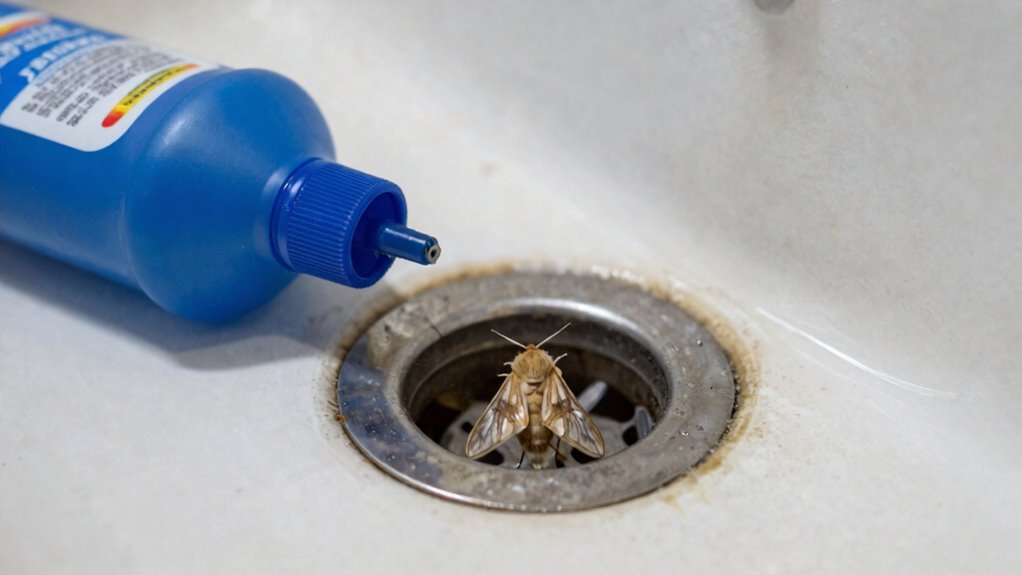
Most homeowners reach for drain cleaner the moment they spot tiny, dark larvae wriggling in the sink. It feels like the obvious fix, but this approach only masks the real issue.
Drain cleaner works like a caustic bandage, not a true cure, because the larvae thrive in the organic slime lining your pipes. That biofilm is a mix of soap scum, skin cells, and food particles, which is exactly the kind of breeding ground a pest control specialist would target.
A microbial analysis of your drain would show thriving bacteria, not chemical residue, proving the cleaner missed the breeding colony. Larvae breathe through tubes, so they can simply retreat deeper into the pipe when exposed to brief chemical bursts.
Boiling water costs nothing and physically flushes out debris, unlike expensive bottles of caustic gel that only superficially dissolve the surface film. For a lasting drain fly treatment, you need to remove the food source, not just poison the visible pests. Enzyme-based drain cleaners that break down sludge rather than burn it are safer for your plumbing and more effective at eliminating the larvae’s habitat.
A stiff drain brush, used weekly, scrapes away the protective layer that cleaners only temporarily soften. This mechanical action also helps prevent future infestations by keeping pipes clear of the organic matter that attracts flies.
For a professional-grade solution, consider enzyme-based drain cleaners that break down sludge rather than burn it. These biological treatments are safer for your plumbing and more effective at eliminating the larvae’s habitat.
Bottom line: skip the drain cleaner and scrub the pipe instead to solve the problem at its source. If you want a one-time fix that works, pair that brush with a hot water flush to keep your drains genuinely clean.
How Traps and Baits Prevent Adult Flies From Laying Fly Larvae
Fly traps truly shine by stopping adult flies from creating the next generation of larvae. When you remove females before they lay eggs, you break the cycle before it starts. Many effective traps, like the high-capacity BugBane model, capture up to 20,000 flies using non-toxic, food-grade bait that is safe for kids and pets.
Scent deterrents in bait stations, like Maxforce granules at roughly $15, lure flies with a food scent and then poison them. If they are dead, they cannot breed. UV light specifics matter too. Commercial traps emit wavelengths around 365 nanometers, irresistible to houseflies.
A $40 unit with replaceable glue boards works well for garages or patios. Sticky traps catch adults instantly, whereas bait stations take hours for digestion. Combine both for best results.
A dead fly cannot lay maggots, simple math. The bottom line is traps and baits prevent larvae by killing breeding adults. Stick to bait stations in fly-heavy zones and use UV traps near entry points.
How to Disrupt the Fly Life Cycle With Cleanup Timing
Timing is key when you want to outsmart flies and stop an infestation. Effective pest control starts with cleanup that targets larvae before they turn into adult flies.
Wipe down bins within 24 hours of spotting eggs, because those tiny rice grain clusters hatch fast. Toss organic waste daily, since a leftover chicken carcass can turn into 1,500 maggots per pound.
Scrub drains weekly to eliminate the slimy biofilm where drain fly larvae hide. Use a bleach water rinse on garbage cans every three days to break the 4 to 6 day larval feeding window.
Align your cleanup schedule with the fly’s week long generation cycle to stop the march from egg to adult. Miss that window and you are just cleaning a nursery instead of solving the problem. For additional fly control near tables, patio fans create airflow that disrupts scent trails and deters flies from landing.
Signs You Need Professional Pest Control for Fly Larvae
Signs include maggots returning weekly even after using chemical sprays.
Finding larvae in multiple rooms or near vents points to hidden fly breeding sites.
Adult flies numbering over a dozen daily means a large larval source is present.
Professional pest control costs $200 to $500 for inspection and treatment, which beats endless store-bought failures.
If your cleaning routine feels like a losing battle against fly biology, call a pro.
This isn’t about laziness; the species’ one week life cycle can outpace your best efforts.
Consider this a strategic retreat, not surrender, to regain control of your home.
However, eco-friendly options with low toxicity can be used responsibly alongside professional help.
3 Daily Habits That Keep Fly Larvae From Returning
A relentless fly problem usually isn’t bad luck, it’s consistently overlooked housekeeping. Daily sanitation and habit consistency are the real keys to keeping larvae gone for good.
Forget chemical sprays, focus on small repeatable actions that break the breeding cycle. Tie and take out trash every night, no exceptions, even if the bag isn’t full.
Rinse all food containers before tossing them, and wipe down counters with a bleach based spray. Cover pet bowls overnight and scoop litter boxes daily, an exposed dish is a five star maggot hotel.
Rinse food containers, wipe counters with bleach, cover pet bowls, and scoop litter daily.
Check under sinks and drains for gunk, then flush with boiling water once a week. Drain flies love a bio film buffet, so this simple step is essential pest control. Pairing these steps with a natural fly repellent can further discourage adult flies from laying eggs near cleaned areas.
Stick with these four habits for two weeks, and the only flies you will see are the ones buzzing past your neighbor’s bin. Consistent fly prevention means no more larvae outbreaks and fewer pest control service calls.
Frequently Asked Questions
Can Fly Larvae Survive in Cold Temperatures?
Fly larvae can survive cold temperatures, but their cold tolerance varies by species. Most maggots slow down or die in freezing conditions, though some enter a dormant state for winter survival.
Drain fly larvae, for example, may persist in insulated drains. Nevertheless, consistent frost kills active larvae quickly.
The real trick is that cold stops them from feeding, halting growth until warmer weather returns. If you’re dealing with an infestation, freezing might not be your friend.
Freezing only gives you a temporary delay, not a permanent pest control solution. To truly eliminate fly larvae, you need targeted drain treatments or professional pest control products.
For fast results, look for biological cleaners or insect growth regulators that work even in cool drains. These are the top buys for winter fly issues and can stop the problem at the source.
Don’t let cold weather fool you into skipping a thorough inspection. Active prevention is the smart purchase when you want long term relief from drain flies and other cold hardy pests.
Are Fly Larvae Harmful to Pets or Humans?
Yes, fly larvae can be harmful if ingested, causing myiasis symptoms like stomach pain or infection. But not all maggots are villains, some are beneficial garden maggots that break down compost.
So, watch pets around trash, but don’t freak out over every wiggler. A simple rule is to keep bins sealed, and you’ll side-step most trouble.
For safe pest control, use sealed garbage cans and reliable fly traps. If you suspect an infestation, professional pest control services can help.
Buying high quality fly repellents or larvicides prevents maggot issues before they start. Trusted products like insect growth regulators stop larvae from developing.
Always check for proper waste management to protect your home and family. Taking these steps ensures you avoid the need for costly medical treatments.
How Long Can Fly Eggs Survive Without Hatching?
Fly eggs typically survive one to three days without hatching, depending on temperature and humidity. In warm weather above seventy degrees Fahrenheit, eggs hatch within twenty-four hours as part of fast fly breeding cycles.
Cooler conditions slow maggot development stages, delaying emergence up to seventy-two hours. This short window means you cannot afford to wait.
Since one female lays up to two hundred eggs at once, even a brief survival time can trigger a full infestation. That is why rapid fly control is essential for protecting your home.
Remove breeding sites immediately, as those eggs won’t wait long. For the best fly elimination results, use a targeted insecticide or a professional pest control service to break the cycle fast.
Can Fly Larvae Infest a Clean Home if Due to a Dead Rodent?
Yes, fly larvae can infest a clean home if a dead rodent is present. The rodent decomposition timeline means eggs can hatch in just 24 hours, so maggots appear fast even in spotless spaces.
Household entry points like gaps in walls or vents give flies access. The scent of decaying tissue overrides any concept of clean and draws them straight in.
A single female fly finding a carcass can lay up to 200 eggs. That is the real problem, not your dusting routine.
To stop an infestation, you need immediate rodent removal and professional pest control treatments. Targeted fly baits and larvicides can break the life cycle fast.
For long term protection, seal all entry points around pipes, windows, and foundations. A clean home stays safe when you combine sanitation with effective pest prevention products.
Do Fly Larvae Die if the Food Source Is Removed Immediately?
No, fly larvae will not die if the food source is removed immediately. Larval starvation takes about 24 to 48 hours before they actually perish.
Food removal timing is critical, but it doesn’t deliver instant results. Those maggots, already 4 to 10 mm long, can crawl to find new grub or survive on residual muck.
Eggs already laid can still hatch within a day. So, you must clean every trace of organic matter, or these little squirmers will outlast your patience.
For effective fly control, focus on eliminating breeding sites first. Use a reliable pest control spray or larvicide to kill eggs and maggots on contact.
A thorough cleanup combined with a targeted insecticide treatment gives you the best chance to stop an infestation fast. If you want a hands off solution, consider a fly bait station or residual aerosol for ongoing protection.


