
Fruit flies vs. gnats: it’s one of the most common mix-ups in pest control, and getting it wrong wastes your time and money. Fruit flies are stocky, red-eyed, and drawn to fermenting sugar like overripe bananas or forgotten wine glasses.
Gnats are slender, dark, and obsessed with damp soil or drain slime—they want your overwatered plants, not your kitchen scraps. Vinegar traps handle fruit flies, while sticky traps and drier soil stop gnats.
The real fix, though, lies in their breeding cycles, and that’s exactly what we’ll cover next. Keep reading to learn how to break the cycle for good.
At A Glance
- Fruit flies are attracted to fermenting sugars; gnats prefer damp soil and organic decay.
- Fruit flies have red eyes and plump bodies; gnats are smaller, black, with long legs.
- Fruit flies breed on rotting fruit in days; gnats lay eggs in moist soil or drains.
- Use apple cider vinegar traps for fruit flies; yellow sticky traps work for gnats.
- Prevent fruit flies by cleaning spills; stop gnats by drying soil between waterings.
What’s the Difference Between a Fruit Fly and a Gnat?
Fruit flies and gnats may look similar, but they are quite different pests in your home. The gnat lifespan is very short, with most adults living only seven to ten days.
In that short time, a single female gnat can lay hundreds of eggs in damp soil or drains. Fruit flies, however, lay their eggs directly on rotting fruit and a full generation can develop in about a week.
Gnat eggs hatch in two to seven days, but their larvae feed on roots or organic matter for up to two weeks. This means gnats have a longer immature phase compared to fruit flies.
For effective pest control, you need to target their different breeding sites. If you see tiny flies near fruit, use a vinegar trap to catch fruit flies.
If they are hovering near houseplants or sinks, you likely have gnats and should reduce moisture and treat the soil. Using containers with fine mesh lids helps block fruit flies from accessing fruit and laying eggs, which is a crucial prevention step. Understanding these differences helps you choose the right gnat killer or fruit fly repellent.
Both are fast breeders, but gnats drag out the baby stage, so patience is key for elimination. The right approach saves time and stops the infestation for good.
How to Tell Them Apart by Appearance
Since physical appearance is often the quickest way to settle the fruit fly or gnat problem, let’s break down the key visual clues. What you really need is a direct appearance comparison, focusing on the physical differences for pest control identification.
Fruit flies are the stocky, reddish-tan ones with bright red eyes. They look like tiny, rounded flies and are a common household pest control target.
Gnats, namely fungus gnats, are smaller, slender, and nearly black. They have long, spindly legs and antennae, which makes them look fragile.
Think of fruit flies as the dumpy, clumsy cousin. Gnats are the delicate, leggy one you might see near houseplant soil.
Think of fruit flies as the dumpy, clumsy cousin. Gnats are the delicate, leggy one you might see near houseplant soil.
A fruit fly is about an eighth of an inch, with a plump body. A gnat is more fragile, darker, and its legs often trail behind when it flies.
A quick glance, especially at the eye color, will tell you which pest control product you need. This simple check helps you choose the right trap or spray. Bright yellow traps are especially effective for catching gnats near houseplant soil.
Where Do Fruit Flies vs. Gnats Hang Out?
The location is the dead giveaway. Fruit flies hover around indoor sources of fermenting sugar, like fruit bowls, trash cans, and compost bins.
Anywhere a rotting banana or spilled soda lurks is prime real estate for a fruit fly infestation. Their patterns are kitchen-centric, clustering by day near food.
Gnats, by contrast, prefer damp, decaying areas like clogged drains, overwatered plant saucers, or damp mops. They are less picky about sweets and more about moisture.
Spot a swarm near your sink’s drain or a forgotten wet sponge. That is a gnat, not a fruit fly.
It is a simple litmus test for pest identification. Fruit flies want your lunch leftovers, and gnats want your plumbing’s humidity.
Ignore the flies, and they will multiply fast. Ignore gnats, and you are battling damp decay.
Know the hangout, and you have cracked half the pest control code. For effective fruit fly control, target fermenting sugars and remove spills.
For gnat removal, address moisture in drains and plant trays. Yellow sticky traps work well for fungus gnats in these damp areas, as their bright color and adhesive lure the pests directly from the soil.
Why Fungus Gnats (Not Fruit Flies) Infest Your Houseplants
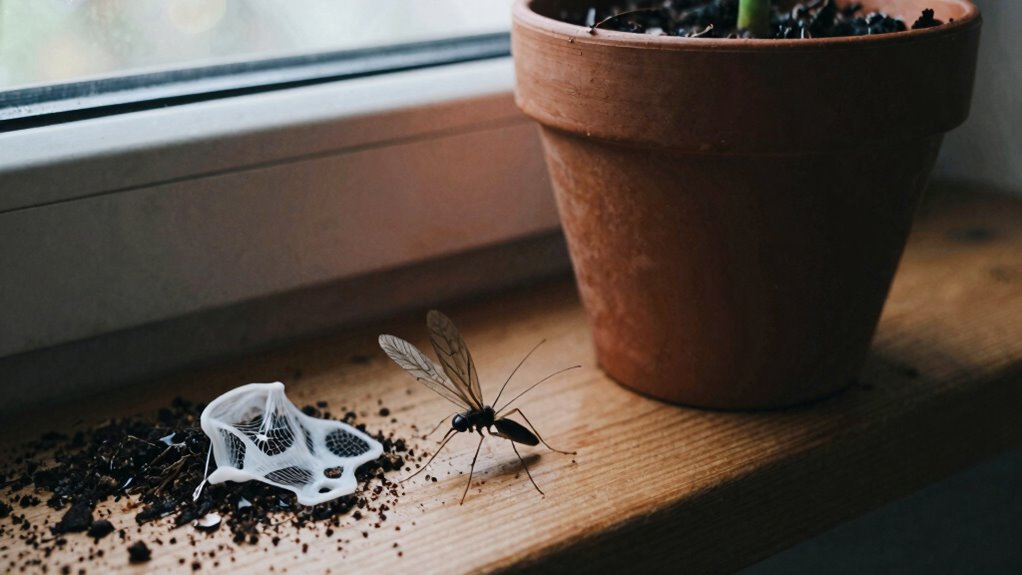
That kitchen test works well until you see bugs crawling out of your houseplant soil.
Fungus gnats are the real problem here, because they breed in damp, decaying organic matter like the kind found in your potted plants.
High humidity and poor soil drainage create a perfect nursery for these pests.
Overwatering is like rolling out a red carpet for fungus gnat infestations.
Their larvae feed on root hairs and fungi in the soil, which weakens your plants over time.
Fruit flies ignore soil entirely and only want fermenting fruit.
So if you spot tiny bugs emerging from dirt, you are dealing with gnats, not flies.
To get rid of them, let your soil dry out between waterings and improve drainage.
A simple layer of sand on top of the soil blocks egg laying and stops new gnats.
The best prevention is dry soil, which means soil drench treatments target the larvae underground and break the gnat life cycle over several days.
Where Do Fruit Flies and Gnats Lay Their Eggs?
Locations matter when tackling infestations, and fruit flies and gnats have very different real estate preferences. Fruit flies, those tiny red-eyed nuisances, lay their eggs directly on fermenting fruit or in sugary spills.
Gnats, on the other hand, especially fungus gnats, prefer the damp organic riches of overwatered houseplant soil. Fruit flies choose decomposing fruit like that forgotten banana or compost bins, and their eggs hatch in about a day.
Gnats thrive in damp soil, while fruit flies prefer forgotten bananas and compost bins.
Fungus gnats target damp soil where the gnat larvae diet consists of fungi and root matter, causing plant stress. Drain gnats lay eggs in the slimy film inside drains, a prime spot for decaying organic matter.
Soil versus fruit is the core difference: fruit flies crave sugary rot on surfaces, whereas gnats need damp earthy decay for their young. Know this: if you see tiny flies near your fruit bowl, it is fruit flies that need a home pest control spray or trap.
If they zip around your pothos, it is gnats requiring soil treatment and moisture reduction for effective pest elimination.
How Fast Do Fruit Flies and Gnats Reproduce?
Gnats are slower reproducers, with a life cycle lasting up to four weeks. Even in warm conditions, their breeding site temperature can slow them down further.
Their larvae feed on roots for up to two weeks before pupating. This sluggish pace makes gnat infestations easier to control with simple pest control methods.
If you are looking for effective pest management, fruit flies are the real sprinters. They outpace gnats by a wide margin, making them a faster problem to address. For example, commercial fruit fly traps like those using food-based liquid bait can last up to 45 days per trap.
For homeowners dealing with pests, speedy elimination matters. Fruit fly traps and regular cleaning are your best first steps.
Ignore gnats if you have them, but do not ignore fruit flies. Their rapid reproduction demands immediate action to prevent a full infestation.
What Attracts Fruit Flies vs. What Attracts Gnats?

Fruit flies zero in on fermenting sugary spills and rotting produce, drawn to the sweet, sour scent of decay like a kid to a candy store.
Gnats, by contrast, are all about damp soil environments and decomposing organic matter, thriving where moisture meets mess.
Think overwatered houseplants or a soggy drain.
One wants your fruit bowl, the other wants your potting mix, and neither cares about your kitchen’s aesthetic.
Multi-action sprays can target both pests at every life stage, including eggs and larvae, for more effective control.
Fermenting Sugary Spills
Start with a simple rule. Fruit flies love fermenting sugary spills like kids love candy, but gnats ignore sweet stuff entirely. These attractants trigger fruit fly breeding in just one day, making your kitchen a hotspot.
Overripe fruit bowls become a fruit fly penthouse suite. Soda spills on countertops mean their happy hour runs nonstop. Wine or beer dribbles create an instant party with no RSVP needed. Forgotten juice containers in the recycling bin turn into a nursery with a view.
Fruit flies chase sugar sources like rotting fruit and sticky spills. Gnats ignore these and instead hunt for damp soil in houseplants. If you spot tiny flies swarming a sticky spot, pest control experts confirm it is fruit flies for certain. Clean those spills fast to stop an infestation before it starts.
Skip sticky traps for this particular fruit fly issue. You want apple cider vinegar traps instead for effective pest control. That simple call targets their breeding cycle and eliminates the problem quickly. Unlike pantry moth lures that use species-specific pheromones to target only male moths, vinegar traps won’t interfere with fruit fly mating disruption, so consistent cleaning remains your best defense.
Damp Soil Environments
The same kitchen sink that attracts fruit flies with sugary spills is a ghost town for gnats. For gnats, the real draw is damp soil, particularly in overwatered houseplant pots.
These tiny houseplant pests, often fungus gnats, are drawn to the damp, organic-rich environment of potting mix that stays wet for days. A fruit fly would ignore that soggy soil, but a gnat sees a nursery.
The key difference is simple: fruit flies want fermenting sugars, while gnats want a damp, moldy home. So if tiny flies swarm around your fern instead of your fruit bowl, it’s gnats.
To manage these pests effectively, let the soil dry out completely between waterings. You can also apply a layer of sand on top of the potting mix to block egg-laying and break the gnat life cycle.
For long-term control, consider using sticky traps near the plant base to catch adult gnats. Pair that with a targeted soil drench if you need a faster solution for an active infestation.
Bottom line: dry soil stops gnats cold, so adjust your watering routine and watch the population drop. This simple change is your first line of defense against fungus gnat larvae in houseplants. For additional outdoor control, a citronella and lemongrass candle can help repel gnats from your patio or garden area.
Decaying Organic Matter
Both types of flies appreciate a good mess, but their taste in rotting stuff is surprisingly picky. Fruit flies are all about the sweet, sticky breakdown of decaying fruit, like that forgotten banana under the counter. For effective control, pheromone-based traps can attract and capture fruit flies from up to 25 feet away without toxic chemicals.
Gnats, though, prefer the earthy rot of rotting vegetation. Think soggy leaves or decomposing mulch in potting soil for effective pest control.
Fruit flies chase sugar sour smells from soft fruit, wine, or apple cider vinegar. You can trap them in a bowl with a little vinegar and dish soap to eliminate a fruit fly infestation.
Fungus gnats target damp, decaying leaf litter and algae in overwatered pots. For gnat prevention, let your soil dry out between waterings and remove dead plant matter.
Breeding spots show clear differences: fruit flies lay eggs directly on fruit, while gnats hide theirs in damp organic matter. To get rid of gnats for good, address the wet soil and decaying debris.
A nose test helps: a fruit bowl gone bad signals fruit flies, but a moldy houseplant means gnat territory. Knowing these signs makes pest identification and targeted treatment much easier for your home.
Vinegar Traps for Fruit Flies vs. Sticky Traps for Gnats
Fruit flies and gnats have different weaknesses, so the right trap depends on which pest you are targeting. For fruit flies, vinegar traps are the clear winner in pest control.
Trap design is simple with a jar and a paper funnel. The bait effectiveness comes from apple cider vinegar’s fermented scent.
Fruit flies plunge in and drown, ending the infestation quickly. Gnats ignore vinegar completely because their weakness is dampness, not sugar.
Sticky traps are the best gnat killer for fungus gnats in houseplant soil. These yellow cards catch adult gnats by the dozens and cost about $5 for a pack of ten.
They are brutally effective at breaking the breeding cycle. Many sticky traps use food-grade adhesives that are safe for use around children and pets, offering peace of mind even in sensitive areas. Just don’t expect drama because it is a quiet, sticky death.
For a fruit fly solution, place vinegar traps near fruit bowls. For fungus gnat control, put sticky traps over plant soil.
Get it right and you stop the swarm at the source. Use these targeted pest control products to eliminate the problem fast.
How to Stop Gnats in Overwatered Soil
Sticky traps work great for adults, but they ignore the root cause, literally. Overwatered prevention begins with one truth: gnats breed in sodden soil, not dry dirt.
Let soil dry out completely between waterings. Gnats can’t survive in parched conditions.
Use a dampness meter, a cheap $10 tool, to check if the top two inches are bone-dry.
Replace topsoil with a sand or gravel layer. This blocks adults from laying eggs.
Water from the bottom using a tray. This keeps the surface dry and inhospitable for gnats.
Soil drying isn’t just good for plants. It’s a gnat death sentence.
Stop coddling that damp dirt. Your spider plant will survive a thirst day.
Bottom line: kill the dampness, kill the gnats. Simple as that.
For dry soil areas like lawns, products containing imidacloprid absorb through roots to kill underground grubs and larvae.
How to Get Rid of Fruit Flies and Gnats for Good
Victory over fruit flies and gnats means outsmarting tiny, relentless breeders instead of seeking revenge. First, crash their life cycles by targeting what they need to survive.
Fruit flies require fermented fruit to breed. Gnats need consistently damp soil. A gnat lives roughly a week but lays hundreds of eggs in that time.
Fruit flies breed in fermented fruit; gnats thrive in damp soil—one gnat lays hundreds of eggs in a week.
Break that chain with targeted pest control. For fungus gnats, use Bti treatment, a bacteria that kills larvae without harming your plants. Bti is safe for fish and wildlife, targeting only mosquito and gnat larvae.
Sprinkle it on damp soil or mix it into water. A pack costs about $15 and works as a long term gnat solution.
For fruit flies, pour apple cider vinegar with a drop of dish soap into a jar. Cover the jar with plastic wrap, poke small holes, and let them drown inside.
Let soil dry two inches deep between waterings to stop gnat eggs from hatching. Clean drains weekly to remove hidden breeding spots.
Remove all rotting produce and dry out overwatered plants. Apply Bti and trap adults with the vinegar jar.
Do it right once, and these tiny pests are gone for good.
Frequently Asked Questions
Do Fruit Flies Bite Humans or Pets?
No, fruit flies do not bite humans or pets. They simply lack the mouthparts needed for biting and only feed on liquids like fermenting fruit.
This means there is no direct disease transmission to your pets through fruit fly bites. However, their presence can be a sign of poor sanitation in your home.
For effective houseplant pest control, focus on removing overripe produce and cleaning kitchen drains. Unlike biting gnats, fruit flies are mostly a kitchen nuisance, not a biting threat.
You should worry about their annoying swarms, not about any sting or bite. A reliable fruit fly trap or drain gel can quickly solve an infestation.
If you need a long term home pest control solution, address the breeding sites with cleaning and organic sprays. Contact a local extermination service for persistent fly problems.
Can Gnats Damage My Houseplants’ Roots?
Yes, fungus gnats can damage houseplant roots, and their larvae are the real problem.
These tiny worms feed on root hairs, which stunts your plant’s growth and weakens its defenses.
This root damage often invites root rot, a soggy infection that can kill your plant quickly.
The good news is that a simple watering adjustment stops them cold.
Letting the soil dry out between waterings kills gnat larvae before they cause harm.
For best results, use a targeted pest control product like a soil drench or sticky traps.
If you want a long term solution, consider adding beneficial nematodes to your potting mix.
These natural predators hunt down larvae without chemicals, protecting your houseplants safely.
Bottom line: gnats are a nuisance, but their larvae are the true threat to your plant’s health.
Invest in the right pest control treatment now to stop root damage and keep your indoor garden thriving.
Are Fruit Flies or Gnats More Common in Winter?
Gnats are more common in winter because they thrive through overwintering indoors, especially in overwatered houseplant soil. Fruit flies need fermenting fruit to survive, and that’s much less abundant inside during the cold months.
Many gnats sustain themselves through drain breeding cycles, finding plenty of dampness in pipes and sinks. That’s why a winter gnat problem often shows up in the kitchen or near potted plants.
If you see tiny fliers in January, it’s likely gnats, not fruit flies. To get rid of them fast, look for a high quality gnat killer or drain treatment.
Targeting the larvae with a biological mosquito dunk or sticky traps can break the cycle. For long term pest control, reduce moisture in houseplants and clean drains weekly.
Smart buyers often combine an indoor gnat spray with a soil drench for complete elimination. This practical approach stops infestations before they spread to other rooms.
Why Do I See Gnats Near My Bathroom Sink?
Seeing gnats near a bathroom sink means you likely have fungus gnats in your home. They are drawn to a prime breeding spot: the sink drain and the pipe biofilm inside.
That biofilm is a slimy layer of bacteria and organic gunk that collects in your pipes. It’s dirty and damp, which makes it the perfect nursery for female gnats to lay their eggs.
The larvae then feast on that muck for about two weeks before turning into adult gnats. To stop this pest problem effectively, you need to clean that drain on a weekly basis.
Pour a half cup of baking soda followed by a cup of vinegar, let it fizz for fifteen minutes, then flush with boiling water. This DIY pest control method breaks down the biofilm and kills both eggs and larvae instantly.
For professional grade results, you can also use a bio enzyme drain cleaner to prevent future infestations. Do this treatment twice a month to keep gnats from moving back in.
It smells fresh and costs pennies compared to calling an exterminator. If you want to buy a long term pest control solution, look for drain gel or foaming cleaner labeled for fungus gnats.
Do Fruit Flies and Gnats Carry Diseases?
Yes, both fruit flies and gnats can carry and spread harmful pathogens. They pick up bacteria from breeding sites like rotting fruit or damp soil.
Their small size limits how far they travel, but they can still contaminate your counters and food. This makes a fruit fly infestation a genuine hygiene risk in your kitchen.
Preventive measures matter if you want to protect your home and family. Sealing produce, fixing leaky pipes, and clearing drains are your first line of defense.
For a long term solution, consider using a targeted fruit fly trap or a gnat insecticide spray. These products eliminate breeding adults and break the cycle fast.
Think of fruit flies and gnats as tiny winged reminders to clean up, not biohazard squadrons. If you need professional grade pest control products, we carry the exact solutions to stop them.


