
Fruit flies vs. drain flies: if you’ve been battling tiny flying bugs near your kitchen sink or bathroom drain, you already know how frustrating it can be. Mistaking one for the other is the fastest way to waste weeks on fixes that simply don’t work.
Fruit flies are smooth-bodied, red-eyed, and swarm around overripe fruit, while drain flies are fuzzy, moth-like, and cling to damp walls. The real clue is location—if the bugs keep appearing near your drains, you’re almost certainly dealing with drain flies.
The good news? Once you know which pest you have, the solution is straightforward and doesn’t require harsh chemicals. Keep reading to learn the one cheap habit that stops both from coming back.
At A Glance
- Fruit flies have smooth wings and red eyes; drain flies look fuzzy with moth-like wings.
- Fruit flies swarm near fermenting fruit; drain flies rest on walls by drains.
- Fruit flies breed in rotting produce; drain flies breed in gelatinous pipe sludge.
- Vinegar traps catch fruit flies but fail against drain flies, which need pipe cleaning.
- Both pests carry bacteria, but drain flies can also trigger asthma with fuzzy scales.
How to Tell If You Have Fruit Flies or Drain Flies?
Look at the walls near your sink. Drain flies rest there motionless, like tiny fuzzy moths. They breed in the slimy biofilm inside pipes, not on fruit. To confirm, check larval identification.
Drain fly larvae are long and pale, living in that gunk. Fruit fly larvae are tiny legless maggots wriggling in rotting produce. Fruit flies have smooth bodies, red eyes, and a frantic flight pattern. They hover near your fruit bowl, not your drain. So watch where they hang out to identify the pest. Drain flies cling to walls; fruit flies buzz around overripe bananas. That simple difference, plus checking the larvae’s home, tells you exactly which pest you’re dealing with. For effective treatment, use an enzyme-based gel that breaks down organic buildup and targets breeding sites deep inside pipes. If you need a professional pest control service for a drain fly infestation, call a local exterminator.
Why Mistaking One for the Other Costs You Time
Mistaking a drain fly for a fruit fly and setting out a vinegar trap is like trying to fix a leaky pipe with a sticky note. That misidentification wastes all your effort because the treatment simply does not target the real breeding site, which is the gunk deep inside your drain.
You end up spending days chasing phantom fruit flies while drain fly larvae keep multiplying. This costly delay could have been avoided with a quick look at their fuzzy wings. For effective pest control, always check the wings first to identify the right fly.
If you spot a drain fly, use a drain gel or a professional drain cleaning service to remove the organic sludge. That is the only way to stop them from breeding and save yourself time and frustration. For instance, fast-acting gel formulas can dissolve organic sludge within hours to target those hidden breeding sites.
Misidentification Wastes Effort
A misidentification is a time suck in disguise. The wrong diagnosis means wasted effort and lingering frustration for these two pests.
Mistaken identity is the culprit here. A homeowner sees a tiny fly and assumes fruit, so they deploy vinegar traps and toss produce.
That effort is wasted because drain flies ignore fruit. They breed in the slimy biofilm and gunk inside pipes, not in your bananas.
You clean the counter, set traps, and wait. Meanwhile the real source festers unseen.
The result is days of fruitless toil, pun absolutely intended. Drain flies have fuzzy moth like wings and rest on walls, while fruit flies dart erratically.
Check physical traits before spraying anything. Non-toxic and food-safe ingredients reduce risks on countertop surfaces if a spray is needed for fruit flies. The bottom line is misidentification wastes effort, and the cheapest fix is proper identification first.
Wrong Treatment Delays Control
That’s the real cost of a mix-up in pest control. Applying the wrong treatment, like fruit fly traps for a drain fly infestation, leads to weeks of wasted effort.
Fly misidentification means you’ll scrub counters, toss produce, and set out vinegar jars. None of that touches the slimy biofilm inside pipes where drain flies breed.
Drain fly control requires physically scraping that gunk out, not just spraying. Fruit fly control, on the other hand, is all about removing overripe bananas and cleaning spills.
Get it backwards, and you’re fighting a phantom while the real problem breeds in the dark. The bottom line is if tiny flies hover near sinks and drains, assume drain flies first.
Clean the pipes, not the fruit bowl. That saves your time, money, and sanity during a professional pest management visit.
For fruit flies, indoor traps with sticky insert catch them without releasing attractant into the air.
What Fruit Flies Look Like and Where They Come From?
Since fruit flies are often mistaken for their fuzzier cousins, knowing what they actually look like is half the battle. These small, oval bodied insects, roughly 1/8 inch long, are typically tan or brown with dark stripes, and their bright red eyes are a dead giveaway.
They don’t rest motionless like drain flies. Instead, they zip around in quick, erratic patterns.
Fruit flies come from fermenting fruit, spilled juice, beer, or uncleaned recycling bins. Any damp, sugary mess can trigger an infestation.
A single female lays up to 500 eggs directly on overripe produce. Using fruit fly proof containers can prevent these pests from accessing your fresh fruits. A lifecycle comparison shows how fast they explode, so professional pest control may be needed for severe cases.
Breeding site cleanup is the real fix. Toss the rotting bananas, wipe up spills, and sanitize bins with a vinegar solution.
Ignore that, and you will keep playing host to these tiny, red eyed party crashers. For stubborn problems, consider a targeted fruit fly trap or a home pest control inspection.
What Drain Flies Look Like and Where They Come From?
If drain flies were a wee bit bigger, they might be mistaken for tiny, clumsy moths. Their bodies are fuzzy and light gray or tan, with heart-shaped wings that fold over their backs like a miniature tent. These pests measure a mere 1.5 to 5 millimeters long.
They originate from that disgusting, gelatinous biofilm inside drains, pipes, and sewer lines. So, whereas fruit flies come from your forgotten apple, drain flies come from the plumbing itself. This fact usually makes homeowners wince and look for effective drain fly control solutions. Reapplication every two to four weeks is needed to manage pests in damp areas.
Appearance & Size
Meet the drain fly: a tiny fuzzy moth like insect with heart shaped wings held roof like over its back. This fuzziness is key for identification, drain flies are fuzzy versus smooth fruit flies with sleek oval bodies and bright red eyes.
Both pests measure about 1/8 inch long, but drain flies appear plumper because of that moth like fluff. They rest motionless on walls with wings folded like a tiny tent, and their bodies range from light gray to tan or black.
Fruit flies are tan or brown with dark stripes and zip around erratically. So when you see a fuzzy, slow moving bug near a drain, that is your sign for professional pest control help.
It is a classic case of mistaken identity, but size alone will not settle it. Texture and behavior are the real clues for effective drain fly elimination. For those dealing with spider misidentification, a plant-based peppermint oil spray can safely repel them indoors without staining surfaces.
Breeding & Origins
Knowing what they look like is half the battle, but figuring out where they come from is the real win for effective drain fly control.
Drain flies breed in the gelatinous biofilm inside drains, pipes, and sewers, which is that slimy gunk you dread.
Fruit fly origins are simpler: they come from overripe produce, spilled juice, or that forgotten beer can.
A breeding grounds comparison shows drain flies favor damp, dirty drains, whereas fruit flies target fermenting food for fast infestation.
Drain fly eggs hatch into tiny, translucent larvae that survive low oxygen and temperature swings.
Fruit flies, on the other hand, lay eggs directly on rotting fruit and reproduce fast.
A single female can lay 500 eggs, so early pest identification is key.
If you see fuzzy bugs near sinks, it signals a drain fly infestation that needs a deep drain cleaning.
If they swarm near fruit bowls, it is fruit flies, and you should remove overripe food to stop the breeding cycle.
Both are annoying, but knowing where they start tells you where to strike for successful pest elimination.
Use this guide to target your treatment and prevent future outbreaks.
Using enzyme-based cleaners regularly breaks down the organic waste that attracts these pests naturally.
The Fast Life Cycle of Drain Flies and Fruit Flies
Tiny flies seem to take over a kitchen overnight because their life cycles are incredibly fast.
A single female fruit fly can deposit up to 500 eggs on fermenting fruit, while drain flies lay irregular egg masses in damp pipe sludge.
Their larval development is just as quick, with fruit fly larvae hatching within 24 hours and maturing in about a week.
Drain fly larvae tolerate low oxygen and temperature swings, but they still finish growing in one to three weeks.
Adult flies only live for about two weeks, yet new generations hatch constantly, which is why a small infestation quickly becomes a swarm.
Adult flies live only two weeks, but constant new generations turn a small issue into a swarm.
Hidden breeding sites like trash bins, sink drains, and overripe produce give these pests a permanent foothold.
To stop the cycle, you need targeted drain fly control and fruit fly removal solutions that address both adults and larvae.
Start by cleaning drains with a biological cleaner, removing all rotting fruit, and sealing garbage lids to cut off breeding grounds.
For persistent problems, use sticky traps and insect growth regulators to break the reproduction cycle for good.
Act fast and consistently, because even a two day delay lets a new batch of eggs hatch and restart the invasion.
Why Bleach Won’t Kill Drain Flies (And Vinegar Traps Won’t Work)

Vinegar traps catch adult fruit flies, but drain flies ignore them completely. Those traps do nothing to the larvae hidden in the sludge.
The real fix is mechanical: scrub drains with a stiff brush and remove the biofilm entirely. Then install insect proof screens over vents and drains.
At about $10 each, these pest control screens block new flies from entering. Skip the bleach and vinegar because they are a waste of money.
Clean the goo with a drain brush for effective fly elimination. Instead, use enzyme-based formulas to break down the organic sludge that feeds drain fly larvae. Seal the entry points and the problem stops for good.
Health Risks Both Drain Flies and Fruit Flies Bring
Scrubbing sludge and sealing pipes stops the flies, but the reasons to bother go deeper than annoyance. Both drain flies and fruit flies pose health risks through microbial transmission.
Drain flies, breeding in pipe gunk, track bacteria from sewage onto kitchen counters and dishware. Fruit flies do the same from rotting fruit, carrying E. coli and salmonella.
Their tiny bodies become biological delivery trucks for these pathogens. These pests additionally act as asthma triggers.
Drain flies shed fuzzy scales that can irritate lungs, especially in sensitive people. Fruit flies don’t shed scales, but their constant presence near food means allergens spread indirectly. Organic pest control products can be applied to breeding sites to reduce these health risks without harsh chemicals.
| Pest | Key Risk | Common Source |
|---|---|---|
| Drain fly | Bacteria and asthma scales | Sewage sludge |
| Fruit fly | E. coli and salmonella | Rotting fruit |
| Both | Contaminated surfaces | Kitchen counters |
| Both | Allergen spread | Trash areas |
| Both | Pet food contamination | Bowls and toys |
The bottom line is that these tiny pests aren’t just gross. They are a quiet health hazard you should address with professional pest control.
How to Remove Drain Flies by Cleaning Your Pipes
Use a 1.5 to 3 foot brush, which costs around $8 to $15. Avoid bleach because it hardens biofilm and makes drain fly infestations worse.
Repeat this pipe cleaning treatment weekly until the flies vanish. Their life cycle is about two weeks, so consistency is key for drain fly control.
Boiling water will not cut it either since larvae survive shallow heat. The real goal is destroying their nursery, not just killing adult flies.
No biofilm means no larvae and no drain flies. It is that simple and probably the most satisfying chore you will finally handle.
Bottom line, scrub your pipes or suffer the fuzz. For effective pest elimination, focus on the breeding ground inside your drains.
Cut Off Fruit Flies’ Food Sources
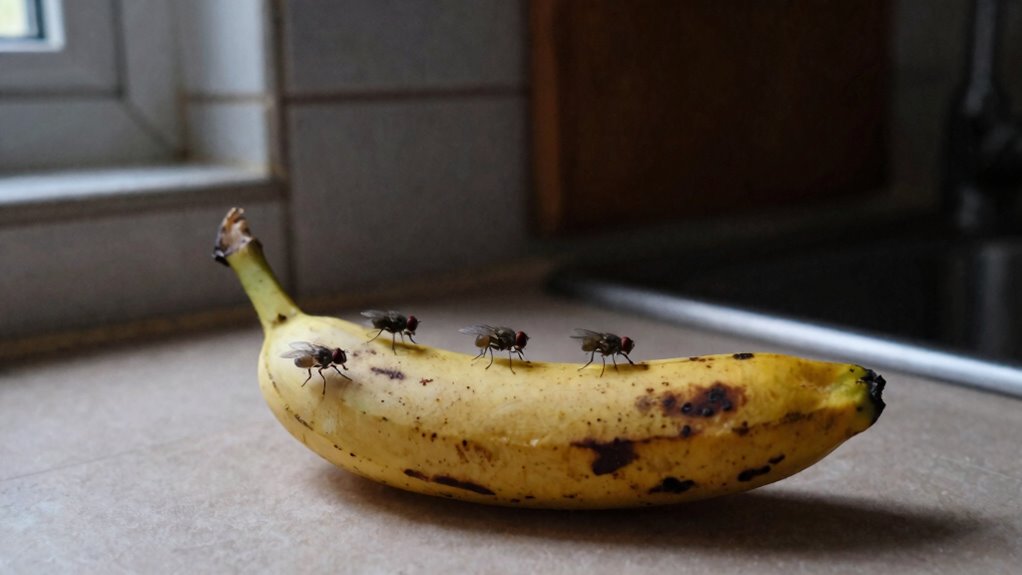
Every seasoned kitchen veteran eventually learns that fruit flies are less a pest problem and more a lifestyle audit. Their entire existence revolves around fermenting produce, spilled juice, and neglected compost bins. Cutting off food sources eliminates them fast. Unlike drain flies, which require aggressive drain maintenance to remove biofilm, fruit flies simply need a clean counter and a trash can with a lid. Storing flour in airtight containers with silicone gaskets and locking lids prevents pantry pests from accessing dry goods.
| Food Source | Action Required |
|---|---|
| Overripe bananas | Toss into freezer or compost |
| Spilled wine or beer | Wipe immediately with vinegar |
| Open recycling bins | Rinse cans and seal bags |
| Garbage disposal gunk | Run ice cubes and lemon peels |
| Pet food bowls | Wash daily; store dry kibble |
Remove these attractants, and the fruit flies lose their reason for existing. For effective fruit fly control, focus on kitchen sanitation and a strict trash disposal routine. Eliminating breeding sites is the fastest way to get rid of fruit flies in your home. This pest prevention strategy saves you from having to name them individually.
Frequently Asked Questions
Can Drain Flies Come From Potted Plants?
Drain flies do not typically come from potted plants. Their breeding grounds are the gelatinous biofilm inside drains, not potted soil dampness.
However, overwatered plants with decaying organic matter can attract fungus gnats. These tiny pests are often confused with drain flies, but they require different pest control solutions.
If you spot tiny flies emerging from indoor plant care neglect, inspect your drains first. A drain fly infestation needs a professional drain treatment or a gel based cleaner.
Drain flies lack interest in soil; they prefer the slimy film coating pipes. For effective pest control, target the source with a drain fly killer or a biological pipe cleaner.
If you want to buy the right product, look for a drain fly foam or a foaming drain cleaner. These products break down the biofilm and stop the breeding cycle naturally.
Do Fruit Flies Breed in Garbage Disposals?
Yes, fruit flies breed in garbage disposals. The fruit fly lifecycle relies on overripe or fermenting organic matter, and a disposal’s damp, food trapping environment creates an ideal breeding ground.
Scraps like fruit peels, juice, or leftover wine under the rubber flap are perfect egg laying spots. Unlike drain flies that live in sludge, fruit flies target exposed, sugary leftovers.
So, if you see tiny flies near the sink, check the disposal before blaming produce. For effective fruit fly control, a thorough cleaning with a disposal degreaser and a fruit fly trap kit can break the cycle.
For long term pest prevention, consider using a biological drain cleaner monthly. And if the infestation persists, a fly bait gel or an insecticide spray labeled for fruit flies is worth adding to your pest control routine.
Smart shoppers often pair a foaming disposal cleaner with sticky traps to catch adults. This combination targets both the source and the active flies, giving you faster results.
Can Both Pests Infest the Same Home at Once?
Yes, they absolutely can, and often do, infest the same home at once. Shared breeding sites, like a neglected garbage disposal or a damp floor drain, create a perfect duplex for both pests.
This means simultaneous pest control methods are non negotiable. You must scrub out organic sludge from drains for drain flies, whereas tossing overripe fruit and cleaning spills handles fruit flies.
Skip one treatment, and the other pest throws a housewarming party. To break the cycle for good, you need to tackle both breeding zones with a targeted drain cleaner or fruit fly trap.
For a smart purchase, look for a professional grade gel or foam that clears biofilm. Pair it with a sticky trap to monitor and catch adult flies.
Always start by removing the food source, then apply your chosen product. This approach stops recurring infestations and saves you from repeated service calls.
What Smell Attracts Drain Flies?
Drain flies are drawn to the fermented fruit odor rising from decomposing organic sludge in pipes, not sugary spills like fruit flies.
Unfortunately, the classic vinegar trap scent that works on fruit flies does nothing for these fuzzy pests.
They want that stinky biofilm, the moist, protein rich gunk that builds up inside your plumbing.
A simple trick is to tape a clear cup over the drain overnight.
If you spot tiny flies trapped inside tomorrow, that is the smell they follow.
The bottom line is to clean the drain, not the counter, for effective pest control.
For a lasting drain fly treatment, look for a professional grade drain gel or a foaming drain cleaner designed to dissolve biofilm.
These products target the organic sludge that attracts drain flies and eliminate the breeding source.
Using a bacterial drain cleaner weekly can prevent future infestations and keep your drains smelling fresh.
If the problem persists, consider a full pipe inspection to remove any hidden blockages.
How Long After Cleaning a Drain Will Flies Disappear?
You scrub the drain, but adult drain flies may still hover for a day or two. The real problem is eggs and larvae hiding in the biofilm.
DIY drain cleaning removes active pests but leaves the breeding cycle intact. For a professional pest control treatment, expect full elimination in four to six days.
Persistence is your best weapon against drain flies. You are not just cleaning pipes; you are breaking their reproductive cycle.
To stop an infestation permanently, invest in a targeted drain fly killer or call a pest control service. This ensures you tackle hidden colonies and prevent future outbreaks.


