
Drain flies are a sign you’ve got a slimy biofilm growing inside your pipes, not a problem with the adults you see buzzing around. Killing the adults with sprays only treats the symptom—you need to remove that gelatinous film to truly get rid of drain flies.
The only real fix is physical removal, using a foaming gel cleaner that dissolves the slime layer where larvae feed and breed. A product like Green Gobbler works well, but you have to let it sit, scrub, and repeat every two days for three weeks.
Skip the bleach—it polishes your pipes but leaves the slime intact. For stubborn infestations and step-by-step instructions, keep reading the full guide below.
At A Glance
- Physically remove drain slime with a snake to eliminate larvae food sources.
- Apply foaming gel cleaner nightly for three weeks to dissolve biofilm.
- Use enzyme-based drain cleaners like Bio-Clean to break down organic debris.
- Pour boiling water down drains twice weekly to prevent buildup.
- Skip bleach; it only polishes pipes without removing the slime layer.
What Are Drain Flies and Why Drains Attract Them
What exactly are drain flies, and why do they treat your drains like a five star hotel? These tiny moth like pests, typically 1.5 to 5 mm long, are covered in water repelling hairs.
Drain flies, just 1.5 to 5 mm long, are tiny moth-like pests with water-repelling hairs.
That unique hair biology lets them survive wet, slimy conditions where other insects drown. Their flight patterns are famously weak and jerky, so they flutter near drains then rest. They rarely stray far from their breeding site when you see them around your sink.
Drains offer the perfect buffet for these pests. A gelatinous film of decaying organic matter lines your pipes, which larvae feed on with strong jaws.
Infrequently used drains with stagnant water and buildup become prime real estate for laying 15 to 40 eggs per batch. Those eggs hatch in two days, starting a 21 to 35 day life cycle.
If you see erratic fluttering near a sink, you have a larval hotel, not just a fly problem. To start pest control, clean your drains with a stiff brush and use a thick gel formula to break down that slime film. This prevents future infestations and keeps your plumbing free of breeding grounds.
How to Confirm You Have Drain Flies, Not Fruit Flies
First, look closely at the flying pest to confirm the issue. Drain flies have a distinct, moth-like appearance, whereas fruit flies look more like tiny, classic flies.
Observe these key differences to identify the pest problem. Body structure is a strong clue for insect identification.
Drain flies are stocky, fuzzy, and covered in fine hairs, almost like a miniature moth. Fruit flies are smoother, with a slender, rounded abdomen and a more fly like silhouette.
Wing shape also helps homeowners tell them apart. Drain fly wings are broad and oval, held roof like over the body when at rest.
Fruit fly wings are more pointed and held out to the sides. They lack that fuzzy, moth like texture.
Resting behavior can guide your drain fly treatment approach. Drain flies are weak fliers, often sitting on walls or drains and crawling slowly.
Fruit flies are more active, hovering near fruit bowls or garbage cans. If it looks like a tiny, fuzzy moth near a drain, you likely need drain fly control.
If it is a smooth, fast fly near fruit, it is a fruit fly. Easy, right? Drain fly killer powder targets drain and sewer flies specifically, not fruit flies.
The Only Way to Kill Drain Flies for Good
Forget the foggers and sticky traps. They only catch adult drain flies while larvae feast in the drain biofilm.
The only way to kill drain flies for good is to physically remove their food source. Use a drain snake to break up clogs instead of chemical sprays that just mask the smell.
> Physically remove their food source. A drain snake breaks clogs, chemical sprays only mask the smell.
Bleach is a temporary fix, not a real solution for drain fly control. You need a foaming gel cleaner that dissolves the slime layer where larvae live.
Pour it down every drain nightly for three weeks. That’s how long their life cycle runs.
Kill the larvae to break the cycle and the flies vanish. No shortcuts, no magic sprays, just consistent physical drain cleaning.
For best results, buy a foaming gel cleaner for about $8 per bottle. Follow this pest control routine and the infestation will end.
Green Gobbler Enzyme Drain Cleaner is a liquid formulation that digests oils, fats, grease, and sludge within hours, safely removing the biofilm that feeds drain fly larvae.
How to Foam-Treat and Scrub Your Drains
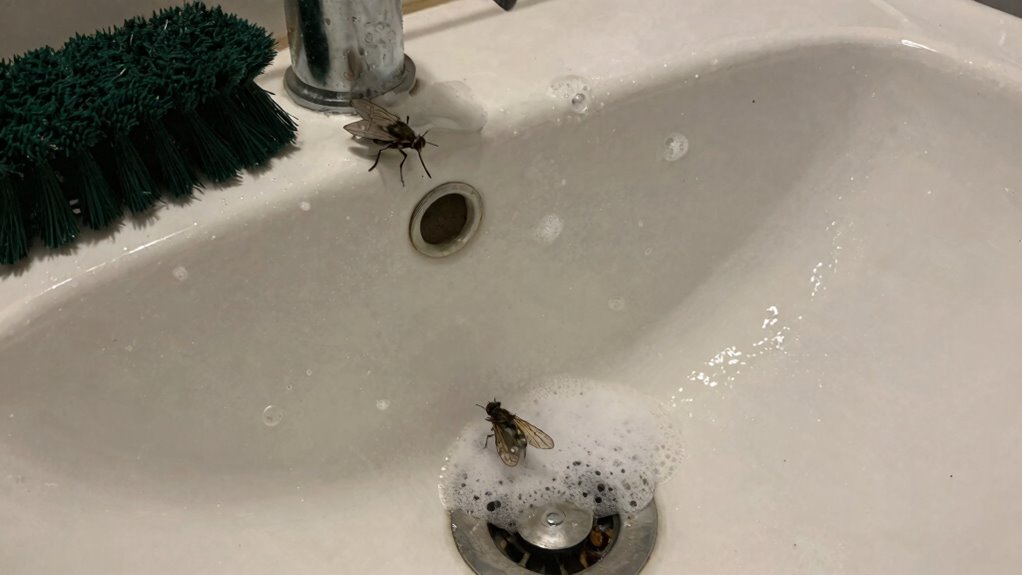
Why scrub when you can foam? Drain biology creates a gelatinous film that larvae love, but foaming agents dissolve it completely.
Pour a foaming drain cleaner like Bio-Clean or Green Gobbler, roughly $15, directly into the drain. Let it work for 15 minutes, then scrub with a stiff brush.
Foam expands upward, reaching hidden gunk in pipes and trap bends. It breaks down slime layers where eggs and larvae hide.
Natural repellents like peppermint oil in some foams discourage regrowth and keep pests away.
Wait two days, then repeat. That extra step kills any stragglers and ensures long term pest control.
No hype needed. It is just science with a dash of elbow grease.
Scrub, foam, repeat. Simple.
Still Seeing Flies After Cleaning? Inspect for Leaks
Sometimes after you’ve scrubbed and foamed every drain, those stubborn drain flies still appear. This means the real issue is likely a hidden leak, not a dirty drain.
Leaks create damp, organic-rich breeding grounds that attract flies like a free buffet. A hydronic heating pipe with a warm, slow drip under floorboards is a prime fly source.
A hidden leak creates damp, organic-rich breeding grounds that attract flies like a free buffet.
An outdoor drainage pipe causing pooling water near your foundation or garden turns your yard into a fly nursery. A toilet or sink supply line creates constant humidity behind a wall or vanity.
Check for water stains, warped wood, or musty smells to find the leak. If cleaning fails, you have a plumbing detective job on your hands.
Find the leak and fix it to stop the fly infestation at its source. Watch those flies finally pack their tiny bags when you eliminate the moisture.
For outdoor drainage issues, you can also deploy baited traps 20-30 feet from the leak to intercept adult flies before they breed further.
What to Do When a Hidden Pipe Is the Source
1. Find the crack: a slow drip under a slab keeps soil perpetually damp, ideal for larvae to thrive in decaying organic matter.
Repair the line with professional leaky pipe repair costing $150 to $800 depending on access.
2. A simple pinhole leak in a crawlspace is cheaper than a slab leak that requires digging.
Dry everything using a dehumidifier (rent one for $30 per day) and fans for 48 to 72 hours to eliminate humidity. Using a dehumidifier with auto or continuous drainage minimizes moisture buildup that attracts pests.
3. This process starves any remaining eggs and stops future fly infestations at the source.
Bottom line: you cannot spray your way out of a pipe leak. Fix the plumbing, dry the mess, and the flies vanish with no magic required.
Simple Habits to Keep Drain Flies From Returning
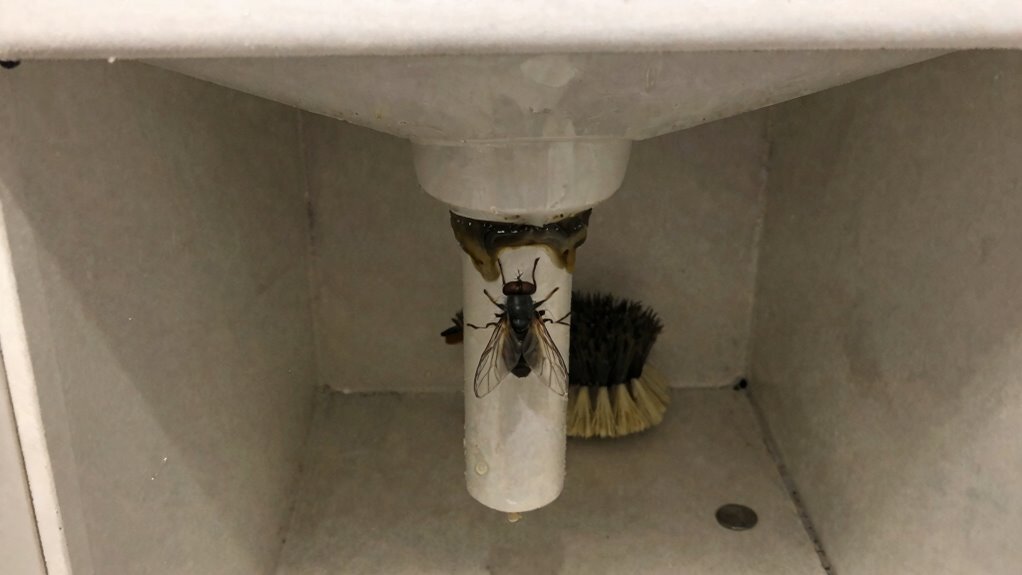
A fly proof home starts with a simple shift in routine: hot water flushes. Twice weekly, pour boiling water down every drain for a cheap, chemical free solution. This alone can halve drain fly infestations, but consistency matters more than force. Drain maintenance is a 10 minute habit, not a weekend project.
| Habit | Cost | Effort |
|---|---|---|
| Hot flush | $0 | 2 min |
| Baking soda scrub | $0.50 | 5 min |
| Enzyme cleaner | $8/month | 1 min |
Pair flushes with a monthly baking soda vinegar fizz, then chase with warm water. Enzyme based cleaners like Bio Clean, around $15, break down the biofilm larvae eat. Skip bleach because it polishes pipes but leaves the slime. Fly prevention thrives on routine, not drama. Watch for slow drains as that signals biofilm building. Set a phone reminder to keep drain flies away for good. Small, steady habits outperform panic scrubbing and protect your home from pests. Consistent use of enzyme drain cleaners prevents organic debris from building up before pests can thrive.
Frequently Asked Questions
Can Drain Flies Bite or Harm Humans?
No, drain flies cannot bite or harm humans because they lack the biting mouthparts needed to pierce skin.
They feed exclusively on decaying organic matter and nectar, so your blood and flesh are completely off the menu.
These pests are not known to transmit diseases, and they pose zero medical threat to you, your kids, or your pets.
That creepy-crawly fear you feel is usually fueled by pest control myths, not actual facts about drain fly behavior.
Their real damage is psychological and cosmetic: they signal a dirty drain and make your kitchen or bathroom look neglected.
The only genuine harm they cause is annoyance, especially when they swarm around sinks, trash cans, or compost bins.
Here’s the critical truth for any homeowner: killing adult drain flies with sprays or traps is a wasted effort unless you destroy their breeding film.
That slimy biofilm inside your pipes is their food source and nursery, so the only lasting fix is a deep drain cleaning or a biological drain cleaner.
If you want a smart purchase, look for enzyme-based drain treatments that dissolve the organic gunk, not just harsh chemicals that kill larvae on contact.
Pair that with a monthly maintenance rinse of boiling water or a foaming drain cleaner to keep the breeding film from ever reforming.
From a pest control professional’s standpoint, a drain fly problem is a sanitation warning, not a health emergency.
So clean your pipes, keep the traps dry, and you’ll eliminate the source faster than any insecticide ever could.
Bottom line: these flies are harmless to your body but harmful to your peace of mind, so choose a proactive drain maintenance routine today.
That’s the only way to ensure they stay gone for good and never come back to haunt your plumbing again.
Do Drain Flies Die in Winter or Cold Weather?
Drain flies do not all die in winter. Their survival depends on access to warm indoor spaces.
These insects keep breeding inside heated buildings, where drain fly larvae thrive in pipes year-round.
Cold outdoor temperatures kill adult drain flies quickly. But eggs and larvae hidden in drain slime survive the chill.
Come spring, the flies reappear because their breeding sites survived indoors. It is a clever but annoying trick of nature.
To stop them for good, use a gel drain cleaner or enzyme treatment to break down the slime.
For a fast fix, try a foaming drain fly killer designed for professional pest control results.
When you target the breeding ground, you eliminate the whole infestation cycle.
Are Drain Flies Attracted to Light at Night?
Drain flies are indeed attracted to light at night, though their nighttime activity is weak. These tiny, hairy pests are terrible fliers, often stumbling around like moths with no sense of direction.
If you spot them near windows or lamps, it signals breeding sites are close by. Don’t just swat them, because that only treats the symptom.
Instead, you need to locate the gunk filled drain they are breeding in. This is the only way to stop the infestation for good.
For effective pest control, consider using a biological drain cleaner to break down the organic sludge. That is the smart purchase that will actually eliminate the source.
Professional pest control products like enzyme treatments or drain gels work best. Apply them directly into the drain to kill larvae and prevent future outbreaks.
How Do Drain Flies Get Inside From Outside?
Drain flies enter homes through any small crack or gap, so common entry points include gaps around pipes, windows, and door thresholds. Garden migration happens when they breed in damp outdoor environments like compost piles or clogged gutters, then wander inside seeking food and moisture.
These weak fliers exploit existing openings rather than forcing new ones, so inspecting your foundation and exterior walls is a smart first step. If a window screen has a tear, that is an open invitation for a drain fly infestation.
For effective pest control prevention, seal gaps with caulk and install weatherstripping around doors. Managing outdoor breeding sites like clearing gutters and turning compost regularly cuts off their source, which helps you stop the problem before it starts.
Can Drain Flies Lay Eggs in Toilet Tanks?
Yes, drain flies can lay eggs in toilet tanks, and that stagnant water is a perfect breeding ground for them. The gaps around your flush valve or fill tube give these weak fliers easy access to the tank’s interior.
Biofilm buildup inside the tank creates a slimy layer of organic gunk that feeds drain fly larvae. Scrubbing the tank’s interior and sealing those entry points is a simple but effective pest control strategy.
If you are looking for a permanent drain fly solution, check the toilet tank seal for cracks or gaps. Adding a biological drain cleaner to your routine can break down the biofilm and eliminate the food source.
For active infestations, a professional grade insecticide formulated for drain flies will kill the adults and larvae on contact. This practical step stops the cycle and prevents future drain fly eggs from hatching in your toilet tank.
Buy a foaming drain cleaner or a gel based treatment specifically labeled for sewer flies to target hidden deposits. Regular maintenance like this protects your bathroom and saves you from recurring pest control headaches.


