
So you’ve spotted tiny flies hovering near your sink, and you’re guessing they’re fruit flies. They’re actually drain flies, and they breed in the slimy biofilm lurking inside your pipes.
The good news is you can banish them with a simple routine—no harsh chemicals needed. Start by scrubbing the drain with a stiff bottle brush, then pour in baking soda and vinegar to kill larvae on contact.
Flush with boiling water, and repeat every seven days to break the cycle. The full guide also covers enzyme treatments and daily habits to keep them gone for good.
At A Glance
- Misidentifying drain flies as fruit flies wastes effort; drain flies are fuzzy moth-like, not tan with red eyes.
- Eliminate pipe biofilm by scrubbing with a stiff bottle brush to remove eggs, larvae, and slime.
- Pour ½ cup baking soda with 1 cup vinegar, let fizz 15 minutes, then flush with boiling water.
- Apply enzyme treatments like Bio-Clean weekly to break down organic buildup in drain pipes.
- Use sticky traps over drain openings overnight to catch emerging adults and monitor infestation decline.
Why “Fruit Flies in Drains” Are Actually Drain Flies
If you’ve noticed tiny flies circling your kitchen sink, you might automatically blame fruit flies, but those pests are likely drain flies instead. The natural history of drain flies, part of the Psychodidae family, explains their fondness for sludge.
Their life cycle stages, egg, larva, pupa, and adult, thrive in the biofilm coating your pipes, a gooey mix of grease and soap. Unlike fruit flies, which crave fermenting fruit, drain flies breed in that muck.
Drain flies breed in the muck coating your pipes, not in fermenting fruit.
Larvae are nearly translucent, feeding on bacteria in clogs. Adults have fuzzy wings, are moth-like, and live only 20 days.
If you see them near drains, not your fruit bowl, it’s a solid bet you’ve got drain flies. For effective pest control, focus on cleaning your drain lines and removing organic buildup. For long-term control, combine a drain treatment with sticky traps to catch adult flies while the gel dissolves the breeding sites.
You can use a drain gel, enzyme cleaner, or call a professional pest control service for treatment. The bottom line is wrong pest equals wrong fix.
How to Confirm You’ve Got Drain Flies (and Not Fruit Flies)
The first clue is visual: drain flies look like tiny, fuzzy moths. Fruit flies are tan with red eyes, like miniature vampires without the cape.
Next, check the breeding site. Drain flies emerge from slimy pipes you might need to treat with a professional drain cleaner.
Fruit flies swarm around a forgotten banana or that open vinegar bottle. So if a fly is hovering near a drain with wings that look dusted in flour, it is almost assuredly a drain fly.
Identifying these pests correctly is key for effective pest control. Using a targeted drain fly treatment will eliminate the source.
This helps you avoid wasted effort on fruit fly traps. For effective results, apply a gel treatment directly into problem drains overnight. For a long term solution, inspect and clean your plumbing regularly.
Visual Differences
Since drain flies and fruit flies look similar at a glance, both tiny and prone to hovering around sinks, it’s easy to misidentify the culprit and waste time on the wrong treatment.
A close look reveals the giveaway: drain flies are fuzzy and moth-like, with heart-shaped wings held roof-style, while fruit flies are smooth, tan with red eyes, and dart quickly.
The dad joke here is one’s a fuzzy monster, the other’s a tiny speed demon.
Check their shape: drain flies rest with wings flat, fruit flies scuttle.
Regular disposal maintenance stops sludge buildup that breeds drain flies, a key pest control step.
For fruit flies, try natural repellents like apple cider vinegar traps for effective home pest solutions.
Pro tip: if you see a fuzzy fly near a drain, skip the fruit basket search.
It’s a drain fly, so spend your energy scrubbing pipes instead.
That’s the bottom line for choosing the right pest control treatment.
Breeding Site Clues
One key clue separates drain flies from fruit flies: where they breed. Drain flies thrive in the goopy, smelly slime, the result of biofilm breakdown, inside your pipes.
Fruit flies, on the other hand, prefer rotting bananas on the counter. So grab a flashlight and look for tiny, moth-like adults hovering near sink drains, not fruit bowls.
You can also pour a cup of water down the drain, then press a clear cup over the opening. If flies appear inside the cup within a day, you’ve confirmed a drain fly infestation.
Spotting larvae in the drain gunk is another giveaway, and it points to an active breeding site. Persistent drain fly control often requires professional drain cleaning when scrubbing with a brush fails.
Remember: no fermenting fruit means no fruit flies, but a slimy drain is pure paradise for drain flies. For targeted pest removal, check the breeding site first, not just the flying adults, since that’s where the real solution begins. For outdoor trash cans, consider a tight-fitting lid as a first line of defense against flies and maggots.
Where Drain Flies Breed Inside Your Kitchen Pipes
Drain flies prefer to breed in the dark, slimy biofilm inside your kitchen pipes. This gooey layer is made of decomposing food, grease, and soap scum that coats the pipe walls down to the P-trap.
The sludge traps moisture and creates a perfect nursery for whitish, nearly translucent larvae. Enzyme cleaners can break down some organic sludge, but they rarely penetrate thick biofilm layers hiding eggs and larvae. Regular weekly use of enzymatic products prevents organic gunk from hardening into serious blockages.
A single pour of drain cleaner won’t solve the problem. For stubborn drain fly infestations, a professional drain service may be needed, costing around $150 to $300.
Professionals physically scrub and jet the pipes to remove the core habitat entirely. Without eliminating that slimy breeding matrix, drain flies will keep returning.
What You’ll Need to Scrub Biofilm Out of Your Drain
You will need three core tools to scrub biofilm out of your drain: a stiff-bristled bottle brush under 3/4 inch wide, baking soda, and vinegar. The brush scrapes away the slimy gunk, whereas baking soda and vinegar create a fizzy reaction that loosens stubborn residue. Enzyme-based formulas break down organic buildup to prevent clogs without damaging pipes.
For stubborn cases, homemade enzyme treatments can break down organic matter, but they are no substitute for a good scrub. If the problem persists, a professional drain inspection may reveal hidden breeding spots deeper in the pipes, which is key for effective pest control.
The table shows your options: a bottle brush for scraping, baking soda as an abrasive cleaner, vinegar for an acidic reaction, and enzyme treatment for biofilm breakdown. Prices range from $5 to $10 for a brush, $1 to $3 for baking soda, $2 to $4 for vinegar, and $10 to $20 for enzyme treatment.
Skip the flimsy brushes. Invest in a sturdy one to buy the right tool for the job. Your drain will thank you, and you will keep pests away naturally.
Step-by-Step: How to Clean Your Drain to Remove Eggs and Larvae

Before scrubbing feels like a futile chore, know the straightforward truth about eliminating drain fly eggs and larvae. First, perform a pipe inspection using a flashlight to locate the slimy biofilm, that jelly-like gunk lining the pipes. Without this step, scrubbing is useless.
Next, remove the drain trap if accessible, using a bucket underneath. Scrub it vigorously with a stiff bottle brush, focusing on ridged areas where eggs hide. For fixed drains, pour half a cup of baking soda followed by one cup of vinegar, letting it fizz for fifteen minutes. Then flush with a pot of boiling water to kill larvae and eggs instantly.
A final flush with cold water clears loose debris. Repeat this monthly as part of regular sink maintenance to prevent reinfestation. You will see fewer flies within days, proving that manual pest control effort beats sprays with pet-safe ingredients every time. This method targets the drain fly breeding cycle directly for long term results.
Does Boiling Water Kill Drain Flies? What Science Says
Many homeowners ask whether boiling water can wipe out drain flies. Science confirms it kills on contact but only at the surface level.
Boiling water instantly dissolves soft bodied larvae and eggs it directly hits. However it fails to penetrate thick biofilm or reach deep pipe crevices where flies hide.
For lasting pest control results combine boiling water with these steps. First scrub the drain with a bottle brush to remove sludge before pouring water.
Think of it like prepping a wall before paint. Next use a carpet steaming attachment to blast hot vapor into drains and reach cracks boiling water misses.
Regular vacuum maintenance of drain covers prevents debris buildup that protects larvae. Repeat the flush every seven days to break the breeding cycle.
One pour is never enough. Without scrubbing or steaming you are just making soup for the survivors. For chemical assistance, BASF Alpine Fly Bait Spray remains effective for up to 30 days when applied to surfaces near drains.
The Best Traps to Catch Adult Drain Flies Fast
Sticky traps placed directly over drain openings catch flying adults fast by intercepting them at their exit point.
Homemade vinegar lures, though better for fruit flies, can likewise pull in drain flies if placed nearby.
Targeted drain covers, like those from the “Drain Cover” brand for about $10, block escape routes yet still allowing water flow.
This simple pest control solution works best when you focus on breeding sites in sinks and floor drains.
For fast drain fly elimination, combine traps with a thorough cleaning of organic buildup.
You can buy these covers online to stop flies from emerging while you treat the pipe.
Consider using fine mesh lids with openings smaller than 1.5 mm to block emerging flies from drains.
Sticky Trap Placement
A drain fly trap is just a piece of sticky plastic, but placement turns it into a weapon. Proper sticky trap placement is the difference between catching stragglers and confirming your drain is the source.
For maximum effect, follow this setup.
Tape the trap directly over the drain opening overnight, so adults emerging from the biofilm get stuck immediately.
Place a second trap near the P-trap access panel under the sink. This catches flies that bypass the main opening.
Set one near a slow-draining pipe. Dampness-loving drain flies often congregate there first.
Swap traps daily for accurate monitoring trap catch counts. This helps you track if numbers climb or drop.
This method gives calm, reliable results. No vinegar fuss, just sticky plastic doing its job.
You will know exactly where the pests live. That is half the battle won.
These traps rely on a waterproof and UV-resistant adhesive that prevents degradation in damp drain environments.
Homemade Vinegar Lures
Homemade vinegar lures offer fast pest control for fruit flies. Those sticky traps are fine for a reality check, but vinegar lures fight back faster.
A simple jar works wonders for effective fruit fly management. Pour two inches of apple cider vinegar, then add three drops of dish soap to break surface tension.
Cover the jar with plastic wrap and poke small holes. The scent attractants in the vinegar mimic fermenting fruit, drawing adults downward for a final, soapy swim.
For heavier infestations, upgrade your trap bait recipes. Mix vinegar with a splash of red wine or a pinch of sugar to boost appeal.
Place lures near the drain rim, not inside the drain itself. Adults rest on edges, so positioning there improves your fly killing catch rate.
Dad quip: they check in, but they never check out. These traps cost pennies and catch dozens overnight.
They beat fancy gadgets hands down for user tested fly removal. Unlike plug-in devices, these passive traps consume no power continuously and require no electricity. Bottom line: set two traps, wait 24 hours, and watch the count drop.
Targeted Drain Covers
Four critical points for choosing a targeted drain cover. A foam seal must be included to create an airtight perimeter around the drain opening with no sneaky gaps.
The sticky insert needs to be double sided, catching flies from both directions as they try to exit or re enter. This is a key pest control feature for breaking the breeding cycle.
The drain cover should fit standard two inch openings. Universal models cost around eight to twelve dollars and are a solid buy for homeowners battling drain flies.
Placement demands leaving the cover in place for two to three nights. After that, replace the sticky insert weekly until your catch count hits zero.
Bottom line: a targeted drain cover with a foam seal stops the breeding pipeline cold. No chemistry is needed, just physics and patience for effective pest elimination. For long-lasting control, consider traps with super sticky glue that delivers up to six months of coverage for other pests like cockroaches and ants.
Use Enzyme Cleaners to Prevent Drain Flies From Returning
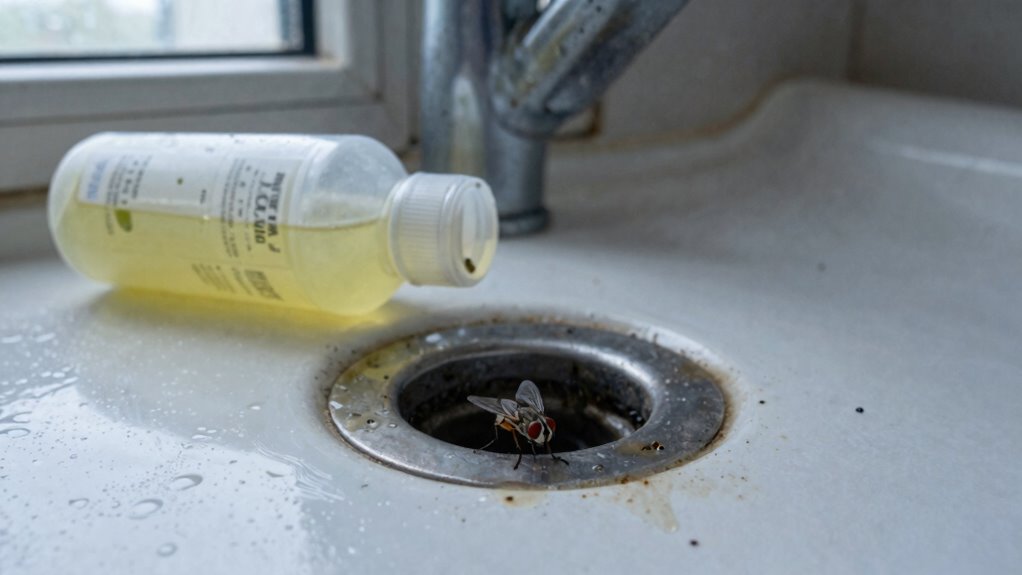
| Product | Cost | Key Feature |
|---|---|---|
| Bio-Clean | $15 to $20 | Bacteria/enzyme blend |
| Green Gobbler | $12 to $18 | Packs for monthly use |
| Drano Max Gel | $6 to $10 | Fast-acting, less natural |
| CLR Drain Care | $10 to $14 | Foaming, easy to apply |
| Homebrew (vinegar + yeast) | $2 to $5 | Cheap, but slow |
Pour a capful down each drain weekly, especially after scrubbing. It’s like giving your pipes a probiotic. Within two weeks, you’ll see fewer flies or none at all. Bottom line: spend $15 now, skip the return visit. For long-term pest prevention in other areas, maintaining humidity levels between 40-50% stops booklice reproduction.
How Long Until the Infestation Dies Off After Cleaning
So you’ve scrubbed the pipes, poured boiling water, and maybe even used a probiotic with enzyme cleaner. Now you wait, wondering how long the bothersome flies persist.
The answer depends on the lifecycle of adult drain flies, which live around 20 days after breeding sites are removed. Without fresh sludge or fruit for egg-laying, a natural die off occurs gradually.
Day 1 to 3: Adults linger, confused, searching for food. Expect to see four to eight flies daily.
Day 4 to 7: Egg deposits, up to 100 per female, fail to hatch without clean dampness. Numbers drop by half.
Day 8 to 14: Old adults die off, with only stragglers remaining. You may see just two to five per day.
Day 15 to 20: The infestation largely ends. A fly trap or two might catch a few stragglers before total die off.
Patience wins. No fresh breeding spots means no new flies, so keep your pest control efforts consistent.
Daily Habits That Keep Drain Flies Out of Drains for Good
A simple nightly habit works wonders: pour a kettle of boiling water down every drain. This kills larvae and eggs and is a key part of dampness reduction since standing water is their spa day.
Pour a kettle of boiling water down every drain nightly—it kills larvae, eggs, and cuts the dampness they thrive in.
Every morning, run cold water for ten seconds to flush the pipes. This prevents fresh gunk from settling and reduces the organic matter pests feed on.
The real secret is biofilm prevention, that slimy, bacteria-filled film they love to breed in. Once a week, scrub the drain opening with an old toothbrush and dish soap, then flush.
It is cheap, easy, and stops the party before it starts. For professional drain fly control, this routine is a proven solution.
Bottom line: a minute a day keeps the swarm away. No hazmat suit or PhD in pest management is required to maintain a drain fly free home.
Before you finish, adding proper airflow and ventilation alongside the cleaning routine will further discourage pests from lingering in damp spaces.
Frequently Asked Questions
Can Drain Flies Come Back After a Thorough Cleaning?
Yes, drain flies can return after a thorough cleaning. Pest persistence often comes down to missed biofilm pockets or new organic buildup in your pipes.
Those fuzzy adults only live about 20 days, but new sludge brings new generations fast. To stop drain fly infestations for good, scrub your drains weekly with a stiff brush and boiling water.
Fix any leaks immediately to eliminate the moisture they love. Think of it like keeping a tidy kitchen: slack off, and they will come back.
The best drain fly treatment is consistent prevention, not a one time fix. Stay on top of routine cleaning and you will avoid needing stronger pest control products later.
Will Enzyme Cleaners Harm My Septic System?
Yes, enzyme cleaners are safe for your septic system. They contain beneficial bacteria that eat organic sludge, not harsh chemicals that kill good microbes.
This enzyme safety in action helps break down waste naturally, promoting septic harmony. But don’t go overboard dumping gallons weekly, it’s pointless and wasteful.
A monthly dose, around $10 to $15 per bottle, works fine. Pick a reputable brand and follow the label, you’re good with no septic panic needed.
If you also manage pest control around your property, remember that enzyme cleaners won’t interfere with common pest control treatments. In fact, keeping your septic healthy reduces odors that attract pests like flies and rodents.
For pest control buyers looking to maintain both a clean home and a healthy septic, enzyme cleaners are a smart purchase. They support your pest control efforts by minimizing attractants, so you can focus on eliminating bugs effectively.
Do Drain Flies Bite or Transmit Diseases?
No, drain flies do not bite or transmit diseases. Their anatomy lacks mouthparts for biting, and their life cycle is too short for disease transmission.
They are annoying, admittedly, like fuzzy winged roommates who never clean. But they are not dangerous to your family or pets.
Focus on scrubbing that biofilm in your pipes. That slimy gunk is their true home and breeding ground.
Get rid of it with a professional drain treatment or a bacterial drain cleaner. Those moth like pests vanish quickly.
For long term pest control, schedule a plumbing inspection and pipe cleaning service. This stops future infestations and protects your home.
If you need a proven chemical drain treatment to kill eggs and larvae, choose a product labeled for drain fly control.
Can Drain Flies Infest Other Rooms Besides the Kitchen?
Yes, drain flies can infest other rooms. This is drain migration, not teleportation.
A bathroom sink or shower drain breeds them. Then they wander, becoming unwelcome bedroom flies.
They follow dampness and biofilm, not just food. If you spot fuzzy, moth like insects near your tub or nightstand, check every slow drain.
The bottom line is to fix leaks and scrub pipes. Stop their slimy highway with a targeted drain fly treatment.
Look for a professional grade gel or foam to break down the biofilm. That kills the larvae and prevents reinfestation.
You want a solution that works in sinks, showers, and floor drains. Buy a pest control product labeled for drain flies to get lasting results.
How Often Should I Scrub My Drains to Prevent Reinfestation?
Scrub your drains every one to two weeks to prevent biofilm from taking hold. That slimy organic sludge coating your pipes is the number one attractant for drain flies and gnats.
If you notice slow drainage or see tiny flies buzzing around the sink, step up your scrubbing routine to once a week. Think of it as a mini science experiment you never want to see thrive in your home.
A quick weekly scrub with a stiff brush and boiling water keeps their breeding ground clean and fresh. Less biofilm means fewer pests, so this small habit directly reduces your risk of reinfestation.
For stubborn buildup, pair your brush with a enzymatic drain cleaner or a foaming gel designed for professional pest control results. You want a product that breaks down organic matter without harsh chemicals that can damage pipes.
Buying a dedicated drain scrubber and a preventive treatment kit saves you from a bigger, buzzier headache later. I recommend adding a monthly maintenance dose of a biological cleaner to keep the pipe walls slick and unattractive to breeding flies.
Make this part of your weekly cleaning checklist, just like wiping counters or taking out trash. It’s a two minute task that delivers long term protection against a full blown drain fly infestation.
Search for keywords like “drain fly prevention” and “biofilm remover for pipes” when shopping, and choose a solution with positive reviews from pest control pros. You’ll get the best value by investing in a product that targets larvae, not just adult flies.
Stick to this schedule, and you’ll rarely need to call an exterminator for sink pests. Consistency is your cheapest and most effective defense.


