
Getting rid of maggots in a garbage can is one of those gross chores you just want over with fast. Boiling water is your quickest, cheapest weapon—a full kettle poured directly on them kills instantly on contact.
It won’t launch them into the air like chemicals can, and metal or heavy-duty plastic bins handle the heat fine. After that, a quick bleach scrub and an hour in direct sunlight finishes the job and prevents a repeat.
But that’s just the start. This guide covers non-toxic alternatives, lid fixes, and the long-term habits that stop maggots from ever coming back.
Stick around for the simple steps that keep your can clean and your trash duty drama-free.
At A Glance
- Pour boiling water directly over maggots for instant, chemical-free kill.
- Use a 1:1 bleach-water solution; ventilate area and wear protective gear.
- Sprinkle salt or food-grade diatomaceous earth to dehydrate maggots naturally.
- Clean bin with 1:10 bleach-water, rinse, and dry fully in sunlight.
- Inspect and seal lid cracks with silicone caulk to prevent reinfestation.
Why Maggots Appear and How to Spot an Infestation
Maggot infestations in garbage cans are a classic example of flies finding a food source and multiplying fast. A single female fly can lay up to 150 eggs directly on rotting leftovers, and those eggs hatch within just 24 hours. The larvae, or maggots, then feed on the decaying waste itself, which is why a bin left unemptied for a week in the sun becomes a breeding ground. To spot an infestation, check the bottom and sides of the can for clusters of small, cream-colored worms that wriggle in tight groups. A sour, ammonia-like odor is another reliable warning sign that flies have been active inside. The root cause is almost always a cracked lid or a torn garbage bag, which gives flies easy entry to the organic matter. Sealing those entry points with a tight-fitting lid and using thick, puncture-resistant bags will stop new fly activity at the source. For active infestations, you can pour boiling water with a little vinegar directly over the maggots to kill them instantly, then scrub the bin with a disinfectant spray. To prevent future problems, consider a vapor-based treatment that kills both adult flies and larvae inside the can for up to four months. If you need a permanent fix, look for trash cans with locking mechanisms or a fly-proof seal, which are common in pest control supply stores. Regularly scheduling a garbage pickup twice a week in warm months also reduces the chance of eggs hatching before the bin is emptied. By closing off access points and clearing organic buildup, you break the fly’s reproductive cycle completely. A quick inspection every few days, focusing on corners and under the bag’s fold, saves you from a full-blown infestation later. After cleanup, sprinkle a thin layer of diatomaceous earth along the bottom to dry out any remaining larvae and deter adult flies from landing. Remember, the goal is both immediate removal and long-term prevention, so pair your cleaning with a habit of tying bags tightly and never leaving them overnight.
Pour Boiling Water Into Your Trash Can for an Instant Kill
Now that you know how to spot the little wrigglers before they take over, it is time for the most satisfying cure available: boiling water.
The method is brutally simple, requiring a full kettle of water at a rolling boil, typically 212°F, to deliver an instant kill on contact.
Bin material safety matters here.
Metal and heavy-duty plastic bins handle the heat fine, but thin, cheap plastic cans may warp, so check the label first.
Use a water temperature of 212°F, boiling, and pour immediately after boiling.
For bin material safety, stick with metal or thick plastic and avoid thin low-grade plastic.
This pest control trick works best for small infestations, using one kettle per standard can.
Pour directly over the maggots, discard the dirty water afterward, then let the bin dry completely.
It is a chemical free fly control solution with no lingering smell.
You get a clean dead verdict and a fast way to eliminate larvae without harsh products.
BASF Alpine Fly Bait Spray offers a commercial-grade alternative with residual power that lasts up to 30 days for ongoing protection.
Use Vinegar or Bleach to Kill Maggots and Remove Odors
Vinegar and bleach give you two effective ways to eliminate maggots and remove odors. For a safe and natural maggot killer, mix one part vinegar with three parts hot water in a sealed container.
Leave the lid on for about 30 minutes to kill the infestation. This homemade pest control solution also cuts through foul smells without harsh chemicals.
Bleach works as a powerful disinfectant that kills maggots through its fumes. It acts in the same 30 minute timeframe but requires strong caution due to toxic vapors.
Always ventilate the area fully and wear rubber gloves when using bleach. This approach suits tough pest situations where you need a potent odor eliminator and fast maggot removal. To prevent future infestations, using enzyme-based cleaners regularly breaks down the organic waste that attracts maggots.
Vinegar Solution Preparation
One part white vinegar mixed with three parts hot water creates an effective solution for killing maggots and eliminating odors. Plain white vinegar works best due to its high acidity and low cost, making it ideal for pest control needs.
Apply this solution directly over maggots and close the lid for 30 minutes to trap the fumes. The acetic acid in vinegar breaks down rotting smells, leaving only a faint temporary scent that fades quickly.
This homemade solution also kills fly eggs and prevents future infestations when sprayed weekly on bin surfaces. Simply rinse the bin afterward to avoid any lingering vinegar smell in your trash can. For long-term protection against pantry pests, store dry goods in containers with silicone gaskets and locking hinges to block infestations at the source.
Bleach Solution Safety
A bleach solution of one part bleach to one part water is a powerful method for maggot removal and garbage can sanitation. This high concentration gets the job done, but it demands respect and proper safety precautions.
Protective gear like rubber gloves and safety glasses is non‑negotiable because bleach fumes are harsh and can irritate your lungs. Keep the bin outdoors or in a well‑ventilated area to avoid breathing in the fumes.
Wear old clothes too, since bleach splatters can ruin fabric. Mix carefully by adding bleach to water, never the other way around.
Leave the lid closed for 30 minutes so the fumes suffocate the maggots. Rinse thoroughly afterward to avoid chemical residue.
This heavy‑handed approach is effective for pest control, but follow all safety steps to prevent a hazmat situation. For best results, treat the bin outdoors and use a proper pest treatment routine.
Application and Timing
Both vinegar and bleach solutions follow a similar game plan, but the timing and application make all the difference. For best results, treat the bin in the morning, then let solar heating boost the kill.
Apply the solution directly to maggots, not just the bin floor, and close the lid tightly. This traps fumes and prevents escape, which is key for effective pest control.
Wait 30 minutes, then rinse with hot water; repeat if needed. After cleaning, inspect the lid for cracks and consider replacement parts or a full bin lid replacement.
Solar heating works like a free oven, so leaving the treated bin in direct sun for an hour speeds up chemical action. Forget the lid, and you’ve just made a sauna for flies, which is a major fly prevention mistake.
Replace a cracked lid immediately, because a loose seal is an open invitation for future infestations. For long term pest management, apply in sunlight, seal tight, and swap worn lids.
Apply Salt or Diatomaceous Earth for Non-Toxic Treatment

When chemical sprays feel like overkill, you can defeat pests with a simple kitchen staple. Salt and diatomaceous earth offer a surprisingly effective, non toxic alternative for pest control.
The nontoxic benefits are clear. Salt dehydrates maggots by sucking dampness from their bodies. Diatomaceous earth, a fine powder made from fossilized algae, does the same through microscopic abrasions. For best results, ensure you use 100% pure amorphous silica diatomaceous earth to avoid harmful additives.
Salt dehydrates maggots; diatomaceous earth does the same through microscopic abrasions.
For outdoor application, sprinkle either substance generously over infested areas in direct sunlight. Sunlight accelerates dehydration, so leave it for an hour. Then sweep out the corpses with ease.
Both options cost under ten dollars for a large bag. They pose no risk to pets or plants. There are no harsh fumes, no scrubbing, just physics doing its job.
Skip the bleach and grab the table salt. Let nature handle the mess with this simple, toxin free solution.
Clean Your Bin Thoroughly After a Maggot Infestation
After the maggots are dead and your salt or diatomaceous earth has done its job, the real work starts. A thorough clean up is not just about looks; it prevents odors and stops any lingering eggs from hatching into a new fly problem.
Deep cleaning with hot water and bleach is your first move. Scrub every surface, inside and out, using a stiff brush and a solution of one part bleach to ten parts hot water.
This kills any remaining eggs and strips away the greasy film that attracts flies to your bin. For effective pest control, do not rush this step; coverage matters more than speed.
Next, rinse the bin completely with a garden hose to wash away all bleach residue. Then spray the inside with a 50/50 vinegar and water solution, which neutralizes smells and sanitizes the plastic.
If you use diatomaceous earth for future prevention, opt for food-grade DE to ensure it is safe around pets and children during application.
Bin drying is critical because maggots thrive in damp conditions. After rinsing, tip the bin on its side in direct sunlight for at least one hour.
A completely dry bin is your best defense against reinfestation, so check for hidden puddles in corners. For odor prevention, this dry time is just as important as the cleaning itself.
Before you put the bin back into service, inspect the lid and sides for any cracks or gaps. A small tube of silicone caulk, about $5 at a hardware store, seals those entry points.
This simple crack sealing step stops future flies from getting inside and laying eggs. Once sealed, your bin is ready for regular use, and you can focus on ongoing fly control habits.
If you want lasting results, pair this cleanup with weekly rinses and a tight-fitting lid. These practical measures reduce the need for deep interventions and keep your outdoor space pest free.
Prevent Future Maggot Infestations With Simple Maintenance
Preventing future maggot infestations comes down to a few simple habits that cost almost nothing but save a world of hassle.
First, focus on maximizing airflow inside the bin by drilling a few quarter-inch holes near the top rim, about three inches down. This lets hot, damp air escape, which reduces the humid environment flies and fly larvae love, but keep those holes small enough that mice can’t squeeze through.
Next, sealing entry cracks is non-negotiable, so check the lid’s rim and hinge areas for gaps wider than a pencil tip. Replace warped lids or apply weatherstripping tape for a tight seal, and this single step blocks adult flies from laying eggs near your waste.
Empty the bin at least weekly, and always use heavy-duty bags, specifically 13-gallon, 2-mil thick options that won’t tear or leak. Rinse the interior monthly with a vinegar solution to remove lingering odors that attract new pests, and this also clears away residue where maggots could hatch.
These few minutes of pest prevention maintenance keep maggots from ever returning, which beats another boiling-water rodeo.
For long-term waste bin pest control, pair this routine with a fly repellent spray around the lid and a tight-fitting lid lock for extra security. Buy a bin with a locking handle if you’re replacing yours, and you’ll cut off the easiest entry points for houseflies and blowflies.
Weekly rinsing also lets you spot early signs of fly activity, like tiny eggs in corners, so you can act before an infestation takes hold.
Keep the bin shaded and off damp ground, as that reduces moisture buildup and makes the area less inviting for pests.
Finally, consider a sprinkle of food-grade diatomaceous earth along the bottom after each rinse, since it dehydrates any larvae that might slip in, using a physical action that damages insect exoskeletons without chemicals. With this simple maintenance plan, you’ll never need chemical treatments again, and your yard stays odor-free and maggot-free all season.
Should You Worry About Health Risks From Maggots and Flies?
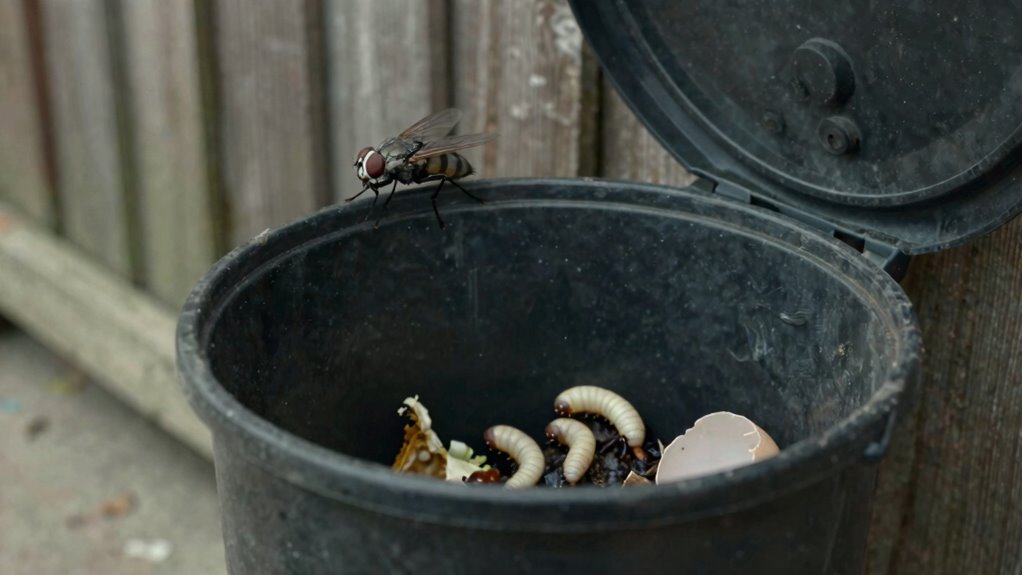
The direct health risk from maggots themselves is minimal, as they rarely bite or infest living tissue.
The adult flies they become are the real concern here, carrying bacteria like typhoid or dysentery from waste to your kitchen counters.
This is a genuine but uncommon problem worth a moment of caution.
As long as you wear gloves and wash up after cleaning the bin, you’re handling the situation with the same sanitary care you’d give any messy chore.
Don’t let it turn into a panic, just stick to proper pest control habits.
A quick inspection of trash areas and sealing entry points can prevent fly infestations before they start.
Products like OFF! Deep Woods Mosquito Repellent Wipes can protect against adult flies and other disease-carrying insects during outdoor cleanup.
Disease Transmission Risk
Flies regurgitate digestive fluids onto food before eating, contaminating surfaces with pathogens. Fly eggs and maggot excrement can carry harmful microorganisms if accidentally ingested.
Infected bins left untreated for days increase airborne bacteria near your living space. Children or pets touching contaminated garbage can transfer germs to mouths or wounds.
The fix is straightforward. Remove the maggots, clean the bin, and seal it.
Kill the infestation now with a simple fly control treatment. You will stop the fly problem before it multiplies into a health hazard.
Bottom line, do not panic. Act fast to eliminate the risk. A properly installed EPDM rubber seal kit blocks beetles and other crawling insects from entering through gaps.
Low Direct Maggot Threat
So, should you actually worry about health risks from maggots and flies? The good news is that maggots themselves pose a low direct maggot threat, meaning they rarely bite or infect you directly.
The real concern comes from the adult flies they become. Flies landing on your trash and then your kitchen counter create a disease transmission risk, as they can carry bacteria that cause typhoid or dysentery.
But here is the thing: the risk stays low if you handle the mess quickly. Maggots are mostly a sign of neglected food waste, not a medical crisis.
Flies are the real culprits, but they are manageable with basic cleaning. For effective pest control, use a strong cleaning spray on infested areas.
Bottom line: do not panic, but do act. Boiling water kills maggots in seconds, and sealing your bin cuts off the fly problem at the source.
You are not in danger, but you are likewise not setting a dinner party with maggots nearby. Focus on immediate sanitation to reduce the pest infestation risk.
Consider using an EPA biopesticide label natural spray to safely repel flies around your trash bin without harsh chemicals.
Sanitary Handling Precautions
Precaution is better than valor when handling a wriggling bin of maggots. You should worry just enough to wear gloves and keep your mouth shut. Flies carry bacteria that cause food poisoning. Treat this like a science experiment gone wrong, not a horror movie.
Choose thick disposable latex or nitrile gloves for maggot removal. A box of 100 costs $8 to $15, and you should toss them after handling to avoid spreading germs to kitchen surfaces. Seal infested waste in a heavy-duty trash bag. Tie it tight and place it directly into an outdoor bin with a secure lid. Never leave loose bags for fly revival.
Avoid aerosol sprays because they send maggots airborne. Instead use boiling water or diatomaceous earth for a safer kill. Diatomaceous earth costs $10 to $20 per bag and keeps the cleanup mess free. Food-grade DE is safe for use around family and pets while effectively dehydrating pests. Wash your hands with hot soapy water for 20 seconds after handling. Your mom was right about that, just skip the “I told you so.”
Frequently Asked Questions
Can Maggots Survive in a Sealed Trash Bag?
Maggots can survive in a sealed trash bag, but not forever. Those wriggly pests need oxygen and food to complete their lifecycle.
Sealing the bag cuts off air supply, which slows them down but doesn’t always kill them. Garbage decomposition creates dampness and gases, which actually buys maggots more time.
A tight knot helps, but don’t count on suffocation as a reliable pest control fix. For real control, freeze the bag or dump it fast in an outdoor bin.
Bottom line: sealing slows the party, but it doesn’t cancel it. If you want effective maggot elimination, consider using a professional grade insecticide or a sealed disposal system.
For long term prevention, invest in trash bags with odor blocking layers and a secure lid bin. This stops flies from laying eggs in the first place, targeting the root cause of infestations.
Does Freezing Temperatures Kill Maggots Instantly?
Freezing temperatures do not kill maggots instantly. In fact, maggots simply slow down as their metabolic processes pause in the cold.
A brief chill only stuns them, but survival depends on the freezing duration and biological effect. Extended exposure to sub 32°F temperatures over hours, not seconds, causes lethal ice crystal damage.
Think of it as a long, drawn out nap they don’t wake from. For immediate results, you should use boiling water or salt instead.
Freezing works as a pest control method, but it requires patience and a working freezer. The bottom line is that cold is a slow killer, not a snap solution.
If you need fast maggot removal, consider professional grade pest control products that deliver instant results. For long term fly prevention, invest in a quality insecticide or trap designed for your specific infestation.
Will Maggots Infest Other Areas of My Home?
Maggots rarely spread to other areas of your home, but it’s technically possible. The maggot lifecycle depends entirely on a food source like decaying organic matter.
If a fly lays eggs somewhere else, you get a localized infestation, not a roaming problem. Keeping your kitchen clean is your best fly control method to keep indoor pest risks low.
Honestly, maggots are pretty lazy and prefer staying close to their food source. They’d rather hang out in your garbage can than crawl across your floors.
Seal your trash can tightly and empty it weekly to break the breeding cycle. For extra protection, use a garbage bin with a locking lid or a fly repellent spray nearby.
Bottom line: unless you’ve got rotting snacks lying around, you’re safe from maggot infestations. If you need fast elimination, shop for a maggot killer or fly traps targeted at homeowners looking for ready to use solutions.
How Do I Dispose of Dead Maggots Safely?
Disposing of dead maggots is simple and safe when you follow these steps. Just seal them in a plastic bag, tie it off, and toss it in the outdoor trash.
There is no need for special handling since maggot decomposition is fast. It also doesn’t smell much once the maggots dry out completely.
Safe handling just means avoiding direct contact with the dead maggots. Wear gloves if the thought squicks you out, then wash your hands thoroughly afterward.
For long term pest control prevention, always check your garbage bins for fly activity. Using a sealed trash can with a tight lid stops flies from laying eggs in the first place.
If you find maggots inside your home, look for spoiled food or a hidden leak. A fly bait trap near your bin can break the cycle before maggots appear.
For recurring fly problems, consider a professional grade insecticide spray. Buying a product labeled for fly and maggot control gives you fast, reliable results.
Can I Use Insecticide Spray Instead of These Methods?
Insecticide spray can work for visible maggots, but its effectiveness relies on direct contact. Hidden maggots in trash crevices often survive the spray, which is a common pest control mistake.
Chemical safety is another concern, as sprays leave residue that may contaminate future waste. A five dollar can kills fast, but boiling water costs nothing and produces zero fumes.
The instant kill on visible maggots is a pro, but the spray misses hidden ones and leaves stinky chemicals. For long term fly control, skipping the spray is your best move.
Boiling water or vinegar are safer, cheaper, and just as effective without toxic aftertaste. Your trash bin will stay clean and odor free with these simple solutions.
For complete maggot eradication, focus on prevention and direct contact methods. Smart buyers choose non toxic treatments for lasting pest management.


