
Ants marching through your kitchen are a nuisance, but they’re just looking for food, water, or shelter—and a single crumb can feed a whole colony. They slip through tiny cracks that you’d never notice, and simple soap often fails because it doesn’t erase the chemical trails they use to call their friends.
In 2024, the good news is that you don’t need harsh chemicals to win this war. A fifty-fifty vinegar spray can wipe out those trails, while caulking seals off their entry points for good. For a few scouts, homemade baits work best; for a full invasion, professional help may be worth it.
We’ve tested the best supplies—from gels to traps—so you don’t waste time or money. Keep reading for the clear, effective fix that keeps your home ant-free.
At A Glance
- Ants enter for food, water, and shelter; even a single crumb feeds a colony.
- Moisture from leaks, humidity, or floods drives ants indoors to damp areas.
- Invisible food residues on counters attract scouts and trigger rapid mobilization.
- Pheromone trails persist after cleaning, guiding thousands back to the source.
- Cracks, wire gaps, and torn screens offer ants easy entry points into homes.
What Attracts Ants to Your Home?
Survival drives ants into your home, plain and simple. They aren’t here to critique your cleaning habits, and they assuredly didn’t RSVP.
They’re after the big three: food, water, and shelter. A single crumb, like a dropped cookie piece worth a fraction of a cent, is a feast to a colony of thousands.
Foraging ants then lay down chemical signals, or trail pheromones, that create those distinct colony odours. This scent map leads reinforcements straight to your pantry, which is why professional pest control services often focus on baiting these trails first.
But it’s not just about snacks. Those heavy rainstorms flood outdoor nests, and that’s when humidity levels spike, making your bathroom or leaky pipe look like prime real estate.
It’s drier, safer, and warmer, so they move in fast. The bottom line is that a spotless house isn’t immune; they’re just looking for a familiar, comfortable ecosystem, which is why ant extermination companies recommend proactive home pest inspection.
Sealing food in airtight containers and fixing leaks is your first, and cheapest, line of defense. Containers with silicone gaskets and locking lids block the moisture and scent trails that lead ants to food. For persistent invasions, scheduling a local ant control treatment can stop the colony before it establishes a satellite nest indoors.
How Ants Sneak In (The Entry Points You’re Missing)
The average ant leg works like a master key, and your home is a lock with broken pins. Ants do not need a grand opening, they will use a wire gap, a pipe seam, or a torn window screen.
The average ant leg works like a master key, your home a lock with broken pins, every tiny gap an opening.
Moisture trails lead them to damp wood, weepy baseboards, and dripping faucets. This creates a free highway for pest control invasions, neighbors.
Nest proximity matters when a colony lives under your driveway. They are not wandering, they are commuting a direct path inside.
To shut the door for ant prevention, grab some silicone caulk for about $5. Also get a fine mesh screen patch and weatherstripping for the door sweep.
Just walk the foundation line and examine the roofline. Then check the soffits during your home inspection.
Seal every gap you find with these ant control supplies. The goal is to truly make your lock’s pins click into place.
Do that and you will stop playing unwitting landlord in no time. Your home defense will finally hold strong.
Why Ants Keep Returning After You Clean (It’s Not Just Crumbs)
It is not just crumbs that bring ants back. It is the invisible leftovers and the chemical road map they leave behind.
That pheromone trail, a scented path ants lay from their abdomens, sticks to surfaces even after a thorough wipe. A single microscopic trace can guide thousands back within hours.
If a colony has decided to nest indoors, like under a humid bathroom floor or inside a wall cavity, cleaning up crumbs will not evict them. You are just tidying up their kitchen.
For effective pest control, you must break the ant trail with a targeted cleaner. Plant-based essential oil sprays can also break the trail safely around kids and pets. A professional exterminator can help locate the nest and apply long-lasting bait treatments.
To stop ants from returning, eliminate moisture sources and seal entry points with silicone caulk. This buyer intent approach ensures your home stays ant free without repeated invasions.
Pheromone Trails Persist
You scrub the counter, sweep the floor, and banish every crumb yet the ants return like uninvited houseguests. The culprit is the chemical trail invisible to you.
Foragers lay pheromone trails and those scent markers persist long after the food is gone. Even with no crumbs, the highway remains.
Pheromones are oily, so soap and water miss them entirely. One ant’s trail can recruit thousands of nestmates into your kitchen.
Ants re-mark the path constantly, reinforcing the signal for new arrivals. Vinegar or bleach disrupts it, but trails reform quickly without a proper pest control plan.
Persistent signals make ant colonies amazingly coordinated, revealing ecosystem benefits too. But you would rather not host a picnic in your pantry.
Disrupt the trail with a vinegar wipe to erase the chemical map. Then seal entry points with caulk to block future invasions.
For long term ant removal, combine trail disruption with baiting strategies. The ants finally get the hint, eventually, when the signal vanishes. For a more reliable approach, place borax ant bait in small containers near the trails, as worker ants will carry the slow-acting poison back to kill the queen and entire colony.
Invisible Food Residues
Pheromone trails explain why ants keep returning, but invisible food residues are the real reason they linger. A spotless counter still holds microscopic sugars, oils, and proteins, invisible to human eyes but perfectly detectable to a scout ant’s antennae.
These remnants nullify your cleaning efforts, prompting constant reinforcement of those chemical highways. This persistence matters due to ant population abundance.
With massive colonies nearby, a single scout’s detection recruits thousands. For species prone to ant colony relocation, like odorous house ants, locating a consistent residue source is a prime reason to shift the whole nest closer to your kitchen.
Wiping with vinegar or a degreaser, not just water, breaks these chemical bonds. It is a cheap, safe, and effective form of ant control. For an extra layer of defense, applying plant-based sprays to entry points and countertops can provide immediate contact kill and long-lasting repellent effects.
Your counter may look clean, the ants know better. To stop ant infestation, you need to clean smarter, not just harder.
Indoor Nesting Sites
A satellite nest explains why ants keep reappearing after every wipe down. They are not raiding from outside. They have moved in.
Humid nesting spots like bathroom wall voids or under leaky sinks feel like home. When conditions shift, colony relocation happens fast, and they do not ask permission.
Here are four indoor nesting sites to suspect. First, behind the fridge, which is warm, dark, and often damp.
Second, inside potted plant trays where moisture lingers. Third, along window sills with condensation buildup.
Fourth, under dishwasher kickplates, a classic hideout for ant control success. Sealing cracks and fixing leaks helps with pest prevention.
No crumbs do not matter. They are staying for the climate.
Ants love a warm, damp hidey hole. The bottom line is to dry out the space and they will pack up.
That is the whole trick for effective indoor ant treatment.
For lingering infestations, applying boric acid powder in those hidden spaces offers weeks of residual protection when kept dry.
How One Ant Becomes Hundreds: Trail Science
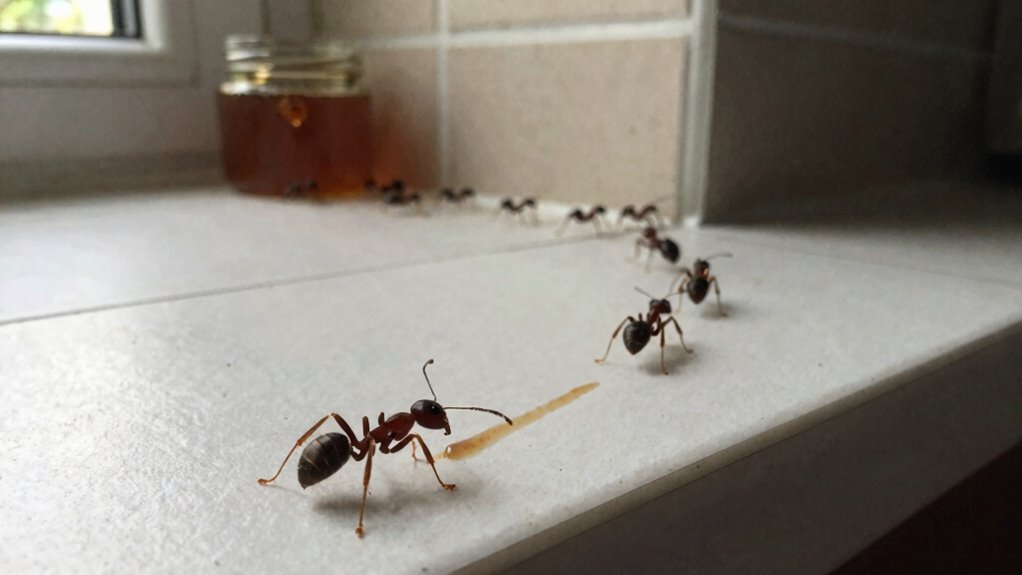
The lone ant that scales the counter is just a scout, and its success hinges on a chemical trail of pheromones, essentially a scented roadmap that swiftly recruits hundreds of workers.
That trail is strikingly efficient, so even a modest crumb can trigger a colony-wide mobilization, with foragers moving in like a well-oiled, six-legged freight train.
To halt the march, disrupting that chemical path with a quick wipe of vinegar or a soapy spray removes the signal, cutting off the recruitment stream.
This simple pest control tactic buys a homeowner precious time to fix the root cause of the spread and request professional ant control services.
For long term prevention, seal entry points and eliminate moisture sources around your home. Applying residual barrier sprays around entry points can provide weeks to months of ongoing protection.
If you notice persistent ant trails, investing in targeted bait stations or contacting an exterminator can stop an infestation before it explodes.
Pheromone Trail Recruitment
A single scout ant leaves a faint chemical trail. As more ants return, the scent grows stronger each time.
Worker ants, always female, follow this path with precise antennae. Reading these chemical signals helps them navigate to the food source.
Within hours, dozens of foragers commit to the trail. This is why urban homes are prime real estate for ant colonies seeking reliable pest control.
Because this trail leads directly back to the nest, using bait stations with slow-acting poison allows workers to survive long enough to transfer the toxin to the queen and brood.
The trail remains active until the food runs out. Then it fades completely, much like an abandoned group chat. If you see sudden ant activity, consider immediate pest control inspection.
Chemical Path Disruption
Disrupting an ant trail is about 80 percent chemistry and 20 percent elbow grease. Vinegar breaks the chemical path and wipes out the invisible breadcrumbs that guide workers.
Bleach works too, but the harsh fumes are a trade off for ant control. A quick wipe with soapy water often does the trick, though ants may rebuild within hours.
Why bother with trail disruption? Trails reflect colony genetics, meaning each nest has its own chemical signature.
That is why a path that works for one home might not work for another. You are not just cleaning, you are nudging ecosystem dynamics and redirecting foragers without nuking the whole colony.
For a reliable fix, use a fifty fifty vinegar water spray for effective pest elimination. It really costs pennies per application. Alternatively, plant-based sprays utilizing essential oils like peppermint offer a pet-safe way to disrupt trails without harsh chemicals.
Just reapply every few days until scouts give up. Patience beats panic, so interrupt the trail and the march stalls.
Rapid Worker Mobilization
One ant is never just one ant. It is a scout with a winning lottery ticket.
That scout’s first whiff of sugar triggers a chemical stampede. Pheromones, or trail smells, are laid like breadcrumbs.
Boom, hundreds arrive in minutes. This rapid worker mobilization is not random.
It is a calculated team effort. Here is how one ant becomes a legion.
A scout finds a crumb, eats a bit, then hustles home. It deposits a pheromone trail from the prize to the nest.
Nest mates follow the scent, each adding more, reinforcing the path. Within an hour, a full conga line streams in, maximizing colony resilience.
For odorous ant spread, this system explains why a kitchen goes from empty to swarmed. The fix is to interrupt the trail, not the ant. Applying Fipronil baits along the trail can eliminate the entire colony within days.
What to Do the Moment You Spot Ants?
That lone scout looks harmless, but it is actually a full-blown marketing campaign for your kitchen.
It is laying a pheromone trail, a chemical GPS saying food this way.
You have minutes before the crew arrives.
First, do not panic.
Grab a spray bottle of soapy water and wipe the trail to break the signal.
Then hunt for dampness sources like leaky pipes, damp rags, and wet sponges.
Ants love humidity as much as your leftover pie.
For effective pest control, target these moisture hotspots immediately.
If you want to stop ant infestations, use professional pest control solutions around entry points.
Acting fast with these tips can prevent a full invasion.
Consider using liquid ant baits near entry points to eliminate the colony at its source.
Why Baits Beat Spraying Every Time?
The instinct to spray visible ants is strong, but it actually solves nothing. You are only killing the ones dumb enough to walk into the open.
Spraying breaks the scent trail, of course, but the colony just rebuilds it like a bad habit. Baits work differently by turning the colony’s own hunger against it.
Workers ferry poison-laced food back to the nest. Within days, the queen gets her share, and that is the real target for effective pest control.
Bait station placement matters most. Put them along walls and near baseboards where you have seen trails.
Do not just toss them in the middle of the room. Timed bait rotation keeps things effective because ants get picky.
Swap bait types every week or two for the best results. Baits are slow, and that is the point, they need time to spread through the colony.
Cost is minimal, under $10 for a pack that outlasts a spray can. Bottom line, spray for instant relief and bait for the knockout.
Bait wins hands down for long term ant control. The active ingredient abamectin at 0.011% uses a delayed-action formula that stops egg production and kills the queen for total colony collapse.
Which Ant Is It? How to Identify the Invader
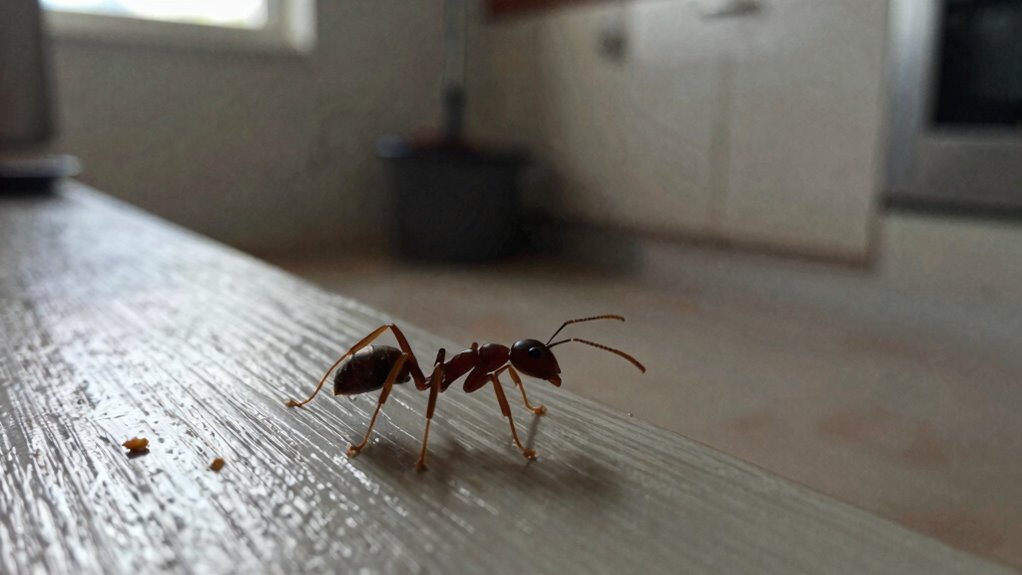
Before a homeowner can mount a counterattack, identifying the intruder is half the battle. Not all ants are alike, so species identification matters for effective pest control.
Odorous house ants, a top urban pest, are nomadic and move colonies every three weeks. That is a key clue to look for during an inspection.
Check size, color, and the rotten-coconut smell when crushed. Nesting habits also differ between species.
Carpenter ants tunnel in wet wood, while pavement ants nest under sidewalk cracks. For ant trails, always check near dampness like bathrooms.
A quick five-minute diagnostic test places a sugar cube and a grease drop side by side. This reveals their protein-to-carb preference for choosing the right bait.
Know your foe to save time, money, and sanity. Grab a magnifying glass and a snack, since you are on recon duty for accurate pest identification. Once you know the foe, boric acid-based powders can provide targeted, long-lasting ant control.
When to Call a Professional (and When to Handle It Yourself)?
Deciding between a ten dollar bait trap and a two hundred dollar pest control visit comes down to one simple question. How many ants are calling the house their own?
A dozen stragglers? DIY wins. Thousands marching in a coordinated parade? That is a colony, not a picnic.
See a single trail? Wipe it with soapy water, then bait. Trails keep coming back daily? That is DIY limitations.
Spot winged ants or sawdust? Carpenter ants need professional treatment. Just a stray crumb crumbler? Blame the kids, not the ant.
Pest pros use industrial gel baits you can’t buy. Professional-grade baits often employ a delayed action that spreads through the colony, killing the queen. They additionally find the hidden nest, the real colony.
If bait stations sit untouched for a week, stop guessing. Call the cavalry now.
Your sanity and your kitchen will thank you. Bottom line: few ants, DIY. Many ants, pro.
Frequently Asked Questions
Are Ants in My House Harmful to My Health?
By and large, no, ants pose minimal health threat to people, so you don’t need to call emergency pest control just yet. The ant health risks are low; they rarely bite, and they aren’t disease vectors like mosquitoes or ticks.
The real issue is ant contamination from their foraging trails. They track bacteria from drains or trash onto your counters, which is gross but easily managed with a soapy wipe down and a targeted ant killer spray.
Think of them as tiny six-legged tourists, not assassins. For most homeowners, these common household pests are a nuisance, not a plague.
Bottom line: seal cracks with caulk, wipe crumbs after meals, and you are fine. If you need an ant bait station or a professional pest control service to stop infestations for good, no panic required.
Can Ants Cause Structural Damage to My Home?
Usually, no, but it depends on the species nesting in your walls. Carpenter ants can hollow out wood over time, though they rarely threaten a home’s structural frame like termites do.
Odorous house ants just want crumbs and moisture, so they’re more of a nuisance than a danger. The real red flag is a potential termite link, because seeing ants might mask a hidden termite infestation.
If you spot ants, don’t panic, but do act smart with a quick DIY pest control check. Sealing cracks around windows and doors costs pennies, like $5 for a tube of caulk, and it blocks both ants and termites.
Check damp spots under sinks, near pipes, and in crawl spaces, since ants love humidity and water-damaged wood. Fixing leaks and improving ventilation is your cheapest home protection against ant nesting and structural decay.
Bottom line: ants rarely threaten your frame, but ignoring them can allow a termite issue to grow silently. A professional pest inspection or a targeted ant bait system beats a costly repair later.
For peace of mind, compare eco-friendly ant sprays and granular baits that target the colony, not just the workers. If you see sawdust-like frass or winged ants, that’s a buyer-intent signal to call a local exterminator for a termite-specific treatment.
Why Do Ants Suddenly Appear During Winter?
Ants suddenly appear in winter because their outdoor nests get too cold, so they move indoors for warmth and humidity.
This is a classic ant behavior driven by winter survival. They aren’t escaping snow, but instead chasing a comfy, food rich haven.
Your kitchen, with crumbs and damp spots, becomes a cozy five star resort for them. Sealing cracks helps, but that just means hosting millions of tiny tourists.
They’re not invading your home. They’re just seeking a heated vacation.
If you want to stop these winter pests, focus on moisture control and food storage.
A professional pest control treatment can target ant colonies at their source.
For long term ant prevention, use gel baits and crack sealants around your baseboards.
These products are designed to solve your ant problem fast.
Choose a reliable pest control solution to keep your home ant free all winter.
Do Ants Bite or Sting Humans?
Yes, ants can bite or sting humans depending on the species. Most common house ants only give a tiny pinch that is barely noticeable.
Fire ants are a different story because they deliver a true sting with venom. Their sting causes burning, itching, and sometimes serious reactions like swelling or dizziness.
For ant bite first aid, wash the area with soap and water right away. Then apply a cold compress to reduce pain and swelling.
If you experience severe reactions, see a doctor immediately. For most people, ant bites are harmless, but watch for allergic signs.
To prevent ants from entering your home, use a professional grade ant bait or barrier spray. These pest control products stop colonies before they become a problem.
If you need a long term solution, consider hiring a licensed exterminator for targeted ant treatment. Smart buyers know that investing in quality pest control saves time and money.
Is It Safe to Use Baits Around Pets?
Is it safe to use ant baits around pets? Yes, when placed smartly, these pest control tools protect both your home and your furry friends.
Pet safety depends entirely on bait placement. Stick ant baits under appliances or in crevices, completely out of paw’s reach.
Most commercial ant killers use low toxicity borax, which is barely harmful in tiny amounts. A dog might chew the plastic station, but that’s a rare occurrence.
Gel baits, like a $5 syringe, work perfectly in tight spots where pets can’t go. The poison acts slowly, letting ants haul it back to the colony.


