
Stop ants from coming into your house by attacking the colony, not just the stragglers you see. This 2025 guide skips the spraying mistakes and focuses on what actually works: bait, patience, and simple fixes.
We cover the best supplies to buy, smart placement tips, and which products are worth your money. No fluff, just a practical plan parents can follow fast.
Scroll down for the must-have gear and step-by-step setup.
At A Glance
- Fix all moisture problems by repairing leaks and using dehumidifiers to keep basements dry.
- Store food in airtight containers and wipe spills immediately to eliminate ant food sources.
- Place ant bait stations along scout trails so workers carry poison to the nest.
- Seal cracks around doors, windows, and foundation with silicone caulk to block ant entry.
- Move firewood away from the house and remove yard debris to avoid attracting ants.
Find Out Why Ants Invade and How to Stop Them
Ants are not mysterious creatures. They are relentless accountants of opportunity, and they have crunched the numbers on your kitchen.
They have weighed your crumbs and that leaky faucet you ignore. That last one matters because ants love damp habitats like wet basements, dripping pipes, or rotting frames.
They set up satellite colonies there while outdoor nests stay in your yard. For proven ant control, fix every leak immediately. For active infestations, place bait stations along baseboards, under cabinets, and near pipes where ants travel.
A three dollar washer beats a three hundred dollar repair. Replace soggy wood, as carpenter ants only tunnel through water damaged material.
A three dollar washer beats a three hundred dollar repair. Replace soggy wood.
Move firewood off the ground and away from siding. Dry it out and you remove their VIP lounge for effective pest prevention.
They will head back to outdoor nests and your kitchen loses appeal. The bottom line is moisture is the invitation for ant infestation.
Cancel that invitation and they stop coming. Period.
Clean Up Food and Trash to Starve Ants
Starving ants means locking down their buffet, so store every crumb in airtight containers. Even a single forgotten cookie on the counter can feed a whole colony for days, which is why thorough kitchen pest control starts with sealing all food sources.
Wipe spills the moment they happen, because a sticky soda ring is basically a five star restaurant invitation for scout ants. For effective ant extermination, focus on removing sugary residues and grease spots that attract foraging trails.
Use a vinegar and water solution to neutralize scent trails after cleaning, as this disrupts their navigation and helps with long term ant prevention. For persistent infestations, consider that boric acid sprays are a common pest control ingredient, but they require careful application to avoid irritation. Keep pet bowls clean and elevate them when not in use, since leftover kibble is a common oversights for homeowners tackling ant infestations.
Check under appliances and inside cabinets weekly, as hidden crumbs are prime targets for professional grade ant bait strategies. Consistent sanitation is your best defense, and pairing it with sealed trash bins gives you a complete home pest solution.
Airtight Food Storage
Before you spend money on sprays or call a pest control technician, try the simplest fix first: airtight food storage. This is the most effective DIY pest prevention for common kitchen invaders.
Plastic bags are not enough because ants can squeeze through incredibly thin gaps. Even a sealed flimsy bag is basically an open invitation for these tiny pests.
Swap chips and cereal into hard plastic or glass containers with locking lids. A decent set of airtight canisters costs between $20 and $40.
Look for silicone gaskets, as they create the true seal that keeps out ants and other pantry pests. Choose BPA-free plastic or high-borosilicate glass for durability, safety, and easy cleaning. Use these containers for sugar, flour, and pet food, which are the top three ant magnets in any home.
This approach starves the scout ants, forcing them to abandon your kitchen for good. When ants are hungry, their ant bait preference changes, which makes strategic bait placement more effective later.
Kill the buffet, and the colony moves on to find food elsewhere. Think of this as a mission to protect your home, not just a storage upgrade.
Airtight storage is prevention, not decoration, and it works before you ever need an exterminator. For long term pest control, this simple habit saves you money and frustration.
Immediate Spill Cleanup
One sticky puddle of spilled soda on the counter is enough to summon the entire neighborhood. Immediate spill cleanup is the unsung hero of ant prevention and a key part of any home pest control plan.
A scout ant finds that sweet mess, gobbles it up, then leaves a chemical trail for colony recruitment. Before long, you’ve got a highway of worker ants foraging straight through your kitchen, which is why fast action stops the problem before it spreads.
The fix is simple and realistic: wipe spills as they happen. Grab a damp cloth, some all-purpose cleaner, and hit the sticky spots, especially around the coffee maker and fruit bowl.
Don’t forget the trash, because garbage is a buffet for these tiny invaders. Take it out nightly and tie the bag tight, since ants never skip a meal and a loose bin is an open invitation.
Build this into a sanitation routine, like brushing your teeth, but for countertops and floors. It takes thirty seconds and costs about a dollar in supplies, which is far cheaper than hiring an exterminator for a full infestation.
If you see a line of ants, that trail is your signal to check every crack, crumb, and cranny. Consistent prevention services start with these daily habits, so you can avoid needing professional pest control for a simple sugar ant issue.
Stay ahead of the colony by pairing this cleanup with sealing entry points near windows and baseboards. Reapply natural repellents every few days to maintain protection. That way, you kill the food source and the access route, which is the most effective ant killer strategy for any homeowner.
Place Ant Baits to Kill the Entire Colony
Ant baits are effective, but only if you match the bait to the species. Protein loving carpenter ants will ignore sugar gels, so identify your pest first. For serious invasions, fipronil-based baits eliminate colonies within a few days through slow-kill poison transfer.
Place ant bait stations along scout trails for maximum colony control. Workers will carry the poisoned food back to the queen, eliminating the entire colony.
This targeted pest control method stops the infestation at the source. Use strategic bait placement to ensure long term results without spot treatments.
Identify Species First
Choosing the wrong bait is a classic DIY blunder, and it usually ends with the ants laughing at you from behind the baseboards. Species identification comes first, since ants crave different foods.
Colony behavior, like whether they send out scouts or full swarms, likewise matters. So watch them before you buy a targeted ant control product.
A quick online search of local ants works wonders for choosing the right pest control bait. Sugar-loving ants, such as odorous house ants, prefer sweet gel baits.
Grease-eating ants, like pavement ants, go for protein or peanut butter formulas. Fire ants need slow acting granular bait to carry back to the colony.
Carpenter ants are picky, often wanting protein plus a hint of sugar. For households with multiple ant types, consider a dual-formula bait that appeals to both sugar and protein feeders. Match the bait to the species, and the colony feeds itself to death.
Otherwise, you are just feeding a picky audience with a wasted purchase.
Strategic Bait Placement
When it comes to eliminating the entire colony, bait placement is everything. A single dab here and there just won’t cut it. You need a strategy, not a hope.
Forget the spray and pray method. Instead, deploy bait stations directly alongside ant trails, right where the action is. Place them near baseboards, along window sills, and by that sneaky crack behind the fridge.
Interior coverage is your goal here. You want a perimeter of poison, a buffet line of doom inside your home.
Bait rotation is key. Ants can get bored, or their cravings shift.
If one bait isn’t gobbled up in a couple of days, swap it for a different flavor. Keep them excited about dying.
Place baits where worker ants forage, as they’ll carry the slow-acting poison back to the nest, wiping out the entire colony in two to four weeks.
Bottom line, place one station near the main trail. Then do a wide interior sweep for full colony elimination.
That is a proper colony level eviction notice.
Match Bait Preference
Effective placement only works if the bait is something the colony actually wants to eat. Ants’ cravings change with the season, so bait selection requires trial and error. Use bait rotations with different active ingredients to prevent resistance.
For colony targeting, the bait must match both the species and its current mood. Sweet gel baits work best for odorous house ants in spring.
Protein baits are ideal for carpenter ants when larvae are present. Grease baits target pavement ants craving fats.
Multi-food gel lets you test preferences quickly and find the right ant control solution. It is like feeding a toddler, honestly.
One day they love peas, the next day they don’t. So set out a few bait options, watch which gets swarmed, and stick with that.
That is colony targeting in action. The bottom line is that bait selection wins the ant war.
Let the ants vote every time to ensure effective pest management.
Skip the Spray: It Only Makes Ants Worse
That can of spray under the kitchen sink is a liar. It promises a quick fix, but the truth is more annoying than a picnic crasher.
Most sprays contain repellent chemicals, which is the absolute wrong move here. Instead of killing the problem, these products just make the visible workers scatter.
This panic creates scattered colonies, meaning the ants just split up and find new, sneakier routes deeper into the house. Here is a quick look at what actually happens.
| Action | Worker Ants | Queen & Colony |
|---|---|---|
| Spray | Dies on contact | Unharmed, deep in nest |
| Result | Scattered survivors | Reproduces, grows stronger |
| Outcome | Temporary relief | Infestation worsens |
| Logic | Feels productive | Secretly backfires |
You kill the garage-sale scouts but leave the real problem, the nest, completely alone. The spray does not reach the queen and it just breaks up the team.
This creates multiple smaller problems where you once had one tidy trail. For effective ant control, you need a baiting strategy that targets the colony directly. Delayed-action formulas allow ants to carry the poison back to the nest, wiping out the queen and her workers.
The bottom line is that spray is a waste of money and effort. It is a false prophet in an aerosol can, so skip it and choose a pest control solution that actually works.
Seal the Cracks and Gaps Ants Crawl Through
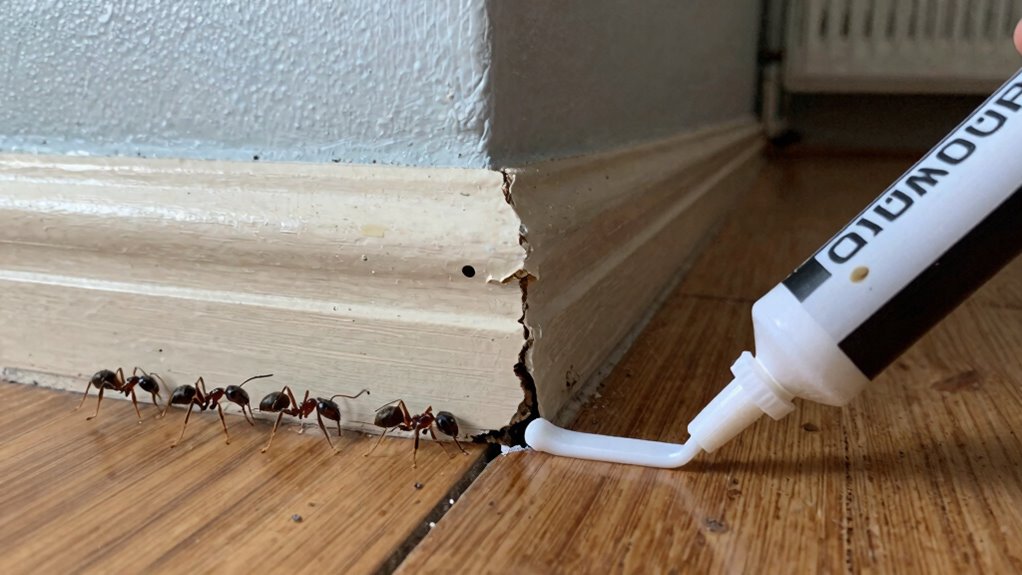
Skip the spray can; it only breaks ants into more plot twists. A simple crack inspection around windows, doors, and the foundation is your best ant control move.
Gap sealing with silicone caulk costs under ten dollars and blocks those tiny highways. The seam where siding meets concrete hides the exact gaps ants march through.
Utility lines like wires, pipes, and meters serve as a direct ant highway to your pantry. A flashlight pressed against baseboards reveals light bleeding through, showing worth sealing cracks. For larger gaps that could also admit rodents, stainless steel wool offers a durable, chew-resistant filler.
A thin caulk bead handles window cracks, while expanding foam works for larger foundation holes. Use moderation to avoid messy overfill for effective pest proofing.
An hour of crack inspection and one silicone caulk tube finally ends the saga for good. This low cost intervention stops ant infestations at the source, saving future headaches.
Fix Moisture Problems That Attract Ants
Waterlogged wood is more than a costly repair; it is a glowing invitation for carpenter ants and other moisture-loving pests. These ants only tunnel through wood that water has already softened, so a leaky pipe or dripping faucet creates the damp, decaying conditions they need for satellite colonies.
To keep your home ant-free, fix any leaks within a week and replace damaged drywall or beams, with typical repairs costing $150 to $500 each. Run a dehumidifier in basements and crawl spaces to keep humidity below 50 percent, which directly removes the breeding grounds pests rely on. Choose a dehumidifier sized for your space to ensure consistent moisture control.
Check showers, window sills, and crawl spaces weekly for any signs of condensation or standing water. Confirm that gutters and downspouts drain at least three feet away from your foundation to prevent soil saturation.
Dry spaces mean ants check out instead of moving in, so staying proactive saves you from larger infestations later. The bottom line is simple: stop the drip, stop the trip, and your pest control efforts will pay off fast.
Remove Aphids, Firewood, and Yard Debris to Keep Ants Out
The ants gathering around your home are often drawn to aphid infested plants, firewood, and yard debris. Remove these outdoor attractions and you stop the ants from moving in.
Remove aphid plants, firewood, and yard debris to stop ants before they move in.
Aphids produce honeydew, a sugary treat that ants love to farm. Use insecticidal soap for aphid control and spray weekly to break the cycle. For severe infestations, systemic sprays are absorbed into the plant, providing two to four weeks of protection.
Firewood provides dry nesting spots like a motel with no vacancy. Stack firewood 20 feet from the home and keep it off the ground.
Yard debris holds dampness and leftover snacks for ant colonies. Rake leaves and debris weekly, and never pile them near the foundation.
Trim overhanging branches to remove ant highways leading to your roof. This simple pest control step cuts off their travel routes.
Stick to this ant prevention routine for just fifteen minutes each week. Clean up the yard, dry out moisture sources, and the ants will move on.
The bottom line is that regular maintenance saves your peace of mind. A little effort keeps your home ant free and your family comfortable.
Call an Ant Exterminator for Stubborn Infestations
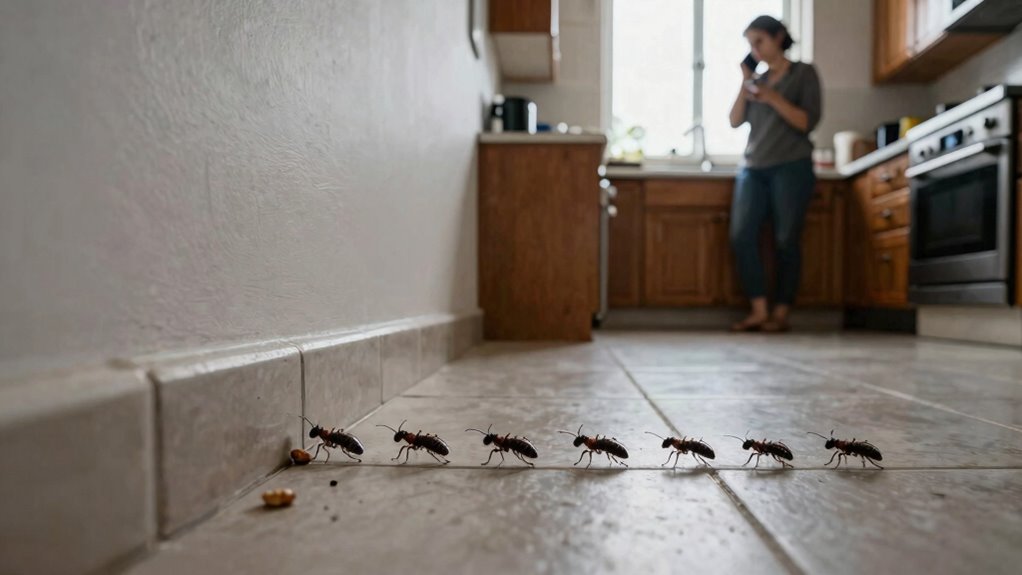
Sometimes those tiny six-legged intruders ignore your traps and march straight to your kitchen as they own the place.
When DIY baits and caulk fail to stop an ant infestation, a professional ant exterminator can identify the species and eliminate the hidden nest.
For those who prefer a DIY approach, boric acid powder can be sprinkled along ant trails and near mounds, killing ants within 24 to 72 hours as they carry it back to the colony.
A licensed pest control expert targets the colony where it thrives, not just the visible trail.
They use specialized gels and insect growth regulators that are not available to homeowners.
Expect a pest control visit cost between $150 and $300, depending on your home’s square footage.
The real payoff is killing the queen to stop the breeding cycle for good.
Many exterminators also seal future entry points as part of the service.
Yes, it is a fee, but wasting food and your sanity on a lost battle costs more in the long run.
When the invasion outlasts your patience, hiring a pro is the practical choice.
Your kitchen and your peace of mind will thank you.
Frequently Asked Questions
Can I Use Vinegar to Repel Ants?
Yes, you can use vinegar to repel ants, but it’s only a temporary fix for active infestations.
The vinegar solution disrupts ant trails by wiping out their scent pheromones, which confuses scout ants and sends workers on a frustrating detour.
This handy trick works well for quick relief, but it won’t kill the colony or eliminate the root cause.
Spray it along baseboards and entry gaps, but expect the ants to return eventually.
For lasting control, pair vinegar with proper sealing of cracks and professional bait stations.
Bottom line is this: use vinegar for short term disruption, not a permanent pest control solution.
If you want to stop an ant problem for good, invest in gel baits or granular insecticides that target the queen.
Are Ants Harmful to My Pets?
Most ants aren’t harmful to pets, but pet food contamination is the real concern because ants can carry bacteria into bowls. Identifying the ant species in your home matters, since fire ants deliver painful stings while carpenter ants usually just nest in wood.
For everyday ants, they’re mostly a nuisance, and your cat won’t need trauma therapy after spotting a trail. A simple water moat under your pet’s dish, costing around $4, blocks ants effectively, and wiping spills fast removes the scent trails they follow.
Watch your pet for swelling around the mouth or unusual behavior if you suspect a fire ant encounter, especially in outdoor feeding areas. Professional pest control services often recommend sealing cracks and using bait stations near pet zones, but always check labels for pet safe ant control products.
If you’re looking for ant killers for pets, choose gel baits or granular barriers labeled low toxicity for mammals. These targeted ant bait stations for home use work well indoors, while outdoor pest treatments around your patio keep ant mounds away from your dog’s water bowl.
Keep your pet’s feeding station clean daily, store dry food in sealed containers, and elevate bowls on a raised platform to reduce ant access. For severe infestations, a licensed exterminator can pinpoint the nest and apply pet friendly pest control products, saving you time and trial.
Stay calm, stay clean, and check your pet’s paws and ears after outdoor play, since red imported fire ants often hide in grass. A proactive pest management routine for your yard, combined with quick spill cleanup, keeps both your pets and your peace of mind safe.
If you notice repeated ant activity near your pet’s bed or litter box, that signals a larger colony, so consider a professional termite and pest inspection. Ultimately, most ant species are harmless, but buying a pet safe ant repellent and using a water moat gives you cheap, effective protection.
Do Ultrasonic Deterrents Actually Work?
No, ultrasonic pest repellers simply do not work against ants.
These plug in devices, typically priced between $20 and $50, blast high pitched squeaks into your home.
Ant behavior ignores these sounds completely because ants don’t hear airborne noise.
Ants communicate and sense their environment through vibrations in their legs, not through the air.
Scientific studies confirm these gadgets have zero measurable effect on ant activity.
In terms of effectiveness, they are about as useful as a screen door on a submarine.
They might chase away a mouse or two, but for ant control this is pure placebo.
Save your cash for the real pest control solution: caulk and bait.
The bottom line is skip the plug in gadget and focus on sealing cracks and crevices.
Follow a proper integrated pest management approach, and that is the real fix.
What Time of Year Do Ants Invade Worst?
The worst ant invasions hit in spring and early summer. That is the peak season for most household infestations.
Warming weather wakes colonies and sends scouts hunting for food. If you see a few ants, a full scale ant control plan is your best defense.
By late summer, many ants shift to building indoor colonies. This is especially common after heavy rain forces them to find shelter.
Expect trouble from April through July. They march across your counters like commuters heading to work.
Seal cracks and keep food sealed tight. A few dollars of caulk beats a hundred dollar exterminator visit.
For best results, prep in March every year. Apply a quality ant bait spray or gel bait before the season hits.
Can Diatomaceous Earth Replace Baits?
No, diatomaceous earth cannot fully replace baits for ant control. The difference is simple: DE shreds ant shells on contact, while baits are slow acting poisons carried back to the queen.
Diatomaceous earth only kills visible worker ants you see right now. Baits, however, eliminate the entire colony by targeting its heart.
For best results, use diatomaceous earth in dry cracks around your perimeter, a bag costs about 10 dollars. But remember, DE fails completely when it gets wet, so moisture is its enemy.
Baits work better for the nest, and they come in convenient gel stations. Think of DE and baits as teammates, not rivals, for complete ant control.
Use diatomaceous earth for a protective barrier, then apply ant baits where the nest is hiding. This two step strategy is the smart purchase for homeowners battling an infestation.
For a long term solution, combine both products to stop worker ants above ground and kill the queen below. That is the expert approach to buying and using pest control gear.


