
“How many cockroaches are there if you see one?” It’s the question everyone dreads—and the answer isn’t comforting. If you spot a single roach, expect at least 50 to 100 more hiding nearby, since colonies often number in the hundreds.
Roaches are social insects, using pheromone trails to recruit others into dark cracks and basements. A single sighting is rarely a loner; it’s usually a scout or a sign of hidden reproduction, with females producing up to 600 offspring. Your best first move is placing sticky traps near baseboards or under sinks to confirm the scale before treatment.
This article breaks down exactly where they hide and how to flush them out, so you can take control quickly.
At A Glance
- One visible roach at night typically indicates 100 or more hidden in the home.
- A single sighting suggests a larger colony is already established nearby.
- Roaches are social; one seen usually means dozens more are concealed in cracks.
- A lone roach may be a scout, signaling a hidden infestation is present.
- No visible roaches does not mean zero roaches are present in the home.
What Seeing One Roach Really Means
Seeing one American cockroach usually means a larger infestation is nearby, since they rely on pheromones to coordinate as social pests.
That lone insect could be a scout or a lost male with a lifespan of about a year, but its appearance signals a hidden colony.
Many people believe a clean home prevents roaches, but a tiny crumb or damp pipe is all they need.
They can survive weeks without food while tucked away in cracks.
Spotting one roach means you are already behind on pest control, so do not assume it is a fluke.
Count on at least dozens or even hundreds hiding within your walls.
A single sighting demands immediate inspection and professional treatment, not wishful thinking.
Products like boric acid kill roaches within 72 hours and can be applied as a powder in cracks and crevices.
For effective cockroach removal, call an exterminator to target the nest before it grows.
Why One Roach Almost Always Means a Colony Nearby
That lone cockroach scuttling across the floor is not a loner. Cockroaches have strong colony instincts, using pheromones to signal safe hiding spots and food sources to each other.
When you see one, it almost surely means dozens of its relatives are nearby. With females laying egg capsules containing 14 to 16 eggs each, a full-blown infestation is already well underway.
Pest control experts recommend immediate action if you spot a single roach. A professional inspection can pinpoint the nest and break the breeding cycle for good.
For effective cockroach treatment, look for bait stations and gel products that target the colony directly. Many of these products use growth regulators or reproductive inhibitors to prevent population resurgence. Early intervention is key to stopping a kitchen invasion before it spreads.
Colony Instincts
There is one cockroach scuttling across your kitchen floor, and every instinct screams that it is not alone. Roaches operate on a strict nest hierarchy, following pheromone trails left by others.
You are not seeing a lone wanderer. You are witnessing a scout from a nearby colony.
Roach migration happens in waves guided by chemical signals that tell them where food and shelter are plentiful. That single bug is basically a real estate agent for its entire family tree.
The rest are already packed and moving in. They hide in cracks, under appliances, and inside walls.
Coordinating their movements through smell and touch requires immediate pest control action. Do not assume it is a solo act.
It is a welcoming committee that signals an infestation treatment is needed. Professional extermination services can break their chemical trail for good.
Rapid Reproduction
Colony instincts are one thing, but biology is the real hammer here. Seeing one American cockroach almost guarantees a hidden colony nearby, thanks to their rapid reproduction and sneaky pest behavior.
A single female produces up to 40 egg capsules, each with 14 to 16 eggs, hatching in just 24 days. Maternal care is almost nonexistent, so nymphs start feeding on their own quickly and reach adulthood in 6 to 12 months.
Pheromones left in feces and cuticle secretions actively attract more roaches, which coordinates group hiding in tight spaces. A single sighting typically means 20 to 30 more are concealed in cracks, near food sources, or in damp areas. These pests are math machines, not just bugs, so you don’t wait for more evidence before acting. The practical approach is to inspect and seal gaps, reduce moisture with dehumidifiers, and apply Fipronil-based gels or roach traps immediately.
Within one week, a few can become a hundred, so early intervention is your best cockroach control strategy. For effective pest management, focus on exclusion, sanitation, and targeted insecticide application at harborages.
If you need professional pest control services, schedule an inspection now to prevent infestation spread. Act fast, because every day of delay multiplies your cleanup costs and health risks.
How Roaches Use Poop and Smell to Build a Colony
Think of a roach problem as a hidden chemical network. One roach finds a crack, leaves droppings, and that scent trail recruits the entire colony.
If you spot a single pest in your kitchen, the infestation is already well established. You should not just fight the roach you see; you need to break that chemical highway.
Clean surfaces thoroughly with a disinfectant to disrupt the scent trails. Use bait stations because they turn the poop signal into a poison pipeline. Gel baits are a fast-acting option that kills roaches within hours after ingestion.
That bait strategy stops reproduction and eliminates the hidden squad. For lasting pest control, focus on sanitation and targeted roach killer products.
Inspect cracks and crevices regularly to prevent new trails from forming. This practical approach helps you protect your home from future infestations.
Where the Colony Is Hiding: Cracks, Basements, and Damp Spots
Most cockroach colonies hide in cracks, basements, and damp spots you rarely check. Professional pest control experts recommend inspecting these hidden areas regularly.
Look for droppings, shed skins, or a musty odor as signs of a hidden infestation. Early detection with routine prevention methods can stop a full-blown invasion.
If one roach is out, dozens more are likely tucked away in that dark, humid corner. Contact a local exterminator for targeted treatment if you spot any evidence.
Quietly multiplying, these pests thrive in moisture-rich environments near leaky pipes or cluttered storage. Effective baiting and sealing cracks are key buyer solutions for long-term elimination.
For long-term prevention, apply residual sprays in hidden spots to create a barrier that keeps roaches away for months.
Common Hiding Spots
A dark, narrow crack in the wall is not just a cosmetic flaw. It is a five-star hotel for a cockroach colony.
These pests prefer tight, undisturbed spaces near food and moisture. Spotting one means the colony likely nests nearby, using these spots as an indoor harborage.
They also use pipes and drains as an entry point from outside. For effective cockroach control, you must inspect these areas first.
- Cracks and crevices. Baseboards, behind cabinets, and wall voids hide dozens, even hundreds.
- Basements and crawlspaces. Dark, humid, and rarely disturbed. Prime real estate for pest infestations.
- Under appliances. Refrigerators and dishwashers offer warmth, water, and crumbs.
- Damp spots. Leaky pipes, sinks, and bathrooms provide critical dampness.
Check these areas first if you suspect a roach problem. If you see one cockroach, assume there are many more concealed.
Act fast with professional pest control or you will be their landlord. Using baits with non-repellent formulas ensures roaches do not avoid the bait, increasing the chance of colony elimination.
Signs of Hidden Infestation
Signs of hidden infestation are often more reliable than spotting a roach itself. Seeing one live roach signals a hidden colony, since these insects are social by nature.
Female roaches produce egg capsules called oothecae, each holding 14 to 16 eggs. Under good conditions, one female can generate up to 40 capsules, which means a massive population can grow quickly.
Watch for droppings that look like small, dark pepper specks near roach hiding spots such as cracks and damp areas. Smear marks, or greasy trails along walls, indicate their regular travel routes.
Brown, pill shaped egg cases found in cabinets or behind appliances are a sure sign of breeding activity. Shed skins, empty exoskeletons left behind as they grow, also appear near nest sites.
A musty, oily odor often means a large population is already established. Spotting a dead roach usually means others are alive and active nearby.
These infestation clues rarely lie, so if you see any sign, adult roaches are hiding in cracks or dark corners. For effective roach control, seal gaps, reduce dampness, and eliminate all food sources.
Don’t wait, because one roach usually means hundreds more are already breeding. If you need professional pest control services, act quickly to prevent the problem from spreading. For long-lasting control in damp hiding spots, consider using a waterproof deltamethrin dust that remains effective in wet conditions.
Physical Signs of a Cockroach Infestation
Even though you might only spot one scuttling across the kitchen floor at night, that single cockroach is rarely a loner. The physical evidence they leave behind is hard to ignore once you know what to look for.
Even though you might only spot one cockroach, that single bug is rarely a loner.
Droppings look like tiny pepper specks or dark smear marks near baseboards. The distinct poop smell is an oily, musty odor that can linger even after a deep clean.
Egg cases are brown, pill shaped capsules called oothecae, often tucked in corners or behind appliances. Each one holds a dozen or so future roaches, making professional pest control crucial.
Shed skins are molted exoskeletons that look like little empty ghosts near hiding spots. Grease trails appear as smudged, brownish streaks along walls or pipes from roaches rubbing against surfaces while foraging.
These signs confirm a colony is thriving nearby, not just a stray wanderer. Using a delayed-action bait can ensure worker cockroaches carry poison back to the nest for full colony elimination. If you spot these clues, it is time to call an exterminator for a full inspection.
Why One Female Roach Can Start a Huge Colony
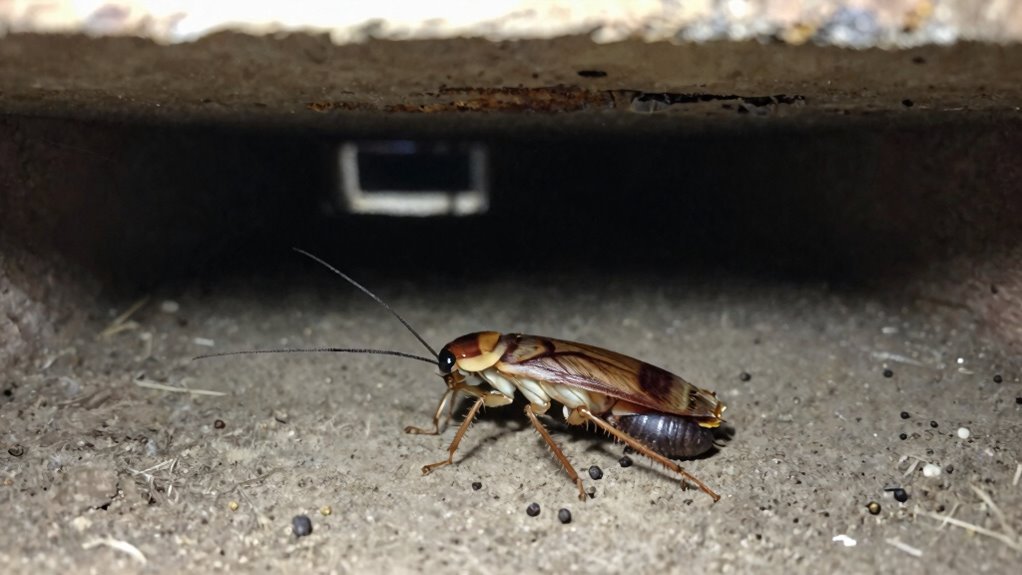
A single female American cockroach is basically a population bomb waiting to go off. She can lay up to 40 egg capsules, each holding 14 to 16 nymphs, which means one lone roach can spawn over 600 offspring in her lifetime.
That rapid population growth, combined with how quickly those young roaches spread to new hiding spots, turns one sighting into a full-blown infestation before you even notice. If you’re searching for roach control near me, this is exactly why acting fast matters.
Professional pest extermination services target these hidden breeding sites, because a single missed egg capsule can restart the cycle. For reliable home pest inspection, check under sinks, behind appliances, and along baseboards where moisture collects.
You don’t have to wait for a visible swarm to request a roach treatment quote. Early intervention with a licensed exterminator is the most cost effective way to stop colony expansion before it gets out of hand. Using bait stations with fipronil can trigger a deadly ripple effect when poisoned roaches carry the bait back to their nest.
Rapid Population Growth
How does a single female cockroach turn into a full-blown infestation. It is a numbers game, and she is playing to win.
One mated female can produce an egg capsule called an ootheca, which holds 14 to 16 nymphs. Under ideal conditions, she can create up to 40 of these capsules in her lifetime.
That means potentially hundreds of offspring from one bug. Genetic mutations are rare but can create pesticide-resistant roaches, which speeds up colony survival.
Population bottlenecks happen when only a few roaches survive an extermination treatment. Their hardy genetics allow them to quickly repopulate your space.
Rapid birth cycles mean nymphs mature in just weeks. This allows exponential growth that can overwhelm your home.
Hidden egg cases protect future generations from sprays and baits. For your home, one sighting signals trouble is already present.
Proactive sealing and targeted baiting are cheaper than fighting a full-blown war. Act before the math works against you and a small issue becomes a major pest control problem. Using hydramethylnon-based baits positioned along trails and near harborages can effectively target hidden nests and break the rapid reproductive cycle.
Colony Spread Rate
One female cockroach can trigger a colony that spreads faster than a bad rumor at a family reunion. The colony growth rate is staggering, with a single egg capsule holding 14 to 16 nymphs.
A female can produce up to 40 capsules in her lifetime. That means over 600 potential roaches from one mother in warm, damp hiding spots.
Infestation detection methods often miss this early stage since roaches are nocturnal and hide in cracks. Grease marks along baseboards, droppings, and shed skins are telltale signs. UV detection lights at 395nm can reveal these hidden pest trails and droppings that are invisible to the naked eye.
By then the colony is already large. If you see one roach, act fast for effective pest control.
One roach is never just one. Early intervention is key to stopping a full blown infestation.
How 14 Eggs per Capsule Becomes Hundreds of Roaches
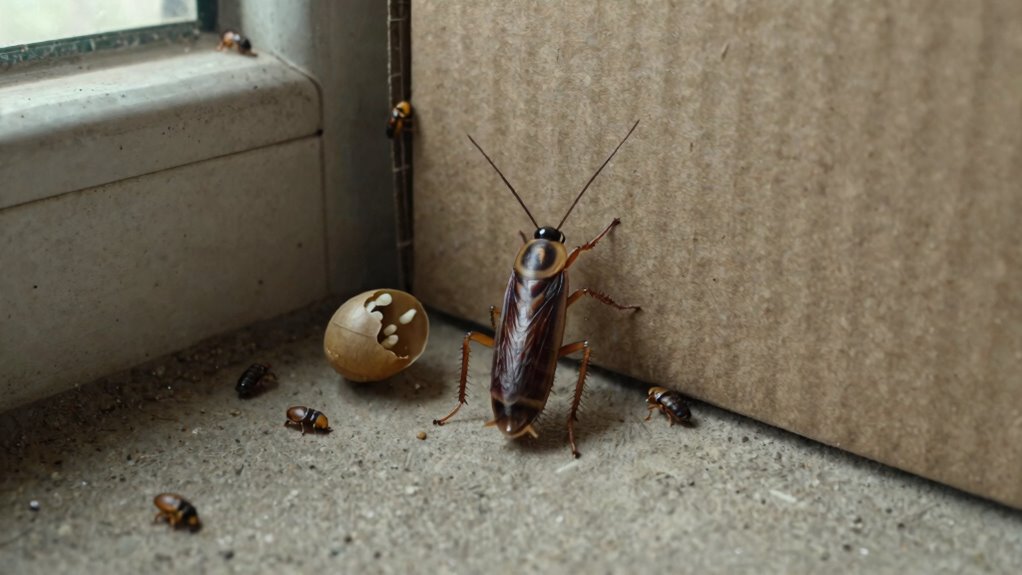
Since a single American cockroach egg capsule contains 14 to 16 eggs, a female can produce up to 40 capsules in her lifetime. That means one female could theoretically spawn over 600 offspring in a year, and those babies start reproducing in just a few months.
Each capsule, called an ootheca, hatches within 24 to 48 hours after being dropped. Nymphs reach adulthood in as little as six months under warm, humid conditions.
Aggression triggers like overcrowding or food scarcity actually boost reproduction rates. Resistance factors allow survivors from pesticide sprays to breed tougher generations.
Professional pest control treatments target these factors to break the cycle. A single spray won’t stop a resistant lineage, so you need a comprehensive roach control plan. Using indoxacarb baits ensures the poison is carried back to the nest to eliminate the entire colony.
Why Nighttime Foraging Makes Roaches More Visible
Why do cockroaches appear when you flip on the kitchen light at 2 a.m.? This happens because of their nocturnal behavior.
These pests are programmed to avoid daylight, so they forage most actively after dark. When you brighten the room, you cross the visibility threshold where hiding becomes impossible.
At that moment, you are seeing active foragers, but this is only the tip of the iceberg. A single sighting often means dozens more are hidden in cracks, behind appliances, or under sinks.
See one roach at night? You probably have 100 or more in your home. They are gregarious insects, so where there is one, there is a hidden colony.
The bottom line is to not rely on your midnight sightings for pest control decisions. Nocturnal scouting is their game, but you can take action.
Set out roach traps to confirm the scale of your infestation, then act fast. Spot one roach at night and it is your cue to invest in professional treatment. Applying boric acid powders to cracks and crevices provides continuous residual control by killing pests within 72 hours after ingestion.
Can You Have Roaches Without Seeing One? Yes
Roaches are nocturnal foragers, so they feed only at night while you are asleep and retreat to cracks before dawn. They use pheromone scent trails to gather in groups, hiding deep inside walls where you cannot see them.
Some species can live a month without food, meaning even a clean kitchen is not a guaranteed deterrent. In fact, up to 48 percent of homes with no visible roaches still have their allergens in dust, which signals a hidden colony is active. For comparison, effective insect repellents like 20% Picaridin provide up to 12 hours of protection against mosquitoes and ticks.
Zero sightings does not equal zero roaches, so do not ignore allergy flare-ups. If you or your family have unexplained symptoms, it might be time to inspect for pest control issues even if you see nothing.
How Many Roaches Are in a Hidden Infestation?
A hidden infestation of American cockroaches rarely stays small. A single female can produce up to 640 offspring in a year.
The infestation timeline accelerates quickly. What starts as a few dozen in a wall void becomes hundreds within months.
Colonies linger in damp, dark zones. Their pheromone trails pull new arrivals into a tight, gregarious cluster.
Your pest control bill climbs with every week you wait. A basic bait and spray job might run $200.
A full scale treatment, including sealing cracks and removing egg cases, can hit $1,500. Multiply that by repeat visits for cockroach extermination.
One cockroach is a warning. A hidden group is a bill you can avoid.
Act fast on roach removal or you will pay more later. Call a professional for an inspection today.
How Germs and Allergens Give Hidden Roaches Away
Musty odors from aggregation pheromones often signal a hidden roach problem. These smells are stronger near active nests and colonies. Droppings appear as tiny black specks near food sources or along baseboards. Shed skins and egg capsules confirm the colony is actively reproducing indoors.
Smear trails along walls come from oily bodies moving through tight spaces. These clues, not the bugs themselves, often reveal the colony’s location and size. Professional allergen testing kits cost $20 to $50 and confirm your suspicions. They help when sight alone fails to find the infestation.
Your First Step to Confirm and Control the Infestation
Confirmation beats panic every time. Seeing one roach means dozens are hiding, since they’re social insects that breed fast with females producing 14 to 16 eggs per capsule.
Confirmation beats panic every time. One roach means dozens are hiding.
First, inspect likely indoor harborage areas like kitchens, bathrooms, and basements. Look for droppings, smear marks, or egg cases, and skip chemical repellents for now because they scatter roaches and make the infestation worse.
Instead, use sticky traps to pinpoint activity and check under appliances and sinks. If you catch multiple in a week, it’s time for urgent pest control treatment.
A bait gel, around $10 per tube, works better than sprays for roach elimination. Patience, not panic, wins this fight, so focus on targeted cockroach management rather than quick fixes.
For a professional-grade solution, search for a roach control kit that includes gel bait and monitoring traps. Early detection and consistent baiting reduce the need for costly exterminator visits later.
Frequently Asked Questions
Can Roaches Come Through Drains or Pipes Into My Home?
Yes, cockroaches can enter your home through sewer entry points and pipe gaps. They navigate drain pipes and squeeze through cracks as small as a dime.
American cockroaches thrive in sewers and may crawl up through sink or shower drains during dry nights. To block them, inspect pipe gaps under sinks and seal openings around plumbing with caulk or foam.
Using drain covers is a smart and affordable pest control solution. Dampness attracts these pests, so fixing leaks reduces the risk of infestation.
If you want to stop roaches at the source, consider a professional grade drain treatment or gel bait. Ignoring this pathway invites a serious cockroach problem into your home.
Do Cockroach Traps Help Determine the Size of the Infestation?
Yes, traps help gauge infestation size, but with limits. Trap placement bias means a glue trap in a clean kitchen might catch nothing, yet one near a damp pipe catches dozens and skews results.
Bait efficacy limits likewise skew data because roaches may ignore certain baits after breeding resistance. A single trap’s catch isn’t reliable, so use several over a week for better accuracy.
For a rough estimate, multiply catches by 100 for hidden numbers. Bottom line: traps guide action, not exact counts, so pair them with professional roach bait and monitoring stations.
How Long After Seeing One Roach Should I Call an Exterminator?
Call an exterminator within 48 hours of spotting a single roach. That is not panic, that is smart timing.
One sighting often signals a larger colony hiding nearby, a classic sign of early infestation. DIY traps might catch a few, but they rarely solve the root problem.
Professional roach treatment, averaging $150 to $400, targets nesting sites and breaks the breeding cycle. Waiting a week lets the population double, so early pest control action is cheaper than a full blown war later.
For reliable roach extermination, you need a pro to apply bait gels and insect growth regulators. Home remedies just miss the hidden eggs and harborage areas.
Bottom line, don’t gamble on DIY solutions for roach removal. Call a local exterminator now to protect your home and avoid repeat visits.
Will Keeping My Home Spotless Completely Prevent a Cockroach Infestation?
Keeping your home spotless is a great defense against cockroaches, but it won’t guarantee total prevention. These resourceful pests can survive on stray crumbs or even a forgotten leftover.
A strict vacuuming schedule helps, but roaches also hide in walls and drains where your cleaning can’t reach. So while a clean home reduces the odds, it’s not a magic shield.
For true control, combine cleanliness with sealing cracks and professional monitoring. Otherwise, you’re just hosting a very clean, well-hidden infestation.
Are Certain Types of Homes More Prone to Hidden Cockroach Colonies?
Yes, certain homes are more prone to hidden cockroach colonies, and old buildings with cracks and crevices create ideal hiding spots.
Vacant properties lack the human activity that deters these pests, making them a prime target for a roach infestation.
These structures often have damp basements or leaky pipes, which is essentially cockroach heaven for moisture loving pests.
Think of it as a roach timeshare, but you are not the one enjoying the vacation; you are the one who needs a professional pest control inspection.
The bottom line is that older or empty homes require extra vigilance, as they provide ideal conditions for colonies to thrive unseen.
To protect your property, consider a targeted cockroach treatment plan that includes gel baits and insect growth regulators.
If you are searching for roach extermination near me, focus on properties with poor drainage or unsealed entry points.
Call a licensed pest control service to perform a thorough crack and crevice treatment before a small problem becomes a full scale infestation.


