
How to keep mosquitoes out of a screened porch boils down to finding where they’re getting in. A porch that lets mosquitoes through almost always has a gap problem, not a screen problem.
A credit-card-sized gap can let in dozens of mosquitoes per minute. In this guide, you’ll learn how to seal door frames, install a simple door sweep, and choose the right 20×20 mesh for your screens.
We’ll cover quick fixes like switching to amber LEDs and running a fan, plus the non-negotiable step of removing standing water every week. The bottom line is seal, screen, and dry.
Read on for the full breakdown so you can enjoy your porch without the buzzing.
At A Glance
- Inspect screening for torn mesh and loose staples; seal any gap larger than a pinhead.
- Upgrade to 20×20 mesh with 256 holes per square inch to block tiny mosquitoes.
- Install self-closing doors with adjustable spring hinges to ensure a tight seal.
- Seal door bottoms with sweeps and caulk all window trim and foundation cracks.
- Remove standing water from birdbaths and gutters to stop mosquito breeding.
Why Your Screened Porch Still Lets Mosquitoes In?
In spite of your best efforts, mosquitoes still find their way onto a screened porch, and the culprit is almost always human error in the setup. A mosquito lifespan is short: two weeks for males, a month for females. So they’re desperate to find blood and breed. They’re drawn to your skin microbiome, the unique mix of bacteria on your skin. That acts like a dinner bell for hungry females.
If a single gap or tear exists, say from a poorly stapled screen corner, a mosquito will sniff it out. It’s not magic. It’s math. A female needs one crack as thin as a dime to slip through. Check every inch of your screening, especially where it meets the framing for effective pest control. Miss one, and they’ll find you, so inspect for torn mesh or loose staples as part of your home protection routine. Applying a bifenthrin spray around the porch perimeter creates a long-lasting barrier that kills mosquitoes on contact for up to four to six weeks.
Bottom line: seal like a pro or accept the free blood donations. Use a professional grade pest control sealant to patch any breach and prevent future mosquito entry.
Seal Every Gap Around Doors and Windows First
The first step in any effective mosquito control plan is simple: caulk those door frames and weatherstrip every window edge.
Mosquitoes can squeeze through gaps smaller than a pencil lead, so even a tiny opening is an open invitation for pest entry.
Slap a door sweep on the bottom of each exterior door for a tight seal.
That closes off three major entry points for insects and improves your home’s energy efficiency.
For uneven gaps around older frames, consider using brush seal strips with flexible nylon bristles to block pests.
Caulk Door Frames
Caulk isn’t glamorous, but it is the quiet hero your porch never knew it needed. A tiny crack around a door frame becomes a five star hotel for mosquitoes.
Seal every gap with exterior grade caulk for about five dollars a tube. Don’t forget foundation cracks, as those sneaky gaps invite entire swarms of biting pests.
| Gap Type | Mosquito Entry Risk | Quick Fix |
|---|---|---|
| Door frame gaps | High (nightly invasions) | Caulk and gap tape combo |
| Window trim gaps | Medium (daytime strays) | Exterior silicone caulk |
| Foundation cracks | Very high (unnoticed breeding) | Caulk and sealant foam |
Use gap tape for larger openings before caulking any door frames. Apply caulk horizontally along the top and sides, then smooth with a wet finger.
A tight seal here stops 80 percent of porch invasions from mosquitoes. For added protection, consider a botanical formula spray that is safe for pets and kids once dry. Caulk is cheap, but mosquito bites and the diseases they carry are not.
Seal every gap now for effective mosquito control. Your porch will thank you quietly, and you will enjoy bite free evenings outside.
Weatherstrip Window Edges
Weatherstrip window edges after you have sealed every gap around doors and windows first. Window caulking along the frame stops drafts, but weatherstripping handles the moving parts.
Check each sash at the top, bottom, and sides for gaps wider than a credit card. Cheap foam tape at about $5 per roll works well for rarely opened windows.
Self stick V strip around $10 lasts longer on frequently used windows and provides a strong pest control barrier. Measure twice, install with the adhesive side facing the frame, and compress gently when closing.
Don’t forget door frames, as they are a common mosquito highway. A tight seal here keeps bugs from slipping past your earlier caulking work.
Bottom line: pick V strip for high traffic windows and foam for the rest. Test every seal with a dollar bill, and if it slips out easily, the gap is too big for effective insect prevention. For an extra layer of defense, apply indoor insect repellents away from food and electronics to deter any mosquitoes that still get inside.
Install Door Sweeps
Two gaps hide in plain sight on most screened porches: the threshold line under a door, and the space where a door’s bottom edge meets the frame. A door sweep is a cheap, easy fix, basically a brush or rubber strip that seals that gap. For sealing larger gaps around doors or frames, pairing a door sweep with steel wool and stainless steel mesh creates a strong dual-layer barrier that even rodents cannot chew through.
Installing one takes a screwdriver and ten minutes. Measure the door width, cut the sweep, and screw it to the interior side.
Even a 1/4-inch gap invites mosquitoes inside, near your porch furniture, so sealing it becomes a key part of your pest control routine. Pick a sweep like the Frost King 1-Inch Handle Sweep ($7), which works well painted to match your exterior paint.
The verdict: door sweeps are a no-brainer for keeping out ants, roaches, and other crawling insects. They stop bugs, block drafts, and protect your porch furniture from moisture and wear.
Seal every gap, because your screen is only as good as your seals. For effective mosquito barriers and draft blocking, this small upgrade delivers big results for any homeowner shopping for weatherproofing supplies.
Pick the Right Mesh to Stop Tiny Mosquitoes
The biggest mistake people make when screening a porch is assuming any mesh will do. Standard 18×14 or 18×16 mesh weave looks fine but lets tiny mosquitoes slip right through.
For true mosquito protection, choose a 20×20 mesh. That weave has twenty strands per inch each way and blocks no-see-ums and the smallest skeeters. Screen durability matters too. Cheap mesh rips easily, but Phifer brand insect screen resists sagging and tearing for years. For even more reliable pest exclusion, consider fine mesh netting with 0.8 mm to 0.04 inch openings, which similarly blocks cicadas and other tiny insects.
Expect to pay around $0.50 to $1 per square foot. It is worth every penny when you are not slapping your ankles.
Bottom line: do not cheap out on your porch screening. Pick a tight 20×20 weave with strong screen durability for true pest control.
Your future itch free self will thank you for making this smart insect screen investment.
Repair Holes and Tears Before Mosquitoes Find Them
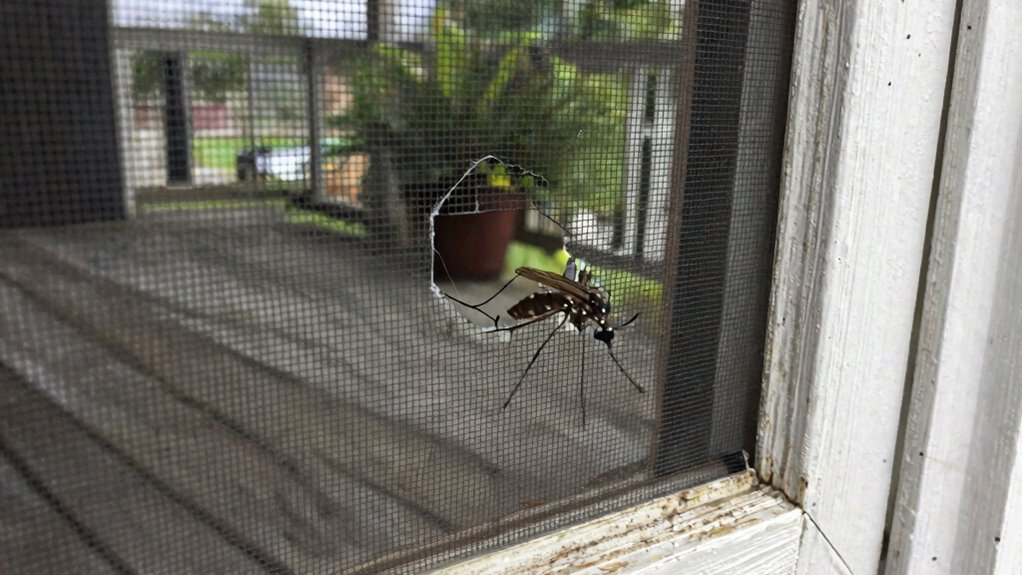
Even a single tiny tear in your screen mesh is an express lane for mosquitoes. Any hole larger than a pinhead invites them in, no matter how tight your mesh weave.
Regularly inspect every corner and seam. A small rip today becomes a swarm tomorrow. Use a screen repair kit with adhesive patches. They cost around ten dollars and seal instantly.
Check for loose spline, the rubber cord holding mesh in place. Fixing it now saves hours of annoyance later. Mosquitoes are patient, but they aren’t magicians.
Patch everything, even hairline cracks, before sunset. You’ve already picked the right mesh. Do not let a sloppy repair ruin your pest control efforts.
For permanent protection, re-stretch any sagging mesh and secure spline with a screen spline roller. A thorough window and door seal check prevents future breaches, and using UV and ozone resistant materials extends seal lifespan, reducing yearly replacements. Mosquito barrier integrity depends on every single joint.
Install a Self-Closing Screen Door That Works
A self-closing screen door is only as good as its hinges, and magnetic or spring hinges are the two main options that actually pull the door shut every time. The real trick is positioning the hinges and latch so the door snaps fully closed, not just mostly closed. A gap of even a quarter inch is basically a mosquito highway with a welcome mat for other pests.
Pick a hinge with adjustable tension, test the swing a few times, and remember that a door that clicks shut on its own is worth its weight in bug spray. For effective pest control at every entry point, this simple upgrade keeps flies and gnats out without fail.
Choose a spring hinge with a strong return force to guarantee the latch engages fully. If you are shopping for a screen door solution, look for buyer intent phrases like “self closing screen door hinge” or “pest proof door closer.” This ensures the door seals tight against mosquitoes and other flying insects. The tension adjustment lets you fine tune the closing speed, so the door does not slam or bounce open.
A properly installed screen door with these hinges becomes a reliable barrier against unwanted bugs. It also helps reduce the need for chemical sprays, making your home safer for kids and pets. When the latch clicks shut every time, you have a truly pest proof entryway. For maximum defense against tiny pests, consider adding a high-density mesh screen with at least 256 holes per square inch to block even the smallest insects.
Magnetic or Spring Hinges
Since a screen door only works if it actually closes behind you, magnetic or spring hinges are the unsung heroes of mosquito prevention. Magnetic screens use embedded magnets to snap shut quietly, keeping flying pests out without a sound.
Spring hinges rely on adjustable tension to pull the door closed, but the wrong choice invites bugs you didn’t invite. For effective pest control, you need a hinge that seals every time.
| Feature | Magnetic Screens vs. Spring Hinges |
|---|---|
| Closure speed | Magnetic screens: instant; Spring hinges: adjustable via tension |
| Durability | Magnetic: magnets weaken over years; Spring hinges: metal coils fatigue |
| Cost range | $15–$30 for strip kits; $8–$20 per spring hinge pair |
| Best for | Lightweight screens; Heavy doors needing firm pull |
For most porch setups, spring hinges offer consistent, adjustable spring strength. Just don’t crank them so tight the door slams on your heels.
Magnetic screens are great for temporary no‑see‑um barriers but less reliable in wind. If you want a door that stays shut without yelling at kids, spring hinges win for reliable pest exclusion.
Ensure Full Closure
Not every screen door closes itself and that is where the battle against mosquitoes is lost. To guarantee full closure, a self closing door is non negotiable for effective mosquito control.
Look for a model with a magnetic closure where powerful magnets snap the door shut automatically when you pass through. Hinge tension must additionally be adjustable letting you fine tune how fast the door closes. Too slow and mosquitoes sneak in. Too fast and it slams like a teenager’s mood.
Aim for a tension range of 5 to 15 pounds as that covers most porch foot traffic. The price range is $40 to $120 depending on mesh quality and frame durability.
Installing it takes about twenty minutes with a screwdriver. Avoid cheap spring only doors because they lose tension fast.
The verdict is to spend the extra twenty bucks for a magnetic closure model. It seals every time and every trip for lasting pest prevention.
Positioning for Best Seal
Even after picking the perfect self-closing door, a bad installation will let mosquitoes in faster than a gap-toothed smile. Positioning matters more than the hardware, especially around the frame.
The door must sit plumb and square, or gaps appear where the close mesh meets the jamb. A door that is not level leaves a bottom gap for bugs to crawl under.
Hinges misaligned create a sliver opening at the top corner. A loose strike plate makes the door bounce so it never latches fully.
A warped frame causes an uneven seal along the edge. A threshold too low gives mosquitoes a space to squeeze through.
To maintain good air circulation, install a pneumatic closer that pulls the door shut smoothly without slamming. Adjust the tension so it closes fully every time for pest prevention.
A well-positioned door costs $30 to $60 and keeps the porch tight for insect control, but adding a treatment of permethrin-based solutions to the screen mesh can provide an extra layer of protection that lasts through many washes. Bottom line: spend the extra 20 minutes on alignment for a strong seal, or spend all summer slapping mosquitoes.
Add Mosquito Netting Curtains for Extra Protection
Adding mosquito netting curtains creates a flexible barrier that cuts off common entry points without any permanent changes to your porch or doorframe.
Proper tension is critical because saggy panels let pests slip through gaps, so use adjustable rods or weighted hems to keep the mesh snug against the frame.
Magnetic closures snap shut automatically after each pass, which eliminates the “I forgot to close it” problem and adds pest proofing convenience.
For a standard porch door, expect to spend $30 to $60 per set, while upgrading to No-See-Um mesh adds about $20 and blocks biting midges and other tiny insects.
These curtains work best alongside your existing screens, especially in high traffic zones where doors swing open constantly and pest control matters most.
They are a low hassle, removable layer that stops mosquitoes at the threshold, but you still have to remember to let the magnets do their job.
The bottom line is that if you want quick mosquito protection without drilling or mounting hardware, netting curtains deliver quiet, effective coverage.
Just keep the fabric taut, close the flap every time, and you will enjoy a noticeably calmer outdoor space with fewer buzzing interruptions.
For optimal pest blocking, choose a design with high mesh density to stop even tiny biting bugs like gnats and no-see-ums from sneaking through.
Use Fans to Create Airflow Mosquitoes Hate
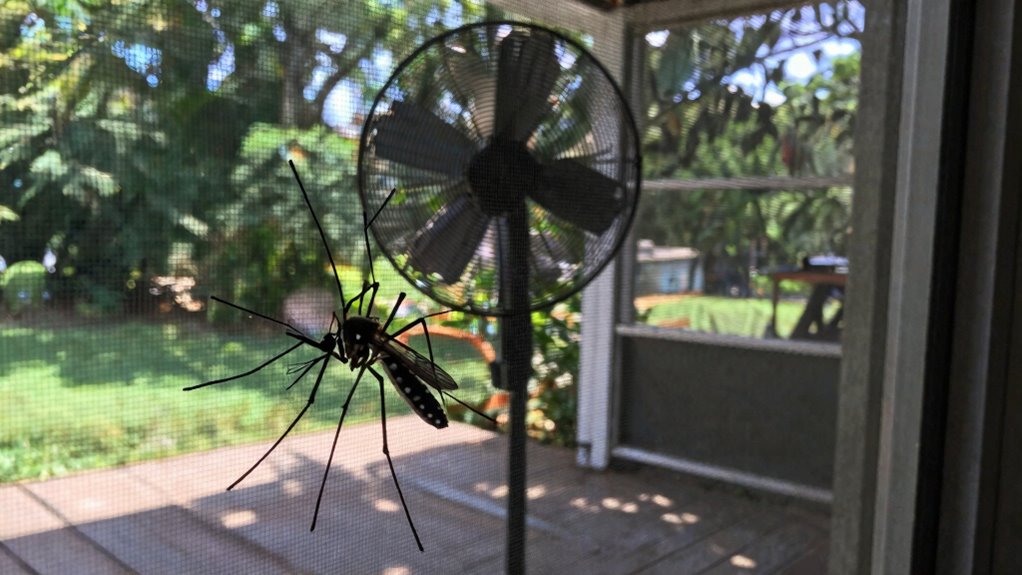
Mosquitoes are terrible fliers, and that is their weakness. A simple fan creates a breeze they simply cannot fight, turning your porch into a no‑fly zone.
Mosquitoes are terrible fliers, and that is their weakness. A simple fan turns your porch into a no‑fly zone.
The key is smart fan placement and steady air circulation to keep the air moving across all seating areas. A 20‑inch box fan on medium, aimed outward from the table, works wonders.
For larger spaces, two fans on opposite corners provide overlapping coverage. Mosquitoes can’t steer in wind above 1‑2 mph, so even a low fan setting grounds them.
Strategic fan placement, like near the door or above the seating, creates a defensive bubble you can sit in. Good air circulation additionally dries sweat, which mosquitoes use to track you, cutting their targeting system.
Bottom line: fans are cheap, chemical‑free, and surprisingly effective. One fan under $30 can save your evening. For added protection, consider placing a citronella candle near the fan to disperse the repellent oils across the porch.
Remove Standing Water Where Mosquitoes Breed
Why is it that mosquitoes, despite their tiny brains, outsmart us every summer? It all starts with a few tablespoons of undisturbed water.
Inspect your porch’s surroundings for anything that holds rain or sprinkler runoff. Bird baths are a prime suspect. Change that water every few days to break the egg-laying cycle.
Clogged gutters are stealth offenders, creating shallow, debris-laden pools that mosquitoes adore. Flip over plant saucers, drain kids’ toys, and poke holes in tarps that sag.
A single bottle cap can hatch hundreds of mosquitoes per week. The fix is simple. After each rain, do a five-minute walk-around, dumping or drying any standing water.
Starving their breeding cycle is the cheapest, most effective first step for your screened porch. This targeted pest control method eliminates mosquito breeding sites without chemicals.
Searching for mosquito control near me often leads to this same advice. Removing standing water remains your top priority for home pest management. For persistent water features, an EPA-registered Bti dunk can safely kill larvae without harming pets.
Trim Your Yard to Eliminate Mosquito Hiding Spots
Even after draining bird baths and toys, mosquitoes still need daytime hiding spots, and an overgrown yard becomes a five-star resort for them.
Yard maintenance is your next line of defense, and it is simpler than you think.
Trimming shrubs and keeping grass short removes their preferred resting spots.
This forces them to find shelter elsewhere or die trying.
Overgrown vegetation traps dampness and creates a humid microclimate where mosquitoes thrive.
Cutting it back dries things out fast.
Dense shrubs provide cover from wind and predators, so regular trimming exposes them to air circulation.
Natural threats then reduce the pest population.
Tall grass offers hiding spots for egg-laying females, making your yard a breeding ground.
Keep your lawn tidy to prevent these biting insects from reproducing.
A tidy yard keeps your porch mosquito-free without chemicals.
It is cheap, effective, and a smart pest control solution for any homeowner.
Stay on top of lawn care and you will eliminate hiding spots easily.
No need for sprays when regular trimming does the job, though for larger areas you could use a propane-powered fogger for portable, odorless fog coverage.
Swap Porch Lights for Mosquito-Repelling Bulbs
Your porch lights might be working against you. Standard bug attracting bulbs turn your screened haven into a mosquito hangout.
Swapping them for yellow or amber LED bulbs, often called bug lights, drastically reduces insect interest without sacrificing visibility. This simple porch lighting fix costs roughly ten dollars per bulb and lasts years.
| Light Type | Color Temp | Mosquito Appeal |
|---|---|---|
| Incandescent | Warm white | High |
| Standard LED | Cool white | Medium |
| Amber/Yellow LED | Low spectrum | Low |
| Red LED | Deep red | Minimal |
Timing matters too. Use dusk dawn settings so lights only activate when needed, cutting both energy waste and insect traffic. For more comprehensive protection, consider that many IGR sprays, like those with pyriproxyfen 10%, are safe for food and residential environments and can be applied around porch perimeters to prevent mosquito larvae from maturing.
This won’t solve everything alone, but it is a solid, low effort upgrade. Spend a few bucks on amber bulbs and you will enjoy fewer buzzers and more brewskis.
Layer These Methods for Complete Mosquito Prevention
Sealing every gap, crack, and seam is your first line of defense, but it is not enough alone. Add a fan or two to create a steady breeze that prevents mosquitoes from landing near you. For added protection, consider using a Picaridin spray for up to 12 hours of defense against mosquitoes and ticks.
Eliminate standing water in the yard to remove their breeding sites and stop new mosquitoes from hatching. Combine these three layers: seal, fan, and drain.
Your porch will stay bug‑free all summer with this complete pest control strategy. For the best mosquito prevention, check screens regularly and use outdoor insect repellent as backup.
Seal All Entry Points
A complete mosquito barrier requires layering every seal at every possible entry point. Take no shortcuts with your door and frame, because a tiny gap is an open invitation.
Use caulk or weatherstripping to seal gaps around every door, window, and porch joint. Install sweeps on all door bottoms to close that notorious dark space.
Check the entire perimeter, especially where walls meet the floor, for any overlooked openings. Even a credit-card-sized gap under a door lets dozens of mosquitoes in per minute; sweeps block this completely.
Professional pest control installation, around $150 to $300, guarantees tight seals at corners and framing. This prevents future repair work and saves you time.
Replace worn weatherstripping on older doors, and a three-dollar tube of caulk saves hours of swatting later. The bottom line is no shortcut exists: seal it all.
A mosquito finds a single crack like a toddler finds a cookie, so close every gap for true home mosquito protection. For additional defense around the structure, consider applying effective perimeter pest control granules along the foundation to target crawling insects that also enter through gaps.
Optimize Airflow With Fans
Fans are the unsung heroes of mosquito control. They create a breeze that mosquitoes, weak fliers, simply can’t handle.
Proper fan speed is key, set it to medium or high. A gentle whisper won’t disrupt their tiny wings.
Fan placement matters most, so position a fan at seating height. Aim it outward or across the porch for best bug repellent results.
A 20-inch box fan, around $30, works well for patios. For larger spaces, a 52-inch ceiling fan at medium speed covers more area. Pairing a fan with a targeted repellent creates a bug-free zone, and combining it with screens forms physical barriers for enhanced pest control.
The goal is a constant, moving air barrier that keeps mosquitoes off you without chemicals. This simple, cheap fix pairs perfectly with screens and seals as part of your pest control plan.
Bottom line, buy a fan, place it right, and turn it up. It’s a practical way to create a mosquito-free zone for outdoor enjoyment.
Eliminate Breeding Grounds
Mosquitoes need stagnant water to breed, and they are not picky about where they find it. A bottle cap holds enough for hundreds of eggs, so yard maintenance and water removal are non-negotiable.
Skip this step, and your screened porch becomes a waiting room for the next generation. Flip, drain, or toss anything that collects water: plant saucers, kiddie pools, even a crumpled tarp.
Mosquitoes will find that teaspoon of rain faster than you will. Clean gutters monthly, because clogged downspouts create mini swamps right above your porch.
If you hire out, gutter cleaning runs about $0.50 per linear foot. Trim grass and shrubs short to eliminate hiding spots for adult mosquitoes.
Adult mosquitoes hide in tall vegetation during daytime, just waiting for dusk to launch their attack inside your screen. Water removal is the cheapest, most effective preventive measure for pest control.
Do it weekly, or live with a cloud of tiny blood-suckers. Mosquito control starts with removing breeding grounds around your home. For water features you cannot drain, use mosquito dunks with methoprene to stop larvae from maturing into biting adults.
Frequently Asked Questions
Can Mosquitoes Enter Through Vents or Roof Gaps?
Yes, mosquitoes can slip through vents or roof gaps, so pest proofing your attic is essential.
Vent screening methods are your first defense, and using 20×20 mesh over soffit or gable vents works best. Secure the mesh with staples or adhesive, because standard 18×14 mesh won’t stop the small ones.
Roof gap sealing also matters, as cracks near fascia or ridge caps let them in. Caulk those spots with silicone, costing about $8 a tube, to block entry points.
Ignore them and you’re hosting a blood buffet, which is not fun for your family.
The bottom line is inspect yearly, patch fast, and breathe easy. That’s the fix to keep your home mosquito free and your pest control products working effectively.
Do Solar-Powered Mosquito Repellers Work on Porches?
Solar-powered mosquito repellers are a shaky bet for porches. Their nighttime pest control performance drops fast when you need it most.
Most LED and ultrasonic emitters simply lack the punch to clear a screened space. Battery longevity is the real headache for buyers seeking reliable protection.
Cloudy days mean dead devices by dusk, right when mosquitoes feast. On the plus side, these gadgets require zero wiring and cost just $15 to $30.
However, spotty coverage and wind render them useless for consistent bug control. For a solid fix, pair a fan with tight mesh instead.
Skip the gadgets and save your cash for screen tape. Invest in proven pest control solutions that actually work where you live.
Should I Treat My Porch With Chemical Sprays Indoors?
Treating an enclosed porch with chemical sprays indoors is not recommended due to serious health risks like inhaling harmful residues in a cramped space.
For safe pest control, consider natural spray alternatives such as citronella or lemongrass oil blends applied sparingly around window screens.
These natural repellents are safer for your family, though they are less potent than synthetic chemical options.
A simple box fan positioned near the doorway works wonders for deterring flying pests without any fuss at all.
If you need stronger pest control for a porch with heavy infestations, look for outdoor labeled sprays that are safe for use inside screened areas.
Always read the label carefully and prioritize ventilation or low toxicity products for enclosed living spaces.
The bottom line is to skip indoor chemical sprays entirely.
Opt for airflow, natural alternatives, or targeted outdoor rated repellents to keep your porch pest free and your family safe.
Can Mosquitoes Bite Through Screen Fabric Directly?
Mosquitoes cannot bite through standard screen fabric, but the outcome hinges on screen gauge and mesh density. A low screen gauge, like 18×14, leaves gaps small mosquitoes slip through, so they can bite without contact.
A high mesh density, say 20×20, blocks even no see ums from getting to your skin. If a mosquito reaches your skin, it is likely due to a screen failing.
For reliable mosquito control, upgrade to a fine mesh screen like Phifer insect screen, which costs about $0.50 per square foot. Pair it with tight seals around doors and windows to stop pests from finding gaps.
The bottom line is simple: choose a higher mesh density for your home pest proofing, or you risk itchy proof of failure. Buy the right screen gauge now to avoid costly pest treatments later.
Will Citronella Candles or Plants Actually Keep Mosquitoes Away?
Citronella candles and mosquito repellent plants offer modest help, but they are not a miracle solution for pest control.
Their effectiveness drops sharply in even a light breeze, which limits their use outdoors.
For plants to work, you need aggressive placement and crushed leaves rubbed on your skin to release the oils.
A single potted plant on your patio will not repel a swarm of mosquitoes.
Think of these products as gentle nudges, not force fields against biting insects.
Pair them with a high velocity fan, which costs under $30, for actual relief from mosquito bites.
The bottom line is that citronella is aromatic and marginally useful for mosquito control.
But do not skip proper screening or professional grade repellents if you want a pest free yard.


