
Keeping mosquitoes out of a tent is trickier than just zipping the door shut. A single gap or damp spot can turn your shelter into a bug buffet all night. The right setup starts before you even unpack, with smart campsite choices and proven pest control tactics. This guide covers the exact steps to seal, spray, and ventilate your tent so mosquitoes can’t get in. You’ll learn how wind, distance from water, and perimeter cleanup cut their activity significantly. We also cover gear like permethrin spray and a camp fan that grounds weak fliers. Enter quickly, feet-first, and zip up instantly—those seconds matter. Read on for the full breakdown that keeps your sleep bite-free.
At A Glance
- Inspect and repair all mesh windows and vents for tears before pitching.
- Set up tent on higher ground, away from standing water and dense vegetation.
- Treat tent fabric with permethrin spray, reapplying every six weeks or six washes.
- Tuck sleep netting firmly under mattress for a gap-free seal around your body.
- Enter and exit quickly, zipping fully to prevent mosquitoes from flying inside.
Choose a Campsite That Keeps Mosquitoes Away
Choosing a campsite that repels mosquitoes is your best first step for a pest free trip. Higher ground like a ridge often has less stagnant air and fewer breeding pools for insects.
Choosing a campsite that repels mosquitoes is your best first step for a pest-free trip.
Wind direction matters a lot, so pick a spot where a steady breeze can blow those bloodsuckers away. Avoid low lying areas near marshes or ponds where mosquitoes nest and multiply.
Look for open spaces with natural airflow to keep the area less inviting. Clear ground of leaf litter and debris before pitching your tent to eliminate hiding spots.
For effective mosquito control, choose a breezy elevated site to win half the battle before you even unzip. This simple strategy cuts down your need for bug spray later on. To further reduce reliance on sprays, consider treating your tent and gear with a permethrin fabric treatment, which bonds tightly to materials for up to six weeks or six washes.
Set Up Your Tent to Block Mosquito Entry Points
Once your campsite is chosen, the tent itself becomes the fortress, and every zipper, seam, and mesh panel is a potential entry point for mosquitoes. Proper tent orientation is key: aim the door away from prevailing wind so gusts don’t blow bugs inside when you enter.
Before pitching, inspect all fine mesh windows and vents for tears. Even a pinprick hole is an open invitation for pests.
Clear the ground of leaves and debris, which hide resting mosquitoes. Stake the tent taut so mesh stays tight against the frame, leaving no sagging gaps.
Zip everything fully before settling in, and enter quickly. Hesitation is a mosquito’s best friend during your camping pest control routine.
This setup won’t guarantee zero bites, but it’ll turn your tent into a respectable, breathable barrier. For the best outdoor protection, consider treating gear with EPA-registered permethrin before your trip.
Why Your Mesh Size Matters: And How Small Is Small Enough?
Mesh size directly impacts your camping pest control success. Holes larger than 1.5mm are basically a welcome mat for mosquitoes.
Smaller gaps block even the tiniest biting insects from getting through. Look for woven polyester or nylon mesh for durability against tears.
Flimsy netting fails fast, so buying a quality tent bug barrier is a smart move. Regular outdoor gear maintenance means inspecting for holes before every trip.
Patch any damage immediately with a sewing kit to keep your sleeping area secure. Spending $15 to $30 extra on fine mosquito netting is worth every cent.
Bottom line: choose 1.5mm or smaller, select a snag resistant material, and check it often. For maximum defense against tiny biting insects, look for mesh density of 40×40 offering over 1,600 openings per square inch. That is how you stay bite free and enjoy comfortable nights outdoors.
Tuck Sleep Netting Under Your Mattress for a Gap-Free Seal
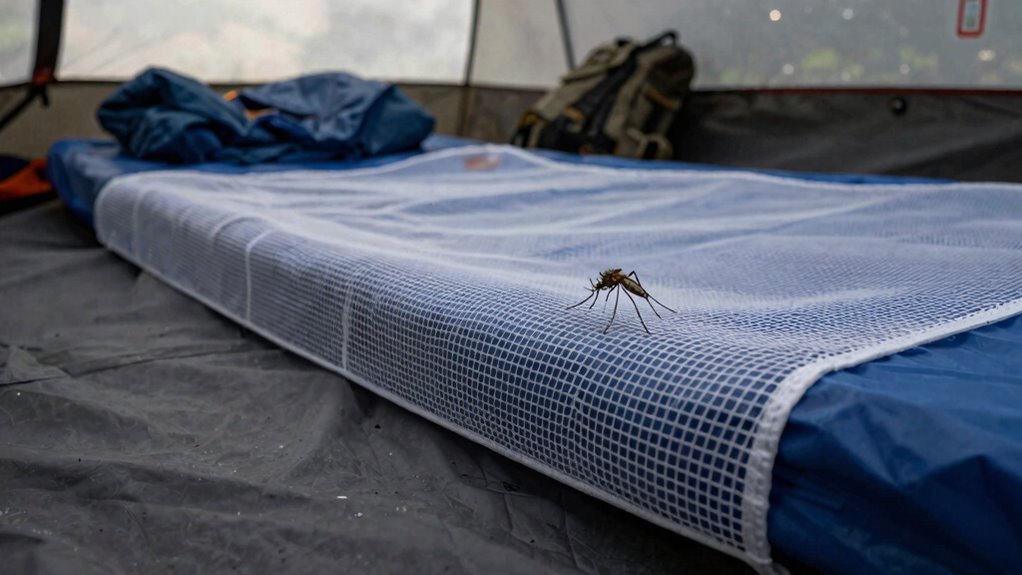
Mosquitos are expert at exploiting even the smallest opening, so a loosely draped net is basically a welcome mat. For reliable mosquito protection, tuck the netting firmly under your mattress or sleeping pad to create a taut, gap-free seal. This simple, low cost method eliminates entry points along the edges, turning your sleep zone into a true pest barrier. You won’t need duct tape, prayer, or any fancy gear to get a solid bug proof setup. The key is to pull the netting smooth and tight before securing it, so no wrinkles or loose folds leave a sneaky gap. Check the corners and sides after tucking, and press down firmly to lock in that snug fit for complete coverage. Once sealed, you’ve got a reliable defense against biting insects, which means better rest and fewer itchy welts. This practical trick works for both indoor beds and outdoor camping setups, making it a versatile addition to any pest control routine. For the best results, choose a net with high mesh density to block even the tiniest biting bugs like no-see-ums.
Secure Net Placement
A mosquito net is only as good as its seal. Secure net placement means tucking the netting under the mattress or sleeping pad until it’s fully pinned down, creating a gap free barrier.
Net tension matters here, because a slack net invites mosquitoes to find a loose edge and slip inside. Before tucking, check door orientation. If the tent door faces the wind, even a sealed net can get blasted open during entry.
Tuck the net deep, ensuring it stays taut against the pad’s edges. This prevents sneaky gaps near corners and stops pest entry points from forming. For blocking tiny vectors, choose a net with at least 256 holes per square inch.
One missed tuck ruins the whole setup. For a solid night’s sleep, always verify the seal before zipping in.
Bottom line: loose netting is a mosquito welcome mat. Keep it taut, keep it tucked for complete insect protection.
Taut Seal Technique
The tent zipper hisses shut, and now the real test begins.
Tucking mosquito netting under your mattress creates a gap-free seal that exploits mosquito behavior: they aggressively probe for openings along edges, searching for skin contact.
Polyester netting (15 to 20 denier) is lighter and dries faster than nylon (30D), but nylon holds its tautness better under mattress compression over multiple nights.
For long trips or frequent camping, nylon is the smarter buy for durable mosquito protection.
Pull the netting drum-tight across the mattress corners, then tuck the excess fully underneath.
Any slack invites persistent buzzing near your face, so invest that extra minute to get the tension right.
Run a hand around the perimeter after tucking to test the seal.
If any gap exists, the mosquito will find it within five minutes, which is why a quick check saves you a restless night.
Essentially, a proper taut seal turns your sleeping area into a mosquito-free bubble, transforming their relentless probing into frustrated circling.
You sleep soundly, they don’t, and that’s the whole trick for effective pest control with a bug barrier.
For complete peace of mind, pair this with a permethrin-treated net for extra repellency.
Check the zipper tracks and corner seams before you pack, since those are prime entry points for biting insects.
Preventing Mosquito Entry Points
Vigilance is the price of a mosquito free sleep, and the most critical gap to close is the one between your netting and your mattress.
Mosquito behavior dictates they will hunt for any opening, especially near your warm, breathing body.
They prefer daytime resting spots like dense grass and leaf litter, but at night they will exploit a loose seal.
Tuck the netting under your mattress or sleeping pad, ensuring it is taut and gap free.
A ten dollar pad can save you from a hundred dollar itch fest.
For a standard rectangular pad, push the netting side down, then clip the edges if needed.
This creates a physical barrier, not just a suggestion.
The bottom line is seal it tight, or sleep with the enemy.
Apply Permethrin Evenly on Tent Walls and Windows
Apply permethrin evenly across your tent walls and windows to create a barrier that kills mosquitoes on contact. Spotty coverage leaves gaps that biting pests will quickly find and exploit.
Treat the entire tent fabric, with extra attention on door and window panels. A consistent chemical barrier is your best defense against mosquitoes and other pests.
Hold the can six to eight inches from the fabric and move in slow, overlapping sweeps. Apply until the surface looks damp but not dripping wet.
Use two light coats and let the first dry for two hours before adding the second. This reaches every thread and seam without pooling or runoff.
Work outside or in a garage to keep fumes away from your living space. Let the tent air out for four hours before packing it away.
Mind the environmental impact since permethrin is toxic to aquatic life. Always spray away from water sources like lakes, streams, or puddles.
Well treated mesh still needs airflow to keep your tent comfortable. Ventilation matters even with a perfect insecticide coating.
Treat your tent once per season for reliable protection. Follow this simple routine and sleep easy, knowing your shelter is properly defended.
The treatment remains effective for up to six weeks or six washes before needing reapplication, depending on the specific product you choose.
Use Insecticide Sprays Safely Inside Your Tent
Using insecticide sprays inside a tent is about precision, not frantic misting. A quick, targeted knockdown application along the walls and ceiling will stop resting mosquitoes in their tracks before you sleep.
Always stick to the label’s safety directions, and hold your breath or turn away while spraying to avoid inhaling the mist. This keeps your tent a secure, breathable sleep zone, especially if you’re looking for long-lasting mosquito control for camping trips.
For best results, check that your chosen aerosol is labeled for enclosed spaces, and consider a residual barrier spray on the zippers and seams. That way, you get effective pest prevention without turning your shelter into a foggy, chemical cloud.
Remember to air out the tent for a few minutes after the knockdown spray settles, but before you crawl in for the night. This practical habit reduces spray exposure while still leaving a protective layer against biting bugs, so your sleep stays undisturbed and safe. Sprays with 20% Picaridin remain a highly effective and low-odor alternative for treating tent surfaces.
Safe Spray Application
Insecticide sprays do a great job clearing mosquitoes from a tent, but careless use leads straight to a headache. Permethrin safety starts with spraying only your gear, never your skin, and always doing it outdoors, never inside the tent.
Let the treated fabric dry completely before setting up camp, or you will breathe chemical fumes all night. For a fresh start, open the tent flap after spraying and ventilate for a full 15 minutes before sealing it shut.
You want dead pests, not a foggy brain, so target the seams with a light mist along corners and zipper tracks where mosquitoes hide. Avoid drenching the entire floor like a kiddie pool, because oversaturation wastes product and increases exposure risk.
Stick to a reapplication schedule every six washes or six months to keep your tent a no-fly zone without overdoing the treatment. This routine protects your sleep and keeps your gear effective for long camping trips. For lasting protection, choose a spray that lasts up to 6 weeks or six washes, bonding to fabric fibers even through sweat and water.
Bottom line: spray smart, ventilate well, and you will sleep bug-free without the chemical buzz. For durable mosquito control, pair this with a permethrin-treated sleeping bag liner and check your tent’s mesh for tears before each trip.
Knockdown Before Sleeping
Spray your room at dusk when mosquitoes are most active. Do it right after dinner for the best pest control timing.
Target corners and dark spots where mosquitoes rest during the day. Aim for seams and crevices to hit their hiding places.
Limit your exposure by stepping out while the spray settles. Ventilate the room before sleeping to avoid inhaling any mist.
Use permethrin based spray for long lasting mosquito kill. Reapply weekly to maintain a strong bug barrier around your tent or room.
Check all zippers and entry points before you sleep. Seal them fully to stop mosquitoes from sneaking inside.
Dry spray lands on surfaces, not floating in the air. It is safe when used sparingly for effective insect control.
An $8 can treats five trips for reliable protection. One quick burst beats waking to bites all night long.
Permethrin sprays bond well to fabrics like cotton, polyester, and nylon without staining or tearing, keeping your tent gear intact.
Choose the Right Repellent for Sleeping Hours Inside the Tent
Two repellents stand above the rest for sleeping hours inside a tent: DEET and permethrin. DEET is the classic choice, applied directly to skin for reliable protection.
Permethrin is sprayed on tent fabric and gear, not skin. It creates a long-lasting barrier that kills mosquitoes on contact.
Repellent duration matters. DEET’s 30-50% concentration offers four to six hours of protection, enough for a full night’s sleep without reapplication.
Repellent duration matters; 30-50% DEET gives four to six hours of protection, enough for a full night’s sleep.
Skin sensitivity is key. Those with sensitive skin can use DEET-based lotions, avoiding high-concentration sprays, or rely solely on permethrin-treated tent walls and sleeping bag.
Application strategy includes applying DEET to ankles, wrists, and neck before zipping in. Permethrin-treated netting adds a second line of defense; think of it as a force field for your tent fabric.
Bottom line: DEET for skin, permethrin for gear. Your tent becomes a fort.
Just don’t forget to test DEET on a small patch first. Nobody wants an itchy face at midnight.
Permethrin-treated gear also bonds to fabric fibers for up to 6 weeks or 70 washes, providing durable protection without reapplication.
Enter and Exit Quickly Without Letting Mosquitoes Inside
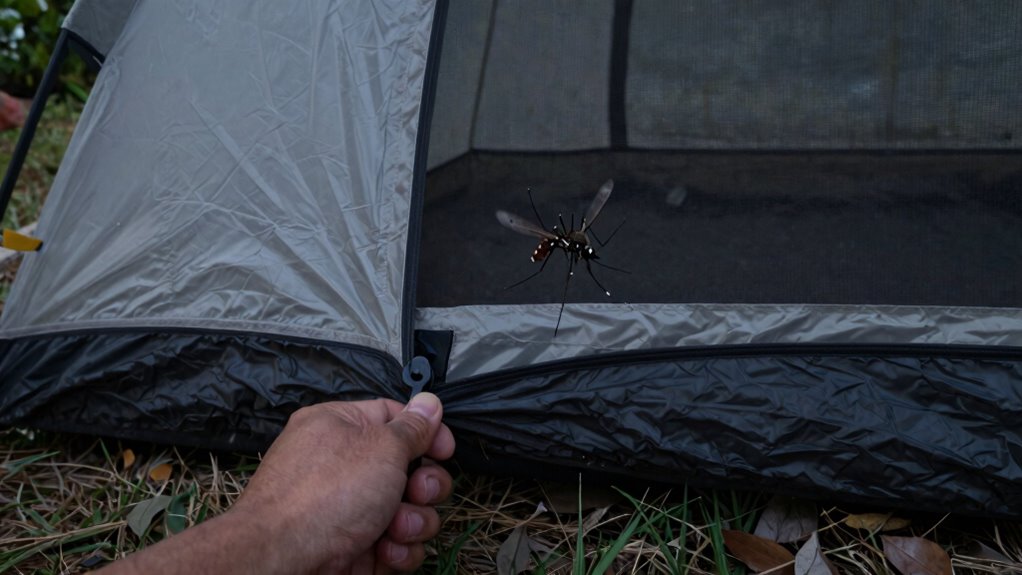
A tent zipper is a flimsy barrier between you and a cloud of mosquitoes, so treat it like a tactical operation. Minimize zipper noise by opening only a narrow gap, wide enough for one body to slip through sideways.
Dusk timing is critical; mosquitoes swarm at sunset, so plan bathroom breaks before that golden hour. Before unzipping, scan the interior for any hanger-ons, then perform a fast, fluid entry.
Pull the zipper closed immediately, not after you’re settled. The same applies when exiting: zip up before moving gear outside.
A single hitch lets a mosquito sneak in, and one can ruin sleep for hours. Think of it like a bank vault, quick in, quicker out, no lingering.
For effective mosquito control, pair this routine with a permethrin-treated tent and a repellent wristband as backup. If you’re shopping for pest-proof gear, look for zippers with tight storm flaps and sealed seams.
Unzip just enough for a shoulder-width pass. Enter feet-first, then spin and zip behind you.
Practice the maneuver at home to build muscle memory, and keep a headlamp handy to spot any buzzing intruder before it settles.
For long-term camp comfort, consider a pop-up mosquito net over your sleeping bag as an extra layer of defense. Buy a zipper lubricant specifically for tent hardware to keep the track smooth and silent.
When you rush, you risk tearing the mesh, so use a steady hand even while moving fast. A quick shake of your clothes outside the vestibule dislodges any clinging pests before you step in.
Remember that a single overlooked gap is an open invitation. Check the zipper’s full length by feel once you’re inside, especially the bottom corner.
With this drill, you’ll cut entry time to under three seconds, and you’ll sleep without that high-pitched whine in your ear.
No need to overthink it, just make the vault routine second nature, and keep your bug spray within reach for any patrol missions. If you pre-treat your tent fabric with a spray like Sawyer SP657, the protection lasts up to six weeks and bonds to the material without staining.
Use Fans and Airflow to Disrupt Mosquito Flight
Since mosquitoes are notoriously weak fliers, a simple breeze can ground them effectively. A well-aimed fan disrupts their fragile flight path, turning your tent into a no-fly zone for these buzzing pests.
Fan design matters for coverage. Clip on or battery powered camp fans, like the $20 to $40 Opolar models, create a steady airflow that mosquitoes can’t navigate.
Fan design matters for coverage. Clip-on or battery-powered camp fans create a steady airflow mosquitoes can’t navigate.
Position one near your head or tent entrance to block their approach. Boost tent ventilation for efficiency by opening mesh vents on opposite sides of your tent.
This cross breeze, aided by a fan, doubles airflow and makes it impossible for mosquitoes to hold steady. Just make certain no gap in netting.
Keep it running all night with a whisper quiet fan and a USB power bank that runs 8 to 12 hours. It masks noise, cools you by saving sweat, and stops those landing attempts dead.
Honestly, it is like giving them a hostile wind tunnel for pest control. Steady airflow naturally discourages mosquitoes and flies from landing. The verdict is a cheap fan with smart tent ventilation is your best non toxic defense for deterring insects.
Don’t forget spare batteries for convenient outdoor pest control.
Clear Out Standing Water and Tall Grass Near Your Tent
Choosing a smart campsite is your first line of defense against biting insects, so set up away from standing water, stagnant ponds, or marshes where mosquitoes breed.
Look for hidden water sources around your tent, like collected rain in buckets or pooled water on tarps, because that ignored puddle is a prime mosquito nursery.
Dump any water you find and flip over containers to keep them dry, and this simple step cuts down on local pest pressure fast.
Next, clear away tall grass and dense vegetation near your sleeping area, since those shady spots are where mosquitoes rest during the day and wait for you.
Use a trimmer or your hands to cut growth back at least a few feet from your tent’s edges, and keep the ground bare or covered with a clean tarp.
For extra protection, consider a permethrin-treated tent or a portable mosquito repellent device to target lingering pests in your immediate zone.
Finally, check under your tent’s footprint and around guy lines for any leftover leaves or damp debris that could harbor ticks or gnats.
A cleaner perimeter means fewer hiding places for biting bugs, so you can relax and enjoy your trip without constant swatting.
If you have a birdbath or rain barrel near the campsite, you can use Bti-based biological larvicides to kill mosquito larvae without harming fish, pets, or plants.
Site Selection Smartly
Except the tent becomes a swamp, mosquitoes will come calling. Site selection is your first and easiest defense.
Look up, not just down. Wind speed matters for pest control: a breezy ridge keeps pests grounded.
Still valleys let them swarm. Elevation gradient helps with mosquito prevention, as higher ground often has fewer breeding puddles.
Scout for natural airflow. A spot with steady 5 to 10 mph breeze cuts mosquito activity by half, no joke.
Avoid low pockets where cold air settles after dusk. These zones trap humidity and bugs together.
Pitch at least 50 feet from any standing water. Still creeks or puddles are nurseries for thousands of eggs.
Do this right, and you’ve already won half the battle without spraying a single drop. This is the smartest step in outdoor pest defense.
For extra protection, consider using a propane fogger to clear bugs from the tent area quickly.
Eliminate Hidden Water Sources
Why would anyone pitch a tent beside a glorified puddle and then act surprised when the mosquito chorus starts? That’s like inviting the whole swarm to a sleepover.
Mosquito biology dictates that females need standing water to lay eggs, and a single bottle cap can produce hundreds of thirsty biters in days. Clear out every hidden water source like bucket bottoms, tarp folds, and even those innocent-looking puddles near your tent door. For any unavoidable standing water, consider using mosquito dunks with methoprene to stop larvae from maturing into biting adults.
Bite prevention begins before you unzip the bag. Additionally, stomp down tall grass and undergrowth, since mosquitoes rest there during the day, waiting for dusk.
A quick sweep of the campsite removes their breeding grounds and hiding spots. This pest control step spares you the itchy aftermath and keeps your tent a mosquito-free zone.
Frequently Asked Questions
How Often Should I Reapply Permethrin to My Tent?
Permethrin breaks down from washing and UV exposure, so reapply it every six weeks or six washes, whichever comes first. That is the honest reapplication schedule for protecting your tent from ticks and mosquitoes.
Most sprays last a full camping season, but heavy rain or direct sunlight cuts that protection short. Give your tent fabric a quick check before each trip, and if mosquitoes seem unfazed, treat it again right away.
A fast spritz of your permethrin insect repellent beats a sleepless night spent listening to buzzing pests. For the best pest control results, buy a quality permethrin spray made specifically for gear and clothing.
Can I Use DEET on My Tent Fabric for Protection?
Absolutely. You should never use DEET on tent fabric. It will degrade the waterproof coating and damage the seam seals over time.
Plus, that persistent chemical smell can linger in your gear for weeks. Instead, use a permethrin spray for your tent and camping equipment.
Permethrin is a top tier fabric treatment for outdoor gear. It bonds directly to the material and stays effective through multiple washes.
This makes permethrin the smart purchase for any serious camper or backpacker. DEET is designed only for human skin, not for tent protection.
Stick with permethrin for your shelter. It is safer, lasts longer, and won’t ruin your tent’s performance.
Is It Safe to Use Mosquito Coils Inside a Tent?
No, it is not safe to use mosquito coils inside a tent. Those coils release toxic fumes and chemical smoke that can be dangerous to breathe in a small enclosed space.
A tipped coil is a serious fire hazard and can easily ignite tent fabric or sleeping bags. Instead, grab a battery operated fan for $15 to $30, which creates airflow to keep mosquitoes away without any smoke.
For a chemical free pest control solution, you can also spray a permethrin treated net around your sleeping area. Coils work fine outdoors on a patio, but inside a tent they are just asking for trouble.
The bottom line is to skip the coil and save your tent. Smart buyers looking for tent mosquito repellent should choose a fan or a treated net for safe, effective protection.
What Is the Best Way to Repair a Hole in Mosquito Netting?
The best repair is a nylon patch, like the self-adhesive ones from a camping store for about $5. Back it with a dab of silicone sealant for a combo that sticks, seals, and flexes with the netting.
Cut the patch round because corners peel up otherwise. Press it firm, then seal the edges to stop mosquitoes from finding a new entry point.
For a quick fix, clear nail polish works in a pinch against biting pests. A small sewing kit handles tears but leaves holes, so sealant fills them for proper pest control.
Mesh fixed, sleep sans buzz without worrying about mosquito bites or bed bug intrusion. This durable repair is ideal for anyone seeking effective insect screen maintenance products.
Do Battery-Operated Fans Really Keep Mosquitoes Away?
Battery operated fans do not truly repel mosquitoes, but they can help. By disrupting airflow patterns near the skin, they make it harder for mosquitoes to land and sense carbon dioxide.
That said, noise levels from the fan may disturb light sleepers. Imagine a tiny, buzzing roommate that keeps you up at night.
A small, rechargeable tent fan priced between $15 and $30 works best. Position it near your head for maximum mosquito deterrence during camping.
This fan is no substitute for netting or chemical repellent in your pest control arsenal. However, as a cheap, low effort addition to a camping kit, it is worth trying.
The bottom line is that it is helpful, but not a magic bullet. For serious mosquito control or nighttime protection, combine it with proven pest control products like permethrin treated gear or DEET based sprays.


