
Getting rid of fruit flies in the kitchen doesn’t require a complete deep clean—just a few targeted steps to break their life cycle. Those tiny pests aren’t a sign of poor hygiene; a single overripe tomato can already host dozens of eggs ready to hatch.
The fastest way to kill the adults you see is with a simple apple cider vinegar trap, where a drop of dish soap breaks the surface tension so they drown. Replace that trap every two to three days to keep up with new arrivals, but the real win comes from sanitation.
Flushing drains weekly with boiling water and vinegar will destroy eggs hidden in biofilm, and scrubbing recycling bins removes unseen breeding grounds. Missed spills under the fridge can silently fuel an infestation, and there’s more to uncover about those hidden spots. Keep reading to learn the exact steps for a fruit fly-free kitchen.
At A Glance
- Build a vinegar trap with apple cider vinegar, dish soap, and plastic wrap.
- Flush kitchen drains weekly with boiling water and vinegar to kill eggs.
- Eliminate breeding sites by rinsing cans, bottles, and recycling bins.
- Clean hidden spills behind appliances and under sinks thoroughly.
- Store fruit in sealed containers and take compost out daily.
How to Get Rid of Fruit Flies Fast
To get rid of fruit flies fast, skip the panic and grab a jar. This practical approach targets their short, frantic adult lifespan of only about two weeks.
Grab a jar and get to work—fruit flies live only two weeks, so your solution is already in motion.
A female lays up to 500 eggs, so the whole fruit fly population can explode in days. Start by hunting their breeding spots, like overripe fruit, recycling bins, and kitchen drains.
Those warm, humid areas are prime real estate for larvae and biofilm. For a fast fix, flush drains weekly with boiling water and white vinegar to kill eggs and remove the film they feed on.
Remove all rotting fruit immediately, then wipe surfaces with a vinegar solution. This cuts off their food supply and stops new adults before they emerge.
Sanitation buys you time and reduces the fruit fly population by 90 percent within a week. It’s the first, most direct move for pest control, no magic, just clean.
If you need a faster knockdown, set up a DIY apple cider vinegar trap with a drop of dish soap. This attracts and drowns adults while you handle the source, giving you immediate relief.
For persistent issues, check compost bins and empty trash cans daily to break the breeding cycle. You can also use a commercial fruit fly spray for targeted spot treatments on counters and sinks, and choose sprays that are safe for food-contact surfaces to protect your kitchen prep areas.
Why Apple Cider Vinegar Traps Work (and How to Make One)
Fruit flies are naturally attracted to apple cider vinegar because it smells just like fermenting fruit, their ideal breeding site. Adding one drop of dish soap breaks the surface tension, so flies sink and drown instead of landing safely.
For an effective pest control solution, pour half a cup of apple cider vinegar into a jar. Then add a single drop of dish soap to eliminate the vinegar’s surface film.
Cover the jar tightly with plastic wrap and use a toothpick to poke a few small holes. This simple fruit fly trap captures pests without harsh chemicals, making it a safe choice for your kitchen.
Use common household items for instant results in your fly elimination efforts. The trap works best when placed near sinks or fruit bowls where flies gather.
These homemade traps can be less consistent, but commercial liquid bait options often last up to 45 days per unit.
Science Behind Attraction
The attraction factors in this trap work through simple chemistry. Odor mimicry uses vinegar to replicate the smell of rotting fruit, drawing flies in.
Acid sensitivity causes fly antennae to detect low pH levels, triggering their approach. Fermentation cues from ethanol signal active yeast, a key larval food source.
This chemical signal overrides caution, pulling them toward the trap. Dish soap then breaks the surface tension, causing them to sink and drown.
It is a cheap, effective trick for pest control, no fancy gear needed. A simple $2 vinegar bottle does the job for fruit fly elimination.
Buy vinegar traps today for a practical, helpful solution. For even better prevention, store produce in fruit fly proof containers with airtight lids and fine mesh to block pests and keep fruit fresh longer.
DIY Trap Assembly Steps
Assemble the trap in under two minutes with items likely already in the pantry.
The science is simple: apple cider vinegar smells like fermenting fruit to flies, a powerful lure for pest control.
Dish soap cuts the liquid’s surface tension, so when flies land they sink and drown. No escape.
A proper DIY trap needs a jar, half a cup of apple cider vinegar, and one drop of dish soap.
Stir gently. Cover with plastic wrap and poke small holes with a toothpick, enough entry for flies but not escape.
Place near fruit bowls or bins. Replace every two to three days to catch adult flies and stop egg laying cycles.
This non toxic solution is cheap and oddly satisfying.
That pulsing knot of flies will vanish in days.
Bottom line: this pest control trap works, costs pennies, and requires zero patience.
Your kitchen deserves it.
For extra protection, consider using non-toxic sticky traps to catch any remaining flies near plants or windows.
The 3 Most Common Breeding Sites You’re Overlooking
Three common breeding sites are likely hiding in plain sight, and they aren’t just the fruit bowl.
Kitchen drains, where biofilm and grease accumulate, provide a warm, damp nursery for eggs, so targeting them with a professional drain treatment can break the cycle early. Using enzyme drain cleaners regularly prevents the organic buildup that attracts fruit flies and maggots in the first place.
Recycling bin residues from juice cartons and drink containers, plus hidden spillages behind appliances, are likewise prime real estate for these tiny troublemakers.
Rinsing containers before disposal and wiping down bin interiors reduces the organic matter that attracts pests.
For thorough pest control, inspect under refrigerators and stoves for sticky spills, then seal cracks and clean with a vinegar solution.
If you’re facing a recurring infestation, a licensed exterminator can apply targeted treatments and offer ongoing prevention plans.
Regularly empty and sanitize bins, and use enzyme cleaners in drains to remove buildup.
These overlooked spots are often why DIY fixes fail, so calling a local pest management service for an inspection is a smart buyer investment.
Kitchen Drains
Don’t overlook your kitchen drain. That slimy biofilm is a mix of grease, soap, and food debris. It creates ideal conditions for fruit fly reproduction in your home pest control routine. Female flies view it as a prime destination for egg laying. They complete all lifecycle stages right under your sink, making drain flies a recurring nuisance. Regular pest prevention stops them before they multiply. For a more thorough approach, enzyme-based gels can digest that organic buildup deep inside pipes to target the root of the problem.
| Issue | Solution |
|---|---|
| Grease buildup traps dampness | Flush weekly with boiling water, one gallon, at no cost. |
| Biofilm hides larvae | Follow with half a cup baking soda and one cup white vinegar. |
| Low-lying pipe bends collect gunk | Let the fizz sit for 30 minutes, then flush again. |
| Hidden damp spots near seals | Wipe dry after each use with a paper towel. |
This warm, damp environment shortens the lifecycle to just 8 to 10 days. Drains become a nonstop nursery for biting midges and other pests. The fix is cheap, easy, and takes 15 minutes for DIY pest control. Do it weekly to eliminate their breeding ground without pesticides. Just boiling water, baking soda, and vinegar provide a complete removal of larvae. No harsh chemicals are needed for this effective drain treatment.
Recycling Bin Residues
Recycling bin residues from juice cartons, soda cans, and beer bottles create a hidden feast for fruit flies.
These sugary, sticky leftovers are embarrassingly easy to overlook.
Hidden spillages beneath the bin liner add to the constant fermenting buffet.
A single unrinsed soda can or beer bottle can fuel an entire generation of pests.
Fruit flies lay eggs directly inside the sticky film, and larvae develop unseen in the crevices.
This makes quick pest control essential for any home.
The solution is simple but often ignored.
Rinse every container before tossing to stop attracting fruit flies.
Dry cans completely, then store them in a lidded bin to block access.
Empty and scrub that container weekly with vinegar for effective pest control.
Do not let recycling pile up.
Stop treating your bin like a free snack bar for these insects.
Long-lasting pheromone lures are designed for use in similar food storage areas to monitor for other pests without relying on chemicals.
Hidden Spillages
One of the sneakiest sources of fruit fly infestations hides in plain sight: the film of sugary residue left behind after a kitchen accident. A spilled soda, a dribble of wine, or a splash of juice under the fridge becomes a perfect nursery, accelerating the fruit lifecycle from egg to adult in just over a week.
These overlooked spots additionally support outdoor overwintering when they’re near doors or windows, letting flies survive cold months indoors. For effective pest control, focus on these high-risk areas to target fruit fly breeding grounds. Using a spray with residual action that lasts for up to 30 days can help kill newly hatched larvae in these hidden spots.
Under the refrigerator, sticky spills from leaky juice or soda containers create a prime spot for larvae. Behind the trash can, splatters from thrown away fruit or drink cartons offer a hidden food source.
Inside a broom closet, fermented residue from dropped cleaning cloths or food scraps attracts adult flies. Under a dishwasher, sugary runoff from plates that didn’t get fully rinsed fuels rapid population growth.
In a pantry corner, dried jam or honey drips lure both adults and larvae. Check these spots with a flashlight, wipe them down with vinegar, and break the cycle for good home pest control.
Where to Look Behind Appliances and Under Sinks for Breeding Sites
Behind a fridge or under the sink, fruit flies discover a perfect hidden paradise. Any forgotten juice spill or rotting potato fuels their rapid breeding.
Check for sticky residues near indoor composting bins that often leak fermenting liquid. Also inspect dark corners for cellar spider webs which trap dead insects.
Those trapped bugs create more fly food, and adults thrive on biofilm inside drain traps. A single female can lay up to 500 eggs in these humid warm spots.
Pull appliances out, look under them, and clean thoroughly to remove breeding sites. That sticky patch behind the fridge is a nursery you must target.
Search every hidden crevice and eliminate all organic debris. Remember no breeding site means no flies in your home.
To target these hidden nurseries, regular use of enzyme-based formulas can digest the organic buildup and biofilm inside pipes that sustain adult flies.
Step-by-Step Kitchen Cleaning to Break the Cycle

Start by clearing every surface of fruit, crumbs, and open food containers. Think of it as decluttering for a microscopic enemy.
Then, wipe counters, drawers, and shelves with a vinegar-based solution to dissolve the invisible biofilm they feast on. Don’t forget the floor: a single dropped grape breeds five hundred flies.
Remove all indoor plants’ saucers and check if they hold organic mulch. That damp, rotting debris is prime real estate for larvae.
Empty and scrub recycling bins twice a week. Residual soda attracts them better than a cheap trap.
Wash fruit bowls daily. One overlooked banana can restart the war.
Scour under the fridge’s front edge. Sticky spills here become a five-star buffet.
Run a damp cloth along cabinet hinges and corners. Crumbs hide like they are paid for it.
Break the cycle, and these tiny tyrants lose their lease. For persistent infestations, consider placing slow-acting poison bait stations nearby to intercept any stray ants that might appear during cleanup.
How to Flush Drains to Stop Flies From Breeding
Drains are a hidden paradise for fruit flies. That warm, greasy biofilm is a breeding buffet for drain flies and gnats. To stop them, flush drains with boiling water weekly. Then chase it with a baking soda and vinegar volcano. Let it fizz for 15 minutes, then rinse with hot tap water. This breaks up the gunk and biofilm they love to lay eggs in. For severe infestations, combine sticky traps with a drain gel for long-term control.
If the infestation persists, consider outdoor baiting near window or pipe entries. This intercepts flies before they come inside and can be a smart part of your pest control strategy. In severe cases, chemical control like a spinosad based drain gel can be effective. Use this only as a last resort and always follow label directions for safe application.
The trick is consistency, as one flush won’t cut it for fly prevention. Do this weekly and the flies will find a less hospitable home. No drama, no gimmicks. Just a clean, dry drain, which is the real fix for drain fly control.
How to Clean Recycling Bins and Trash Cans Right
The simplest way to stop fruit flies from breeding in the kitchen is a daily rinse of recycling bins and trash cans. Then use a lidded caddy for their worst mess.
A quick spray with a white vinegar and water solution removes fermenting residues that attract pests. A wipe down afterward targets the juices from juice cartons and beer cans.
This pest control routine, paired with a cheap lidded container for smelly scraps, cuts off the flies’ food supply. They cannot lay eggs without that fermenting debris to feed on.
For effective fly prevention, spray the bins weekly with a vinegar solution. This keeps your kitchen smelling fresh and free of infestations.
Odor-neutralizing deodorizers can also help reduce the fermenting smells that lure fruit flies in from nearby outdoor trash areas.
Daily Rinse Routine
A daily rinse routine is the boring, unsung hero of fruit fly control. It attacks the problem at the source: the sticky residue in your bins where eggs hatch.
This is about daily cleaning, not weekly deep scrubs. A simple hot water swish takes 30 seconds.
Rinse empty cans and bottles before tossing them in the recycling. Wipe the bin’s inner walls with a damp cloth after each emptying.
Pour a splash of dish soap into the bottom, then swish with hot water. Dry the bin completely. Moisture is a breeding invitation.
Focus on odor elimination since smell signals “food” to flies. Do this every evening for effective pest control.
It is tedious, but it is cheaper than buying new fruit. Bottom line: a dry, clean bin breaks the lifecycle.
Your future self will thank you for this simple fly trap alternative. Consistent daily rinsing stops infestations before they start, similar to how non-toxic pheromone attractants disrupt the breeding cycle of pantry moths.
Lidded Caddy Use
A dry bin is a dead bin for fruit flies. The lidded caddy method attacks dampness and smell at once.
Sealing fermenting residues behind a tight lid prevents breeding. This cuts off adult flies from their egg laying spots.
A lidded caddy, like a simple $10 countertop model, should be rinsed daily and lined with a bag. Empty it every other day, or sooner if you catch a whiff.
Trust me, even a clean recycling bin can host a hundred eggs in a damp soda can. For effective pest control, this method stops fruit fly infestations fast.
The caddy offers high breeding prevention and strong smell containment. It also provides excellent moisture control at a low cost.
Open bins offer poor moisture control and no smell containment. Trash cans fall in the middle for both breeding prevention and cost.
Bottom line: a lidded caddy stops the cycle fast. Your fruit flies will hate it, your kitchen will thank you.
This method works similarly to airtight side-locking lids that block out dampness and pests from pantry storage.
5 Daily Habits That Prevent Fruit Fly Infestations
Since fruit flies can complete their entire life cycle in just over a week, daily habits are your best defense against a full-blown kitchen invasion.
A consistent routine makes their tiny lives far more difficult, saving you from sticky vinegar traps and frustration.
Wipe counters and sinks dry after each use. Moisture is their favorite breeding ground, so keep it wiped down.
Empty and rinse the kitchen trash bin daily, especially if it holds fruit peels or leftovers. Store pet food in an airtight container to block pantry pests from accessing it.
Window cleaning can wait, but pet food storage cannot. Scrub recycling bins after each pickup, rinsing any juice or soda residue that attracts flies.
Use a lidded caddy for compost. Take it outside each evening to eliminate breeding zones.
These small, daily actions crush the fly life cycle before it starts. Consistent pest control habits keep your kitchen fly free without harsh chemicals.
How to Spot and Discard Overripe Fruit Before It Attracts Flies
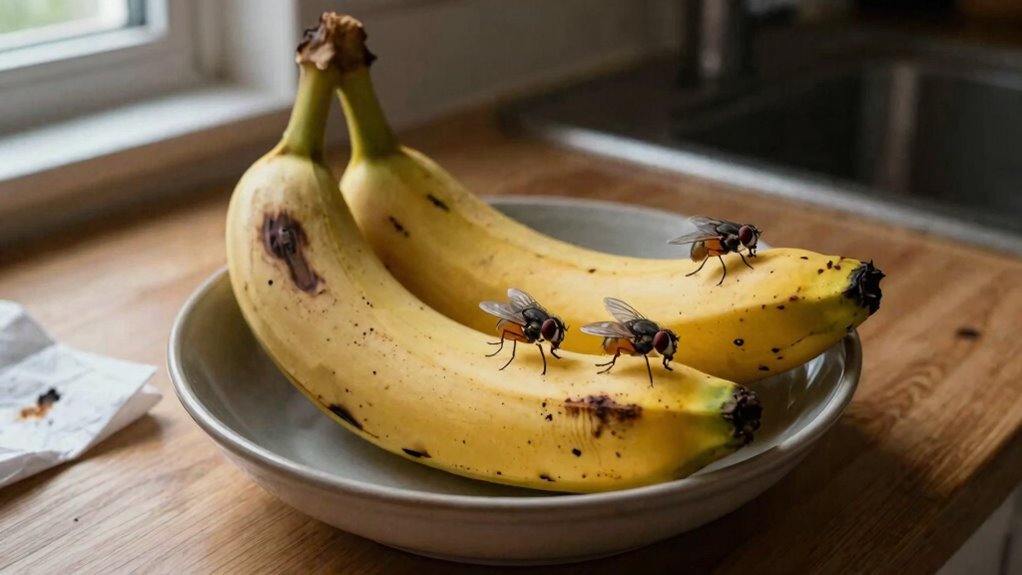
Catching fruit before it turns into a fly magnet means knowing exactly what to look for. Soft spots, bruises, and any hint of wrinkling on apples or bananas signal fermentation starting.
A single overripe tomato can host dozens of eggs, thanks to female flies laying up to 500 each. Outdoor biology matters here: flies enter from gardens or compost piles, and lifecycle timing means warm kitchens speed egg-to-adult in eight days.
Check fruit bowls daily, not weekly. Squeeze peaches and plums gently: give at the stem end means toss it.
Discard any fruit with cracks or oozing juice immediately in an outdoor bin, not kitchen trash. If it smells like vinegar or wine, it’s already a breeding site.
Stay strict; one missed banana can restart the cycle. For pest control, pair swift disposal with a yellow sticky trap near the bowl to catch stragglers before they multiply.
No fridge talk here, just clear sight and swift disposal. Use a sealed compost caddy or freezer bag for scraps, since open bins indoors are a prime egg-laying zone.
Wipe down countertops after tossing fruit, as sticky residue attracts new flies from nearby windows. For buyer intent, stock up on fine mesh fruit covers or an indoor electric zapper if you want a long-term shield against re-infestation.
When to Refrigerate Soft Fruits (and How to Store Them)
The obvious step after fruit is past its prime is to stop it from getting there in the first place. Proper soft fruit storage hinges on refrigeration timing. Pop berries, grapes, and tomatoes in the fridge right after purchase. Room temperature speeds ripening, so delaying cool storage invites fruit flies to a five-star buffet.
Refrigerate berries within two hours of buying. Rinse them just before eating to prevent mold. Keep grapes unwashed in a perforated bag in the fridge crisper drawer. They will stay fresh for up to two weeks without attracting pests.
Store tomatoes stem side down in the fridge crisper. This slows softening without losing flavor. Place stone fruits like peaches and plums on the counter until ripe. Then move them to the fridge to halt further ripening and keep fruit flies away.
Check that your fridge stays between 35 and 40 degrees Fahrenheit. Too warm defeats the purpose and too cold damages texture. The bottom line is to match refrigeration timing to fruit type. Those flies will look elsewhere for a party once your storage routine is solid.
Still Seeing Flies? Try These Next Steps
| If you see… | It means… |
|---|---|
| Flies near drains | Biofilm breeding. Flush with enzyme cleaner. |
| Flies at dawn | Newly emerged from hidden fruit. |
| Flies after cleaning | Exterior source is attracting them. Compost or bins are the problem. |
Dad joke: I tried trapping them with a winning personality. It didn’t work.
Bottom line: remove breeding sources outside. Use bait outdoors only and keep patience. These flies are stubborn, not invincible.
For fast results, place bright-colored sticky traps near fruit bowls or kitchen counters to visually attract and catch fruit flies without any chemicals.
How to Call a Pest Control Professional for Indoor Infestations
Having exhausted your own efforts, traps set, drains flushed, every last banana peel banished, sometimes the only honest move is to call in backup.
A pest control pro brings accurate pest identification, essential since fruit flies often masquerade as drain or phorid flies.
A pest control pro brings accurate pest identification, essential since fruit flies often masquerade as drain or phorid flies.
They navigate chemical regulation, applying only approved, professional-grade treatments, not the weaker sprays you find at the store.
They start with a full inspection, locating hidden breeding sites you missed.
Expect a treatment plan using targeted gels or aerosols, not foggers.
Ask about their bait formulations; some attract and kill the entire population.
They will provide a follow-up schedule, typically one to three visits.
Cost usually runs $150 to $300 for a standard kitchen infestation.
The bottom line is to save your sanity, let the expert handle the chemical regulation and pest identification, and move on with a fruit fly free life.
For surface treatments, professionals may use professional-grade bait like BASF Alpine Fly Bait Spray, which remains effective for up to 30 days.
Frequently Asked Questions
Can Fruit Flies Come From Store-Bought Produce?
Yes, fruit flies can absolutely come from store-bought produce. They often arrive via infested shipments, meaning eggs or larvae were already on the fruit when it was packed.
A single overlooked peach or bag of grapes can become a produce breeding ground once you bring it home. The tiny flies you see may hatch days later, not from your kitchen mess.
That is why a quick inspection of bananas and onions is a smart step in fruit fly prevention. Catching an infested item early can save you from buying sticky traps or calling a pest control service.
If you already see flies, a targeted fruit fly trap or indoor insecticide spray will stop the infestation fast. For ongoing protection, consider a fruit fly killer gel or a reusable trap placed near your fruit bowl.
Do Fruit Flies Bite or Transmit Diseases to Humans?
Fruit flies do not bite humans. Biting behavior is completely absent in these tiny pests because they lack the mouthparts needed to pierce skin.
The real concern with fruit flies is their role as a disease vector. They can transfer harmful bacteria like E. coli or Salmonella from trash and rotting fruit to your clean counters, utensils, or uncovered food.
So they won’t leave itchy marks on you. But they can easily contaminate your leftovers and kitchen surfaces.
If you see these pests around, you need a targeted fruit fly trap or a professional pest control spray. Using a drain cleaner or an organic fruit fly killer near your fruit bowl can break their breeding cycle fast.
Store your fruit in sealed containers or the fridge. Rest easy knowing that a simple pest management routine keeps your home both bite free and bacteria free.
How Long Do Fruit Flies Live if They Can’T Find Food?
A fruit fly without food lives only about two days, max. That is it. No scavenging and no long goodbyes.
Their entire life cycle, from egg hatching to adult, is built for fast breeding on fermenting fruit. It is not built for survival if food is missing. Egg hatching happens in under 24 hours if food is present. Without it, adult fruit flies starve quickly.
So if you remove all ripe produce and clean your drains, they die off in 48 hours. This method is simple, cheap, and oddly satisfying. For fast fruit fly control, pair drain cleaning with a store bought fruit fly trap.
If you need pest control products that kill adult flies on contact, choose an aerosol spray labeled for fruit flies. For ongoing protection, use a monitoring trap to catch stragglers. This gives you a total pest management solution without harsh chemicals.
Can Fruit Flies Survive in the Refrigerator or Freezer?
Fruit flies cannot survive in a refrigerator below 40°F because their metabolism completely shuts down. That means refrigerator survival is impossible for both adults and eggs, no exceptions.
In a freezer set to 0°F or colder, they die within hours, so freezer survival is absolutely zero. A single female can lay up to 500 eggs, but cold stops that entire cycle in its tracks.
Pop infested fruit into the fridge to stall them temporarily, or freeze it to kill them dead for good. Short answer: these pests are total cold wimps.
Bottom line: refrigeration buys you time, but freezing ends the party completely. For total pest control, combine cold treatment with a targeted fruit fly trap to catch any stragglers.
If you want a reliable home pest control solution, look for a fruit fly killer spray or sticky traps near your produce. Smart buyers also use drain treatments and vinegar baits to eliminate breeding sites fast.
Why Do Fruit Flies Suddenly Appear Even After Thorough Cleaning?
Unexpected infestations after a thorough cleaning aren’t a sign of failure. Hidden breeding sites lurk everywhere, like a forgotten potato in the back of a cupboard.
A greasy drain or recycling bin residue can host these pests. Female fruit flies lay up to 500 eggs, and with an 8 day lifecycle, new adults pop up fast.
Think of it like a party: you cleaned the living room, but the basement is still hopping. To stop fruit flies for good, you need targeted pest control that tackles hidden hotspots.
Check your drains weekly with boiling water and flush out biofilm. This simple step is a powerful DIY pest control solution that disrupts their breeding cycle.
For heavy infestations, consider a store bought drain gel or fruit fly trap. These pest control products target the eggs and adults, giving you fast, lasting relief.
Only then will the flies stop appearing, making your home truly clean from top to bottom.


