
If you’ve spotted tiny flies hovering near your sink, you’re likely dealing with drain flies, not fruit flies.
The real fix for how to clean a drain to remove flies isn’t bleach or boiling water—it’s getting rid of the slimy biofilm where they breed.
You don’t need harsh chemicals or expensive pest control visits to solve this.
This guide will walk you through a simple, mechanical cleaning method plus a monthly biological treatment that actually works.
We’ll cover the exact steps to break the life cycle and stop the flies for good.
Keep reading to learn how to trap adults and confirm the source before you start.
At A Glance
- Disassemble trap pipes and scrub interior walls with a stiff bottle brush to remove biofilm.
- Pour one ounce of biological surfactant per drain, let soak overnight, then rinse with hot water.
- Cover drain overnight with clear tape or oil-coated cup to trap surviving adults and confirm breeding site.
- Boiling water fails because it cannot penetrate thick biofilm; physical scrubbing or enzyme cleaners are required.
- Apply monthly maintenance treatments with Bacillus bacteria cleaner to prevent biofilm regrowth and reinfestation.
Why Drain Flies Keep Coming Back (And What You’re Missing)
A recurring drain fly problem is rarely a mystery. It is almost always a failure to remove the biofilm where the larvae actually live.
That gooey, organic layer is their buffet, not just a gross inconvenience. Related species, like the moth fly, share this habit and can become a disease vector if unchecked, carrying bacteria from your pipes.
Boiling water is a nice try but it cools too fast. Baking soda and vinegar fizz looks fun yet does nothing to the sticky biofilm base.
The real fix for effective drain fly control is simple. You must physically or biologically scrub that film away with a pipe brush or a microbial cleaner. Enzyme-based formulas are a powerful alternative, digesting organic buildup to target the root of the infestation.
Bottom line for pest eradication. If adults keep reappearing after two weeks, your cleaning missed the film.
Fix that film or keep playing host to these flies. Use a professional grade treatment to stop the infestation for good.
What Makes a Drain Fly Breeding Site in Your Pipes
Your drain pipes are more than just wastewater channels, they are a prime breeding ground for drain flies thanks to a buildup called biofilm.
That biofilm is a slimy layer of bacteria, fungi, and organic debris that coats the inside of your pipes over time.
This gooey film provides both food and constant moisture, making it the perfect nursery for drain fly eggs and larvae.
The pipe material also plays a key role: rough metal pipes like copper or galvanized steel trap organic matter far more easily than smooth PVC.
Small joints and fittings in metal pipes create hidden pockets where biofilm thrives, turning your plumbing into a pest control nightmare.
If you notice a musty odor or standing water, you have already signed a long-term lease for these tiny invaders, with free room service included.
For effective drain fly elimination, you need to remove the biofilm itself, not just kill adult flies.
Professional pest control services often use enzymatic cleaners or mechanical snaking to break down the organic layer and dry out the breeding site.
A simple DIY fix is pouring boiling water down the drain weekly to disrupt biofilm formation, but persistent infestations require thorough drain cleaning.
If you are searching for drain fly treatment near you, focus on products that target sludge and organic residue rather than surface sprays.
Remember, a clean and dry drain pipe is your best defense against these pests, so regular maintenance is your strongest ally.
Once the biofilm is gone, the flies lose their food source and moisture, breaking the entire life cycle for good.
For serious infestations, combining sticky traps with a drain gel or enzyme cleaner can provide long-term control by breaking down the organic scum that fuels the problem.
How to Inspect Your Drains for Biofilm and Larvae
Grab a flashlight, a pair of gloves, and a tongue depressor before you begin your drain inspection. Shine the beam directly into the opening and look for a slimy, grayish or brown coating along the pipe walls.
That coating is biofilm, which acts as a buffet for drain fly larvae and other pests. For larvae detection, search that muck for tiny, worm-like creatures about a quarter-inch long, wriggling in the slime.
They thrive in that goo, so pay close attention to any dark, damp buildup near the edges. Next, check for egg mass location just below the drain strainer or inside the P-trap.
Females deposit clusters of dozens of eggs, often hidden in organic debris, so look for shiny, dark specks that stand out. A tongue depressor can scrape a sample for closer inspection, letting you confirm whether breeding is active.
This straightforward check tells you if you need professional pest control services or a simple DIY cleaning routine. No science degree needed, just a steady hand and a willingness to look closely at what’s lurking below. Using enzymatic products consistently breaks down this organic debris before pests can thrive.
How to Physically Clean a Drain Fly Pipe
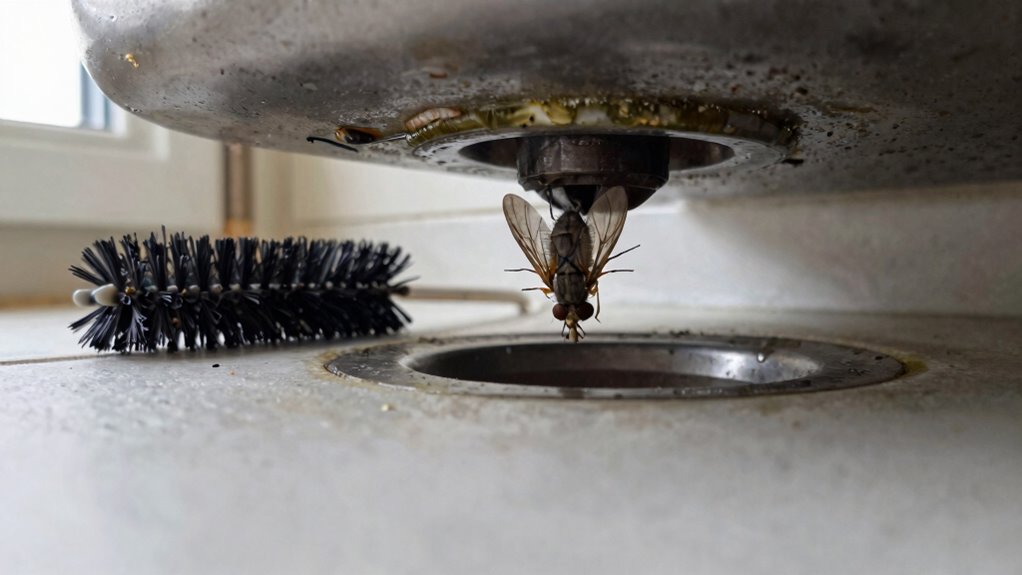
Disassembling the trap pipes is the first real step, since scrubbing blindly from above rarely gets the job done.
Once those pipes are apart, a stiff bottle brush with nylon bristles should scrape every bit of that slimy biofilm from the inside walls.
After reassembly, cover the drain with clear tape or a plastic cup coated in petroleum jelly to trap any surviving adults.
This simple pest control method confirms the cleanup worked and stops future drain fly infestations.
For long term results, use a drain fly treatment product like a foaming cleaner to break down organic matter inside the pipe.
Targeting the biofilm source is key to eliminating these pests from your home.
For ongoing prevention, consider using enzyme-based formulations that digest organic buildup to keep pipes clear.
Disassemble Trap Pipes
A bottle brush and some elbow grease are your real tools here. Place a bucket under the trap to catch that gross standing water.
Loosen the slip nuts with a pipe wrench safety grip, just wiggle them. Gently slide off the curved P trap, then remove the straight wall pipe.
During reassembly, perform a trap alignment check to prevent leaks and future drain flies. Confirm each joint lines up perfectly before tightening.
Tighten nuts hand tight, then give them a quarter turn with the wrench. This takes ten minutes tops and costs zero dollars beyond your brush.
You are removing their nursery, not just swatting adult pests. It is oddly satisfying, like popping bubble wrap, but with more drain sludge.
Scrub Interior Biofilm
Why scrub the inside of a pipe when you could just pour something down it and hope for the best? Physical scrubbing with a stiff bottle brush is the only way to actually remove the slimy biofilm where larvae thrive and dream.
Yank out the P-trap, then reach into the pipe walls and scrape that organic gunk loose. This stops new flies before they ever hatch, which prevents adult migration to other drains.
It additionally helps rule out outdoor sources, like wet compost piles, if flies keep appearing. A brush costs about eight bucks, and pouring chemicals costs more and often fails.
Do this, and you’ve won the real battle against drain fly infestations. This simple step protects your kitchen and bathroom sinks from recurring pest problems, and for surrounding areas, you can use a natural barrier like food-grade diatomaceous earth to keep crawling insects at bay.
Cover Drain to Monitor
Patience is a virtue when waiting for drain flies to reveal themselves. A simple trap placement proves where they breed.
Cover a drain overnight with clear plastic wrap secured by tape, but poke tiny air holes. Check it by morning light for trapped adults near the surface.
This monitors their nightly activity without harsh chemicals. For a more permanent trap, use a glass jar coated inside with vegetable oil.
Place it upside down over the drain. Adults fly up into the oil and stick, confirming the source.
This low cost method, under five bucks, shows if kitchen or bathroom drains are your pest problem. If you see no flies after three nights, the issue likely lies elsewhere.
Cover up and let them outing themselves. It is cheaper than a plumber and gives you targeted pest control results.
Apply a Biological Surfactant to Dissolve Biofilm
Boiling water and bleach might kill the visible adults, but they leave the slimy biofilm lining your pipes completely intact. That biofilm is a fortress, protecting larvae through the biofilm lifecycle and showing strong enzyme resistance to harsh chemicals.
A biological surfactant, made from *Bacillus* bacteria, works differently. It lowers the surface tension of the gunk, letting it slide off pipe walls like a greasy egg off Teflon.
Pour one ounce per drain, let it soak overnight, eight hours minimum, then rinse with hot water. Apply weekly for the first month, then monthly for ongoing drain maintenance.
This stuff actually breaks the breeding cycle, not just the adult fly’s day. It targets the root cause of pest control issues like fly infestations and clogged drains.
Give it a shot; your pipes will thank you. You can buy this effective treatment for home pest management and see real biofilm removal results. This biological approach is safe for wildlife and non-toxic to pets and children.
Why Bleach and Boiling Water Don’t Stop Drain Flies
You have probably seen the advice to pour bleach or boiling water down a drain to stop drain flies. That approach is like swatting a fly with a sledgehammer, it misses the real problem.
Bleach kills surface bacteria but cannot penetrate the thick biofilm where larvae hide and feed. It rinses out fast and the slime regrows in two to three weeks.
Boiling water flushes loose debris but cools on cold pipes, leaving the biofilm untouched. Real drain fly control requires removing that biofilm completely, not just scorching the top layer.
That means regular P trap maintenance, disassembling and scrubbing the curved pipe to eliminate breeding sites. Septic vent checks will also guarantee no hidden larvae harborage exists.
Shortcuts like bleach treatments just waste time and money. Enzyme-based cleaners eliminate smells quickly and reliably by breaking down the organic matter that feeds flies and their larvae.
For effective pest control, stop reaching for bleach and start cleaning the pipe.
Trap Adult Drain Flies to Confirm the Source
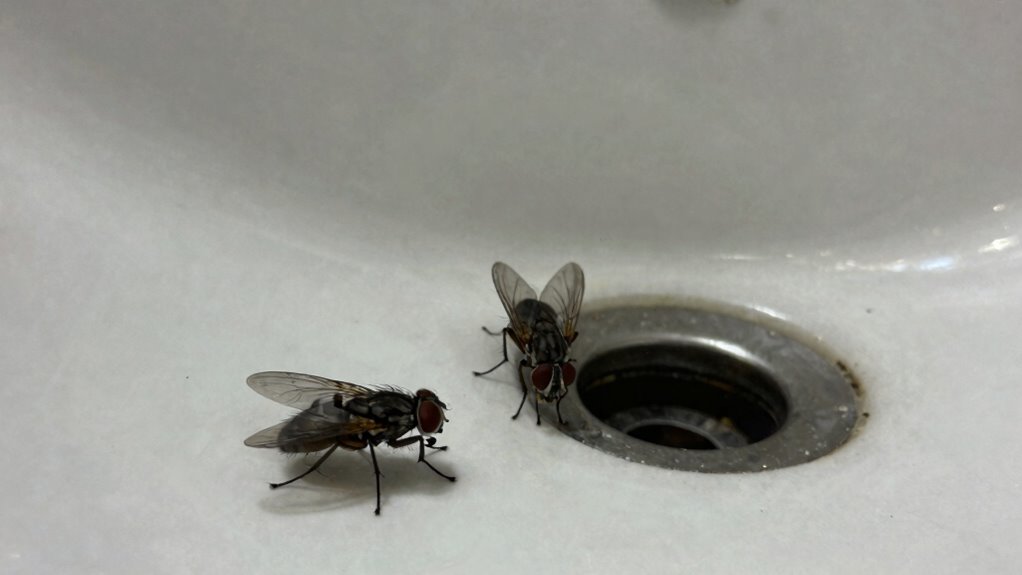
First, trap adult drain flies quickly before assuming the source. A clear monitoring trap catches emerging adults and confirms they are breeding inside that pipe.
Use a glass jar coated inside with vegetable oil, set over the drain for 24 hours. This simple trap stops you from wasting time on pest control treatments for the wrong drain. For broader coverage, sticky fly tapes placed nearby can also catch adults and verify their presence.
This reliable method prevents the classic rookie mistake of misidentifying a breeding site. You will avoid unnecessary effort and focus your drain fly elimination exactly where it is needed.
Trap Adult Flies Quickly
A simple trap can confirm if those small, fuzzy flies near your sink are drain flies. Since adults live only 12 to 20 days, quick trapping is key for pest control.
Their weak flight and habit of resting on walls near drains makes them easy to catch. Use a clear cup coated with cooking oil placed over the drain overnight.
Sticky tape over the drain catches emerging adults for a cheap and fast inspection. A glass jar with bait lures adults from nearby walls and works for multiple drains.
A plastic bag taped over the drain monitors emergence and should be replaced daily for three days. Set one trap per suspect drain and check after 24 hours.
If you see fuzzy, winged adults stuck inside, you have found the breeding site. No fancy gear is needed, just a cup, some oil, and patience.
Alternatively, UV light traps attract a variety of flying pests and can help confirm drain fly activity near the source.
Use Clear Monitoring Traps
Place a clear plastic cup coated with a thin layer of cooking oil over the suspect drain. This transparent bowl trap catches adult flies as they emerge.
Check it daily. If flies stick inside within 48 hours, that drain is likely a breeding source.
Another quick method involves laying sticky tape drain side down over the opening overnight. Both approaches confirm the problem without guesswork.
These pest control traps cost pennies yet save hours of aimless cleaning. They also prevent you from treating drains that aren’t infested.
So skip the expensive gadgets. A cup and tape do the job for effective drain fly monitoring. For a more advanced solution, UV light traps are typically more effective for drawing in and zapping flying bugs.
It’s satisfying catching tiny evidence in a glorified Dixie cup. Just remember: monitoring confirms the source and cleaning solves it later.
Identify Breeding Site Confirmation
Sticky tape and overturned cups will tell you if a drain is infested. But once you’ve caught adult flies, the next step is confirming that drain as the primary breeding site.
You must rule out other spots like floor drains or leaky AC pans. Drain flies love to play hide and seek, so a thorough check is essential.
For serious confirmation, place UV light traps near suspect drains overnight. These plug-in units lure adults with a blue glow and are a key pest control tool. UV light in the 365nm to 395nm range is particularly effective at attracting these nocturnal pests.
Pest control companies often pair these with inspection scopes to pinpoint the main colony. A single, focused trap catch seals the deal and proves the drain is their nursery.
If they show up there first, you have found your breeding site. No more guessing, just cleaning.
How Many Weeks of Cleaning Actually Work
Three weeks is the magic number, give or take a few days of frustration. That’s the time needed to break the drain fly life cycle, since larvae can mature in about two weeks.
Stick with mechanical cleaning or biosurfactant treatments for three full weeks, and you’ll likely see the last adults die off. Skip a week, and you’re just hosting a family reunion.
For long term maintenance, once a month biosurfactant doses keep biofilm from returning. If you’ve done three weeks of cleaning and still see flies, a professional pest control inspection might reveal a hidden leak or broken pipe. After removing the flies, consider using airtight lids with locking buckles to prevent pests from detecting produce odors in your kitchen.
Those are larval hideouts no brush can reach. It’s tedious, but three weeks of consistent effort beats months of swatting.
Stop Drain Flies for Good With a Monthly Treatment
How often should you repeat a treatment that actually works. Monthly, without fail.
Once a month, pour one ounce of a biological surfactant down every drain. Use a product like Bacillus bacteria cleaners for effective drain fly control.
Let it soak overnight, then rinse with hot water in the morning. This dissolves the biofilm, the slimy layer where larvae feast.
Don’t skip drains near a sump pump or leaky pipes. Those hidden, damp spots are perfect breeding grounds for a pest infestation.
A single missed drain can restart the whole circus. A 32-ounce bottle costs about $15 and lasts a year.
Apply it, and you’ll stop drain flies for good. Think of it as a monthly insurance policy against your own gross plumbing.
Frequently Asked Questions
Can Drain Flies Survive in an Empty, Dry Pipe?
No, drain flies cannot survive in an empty, dry pipe. An adult drain fly might last a day or two without moisture, but its real survival depends on biofilm.
Without wet, organic gunk to feed on, larvae will starve quickly. Egg desiccation kills them in hours, not days, often in under 24 hours.
Think of your drain pipe like a swamp. Drain it dry, and you drain the breeding site completely.
The real trick for effective pest control is keeping that pipe dry for weeks, not just after a quick scrub. A bone dry drain breaks the cycle permanently.
For buyers searching for drain fly killer or professional drain cleaning products, remember that targeting moisture is key. A dry environment means no breeding ground and no repeat infestations.
Adults alone cannot start the next generation. Without wet sludge, larvae and eggs have zero chance of survival, making your home pest free.
Will Drain Flies Eventually Go Away on Their Own?
No, drain flies do not go away on their own. Their lifecycle lasts about 35 days, but they keep breeding in the biofilm inside your pipes.
Dampness attracts them, so they stay as long as your drains are damp with organic buildup. Killing adult flies is pointless because they simply return from the breeding source.
Without cleaning the biofilm, new generations hatch every week or two. Think of it like inviting houseguests who never leave and then multiply.
To get rid of drain flies for good, you need to remove their food source. A monthly biosurfactant drain treatment, costing about $10, breaks the breeding cycle permanently.
This is the most effective pest control solution for drain fly infestations. By choosing a quality drain cleaner with biosurfactants, you can stop drain fly eggs and larvae from maturing.
Are Drain Flies Harmful to Human Health?
Drain flies are not known for disease transmission, so they won’t make you sick directly. Their main risk is hygiene concerns because they breed in gunk like hair, grease, and soap scum.
Larvae and adults can pick up bacteria from that muck and then track it elsewhere. This is not a major health threat, but it is a definite sign your drain needs cleaning.
If you spot these pests, it means you have a buildup of organic debris that needs professional pest control attention. Using a drain fly treatment gel or an enzyme cleaner can break down that sludge fast.
For a long term solution, consider a drain fly trap or a biological drain cleaner that eats the breeding material. These products target the root cause and stop the cycle without harsh chemicals.
Basically, drain flies are more of an “ick” factor than a “call the doctor” one. But if you want peace of mind and a sanitary kitchen or bathroom, investing in a proper drain fly removal kit is a smart move.
Can Drain Flies Come From a Toilet or Shower Drain?
Yes, drain flies can absolutely come from a toilet or shower drain. These pests thrive in the moist, organic film that builds up inside unused plumbing.
Toilets with a seldom used bowl trap hold stagnant water and biofilm, which is a perfect nursery for drain fly larvae. Shower drains collect hair and soap scum, creating an ideal breeding ground you can’t ignore.
To inspect a toilet for a drain fly source, lift the lid and check for sludge in the bowl or inside the tank. For shower drains, pull the grate and you will often find gunk that must be cleaned out.
The bottom line is you must treat every damp, organic lined pipe in your home. Ignoring even one pipe means they will keep coming back, no matter how many adults you swat.
For long term control, apply a biological drain cleaner to break down the biofilm and eliminate larvae. Pair that with a foaming drain treatment for heavy infestations to get rid of drain flies fast.
If you are ready to buy pest control products, look for enzyme based cleaners or professional grade insecticidal gels labeled for drain fly control. Smart homeowners also seal cracks around pipes and keep drains dry when not in use.
What Natural Predators Can Control Drain Flies Indoors?
Beneficial nematodes and predatory mites are the only natural predators that can help indoors. Nematodes are microscopic worms priced around $20 for 5 million, and they hunt drain fly larvae in damp, organic goo.
Predatory mites cost roughly $30 for 2,000 and patrol the same breeding zones inside pipes. Neither of these biological controls handles adult drain flies.
They require reintroduction every few weeks and must be placed directly into drains for best results. It is a low effort solution, but without biofilm removal these predators are just a temporary band aid.
The bottom line is that natural predators work as a secondary tactic for drain fly control. However, mechanical cleaning, like scrubbing pipes and removing sludge, remains the winning strategy for lasting pest elimination.


