
Getting rid of fungus gnats starts with understanding they’re not fruit flies—they’re tiny, dark pests that thrive in damp soil, not your kitchen fruit bowl. The real problem is their larvae, which chew on plant roots and can stunt growth if left unchecked.
The easiest fix is to let the top inch of soil dry out between waterings, since larvae need moisture to survive. Yellow sticky traps will catch the adults, and a raw potato chunk can help you confirm an infestation below the surface.
For tougher cases, a Bti soil drench—like mosquito bits—kills the larvae safely without harsh chemicals. This guide breaks down each step simply, so you can spot the issue and act fast.
Keep reading for the full breakdown on stopping gnats for good.
At A Glance
- Let soil surface dry completely between waterings to kill larvae.
- Place yellow sticky traps at soil level to catch adult gnats.
- Use potato chunks as traps to monitor and remove larvae.
- Apply Bti soil drench every five days for two weeks to kill larvae.
- Repot plants with fresh, pasteurized soil when infestation is severe.
How to Spot Fungus Gnats and Tell Them Apart From Other Pests
Adult fungus gnats are small dark flies that hover near your plant’s soil, not fruit flies around the kitchen.
Adult fungus gnats are small dark flies hovering near your plant’s soil, not fruit flies around the kitchen.
Their translucent larvae live in the top inch of damp potting mix, with no legs and a black head.
This is a reliable pest identification trick for spotting fungus gnats early.
They do not bite people, which is helpful, but they signal you are watering too much.
Look for slow plant growth or yellowing leaves as quiet damage clues.
Yellow sticky traps placed near pots give you a quick headcount to confirm an infestation.
Place these traps at soil level to target where gnats emerge and gather.
If it is crawling out of the dirt, it is a fungus gnat.
Get them identified early with these pest control tips, and you are halfway to winning the battle.
Why Overwatering Is the Number One Cause of an Infestation
You have spotted the little flies and confirmed they are fungus gnats. Overwatering is the number one cause of an infestation since it creates a soggy paradise for larvae.
Female gnats lay eggs only in consistently damp soil. Dry topsoil kills them outright, so let your pot dry out.
Think of your wet pot as a damp nightclub where gnats love to party. The larvae munch on roots, stunting growth and turning leaves yellow.
Letting soil dry between waterings is cheaper than buying sticky traps. A pack of 50 traps costs about eight dollars.
Water less and wait more. Stop drowning your plants starting today.
Additionally, using a Bti soil drench every couple of weeks targets larvae and breaks the gnat life cycle.
Dry Out Soil to Kill Fungus Gnat Larvae Without Damaging Plants
Drying out the soil is a simple way to kill fungus gnat larvae without hurting your plants. You just need to balance the plant’s water needs carefully.
Wait until the top inch or so of soil is dry before watering thoroughly. Use a raw potato trap placed cut-side down on the soil to check for larvae.
This works because the larvae cannot survive dry conditions. The potato chunk acts as a free, reusable insect monitoring tool to confirm your pest control efforts are working.
For effective fungus gnat elimination, keep the soil surface dry between waterings. This buyer-intent strategy helps you protect your indoor garden without harsh chemicals.
Balancing Moisture Needs
Balancing moisture needs while tackling fungus gnat larvae is tricky, but you can use targeted pest control methods to break their life cycle.
Let the top inch of soil dry out to disrupt larvae survival without turning your peace lily into a crispy critter.
Most common houseplants, like pothos and snake plants, handle brief dry spells well.
Use a moisture meter costing about $12 to check soil two inches down for reliable results.
Dry soil there means larvae die, while root aeration improves and helps roots breathe.
Water deeply only when the meter reads dry, then drain excess water from the saucer.
Your plants stay hydrated and gnats starve, a true win-win for indoor pest control.
For persistent infestations, consider sticky traps or hydrogen peroxide drenches as a proven solution.
Always buy quality moisture meters or gnat control products to ensure long term plant health.
A dehumidifier maintaining humidity below 50% also helps prevent booklice, which share similar moisture needs.
Potato Trap Monitoring
A raw potato chunk, cut side down on the soil, works as a surprisingly effective larval lure. It monitors infestations by drawing larvae to feed, giving a clear picture of their density.
This trap doesn’t target adult longevity. Those short-lived fliers die off naturally, but it focuses on larval feeding activity.
| Trap Type | Target Stage | Effectiveness |
|---|---|---|
| Potato chunk | Larvae | High; collects visible clusters |
| Yellow sticky card | Adults | Moderate; monitors flights |
| Bti soil drench | Larvae | High; kills directly |
| Nematode application | Larvae/pupae | High; biological control |
After 24 hours, flip the potato and count larvae. Remove and discard it. Repeat weekly.
This method avoids harsh chemicals and won’t harm plant roots. Bottom line: it’s a cheap, low-effort early warning system for pest control.
A baked potato might be tastier, but this one saves your houseplants. Use this natural trap to monitor larval activity and keep your soil healthy. For additional pest protection, plant-based essential oils like cedarwood or peppermint offer a similarly non-toxic approach for other household bugs.
Use Yellow Sticky Traps to Catch Adult Fungus Gnats
Yellow sticky traps work best when placed horizontally just above the soil surface, as adult gnats fly low. Bright yellow attracts them most effectively, so skip blue or green which are less appealing for pest control.
Replace traps every two weeks or when they’re covered with gnats and dust. This keeps your gnat count reliable and your fungus gnat management on track. These traps are also safe, odorless and non-toxic for homes with children or pets.
Using these traps as a key part of your indoor pest control strategy helps catch adults before they lay more eggs.
For best results, position them near infested plants to target their natural flight path.
Optimal Sticky Trap Placement
Since those little adult gnats are the ones flitting around your face as you watch TV, catching them is step one. But slapping a sticky trap anywhere won’t cut it.
Place traps horizontally at soil level, just above the pot’s rim. Gnats hover low after emerging, so this intercepts them right at the source for maximum trapping efficiency.
For visual monitoring, stick one trap vertically near a plant’s foliage to gauge activity peaks. Avoid corners or drafty windows because gnats avoid air currents.
Spread one trap per small pot, two for larger ones, spaced 18 inches apart. Check them weekly. If you see more than a dozen adults per trap, you’ve got a problem.
Replace traps when they’re full or dusty. This affordable pest control method is low effort and beats swatting at ghosts. For heavy infestations, choose traps with a UV-resistant glue to prevent the adhesive from degrading under bright grow lights or sunny windowsills.
Best Trap Colors
Efficacy depends on color, and for fungus gnats, yellow is the undisputed champion. They are naturally drawn to it, so think of yellow as their preferred hue preference like a moth to a porch light. Non-toxic sticky traps use physical capture, making them completely safe for use around children and pets.
Blue sticky traps work better for thrips, so do not grab those by mistake unless you are hosting a thrip party. Standard yellow sticky traps cost about $8 for a pack of 20, and you can cut them into squares per pot.
Trap design includes a pre-coated non-toxic adhesive that is UV resistant and stays tacky for weeks. For best use, hang or stake near soil level with one trap per plant, replacing when covered.
A dad quip to remember: fungus gnats love yellow. They are basically tiny, flying sunflowers.
Bottom line: stick with yellow and skip blue. This simple, cheap pest control method really works.
Trap Replacement Schedule
Replace yellow sticky traps every seven to ten days, or sooner if the adhesive surface is covered. This schedule helps maintain accurate readings of the adult pest population.
Set traps just above the plant’s canopy, where flying gnats are most active. Water level influences trap effectiveness, so keep an eye on your watering habits.
Overwatered soil raises humidity and attracts more fungus gnats, filling traps faster. For a standard 4-inch pot, traps are cheap, usually under a dollar per pack of ten.
Check twice weekly and swap when the stickiness fades. A fresh trap catches more flies than a full one.
The bottom line is that weekly replacement keeps your monitoring honest. It also keeps your pest control efforts on track and your gnats nabbed.
Use traps with thicker glue layers that resist drying and dripping for longer-lasting effectiveness.
Use Potato Chunks to Detect Fungus Gnat Larvae
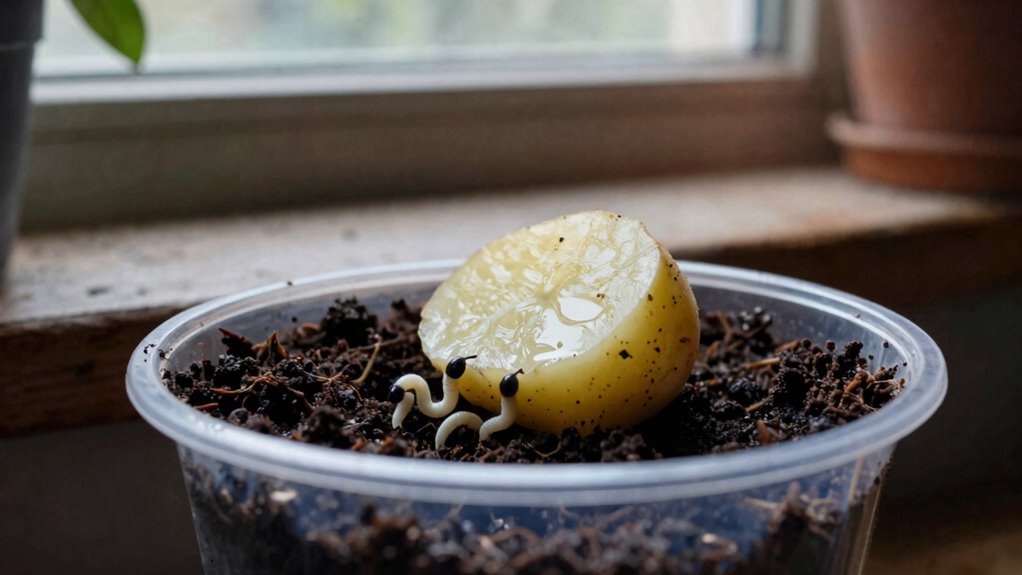
Potato chunks are a simple and effective tool for detecting fungus gnat larvae. They work surprisingly well for pest control monitoring.
Cut a raw potato into one-inch chunks. Place them cut side down about an inch deep into the soil.
This trap depth attracts larvae because they love the damp starch. Within 24 hours, they will crawl into the potato.
| Step | Action | Duration |
|---|---|---|
| 1 | Cut potato chunk | 1 minute |
| 2 | Bury at trap depth | 30 seconds per pot |
| 3 | Check for larvae | 24 hours later |
| 4 | Remove and repeat | Every 3 days |
After 24 hours, lift each chunk and inspect it. If you see tiny white worms with black heads, you have larvae.
Remove the infested chunk and repeat the process weekly. This method costs less than a dollar per potato for a clear yes or no answer.
That cheap peace of mind helps you decide on next steps for fungus gnat control, such as using food-grade diatomaceous earth as a safe, chemical-free barrier on soil to dehydrate larvae on contact. Buy a potato from your local grocery store to start.
When to Repot to Remove Fungus Gnat Eggs
So when is the right time to repot and evict those fungus gnat squatters. The moment you see adults on sticky traps, and potato chunks come up with wriggling larvae, it’s go time.
Don’t wait. Eggs are tiny, translucent, and nestled in damp soil. They hatch fast, feeding on roots. An immediate repot removes the entire buffet. Use fresh, pasteurized potting mix to kill hidden eggs.
Scrub the old pot with soapy water before refilling. A 12 inch round nursery pot costs about three dollars. That’s cheaper than losing a prized philodendron. For best results, repot when the top inch of soil is dry. This makes it easier to shake off old dirt. Save a few new sticky traps for monitoring afterward. A quick switch now saves headaches later. Storing dry goods like pasta and rice in airtight pantry storage containers prevents future pest infestations.
Which Biological Control Actually Works Best?
Bti eliminates fungus gnat larvae faster than nematodes or predatory mites, and it works in roughly two days. It is also forgiving of your mistakes, unlike other biological controls that demand steady humidity and patience.
Boost indoor air circulation near pots and let the soil surface dry between waterings. Bti handles the rest while forgetful plant parents get reliable pest control results.
A small packet costs about $10 and covers every houseplant you own. Application is simple: sprinkle, water, and you are done with no need to mix live critters.
For a persistent fungus gnat infestation, Bti delivers the least fuss and the greatest kill rate. You get zero survivors without complicated pest management routines.
This biological control is registered with the EPA and safe for pets, plants, and people when used as directed.
Apply Mosquito Bits Safely as a Soil Drench
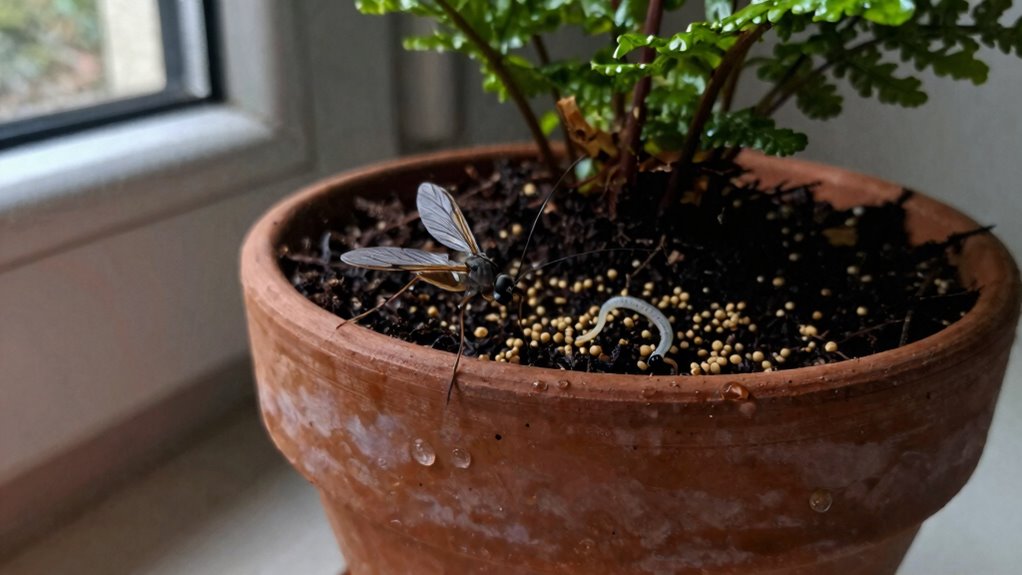
Applying Mosquito Bits as a soil drench is a straightforward pest control method that protects your garden. You just need to plan ahead because the bits must soak in water for at least 30 minutes.
Longer soaking releases the Bti bacteria that targets mosquito larvae in damp soil. Once soaked, apply this mixture to already damp soil for the best results. This application is safe because Bti is non-toxic to wildlife and breaks down quickly in water.
Resist the urge to skip the soak, since a rushed drench is a waste of time and money. For effective mosquito larvae control, proper preparation is the key to killing pests before they mature.
Soaking Time Required
Soak mosquito bits for a full 30 minutes to create a lethal treatment for fungus gnat larvae. Shorter steeps fail to release enough Bti, the active bacteria that targets and kills these pests.
The corncob bits absorb water slowly, floating at first before gradually sinking as they saturate. A 5 minute soak leaves them mostly floating and barely softened.
At 15 minutes, bits are only partially sinking and still crunchy. But after 30 minutes, they become fully saturated and actively release Bti.
Longer soaks over 1 hour just turn them into a soggy mess with no added potency against gnats. Drain the liquid and apply it directly to soil for effective pest control.
Toss the spent bits afterward, simple and no fuss. Your gnats won’t see this treatment coming. This method is safe for fish, plants, and pets, making it a reliable alternative to broad-spectrum chemicals that can harm beneficial insects.
Mix With Water First
Once the bits have soaked their full 30 minutes and released their Bti payload, the liquid needs a quick strain before it can go to work. Pour it through a fine-mesh sieve or old coffee filter, catching the gritty bits that would clog a watering can.
Splash timing matters: apply the strained liquid immediately, within an hour. Bti degrades fast under light, so don’t let it sit.
Dose measurement is simple: use one tablespoon of bits per gallon of water. You won’t need fancy scales for this mosquito control treatment.
Strain twice if dealing with fine particles. A second pass prevents nozzle blockages and keeps your sprayer working smoothly.
Avoid reusing bits: they’re spent, so toss them in compost, not the sink. This keeps your pest control routine efficient.
Label the jug with date and concentration. Banana peel logic says you’ll forget tomorrow, so write it down now.
This drench works best when fresh. Measure, strain, and apply without delay: no aging required here for effective mosquito larvae control. Wear a mask, goggles, and gloves to avoid inhaling the fine powder.
Apply to Damp Soil
Apply to Damp Soil. A damp potting mix is the ideal delivery system for Mosquito Bits.
Drench the soil every five days for two weeks. This targets larvae in the top inch where they hide. The water activates Bti, a bacteria worms can’t resist, without harming your plant. Don’t just pour it on dry dirt because that wastes the Bits and invites more gnats.
For a fun side check, toss in potato chunks to trap larvae for a gross but satisfying count. Meanwhile, yellow traps catch adults for a full picture of your pest control strategy. It’s not glamorous, but it works as a natural gnat killer. For comprehensive management, combine this drench with a plant-based spray that targets adult gnats on contact.
Soak the soil thoroughly, let it drain, and repeat.
You’ll beat the gnats without drowning your patience. This is a practical way to buy mosquito bits for indoor plants and stop fungus gnats fast.
Quarantine New Plants to Prevent Fungus Gnats
Before welcoming a new plant into your home, isolate it from your existing collection for at least two weeks. This simple quarantine can save you from a full blown fungus gnat invasion. It’s a proven barrier against hidden larvae, not just general advice.
Keep new plants in a separate room, ideally with no shared airflow. Place yellow sticky traps near the pot to catch any adult gnats that emerge. Check the soil daily for tiny, crawling larvae. They look like clear worms with black heads.
Allow the top inch of soil to dry out completely between waterings. Fungus gnat larvae hate dry dirt. After two weeks, if no gnats appear, slowly move the plant into its permanent spot. Quarantine cheaply protects your whole collection. Chemical-free sticky traps are safe to place directly in the soil near new plants, as they use no toxic fumes and are eco-friendly.
Last Resort: Disposing of a Heavy Infestation
Sometimes, in spite of all the sticky traps, dry soil, and biological controls, a plant becomes a lost cause. A heavy pest infestation demands a clear disposal protocol.
Bag the entire plant, pot and all, and seal it tightly before placing it in outdoor trash. Do not compost it, as fungus gnat larvae survive the process.
For remaining pots, implement soil sterilization by baking the mix at 180°F for 30 minutes. This heat treatment kills every stage of the pest, including eggs and pupae. Using a 120°F lethal temperature ensures all hidden life stages are destroyed instantly.
| Disposal Step | Action | Why It Works |
|---|---|---|
| 1. Extract | Remove plant from pot | Separates host from healthy soil base |
| 2. Bag | Double-bag in sealed plastic | Prevents adult gnats from escaping |
| 3. Trash | Place in outdoor bin | Breaks the life cycle entirely |
| 4. Sterilize | Bake or microwave old soil | Kills hidden eggs, larvae, and pupae |
| 5. Clean | Scrub pot with bleach solution | Removes lingering pathogens and shoot |
Think of it as a tiny, tragic funeral, except you are the one holding the shovel. Bottom line: when gnats outnumber hope, ditch the plant, sterilize the soil, and start fresh without the freeloaders.
Frequently Asked Questions
Can Fungus Gnats Harm Humans or Pets?
Fungus gnats are mostly harmless to humans and pets. They don’t bite or spread disease like mosquitoes or fleas.
Rare cases of skin irritation or respiratory issues can occur if you accidentally inhale or ingest large numbers of them. Larvae might cause mild discomfort if they crawl on skin, but this is very uncommon.
For most people, fungus gnats are just an annoying pest that buzzes around your face. If you need fast indoor pest control, a simple sticky trap or hydrogen peroxide drench can stop their life cycle.
Bottom line: these flies are not dangerous to your family. However, they can destroy your houseplants, so plant owners should look for targeted fungus gnat treatments to protect their soil.
Do Fungus Gnats Infest Furniture or Carpets?
Fungus gnats do not infest furniture or carpets, as their larvae need damp soil to survive, which means fabric and hardwood simply don’t support them.
So if you’re dealing with these tiny pests, your couch and rug are safe, and the real culprit is almost always your potted plants.
For furniture protection, focus on keeping houseplant soil dry instead of spraying your sofa with unnecessary treatments.
Carpet treatment is a waste of money unless a water spill creates a damp spot right next to an infested pot, and even then, the larvae won’t colonize the fibers.
Adult gnats might land on surfaces temporarily, but they won’t breed there, so don’t let a few sightings trick you into buying harsh chemical sprays.
Bottom line: skip the rug sprays and tackle the root cause by letting your soil dry out between waterings, which is your best pest prevention strategy.
If you’re shopping for fungus gnat control, look for products like sticky traps, insecticidal soaps, or beneficial nematodes that target larvae in the soil.
These targeted pest control solutions work far better than any carpet treatment, and they’ll save you money while keeping your home gnat-free.
Can Fungus Gnats Survive in Sand or Gravel?
Fungus gnats can survive in sand or gravel, but it’s a tough gig for them. Sand composition that’s too dry and dense won’t support larvae since they need wetness to thrive.
Gravel wetness is key. If it stays wet, gnats might breed in any organic debris trapped between stones.
But here’s the kicker. Without decaying matter to eat, they’ll starve.
Will Neem Oil Kill Fungus Gnat Eggs?
Neem oil efficacy against fungus gnat eggs is limited at best, so it is not your best bet for soil pest control. It disrupts the egg lifecycle by smothering, but its penetration into damp potting mix is poor.
Larvae hiding deep in moist soil often survive this treatment, which makes neem oil unreliable for complete gnat elimination. It works better as a light deterrent for adult gnats, not a solid egg killer for indoor plants.
For direct egg control, skip the neem and try Bti like Mosquito Bits instead. Drench the soil with this targeted pest control product and repeat every five days for best results.
Neem oil is good for protecting leaves, but it is bad for soil battles against fungus gnat infestations. If you want to buy a smart purchase for gnat prevention, focus on Bti treatments.
How Long Does It Take to Fully Eliminate Them?
Full elimination of fungus gnats typically takes two to four weeks, matching their complete life cycle. Adults die quickly, but the larvae hiding in your plant soil persist and cause the real damage.
The prevention timeline starts with consistently drying the top inch of soil between waterings. Pair this with sticky traps to catch adult gnats and monitor the infestation.
Biological controls like Bti applied weekly can speed up this process significantly. Patience is key because skipping a single week can restart the entire cycle.
For mild infestations, expect elimination in about three weeks. Severe cases may stretch to six weeks, especially if you have multiple plants or poor drainage.
Investing in a quality soil moisture meter helps you avoid overwatering and break the gnat life cycle. For fast results, combine Bti drenches with yellow sticky traps for a proven one two punch.
If you want the best pest control products for fungus gnats, look for Bti based formulas and long lasting sticky traps. Consistent use ensures you fully eliminate them and prevent future outbreaks.


