
When mosquitoes turn your backyard into a buffet, you might grab anything close at hand—like Vicks VapoRub. The real question is whether this menthol-scented chest rub actually stops bites, and the short answer is mostly no. With only 8.5% active repellents like camphor and eucalyptus oil, it falls short of the CDC’s 10% effectiveness threshold. That means it may confuse mosquitoes for about 30 minutes, but it won’t protect you through a full evening outdoors. Worse, relying on it could leave you exposed while giving a false sense of security.
This guide breaks down why Vicks fails as a repellent, compares it to proven options like DEET and picaridin, and covers safer, faster alternatives. You’ll also get practical tips for choosing the right product based on your activity and environment.
Stick around—the details will save you from itchy bites and wasted money.
At A Glance
- Vicks VapoRub contains only 8.5% active repellent compounds, below the CDC’s 10% efficacy threshold.
- No scientific studies confirm Vicks reliably repels mosquitoes; user experiences are mixed.
- A 10% DEET lotion provides up to six hours of protection, outperforming Vicks’ short-lived effects.
- Vicks’ 4.8% camphor and unlisted eucalyptus oil levels offer unproven synergy for mosquito repellency.
- For serious protection, use DEET or picaridin; Vicks is not a substitute for dedicated repellents.
Does Vicks VapoRub Repel Mosquitoes? Here’s the Truth
The short answer is that Vicks VapoRub might deter a few mosquitoes, but it is not a reliable repellent for serious pest control.
User experiences are mixed, with some people swearing it works in a pinch, while others get bitten right through the greasy layer.
For natural alternatives to ward off biting insects, consider essential oils like clove or cinnamon. Studies show these can offer over 60 minutes of protection, making them a better choice for backyard bug control.
Vicks contains only 8.5% active repellent compounds like camphor and menthol. This falls short of the CDC’s 10% threshold for proven efficacy against mosquitoes.
It is cheap at around $5 for a 1.76 ounce jar and handy for chest congestion. However, do not count on it for a mosquito free grill session or outdoor gathering.
Stick with DEET or picaridin for serious protection that works every time, especially in high risk areas.
For a proven natural alternative, lemon eucalyptus oil provides up to six hours of mosquito protection and four hours of tick protection.
Which Vicks VapoRub Ingredients Actually Repel Mosquitoes?
The exact amounts of Vicks VapoRub ingredients are not listed on the label. So while camphor and eucalyptus oil can help repel pests, the overall mixture stays below the 10 percent concentration professionals recommend.
That means Vicks might annoy mosquitoes, but it is not a reliable bug shield for your backyard. For real protection against biting insects, stick with a proven topical repellent containing DEET.
If you want effective pest control, choose a buyer-intent product formulated specifically for mosquito defense. This practical approach keeps you bite-free without guesswork. For comparison, effective garlic oil repellents use concentrated active ingredients that create a reliable scent barrier against burrowing pests.
Why the CDC Requires at Least 10% Active Repellent Ingredients
The CDC’s 10% rule isn’t random. It comes from the fact that weaker repellents give mosquitoes more time to land and bite you.
Studies show that active ingredient levels below 10%, like DEET or picaridin, often fail to provide reliable protection. This is critical for preventing disease, not just avoiding annoying bites.
If you want effective mosquito repellent, check the concentration on the label. Products with less than 10% active ingredients typically last only 30 to 60 minutes.
For outdoor pest control that lasts, look for 10% to 15% concentration for 1 to 3 hours of coverage. For longer protection around your yard or on hikes, choose 20% or higher to get 3 to 5 hours of defense.
Always match the repellent strength to your activity. A higher percentage means fewer reapplications and better peace of mind.
High-quality DEET sprays at 20% concentration typically provide around 4 hours of protection.
How Vicks VapoRub’s 8.5% Active Content Compares to DEET
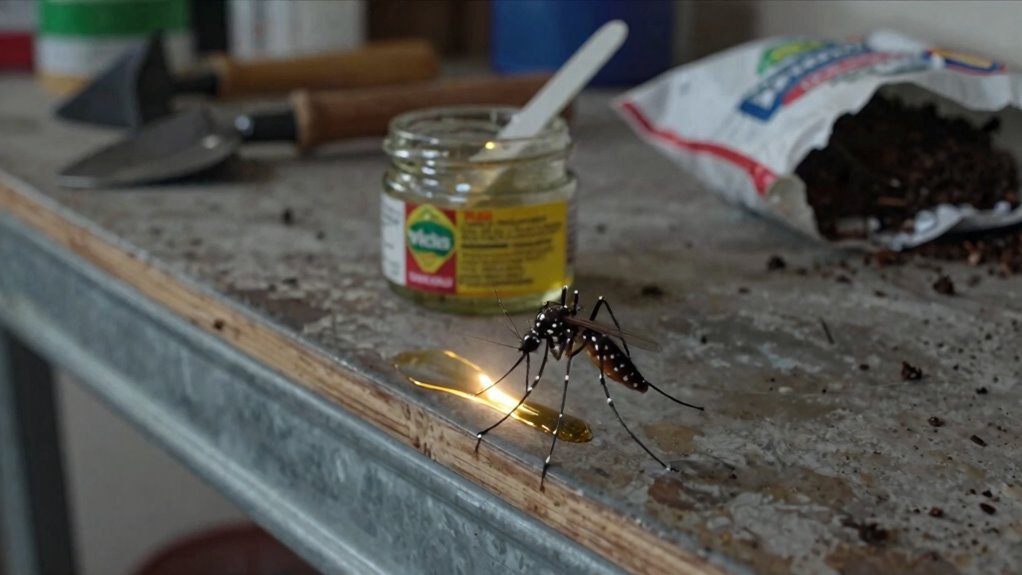
The CDC’s 10% threshold is the bare minimum for a repellent to actually work. A 10% DEET lotion can shield you from bites for up to six hours, a proven standard for pest control.
Vicks VapoRub’s 8.5% active content falls short of that guideline. It is more of a hopeful scent than a dependable shield for topical use.
When shopping for bug bite protection, look for products that meet the CDC benchmark. This ensures you get a reliable barrier against mosquitoes and other biting pests.
For outdoor buyers seeking effective insect repellent, DEET-based lotions remain the trusted choice. Vicks VapoRub may smell strong, but it won’t replace a dedicated repellent for long-lasting coverage.
For longer protection, products with 25% to 40% DEET provide up to 8 hours of defense against mosquitoes and ticks.
CDC’s 10% Efficacy Threshold
CDC sets a clear bar for mosquito repellents: at least 10% active ingredients proven to work.
This isn’t bureaucracy for fun, it’s the efficacy guideline rationale.
The threshold exists since lab data shows 10% is the minimum for reliable, prolonged bite prevention.
CDC threshold testing on DEET, picaridin, and IR3535 confirmed this baseline, weaker mixes fail consistently.
Below 10%, you gamble on protection like bringing a squirt gun to a wildfire.
Vicks VapoRub’s 8.5% active content lands below this line.
That 1.5% gap might not sound huge, but it’s the difference between works and maybe.
The CDC isn’t being picky, they’re being honest.
Eight percent can repel briefly, but ten percent delivers predictable coverage.
So if you’re betting your evening on mosquito defense, do not bet below par.
Stick with products hitting that magic ten.
For effective pest control, always check the label for topical repellent strength before you buy.
For example, 25% DEET provides long-lasting protection for mosquitoes, ticks, and flies.
DEET’s Proven Six-Hour Shield
What happens when you compare a legendary six hour shield to a simple vapor rub? DEET’s proven six hour protection sets a strict benchmark for mosquito repellent performance.
A 10% DEET lotion reliably blocks bites for up to six hours, so your exposure duration stays minimal. That’s not just a claim; it’s data backed calm for your pest control needs.
Vicks VapoRub, with its 8.5% active content, cannot promise that same window of coverage. Its camphor and menthol may deter mosquitoes briefly, but they lack the staying power for long lasting bug defense. Unlike DEET, Picaridin-based repellents are odorless, gentle on skin, and provide up to 14 hours of protection.
Short hikes might see you covered, but an evening barbecue? Not so much. For reliable insect repellent, DEET delivers solid protection you can count on.
DEET offers six hours of solid protection. Vicks is a temporary, uncertain buffer for pest control.
If you need dependable coverage, DEET wins for peace of mind. Vicks is a quirky backup, not a true shield for your outdoor adventures.
Buy DEET for proven repellent persistence, not a vapor rub’s guessing game. Choose the best insect repellent for lasting protection.
VapoRub’s Below-Guideline Content
Compare Vicks VapoRub’s 8.5% active repellent content to DEET’s heavy hitting formula, and the numbers tell a straightforward story. It is 1.5% short of the CDC’s 10% efficacy threshold, like bringing a water pistol to a fire hose fight. DEET at 10% lasts six hours, while VapoRub’s 8.5% fades fast and demands frequent re application. User testimonials often praise its soothing scent, not long term bite prevention. The FDA caps camphor at 11%, but VapoRub’s mix barely squeaks by, leaving scientific backing thin. Application frequency won’t save you from a mosquito’s dinner bell. User testimonials may rave about the smell, but the data says stick with DEET for real protection. VapoRub is a great chest rub, just don’t ask it to be a bodyguard. Bottom line: use proven repellents for mosquito control and topical pest defense. For buyer intent, choose DEET based products for reliable outdoor protection. In contrast, 20% Picaridin repellent keeps insects away for up to 12 hours with no greasy feel or heavy scent.
What Scientific Studies Say About Vicks VapoRub and Mosquitoes
Scientific studies on Vicks VapoRub and mosquitoes are surprisingly thin. User experiences and anecdotal stories dominate the conversation.
A 2020 review noted people in Colombia use it for bites or as a natural mosquito repellent. However, no research confirms this specific claim.
Active compound studies show promise. For example, 10% clove or cinnamon oil gave over 60 minutes of protection.
Vicks has only 8.5% active repellent ingredients. This is below the CDC’s 10% threshold for effective pest control.
The science on oils is inconsistent. Results vary by concentration and solvent used.
In contrast, Oil of Lemon Eucalyptus repellents provide up to 6 hours of protection against mosquitoes.
Do Vicks VapoRub’s Inactive Ingredients Like Thymol Help Repel?
Thymol, an inactive ingredient in Vicks VapoRub, has shown some ability to repel mosquitoes in lab studies. However, the exact concentration of thymol inside the product is not publicly listed.
Camphor and turpentine oil may work together with thymol to create a possible synergy that boosts repellency. No scientific studies have confirmed this specific mix working inside Vicks VapoRub.
Without knowing the precise amounts of these inactive pest control ingredients, it remains unclear if the overall repellent power meets the CDC’s 10% active ingredient threshold. For reliable mosquito repellent, you may want to look for topical entities like DEET or picaridin instead. By contrast, plant-based repellents with lemon eucalyptus oil last up to six hours against mosquitoes.
Thymol’s Repellent Potential
First, the bad news for anyone hoping Vicks VapoRub is a secret mosquito-killing weapon: its inactive ingredients, like thymol oil and turpentine oil, do have repellent properties, but we can’t trust them to do the job alone.
Thymol, a compound found in thyme, has shown some bite-deterring power in lab studies, but its concentration in the salve is unknown.
Here’s the catch: the exact percentage of thymol in Vicks isn’t listed, so its real-world effectiveness is pure guesswork for pest control buyers.
Skin absorption is another concern, since thymol can penetrate the skin, but its safety at Vicks’s unlabeled levels, especially alongside camphor toxicity worries, remains unclear.
Even when potent, thymol-based repellents often wear off faster than DEET, so you would need constant reapplication for reliable mosquito protection.
For anyone seeking a proven topical repellent, look for products with clearly labeled active ingredients and EPA-reviewed concentrations, rather than relying on this salve as a standalone solution.
If you do use Vicks for minor pest deterrence, apply it sparingly and only on intact skin, then monitor for irritation or dizziness.
For longer outdoor exposure, pair it with a registered insect repellent containing DEET, picaridin, or oil of lemon eucalyptus, and reapply according to that product’s label.
That way, you get practical, safer coverage without guessing at thymol’s strength or risking overexposure to camphor.
Regardless, knowing that clove oil disrupts pest sensory receptors, a proven alternative like a properly diluted 2% clove oil formula offers reliable, labeled protection without the guesswork of thymol’s unlisted concentration.
Camphor and Turpentine Synergy
Camphor and turpentine oil are listed as inactive ingredients in Vicks VapoRub. They might seem like a clever pest control duo against mosquitoes, but they are not a reliable repellent solution.
Camphor can deter mosquitoes at higher concentrations when used as an active ingredient. At Vicks’s 4.8% plus an unknown turpentine dose, the synergy remains unproven for topical application.
Camphor toxicity is a real concern for users. The FDA caps it at 11% in OTC products, and frequent use on sensitive skin increases the risk.
This limits how often you can apply the product safely. That makes dependable protection against mosquito bites unlikely.
For guaranteed results, stick with DEET or picaridin as your buyer-intent choice. Vicks’s camphor-turpentine blend is a gamble, not a trustworthy ticket to bite-free evenings.
Unknown Concentration Effects
No label lists thymol’s percentage, so you can’t compare batches for consistent pest control.
A 2012 study showed thymol repels bugs, but only at specific, known topical doses.
Without standardized amounts, Vicks’s “extra” ingredients are a guessing game, not a guarantee for buyers seeking reliable protection.
That makes it hard to trust these products as a safe, effective pest solution.
Oil of lemon eucalyptus offers a milder alternative with no sticky or greasy residue.
How to Apply Vicks VapoRub for Possible Mosquito Protection
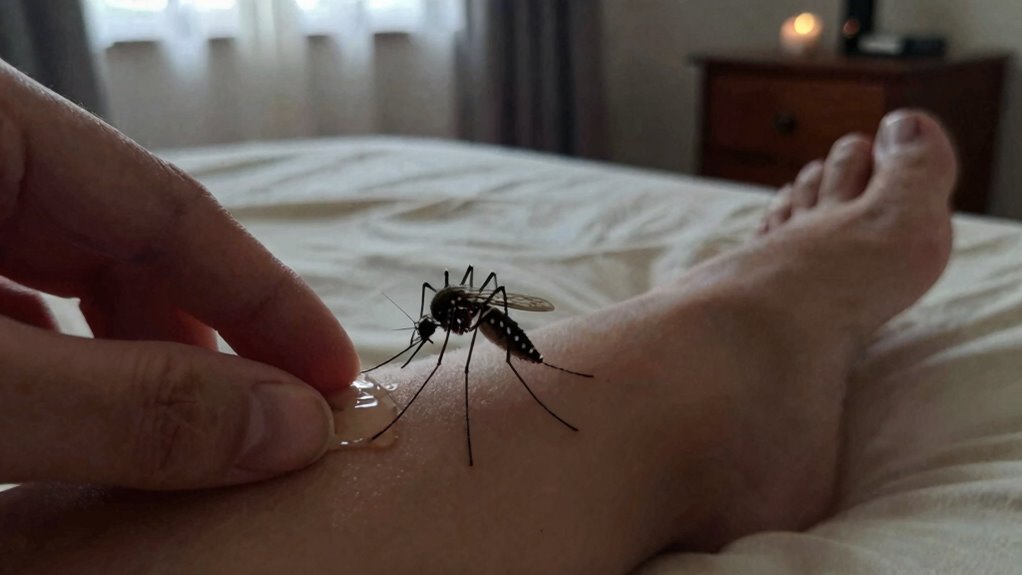
If one is willing to accept that Vicks VapoRub might only be a halfway decent mosquito deterrent, application is fairly straightforward. It should not replace proven pest control solutions.
Apply small dots to exposed arms and legs, focusing on ankles and wrists. A pea-sized amount goes a long way for a topical repellent.
Rubbing in more can be added if needed, but avoid overdoing it. Apply with care, keeping it far from eyes as corneal damage is no joke.
Never use it on children under two. The real trick is its potential synergistic effects with camphor, menthol, and eucalyptus oil.
These ingredients may create a stronger odor barrier than any single ingredient alone. Still, its total active concentration sits at just 8.5 percent.
That is below the 10 percent CDC threshold for effective insect repellents. Use it as a backup, not a primary shield for your home pest control.
Oil of Lemon Eucalyptus (OLE) repels mosquitoes for up to six hours, making it a far more effective and longer-lasting natural option than the low concentration found in Vicks.
Why Vicks VapoRub Can’t Replace DEET or Picaridin
The gap between Vicks VapoRub and proven repellents like DEET or picaridin is a yawning chasm. For serious outdoor recreation planning, relying on Vicks is like bringing a squirt gun to a wildfire. Here is the cold, hard truth.
Vicks has only 8.5% known repellent compounds, while DEET starts at 10% and goes up to 25%. A 10% DEET lotion blocks bites for six hours, but Vicks fizzles fast. The CDC requires at least 10% active repellent for efficacy, so Vicks falls short.
Any entomology consultation would recommend real DEET or picaridin instead. Research on volatile oils is inconsistent, lacking the rigorous data that DEET and picaridin have earned. For proven protection, skip the Vicks and grab a DEET based spray to control pests effectively. In contrast, a 20% Picaridin formula offers up to 12 hours of bug-free time.
3 Safety Risks of Using Vicks VapoRub on Skin
Safety is easy to overlook when you are in a mosquito panic. But using Vicks VapoRub as a skin repellent carries three real risks.
The first risk is camphor toxicity. The FDA limits camphor to 11 percent for a reason, and Vicks sits at 4.8 percent, but slathering it on children under 2 can cause seizures or worse. The second risk is corneal damage. Get this stuff near your eyes, and you face a trip to urgent care instead of pest control.
The third risk is allergic contact dermatitis. The essential oils, especially eucalyptus and turpentine, can trigger nasty rashes sensitive individuals.
To avoid camphor toxicity, never use Vicks on children under 2. To prevent corneal damage, keep it far from your eyes. For allergic reactions, test a small patch of skin first.
Bottom line: Vicks has its uses, but for mosquito repellent it is a safety headache. Stick with DEET or picaridin for reliable protection and peace of mind. Additionally, properly formulated pyrethrin sprays like MGK Evergreen Pyrethrum Concentrate offer a plant-based, OMRI-listed alternative that effectively knocks down over 140 pests while avoiding the risks of camphor toxicity.
Can Vicks VapoRub Soothe Mosquito Bites?
Many people apply Vicks VapoRub to a mosquito bite hoping for relief, and the honest verdict is that it can help a bit.
Do not expect a miracle cure, as the menthol and camphor create a cooling, tingling sensation that distracts from the itch.
This offers temporary mosquito bite relief, but it is not a true anti‑itch treatment like hydrocortisone.
The oily base can trap heat, so for pest control around your home, consider buying insect repellent sprays or bite relief lotions instead.
The numbing effect from menthol mildly desensitizes nerve endings, reducing the urge to scratch for roughly 20 to 30 minutes.
For a skin soothing application, the thick ointment forms a barrier that can calm inflamed skin, though it may clog pores if used heavily.
Avoid using this on broken skin, as bites you have scratched open will sting.
Only apply Vicks to intact, raised welts for a quick fix.
The bottom line is to use it as a short‑term solution, not a long‑term treatment.
For persistent itching, try topical hydrocortisone or an oral antihistamine from your local pharmacy.
For a more reliable approach, consider a barrier spray that guards your home for nearly three months.
Should You Try Vicks VapoRub or Stick With Proven Repellents?
Why choose between a chest rub and a lab-tested repellent when the science is clear? Vicks VapoRub’s 8.5% active ingredients fall short of the CDC’s 10% threshold. That’s like bringing a butter knife to a gunfight.
Its product limitations are real, with untested concentrations and no proof for mosquitoes. Safety risks exist for kids under two or near eyes. For a backyard cookout, maybe Vicks works as a quirky placebo. But for a hike or camping trip, you need reliable mosquito control.
Alternative repellents like 10% DEET or picaridin guarantee six hours of bite-free skin. A bottle costs about eight bucks, lasts all summer, and won’t leave you smelling like a cold remedy. The verdict is simple, stick with proven stuff. If you want a chest rub, use it for your chest, not your arms. For long outdoor events, look for products with up to 8 hours water resistance to avoid reapplication after sweat or rain.
Frequently Asked Questions
Can Vicks Vaporub Be Used on Clothing to Repel Mosquitoes?
Applying Vicks VapoRub to clothing for mosquito repellency is possible but messy. The ointment can leave greasy fabric stains that are tough to wash out, especially on light colors.
Scent transfer is additionally a concern. The strong menthol and camphor smell clings to fabric for days.
A better bet? Stick to skin application in small dots. Or use a proper mosquito repellent like DEET for reliable bug protection.
Bottom line: avoid ruining your favorite shirt for questionable pest control. For practical DIY mosquito prevention, skin spots are cleaner.
If you need long lasting outdoor protection, consider a proven insect repellent spray. This is the smarter purchase for effective pest management.
How Long Does Vicks Vaporub Last on the Skin?
Vicks VapoRub typically lasts on the skin for about one to two hours before skin absorption reduces its effect.
Since it is a thick ointment, not a spray, application frequency must be higher than with DEET.
Think reapplying every hour, not every six.
The active oils just soak in quickly, leaving you with a greasy souvenir and no bug shield.
For real protection, grab a dedicated insect repellent with a longer lasting active ingredient.
If you need outdoor pest control that actually works, choose a product with picaridin or DEET instead.
Is Vicks Vaporub Safe to Use During Pregnancy for Mosquitoes?
Using Vicks VapoRub during pregnancy for mosquitoes isn’t recommended, mainly because of camphor concerns. Camphor can cross the placenta, and the FDA warns pregnant women to avoid it even if serious issues require high doses.
Pregnancy safety isn’t guaranteed with this topical remedy. You are better off with DEET or picaridin, which are proven safe for expecting moms and widely used in pest control products.
Don’t risk it for a few mosquito bites. Stick with the boring, effective mosquito repellent and save Vicks for your chest colds.
If you are looking for a trusted repellent during pregnancy, choose a DEET or picaridin based spray. These pest control ingredients offer proven protection without the camphor risks.
Does the Smell of Vicks Vaporub Dissipate Quickly Outdoors?
The smell of Vicks VapoRub does not last long outdoors. It’s highly wind sensitive, so a light breeze whisks away the menthol and camphor scents in minutes.
Temperature impact is big, too. On hot days, evaporation speeds up, and that familiar odor fades fast.
If you’re heading outside, don’t count on it lingering for mosquito control. Reapplication becomes necessary, which isn’t practical for repelling pests anyway.
For reliable mosquito protection, you need a proven outdoor repellent that won’t blow away. Look for products with DEET or picaridin to keep biting insects at bay.
These active ingredients hold up better in wind and heat, giving you long lasting coverage. That means fewer bites and less fuss than using a vapor rub.
Can Vicks Vaporub Be Mixed With Other Repellents?
Mixing Vicks VapoRub with other repellents is not recommended. The chemical synergy is unpredictable and can backfire.
Camphor and menthol may react with DEET or picaridin. This can reduce insect repellent effectiveness or cause skin irritation.
The sensory impact can be overwhelming with competing scents. Your nose gets a confusing punch instead of clear protection.
Stick to one mosquito control product at a time for safety. If Vicks fails to keep bugs away, grab a proper EPA registered repellent.
Your skin will thank you for avoiding risky DIY repellent blends. Smart buyers choose tested pest control solutions for reliable results.


