
Do mosquitoes bite through clothes? The short answer is yes—most fabrics won’t stop them. Long sleeves and loose fits often give a false sense of security, not real protection.
The only fabric proven to block bites is a dense, double‑layered interlock knit, especially after heat treatment shrinks gaps by 16.5 percent. Permethrin‑treated shirts kill on contact, but they fail if worn tight because mosquitoes probe through stretched weave.
Fit actually matters more than fabric: loose layers create a bite‑blocking air gap, while skin‑tight cloth turns your shoulders into a buffet. This guide breaks down exactly which materials and cuts work, when to use sprays, and how to layer up for full coverage.
Keep reading to get the complete pest‑control checklist for mosquito‑proof clothing.
At A Glance
- Yes, most clothing like single jersey fails to block mosquito bites.
- Interlock knit fabric with thick thread forms a reliable physical barrier.
- Tight clothes press against skin, allowing mosquitoes to probe through gaps.
- Loose fit creates an air gap that prevents proboscis penetration.
- Permethrin treatment deters mosquitoes but only works with loose, uncut fabric.
Can Mosquitoes Actually Bite Through Clothing?
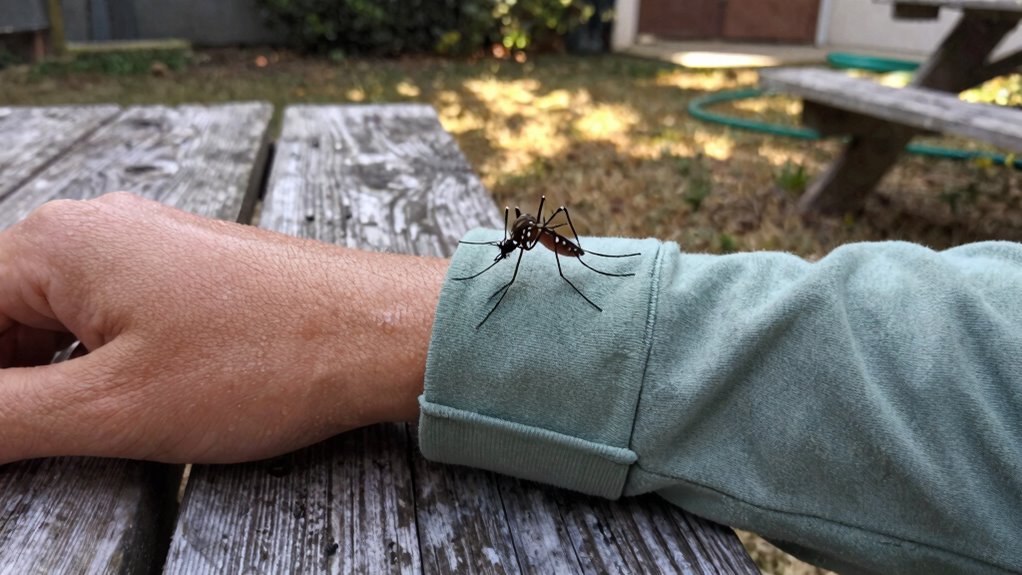
Yes, mosquitoes can bite through most clothing, and this is not a fashion critique but a proven fact. Testing shows common weaves like single jersey or jersey skip fail to block bites effectively.
Even Permethrin treated fabrics offer limited physical protection, as treated military uniforms still require a loose fit. Mosquitoes probe through fabric gaps, especially where clothing clings to skin like on shoulders and back.
Permethrin-treated fabrics offer limited protection, as mosquitoes probe through fabric gaps where clothing clings to skin.
Fortunately, fabric heat treatment after knitting can shrink gaps by about 16.5 percent, improving bite blocking in certain knits. Interlock knits with thicker thread or added spandex can work as a reliable mosquito repellent barrier.
But form fitting athletic gear is useless for pest control. You will feel zero landing events until it is too late for an insect bite reaction.
So use loose fitting, tightly woven fabrics as your real defense against mosquitoes. Do not trust mere long sleeves; always check the weave before relying on clothing for outdoors protection.
For best results, choose tightly knit clothing and consider a commercial bug spray for added safety. Loose layers that avoid skin contact are your strongest tool in mosquito bite prevention. Permethrin-based treatments bond tightly with fabric fibers and remain effective after washes, making them a valuable supplement to physical barriers.
The Only Fabric That Blocks Mosquito Bites
Of all common fabrics tested, only the interlock knit stopped mosquitoes cold.
Two adjustments like thicker thread or added spandex turned ordinary knits into barriers.
This is a small victory for anyone tired of being the neighborhood blood bank.
You can finally get effective mosquito bite protection without heavy sprays.
Choose these knit fabrics for reliable bug control around your home and yard.
They help you stay bite free during outdoor pest season.
If you want immediate relief from mosquitoes, look for interlock knits with spandex.
That simple tweak makes them a solid mosquito defense option.
For even stronger protection, consider permethrin-treated clothing that repels mosquitoes through 70 washes.
Interlock Knit Blocks Bites
In the mosquito bite arms race, one humble fabric emerges victorious: the interlock knit. Its secret lies in the fabric weave. Instead of loose loops, it uses a double layered structure that mosquitoes simply cannot probe through. Best pest control for clothing is this tight defense.
Even better, heat shrinkage tightens the gaps further. A wash and dry cycle can shrink inter loop spacing by about 16.5 percent. This turns a decent barrier into a fortress you can trust for backyard protection. Here is why this fabric wins for bite proof clothing.
Lab tests showed only interlock knit stopped bites across multiple mosquito species. That is a proven blocker with no surprise there. Fit matters for preventing bug bites effectively.
Loose interlock garments prevent skin contact with mosquitoes. Tight cling still invites trouble so opt for relaxed cuts. Easy care is a huge bonus for daily use.
That heat treatment works with normal laundering. No special rituals are needed to maintain the bite proof feature. Bottom line is simple if you want bite proof clothing.
Ignore fancy tech and grab interlock knit instead. It is the unsung hero of backyard barbecues and pest repellent wardrobes. For full-body protection, consider a suit with attached or removable hood design to shield your head and neck from biting insects.
Thread Thickness And Spandex
Thread thickness and spandex content are the true game changers in biteproof fabrics. Increasing thread density packs more fibers per inch, creating a tight barrier mosquitoes cannot probe.
Adding spandex boosts fabric elasticity, pulling yarns closer together and closing gaps. For better mosquito protection, choose fabrics with thick thread and spandex content.
| Parameter | Effect on Bite Protection |
|---|---|
| Thin thread | Bites through easily |
| Thick thread | Blocks most probes |
| No spandex | Fabric clings, gaps remain |
| Spandex added | Elasticity tightens weave |
Thick threads block most mosquito probes, making them ideal for pest control clothing. Spandex elasticity tightens the weave, eliminating entry points for biting insects. For extended durability, look for factory-bonded permethrin treatments that last up to 70 washes without reapplication.
Buyers seeking bite proof garments should prioritize high thread density and spandex blends. This combination provides reliable protection against mosquitoes and other pests.
Why Long Sleeves and Loose Fit Fail to Protect
Here’s a dirty little secret about summer misery. Long sleeves and loose fit often fail to protect you from mosquitoes, and the reason is painfully simple.
Fabric, even when loose, contains small spaces called fabric gaps that mosquitoes can probe through. When clothing is skin tight, it clings to the body and creates large areas where mosquitoes can easily bite through the weave.
Here’s what goes wrong. Gaps in the weave give mosquitoes a direct path to your skin.
Skin tight fabric on shoulders and upper back creates bite hotspots. Loose fit reduces cling, but fabric gaps still allow probing.
The bottom line is that neither long sleeves nor loose fit alone block bites. For real pest control, choose tightly woven, noncling fabrics to stop biting insects at home.
Neither long sleeves nor loose fit alone block bites. Choose tightly woven, noncling fabrics for real protection.
A proper mosquito repellent fabric or bug proof clothing may be your best buy for outdoor work or hiking. Dense weaves and fitted cuffs prevent probing and eliminate false security. Applying a spray like Sawyer SP657 bonds permethrin to fabric fibers for up to six weeks.
How Clothing Fit Determines Bite Locations
Fit writes the unwritten rules of where mosquitoes feast. Tight clothes, like that clingy athletic heat gear, press fabric flat against skin, turning the upper back and shoulders into a buffet.
Even with a dense fabric weave, a mosquito’s proboscis slips right through since there’s no air gap. That’s why loose fit works, it keeps cloth off your skin.
Heat treatment can help shrink inter-loom gaps, reducing accessible surface area by about 16.5% in tightly knit shirts. But if the shirt hugs you, that improvement means little for your pest control efforts.
The bite map follows the cling map. A loose long sleeve over a tucked-in shirt is your cheapest defense, no special tech required.
Two inches of air beats two hundred thread count every time. Bottom line: fit decides bite before fabric does, so choose loose layers to stop mosquito bites. For stubborn infestations, a slow-acting poison ensures worker ants carry the treatment back to the colony, killing the queen and brood for complete elimination.
Does Permethrin Clothing Stop Mosquito Bites?
Long sleeves offer limited protection, but permethrin clothing actually prevents mosquito bites effectively.
Factory treatment bonds a synthetic pesticide into fabric fibers, creating a powerful mosquito deterrent that kills on contact.
Field tests confirm its bite protection works, but only under the right conditions.
Wash durability is strong with factory treatment lasting up to 50 washes while maintaining over 90% bite protection.
Dry cleaning strips the permethrin and leaves your gear useless against pests.
Fit still matters because loose wear prevents skin contact while tight fabric lets mosquitoes bite through even treated clothing.
A treated combat shirt costs about 60 dollars, but a single dry cleaning trip renders it inert.
For best results, pair it with a proper fit and apply repellent to exposed skin.
The bottom line is permethrin clothing stops mosquito bites, but only when you avoid dry cleaning and never wear it tight.
Sawyer Permethrin treatments require UV exposure to bond to fabric fibers.
Where Mosquitoes Bite: and How to Cover Every Spot
Mosquitoes have favorite spots, and those spots shift depending on your activity. When you stand, Aedes aegypti target your lower limbs for nearly half of all bites.
But when you sleep, both major species bite every exposed surface equally. Covering just below the knees only wins half the battle.
For full protection during sleep, use a high-density mosquito net or treated clothing to cover every area. Leave only your hands and face exposed for total defense.
A quality insect repellent spray on ankles and wrists helps during standing activities. For overnight pest control, a mosquito net or tent spray ensures no gaps remain.
Preferred Bite Locations
They say mosquitoes have a favorite flavor, and it’s apparently your ankles. Understanding mosquito anatomy helps explain why their piercing mouthparts can slip through most textile weave gaps.
This is why they target specific spots like your lower legs and ankles. Standing volunteers received 96% of bites below the knees from *Anopheles* mosquitoes, making pants a poor defense if fabric clings.
Tight shirts create cling zones where mosquitoes probe through stretched weave, even under long sleeves. Leaving feet exposed reduces bite protection to as low as 36% against *Anopheles* during non-sleeping hours.
The key is coverage plus loose fit for effective pest control. Tight fabrics fail since mosquito anatomy easily pierces the weave when fabric presses against skin.
Cover every inch but make it roomy for best protection. Choosing loose, long clothing helps keep biting insects away from your skin. For outdoor protection, applying a tank sprayer or spot treatment with permethrin concentrate to clothing can create an additional barrier against mosquitoes.
Preventing Lower Limb Bites
Blocking lower limb bites is less about fabric type and more about a basic geometry problem. You need to create a tent, not a second skin. Tight leggings fail since mosquitoes bite right through the stretched weave. Ankle protection is critical for pest control.
Tuck pants into socks, not just over them, to seal entry points. Footwear barriers matter. Closed toe shoes or boots with high socks beat sandals every time. Choose loose, long pants, ideally factory treated with permethrin that lasts 50 washes. Dry cleaning kills that treatment, so avoid it.
Avoid cheap bug shirts that cling. Test by pulling fabric away from skin. If it snaps back, mosquitoes will find a way. Lower limbs account for 96 percent of Anopheles bites on standing people. Cover them properly, and you cut that number to zero.
The verdict is to create air space below the knees. Lock down socks and shoes. Leave no gap for probing proboscises. This is your best bite prevention strategy. For added protection on untreated gear, Sawyer Permethrin Insect Repellent bonds tightly to fabrics for up to six weeks or six washes.
Essential Sleep-Time Coverage
Sleep transforms the bite map. During sleep, mosquitoes distribute bites evenly across all exposed skin, so even a single uncovered foot can drop protection to 36 percent.
The solution requires covering every spot with fabric that truly blocks. For reliable pest control, use gear that stops bites completely.
Loose fitting clothing is non-negotiable for effective mosquito repellent. Tight fabrics cling to skin, creating prime bite zones on shoulders and back.
Loose garments create a physical barrier, preventing proboscis penetration. This is a top tip for sleep safety outdoors.
Thermal post treatment of knits works by shrinking fabric gaps by about 16.5 percent. A simple hot wash and dry cycle turns a nonblocking jersey into a barrier.
Buying heat-treated sleepwear is a cheap, effective hack for nighttime protection. It is a smart step for any camp kit.
Factory permethrin-treated uniforms provide more than 90 percent bite protection. However, they only work when worn loose, and dry cleaning kills the treatment.
Look for factory permethrin-treated sleep socks and tops for maximum defense. This is a key buyer-intent choice for serious pest control.
Bottom line: Sleep in loose, heat-treated, or permethrin-treated clothing covering all but hands and face. Expose one foot, and you are basically a mosquito buffet.
Cover every spot for true bite prevention. Shop for loose, treated sleep layers to avoid dawn feeding.
For additional protection around your sleeping area, consider using a high-voltage bug zapper with UV light to reduce the local mosquito population overnight.
5 Features to Look for in Mosquito-Proof Clothing
When shopping for mosquito-proof clothing, the first feature to look for is a tightly woven or knit fabric that mosquitoes cannot stick their mouthparts through.
A tight fabric weave is your first line of defense, since if the holes are too big, those little vampires just poke right through.
A tight fabric weave is your first line of defense—if the holes are too big, mosquitoes poke right through.
Look for a dense knit, like an interlock. It is the textile equivalent of a medieval castle wall for pest control.
Second, heat treatment after knitting shrinks fabric gaps by about 16.5 percent. This turns a so-so shirt into a bug-proof barrier.
Think of it as a shrink ray for your clothes, but without the sci-fi budget.
These two features alone can cut your bite count from a festival of welts to maybe one or two.
Check the fabric tightness and ask if it is heat treated. Your skin will thank you for buying the right gear.
Pairing these features with permethrin-treated clothing can provide an even stronger defense against biting insects.
Frequently Asked Questions
What Color Clothing Attracts the Most Mosquitoes?
Dark colors attract the most mosquitoes, especially black, navy, and red.
These shades absorb heat and carbon dioxide, making you a clearer target for pest control concerns.
Light colors like white or beige reflect heat and are less visible to mosquitoes, offering a small but real advantage.
So wear light colors if you’re heading outside, not to be invisible to humans, but to be slightly more forgettable to bugs.
This is a cheap, easy defense for anyone looking for mosquito repellent clothing or outdoor pest solutions.
For the best mosquito control, pair light clothing with a reliable repellent or a bug zapper.
Buying the right outdoor gear now can save you from itchy bites later.
Can a Mosquito Bite Through Denim Jeans?
Denim’s tight weave and thick fabric act as a strong physical barrier, so mosquitoes usually cannot bite through jeans. Their proboscis simply can’t push through the dense material, unlike loose knits or thin cotton.
For the best pest control protection, choose loose fitting denim instead of skinny jeans. Tight denim against your skin can create cling areas where mosquitoes might still reach you.
If you’re looking for bite prevention while outdoors, wearing denim is a smart and practical choice. To get the best results, avoid skintight jeans and pair them with a reliable insect repellent.
Do Mosquitoes Prefer Certain Body Scents Over Others?
Yes, mosquitoes definitely prefer certain body scents over others. Sweat composition plays a big role, with lactic acid and ammonia drawing them in like a dinner bell.
Blood type also matters. Type O is a favorite, while Type A is less appealing.
If you’re always the one getting bitten, blame your biology. It’s not personal, just chemistry, but it can feel unfair.
For effective pest control, choose a repellent that targets these specific attractants. Look for products with DEET or picaridin to block mosquito detection.
You can also use outdoor sprays to reduce mosquito populations around your yard. This helps you enjoy your space without constant bites.
To buy the best mosquito repellent, consider your activity level and skin sensitivity. A good spray or lotion makes all the difference.
Are There Any Natural Fabrics That Repel Mosquitoes?
No natural fabrics alone reliably repel mosquitoes; untreated cotton, wool, or linen offer little resistance against a hungry pest.
Fabric treatment with permethrin provides the real barrier for effective mosquito control, not the fiber itself.
Volatile oils like citronella or lavender fade fast, often losing effect within an hour of application.
Loose weaves let mosquitoes bite through any “natural” label, so fabric structure matters as much as the material.
For true protection, stick with treated synthetics or loose fitting permethrin soaked clothing for outdoor pest prevention.
Volatile oils are better for scent than survival, so focus on gear built for serious bug defense.
When you shop for insect repellent clothing, look for permethrin treated options that last through multiple washes.
This gives you safe, long lasting mosquito repellency without reapplying oils every time you step outside.
Can Mosquitoes Bite Through Multiple Layers of Clothing?
Yes, mosquitoes can bite through multiple layers if the fabric is thin or tight against skin. Clothing thickness matters a lot, and loose, bulky layers are your best defense against these pests.
Even two t-shirts won’t stop them if the fabric clings to your body. For effective pest control, think flannel over a long-sleeve, not yoga gear under a windbreaker.
Tight knits fail to block bites, while bulky separates work much better. When camping, two loose layers beat one tight layer for mosquito protection.
Permethrin treated clothing is still the top choice for serious pest control buyers. Stack loose layers, not tight ones, to keep biting insects away.


