
Do mosquitoes bite some people more than others? Yes—and it’s not random. In fact, 20% of people get 86% of the bites, making some of us natural repellents and others bait.
Men are 1.68 times more likely to get bitten than women, and school-age boys attract even more. Warmer bodies, certain blood types, and scents like lactic acid all play a role.
If you’ve ever felt like the designated mosquito magnet, you’re not imagining it. The good news is pest control strategies can tip the numbers in your favor.
Using a treated bed net cuts bite risk in half, and targeted treatments can protect your yard or home. This article breaks down exactly why mosquitoes target you and how to stop them cold.
Stay with us—the next section covers proven repellent strategies and when professional pest control makes sense.
At A Glance
- Bite distribution is highly unequal, with 20% of people receiving 86% of bites.
- Your unique body scent, temperature, and CO2 output influence mosquito attraction.
- Blood type O attracts nearly twice as many mosquitoes as blood type A.
- People infected with malaria emit odors that make them more attractive to mosquitoes.
- School-age boys (5-15 years) receive significantly more bites than other demographics.
Why Mosquito Bite Rates Vary So Much Between People
Why do mosquito bite rates vary so much between people? The answer comes down to human scent and body temperature.
Every person emits a unique chemical cocktail through their skin, a sort of personal perfume. Mosquitoes are picky eaters drawn to specific scents like lactic acid and ammonia.
Every person emits a unique chemical cocktail from their skin, a personal perfume that attracts mosquitoes.
A warmer body temperature acts like a dinner bell, signaling a blood rich target. If you are the sweaty warm one at the barbecue, you might need an effective mosquito repellent.
It is not personal it is just chemistry. Your scent profile and heat signature make you a mosquito magnet.
To reduce bites, consider professional pest control services or a backyard mosquito treatment. Bottom line: your unique smell and warmth are the culprits. When spending time outdoors, a spray with 20% Picaridin can offer up to 12 hours of defense against these pests.
Kenyan Data: How Unequal Are Nightly Mosquito Bites?
How uneven are nightly mosquito bites in Kenya? The results are stark and backed by data. A landmark study found that only 20% of people absorbed 86% of all bites per night, a pattern scientists call bite heterogeneity. This is not random luck, it is mosquito behavior with social consequences.
Mean nightly bites ranged from 0.03 to 1.5 per person, a fifty fold gap. For pest control planning, this means targeting the most bitten individuals can reduce transmission. 65% of participants recorded zero bites on any given night. The most bitten person received 12 bites in a single evening.
A Gini index of 0.82, far above random chance’s 0.51, confirms extreme inequality. Mosquitoes are picky diners, not equal opportunity feeders. This clumped distribution matters for malaria spread, since a few unlucky hosts fuel transmission. Predicting who gets bitten, beyond sheer bad luck, remains the tricky part.
But the data proves nightly exposure is anything but fair. If you want to protect your home, consider professional mosquito control services. Targeting hot spots could be the key to stopping bites before they start. Matching coil duration to activity length prevents bite risks for those most targeted by mosquitoes.
Why Age and Sex Determine Mosquito Appeal
Age and sex are not just demographics; they are mosquito magnets. Research shows that males, particularly school-age boys, get bitten far more than females or older adults, with a biting rate ratio of 1.68 for males versus females.
This isn’t random, it’s tied to host behavior, like spending more time outdoors or producing stronger body odors. Surprisingly, older men (31 to 75) are likewise overrepresented in blood meals, whereas young children under five are avoided.
For practical pest control, knowing these patterns helps you target repellent use where it matters most. School-age boys should get the strongest protection, especially during outdoor play or camping trips.
Younger children under five are less of a target, but don’t skip their bug spray entirely, as low risk is not zero risk. Older males might benefit from extra scent-based repellents, since their appeal may stem from stronger chemical cues on the skin.
If you’re looking for mosquito control services, ask about yard treatments that reduce resting and breeding sites near your home. This proactive step cuts down on bites for the whole family, not just the high-risk groups.
Females show moderate appeal, often because of clothing choices or indoor habits, so a simple DEET or picaridin lotion usually does the trick. The pattern even hints at parasite manipulation, as some malaria strains nudge mosquitoes toward specific hosts, but alternative hosts like birds or cows are rarely chosen.
So, if you’re a male kid, you’re basically a mosquito target, no offense. To keep those biting rates low, use mosquito repellent wipes on arms and legs before heading outside, and schedule routine pest inspections for your property.
A mosquito misting system can also provide ongoing defense, especially during peak dawn and dusk hours. For a friendly, practical approach, focus your efforts on the most bitten family members first, then layer protection for everyone else. For high-risk groups like school-age boys, plant-based repellents with oil of lemon eucalyptus offer up to six hours of protection per application.
That way, you’re not guessing, you’re matching your pest control plan to real-world biting risk. And if the biting seems uneven, remember that age and sex are just two clues in a larger puzzle of mosquito taste.
How Malaria Infection Makes You a Bigger Target for Bites
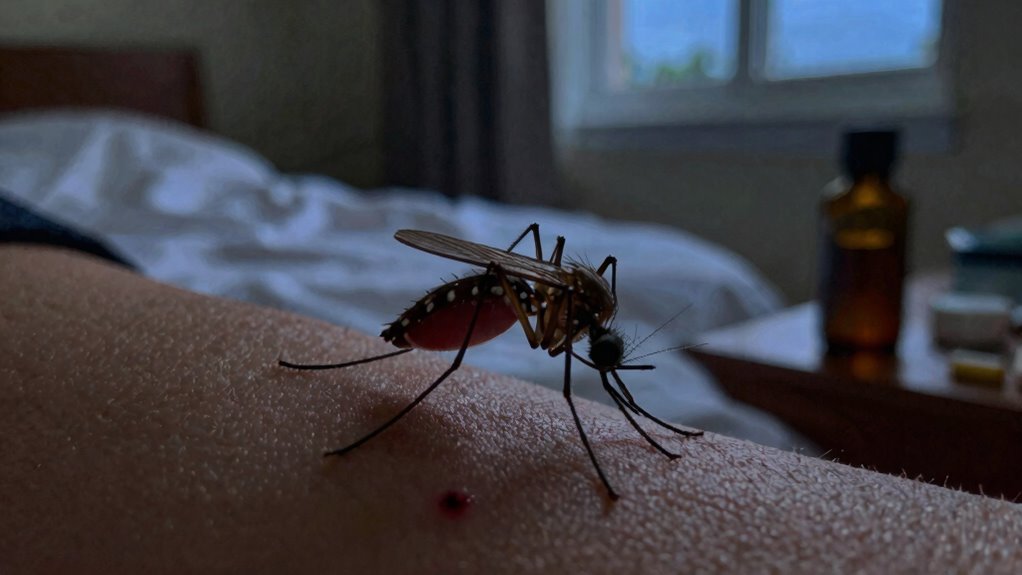
Infected school-age boys are hit hardest, receiving 6.4 times more infectious bites than others. The parasite changes your body odor, making you smell like a five-star meal to mosquitoes. Sporozoite-laden mosquitoes actively prefer infected hosts, a creepy example of parasite manipulation. Non infected people nearby are actually safer, since mosquitoes target the one infected person in the room. The bottom line is that malaria does not just make you sick. It weaponizes your smell to attract more bites, so effective pest control is critical. Using a treated bed net is a simple way to block these attacks. For extra protection, consider insect repellent sprays and indoor mosquito traps to break the cycle. Applying a repellent with 20% Picaridin offers up to 12 hours of protection and is effective against disease-carrying mosquitoes.
Do Bed Nets Really Protect You From the Most Bites?
Using a treated bed net cuts your bite rate in half, according to the same Kenyan study. That is a 0.51 biting rate ratio compared to non-users, which is solid bed net efficacy but not a magic shield.
The net’s real job is to make you less of a dinner bell for mosquitoes, especially when paired with other personal protection strategies. Combine it with repellent or screened windows for the best pest control results.
It cuts bites by half, but only if you are under it before dark. There should be no rips, tears, or tucked in edges, as mosquitoes find gaps faster than a toddler finding a cookie. To ensure optimal mesh density blocks even the smallest insects, look for nets with high hole counts per square inch.
This net is best for sleeping areas, not patios. Think bedroom, not barbecue, for effective mosquito protection.
Bottom line: a net is a great first move, but it is not a solo act. Use it nightly, check for holes, and combine with repellent for full coverage.
Why School-Age Boys Fuel Malaria Transmission
School-age boys are the mosquito’s most valuable pin cushion for spreading malaria. A Kenyan study shows these kids are transmission super-spreaders because they get bitten far more than others.
Males aged 5 to 15 had a biting rate 1.68 times higher than females and 1.49 times higher than anyone over 15. Infected school-age boys attract infectious mosquitoes nearly three times more often than uninfected individuals.
Mathematical modeling reveals that although these boys make up only 19.2 percent of the population at risk, they account for half of all bites that lead to onward malaria transmission. This makes them a perfect target for pest control efforts like school based net distribution or treatment programs.
Fixing their bite risk could slash overall transmission, making these kids the bullseye for malaria control. For families seeking home pest control solutions, focusing on school age boys with repellents or bed nets is a smart, targeted intervention. Using an effective indoor plug-in diffuser can create a 20-foot protection zone in shared bedrooms used by these boys, providing continuous defense without sprays or fumes.
The Gini Index: A Fancy Number That Shows Who Gets Bitten Most
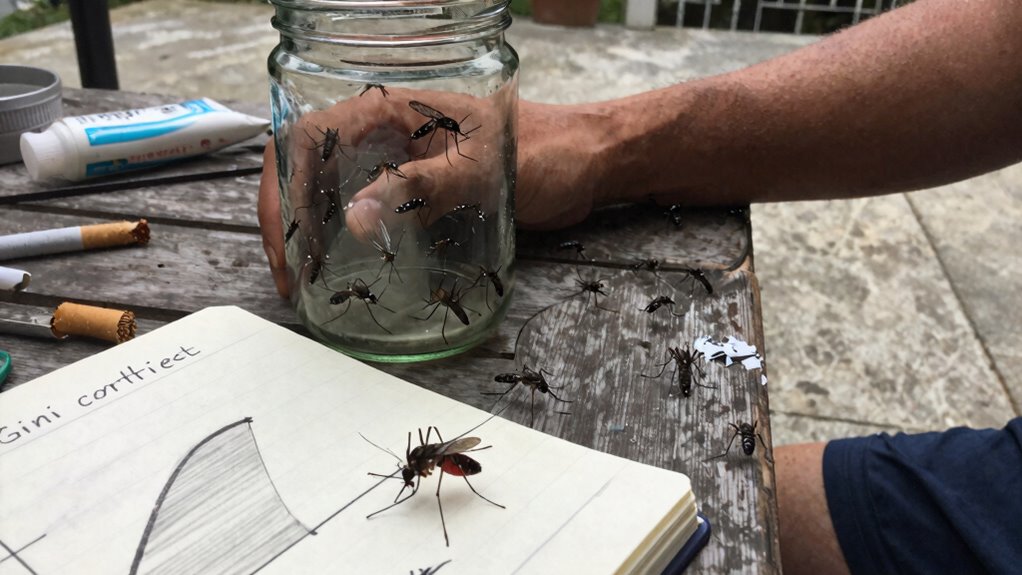
Not all mosquitoes are created equal, and neither are the people they bite. The Gini index, a measure of inequality, reveals a startling truth from a Kenyan study. Just 20% of people received 86% of all bites. That is a Gini of 0.82, far higher than random chance’s 0.51.
A few unlucky individuals get eaten alive. Mathematical modeling helps pinpoint these high bite groups, such as school age boys. This allows us to design targeted pest control interventions. It is not about blaming the victims.
It is about focusing mosquito nets and insecticide sprays where they will do the most good. No more spraying the whole field when we know the hotspots. The bottom line is simple. Knowing who gets bitten most makes malaria control smarter, not harder.
How Non-Random Biting Accelerates Malaria Spread
School-age boys between 5 and 15 receive 6.4 times more infectious bites, making them key super-spreaders. Skipping a bed net raises biting rates by 49 percent, which hits infected children the hardest.
Using a quality bed net and repellent can break this cycle. Consulting a pest control expert helps identify local mosquito hotspots around your home. Applying a Bti-based biological larvicide to standing water offers safe, targeted control that kills larvae without harming fish or pets.
Why Mosquitoes Don’t Pick Their Human Hosts at Random
Mosquitoes don’t pick their human hosts at random, which explains why some people get bitten far more often than others. A Kenyan study found that 20% of people received 86% of all bites, with rates ranging from near zero to 1.5 bites per person-night.
This pattern is far more uneven than chance allows and creates clear winners and losers in terms of bite exposure. Host selection bias is tied to factors like age, sex, and even malaria infection status. Products with 25-40% DEET provide effective, long-lasting protection against mosquitoes and ticks for those most at risk.
For effective pest control, targeting the 20% who attract the most bites can dramatically reduce local mosquito populations. If you’re looking for mosquito control solutions, understanding these patterns helps you choose the right repellent or treatment plan.
The bite distribution is predictably skewed, not a matter of bad luck. To buy mosquito traps or repellents that address this bias, consider options tested against real-world host attraction data.
Host Selection Bias
Your personal body chemistry plays a big role in mosquito attraction. Lactic acid and ammonia create a unique scent that some bugs find irresistible.
Larger people give off more carbon dioxide, which acts like a long range beacon. Your blood type also matters, with Type O individuals attracting nearly twice as many as Type A.
Skin microbes produce odors that can either draw in mosquitoes or help keep them away. It may feel like a frustrating lottery, but you can tilt the odds with proven pest control solutions.
Using a quality insect repellent is your best defense against these biting pests. Products containing DEET or picaridin offer reliable protection for outdoor activities. For example, 25% DEET provides long-lasting protection for mosquitoes, ticks, and flies.
To reduce your home’s appeal, eliminate standing water near your property. Mosquito control treatments for your yard can also lower local populations.
Staying protected with topical repellents and yard maintenance makes a real difference. With these steps, you can enjoy your time outdoors with fewer bites and less irritation.
Unequal Bite Distribution
Mosquito bites are not evenly distributed, and some people truly attract far more than others. A Kenyan study found that 20% of people received 86% of all bites in a single night, showing a clumped pattern instead of a random one.
Mean bite rates ranged from 0.03 to 1.5 bites per person per night, and 65% of participants got zero bites. The maximum for one person reached 12 bites in one night.
This unequal distribution means lone travelers can become a feast for mosquitoes. On the other hand, indoor fans who sleep under nets cut their risk by half, with a rate ratio of 0.51.
The Gini index of 0.82 compared to the expected 0.51 proves it is not just luck. Mosquitoes do not play fair and they pick favorites, which changes everything for transmission dynamics.
For effective pest control, consider using mosquito nets and repellents to protect yourself. If you are struggling with bites, targeted pest control solutions can help reduce the activity around your home. For example, a natural pet-safe formula like PetraMax can cover up to 128,000 square feet and is safe for children and pets after application.
Remember that mosquito control products like sprays and traps work best when you understand who is most attractive. Buy a quality mosquito net today to slash your personal risk immediately.
Demographic Feeding Patterns
Males attract 1.68 times more mosquito bites than females due to larger body size and different human scent profiles. This makes them a priority for pest control treatments like repellents and bed nets.
Young adults aged 5 to 15 get 1.49 times more bites than older individuals, making them key transmission hubs. For effective mosquito control, focus on protecting school-age children with sprays and permethrin-treated clothing.
Genetic attractiveness plays a role, as some people are simply more appealing to mosquitoes due to inherited body odor compounds. Using targeted pest control products can help reduce bites for those with this natural draw.
People with *P. falciparum* malaria are 1.25 times more likely to be bitten, creating a nasty feedback loop. To break the cycle, consider insecticide-treated nets and professional pest management services.
The bottom line is mosquitoes don’t play fair, so targeting school-age boys with nets and repellents can slash transmission. However, your DNA might still put you on the menu, so combine personal protection with home pest control plans.
How to Use Your Bite Risk to Stay Safer
Mosquitoes follow predictable patterns, not revenge. Your sweat chemistry, body heat, and blood type can make you a bigger target for bites.
School-age boys with malaria get bitten six times more than others. To lower your bite risk, use bed nets and wear long sleeves.
Bed nets cut biting rates by half, with 0.51 bites per person night. For high risk groups like males aged 5 to 15 without nets, bites spike to 13.2 per month.
Avoid peak dusk hours and skip floral scents. Make yourself boring to mosquitoes by reducing attractants.
Use nets and dodge prime time. This works like a cheap insurance policy against mosquito control failures.
For additional protection, consider DEET-free repellents containing oil of lemon eucalyptus, which last up to six hours.
Frequently Asked Questions
What Makes Some People Smell More Attractive to Mosquitoes?
Some people are naturally more attractive to mosquitoes because of their unique scent.
Skin bacteria create a personal odor bouquet that can either repel or invite pests.
You also exhale carbon dioxide, which acts like a dinner bell for biting insects.
Larger exhalations from exercise or a higher metabolism signal a blood meal.
Sweat containing lactic acid and ammonia adds to the chemical allure.
If you want to avoid being a mosquito magnet, targeted pest control is key.
Investing in DEET free repellents or a local mosquito treatment can change your chemical signature.
Smart buyers look for products that mask skin bacteria and reduce exhaled attractants.
Your body’s bug and breath chemistry decides if you are a buffet or a pass.
Choose professional pest control solutions to stay bite free all season.
Can Changing Your Diet Reduce How Often Mosquitoes Bite You?
Changing your diet won’t reliably reduce mosquito bites. Some individuals swear by garlic or spicy food, but the evidence is thin.
Mosquitoes still bite regardless of what you eat. Biting rates vary wildly by person, not by plate.
For real protection, skip the garlic bread and invest in a quality bed net. A simple $10 net can cut bites by 49 percent, no stinky breath required.
Consider it a key part of your pest control strategy. If you want to stop mosquitoes at home, a bed net is a smart, affordable purchase.
The bottom line is clear: your dinner isn’t a repellent. A net is.
Is There a Genetic Reason Mosquitoes Prefer Certain People?
Yes, genetic markers are a big part of why mosquitoes prefer certain people. Inherited traits like your skin’s natural scent and metabolism act like a dinner bell for pests.
Some people naturally produce more lactic acid or carbon dioxide, which attracts mosquitoes. This isn’t a curse, just bad luck in the gene pool.
Studies show identical twins get bitten at similar rates, while fraternal twins do not. So the “sweet blood” excuse is actually genetics, and you cannot diet your way out of it.
For effective pest control, focus on proven repellents and professional grade mosquito treatments. Look for products with DEET or picaridin to block those genetic cues.
If you want lasting outdoor protection, consider a yard spray or barrier treatment. These solutions target breeding areas and stop mosquitoes before they bite.
Do Mosquitoes Bite More People With Type O Blood?
Yes, research suggests mosquitoes bite people with Type O blood more. Studies show they land on Type O secretors nearly twice as often as Type A.
Skin temperature also plays a role, and slightly warmer bodies attract more bites. Blood type and heat signals combine to make certain individuals easier targets.
It is not personal, just chemistry. That is why using a proven mosquito repellent is your best pest control strategy for outdoor spaces.
If you are Type O and tend to run warm, you need a stronger shield. Look for a yard spray or personal repellent with DEET or picaridin for lasting protection.
Buying a mosquito trap or barrier treatment can reduce the local population around your home. For immediate relief, try an EPA approved fogger to knock down biting adults fast.
Targeting these chemical cues with professional grade pest control products gives you the upper hand. Smart buyers choose options that match their specific risk factors and outdoor habits.
Can Taking Vitamins or Supplements Lower Your Bite Risk?
Can taking vitamins or supplements lower your risk of mosquito bites? The evidence says no.
B vitamin dosage, especially B1, was once touted as a natural insect repellent. But studies show it doesn’t reliably change your skin microbiome’s scent, which is the real lure for mosquitoes.
You are better off with a DEET spray for around $8 per 4-ounce bottle. Or try a permethrin-treated shirt for about $30.
These are cheap, easy, and proven pest control solutions. Throwing money at supplements won’t stop the buzzing; physical barriers will help you buy the right protection.


