
Getting rid of flies in the garage starts with one simple truth: where there’s filth or moisture, there’s a breeding ground. You’ll need to kill the active swarm first, then cut off whatever is drawing them in.
An electric zapper or sticky traps near windows will knock down the adults fast, but that only solves half the problem. The real fix is removing their food and water sources—seal pet food in metal bins, rinse trash cans weekly, and dry up damp floors or leaky pipes.
After that, close the entry points with silicone caulk and mesh vents so new flies can’t get in. This guide walks you through each step in order, from quick kills to long-term prevention, so your garage stays fly-free for good.
At A Glance
- Seal all gaps, cracks, and vents with silicone caulk or mesh to block entry.
- Eliminate moisture by fixing leaks and running a dehumidifier or fan.
- Remove food sources: rinse trash bins, seal pet food, and clean bowls.
- Use sticky traps near lights or baited traps to kill adult flies quickly.
- Apply garage-safe spray to resting areas for lingering infestations.
Why Are There So Many Flies in My Garage?
Flies aren’t out to ruin your day; they’re just following basic survival cues.
Flies aren’t out to ruin your day; they’re just following basic survival cues.
Your garage provides three key things they crave: food odors, moisture, and sheltered breeding spots.
Trash cans, recycling bins, and pet food bowls are like all-you-can-eat buffets for them.
Damp mops, leaky hoses, or sweat on concrete create the humidity they need to thrive.
A single female house fly can deposit up to 500 eggs in less than a week during warm months.
Those eggs hatch into maggots within 24 hours, and in about a week you’ve got a new swarm.
To cut the population, start by removing standing water and sealing trash lids tightly.
Clean pet bowls daily and wipe down counters or shelves where grease or spills linger.
For long-term control, consider installing reusable bait traps near entry points or using a residual insecticide spray.
Check window screens and garage door seals for gaps, since flies follow scent trails through tiny cracks.
If the infestation feels overwhelming, a professional pest control service can apply targeted larvicide treatments.
They’ll also identify hidden breeding zones like floor drains or compost piles you might have missed.
The goal isn’t to hate the fly, it’s to make your garage less inviting than the neighbor’s shed.
Once you remove the trifecta of stink, wetness, and warmth, the fly count drops fast.
How to Kill Flies Already Inside (Fastest Methods)
Even after scrubbing the trash cans and sealing the cracks, a few flies will still find a way in. They might have been hiding nearby, waiting for their chance to strike. For these stubborn stragglers, direct elimination is the fastest pest control solution.
A high-voltage electric zapper, costing around $20, works within seconds, frying flies mid-flight. A classic flyswatter costs under $5 and delivers instant satisfaction. Just mind the landing zone near spider webs, which often catch stray flies anyway.
For a hands-off approach, sticky traps placed near light sources cost about $5 for a pack of six. These traps catch flies quickly and also grab carpet beetles, a bonus benefit for garage cleanliness. Bottom line: for immediate kill, use a zapper or swatter.
For ongoing passive trapping, sticky traps near windows work best. Those using an electric model should look for five-layer safety mesh to protect kids and pets from accidental shocks. Buy the right fly killer for your home and enjoy a fly-free space fast.
Remove What’s Attracting Them (Food, Water, and Odors)
Removing what draws flies in is the real battle, and it starts with trash bin hygiene. A simple rinse of the can every week eliminates the rotting smells that attract them.
Sealing pet food in a container after feeding cuts off a major meal source for pests. Fixing any drips or damp spots near walls denies flies the water they need to breed.
Wiping down wet floors removes the moisture that keeps these insects active. For effective pest control, these simple steps help you win the fight against infestations. Essential oils like peppermint and cedarwood can also be used as a non-toxic repellent to deter flies from the garage.
Trash Bin Hygiene
Flies in the garage often trace back to a single, smelly source: the trash bin. That lingering odor is basically a dinner bell for them, so a pest control reset is needed.
The fix isn’t rocket science. Stick to a strict bin cleaning schedule for effective fly prevention.
Scrub the can with a bleach and water mix every two weeks. Yes, even the lid needs a good cleaning.
Rinse recycling too, because sticky soda residue is heaven for flies. For a truly hygienic trash can, keep the bin dry after cleaning.
Dampness helps smells fester and attracts more pests. Use a tight fitting lid to trap odors and control the source.
Bottom line: a clean bin equals fewer flies. That is a win you can smell, or rather, not smell at all.
For enclosed spaces like a garage bin, consider a vapor treatment to kill flies and maggots without adding more stink to the air.
Pet Food Removal
Leaving a bowl of kibble out for Fido might feel like hospitality, but to a fly, it is an open buffet sign with a blinking neon arrow. Even dry pet food emits odors that attract flies within hours, making proper pest control essential for keeping your home pest-free.
Store dry kibble in airtight, sealed plastic or metal bins, not the original bag. Flies can smell through thin packaging, so secure storage is a key step in fly prevention. Airtight side-locking lids with silicone gaskets provide a secure, pest-proof seal that keeps out pests and moisture. Never leave uneaten wet food in bowls longer than 30 minutes. This prime breeding site for pests must be removed promptly.
Clean bowls immediately after each feeding with hot, soapy water to remove residue and lingering scent. This simple practice cuts off the food sources that draw flies and other insects. Feed pets only in a designated, easy to clean area, sweeping up crumbs right away. Eliminating leftover food is a proven fly control tip that stops infestations before they start.
The bottom line is simple: if you do not remove the food, flies will keep coming. Secure pet food storage and daily bowl cleaning turn a fly magnet into a non-issue, giving you effective pest management with minimal effort.
Moisture & Leak Control
Pet food might be off the menu, but dampness is the next item on the fly’s checklist. Standing water and leaks create a breeding buffet, so drying out the garage is critical for drain fly removal.
Target sink drains and floor drains with an enzymatic cleaner, about $10 per bottle. Fixing a dripping pipe saves more than a headache, it stops dozens of eggs from hatching.
| Moisture Source | Fix Method | Approx. Cost |
|---|---|---|
| Leaky pipe | Replace washer or seal | $5 to $15 |
| Wet floor | Use a squeegee, then fan | $10 fan |
| Damp walls | Apply waterproof paint | $30 to $50 per gallon |
| Condensation on windows | Install vent or dehumidifier | $40 to $200 |
| Standing water in mop bucket | Empty and dry immediately | $0 |
Condensation prevention means running a dehumidifier in humid seasons, around $50 for a compact unit. Dry floors, sealed leaks, and no standing water starve the flies out. For a faster knockdown of adult flies while you dry the space, place sticky traps near moist areas to catch them instantly without adding chemicals.
Seal Garage Gaps and Doors to Keep New Flies Out

Sealing gaps is the real gatekeeper for effective pest control, and it starts with checking the rubber door seal along the bottom edge for wear or tears.
Any crack around a window frame or vent is basically a fly’s welcome mat, so grab some silicone caulk and fill those tiny openings, and install a fine mesh screen over any vent you can see through to prevent fly infestations.
Once those entry points are closed off, the only flies left are the ones already inside, and that’s a much easier problem to solve.
Focus on removing food sources and using traps to handle any remaining pests for complete fly elimination.
Using EPDM rubber for seals ensures durability against heat and cold while blocking pests.
Check Door Seals
A gap in a garage door seal is a welcome mat for flies and other pests. Checking door seals means examining the entire perimeter where the door meets the ground.
A common oversight is failing to reinspect thresholds after heavy rain, which can warp rubber or create hidden gaps. Additionally, check slopes in the concrete floor, uneven spots leave room for flies to slip under.
Look for daylight under the closed door, it signals a seal failure. Feel for drafts along the bottom and sides with a damp hand to catch small air leaks.
Replace any weather stripping that is cracked, brittle, or missing to close off pest entry points. Use a level to confirm the floor’s slope isn’t creating a gap for insects.
A proper seal blocks the fly’s easiest entry point and helps with fly control. Fixing it takes an hour and under 30 dollars for new stripping, a cost effective pest prevention solution.
Seal Window Cracks
Windows are more than just sources of light. They often become open invitations for flies.
Cracks around window frames allow adult flies to enter seeking decomposition sources. Once inside, they lay eggs in damp corners or near forgotten trash.
Those eggs can hatch into maggot infestations within just days. Seal these gaps with silicone caulk, which costs about $5 to $8 per tube.
Apply the caulk along the frame’s edges for a tight seal. For larger openings, use foam backer rod before caulking to create an airtight barrier.
Check for gaps where the window meets the sill. Even a 1/8-inch crack is enough for flies to slip through.
A single tube of caulk covers roughly 25 feet of cracks. Skip the tape, as it fails quickly and won’t stop an infestation.
Sealing windows keeps flies out and stops new ones from finding their way in. This is a cheap, permanent fix for home pest control.
For added protection after sealing, consider applying a broad-spectrum spray around the garage perimeter to repel any flies that linger near entry points.
Install Vent Screens
Vent screens stop flies from entering through openings that aren’t doors or windows. They’re the unsung heroes of fly control, quietly blocking intruders as you focus on the real battle like that suspiciously sticky floor.
Install insect mesh on all soffit, gable, and foundation vents. It’s cheap, around $10 per roll, and takes just a screwdriver.
For larger openings, magnetic vent covers snap on in minutes with no tools required. But don’t forget the little details.
Use stainless steel mesh for durability because it won’t rust or sag. Check for gaps around vent covers and use foam tape to seal them tight.
Secure mesh with staples every 2 inches, or flies will find the loose spots. Pair with weather stripping on the garage door for a complete seal.
The bottom line is to install vent screens. Those buzzing freeloaders stay outside where they belong.
Look for UV-stabilized, weatherproof netting that blocks pests without harming plants or limiting sunlight.
Best Traps and Sprays for Garage Fly Control
Two or three strategic tools typically cover most garage fly problems, and the right combo depends on whether you face a few stragglers or a full swarm.
For light activity, sticky traps near windows and trash bins work wonders: think of them as fly parking tickets. High-tack adhesives catch flies instantly and resist drying out in humid garage conditions.
For heavier infestations, baited traps intercept females before they complete the insect life cycle. Warm weather accelerates this cycle, so eggs hatch faster in summer and timing matters.
A garage safe spray applied per label instructions to resting areas eliminates lingering adults.
Light traps attract flies to a sticky grid, costing 20 to 30 dollars, ideal near workbenches.
The key is to match your pest control tool to the population size.
Bottom line: sticky traps for stragglers, baited traps or spray for swarms, and light traps for persistent congregations.
Prevent Flies in Your Garage From Coming Back
A garage’s best defense against a fly encore is routine cleaning that treats every corner like a crime scene. Wipe down surfaces weekly, rinse trash bins after each haul, and fix that slow-drip pipe. Moisture is their VIP lounge, so keep it dry.
Watch seasonal patterns as spring warms up. Flies scout for nesting spots, so adjust your outdoor landscaping. Keep mulch, compost, and grass clippings away from the garage door. Those are fly buffets posing as decoration.
Seal entry gaps with weather stripping. A crack the width of a dime is a welcome mat for pest control. Store pet food in metal bins with clamped lids. Plastic bags are just dinner bells to them.
Install a bright LED light trap near the garage door. It zaps flies before they settle in for winter pest prevention. Use a dehumidifier in damp garages. Flies cannot party where it is bone-dry.
For added protection, place a quiet, battery-powered fan near workbenches to keep flies from landing.
When It’s Time to Call a Pro (5 Warning Signs)
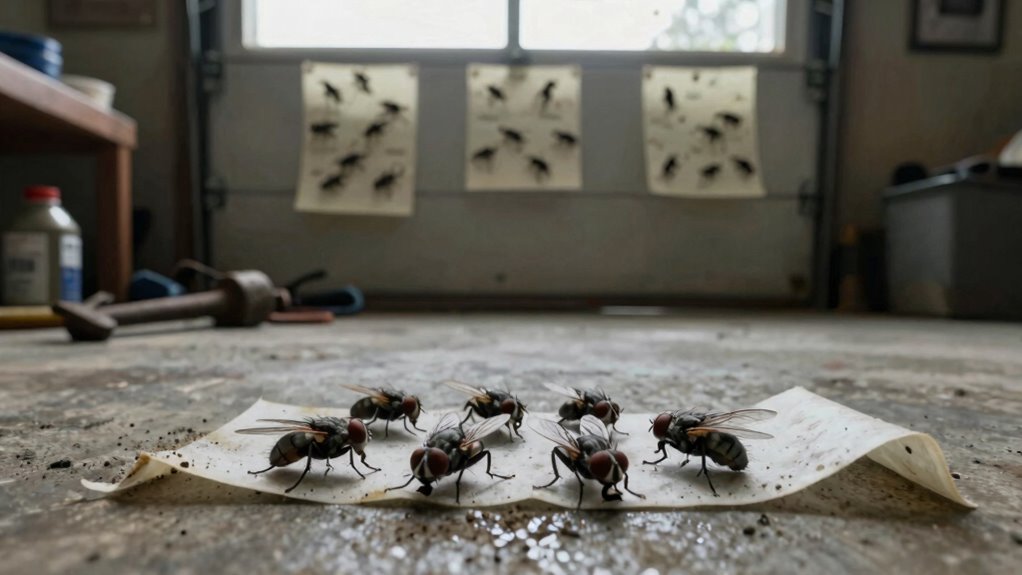
Facing a fly problem that a weekend of sticky traps and apple cider vinegar cups cannot solve is frustrating. When flies return within hours of cleaning, warning signs point to deeper issues that require professional pest control.
You spot clusters near walls, suggesting hidden fly sources like a dead rodent behind insulation. Your traps catch dozens daily, indicating a breeding site you missed during your inspection.
Flies persist through seasonal pest cycles, meaning they are not just visitors but residents. You see maggots in cracks or under shelving, and that is a direct call for professional exclusion services.
You have sealed everything you can, yet flies still enter through tiny gaps. Some traps can capture up to 20,000 flies, but if your DIY fails after two weeks, hire someone who knows where flies hide. A pro costs $150 to $400 to locate nests, apply commercial grade treatments, and install permanent barriers for long term fly prevention.
Bottom line: if your DIY fails after two weeks, hire someone who knows where flies hide. They will help you stop the infestation and keep your home protected.
Frequently Asked Questions
Can Flies Breed Inside an Attached Garage?
Yes, flies can breed inside an attached garage. Garage humidity levels, often high from damp corners or leaks, create ideal breeding conditions.
A single pet waste location left uncleaned is a prime spot for egg laying. Flies complete a life cycle from egg to adult in as little as 6 to 8 days.
So, that forgotten bag of dog poop is basically a fly nursery. Remove dampness and waste fast to break the cycle.
For effective pest control, you need to eliminate moisture sources and clean up organic debris. Look for a proven fly bait or insecticide spray to target active infestations.
If you want to stop flies from breeding, seal cracks and ensure proper ventilation. Buying a dehumidifier or a fly trap can help you control the problem quickly.
Do Dead Flies Attract More Flies to the Garage?
Dead flies don’t typically attract more flies through smell alone, but they can become an issue.
Decaying carcasses release pheromone trails that signal a safe spot for egg laying.
That means oviposition cues like tiny chemical signals may draw females looking for fresh breeding ground.
So although a single dead fly won’t summon a swarm, a pile left rotting could encourage new arrivals.
The lesson is a quick sweep saves you from a family reunion.
To prevent fly infestations from escalating, consider using a professional grade insecticide or a UV light trap for effective fly control.
If you already see a buildup of dead flies, apply a residual spray to break the breeding cycle.
For long term pest prevention, a regular cleaning routine combined with targeted fly baits keeps your garage pest free.
Why Are There More Flies After Using a Bug Zapper?
Wondering why there are more flies after using a bug zapper? The truth is that a zapper’s UV light acts like a beacon, pulling in new flies from your entire yard.
While some insects get electrocuted, many larger flies survive the shock and fly away disoriented. Worse, the zapper’s debris and dead body parts smell like a protein-rich feast to other flies.
That scent trail is basically a dinner bell for smarter, scavenger flies, so they swarm in from neighboring properties. You end up with a higher fly population than before, not a lower one.
For a smart purchase, pair your zapper with a sticky trap placed a few feet away. Those glue boards catch the survivors and the newcomers for under $10, solving the mess efficiently.
If you want long-term fly control, invest in a covered bait trap or an indoor electric fly killer with a catch tray. That combo reduces the breeding cycle and stops the “more flies” paradox.
For pest control pros, the key is to reduce attractants like garbage, pet waste, and rotting fruit first. Then use the zapper only as a supplement, never as your sole fly control solution.
Can Fly Traps Attract More Flies Inside From Outside?
Yes, fly traps can draw more flies inside from outside. This happens especially if the trap’s lure strength is too potent or its outdoor placement is too close to an open garage door.
A strong attractant near a gap acts like a dinner bell for nearby pests. Instead, place traps at least 20 feet from the garage or use weaker lures.
For example, a ten dollar UV light trap inside catches flies without pulling them from outdoors. Bottom line, trap location matters more than trap type for avoiding accidental fly invitations.
How Long Does a Garage Fly Infestation Usually Last?
A garage fly infestation typically lasts 6 to 8 days, which matches the lifecycle from egg to adult fly. But summer heat can speed that timeline up, while cooler weather slows it down considerably.
The real headache is that flies keep returning to lay more eggs. Without removing attractants like trash or pet waste, the cycle drags on for weeks.
Blocking entry points is your best fly control strategy to break that cycle. If you want effective pest management, invest in quality fly traps, sprays, or a bug zapper suited for garages.
Stop the source with proper sanitation and a targeted insecticide, and you won’t be counting days. For the best results, pair a residual spray with entry sealing, then monitor with sticky traps for ongoing prevention.


