
Flies in the kitchen don’t announce themselves; they just show up and never leave. Getting rid of kitchen flies means cutting off their food and breeding grounds, not just swatting a few stragglers.
Flies breed in drain slime, damp trash, and overripe fruit, so the fix starts with a weekly scrub and a biological drain cleaner. Storing flour and sugar in airtight glass containers, not flimsy twist ties, also shuts down their buffet.
Seal door gaps with sweeps; if a dollar bill slides under, a fly can too. For stubborn ones, a simple vinegar trap works without harsh chemicals.
This article breaks down each step so you can clear your kitchen fast and keep it fly-free. Read on for the full fix.
At A Glance
- Seal gaps around doors and windows using caulk and door sweeps to block entry.
- Clean kitchen drains weekly with a biological enzyme cleaner to eliminate breeding sites.
- Store food in airtight containers and refrigerate ripe produce to remove attractants.
- Use apple cider vinegar traps near bins to catch and drown flies effectively.
- Wipe counters daily with degreaser and rinse trash cans with vinegar to remove organic film.
Why Flies Invade Your Kitchen in the First Place
Flies don’t show up for the ambiance. They come for the buffet you’ve accidentally left out.
Flies don’t show up for ambiance. They show up for the buffet you left them.
A dirty dish or forgotten trash is basically a banquet hall. Climate impact matters too.
Warmer kitchens speed up their life cycle. A few flies can become a full invasion in under two weeks.
Entry seasonality means they’re worst in spring and fall. Cracks and open doors invite them in.
They aren’t pests. They’re opportunists drawn by dampness and organic decay.
You’re not unlucky. You’ve just left the welcome mat out.
Bottom line: flies don’t appear from nowhere. They follow your mess.
Clean up and they’ll take the hint. For effective fly control, seal entry points and use traps near bins, or apply a spray like BASF Alpine Fly Bait Spray that remains effective for up to 30 days.
How to Spot and Eliminate Fly Breeding Sites in Drains
You have scrubbed counters, sealed trash bins, and even apologized to that overwatered houseplant. But flies still buzz from the sink drain. That slimy film inside pipes is a fly nursery. Organic debris plus dampness equals a breeding paradise for pest flies.
| Spot | Solution |
|---|---|
| Kitchen sink drain | Scrub with a stiff brush, then pour a biological monitoring solution (enzyme-based cleaner, about $15 per gallon) weekly. |
| Floor drain | Remove the grate, mechanically clear debris, and apply a biological cleaner. |
| Garbage disposal | Grind ice cubes and lemon peel, then flush with boiling water. |
| Bathroom drain | Use a drain snake, then follow with a biological treatment. |
Biological monitoring means using traps or inspection to track fly activity. Structural sealing means caulking gaps around pipe entries to block adult flies. Combine both methods: monitor, scrub, and seal. No dampness, no muck, and no flies.
For effective pest control, target the drain fly breeding sites with these steps. This fly prevention plan stops the cycle before it starts. If you want to buy drain cleaners for fly removal, choose enzyme-based products for long term fly control. Seal pipe gaps with silicone caulk for complete fly elimination.
Regular weekly enzyme use prevents organic gunk from hardening into blockages that attract flies.
The Best Way to Clean Your Kitchen to Repel Flies
A clean kitchen is your best fly repellent, especially when you target the invisible organic film they feast on. Wipe every counter daily with a degreaser, because that grime is a fly buffet they cannot resist.
Scrub sink walls and the garbage disposal flange, then run hot water to flush debris. For drain maintenance, pour a biological cleaner down weekly to eat the gunk regular soap misses. Products that break down organic scum in drains eliminate the breeding ground for flies to prevent future infestations.
Tackle the trash can by rinsing it with vinegar and drying it fully before adding a new bag. Composting benefits your garden, but keep that bin outside or in the freezer for effective pest control.
Inside, empty counter compost daily and seal it tight to stop flies from breeding. Bottom line: hit the residue, manage the drains, and store scraps cold, or you will have tiny buzzing roommates you need to get rid of.
How to Store Food Properly to Keep Flies Away
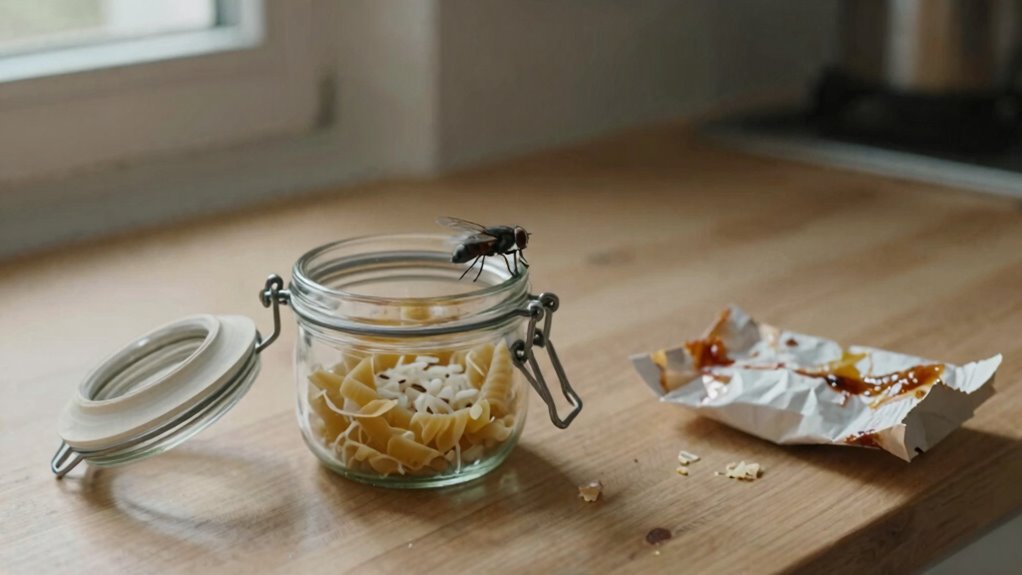
Why do flies treat an open bag of flour like a VIP lounge? Because crumbs, spills, and unsealed food create an all you can eat buffet for pest control.
Proper storage is critical for food safety and effective fly prevention. Use airtight containers with snap tight lids, not twist ties, to block scent trails that attract flies.
Transfer dry goods like flour, sugar, and cereal into hard plastic or glass containers. This stops flies from detecting or reaching your stored food.
Store fruits and vegetables in the refrigerator instead of on the counter. A single overripe banana can draw dozens of flies within hours.
Wipe down pantry shelves weekly to remove spilled crumbs and sticky residue. This simple step boosts kitchen hygiene and reduces pest breeding.
Use small covered bins for pet food and compost. These are prime fly breeding zones that need immediate containment.
This direct approach to fly control guarantees a cleaner kitchen with fewer uninvited guests. Spend $10 on proper containers and you save hours of frustration from recurring fly problems.
For produce that must stay out, use containers with fine mesh lids that block flies while still allowing airflow.
How to Seal Doors and Windows to Block Flies
Every fly that slips through a cracked door or torn screen is a fly that had to be invited. Those tiny structural gaps are like open invitations, even a quarter inch is enough.
Check windows and door frames with a flashlight at dusk. Light leaking through means flies can enter.
Perimeter lighting is a double-edged sword: it keeps burglars away but draws flies closer. Move lights away from doors, or switch to yellow bug bulbs for a simple fly control upgrade.
Seal gaps with silicone caulk or foam backer rod for a lasting pest proofing solution. Don’t forget pet doors, mail slots, or dryer vents during your home inspection.
A simple test: hold a dollar bill against a closed door. If it slides through, so can a fly.
The verdict: find and seal every gap, reposition lights, and flies stop showing up.
Non-toxic adhesives are safe around kids, pets, and wildlife, making them a smart choice for household pest control.
Step-by-Step: Install Door Sweeps and Window Screens
Door sweeps and window screens are your first line of defense against flies, yet most people install them wrong.
That mistake hits pest control hard because a single fly can go from egg to adult in just seven days in a warm kitchen.
A tiny gap can turn into a full infestation fast.
Fixing it takes only ten minutes and about twenty dollars.
Use the dollar bill test by sliding a bill under the door.
If it fits, swap the sweep for a tight seal that stops flies better than any spray.
Pick 16 mesh screens for standard flies and upgrade to 20 mesh for tiny fruit flies.
This blocks entry without killing airflow or natural ventilation.
Measure twice and cut once so the sweep touches the threshold at most a quarter inch.
Too low and it drags, too high and flies waltz right in.
Check weather seals every three months because sun warps them quickly.
Replace worn sweeps immediately to keep that barrier strong.
The bottom line is that proper installation is cheap, easy, and stops flies before they start.
A pairing a fan with targeted screens provides a bug-free zone by adding physical air movement to disrupt insect trails around entry points.
Where to Place Insect Light Traps for Maximum Effect
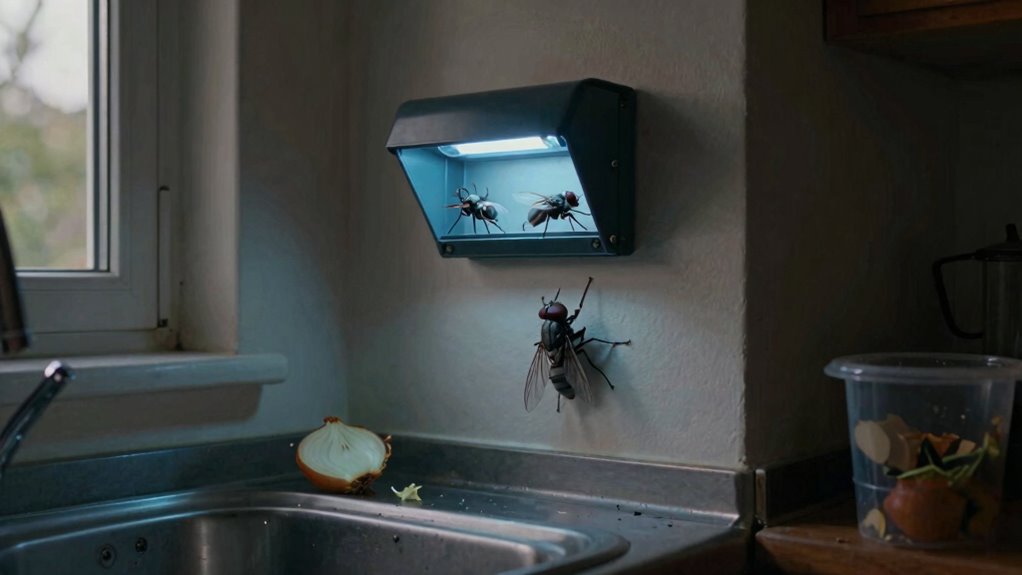
Placement determines whether an insect light trap actually catches flies or just decorates the wall. Getting the location right matters more than the unit’s price tag for effective pest control.
Placement decides if your insect light trap catches flies or just decorates the wall.
For indoor placement, mount ILTs at an ideal height of about five feet off the ground. This is eye level for a seated fly, so it works as a strong attractant.
Too high, and flies ignore it. Too low, and it acts like a floor lamp with no biting power.
Position traps away from windows, doors, and food prep surfaces. If the unit is visible from outside, it lures flies in rather than catching them inside.
Think of the trap as a bouncer, not a billboard. Stick to hallways, near trash bins, or in break rooms for best fly management results.
Never place ILTs directly over counters or food areas. Get the height and location right, and the trap does the heavy lifting for your pest control strategy.
For maximum effectiveness, place the trap in a dark, shaded spot away from competing lights like porch lamps to ensure the UV light serves as the strongest attractant.
How to Make a DIY Vinegar Trap for Fruit Flies
A DIY vinegar trap works because fruit flies are drawn to the smell of fermentation. Mix equal parts apple cider vinegar and water in a small bowl to create the bait.
Add a few drops of dish soap to break the surface tension, making the flies sink instantly. Cover the bowl tightly with plastic wrap and poke small holes with a toothpick.
Place the trap near your fruit bowl or trash can where you see the most activity. The vinegar scent lures them in, but the soap drowns them within hours.
Replace the mixture every two days for consistent pest control results. This natural fruit fly solution costs about fifty cents per batch and works best for light infestations.
Expect significantly fewer flies, not a complete miracle solution. For heavy bug issues, you may need a commercial fruit fly killer or professional pest management. Commercial traps often offer a longer lifespan and more targeted capture than homemade versions.
When to Use Chemical Fly Control (and When to Skip It)
Not every fly problem needs a chemical showdown. Skip the spray if you’re seeing a few stragglers, not a swarm.
Chemical overuse fuels insecticide resistance, making future infestations tougher to kill. Instead, rely on sanitation and biological cleaner efficacy in drains to break the breeding cycle, since that’s where most flies start.
Rely on sanitation and biological drain cleaners to break the fly breeding cycle, not chemical overuse.
Reach for pyrethrin-based sprays only when sticky traps and vinegar fail over several days, and you count more than 20 flies daily. But even then, spray early morning or late evening, away from food prep surfaces.
Resistance builds fast, so save chemicals for emergencies, not every fly. This targeted pest control approach keeps your kitchen safe and your fly treatment options effective.
Skip chemicals if fewer than 10 flies appear daily. Use sticky traps to confirm infestation size first, which is a smart fly monitoring step.
Rotate spray types if you must spray to slow resistance, and always check labels for food-safe application zones. Pyrethrins break down fast in sunlight and rain, so reapply every 7–10 days for ongoing control. Bottom line: when in doubt, clean first, spray last.
That means prioritizing drain treatments, trash sealing, and surface wiping before you ever buy a fogger or aerosol. If you still need a professional grade solution, contact a licensed exterminator for a long term fly prevention plan.
How to Use Sticky Traps and Mechanical Controls Safely
After you’ve ruled out chemical sprays, sticky traps and mechanical controls serve as the quiet, reliable backup for fly management. They don’t shout; they just stick around, literally.
The trick is placement, not power. Trap placement height matters: hang sticky strips about five feet off the ground where flies naturally cruise, but keep them clear of food prep zones.
For electric zappers or fan traps, ILT maintenance is non-negotiable. Clean the glue boards monthly and swap bulbs annually, since dim UV lures nothing but dust.
Position traps away from windows so outdoor flies aren’t drawn inside. Check sticky boards weekly, replacing when 70% covered because flies ignore crowded real estate.
Secure mechanical traps on stable surfaces, avoiding drafts that blow scent trails. Log catch counts to spot breeding hotspots; data beats guesswork.
Bottom line: safe, silent, and stubbornly effective if you mind the maintenance.
Electric swatters with 4000V safety mesh instantly zap flies without chemical sprays.
Natural Repellents That Actually Work Against Flies
Natural repellents can work against flies when used with a little strategy. The classic vinegar trap uses a shallow dish of apple cider vinegar with a drop of dish soap to drown them quickly. This pest control method costs about $10 for reusable traps and targets their attraction to fermentation.
Herbs like basil, mint, and lavender planted near doorways release scents flies find offensive. Critical oil barriers with peppermint or eucalyptus sprayed on window frames offer a chemical free zone. This repellent lasts a few days before needing reapplication for ongoing fly control. For a more comprehensive solution, broad-spectrum natural sprays can target multiple pests like flies and mosquitoes with botanical oils.
Herbs That Deter Flies
Some plants smell lovely to humans but bugs cannot stand them. Herbs like basil and lavender work as natural mosquito repellents while also helping tomatoes or roses grow better.
Their strong oils confuse flies and make it impossible for them to find food. Basil planted near windows repels house flies and mosquitoes with its pungent leaves. Price is $3 to $5 per seedling.
Lavender dried in bunches lasts for weeks on counters or near trash. Its strong scent masks food odors and keeps pests away naturally.
Mint is a bonus for teas but keep it in pots because it spreads aggressively. Crush leaves to release oils that flies hate. Cost is $4 per starter plant.
Rosemary sprigs on the grill or dried in sachets create a natural barrier near doors. It is both fragrant and functional for fly control.
Place pots near entry points and trash areas. Avoid vinegar traps discussed later in the guide. Bottom line: herbs cost under $10 total, last months, and smell better than bug spray. For broader pest issues, a product like Captain Jack’s Neem Max targets flies and other insects across all life stages.
Vinegar Trap Method
A simple glass jar, apple cider vinegar, and a drop of dish soap form the core of the vinegar trap method.
The trap works because the vinegar scent mimics fermenting fruit, and the soap breaks the liquid’s surface tension to drown flies fast.
For effective pest control, place these traps near sinks, fruit bowls, or trash cans where flies gather most.
Avoid windows or doors since outside air dilutes the lure and reduces kills.
This buying guide tip costs under a dollar and can catch dozens of flies in a single day.
It won’t tackle every fly species, but for fruit flies, it is a solid defense.
The verdict: this home remedy is simple, cheap, and surprisingly satisfying for DIY pest solutions.
For an alternative approach, plant-based active ingredients like peppermint or citronella provide non-toxic protection around kids and pets.
Essential Oil Barriers
Aromatic oil barriers offer a surprisingly effective first line of defense against flies and they smell much better than traditional bug spray. These natural fly repellents use concentrated plant oils to confuse fly senses, creating an invisible force field flies hate to cross.
Citrus barriers work especially well since flies detest lemon, lime, and orange scents that humans find refreshing. For a peppermint oil barrier, mix 15 drops with water in a spray bottle and apply to window frames and door thresholds every two days; this costs about $8 for a one-month supply.
Essential oil blends combine equal parts eucalyptus, lavender, and tea tree oil for a broad spectrum repellent that keeps flies away from countertops for up to six hours. To make a citrus barrier, simmer lemon peels in water for 30 minutes then pour into a spray bottle; this inexpensive trick repels fruit flies near sink drains effectively.
Apply your fly control spray on cotton balls placed near trash cans or entry points. Reapply after cleaning to maintain potency and keep your home protected. For longer outdoor protection, lemon eucalyptus lasts up to six hours against mosquitoes and four against deer ticks, making it a reliable barrier option.
How to Create a Year-Round Fly Control Plan for Your Kitchen
A year-round fly control plan for your kitchen requires constant vigilance, not a single effort. Schedule an annual perimeter inspection to check door sweeps and window screens for gaps.
If a dollar bill slides under the door, a fly can enter too. Air curtains near loading docks are a powerful barrier, but they cost around $2,000.
A more affordable solution is self-closing lids on all trash bins. Flies hate a sealed pantry as much as we hate an empty fridge.
Self-closing lids on trash bins keep flies out and your kitchen cleaner.
Combine these steps with monthly drain cleaning using a biological cleaner. This destroys hidden breeding sites and starves out fly larvae.
Check barriers once a year and fix any gaps immediately. Keep garbage sealed and drains clean so flies never get a foothold. For persistent issues, non-toxic bait traps can be hung discreetly 20 feet from the house to draw filth flies away from living spaces.
Frequently Asked Questions
Can Flies See in the Dark?
Flies can’t see in total darkness, but their compound eyes handle low light really well. At night, they go still and rest until dawn, which explains why a dirty kitchen attracts a morning swarm.
To prevent a fly infestation, deny them landing zones and food sources before dusk. Use effective fly control products like sticky traps or insect sprays to disrupt their active hours.
Flies react fast to sudden light and startle easily when they sense danger. They don’t have night vision like owls, but they manage in dim conditions.
The smart pest control solution is to clean surfaces and seal trash bins at sunset. Look for trusted fly repellents or indoor traps to stop them from gathering overnight.
Do Ultrasonic Pest Repellers Work on Flies?
Ultrasonic pest repellers do not work on flies. Fly behavior studies consistently show these devices fail to deter them.
Flies simply ignore the high frequency noise that is often marketed as a miracle cure. It does not bother their tiny brains, so save your money.
For a real pest control solution, focus on sanitation and sealing cracks around your home. Remove organic debris to eliminate fly breeding grounds.
A sticky trap like the $5 Catchmaster model beats a $40 ultrasonic gimmick every time. If you want a smart purchase, skip the noise and clean the kitchen.
Bottom line, effective fly prevention starts with proper hygiene and targeted products. Buy a proven fly trap instead of wasting cash on useless gadgets.
How Often Should I Replace My Fly Traps?
Fly traps should be replaced every two to four weeks, or sooner if they’re completely full. For sticky traps, place them near windows or drains, but swap them out once dust coats the glue and blocks their stickiness.
Homemade vinegar traps need changing every few days, since their scent fades fast and loses fly-attracting power. A full trap is a gross trophy, not a real pest control solution, so don’t wait until it’s overflowing.
Check your traps weekly as part of a simple home fly prevention routine. A clean trap means no flies nearby, or it’s broken and needs a fresh replacement.
When you’re buying new fly control products, look for high-capacity sticky sheets or refillable liquid traps for longer service life. For kitchen or bathroom infestations, pair your trap replacement with regular drain cleaning to target breeding spots.
If you want the best results, rotate trap types and reposition them every few weeks to cover entry points. That’s the smart way to keep your space fly-free and avoid buying replacements too often.
Are Coffee Grounds Effective at Repelling Flies?
Coffee grounds are not a reliable solution for keeping flies away from your kitchen.
Their strong smell might seem promising, but it rarely stops a persistent fly infestation.
If you are looking for effective fly control, skip the coffee ground hack and focus on proven pest control methods.
Sanitation and sealing entry points are your first line of defense against indoor flies.
For serious results, install insect light traps, also known as ILTs, mounted 5 feet high and away from windows.
These professional grade fly traps cost between $20 and $100 and deliver consistent, lasting protection.
Coffee grounds offer only weak, short term results that waste your time and effort.
Invest in a quality fly trap instead to buy the best solution for your home.
Will Keeping a Fan on Prevent Flies From Landing?
Yes, keeping a fan on will prevent flies from landing, and it is one of the most effective chemical-free fly control methods for small spaces.
A steady breeze from a standard 20-inch box fan on high creates enough air current to disrupt a fly’s approach, since these insects are weak fliers and struggle against even mild wind.
Think of it as landing disruption for tiny aviators, which makes it a smart choice for quick fly prevention in kitchens or dining areas. This fan-based fly deterrent works best within a 10-foot radius, so position it on your counter near food prep zones or trash cans for maximum coverage.
For a budget-friendly pest control solution, a basic box fan costs around $25 and requires no sprays, traps, or toxic ingredients, perfect for pet owners and families.
It won’t kill flies, but it buys you valuable time to identify and remove the source of the infestation, like rotting fruit or uncovered compost.
If you are looking for an inexpensive fly repellent for indoor use, this airflow strategy pairs well with sticky traps or a UV light zapper for layered protection.
For larger rooms, you may need two fans or a high-velocity floor model, but in a small kitchen, a single fan on high is usually sufficient to keep flies off your counters.
As a pest control expert, I recommend this as a temporary measure, not a permanent solution, since it does not address breeding sites or entry points.
To make a smart purchase, look for a fan with adjustable tilt and a washable grille, so you can direct airflow where flies hover and clean it easily after summer use.
This proactive fly prevention tactic is ideal for outdoor picnics, garage workshops, or restaurant prep areas that need immediate relief without chemical residue.
Remember to run the fan for at least 30 minutes before serving food, as flies need consistent breeze to avoid landing.
If you want a hands-off approach, combine mechanical fly barriers like window screens with a fan, and you will see a noticeable drop in landing attempts within hours.


