
How to Protect Dogs From Mosquitoes starts with one simple truth: mosquitoes aren’t just annoying for your dog—they can transmit heartworm, a deadly disease that’s expensive to treat. The real strategy is a layered approach that combines vet-approved pesticides, environmental controls, and natural repellents.
We’ll walk you through monthly heartworm prevention, permethrin spot-ons, eliminating breeding sites like standing water, and planting rosemary or catnip. You’ll also learn the best times for walks and why DEET is off the table.
This isn’t generic advice—it’s practical, budget-friendly, and proven for pet owners who want quick, effective pest control.
Stick with us, and your dog stays safe without the guesswork.
At A Glance
- Give year-round heartworm prevention; one missed dose risks infection and costly treatment.
- Apply dog-only permethrin spot-ons monthly; they repel mosquitoes for 3–4 weeks.
- Use a deltamethrin collar for six months of mosquito, flea, and tick repelling.
- Eliminate standing water weekly and use Bti larvicides in birdbaths or rain barrels.
- Walk dogs midday, avoiding dawn/dusk peaks; use pet-safe plant-based sprays, never DEET.
Why Year-Round Heartworm Prevention Is Non-Negotiable
Mosquitoes are basically flying hypodermic needles with wings, so heartworm prevention is not optional for your dog. It is the single most reliable weapon in your defense arsenal against this pest-borne disease.
Year round compliance matters because one missed dose leaves a 30 day gap where larvae can mature. The cost comparison is stark: prevention runs roughly $6 to $15 monthly, while treating an established infection can hit $1,000 or more.
Year round compliance matters because one missed dose leaves a 30 day gap for larvae to mature.
Treatment risks include embolisms, strict cage rest, and potential fatality, none of which belong on your budget. Prevention efficacy, when administered consistently, exceeds 99 percent, making it a clear winner for any pet owner focused on pest control.
Skip a month and you roll dice you do not want to load. Set a calendar reminder, buy a 12 month supply, and treat heartworm prevention as a non negotiable part of your dog’s health routine.
Your dog’s heart will thank you for this protective step. Use a topical solution or a fast-acting oral chewable to keep pests away and ensure total compliance.
3 Vet-Approved Topical Repellents for Heartworm Prevention
Two vet-approved topical repellents stand out for heartworm prevention. These are permethrin spot-on treatments and deltamethrin-impregnated collars.
Permethrin-based spot-ons, applied to the skin, repel mosquitoes for three to four weeks. A 4% deltamethrin collar can last from one week to over six months.
Both require careful weight-based selection and strict label adherence. Using DEET, by contrast, risks vomiting or seizures, so these proven options are far safer.
Permethrin Spot-On Treatments
Key features:
- Coverage lasts 3 to 4 weeks per application.
- Active ingredient is permethrin, often paired with dinotefuran for broader flea and tick control.
- Cost runs roughly $15 to $30 per month, depending on your pet’s size.
Bottom line: For a low-hassle, effective monthly shield against fleas and ticks, permethrin spot-ons are a solid choice.
You get reliable pest prevention without daily pills or messy sprays, which makes dosing simple and stress-free.
If you’re shopping for flea treatment for dogs, this topical solution kills pests on contact and keeps repelling new arrivals.
Buyers looking for convenience will appreciate that one quick application between the shoulder blades handles the job for weeks.
Just remember to use it only on dogs, since permethrin is toxic to cats and aquatic life.
Check your dog’s weight range before purchase to ensure you pick the right tube size for maximum protection.
For outdoor pets or those with heavy tick exposure, this monthly spot-on remains a practical, budget-friendly option compared to vet prescriptions. Similar permethrin-based sprays for clothing and gear can last up to 40 days or six washes, providing durable protection against ticks and mosquitoes without staining fabrics.
Deltamethrin Impregnated Collars
Deltamethrin impregnated collars provide a surprisingly long lasting shield against mosquitoes. One collar repels mosquitoes for up to six months, which is handy if you forget monthly spot on treatments.
This pest control solution also handles tick control and flea prevention, making it a multitasking marvel for outdoor dogs. But here is the catch: deltamethrin will not kill existing heartworm larvae, so it is a repellent, not a replacement for monthly heartworm meds. Like tick collars, this collar can cause allergic reactions in some dogs, indicated by itching or skin irritation after application.
Put the collar on in early spring, keep it snug, and remove it if your dog swims constantly. Water degrades it faster, so for lazy owners or high exposure pups, this is a solid, low effort first line of defense.
Pair with oral heartworm prevention for total coverage. That is the bottom line for complete protection.
How to Mosquito-Proof Your Yard for Heartworm Prevention
The simplest way to start mosquito-proofing your yard is to eliminate all standing water. Stagnant water in flowerpots, buckets, birdbaths, or low-lying spots is a prime breeding ground for mosquitoes, so dump and drain these areas weekly.
This single step removes the majority of larvae before they become biting adults that can transmit heartworm to your pets. For added outdoor pest control, apply a pet-safe insecticide spray to your lawn and garden beds, always following the manufacturer’s label for dosage and timing.
Choose a product specifically labeled for flea and tick suppression as well, since many yard treatments double as a barrier against multiple biting pests. After spraying, allow the treatment to dry completely before letting your dog or cat roam freely, and reapply after heavy rain for lasting protection.
Beyond liquid sprays, consider installing mosquito-repellent granules around patios and kennels to create a no-go zone for these insects. For a low-toxicity option, you can also place larvicide tablets in birdbaths and rain barrels, which kill mosquito larvae without harming pets or wildlife. Bti-based biological larvicides are an effective and EPA-registered choice for targeting larvae in standing water without affecting fish, birds, or plants.
Regularly mow your lawn and trim overgrown shrubs, since tall grass and dense shade give adult mosquitoes a cool place to rest during the day. Buy a mosquito trap for the yard’s perimeter to reduce local populations, especially near pet sleeping areas, which lowers heartworm transmission risk.
Finally, check that all window and door screens on your home are intact, because mosquitoes that get inside can bite your pet even after yard treatments. To buy the right supplies, look for heartworm prevention bundles that include yard sprays and larvicide, ensuring a comprehensive approach from garden to pet.
Eliminate Standing Water
Walk your yard like a detective on a minor, slightly damp case. Any standing water is a mosquito nursery, plain and simple.
Mosquito control starts here, since a single bottle cap can breed hundreds of biters. Flip over flowerpots, buckets, and toys.
Check rain gutters and birdbaths. Change that water weekly to stop mosquito breeding.
A low yard spot holding a puddle? Fill it with dirt for good. That kiddie pool? Dump it when not in use.
Even a frisbee on the lawn is a suspect. The math is simple: less water equals fewer mosquitoes.
This means lower heartworm risk for your dog with a simple pest prevention routine. It’s the cheapest, most effective step, no sprays, no fuss.
Your verdict: walk that yard weekly, eliminate every hidden drop, and protect your pup from the ground up. For additional protection, consider sprinkling natural essential oil granules around the yard to create an immediate vapor barrier.
Use Pet-Safe Sprays
Spraying your yard for mosquitoes is a smart way to protect your pets, not an attack on nature. It targets the insects that deliver heartworm disease to your dog. Pet-safe sprays with permethrin work great for dogs but must never be used on cats. A single pump bottle costs around $15 and treats 5,000 square feet, creating a weeks-long repellent barrier. Reapplication is needed after heavy rain or one month to maintain effective protection against mosquitoes and ticks.
Add mosquito netting over outdoor crates or resting areas for extra bite prevention. Mesh smaller than 0.4 mm keeps those biters out completely.
| Product Type | Key Specs & Use |
|---|---|
| Permethrin spot-on | 3–4 week protection, apply by weight, around $12 per dose |
| Deltamethrin collar | Repels up to 6 months, costs $25 to $35 |
| Ready-to-spray yard mist | Covers 5,000 sq ft, $15 to $20 per bottle |
| Mosquito netting | 0.4 mm mesh, $10 to $30 for crate covers |
Bottom line: pet safe sprays and netting reduce bite risk but never replace monthly heartworm meds. Always combine these pest control tools with your vet’s prescribed prevention plan.
What to Do About Standing Water Around Your Home
Since mosquitoes breed in standing water, eliminating it around your home is one of the most effective and cheapest ways to cut down on bites. This directly supports pet health and supports a cleaner environment by reducing pest pressure.
Empty anything holding water, including flowerpot saucers, kids’ toys, and clogged gutters. Birdbaths and pool covers also need weekly attention, as even a bottle cap can host larvae.
Mosquitoes only need a half‑inch of water to multiply, so toss or tip every container weekly. For larger containers, drill drainage holes to prevent future pooling. For any remaining water features you can’t empty, consider BTI-based larvicides that kill larvae for over 30 days while staying safe for pets.
Keep gutters debris‑free and fill low spots in your yard where puddles linger after rain. It sounds obvious, but most people find at least three offenders on their first walk around the house.
Bottom line: stand your ground on standing water, or stand itchy. The fewer breeding spots you maintain, the fewer mosquitoes you’ll have near your family and pets.
If you’re shopping for a pest control service, this habit reduces the need for chemical treatments. You’ll also save money on repellents and bite remedies, which is a clear win for any homeowner.
5 Mosquito-Repelling Plants That Are Safe for Dogs
Many dog owners don’t realize their garden can be a frontline defense against mosquitoes. Natural repellent plants like rosemary, catnip, peppermint, lemon balm, and lavender are safe for dogs and keep pests away.
Catnip is ten times stronger than DEET without the toxicity. Just don’t let your dog eat too much; a nibble is fine, a feast is not.
Rosemary uses a camphor like scent to disrupt mosquitoes. Peppermint’s menthol irritates mosquito antennae, making it great for pest control around your patio.
Lemon balm contains citronellal, a natural repellent you can buy as a topical spray. For shaded areas, pair these plants with mosquito bed nets for extra coverage.
The bottom line is these plants reduce bites but don’t replace heartworm meds. For best results, choose pest control plants that match your buyer intent for a dog safe yard.
For safe topical use, dilute catnip oil to a 1-2% concentration in a carrier oil before applying to a dog’s fur.
Dog-Safe Natural Repellents (Plus Cat Toxins to Know)
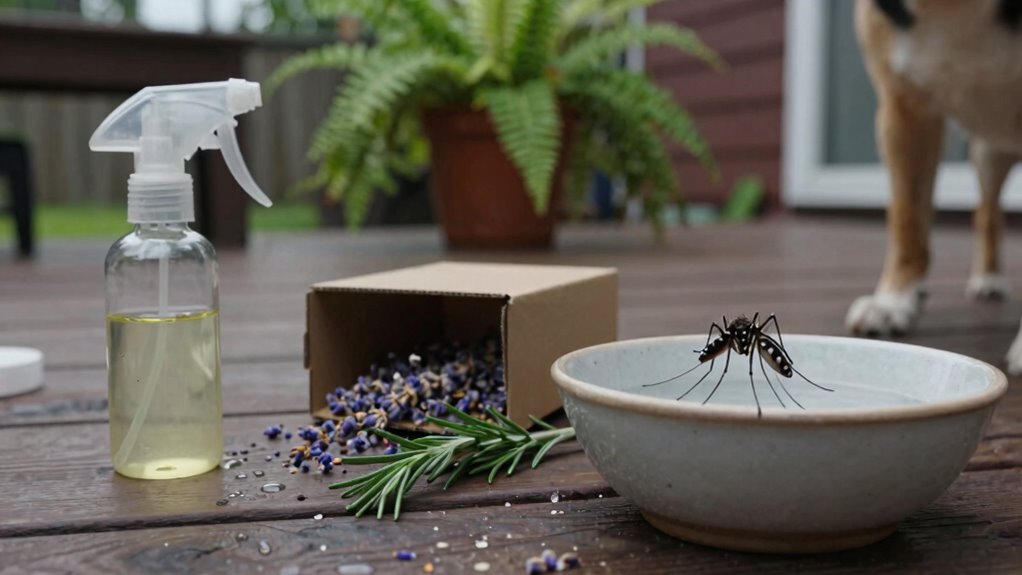
Bottom line: stick to plant-based sprays for dogs. Skip DEET entirely to keep your pet safe.
Remember that cats need separate, vet-approved repellent solutions. A little planning keeps tails wagging, not drooping. For extended outdoor protection, consider Permethrin-treated gear that bonds to fabrics for up to six weeks and can significantly reduce tick bites.
Walk Your Dog at These Times to Avoid Mosquito Bites
All those dog safe plants and sprays in the yard help, but the best pest control is sometimes just a different clock. Mosquito activity peaks at specific times, so shifting your schedule can slash bites.
The worst windows are dawn and dusk, when mosquitoes swarm. Walk your dog during the middle of the day instead, when the sun dries out their breeding grounds.
Here is the timing logic to keep mosquitoes away. Avoid dawn and dusk walks for better mosquito repellent results.
Mosquitoes are most active in these low light hours, especially near water. Stick to midday between 10 a.m. and 4 p.m. for a major dip in activity. Since these low light hours are when most repellents wear off fastest, this schedule also avoids relying on heavy sweating or reapplication timing.
Check local sunrise and sunset times each week, since seasons shift. Use a weather app to skip rainy or humid evenings that still spike activity.
Bottom line: rethink your routine for smarter mosquito control. A 30 minute walk at noon beats a 10 minute one at dusk.
Why DEET-Based Bug Sprays Are Dangerous for Dogs
DEET is the gold standard for human mosquito repellent, but it is a straight up poison for dogs. When a pup absorbs DEET through skin or licks a sprayed arm, it can trigger DEET toxicosis, a nasty condition marked by drooling, vomiting, and tremors.
Neurological symptoms like staggering or seizures can show up within hours, turning a simple walk into an emergency vet visit. Dogs don’t sweat like we do, so they groom constantly, meaning that lingering spray becomes an accidental snack.
Pet-safe alternatives like permethrin spot ons cost roughly $15 a dose and last a month, without the toxicity. The best flea and tick prevention for dogs avoids these risks entirely. For example, plant-based sprays with cedarwood oil provide effective, pet-safe pest repellent action without harsh chemicals.
Bottom line: leave the DEET for humans, grab a dog specific repellent, and let your buddy sniff the yard safely. Choose a vet recommended product for effective pest control and peace of mind.
Frequently Asked Questions
Can Heartworm Be Transmitted From Dog to Dog Directly?
No, heartworm cannot be transmitted directly from dog to dog. Direct transmission requires a mosquito bite because saliva transmission is impossible without that intermediate vector.
Infected dogs carry microfilariae in their blood. But these larvae cannot infect another dog through casual contact, shared bowls, or saliva.
Think of mosquitoes as the only delivery service for heartworm. The real risk is an infected dog attracting mosquitoes, which then bite a healthy dog.
That is why year round preventatives are non negotiable. For effective pest control around your home, use mosquito repellents and yard sprays to break the cycle.
If you spot mosquitoes or know heartworm is in your area, look for a fast acting mosquito killer for your yard. Making a smart purchase on a proven insecticide can protect your pet without relying solely on oral meds.
Consider barrier treatments like permethrin based yard granules or foggers for seasonal mosquito control. Pair that with a quality heartworm preventive from your vet for total protection.
How Long Does Heartworm Medication Stay in a Dog’s System?
Heartworm medication typically stays in a dog’s system for about 30 days, which matches the safe dosage interval between monthly preventative doses.
Drug metabolism varies by formula, so some break down faster, but monthly preventatives are designed to cover a full cycle of parasite protection.
Think of it as a 30 day shield that starts killing larvae shortly after you give it, then fades gradually.
For example, a typical macrocyclic lactone dose lasts around 30 days, so giving it on the 1st of each month keeps levels steady.
To get the best pest control results, stick to this schedule without gaps.
Skipping even a few days leaves your pup exposed to mosquitoes, which can transmit heartworm larvae.
Make a smart purchase by choosing a reliable topical or oral product with proven residual activity.
The bottom line is simple: don’t gamble with gaps in your dog’s heartworm prevention routine.
Are There Mosquito Repellent Wipes Safe for Dogs?
Most dog safe mosquito repellent wipes are not truly effective for long term pest control. Look for wipe ingredients like permethrin or citronella and avoid DEET, which is toxic to pets.
Application frequency matters because some wipes offer only a few hours of protection. Topical treatments and flea and tick collars often last weeks instead.
For quick walks, citronella wipes from brands like Wondercide at around $12 work well. But they are no substitute for monthly heartworm meds or a deltamethrin collar.
The bottom line is that wipes are a sweaty summer backup, not a fortress. It is better to be safe than scratching, so pair them with a proven insect repellent strategy.
Do Heartworm Preventatives Also Protect Against Other Parasites?
Yes, heartworm preventatives often cover other parasites, but it varies by the product. Many combine ingredients to tackle heartworm lifecycle stages plus intestinal worms like hookworms, roundworms, and whipworms.
Some even handle fleas, ticks, or ear mites in their pest control coverage. Think of them as multitaskers, not magic bullets. They won’t touch every parasite under the sun, so a broad spectrum option may be a smart purchase.
Always read the label or check with your vet to match coverage to your dog’s risky habits. A monthly chewable might just save you from buying separate dewormers, which is nice for your wallet and your sanity.
Bottom line is pick one that fits your dog’s lifestyle, not just heartworm alone. For best protection, look for topical entities like flea and tick ingredients embedded in the same dose.
This kind of combo keeps your yard and home safer from pet borne pests. It also simplifies your routine while targeting common worms and biting insects.
If your dog loves digging or exploring woods, a product covering tapeworms or ticks is a smart purchase. Your vet can recommend a brand that aligns with local parasite threats and buyer intent for convenience.
Can Indoor-Only Dogs Skip Heartworm Prevention Medication?
No, indoor only dogs cannot safely skip heartworm prevention. Indoor transmission happens because mosquitoes fly inside through open doors or windows.
Year round risk exists since heartworm is present in all 50 states. A single bite from an infected mosquito can transmit fatal heartworm disease.
Monthly preventatives cost roughly $5 to $15 per dose. Treatment for the disease is expensive and risky.
Skipping prevention is like locking the front door but leaving the window wide open. It saves pennies now but invites a thousand dollar problem later.
Keep your indoor dog on year round heartworm protection to avoid costly pest control issues. Ask your vet about affordable topical flea and tick products that also cover heartworm for complete indoor pest defense.


