
Making a tick-safe yard doesn’t have to be complicated or expensive. With a few strategic changes, you can drastically reduce tick habitat without turning your property into a chemical zone. Short grass, cleared leaf litter, and a simple gravel barrier can cut nymphal ticks by up to 70 percent. This guide covers the key steps—from mowing heights to deer fencing—so you can protect your family fast.
You’ll learn exactly where to place barriers, how to manage woodpiles and bird feeders, and when sprays are actually worth it. No fluff, just practical measures that work.
Ready to take back your yard? Let’s walk through the most effective moves you can make this weekend.
At A Glance
- Mow grass weekly to three inches or less, eliminating tick-friendly shade and moisture.
- Remove leaf litter, cutting nymphal tick numbers by up to 70 percent.
- Install a three-foot wide dry gravel barrier between lawn and woods.
- Place bird feeders at least 30 feet from the house, cleaning spilled seeds weekly.
- Clear yard debris, stone walls, and woodpiles to remove tick hiding spots.
Why Ticks Invade Your Yard (And How to Stop Them)
Ticks do not parachute into your yard. They arrive by hitching a ride on animals like mice and deer.
These pests then settle into damp, shaded spots you provide. To effectively control pests, you must cut off their ride through host exclusion.
After hitching a ride into your yard, ticks settle in damp, shaded spots you provide. Cut off their ride through host exclusion.
A fence enclosing at least 75% of your property can significantly reduce tick burdens on mice. This is a proven yard treatment investment of $1,000 to $3,000.
A six foot tall fence stops deer, but a three foot fence will not. Don’t expect miracles from wood chips alone for pest management.
Barrier effectiveness is real, but study data is shaky because only two properties had them. Think of a fence as your yard’s bouncer; gravel is just a velvet rope.
For professional tick control, fence first with a six foot barrier. Then add wood chips or gravel three feet wide.
Skip the gravel if deer visit your property. Your best protection starts with a strong fence. For additional defense on your skin and clothing, use a DEET-based spray that provides reliable protection against ticks carrying Lyme disease.
Start With Your Lawn: Mowing, Clearing, and Leaf Removal
A well-maintained lawn is your best defense against ticks. Frequent mowing keeps grass short, which limits tick survival and removes their cover.
Clearing leaf litter eliminates their hiding spots and reduces the dampness they need to thrive. To further guard against pest control problems, consider targeted tick treatments for your yard, such as natural granules that use plant-based oils to disrupt insect senses without harsh chemicals.
Focusing on these simple lawn care steps can reduce your need for professional pest control. If you already have an infestation, effective removal strategies protect your family.
Regular mowing and leaf removal are essential for long term tick prevention. For the best results, combine these habits with a pest control plan tailored to your property.
Mowing and Short Grass
Keeping your lawn short might feel like a chore, but it is one of the simplest ways to ruin a tick’s day. Ticks hate dry, sunny conditions, and short grass creates exactly that.
Grass height matters, so keep it at three inches or less by mowing weekly. Any taller, and ticks get the shade and dampness they need to survive.
For bare spots, consider a mulch depth of two inches around garden beds. Avoid using deep mulch near the house for effective tick control.
Ticks will not cross well-maintained wood chips, but thick mulch holds dampness and creates a tick-friendly zone. Stick to dry gravel barriers instead for a pest management approach.
Short grass, shallow mulch, and consistent mowing beat any chemical spray for yard defense. For even better protection, you can treat clothing with sprays that reduce tick bite risk by over 70%. This cheap and effective method makes your yard a tick’s worst nightmare.
Leaf Litter Removal
From leaf litter to lawn care, removing fallen leaves is one of the most effective steps for reducing tick habitat. Ticks crave damp, shaded leaf piles where they hide and survive harsh weather.
Clearing them dries out these microclimates, making yards less inviting for pest control. The impactful data shows leaf removal can cut nymphal tick numbers by up to 70 percent.
But the remedy isn’t free. Rake, bag, or compost, and the homeowner cost averages around $50 per visit if hiring help for tick control services.
That’s a small price for fewer itchy surprises. Rake weekly in fall, focusing on shaded edges near woods.
Bag leaves immediately. Don’t leave piles for compost, as they create ideal tick habitat.
Use a leaf blower on hard to reach spots under shrubs. Consider a mulching mower for thin layers, not deep drifts.
Bottom line: skip the leaf carpet and keep the yard bare. Ticks lose their hideout when you remove their preferred environment.
Clear Trash, Stone Walls, and Bird Feeders to Reduce Tick Habitats
Trash, stone walls, and bird feeders create prime hiding spots for ticks and the rodents that transport them. Studies from Dutchess County, NY, show yards with these features have much higher larval tick counts.
Clearing trash and stone walls is a straightforward, high impact pest control fix for your property. Relocate bird feeders far away from your house to reduce tick habitats.
Remove all yard debris and clutter to cut off the tick buffet and lower your pest control risks. This simple yard maintenance step serves as an effective tick prevention method for homeowners. For maximum protection, apply a properly diluted permethrin concentrate mixed with water to create a protective barrier band around your yard’s perimeter.
Trash Removal Benefits
Removing old junk from your yard might not sound glamorous, but it’s one of the cheapest tick control strategies you can adopt.
Research links trash piles to higher larval tick counts, since debris traps dampness and shelters rodents, which are ticks’ favorite ride.
Clear out broken furniture, old tires, and stray lumber to break that cycle and reduce tick habitat near your home.
Eliminate hiding spots: even a rusted bucket gives ticks a shady, damp haven.
Deter rodent hosts by removing junk piles, since mice love clutter and fewer piles mean fewer tick carriers.
Boost airflow across your lawn, because open spaces dry faster, and ticks despise dry conditions.
Bonus cleanup: use the cleared space for tomato gardening or simplify pool maintenance, since both thrive in tidy yards.
Haul away the junk, skip the sprays, and cut down on chemical pest control costs.
This free, chemical free method also lowers your need for professional pest removal services.
It is oddly satisfying and practical for year round yard care. Consider treating clothing with permethrin spray for additional protection against ticks when working in the yard.
Stone Wall Relocation
That charming stone wall in your yard might be hiding a pest problem. Research shows stone walls are linked to higher counts of questing larval ticks, especially those tiny nymphs waiting on low vegetation.
A complete stone wall removal eliminates this prime tick habitat, though it is labor intensive. For a simpler approach, consider a barrier material like a three foot strip of wood chips or gravel between the wall and lawn. To further protect yourself when working near these areas, consider using 20% Picaridin for up to 12 hours of protection against ticks.
This does not remove the wall but helps disrupt tick migration from it. Studies note that barriers show low statistical power for reduction, yet they are a practical, low cost step for tick control.
For best results in tick prevention, pair wall removal with other integrated pest management tactics. A wall free yard is one less tick hotel, reducing the risk of tick bites near your home.
The bottom line is that stone walls look nice, but ticks love them more. Choose a yard pest solution that fits your comfort and budget.
Strategic Feeder Placement
Clear out old furniture, mattresses, or random junk, because trash piles were linked to higher larval tick counts in studies.
Stone walls provide cool, damp crevices that ticks love, so relocate or seal them to break their habitat and reduce pest pressure.
Place bird feeders at least 30 feet from your house, keeping them away from play areas and outdoor seating to prevent tick transport.
Clean spilled seeds weekly, since leftover seed attracts rodents that carry ticks right into your yard for easy pest control.
For added protection, use a natural peppermint spray around stone walls and feeder areas to repel rodents carrying ticks.
Bottom line: clear the clutter, move feeders far from living spaces, and seal stone walls as a simple DIY tick prevention tactic.
This is a cheap, safe, and surprisingly effective start for homeowners looking to reduce tick encounters without hiring a professional.
Place Woodpiles and Play Sets Away From Tree Lines and Decks
Where should woodpiles and playsets go to keep ticks at bay? Away from tree lines and decks, that’s where. Ticks love shady, humid edges, and those spots are prime real estate for rodents that carry them.
A woodpile stacked near a deck or tree line is a tick motel with a welcome mat. For playset pest control, place the equipment in a sunny, dry area far from those edge zones. Wood chip placement under the set can help, but save that for the barrier talk later.
A woodpile near a deck is a tick motel. Put playsets in sunny, dry zones instead.
Think of it like this: you would not set up a picnic in a swamp. The same logic applies to tick prevention around your yard. Keep play areas central and open, and spot-check for stray wood stacks near the house.
A little distance goes a long way toward keeping the fun tick-free. This simple yard maintenance step reduces tick habitat without harsh chemicals. For ongoing protection, consider applying a residual barrier spray to the perimeter to keep pests from returning.
Install a 3-Foot Barrier of Wood Chips or Gravel Around Your Lawn
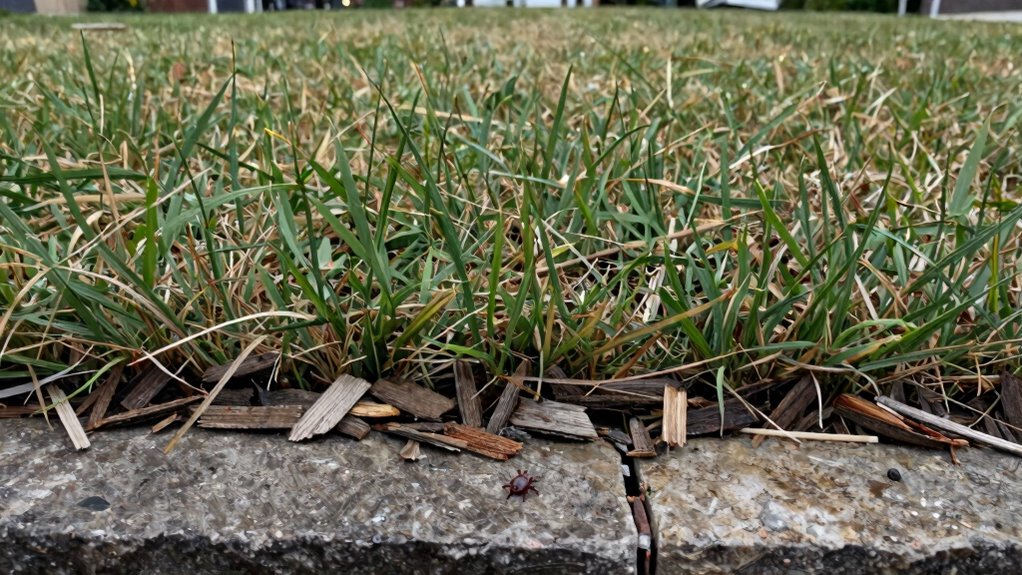
A three-foot barrier of wood chips or gravel is a simple, physical deterrent that ticks dislike crossing. It creates a dry, sunny no-man’s-land between your lawn and the woods, which ticks avoid since they need moisture and shade. Think of it as a moat, minus the alligators.
A chip barrier costs roughly $50 to $100 per cubic yard, delivered. A gravel barrier runs about $40 to $80 per ton and lasts longer. Both need a weed barrier underneath to stay effective. Refresh wood chips every couple years; gravel needs little upkeep. This approach aligns with non-toxic options that avoid harsh chemical residues in soil and water.
A few studies note barriers lack strong statistical proof, but they’re cheap, harmless, and beat spraying chemicals. Bottom line: lay down three feet of either material, keep it tidy, and you’ve made your yard a tougher tick sell. For trusted pest control results, this low-cost tick prevention method works well for homeowners. It is a simple lawn care upgrade that reduces tick habitat near your property.
Fence Your Property to Keep Deer and Rodents Out
Fence your property to block deer and rodents, and you are making a smart investment in long term pest control. This approach relies on solid data, not guesswork: enclosing at least 75% of your yard significantly reduces larval tick burden on mice, which means far fewer baby ticks in your outdoor space.
Think of that fence as micro-level deer population control, because deer will bounce off the barrier instead of munching through your garden. For mice and voles, you need rodent exclusion fencing with a buried mesh skirt six inches deep and quarter inch openings to stop persistent diggers. For enhanced security against slithering intruders, use 1/4 inch mesh steel fencing with at least 19-gauge thickness and corrosion-resistant coatings.
A six foot deer fence typically costs five to eight dollars per linear foot, which is a reasonable price for professional pest prevention. Skip flimsy plastic barriers and choose welded wire instead, since that material stands up to weather, hooves, and gnawing teeth.
This isn’t a moat, but it works reliably and keeps your yard safer from tick borne diseases. In short, installing proper fencing beats repeated panic over ticks and gives you peace of mind with every visit outside.
Keep Pets From Bringing Ticks Inside Your Home
That same fence that bounces deer away won’t stop a dog that walks through tall grass and waltzes back inside. Pets are tick taxis unless you take action with pest control. Regular tick checks are your first line of defense. Run fingers through their fur after every walk to feel for bumps. A fine-tipped tweezer from a stainless steel kit ensures safe removal of tiny ticks found during those checks.
Good pet hygiene means washing bedding weekly. Use vet-approved preventatives as part of your flea and tick prevention routine. Check your pet’s ears, armpits, and groin daily for hidden ticks. A fine-toothed comb works best after romps in the woods or tall grass.
Keep their sleeping area clean and vacuum floors near pet doors. Consider tick collars or spot-on treatments, which cost $30 to $60 per season. These treatments are a smart buy for long-term protection against tick-borne diseases. A few minutes of tick checks and simple pet hygiene stops hitchhikers cold.
Chemical Yard Sprays: When to Treat Your Lawn Yourself or Hire a Pro
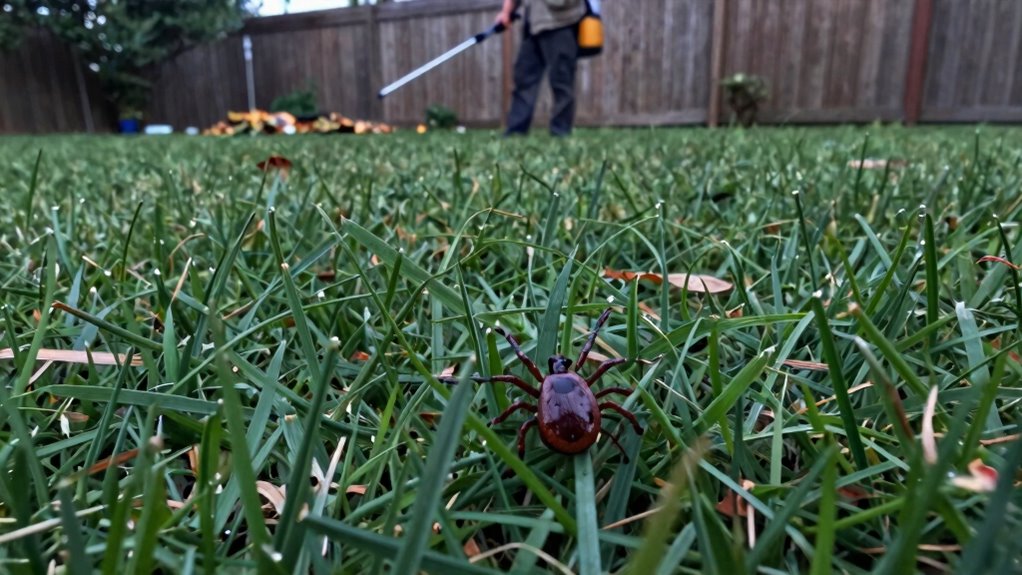
Chemical yard sprays with bifenthrin or permethrin can reduce tick populations but aren’t a one-size-fits-all solution.
A licensed professional should handle perimeter and shady area treatments for safety and proper coverage.
Open, sunny lawns usually don’t need spraying at all.
For the DIY route, stick to targeted application and follow label instructions exactly.
Overuse or misapplication can harm beneficial insects and pets.
Always prioritize pest control safety and spot treatments for best results.
Bifenthrin spray typically lasts about 4 to 6 weeks after application, so schedule retreatments accordingly.
Chemical Options Overview
Active ingredients like bifenthrin and permethrin kill ticks on contact for weeks. Focus application on perimeter zones and shady spots. Sunny lawns rarely need spraying because ticks hate a sunburn almost as much as you do. Bifenthrin granules provide 2 to 6 months of residual control when applied to tick habitats.
Homeowner sprays cost around $20 to $40 per gallon, covering about 5,000 square feet. This DIY approach requires careful mixing and timing for best results. Keep kids and pets off treated areas until dry, usually a few hours.
Spot treatments work well for targeted control, but do not overdo it. Overuse wastes money and annoys beneficial bees.
Professional Treatment Benefits
Professional yard tick control services cost $80 to $150 per visit, which beats buying a $30 sprayer and hoping you don’t mess up the mix. The upfront cost stings, but the peace of mind and precision often make it worth every penny.
Treatment scheduling is a key perk. They arrive on a set cycle, usually every three to four weeks, hitting shady perimeters and brush lines where ticks hide.
They use commercial-grade bifenthrin or permethrin, stuff that’s stronger than store-bought. They know exactly how much to apply, no guesswork and no wasted product. Higher concentrations like 10% or 13.3% require careful mixing to avoid ineffective pest control or increased toxicity, which pros are trained to handle.
Open lawns get skipped, saving you money. Hire a pro for reliable, hands-off control, especially if your yard abuts woods.
DIY Treatment Safety
Weighing DIY versus a pro for tick sprays is about matching the method to the situation. A DIY application can save money but demands careful handling of chemicals like permethrin. For example, factory-applied permethrin in clothing lasts up to 70 washes, but home sprays like Ranger Ready protect through only 5 washes or 40 days of sun exposure.
Without proper protective gear, anyone risks skin or respiratory irritation. The key is knowing when it is safe to go it alone.
Read the label, really. Every chemical has specific mixing ratios and safety steps.
Skipping them is like ignoring a recipe for a soufflé. It may collapse.
Gear up fully. Long sleeves, nitrile gloves, and a respirator mask are not optional.
They are the difference between a job well done and an itchy mistake. Target only shady edges.
Sunny lawns do not need sprays. Focus on wooded borders, woodpiles, and under decks where ticks lurk.
Timing matters. Treat in early morning or evening when wind is calm, avoiding drift onto plants or pets.
Bottom line: if you can follow directions and suit up properly, go DIY. If not, hire a pro for your pest control needs.
Which Yard Changes Are Proven to Work (And Which Aren’t)
A yard with leaf litter, tall grass, and old furniture is a luxury hotel for ticks. Trash and stone walls are proven culprits that boost larval tick numbers in studies.
Installing fencing on at least 75% of your property works to cut tick burdens on mice with measurable effectiveness metrics. But do not bank on natural repellents like cedar chips, as research shows they offer minimal and unproven impact.
Bird feeders, wood piles, and Japanese barberry show no strong link to tick abundance. So you do not need to panic over those items in your yard.
The bottom line is to prioritize removing junk and installing fencing for effective pest control. Skip the fancy eco-sprays that lack data on long term results.
A modest fence for about two dollars per linear foot beats any untested herbal fix. Clean first. Fence second for real tick prevention results.
For those already managing burrowing pests in the yard, castor oil-based repellents provide a proven, pet-safe option that disrupts pest senses naturally.
Build Your Custom Tick-Safe Plan: A Step-by-Step Action Checklist
A tick-safe yard is not one size fits all, but you can build yours with a pest control checklist that skips the guesswork. Start by auditing your space, think of it as urban planning for your own little ecosystem.
Then follow these steps. Remove hiding spots by clearing leaf litter, tall grass, and old furniture.
A tidy yard is a tick’s worst enemy and a key part of your tick prevention plan. Set barriers with a 3 foot wide strip of wood chips or gravel between lawn and woods.
It acts like a moat for ticks and is a simple way to reduce tick habitats. Manage hosts by installing fencing that encloses at least 75% of the yard to keep deer out.
A fence is cheaper than a deer’s dinner and supports long term tick control. Adapt to your region in dry areas like desert landscaping.
Focus on watering zones to avoid creating humid tick havens that attract pests. Urban planners might prioritize community wide leaf removal as a broader pest management strategy.
Bottom line is to customize your plan, tick the boxes, and enjoy a safer yard with less worry.
Frequently Asked Questions
Do Cedar Chips Repel Ticks More Effectively Than Gravel?
Cedar chips can give you a slight edge over gravel when it comes to repelling ticks, mainly because cedar oil has natural insecticidal properties.
That said, the effect is modest, and gravel wins big on long-term durability and zero maintenance.
For tick control around your yard, a three inch layer of cedar mulch can create a mild barrier, but it breaks down fast and needs yearly replacement.
Replacing cedar chips typically costs $50 to $100 per yard each season, while gravel just sits there requiring nothing from you.
If your priority is a low maintenance pest barrier for your property line, gravel is the smarter investment for lasting protection.
If you want a natural tick repellent that also adds a woodsy look, cedar offers a faint repellent edge, but pair it with other proven tick prevention methods.
Truth is, neither material alone will stop a tick infestation, so focus on integrated pest management like regular yard sprays, tick tubes, and keeping grass short.
For homeowners searching for “best tick repellent mulch” or “natural tick barrier for yard,” cedar chips can be a useful addition, but don’t bet the house on them.
Gravel gives you permanent structure and drainage, while cedar gives you a temporary aromatic deterrent that fades within months.
Make your choice based on whether you value longevity or a subtle botanical boost, and always combine any ground cover with professional grade tick control products for real safety.
Are Tick-Killing Nematodes a Safe Alternative to Chemical Sprays?
Yes, tick killing nematodes are a completely safe alternative to chemical sprays for yard pest control. These microscopic worms naturally target ticks in the soil without harming your kids, pets, or beneficial insects.
Soil safety improves because nematodes are naturally occurring and fully biodegradable. To apply them, simply mix the nematode powder with water and spray damp, shaded areas of your lawn.
This natural pest control treatment costs around $30 to $50 per application. Unlike chemical yard treatments, nematodes won’t kill ticks instantly, but they offer long term pest suppression.
Think of them as tiny living pest control ninjas that leave zero toxic residue behind. For any homeowner seeking low chemical yard care, this is a solid, safe choice for tick management.
Can Certain Plants Naturally Repel Ticks From My Yard?
Plants alone will not reliably repel ticks from your yard. Research shows plant diversity and habitat modification matter far more than any single repellent species.
Focus on removing leaf litter and tall grasses to reduce tick hiding spots. Some plants like lavender or rosemary may help slightly, but they are no substitute for physical barriers.
Use wood chips or gravel borders to create dry zones ticks avoid. Ticks laugh at your thyme, so stick with proven pest control strategies.
Clear debris consistently and mow your lawn short to limit tick habitats. Consider fencing to keep out deer and rodents that carry ticks.
These steps are cheaper and more effective than a tick themed garden. For serious tick control, combine habitat changes with professional grade pest control products.
Shop for tick repellent sprays and granules designed for yard perimeter treatments. Look for buyer intent phrases like “best tick killer for lawns” or “yard tick treatment” to find proven solutions.
How Often Should I Replace Wood Chip Barriers to Maintain Effectiveness?
Wood chip barriers should be replaced every one to two years. Over time, moisture retention breaks them down, creating a perfect tick haven instead of a barrier.
Barrier compaction reduces that loose structure ticks hate. Think of it like a cozy blanket for bugs, defeating the purpose.
Check yours annually. If it’s flatter than a pancake, swap it out.
Bottom line: fresh chips keep ticks out, old chips invite them in. For effective pest control, a fresh barrier is a smart investment in your yard.
Does Having a Compost Pile Increase Tick Populations in My Yard?
Compost piles can increase tick populations in your yard, but it’s not guaranteed when you follow proper pest control practices. The key issue is moisture levels, because ticks thrive in damp environments and compost’s microbial activity keeps things warm and humid.
Think of it as a tiny tick spa if you let it get too wet. That said, well managed piles that are turned regularly and kept dryish reduce risk significantly. A dry, hot compost bin wins for tick prevention, while a soggy heap loses every time.
The bottom line is to keep your pile aerated and dry, or ticks might invite themselves over. For effective tick management, use a moisture meter and consider adding a tick repellent barrier around your compost area. If you are shopping for pest control solutions, look for granular tick treatments or organic sprays that target humid zones near compost piles.
These products offer buyer intent peace of mind and are easy to apply in your backyard. A proactive routine with regular turning and dry conditions will keep your compost safe and your yard tick free.


