
Finding a bat entry point at home doesn’t have to turn into a wild goose chase. A simple dusk watch is all it takes to spot where they’re getting in before you seal anything shut.
Station yourself outside at sunset, focusing on rooflines and eaves for brown rub marks or piles of guano. Listen for faint chattery squeaks or scratching inside walls, which confirm an active roost.
Common gaps include warped siding, chimney flashing, and unscreened vents, anything half-inch or larger works. You’ll learn exactly how to pinpoint the hole without trapping bats inside, so sealing mistakes don’t become a real headache.
This guide breaks down the signs, tools, and step-by-step methods you need for a clean, safe seal. Read on to get your home bat-free without the stress.
At A Glance
- Conduct a dusk watch to observe bats swarming at entry holes.
- Look for brown rub marks near roof edges, eaves, and unscreened vents.
- Check for dry, black guano piles on walls or ground below cracks.
- Listen for scratching or chittering sounds inside walls 5-20 minutes before dusk.
- Inspect any gap ½ inch or larger, especially roofline junctions and warped siding.
Best Time of Day to Spot Bat Entry Points
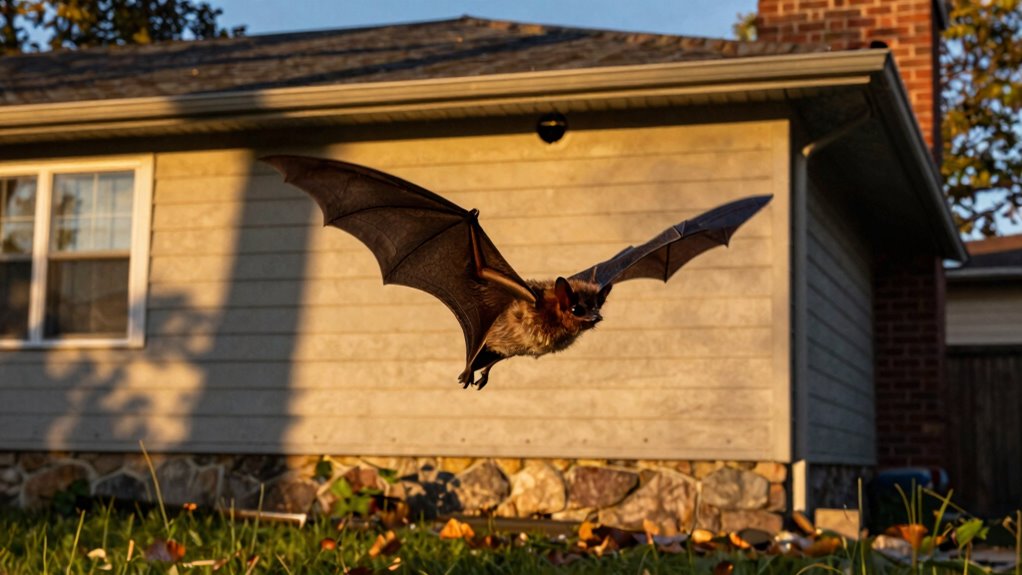
The best time to spot bat entry points is at dusk, when bats exit for night foraging. This gives a clear view of holes as they pour out near the roofline or eaves.
Watching from a distance helps you see exact entry gaps without disturbing the colony. Dawn also works for spotting bats returning from hibernation emergence.
Watching from a distance helps you see exact entry gaps without disturbing the colony.
At dawn, bats swarm around the structure before re-entering a specific crack or crevice. Observers should station themselves on each side of the building.
Look for brown rub marks near possible entry points, as these confirm frequent use. It is a waiting game, but you avoid guessing where bats squeeze in.
For reliable results during a home inspection, stick with dusk observations. This timing provides the clearest sign of bat infestation and helps plan exclusion services. Continuous operation for at least three weeks after exclusion ensures bats are fully deterred from returning.
7 Visual Signs of Bat Entry You Can See Outside
No need to camp out at dusk every night once you know what stains to look for. Rub marks appear as greasy, brownish smudges from bat body oils and dirt around entry holes.
These stains look like tiny, persistent signatures near roof edges, under eaves, and where siding meets gutters. Guano piles on exterior walls or ground below a crack are dead giveaways for bat entry.
Bat droppings are dry, black, and crumble easily, unlike rodent pellets. Stains from accumulated dirt and oil form along frequently used exit edges, creating a dark, polished look.
Check for scattered droppings beneath suspicious openings, especially near unscreened vents or warped flashing. If you see brown streaks and guano clusters, you’ve found a bat highway.
You need no guesswork, just a keen eye and a flashlight for effective pest control inspection. Once you locate the openings, you can seal them using one-way exclusion devices that allow bats to exit safely without reentry.
How to Do a Bat Watch at Dusk
Why wait for stains to reveal bat activity when you can see them firsthand. Station observers on each side of the building at dusk, from sunset until dark. Focus your pest control efforts on areas where bats first appear. They often swarm near entry holes, circling a few times before exiting.
This direct observation is vital for safety, as bat bites carry a rabies risk. Pinpointing exact bat entry points prevents surprises during exclusion work. If there are multiple emergence points, use different nights or extra observers. Dawn observations also work well, as bats swarm before entering the roost.
Patience is key when watching near the roofline, chimney, or eaves. Spotting them leave is your clear verdict no stains needed. A dusk bat watch is the cheapest bat inspection method. It costs just your time and reveals exactly where to seal for permanent bat control. Combining these observations with humane deterrent sprays can help ensure bats do not return after exclusion.
What to Listen For: Bat Squeaks, Calls, and Scratching
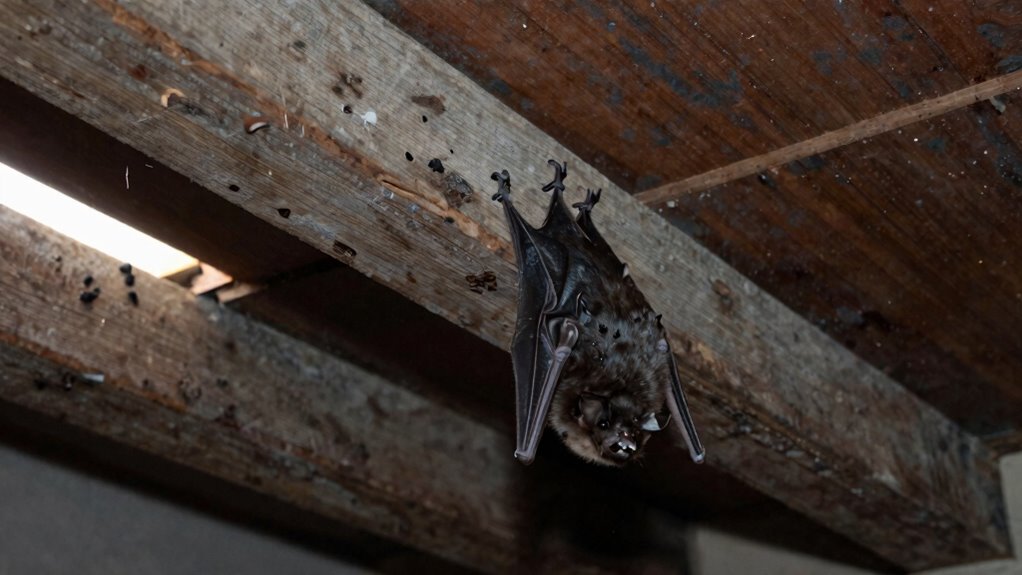
As dusk settles, listen near the roofline for the faint, chattery squeaks bats make before heading out. It sounds like tiny, excited arguments.
Those high-pitched calls, often just within human hearing, are your cue that bats are stirring. They are a dead giveaway of a roost above and a clear sign you may need professional bat control.
For a more concrete clue, press an ear to the wall at night. Scratching or scurrying sounds inside signal bats are moving through their entry points, not ghosts.
This noise often means bats are accessing your attic or walls, requiring immediate exclusion services. If you hear these animal sounds, it’s time for a thorough pest inspection.
Schedule a wildlife removal visit to address the problem before the colony grows. Taking action now prevents costly damage and health risks from bat guano.
Using a high-density mesh netting with at least 256 holes per square inch can block tiny Chagas vectors if you also need protection from kissing bugs.
Sunset Vocalizations
Sunset is showtime for bat detection and pest control scouting. As light fades, colonies stir inside walls or attics, producing distinct pre-flight vocalizations.
These high-pitched squeaks and chattering calls signal they are awake and readying to exit. Listening near potential entry points at dusk helps pinpoint roost locations.
| Sound Heard | What It Indicates |
|---|---|
| Rapid chittering | Active group preparing to emerge; common during summer migration patterns |
| Single, sharp squeak | Disturbed individual, often near an entry crevice |
| Faint rustling plus calls | Bats shifting positions before departure; suggests a nearby opening |
These noises occur 5 to 20 minutes before first bats exit. Focusing on rooflines, eaves, and chimney gaps maximizes results for removal.
Most echolocation calls are ultrasonic, but social squeaks fall within human hearing. This makes dusk listening a simple, effective tool for bat inspection.
If you hear these sounds, contact a professional for bat exclusion services. Early detection prevents larger infestations and costly repairs.
Using a one-way bat door allows bats to exit safely while blocking re-entry for humane relocation.
Audible Scratching Signs
After sunset, when the colony’s pre-flight chatter fades, a different sound emerges from walls and attics: audible scratching.
This isn’t a casual mouse rustle.
It’s a frantic, persistent scrabbling that marks nocturnal bat activity.
Listen for a distinct, rhythmic scratching, often coupled with faint squeaks, as bats crawl through narrow voids.
They’re not trying to be quiet.
They’re just bad at it.
These audible scratching signs are your best clue for pest control inspection.
Unlike high-frequency echolocation calls, which most humans can’t hear, scratching is low enough frequency for any ear.
It’s especially loud near roosting spots like unscreened attic vents or gaps around chimney flashing.
If you hear it consistently after dark, you’ve pinpointed a colony’s commute.
Check these spots first: behind eaves, near roof peaks, and under loose siding.
That scratching sound is a bat GPS telling you exactly where to look for bat removal services.
Follow the noise and you’ll find the hole.
Sealing these entry points often requires flexible wire mesh to block airflow while keeping bats out.
Schedule an inspection soon to prevent structural damage and health risks.
Indoor Tricks to Find Hidden Bat Holes
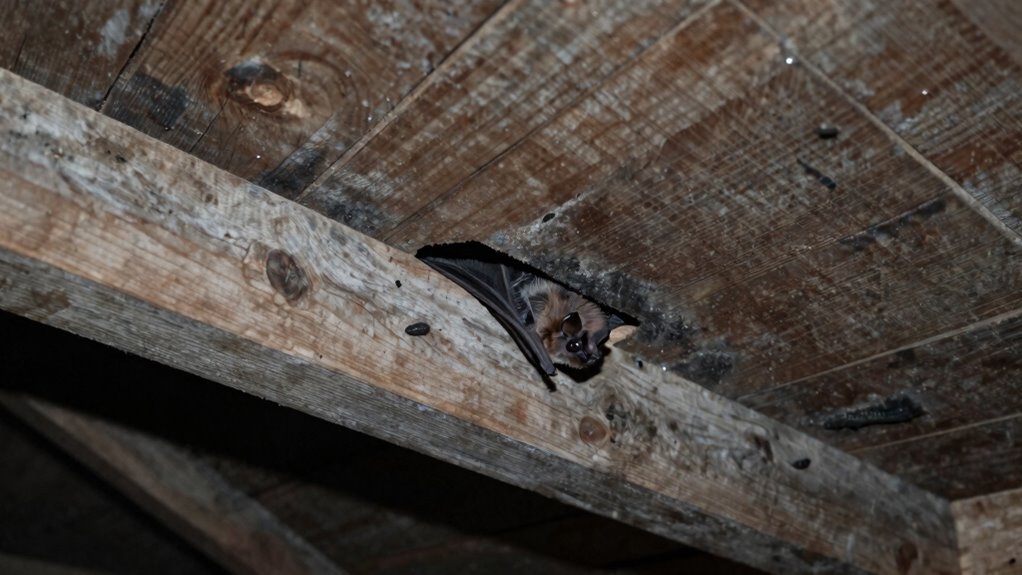
Flashlight sweeps help you spot light entering from outdoors. Guano sniff tests reveal droppings that mark active roosts.
A borescope poke checks tight crevices without climbing. Always examine dark gaps where pipes meet walls.
Listen for scratching sounds near potential entry points. Droppings near vents or eaves often indicate a hole just above.
These indoor tricks can help you locate bat entry points quickly. Stainless steel mesh offers rustproof durability for sealing these holes, while finding and sealing them is key to lasting pest control.
Don’t Forget These Uncommon Entry Points
Indoor tricks are great for finding holes, but they mostly focus on attics and walls. Don’t forget these uncommon entry points for effective pest control.
Cellar hatch gaps, for example, are a prime suspect. That rusted, downhill-angled bulkhead door often leaves a half-inch gap, perfect for a bat’s skinny frame.
Cellar hatch gaps leave half-inch openings, ideal for bats to slip through unnoticed.
Likewise, pet door entries allow curious bats to simply stroll inside. Add a chimney without a proper cap, and you have a vertical superhighway for rodent exclusion.
Inspect rotted eaves where building materials separate. Any gap ½ inch or larger suffices, though it seems too small for wildlife removal.
Check roofline junctions, warped siding, and old window frames. Bats exploit negligence, so schedule a home inspection to catch these vulnerabilities.
Crawl around the foundation at dusk, but never seal the hole with bats trapped inside. Always call a professional for safe bat removal.
How to Seal the Entry Point Without Trapping Bats
Timing is everything when sealing entry points for bat removal. Bats must be out before you close them in for good.
One-way exclusion devices let bats leave but not return. These netting or tube units cost roughly $10 to $30 per unit at local hardware stores.
After all bats have exited, seal every gap with caulk or mesh. This ensures no bats are trapped inside for a humane and permanent solution to your pest control needs. You can also place tamper-resistant bait stations in nearby areas to manage any remaining rodent pests after the bats are excluded.
Timing Exclusion Methods
A sealed entry point is a useless trick if it traps a bat colony inside. Timing exclusion methods prevent this by working only when bats are out foraging.
This means installing one way valves after sunset, when the colony has left. These valves let bats exit but prevent re-entry, a clever solution for tight schedules.
Exclusion netting, a fine mesh draped over openings, achieves the same goal. Bats push through to leave but cannot squeeze back in, acting like a one way door for winged tenants.
The trick is patience: wait until you’re certain the roost is empty. Seal all other holes first, then install these devices.
Leave them in place for at least three to four days to guarantee no bats remain trapped inside. This method ensures humane bat removal without harming the colony. For ongoing prevention, applying a thick, enzyme-based gel to drains can break down organic buildup that attracts pests.
One-Way Exclusion Devices
One way exclusion devices are essential for effective bat control without harming the animals. They allow bats to leave for nightly feeding but block their return, solving the problem humanely.
For a colony of fifty or more bats, a single netting tube over the main entry point works best. You can find these at local hardware stores for around twenty dollars.
Smaller gaps are better suited to funnel style devices, which cost about fifteen dollars each. Install them at dusk when bats are naturally exiting to forage.
Before installing, seal all other openings so the exit device is the only way out. Check the setup daily for three days, which gives bats a reasonable window to leave completely.
These removal devices offer a polite exit, then you can finish the job permanently by sealing the final gap. It is an efficient bat proofing method without the guilt or the mess. Similar to humane exclusion devices used for squirrels and other wildlife, these tools avoid chemicals while letting animals leave structures safely.
Seal All Entry Points
Sealing the entry point is the final, satisfying step like putting the last piece in a puzzle, except the puzzle is your attic and the piece is a chunk of caulk. Never seal while bats are inside; you will trap them.
Wait until after a thorough roof inspection confirms they have exited, usually via one way devices used first. This is not a DIY forgiving job.
Pros fill gaps with caulk, steel wool, or expanding foam for about 20 to 50 dollars per tube. A professional remediation team ensures no subtle gaps remain, like where chimney flashing warped.
They will also patch torn shingles and close vents properly. Miss one half inch hole, and the colony returns.
Bottom line, hire pros for bat exclusion. Their roof inspection catches what you will not.
Expect costs from 300 to 800 dollars for a full seal. That price is worth it for a bat free attic and no trapped wildlife regrets.
For homeowners also worried about birds, transparent gel deterrents provide a long-lasting, invisible barrier to protect AC units from pigeons without harming surfaces.
How to Prevent Bats From Coming Back
After the bats are out, the real work begins. Preventing their return means sealing every gap, but first understand their seasonal migration patterns.
Bats leave in fall, so exclusion work is best done then.
Don’t skip cleanup, as guano health risks are real and can cause lung issues.
Seal all holes half-inch or larger with caulk, steel wool, or hardware cloth.
Check attic vents, chimney flashing, and siding gaps carefully.
One missed spot and they’re back, so thorough bat-proofing is essential.
Install a one-way exclusion device like a bat cone before sealing.
It lets them leave but not re-enter for lasting pest control.
Watch at dusk to confirm they’re gone permanently.
Then, seal the entry with durable materials.
For extra protection, add bat houses nearby as alternative roosting spots.
Bottom line, seal tight, clean up thoroughly, and exclude smartly.
That is how you keep bats out for good with professional pest removal techniques.
Frequently Asked Questions
How Do I Know if Bats Are in My Walls?
Smell detection is a clue, but not proof. A musty, ammonia like odor often signals a colony.
Listening for sounds like squeaking or scratching at dawn or dusk is more reliable. Those noises, plus dark stains or droppings near gaps, confirm activity.
Think of it as a bat house party. You’d hear it through the walls, so your ears are your best tool
Can One Bat Entry Point Mean a Larger Colony?
A single entrance can absolutely mean a larger colony. Bats are social creatures that often share one well concealed hole.
Colony size isn’t determined by entrance count but by signs like guano piles. These droppings indicate heavy traffic and are a clear pest control red flag.
For precise numbers, acoustic surveys detect vocalizations and reveal population density. If you spot a single entry point, you may need professional bat removal to address a large roost.
One hole might hide dozens of bats. Think of it like a crowded elevator with one door.
Before you buy exclusion products or call a technician, check for multiple signs of infestation. Relying on one clue alone could mean underestimating the colony.
For smart pest control decisions, always confirm with guano, odors, and noise. That way you choose the right bat repellent or exclusion service.
Do Bats Return to the Same Entry Point Every Year?
Yes, bats do return to the same entry points year after year, often for decades. They learn these routes during bat migration and return to them after bat hibernation.
A colony treats a familiar gap like a loyal pet uses a dog door, relying on reliable grooves. So if you seal one small hole without evicting them first, they will just find a slightly cracked eave or a loose vent next season.
That is why watching at dusk is critical for effective bat exclusion. It shows every spot they use, not just last year’s favorite, and helps you target all entry points before installing a one way bat valve.
For homeowners needing bat removal services, this behavior means a professional inspection is essential. Sealing all gaps with durable materials like caulk or steel wool prevents re entry and protects your attic from guano buildup.
If you want a permanent solution, consider a full bat exclusion setup with exclusion netting and a bat cone. Searching for bat control near me can connect you with licensed experts who use these products to solve infestations fast.
What Should I Do if I Find Baby Bats Inside?
If you find baby bats inside your home, do not touch them. Call a bat rescue specialist or wildlife rehabilitation center immediately.
Baby bats need very specific care, and handling them improperly can harm them or you. In many areas, it is additionally illegal to disturb them, which is why professional pest control removal is essential.
A wildlife expert will safely remove the pups and reunite them with their mother. Trying to handle a bat infestation yourself usually ends badly for everyone.
The best approach is to schedule a professional bat inspection and exclusion service. Look for a local pest control company that offers bat removal services and humane wildlife management.
Remember that bat pups cannot survive without their mother’s milk and guidance. For your safety and the bats’ wellbeing, leave it to the experts who use proven pest control products and techniques.
How Long Does It Take to Safely Seal a Bat Entry?
Sealing a bat entry usually takes one to three days, but factors like colony size and hole count can stretch it to a week. Weather also impacts your timeline, since rain delays caulking and mesh installation.
Expect to seal 10 to 20 holes, with costs running $5 to $15 each. A bat might slip through reopened gaps, so a thorough bat exclusion inspection is critical.
The bottom line is to plan for a weekend project, but don’t schedule a barbecue. For a safe seal, choose professional bat proofing services and ask about one way doors for humane removal.


