
Why do you still have mice in a clean house? It’s not because your kitchen is dirty—mice don’t care about your cleaning schedule.
They squeeze through gaps the width of a pencil, drawn by micro-grease on stovetops and pet food dust near bowls, not crumbs.
Your spotless home still offers calories, and mice are calorie-focused survivors. Sealing quarter-inch gaps with steel wool or copper mesh is step one, since foam gets chewed through.
Traps finish what sealing starts, but the real fix is knowing where they’re entering.
This article walks you through the exact entry points and how to block them for good. Keep reading to find out where mice are getting in and how to stop them permanently.
At A Glance
- Mice enter through gaps as small as a pencil, regardless of home cleanliness.
- They seek warm nesting spots like wall voids and under appliances, not dirt.
- Food sources include grease, crumbs, and pet food dust invisible to humans.
- Breeding is rapid; a few mice quickly become a large hidden colony.
- Clutter and cardboard boxes provide nesting materials and shelter, inviting infestation.
How Mice Get Into a Clean Home (Hint: It’s Not About Dirt)
Mice find their way into even the cleanest kitchen by squeezing through gaps as small as a quarter inch. You might spot them around a loose pipe or a cracked foundation vent.
A spotless home reduces food odors but does not block these openings. Their tiny bodies and constant gnawing quickly create new entry routes.
Seasonal patterns also drive them indoors as temperatures drop in fall. They seek warmth and shelter, ignoring spotless counters in the process.
For example, a pencil sized gap behind a stove becomes a luxury highway for mice. To protect your home, inspect monthly and after any weather changes.
Seal every visible crack right away for effective rodent control. Otherwise, these pests will treat your clean home like a free motel.
Applying a spray with peppermint essential oil around entry points can help deter them from exploring further.
Seal These 5 Tiny Gaps and Cracks You Keep Overlooking
Knowing where mice squeeze in is only half the battle. Sealing the five most overlooked tiny entry gaps prevents gnaw damage from creating new routes.
First, check gaps where utility lines enter, like gas pipes or cable wires, which are often forgotten. Second, inspect the weep holes in brick veneer, those tiny slots meant for drainage are perfect mouse highways.
Third, seal gaps around dryer vents with heavy-gauge steel mesh, not plastic, as mice chew through soft materials. Fourth, look at the foundation where siding meets concrete, even a quarter-inch crack invites entry.
Fifth, check attic soffits for loose vents. Use copper mesh and caulk for gaps, never expandable foam, which mice dig through.
A $10 roll of mesh stops hundreds of dollars in future damage. For professional-grade rodent exclusion, pair this with routine home pest inspection and weatherproofing services.
These small fixes block common mouse entry points and reduce the need for costly mice extermination later. Prioritize durable materials like stainless steel wool or copper mesh for long-term pest prevention.
Why Pet Food and Pantry Items Still Attract House Mice
Persistence, not filth, is what makes a mouse problem stick. Even a spotless kitchen offers a buffet if food isn’t sealed.
Persistence, not filth, is what makes a mouse problem stick.
Pet food and pantry staples like cereal or pasta are prime targets. Mice don’t care about your cleaning schedule; they care about calories.
Their nocturnal habits mean they raid at night, silently. Once they find a meal, they lay down scent trails for others.
It’s a mouse highway, right in your cabinets. For effective rodent control, you need to break that trail fast.
Here’s the deeper truth about mouse prevention:
Cardboard and thin plastic are useless. A one-inch tear is a door.
Open bags are an invitation. Airtight containers, like glass or thick metal, are the only real defense.
Even crumbs act as a starter kit. A single dropped kibble fuels a scout.
If you’re looking for a pest control solution, start with food storage upgrades. Seal it, or share it.
Stop feeding them, and they’ll leave. That’s the simplest way to get rid of mice for good.
For example, containers with silicone gaskets and locking hinges block the scent trails that mice use to raid pantries.
What Mice Eat When Your Kitchen Is Spotless
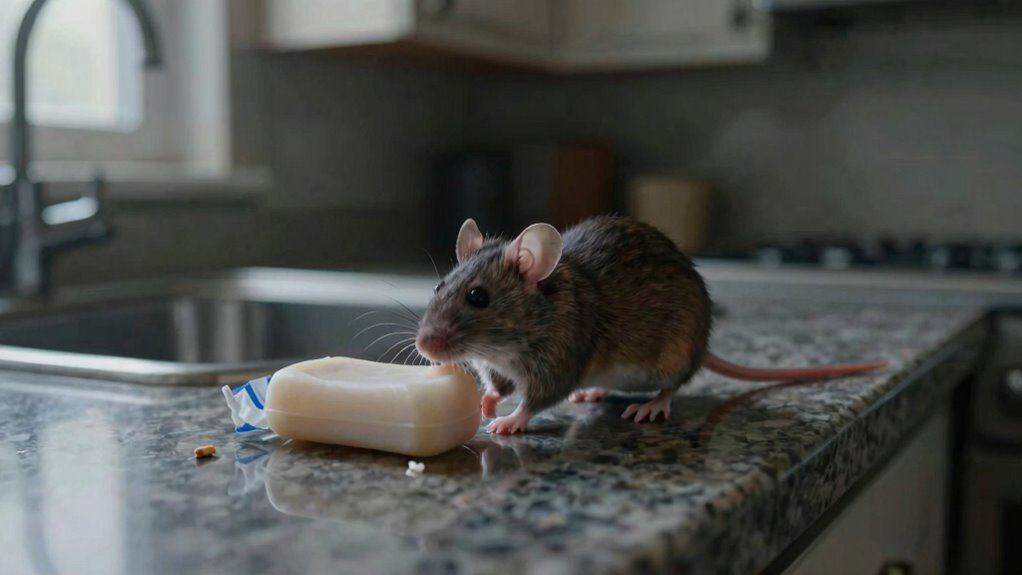
Even in a spotless kitchen, mice can survive on tiny crumbs and grease specks. They are especially drawn to high fat residues like butter smears or single food particles behind appliances.
Professional pest control experts confirm that these invisible bits are enough to sustain a rodent. For effective rodent prevention, focus on deep cleaning hidden areas where grime collects.
A simple wipe down of countertops may not remove all food sources. To keep mice out, vacuum under the fridge and wash behind the toaster regularly.
These small steps can reduce the chance of an infestation. Consider sealing cracks and gaps to block entry points for lasting rodent control. Using concentrated essential oils in spray or pouch form can also cover entry points and nesting areas to further deter rodents naturally.
Feeding On Crumbs
Imagine a mouse, a tiny four-legged burglar, tiptoeing across your spotless counter at 2 a.m. It’s not feasting on leftovers; it’s scraping microscopic debris, like a flour dusting or a sugar grain.
Even clean kitchens hide crumbs in crevices, under appliance feet, and inside drawer tracks. These fragments, mere milligrams daily, sustain a rodent’s metabolism, so pest control starts with eliminating those hidden food sources.
For a long-term rodent prevention plan, focus on three sneaky zones. First, micro-crumbs hide in hinge gaps and seal edges, invisible to your routine wipe-down.
Second, sticky residues from spills, such as syrup or oil, cling to surfaces and become an edible film. Third, pet food dust settles near bowls, creating a protein-rich buffet that attracts mice and rats alike.
Mice also face aerosol dangers from cleaning sprays, but they’ll brave those fumes for a crumb. Heater risks, like warm motor housings, offer cozy dining spots near vents, so inspect those warm areas during a home pest inspection. While tackling these hidden food sources, consider that a higher DEET concentration in repellents can similarly provide up to 10 hours of defense for outdoor areas, but it is no substitute for removing the crumbs indoors that lure rodents.
Bottom line: don’t just wipe; vacuum cracks weekly with a crevice tool. A crumb-free zone is a mouse-free zone, so book a professional pest control service if you spot droppings or gnaw marks.
Vacuum under fridge coils, behind the toaster, and along baseboard seams to break the food chain. For the best rodent extermination results, combine this habit with sealing entry points and using bait stations strategically.
Remember, even a single stray crumb can sustain a mouse for a day, so consistent sanitation is your cheapest mouse removal strategy. Check drawer slides and cabinet hinges monthly, and wipe down sticky jar bottoms before storing them.
If you’re shopping for rodent repellents or ultrasonic devices, know that they work better alongside a rigorous cleaning routine. Call a local exterminator for a free inspection if you notice a persistent problem; they can identify nesting sites and suggest safe bait options.
Stay practical: set a weekly reminder to vacuum all cracks, and dry any damp spots where residues cling. That simple habit beats any spray, trap, or poison on the market.
Preferred Fat Sources
Crumbs aren’t the only thing on a mouse’s menu. A spotless kitchen still offers irresistible fat sources, like drip pan grease from under the stove.
This quietly builds up into a perfect calorie bomb for pest control concerns. These mice need high-energy fats, not just crumbs, so a smear application of butter or oil left on counter edges leaves a scent trail they follow.
Dropped nuts, pet food bits, or greasy residue from cookware attract them too. Drip pan grease under the stove or oven is a high calorie source with easy access for rodent prevention.
Butter smears on counter edges provide a strong scent and quick energy. Cooking oil drips on the stovetop or floor create a slick trail that leads to repeat visits.
Nut butter residue on jars or in spill zones offers a protein and fat combo mice love. Peanut butter is a particularly effective bait for many trap types. The takeaway is to seal grease traps, scrub smears, and store cooking oils in metal containers.
A clean house still hosts a mouse’s preferred fat buffet. Deny it those oils, and they may look elsewhere for home pest control solutions.
Surprising Places Mice Nest in Uncluttered Homes

A clean house offers no guarantees against mice, since these resourceful pests will nest in spots that diligent homeowners overlook. They view your home as a buffet and a hotel, even if it is spotless. To effectively block these hidden entry points, consider using steel wool as a sturdy barrier that mice cannot gnaw through.
Inside wall voids, mice haul nesting materials like insulation or paper into gaps between walls. These spaces, accessed through tiny cracks or unsealed ceilings, become hidden nurseries for their colony.
Under appliances, the warm, dark space beneath a refrigerator or stove is prime rodent real estate. They squeeze in through a quarter-inch gap near the floor, building nests from dust bunnies and crumbs.
Inside upholstered furniture, the hollows of sofas and recliners offer shelter for pest infestations. Mice sneak up through the bottom fabric, shredding foam for bedding material.
The Breeding Math: How 2 Mice Become an Infestation in Weeks?
The breeding math is simple, but the result is staggering. A single female mouse, with a gestation of just three weeks, can produce her first litter of 10 to 12 pups before the second month ends.
Those pups reach sexual maturity in six to eight weeks, meaning one pair can generate a colony of hundreds in mere months, not years.
For homeowners, this rapid reproduction is why professional rodent exclusion and immediate pest control services are essential to stop the cycle early.
If you spot one mouse, you likely have an active nest nearby, so scheduling a home inspection for mice is the smart first step.
Ignoring the problem lets the population explode, which is why most effective mouse removal strategies focus on sealing entry points and using bait stations.
Within weeks, what started as two mice can demand a full rodent extermination plan to prevent structural damage and health risks.
Act fast with preventive pest management, because waiting even a month can turn a minor issue into a costly infestation.
A single litter alone shows how quickly DIY traps become insufficient, making professional pest control for mice the practical choice.
To ensure complete elimination, bait must remain fresh and palatable for at least 15 days to guarantee mice consume a lethal dose.
Quick Breeding Cycle
A female mouse can be pregnant again just 24 hours after giving birth, with a gestation period of only three weeks. Each litter averages 10 to 12 pups, so a single birth can quickly add a dozen new rodents to your home.
All of those pups will be ready to reproduce within two months, making professional rodent control a smart investment. A single pair of mice can produce over 100,000 descendants in one year, which is a proven biological fact.
This rapid breeding cycle means a small problem can become a full infestation before spring cleaning is done. Keep your pantry sealed and call a pest control specialist at the first sign of droppings or scratching.
Ignoring the issue only gives mice more time to multiply behind your walls. Routine inspection and exclusion services are the best way to stay ahead of their breeding speed. For existing infestations, single-feed options like bromethalin kill in one dose over days, providing a quick and reliable solution.
Explosive Litter Production
Mice breed so fast that even a clean home can be overrun in just weeks. A single female produces 5 to 10 litters yearly, each with 10 to 12 pups.
Those pups mature in six weeks and start breeding again. The math is brutal, two mice become hundreds within months.
They find nesting sites inside walls or under appliances, often hidden in clutter they uncover. For effective rodent control, seal gaps over 1/4 inch with steel wool or caulk.
This simple pest proofing cracks their breeding cycle. Without it, you are always playing catch up.
One missed entry and the litter production doubles. So check foundations, pipes, and vents and plug them fast.
After sealing entry points, place tamper-resistant bait stations along walls to block new invaders from settling in.
That is much easier than explaining to guests why your clean house smells like a barn. The bottom line is stop the entry, stop the explosion.
Salmonella, Asthma, and Gnawed Wires: Real Health Risks Hidden in Your Walls
Even the cleanest homes can hide unwelcome guests. The real danger from mice is not just the squeak at midnight, it is the microscopic mess and structural mayhem they leave behind.
Mice spread disease like Salmonella through their droppings. These pellets can land in your pantry or on countertops, causing food poisoning that ruins more than your appetite.
Their constant gnawing causes structural damage to drywall and insulation. They chew through these materials to create new highways inside your walls, often unseen until major repair is needed.
The hidden health risks include Salmonella poisoning with 50 to 75 droppings per day. This bacteria contaminates food surfaces and triggers vomiting and diarrhea.
Asthma triggers come from airborne urine and dander. They aggravate lungs, especially in children, turning clean indoor air into a wheeze factory.
Electrical fires are a severe pest control threat from gnawed wires. Exposed copper sparks shorts that can burn your house down, as a single mouse can cause thousands in damage repairs. To address these risks, single-feed anticoagulant rodenticides can eliminate mice within days to weeks after just one feeding.
That squeak is a red flag for real trouble. Protect your home with professional pest removal services before these hidden dangers escalate.
Why Cleaning Alone Won’t Stop a Mouse Infestation
Why scrub a countertop until it gleams if the real problem is a hole the size of a dime behind the stove? Cleaning alone fails because mice show behavioral resistance, ignoring spotless floors when they can simply squeeze through a foundation crack.
These rodents rely on scent trails, not crumbs, to navigate. Olfactory traps baited with peanut oil exploit this habit, but a mop cannot seal gaps.
A single mouse squeezes through gaps under sinks or around pipes. They breed rapidly in wall voids, so no matter how tidy your pantry, without sealing entry points like those quarter-inch gaps, infestations persist.
Sanitation helps traps work better, but it is not a solution. The verdict is simple: stop scrubbing and start sealing, or the mice will keep coming. Focus on exclusion with steel wool and caulk for lasting rodent control, just as permethrin-treated clothing bonds tightly to fabric fibers to provide long-lasting bug protection. Call a pest control expert for professional entry point inspection if you need guaranteed results.
2025 Home Sealing Playbook: What Actually Stops a Mouse
- Inspect your foundation, pipes, and vents with a flashlight. Dawn or dusk works best for spotting rodent activity.
- Patch gaps with copper mesh, not just foam. Mice can chew through foam, but copper mesh blocks them permanently.
- Recheck your home sealing quarterly. Weather shifts, and so do mouse entry points.
Bottom line: seal first, then relax slightly. Save the traps for stragglers and focus on exclusion. For lasting results, choose EPDM rubber seals that resist wear and maintain flexibility in extreme temperatures.
Trapping After Sealing: Why Both Steps Are Non-Negotiable
Sealing your home is a critical first step, but trapping is the non-negotiable follow-up. Sealing effectiveness keeps new mice out, but any rodents already inside remain.
Rodents that snuck in before the caulk dried are still a problem. Trap placement is your cleanup crew, targeting active runways along walls and behind appliances.
Skip trapping, and those survivors breed faster than you can say “cheese.” Use snap traps, about $5 for a six-pack, baited with peanut butter.
Set them perpendicular to baseboards for best results. Check daily and reset until catches stop for a week.
One Easy Change That Stops Mice From Coming Back
One simple change stops repeat infestations. Seal all openings larger than a quarter-inch to block rodent entry points.
Store every bit of food in airtight containers, including pantry goods, pet kibble and birdseed. Clear clutter that gives mice cozy hiding spots for effective rodent control.
That trifecta denies them entry, meals and shelter. They will move on to messier homes without these pest exclusion basics.
It is not glamorous but it works. This integrated pest management approach costs far less than cleaning up after a dozen tiny squatters, and placing non-toxic glue traps along walls and pathways can help monitor for any remaining activity.
Seal Tiny Entry Points
A 1/4 inch gap is all a mouse needs to enter your home. That is basically the width of a pencil.
Understanding mouse biology explains why this happens. Their flexible skeletons let them squeeze through impossibly small spaces.
Their nesting habits drive them to seek warmth and shelter constantly. This happens even in spotless homes that seem mouse proof.
To stop them permanently, seal every potential entry with steel wool or caulk. This pest control method costs under 20 dollars and takes an afternoon.
Inspect foundations and rooflines for gaps around pipes and vents. These utility line openings are highway entrances for mice.
Check doors and windows for worn weather stripping. Install door sweeps to close bottom gaps and block rodent access.
Examine siding and eaves for cracks wider than a quarter inch. These invite mice to establish nests in wall voids.
For larger holes use hardware cloth to seal them completely. No more mouse highways and no more nesting surprises.
For tiny cracks around vents or pipes, copper barrier tape with a strong adhesive provides durable, non-toxic protection that mice cannot gnaw through.
Store Food Airtight
Mice can survive on crumbs that humans would never notice, so a clean kitchen is not a mouse‑free kitchen. The real trick is denying them access to any food, even tiny particles.
Store everything like cereal, pasta, and pet kibble in airtight plastic containers or hefty glass canisters. Cheap cardboard boxes? Mice chew through those in seconds. Airtight side-locking lids with silicone gaskets provide a secure, pest-proof seal that blocks out dampness and pests.
A one‑pound bag of rice left open under the sink becomes an all‑you‑can‑eat buffet. But that sealed, four‑dollar plastic container works like a bank vault against rodent control.
For dry goods, glass canisters cost around two to five dollars at discount stores and last for years. Mice won’t touch anything they can’t smell, so snap on those lids tight.
Think of it as mouse‑proofing your pantry, one plastic container at a time. It is cheaper than calling an exterminator for pest removal.
Bottom line: if it is not sealed, it is not safe for effective pest prevention.
Remove Hiding Places
Cleaning every crumb and sealing every grain of rice won’t stop mice if they already have a cozy place to nap. Mice turn clutter into condos, so clutter removal is step one for effective rodent control.
Without shelter, they won’t settle in. Clear cardboard boxes and paper piles, as mice chew these into nests.
Swap for plastic bins with tight lids, which are cheap, reusable, and rodent proof. Pull appliances away from walls to sweep behind fridges and stoves.
Dark, greasy spots are five star mouse hotels, so disrupt these nesting deterrents monthly. Store firewood at least 18 inches off the ground and away from your house.
A woodpile touching the siding is an open invitation for a mouse infestation. One afternoon of decluttering costs nothing but effort and is a simple pest prevention step.
Do it, and you’ll break their welcome mat. It is effective and oddly satisfying.
Frequently Asked Questions
Can Mice Climb Walls to Enter an Upper-Floor Apartment?
Yes, mice can climb walls to enter an upper floor apartment. Their vertical climbing ability is exceptional, and they scale brick, siding, and pipes with ease.
Floor gaps around vents or utility lines are common entry points, even in clean buildings. A mouse needs only a quarter inch gap to squeeze through.
So a tidy home doesn’t stop them. Sealing those openings with metal or concrete does.
It’s less about cleanliness and more about plugging their ninja like access routes. For effective rodent control, focus on professional pest proofing and installing door sweeps.
If you want to keep mice out for good, buy copper mesh and expandable foam from a trusted pest control supplier. These are the top mouse prevention products that block even tiny gaps.
Remember, every crack and pipe entry is a potential mouse highway. Inspect your foundation, roofline, and utility penetrations for signs of rodent activity.
When you choose the right exclusion materials, you stop the infestation before it starts. That saves you money on expensive exterminator treatments later.
Do Ultrasonic Pest Repellers Actually Keep Mice Away?
Ultrasonic repellers are typically a bust, and tests show they rarely work long-term. Weather interference and pest resistance quickly make them useless for keeping mice away.
Mice simply get used to the sound, ignoring it after a week or two. A 30 dollar plug in device? Save your money for real pest control solutions.
It’s like a dad joke, funny at first but annoying fast. Instead, seal holes with metal or concrete, and set snap traps.
Tired of fake fixes that promise mouse control? Go physical, not sonic, for effective rodent removal.
Bottom line: mice win this sound battle, so buy caulk and steel wool, not gadgets. Focus on exclusion and trapping for long term pest prevention.
How Long Can a Mouse Survive Trapped Inside a Wall?
A mouse trapped inside a wall typically survives only 3 to 5 days without food and water. Mouse behavior drives them to frantically gnaw, accelerating wall decay as they seek escape.
Unfortunately, that scratching sound you hear? It’s usually the rodent’s last, desperate act. Even in a clean house, a single gap lets them in. If they die inside, the smell lingers for weeks.
Seal all openings over 1/4 inch with metal or concrete. It’s cheaper than dealing with wall decay or a trapped corpse. For effective rodent control, choose steel wool or copper mesh for blocking entry points.
You should inspect your home for gaps around pipes and vents. Hiring a professional pest control service can save you from costly wall repairs. Want to prevent wall decay from gnawing rodents? Start with durable exclusion products from your local hardware store.
This practical approach keeps mice out for good. Your best purchase is a combination of sealants and traps for long term prevention.
Will Leaving Lights on at Night Deter Mice From Entering?
Leaving lights on at night is not a reliable deterrent for mice. These nocturnal pests prefer the dark, but light alone won’t scare them away.
They will still enter your home if they smell food or find a crack bigger than a quarter inch. Think of it this way, lights don’t seal holes.
Focus on professional rodent exclusion by sealing entry points with metal or concrete. For effective mouse control, trapping and proper food storage in airtight containers work much better.
Lights are like a nightlight for a burglar, they are not stopping the invasion. If you want to keep mice out of your house, skip the light and patch the holes.
That is the smart purchase for long term pest prevention. Use steel wool and caulk to block gaps and stop mouse infestations for good.
Do Mice Return to the Same House After Being Removed?
Yes, mice often return to the same house after removal because they have sharp memories and strong navigation skills. They remember where food sources, safe routes, and cozy nesting spots are located.
Even after trapping, if entry points remain open, they will come back. You must seal any hole larger than 1/4 inch with metal or concrete to block their reentry.
Store grains, cereals, and pet food in airtight glass or metal containers. Sanitation alone will not stop a determined mouse from returning to a familiar home.
Think of it like a bad ex: they keep showing up until you fix the door. The bottom line is that prevention beats removal every single time.
Investing in professional exclusion services or quality DIY rodent proofing materials saves you from repeat infestations. For long term rodent control, focus on sealing gaps, trimming vegetation, and using tamper resistant bait stations near vulnerable areas.


